Yangon 2026: The Last Synagogue With 20 Jews, World's Largest Opium Producer & a City of 7 Million Persisting
The final Yangon—longyi silk from Inle Lake's Intha weavers at Bogyoke market (the wave-pattern achiek the most prestigious textile in a country where everyone wears a sarong), the Musmeah Yeshua Synagogue's caretaker family maintaining services for fewer than 20 remaining Jews in a community that once produced Rangoon's mayor, the UWSA's Shan State drug operation that made Myanmar the world's largest opium producer again in 2023 (surpassing Taliban-suppressed Afghanistan), the Press Scrutiny Board that required pre-print censorship approval until 2012 and the Frontier Myanmar journalists now filing from exile in Thailand, the Strand Road ferry to Dalah as the last working river transport, and a city where 12-hour power cuts and 70% currency devaluation coexist with Shwedagon still gold at dawn and the circular train still running for 200 kyat.
- 1
Yangon's Longyis & Textiles – Wearing Myanmar
The longyi—the sarong-like tubular garment worn by virtually all Myanmar people (men and women, from labourers to government officials, at work and at ceremony)—is one of the most universal national garments in Asia and the most immediate visual marker of Myanmar cultural identity. Men's longyis (paso): typically made of chequered, striped, or plaid cotton or silk, tied in front with a folded knot at the waist; the method of tying and re-tying a secure longyi while walking is a social skill acquired in childhood. Women's longyis (htamein): floor-length, usually in solid colours or subtle patterns, with a decorative panel at the hem, worn with a fitted jacket (eingyi). Silk longyis: the most valuable are made from pure Burmese silk woven in Inle Lake's village workshops (the Shan and Intha weaving tradition) or the Mandalay silk mills; the Mandalay chequered silk (achiek—with wave-pattern weave) is the most prestigious Myanmar textile. The Bogyoke Aung San Market is the best source for quality longyi silk; the Theingyi Zei cotton market for everyday fabric.
- 2
Yangon's Architecture of Faith – Mosques, Churches & Synagogues
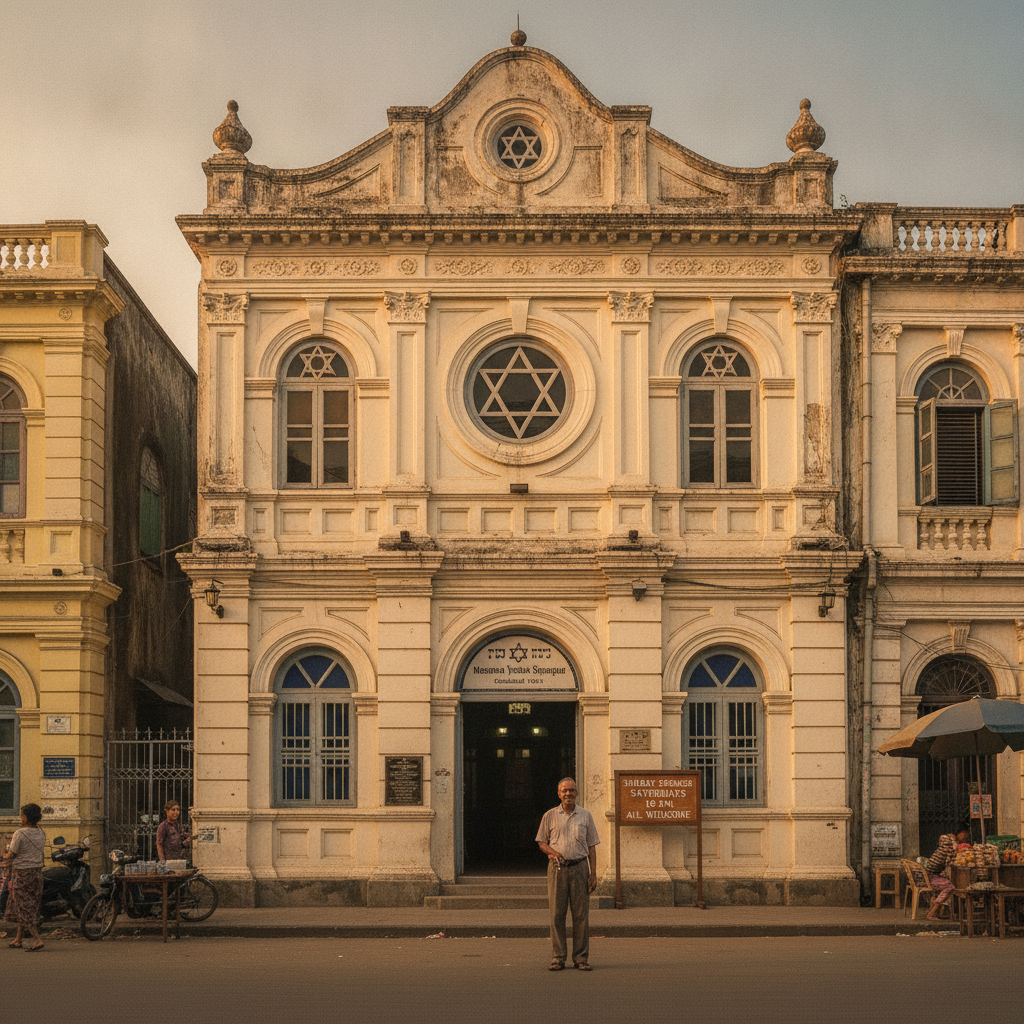
Yangon's religious diversity—a product of the city's colonial history as a port city that attracted merchants and migrants from every part of the British Empire and adjacent regions—produced a remarkable range of religious buildings that coexist in the downtown colonial grid. The Musmeah Yeshua Synagogue (26th Street—the only remaining functioning synagogue in Myanmar, built 1896 by the Baghdadi Jewish community—at its peak, Rangoon's Jewish community numbered 2,500 and included prominent merchants and the mayor of Rangoon; today fewer than 20 Jews remain in Myanmar, and the synagogue is maintained by a caretaker family and opened for Shabbat services). St Mary's Cathedral (Catholic—1899, neo-Gothic red-brick, the finest colonial-era church in Yangon; mass in Burmese, Karen, and English). The Immanuel Baptist Church (the oldest Baptist church in Myanmar—Yangon's Baptist community, particularly from the Karen ethnic group, reflects the extraordinary success of American Baptist missionary Adoniram Judson's work among the Karen people from the 1820s). The Nanthar Mosque and Surti Mosque (the two largest mosques in the city, both 19th century).
- 3
Shan State & the Drug Trade – Myanmar's Opium Legacy
Myanmar is the world's largest producer of opium (surpassing Afghanistan in 2023 and again in 2024 as Taliban suppression reduced Afghan production)—a position that reflects both the geography of Shan State (mountainous, remote, partially beyond central government control) and the complex economics of the armed ethnic organisations that control drug production. The history: opium cultivation in the Golden Triangle (the Shan hills where Myanmar, Thailand, and Laos converge) was initially encouraged by the CIA-backed KMT (Kuomintang) forces who retreated into Shan State from China in 1949 and needed revenue for anti-Communist operations; it was subsequently taken over by the Shan State Army and the Wa State Army (UWSA—the United Wa State Army, the largest non-government armed organisation in Southeast Asia, controlling the 'Wa State' in eastern Shan as a de facto independent territory). The UWSA is the primary opium and methamphetamine producer in Myanmar; the methamphetamine trade (yaba—'crazy medicine'—the red tablets of methamphetamine that have become the primary drug of addiction in Myanmar, Thailand, and across Southeast Asia) has in many ways superseded opium in economic importance.
- 4
Yangon's Publishing & Literary Life – Under Censorship
Myanmar's literary tradition—rooted in the court literature of the Konbaung dynasty, the pagoda school education system that made Burma the most literate country in British India by 1900, and a 20th-century newspaper culture that was among the most developed in Southeast Asia before Ne Win's 1962 coup—has operated under varying degrees of censorship for most of the post-independence period. The Press Scrutiny Board (established 1962)—which required all publications to be submitted for pre-print censorship approval—operated until 2012; in the interim decade (2012–2021), Myanmar's publishing industry experienced a brief flowering of titles, including translations of previously banned authors, history books about the 1988 uprising, and political commentary. The 2021 coup re-imposed tight media controls: independent newspapers (including the Frontier Myanmar—the most significant English-language news outlet that developed during the democratic period) were shut, journalists were arrested, and the independent publishing industry collapsed. The literary life that continues does so online, in exile (many Myanmar writers and journalists are based in Thailand), and in the informal circulation of samizdat-style writing through trusted networks.
- 5
Yangon's Rivers & the Sea – Port City Geography
Yangon sits at the junction of the Yangon River (the eastern arm of the Ayeyarwady Delta) and the Bago River—a geography that made it the natural site for British colonial Rangoon's development as the primary port of Burma. The Yangon River (called the Rangoon River under British administration): 32 km long, emptying into the Gulf of Martaban; at the time of British development, ships from India could anchor within the city bounds; the river has silted and the deep-water port has shifted downstream (Thilawa—25 km south, developed as a Japanese-invested special economic zone with a deep-water terminal). The Strand Road waterfront: the colonial-era embankment road running along the Yangon River—the Strand Hotel faces it, the 19th-century colonial godowns (warehouses) once lined it; the waterfront has been partially redeveloped but retains much of its colonial character. The ferry crossings: public ferries to Dalah (on the opposite bank—a quickly modernised township that was for decades a window into everyday Yangon life that had been relatively unaffected by tourism, now developing rapidly)—operate from the jetty at the end of Pansodan Street, the most visible remaining river transport.
- 6
Yangon in 2026 – A City Under Pressure
Yangon in 2026 is a city living through the most severe political and humanitarian crisis in its post-independence history. The 2021 coup set in motion a sequence of events—the CDM (civil disobedience movement), military crackdowns, the formation of the PDF (People's Defence Forces), the onset of an armed conflict that has reached most of Myanmar's states and regions—that has fundamentally altered the atmosphere and economic life of the city. The consequences in Yangon: the departure of most international NGO staff and foreign business personnel (reducing the international community significantly from its 2019 peak), the closure or scaling-back of international companies (TotalEnergies, Telenor, Grab, and others exited Myanmar after the coup), and the economic hardship of ordinary residents facing currency devaluation (the kyat lost approximately 70% of its value against the dollar between 2021 and 2024), power outages (12+ hours of daily load-shedding in residential areas), and rising food prices. Yet the city persists: the tea houses are open, Shwedagon is still gold at dawn, the circular train still runs, and the ordinary life of 7 million people continues against a backdrop of extraordinary difficulty.
Walk this route with audio
Stories play automatically as you reach each stop — no tapping needed.
More in Yangon
Yangon Deeper: The $0.10 Circular Train Loop, 19th Street Chinatown Barbecue & Aung San Suu Kyi's Lake House
Yangon's Weight: Bago's 55-Metre Reclining Buddha, the 1962 Military Coup's Roots & a City of Resilient Dignity
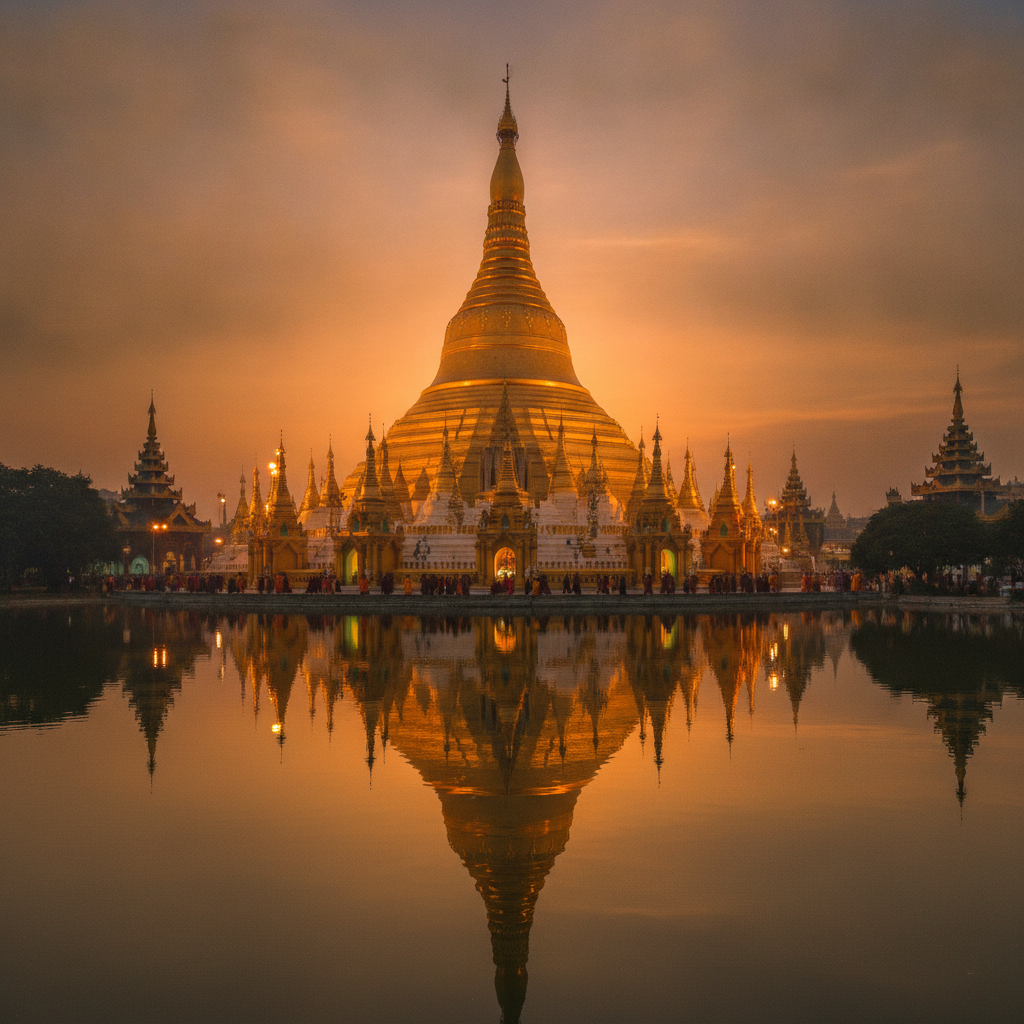
Yangon: 60 Tonnes of Gold on Shwedagon Pagoda, Victorian Rangoon's Last Streets & the Tea House Where Myanmar Talks
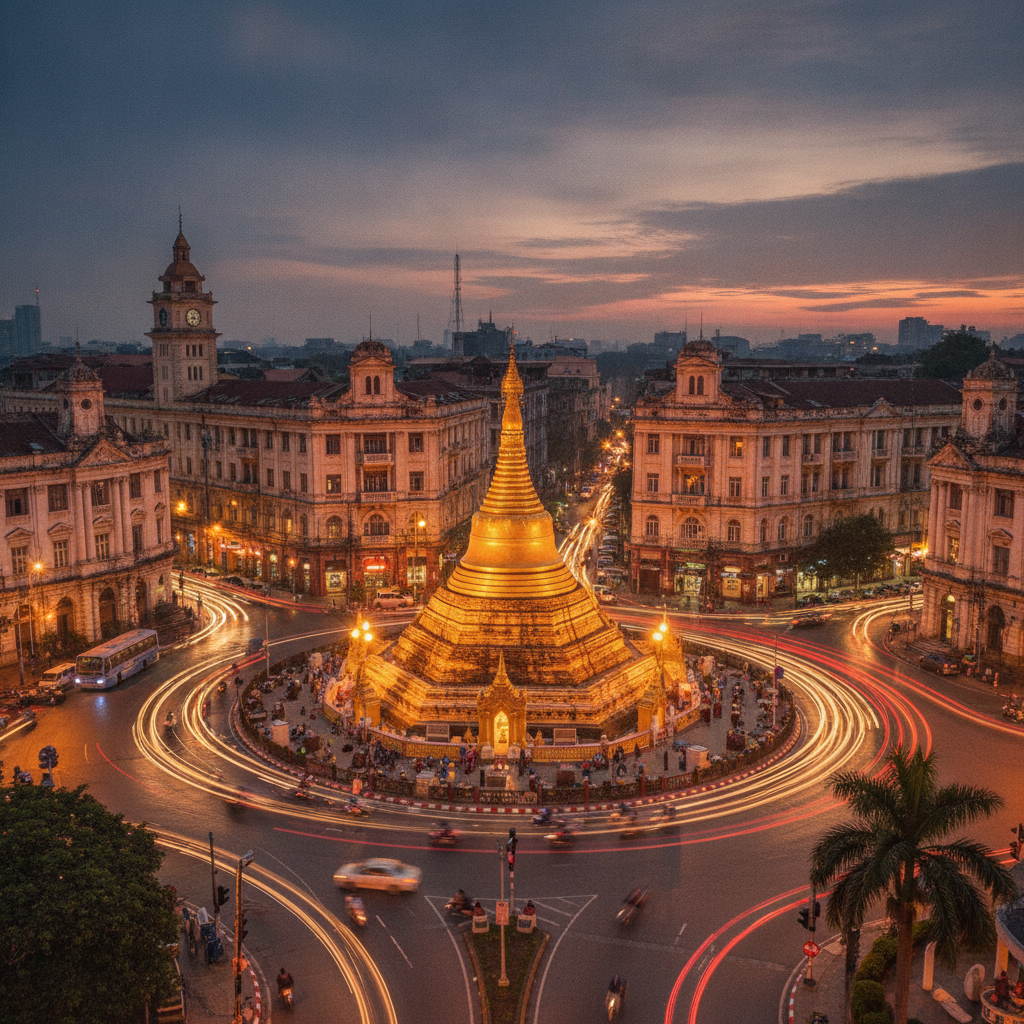
Yangon's Hard Questions: Rohingya Genocide Context, the Ethics of Visiting & Shan Noodles in the Tea House