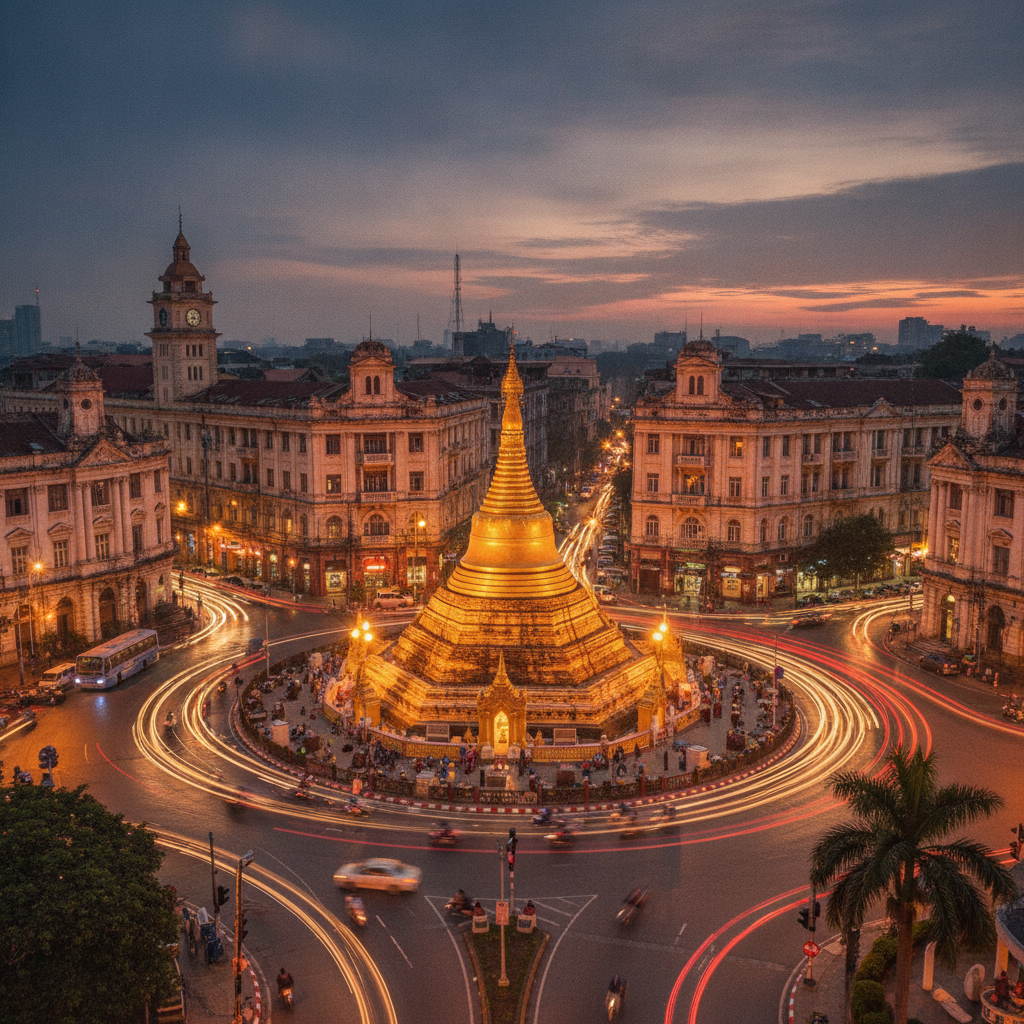
Myanmar Beyond Yangon: Bagan's 2,200 Temples, Inle Lake's Leg-Rowing Fishermen & the Golden Rock at Dawn
The Myanmar travel circuit from Yangon—Inle Lake's 70,000 stilt-village residents and the Intha leg-rowing silhouette at dusk on floating tomato gardens, Bagan's 10,000 temples reduced by earthquake to 2,200 across a 40 km² dry-zone plain (and the gold paint controversy at the renovated Ananda), Mandalay's 729 marble slabs of the entire Pali canon each in its own white miniature pagoda, Kyaiktiyo's golden boulder balanced on a cliff edge at 1,100 metres that women cannot touch, the Hukaung Valley tiger reserve larger than Sri Lanka now complicated by civil conflict in Kachin State, and the 50-100 remaining Ayeyarwady dolphins whose mutualistic fishing partnership with Bhamo fishermen is documented since the colonial era.
- 1
Inle Lake & the Leg-Rowing Fishermen of Shan State
Inle Lake—Shan State, 900 metres altitude, 900 km north of Yangon (accessible by flight from Yangon to Heho, 1 hour, then 1.5 hours by road)—is the second most visited destination in Myanmar after Bagan, and one of Southeast Asia's most distinctive freshwater landscapes. The lake: 22 km long, 11 km wide, shallow (average 2 metres), surrounded by mountains, and home to approximately 70,000 people living in floating villages, on stilts above the water, and on the lake margins. The leg-rowing technique: the Intha fishermen (the ethnic group indigenous to the lake) row their flat-bottomed boats by wrapping one leg around the oar and standing on one leg—a technique that allows the fishermen to use both hands for the conical fish trap while propelling the boat—creating one of the most photographed human silhouettes in travel photography (the lone fisherman silhouetted at dusk against the mountains). The floating gardens (ingeniously cultivated strips of lake vegetation and soil anchored by bamboo poles—growing tomatoes, flowers, and vegetables on rafts that expand year by year as new material is added).
- 2
Bagan's 2,200 Temples – The Myanmar Essential
Bagan (Old Bagan)—the ancient capital of the Pagan Kingdom (849–1297 CE) on a bend of the Ayeyarwady River, 690 km north of Yangon—is the destination that most Myanmar visitors cite as their primary reason for coming. The landscape: approximately 2,200 temples, pagodas, and monasteries spread across a 40 km² plain of the dry zone (low scrub, tamarind trees, and sandy soil); at Bagan's peak (11th–13th centuries), over 10,000 structures were built by successive kings competing in religious merit-making on a scale without parallel in Southeast Asian history. The damage: the 2016 earthquake (6.8 magnitude) damaged approximately 400 structures; the APSARA-equivalent authority (Department of Archaeology) and UNESCO have been overseeing repairs, some controversially (the renovation of Ananda Temple added bright gold paint and new tiles that architectural historians have criticised as inappropriate restoration). The temples: Ananda (1105—the finest temple of the early Bagan period, perfectly proportioned, housing four standing Buddha images 9 metres high), Dhammayangyi (the largest temple at Bagan, unfinished), Sulamani (late 12th century, the most elaborate decorative carving), and the Shwesandaw (the best sunset terrace).
- 3
Mandalay – Myanmar's Cultural Capital
Mandalay—650 km north of Yangon, the last royal capital of Myanmar before British annexation in 1885—is the cultural and religious centre of Bamar Myanmar in a way that Yangon (a British colonial creation) is not. The Mandalay Palace (built 1857–1859 by King Mindon—a walled and moated royal compound of teak pavilions, the original entirely destroyed by Japanese and Allied bombing in 1945 and rebuilt in concrete by the military government in the 1990s; the reconstruction is controversial but the setting remains impressive); the Kuthodaw Pagoda (the 'world's largest book'—729 marble slabs inscribed with the entire Pali Buddhist canon, each housed in its own white miniature pagoda around the main stupa); and the U Bein Bridge (1.2 km of teak planks across the Taungthaman Lake—the world's longest teak bridge, built 1849—the quintessential Myanmar sunset photograph). Mandalay is the embarkation point for river cruises on the Ayeyarwady (Irrawaddy) River—from the colonial-era Strand hotel-owned river cruises to the backpacker deck passage on the government ferry northward to Bhamo and the China border.
- 4
The Golden Rock – Kyaiktiyo Pilgrimage
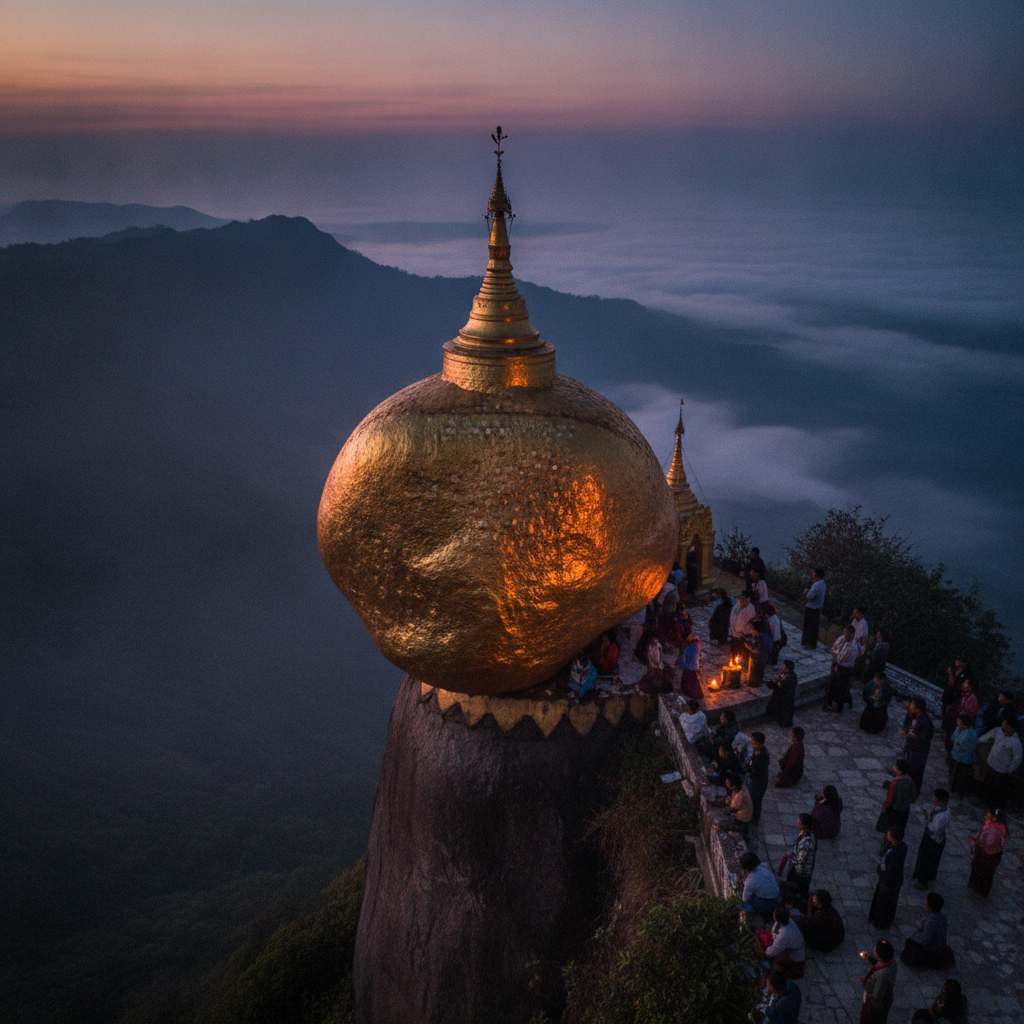
Kyaiktiyo Pagoda (the Golden Rock)—220 km east of Yangon in Mon State, at 1,100 metres altitude—is the third most sacred Buddhist site in Myanmar (after Shwedagon in Yangon and the Mahamuni Pagoda in Mandalay) and the most visually extraordinary: a large golden boulder balanced on the edge of a granite cliff, with a small stupa on top—the boulder appears to defy gravity, seemingly held in place by a single hair of the Buddha enshrined within. The pilgrimage: Burmese Buddhists travel to Kyaiktiyo in large numbers especially during the pilgrimage season (November–March); the final ascent (11 km from Kinpun base camp, accessible by truck—open-air truck rides standing, often crowded—then a 45-minute walk on the ridge path) ends at the rock, where pilgrims apply gold leaf to the boulder's surface. Women are not permitted to touch the rock (though they can view it from the viewing platform). The overnight experience: staying in the basic guesthouses near the rock to experience the sunrise and the evening illumination—when the golden boulder is lit from below against the night sky—is considered the essential Kyaiktiyo visit. Getting there from Yangon: 4 hours by bus to Kinpun, then truck ascent.
- 5
Myanmar's Natural Environment – Endangered Forests & Rivers
Myanmar's natural environment—which includes some of the most biodiverse and least-disturbed forest in mainland Southeast Asia (Hukaung Valley in Kachin State contains the largest protected area in Southeast Asia)—is under severe and accelerating pressure from multiple directions. The teak: Myanmar's teak forests (the source of the finest structural timber in the world, prized since antiquity by shipbuilders and palace architects) were heavily logged under both the colonial British period and the post-independence military governments; the Ayeyarwady-Salween watershed forests that remain are being pressured by Chinese timber concessions and illegal cross-border logging. The Ayeyarwady River: hydropower dam construction (particularly on the Irrawaddy's tributaries and the upper Irrawaddy itself, with major Chinese-invested projects) threatens the river's ecological function as the source of Myanmar's agricultural fertility and fish production. The wildlife: the Hukaung Valley Tiger Reserve (27,000 km²—larger than Sri Lanka) was established to protect Myanmar's remaining tiger population; the ongoing civil conflict in Kachin State has complicated conservation enforcement. The rare Burmese roofed turtle (Batagur trivittata)—thought extinct until rediscovered in 2001—is now breeding in captivity as one of Asia's most intensive single-species conservation efforts.
- 6
The Irrawaddy Dolphin & the Ayeyarwady River System
The Irrawaddy dolphin (Orcaella brevirostris)—a small, round-headed freshwater dolphin with a flexible neck and no distinct beak—has a complex relationship with Myanmar's fishermen and is one of the country's most potent conservation symbols. The species ranges from coastal marine areas to freshwater river systems across Southeast Asia, but the Ayeyarwady River population is critically endangered: approximately 50–100 individuals remain in the stretch between Mandalay and Bhamo, where they have historically cooperated with fishermen in a unique mutualism (dolphins drive fish toward nets in exchange for a share of the catch—a relationship documented by colonial-era naturalists and still practised by a small number of fishermen near Bhamo). The threats: the dams on the Ayeyarwady and its tributaries (which alter the river's flow regime and fragment dolphin habitat), electrofishing (illegal but widespread—electric shocks stun fish but also kill dolphins and river turtles), and the political disruption of conservation efforts since the 2021 coup (the Wildlife Conservation Society and other organisations that monitored the Ayeyarwady dolphin population have reduced field presence due to security conditions).
Walk this route with audio
Stories play automatically as you reach each stop — no tapping needed.
More in Yangon
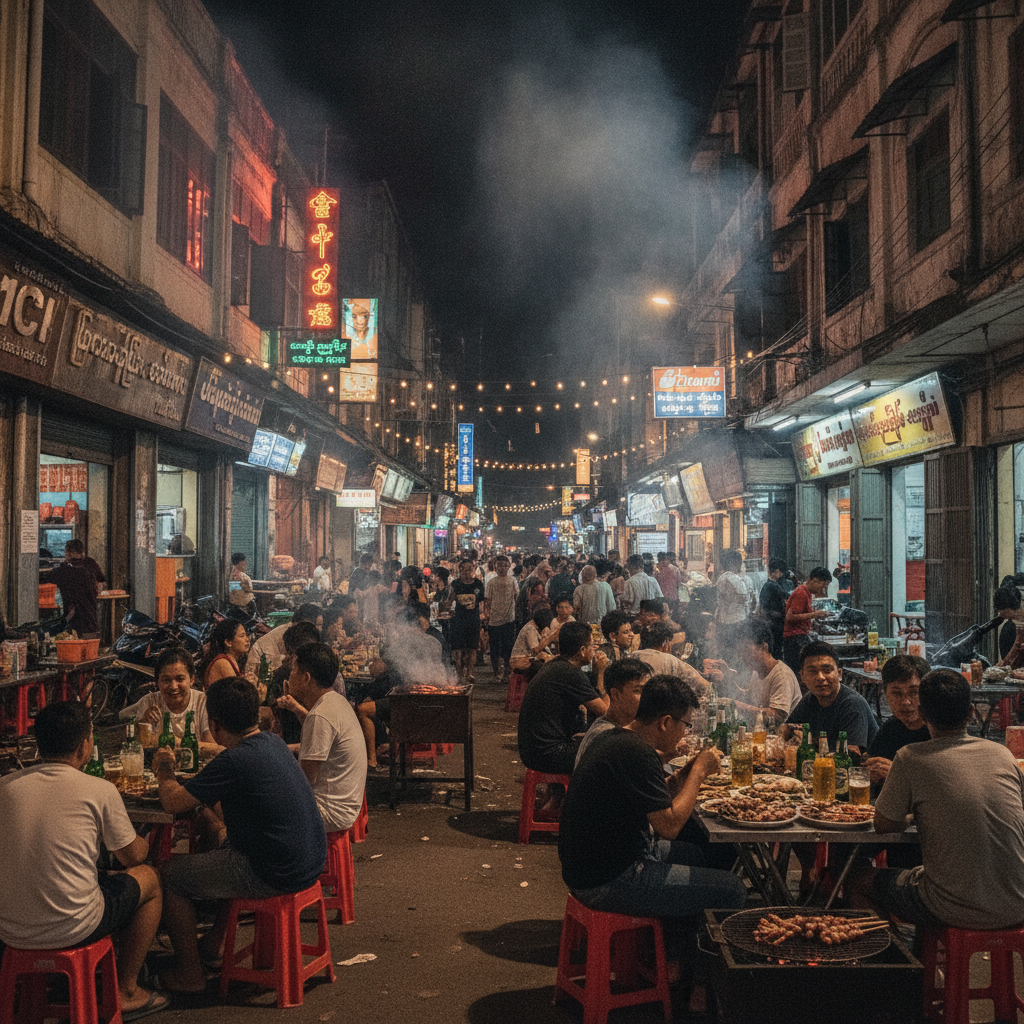
Yangon Deeper: The $0.10 Circular Train Loop, 19th Street Chinatown Barbecue & Aung San Suu Kyi's Lake House
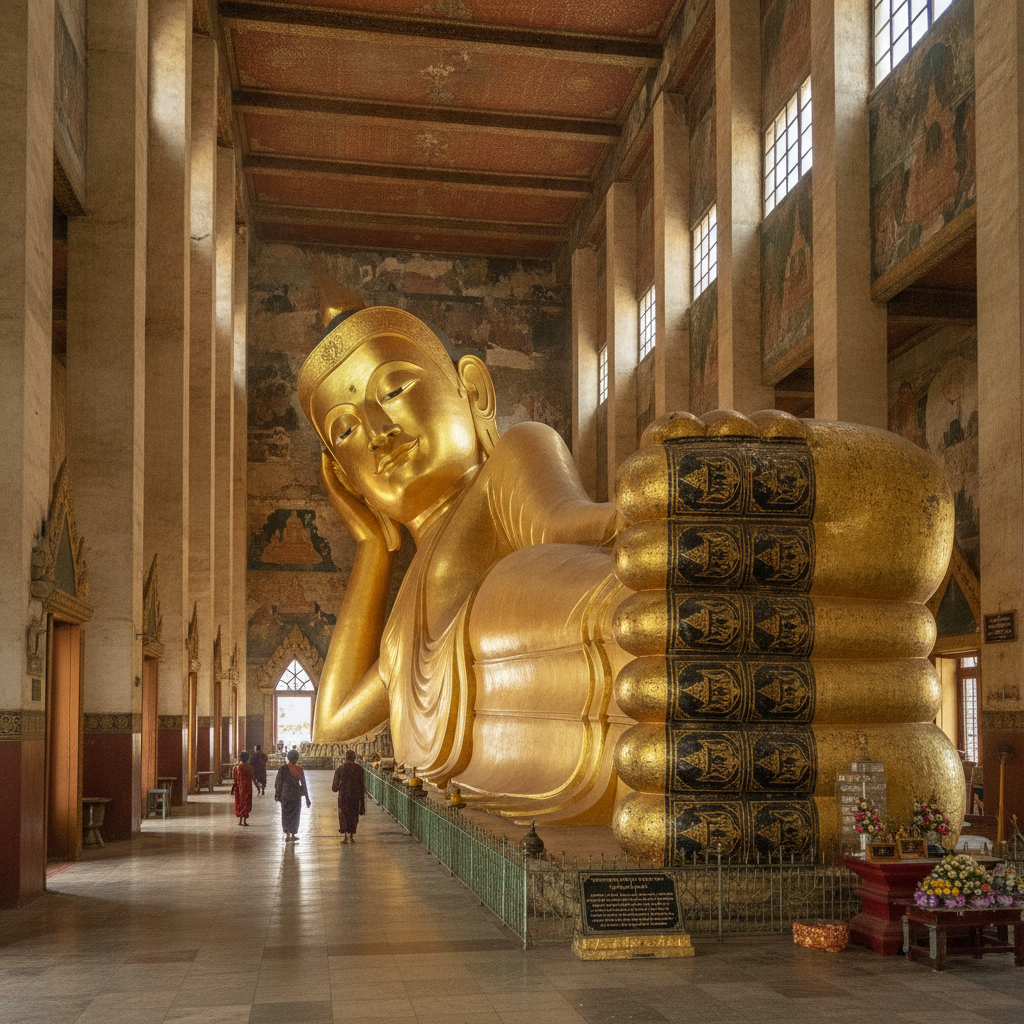
Yangon's Weight: Bago's 55-Metre Reclining Buddha, the 1962 Military Coup's Roots & a City of Resilient Dignity
Yangon 2026: The Last Synagogue With 20 Jews, World's Largest Opium Producer & a City of 7 Million Persisting
Yangon: 60 Tonnes of Gold on Shwedagon Pagoda, Victorian Rangoon's Last Streets & the Tea House Where Myanmar Talks