Wrocław Food — Silesian Pierogi, the Market Hall, Craft Beer & Local Restaurants
Wrocław's food culture (the most cosmopolitan in Lower Silesia, the combination of the traditional Silesian Polish cooking inherited from the 1945 expellees who brought their eastern Polish and Kresy borderland food traditions, and the post-1989 restaurant scene developed by the city's large student and young professional population) is more historically layered than any other Polish city.
- 1
Silesian Cuisine — the Regional Food Tradition
Silesian cuisine (the cooking tradition of the Silesia region, combining German, Czech, and Polish culinary influences accumulated over 800 years of multi-ethnic coexistence, the specific Silesian dishes: the rolada śląska — the beef roll stuffed with pickled cucumber, bacon, and onion, slow-braised in dark beer sauce, the most characteristic Silesian main course; the kluski śląskie — the Silesian potato dumplings, the round flat dumplings with a thumb-print dimple in the centre, boiled and served with gravy or sauerkraut, distinct from the rounder kopytka dumplings of other regions; the żur śląski — the Silesian white sour rye soup thickened with cream, different from the leaner Warsaw żurek — the combined Silesian plate: rolada with kluski and red cabbage at €12-16 at the traditional restaurants) is the local-food priority for Wrocław visitors. The restaurants: Restauracja Śląska (Świdnicka 45, the most comprehensive Silesian menu in Wrocław, open daily noon-10pm, the rolada and the kluski the flagship dishes), and Stara Zajezdnia (the former tram depot on Świdnicka converted to a restaurant and craft brewery, the Silesian dishes alongside the house-brewed beer).
- 2
Hala Targowa — the Art Nouveau Market Hall
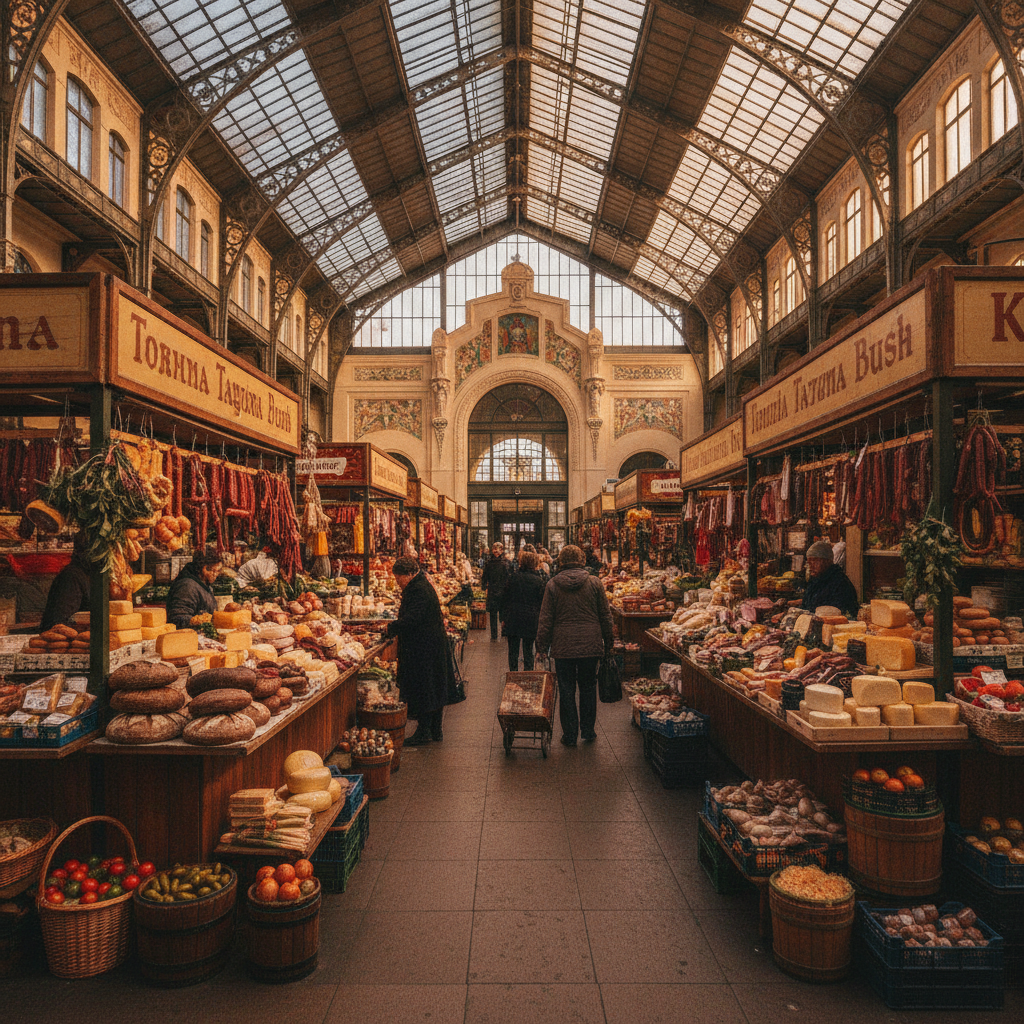
Hala Targowa (the covered market hall at Piaskowa 17, built 1908 in the Art Nouveau style — the decorative iron and glass structure, the glazed ceramic facade with floral motifs, the market hall the most architecturally distinguished of Wrocław's market buildings, the hall operating as the main fresh food market Monday-Saturday 6am-5pm, Sunday 6am-2pm, the stalls divided between the butchers, the cheese vendors, the bread bakers, and the fresh produce, the central section allocated to the flower market) is the most convenient market for visitors staying in the Old Town — 10 minutes walk east of the Rynek across the Świdnicka bridge. The Wrocław bread (the Silesian rye breads baked by the remaining traditional bakeries — the Chleb Śląski, the dark rye bread with caraway, the most distinctively Silesian bread product, available at the Hala Targowa bakery stall and at the Piekarnia Rodzinna Woźniak on Świdnicka Street, the bread reflecting the German and Polish Silesian bread baking tradition unified under the post-1945 Polish administration into a single continuous craft).
- 3
Pierogi Wrocław — Dumplings of the City
Wrocław's pierogi scene (the most competitive in Poland outside Kraków, the city's student population supporting 20+ dedicated pierogi restaurants): Pierogarnia na Świdnickiej (Świdnicka 19, the flagship pierogi restaurant of Wrocław, the menu of 25 pierogi varieties including the specifically Wrocław variants — the pierogi with Silesian filling of potato, cream cheese, and fried bacon, and the pierogi z gulaszem — with beef goulash filling — not found elsewhere in Poland, the production visible from the street through the glass wall of the kitchen, the price at €5-8 for a portion of 8-10, open daily noon-10pm), Bar Mleczny Miś (the milk bar near the Rynek, the boiled pierogi at €3.50 for 10, the cheapest correct pierogi in the city, the queue at noon from the students and the retired residents of the Old Town, open Monday-Friday 8am-6pm, cash only), and the pierogi festival (the Wrocław Good Beer and Pierogi Festival held in August in the Rynek, the combined event celebrating the two foods most associated with the city, the outdoor stands from the city's pierogi restaurants competing for the festival award).
- 4
Wrocław Craft Beer — the Lower Silesian Brewery Scene
Wrocław craft beer (the most developed craft brewing scene in Poland after Warsaw, the city producing its own styles based on the Silesian brewing tradition that dates to the 13th century when the Wrocław brewers' guild produced beer for the wider Silesian market): Browar Stu Mostów (the most acclaimed Wrocław craft brewery, the name 'Hundred Bridges' referring to the city's bridge count, the taproom and restaurant in the Old Town at Świdnicka 8, the 20 rotating taps including the flagship WRCLW lager, the Neipa, the barrel-aged stout, and the seasonal releases, open daily noon-midnight), Artezan (the Warsaw-based craft brewer with a production facility in Wrocław, the collaboration beers with the Stu Mostów brewery available in both cities), and the craft beer bars of the Świdnicka Street corridor (the 6-8 craft beer bars within 200m of the Rynek on the main pedestrian street, the most concentrated craft beer strip in Lower Silesia, the progressive tasting from Polish lager to the more complex Silesian-inspired styles the correct evening circuit).
- 5
The Nadodrze District — Wrocław's Bohemian Quarter
Nadodrze (the neighbourhood 1km north of the Old Town on the north bank of the Odra, the former working-class district of pre-war Breslau, the area of Wilhelminian-era apartment buildings largely intact — unlike the Old Town the Nadodrze suffered relatively less destruction in 1945, the tenement facades of the 1890s-1910s surviving on the main streets — the neighbourhood gentrifying since 2010 with the arrival of art galleries, design studios, alternative cafes, and the Wrocław independent music scene) is the non-tourist counterpart to the Old Town experience. The key streets: Roosevelta Street (the main spine of the Nadodrze, the Art Nouveau apartment facades, the cafe tables on the pavement, the Polish crafts and vintage shops), the Sunday flea market at the Różanka stadium (the largest flea market in Wrocław, 30 minutes walk from the Old Town, the mix of pre-war Breslau objects — the German-language books, the Silesian ceramic plates, the Imperial German postcards — and post-war Polish collectibles, open Sunday 7am-2pm), and the WRO Art Centre (Widok 7, the contemporary media art centre in the Nadodrze, the permanent collection of video and digital art, €5 adults, the most internationally connected contemporary art institution in Wrocław).
- 6
Day Trips from Wrocław — Świdnica, Książ, and the Sudeten Mountains
Day trips from Wrocław within 100km: Świdnica (50km south of Wrocław, the Church of Peace — the UNESCO World Heritage timber-frame Protestant church built 1657 under the Peace of Westphalia, the largest timber-frame church in Europe at 5,200 seats, built entirely without nails under the treaty restriction that no durable materials could be used, the interior with its three tiers of wooden galleries and the Baroque painted ceilings, €5 adults, accessible by bus in 1 hour at €3), Castle Książ (the third-largest castle in Poland, 70km south of Wrocław near Wałbrzych, the medieval castle expanded in the Baroque period by the Hochberg family — the richest aristocratic family in Silesia — the Hitler-era Riese project: the complex of secret underground tunnels bored beneath the castle in 1943-45 by forced labour for an unknown purpose, the 9km of accessible tunnels open to visitors, €15 adults for the castle and tunnels, accessible by bus from Wrocław in 1.5 hours at €5), and the Karkonosze National Park (the Sudeten Mountains, 120km south of Wrocław, the Giant Mountains with the Śnieżka peak at 1,603m the highest point in the Sudetenland, the hiking trails accessible from Szklarska Poręba and Karpacz, the cable car to the Polish-Czech summit ridge).
Walk this route with audio
Stories play automatically as you reach each stop — no tapping needed.
More in wroclaw
Wrocław Dwarf Hunt, Bridges & Walking Routes — the Complete City Circuit
Wrocław Cathedral Island — Gothic Towers, Gas Lamps & the Odra Islands
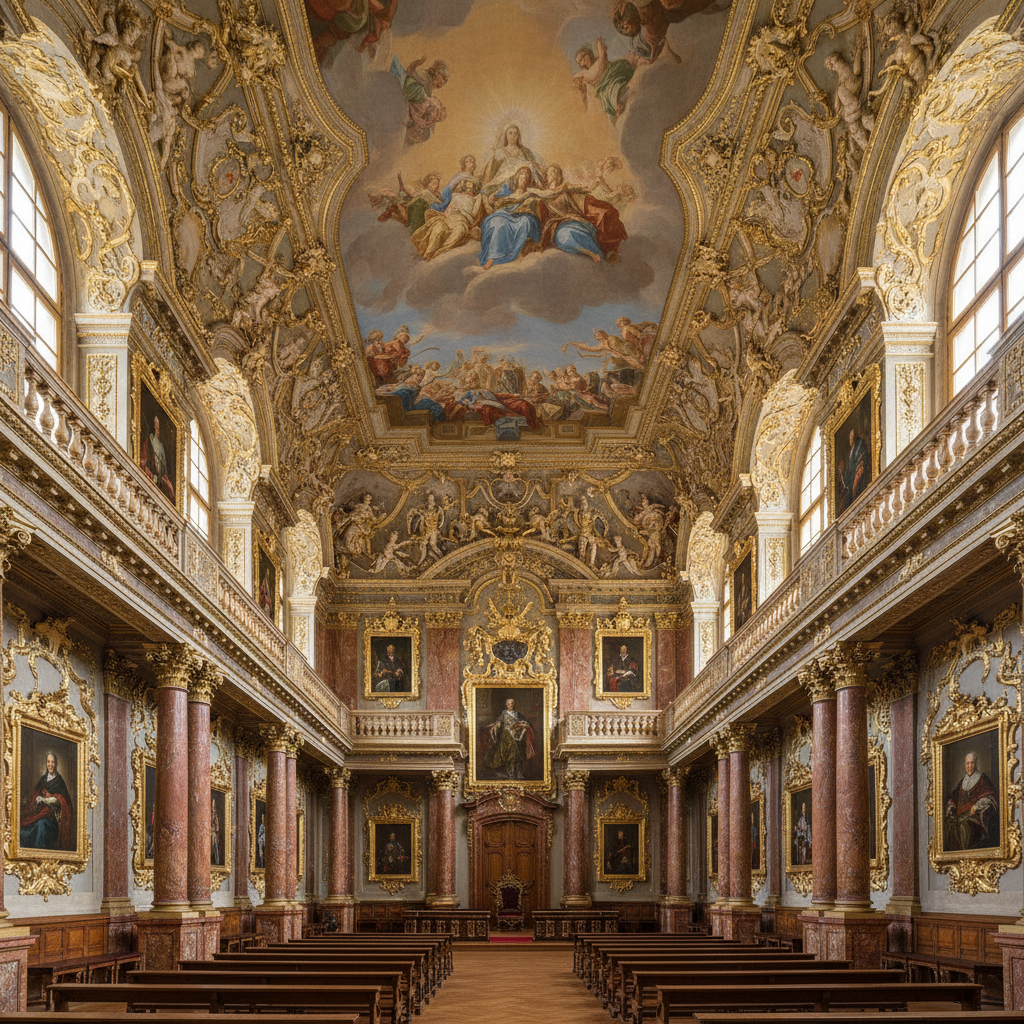
Wrocław University, Museums & the National Forum of Music — Cultural Capital Legacy
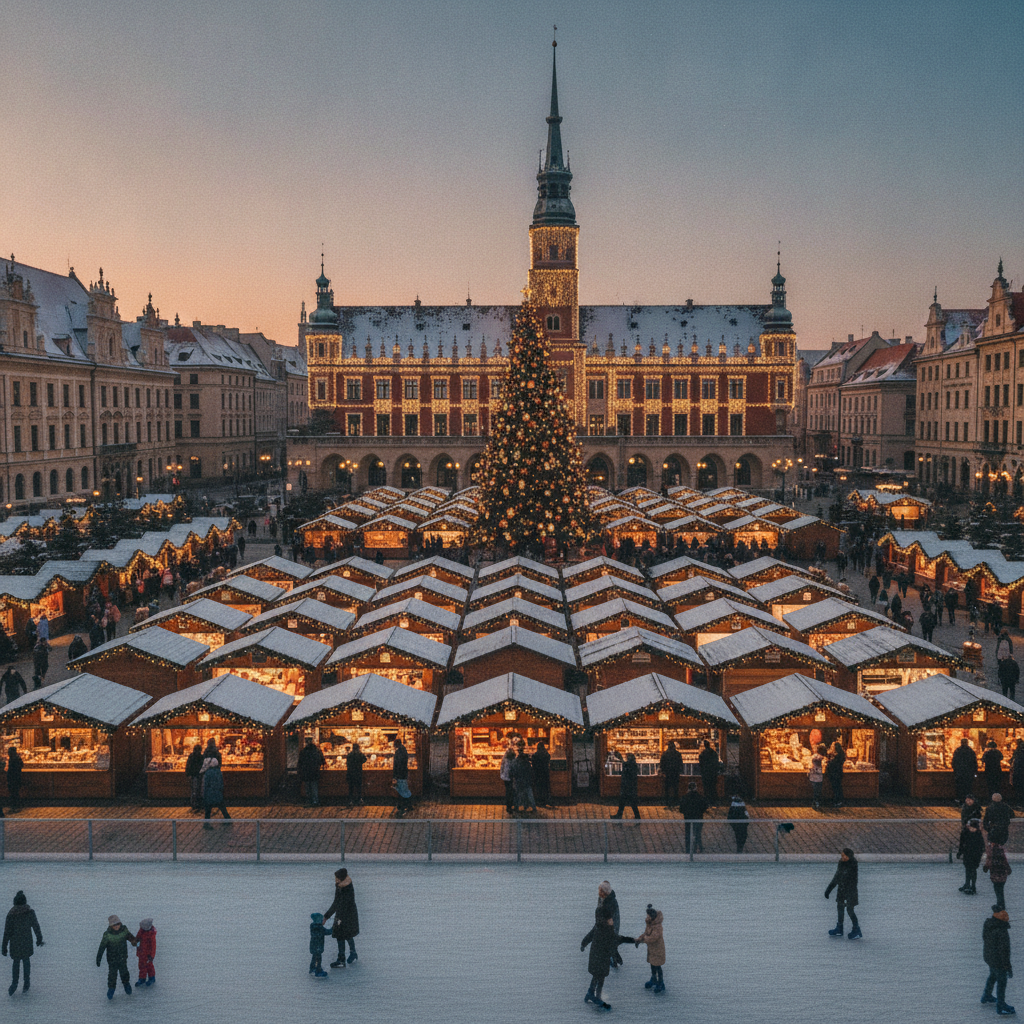
Wrocław Practical Guide — Seasons, Transport, Christmas Market & Day Trips to the Sudeten