Wrocław Dwarf Hunt, Bridges & Walking Routes — the Complete City Circuit
Wrocław's 600+ bronze dwarfs (krasnale) scattered across the city and its 112 bridges create two distinct walking experiences: the dwarf hunt (the scavenger-hunt-style tour of the city following the dwarf map) and the bridges circuit (the walk connecting the 12 islands of the Odra via the bridge network, unique in Polish urban geography).
- 1
The Orange Alternative and the First Dwarfs
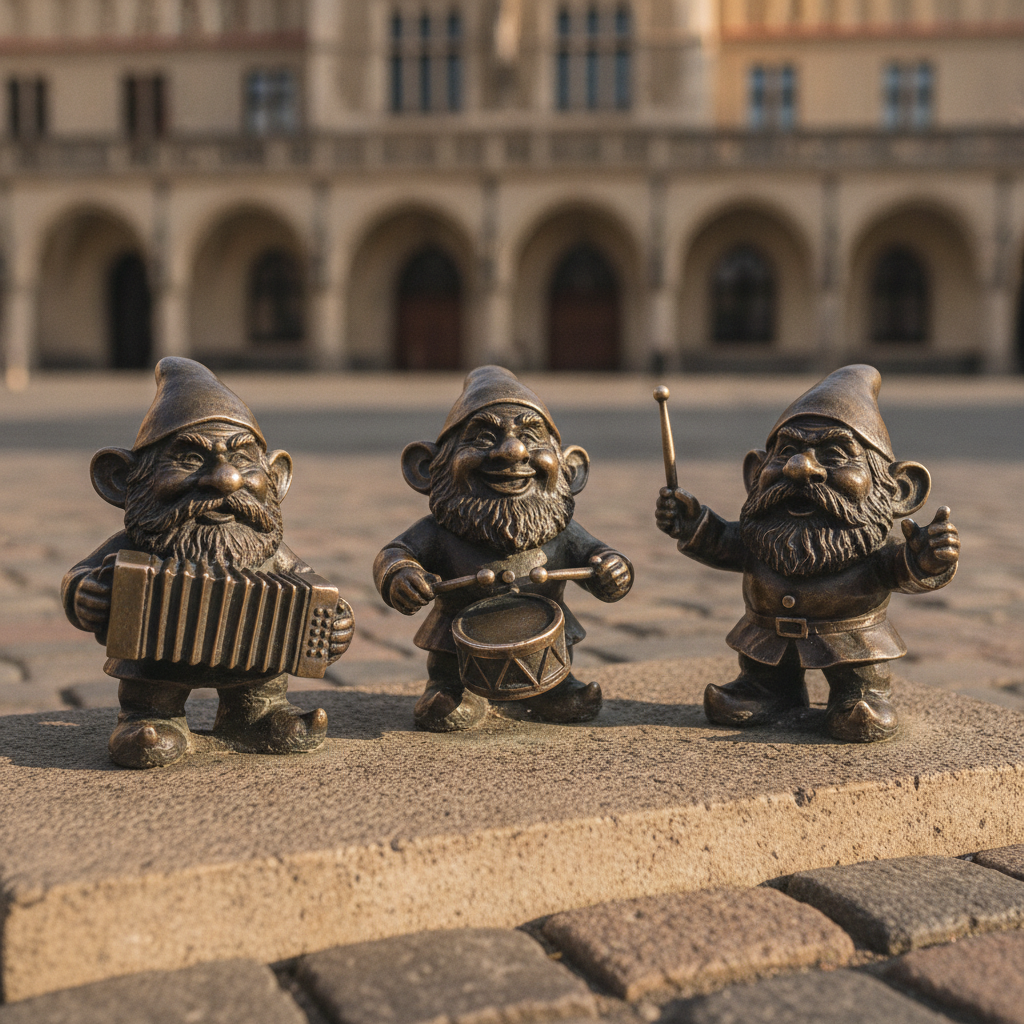
The Wrocław dwarfs' political origin (the Orange Alternative — Pomarańczowa Alternatywa — the absurdist anti-communist protest movement led by Waldemar Fydrych 'Major' in the 1980s, the movement organizing surrealist street happenings: protesters dressed as dwarfs, elf hats distributed to passers-by, the movement's logic that the communist authorities could not arrest people for wearing orange hats without appearing ridiculous — the dwarfs chosen as the symbol because they appeared in the communist-era children's fairy tales, the dwarf being simultaneously a folk tradition, a children's fantasy, and a subversive political symbol impossible to officially condemn). The first physical dwarf monument (placed in 2001 at Świdnicka 2 as a memorial to the Orange Alternative, the sculptor Tomasz Moczek commissioned by the city, the single dwarf the seed of the 600+ that followed). The dwarf hunt app (the Krasnale Wrocławskie app, free download, the GPS-guided tour of all 600+ dwarf locations with their names and backstories, the hunt organized by theme — the professional dwarfs, the historical dwarfs, the seasonal dwarfs — the app showing which dwarfs are within 100m of the current location).
- 2
The Rynek Dwarfs — the 40 Gnomes of the Market Square
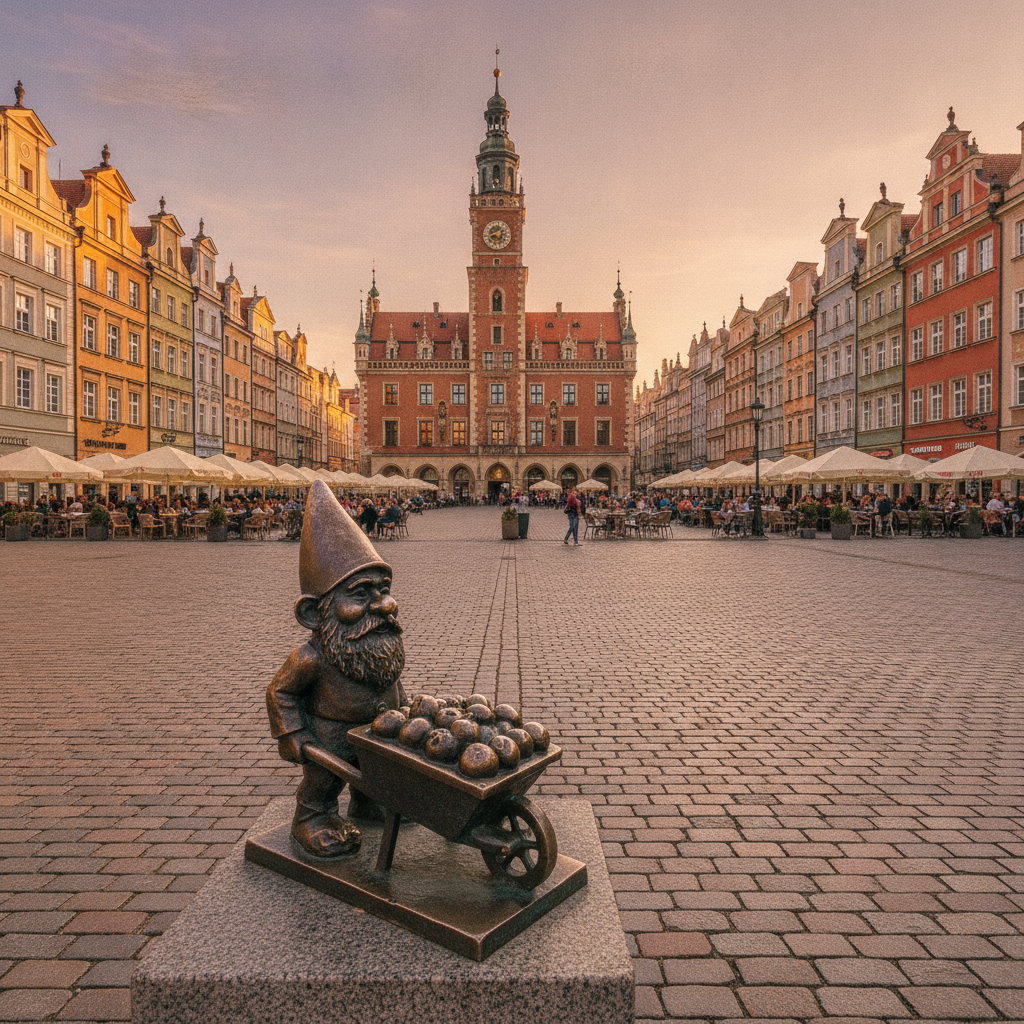
The Market Square dwarf cluster (approximately 40 dwarfs within 200m of the Town Hall, the highest concentration in the city, the dwarfs representing the specific trades and activities of the Market Square — the dwarf tailor at the tailor shop, the dwarf bookseller at the bookshop, the dwarf chef outside the restaurant, the dwarf drunk outside the bar, the collective telling the story of the Rynek as a working commercial space rather than merely a tourist attraction): the Rynek circuit (the walk around the perimeter of the Market Square identifying all 40 dwarfs, the circuit taking 45-60 minutes with photography stops, beginning at the Town Hall and proceeding clockwise, the dwarf locations concentrated at the base of the building facades and on the low plinths at the kerb). The oldest and most visited: the Businessman Dwarf (at the bank corner of the Rynek, the briefcase and the mobile phone, the most photographed dwarf in Wrocław), the Sleeping Dwarf (on the cobblestones of the eastern arcade, the dwarf lying flat with a tiny pillow, the most frequently touched and most worn by visitor contact of all the Rynek dwarfs).
- 3
The Bridges of Wrocław — the 112-Bridge Circuit
Wrocław's 112 bridges (the highest bridge count of any city in Poland, the bridges spanning the multiple channels of the Odra River and the Oława and Bystrzyca tributary streams, the bridges ranging from the medieval stone bridges of Cathedral Island to the 19th-century cast-iron suspension bridges to the 20th-century concrete road bridges): the essential bridge walk (the pedestrian circuit connecting the key bridges, 3km, 1.5 hours, starting at the Most Grunwaldzki — the 1910 chain-suspension bridge west of the Old Town — crossing to the left bank, returning via the Most Piaskowy to Sand Island, crossing Most Tumski to Cathedral Island and returning to the Old Town via the Kładka Zwierzyniecka footbridge): the Most Grunwaldzki (the most elegant bridge in Wrocław, the 1910 art nouveau chain-suspension bridge, the cast-iron towers and the suspension cables the most photographed bridge structure in the city), the Most Piaskowy (the 1861 cast-iron bridge connecting Sand Island to the Old Town, the bridge with the best view of the Cathedral twin towers), and the Kładka Zwierzyniecka (the suspended footbridge in the Szczytnicki Park, the bridge swinging gently in the wind, the walk above the Odra channel through the trees of the park the most tranquil bridge experience in Wrocław).
- 4
The Dwarf Trail Outside the Old Town
The dwarf installations outside the Market Square concentration (the dwarfs extending across the entire city, the furthest at the Wrocław Zoo, the airport, and the Centennial Hall complex, the themed concentrations): the University Quarter dwarfs (the dwarfs representing the Wrocław academic life — the dwarf professor, the dwarf student, the dwarf rector, positioned on the Plac Uniwersytecki and the adjacent streets), the Świdnicka Street dwarfs (the commercial street dwarfs representing the trades of the pre-war city — the dwarf newspaper vendor, the dwarf pharmacist, the dwarf clockmaker), the Nadodrze dwarfs (the bohemian quarter dwarfs added since 2015 reflecting the neighbourhood's artistic identity — the dwarf painter, the dwarf poet, the dwarf musician, the most recently designed and the most contemporary in aesthetic compared to the earlier folkloric dwarfs of the Old Town). The competitive dwarf collection: the Wrocław city government publishes an annual 'dwarf census' updating the official count, new dwarfs commissioned by private sponsors at €3,000-5,000 each, the right to commission a dwarf including the right to name it and determine its occupation.
- 5
The Wrocław Zoo and Afrykarium
Wrocław Zoo (Ul. Wróblewskiego 1, the oldest zoo in Poland, founded 1865, €25 adults for combined zoo and Afrykarium, daily 9am-6pm in summer, the zoo covering 33 hectares with 10,000 animals) is home to the Afrykarium (the African Ocean pavilion opened 2014, the largest indoor ocean aquarium in Central Europe, the 7.5 million litre tanks housing sharks, rays, and the full African ocean ecosystem — the South African kelp forest, the East African coral reef, the Nile delta habitat — the pavilion built as a stand-alone structure within the zoo grounds, the most significant new attraction in Wrocław in the 21st century). The zoo dwarfs (the 6 dwarfs commissioned specifically for the zoo and Afrykarium, the dwarf zookeeper, the dwarf diver, the dwarf penguin, the most naturalistic and least folkloric of all the Wrocław dwarf installations, the child visitors' favourite encounters in the city) and the hippo pool (the hippopotamus enclosure, the zoo's most popular resident animals, the hippos visible underwater through the glass panels of the pool — the most visited single enclosure in the zoo) are the child-specific highlights of the Wrocław visit.
- 6
Wrocław in the Seasons — Summer and the Christmas Market
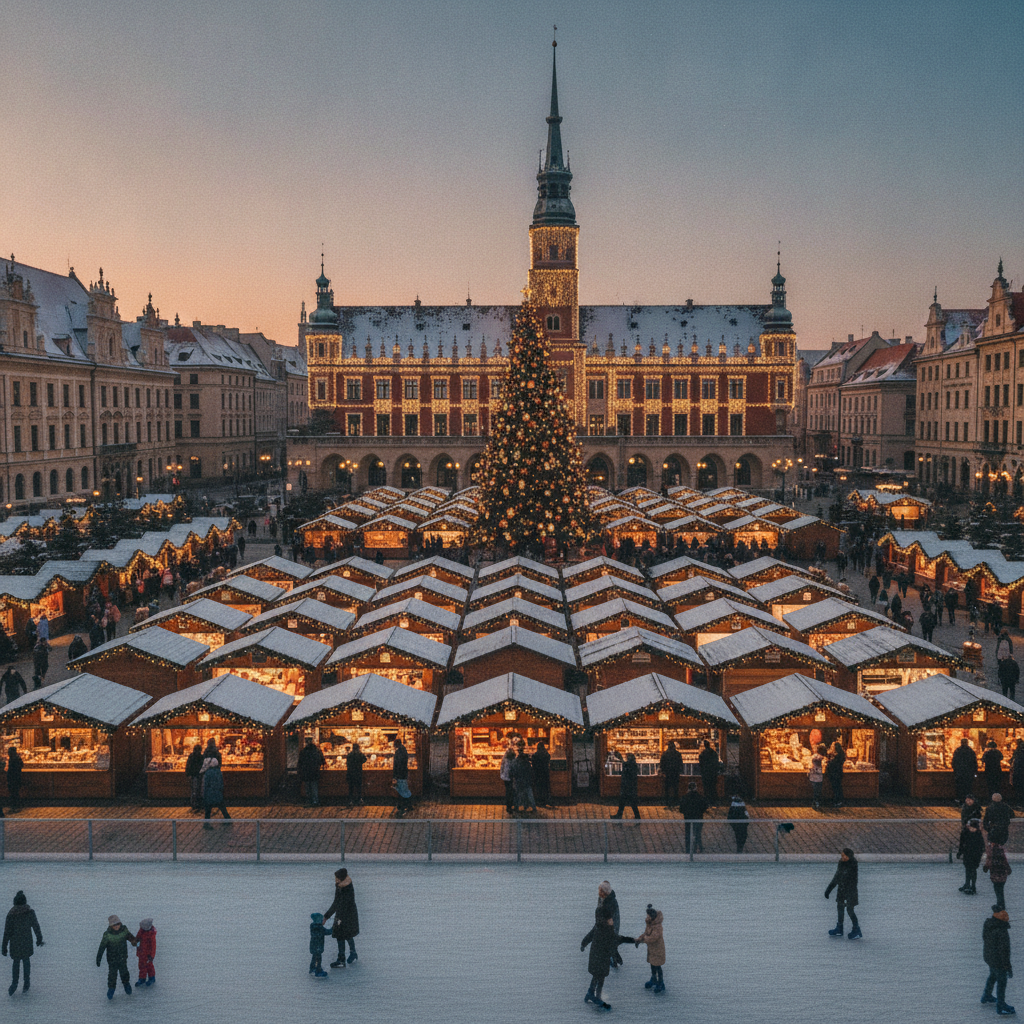
Wrocław seasonal highlights: Summer (June-August, the Rynek outdoor terraces at full capacity, the evening concerts at the National Forum of Music, the Fountain Show at the Centennial Hall — the multimedia fountain display on the Pergola fountain, Tuesday and Thursday-Sunday evenings from May to October, free, the 30-minute water-and-light show the most family-friendly free event in the city), the Wrocław Good Beer Festival (August, the Rynek converted to a craft beer market, the 80+ Polish and international breweries represented, the largest craft beer event in Central Europe), and Winter (November-January, the Wrocław Christmas Market — consistently rated the best Christmas market in Poland and one of the top 5 in Central Europe, the market occupying the full Rynek from late November to 31 December, the 150 wooden stalls selling regional crafts, the mulled wine and the zapiekanka, the ice skating rink in front of the Town Hall, the nightly light and sound show projected onto the Town Hall facade, the December evenings in Wrocław the most magical urban winter experience in Poland outside the Kraków salt mine Christmas concert).
Walk this route with audio
Stories play automatically as you reach each stop — no tapping needed.
More in wroclaw
Wrocław Food — Silesian Pierogi, the Market Hall, Craft Beer & Local Restaurants
Wrocław Cathedral Island — Gothic Towers, Gas Lamps & the Odra Islands
Wrocław University, Museums & the National Forum of Music — Cultural Capital Legacy
Wrocław Practical Guide — Seasons, Transport, Christmas Market & Day Trips to the Sudeten