Winnipeg: The Ukrainian Olympic Hockey Champions Who Were Not Allowed to Join the WASP Hockey Establishment, the Most Endangered Ecosystem in North America and the First Provincial Human Rights Code in Canada
Read the story of the Winnipeg Falcons 1919 Olympic hockey gold won by North End Ukrainian-Canadian players who were excluded from the Anglo-Canadian hockey establishment and formed their own team before representing Canada internationally, visit the most significant collection of Ukrainian cultural artifacts outside Ukraine in the Oseredok and understand that Manitoba has maintained Ukrainian language and tradition for 130 years because Clifford Sifton recruited settlers specifically for their agricultural resilience, drive south to Steinbach for Mennonite rollkuchen at a heritage village museum whose 40 acres reconstruct the communities that arrived from Russia in 1874, understand that Manitoba passed the first provincial human rights code in Canada in 1970 and also interned thousands of Ukrainian-Canadians as enemy aliens during World War I, camp for four days at the Winnipeg Folk Festival on a prairie hillside that 40,000 people treat as their annual community reunion, and find one of the last fragments of tallgrass prairie ecosystem at the Living Prairie Museum because less than 1 percent of the original extent that stretched to the horizon in every direction now remains.
- 1
Winnipeg Ukrainian Heritage
The Ukrainian community in Manitoba, the largest outside Ukraine and Russia in the world at the time of the major immigration wave from 1891 to 1914, settled the parkland region of Manitoba and Saskatchewan in block settlements that preserved Ukrainian language, Orthodox and Greek Catholic religious traditions, embroidery, pysanka egg decoration, music, and cuisine into the 21st century in a concentration unusual for immigrant communities that typically assimilate more rapidly. The Ukrainian Cultural and Educational Centre in Winnipeg, the Oseredok, holds the most significant collection of Ukrainian cultural artifacts outside Ukraine, with embroidered textiles, religious icons, decorative objects, and documentary history of the Ukrainian prairie diaspora. The Ukrainian Labour Temple on Pritchard Avenue in the North End, a National Historic Site built in 1919, is the center of the Ukrainian working-class progressive political tradition in Canada that produced leaders including the Ukrainian Canadian Congress organizers who helped shape Canadian multiculturalism policy. The Ukrainian pioneer settlement of the parkland was facilitated by Clifford Sifton, the Interior Minister under Laurier who specifically recruited Ukrainian settlers as ideal agricultural workers for the prairie climate, describing them as stalwart peasants in sheepskin coats who could be relied upon to break the land. The resulting Ukrainian diaspora in Manitoba has maintained cultural vitality for over 130 years.
- 2
Winnipeg Human Rights and Civil Liberties History
Winnipeg has a more complex and contested civil liberties history than its current progressive reputation would suggest, with significant episodes of government repression of minority communities alongside genuine progressive achievements. The internment of Ukrainian Canadians during World War I, when thousands of Ukrainian immigrants from the former Austro-Hungarian Empire were designated enemy aliens and interned in camps including one at Banff National Park, was the largest mass internment in Canadian history and is recognized as a significant human rights violation. The Japanese Canadian internment of World War II affected Manitoba communities as families displaced from British Columbia were sent to sugar beet farms in southern Manitoba. The Canadian Human Rights Museum has addressed these internments as part of its mandate. The Manitoba Human Rights Code, enacted in 1970, was the first comprehensive human rights code in Canada and served as the model for subsequent provincial and federal legislation. The settlement of South Asian, Caribbean, and African-Canadian communities in Winnipeg has encountered discrimination in housing, employment, and policing that has generated ongoing advocacy. The Winnipeg Police Service relationship with the Indigenous community has been a persistent source of conflict and reform effort, with the death of Brian Sinclair in the Health Sciences Centre waiting room in 2008 after 34 hours without medical attention highlighting the systemic failures affecting Indigenous people in the healthcare system.
- 3
Winnipeg Mennonite Heritage
The Mennonite communities of southern Manitoba, concentrated in the towns of Steinbach, Winkler, Morden, and surrounding agricultural areas 50 to 100 kilometres south of Winnipeg, represent one of the largest and most culturally intact Mennonite settlements in North America, descended from Russian Mennonites who emigrated to Manitoba in two major waves in 1874 and 1923 under arrangements with the Canadian government that guaranteed exemption from military service and the right to operate German-language schools. The Mennonite Heritage Village in Steinbach, a 40-acre outdoor museum with over 30 reconstructed buildings including windmills, a blacksmith shop, and a Mennonite church, is one of the most significant ethnic heritage museums in Canada. The Mennonite culture of southern Manitoba has produced a distinctive cuisine including Platz (fruit crumble), Rollkuchen (fried dough), Borscht (beet and cabbage soup), and Zwieback (double-decker rolls), available in restaurants and bakeries in Steinbach and other Mennonite towns. The Hutterite colony communities of Manitoba, a more communal Anabaptist group that operates collective farms, are distinct from the Mennonite settlements but share the pacifist religious heritage. The Mennonite artistic tradition in Manitoba has produced significant novelists including Miriam Toews, whose novel A Complicated Kindness won the Governor General Award in 2004.
- 4
Winnipeg Goldeyes and Sports History
The Winnipeg Goldeyes, an independent professional baseball team founded in 1994 and operating in the American Association of Professional Baseball, plays at the 7,481-seat Shaw Park on the banks of the Red River adjacent to The Forks, one of the most attractive small ballpark settings in North American baseball. The Goldeyes represent the spirit of independent league baseball, operating successfully outside the MLB minor league system. The Winnipeg Blue Bombers CFL team, founded in 1930 and playing at IG Field, won the Grey Cup in 2019 and 2021, the first back-to-back championships in CFL history since the 1950s, making the Blue Bombers the dominant CFL team of the early 2020s. Winnipeg has a deep hockey history beyond the Jets, with the Winnipeg Falcons winning the gold medal at the first Olympic hockey tournament in 1920 at the Antwerp Games, making them the first Olympic ice hockey champions in history. The 1919 Antwerp Falcons were working-class Ukrainian-Canadian players from the North End who had not been allowed to join the segregated WASP hockey establishment and formed their own team, then represented Canada internationally. The Manitoba Museum and its Planetarium, on Main Street north of downtown, houses the most complete record of Manitoba natural and human history.
- 5
Winnipeg Prairie Sky and Aurora Borealis
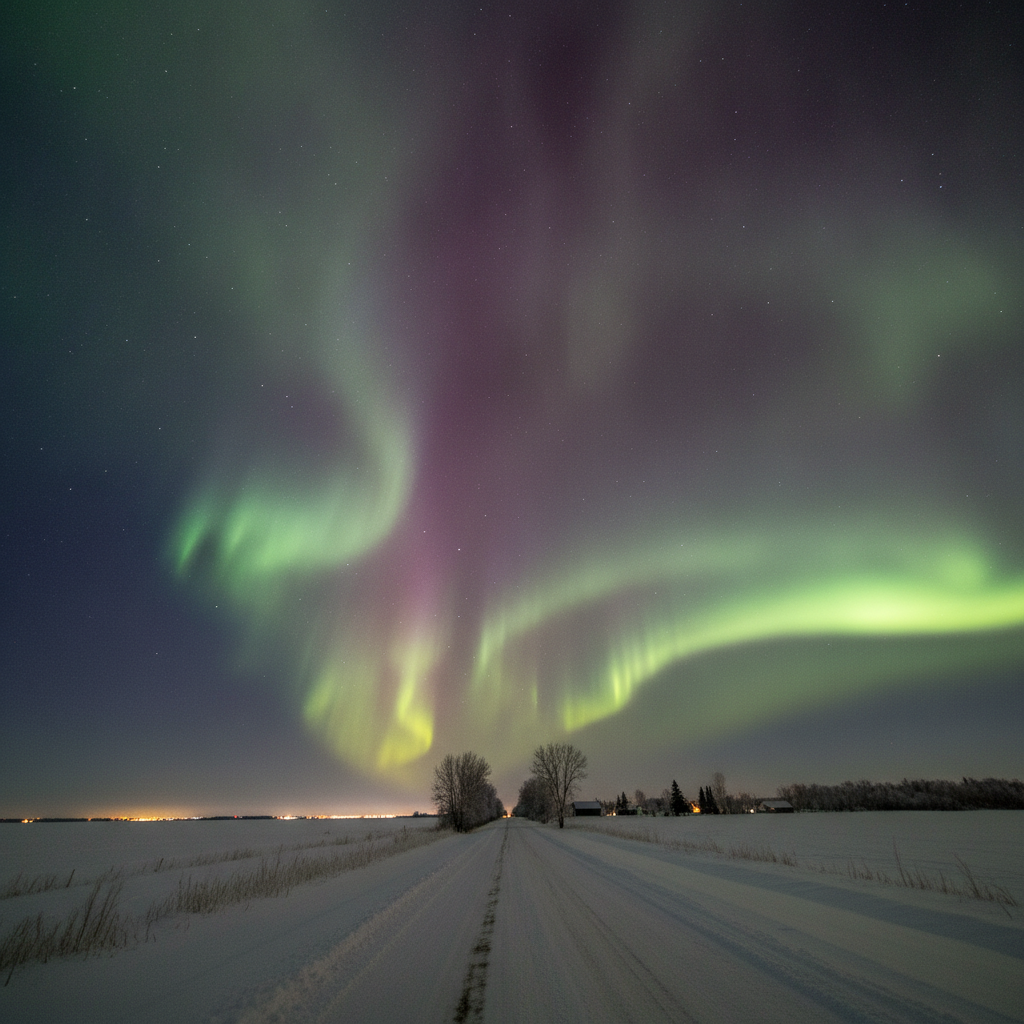
Winnipeg at latitude 49.9 degrees north is one of the southernmost cities in Canada where the aurora borealis is reliably visible, with the flat prairie landscape providing unobstructed 360-degree horizon views that make aurora watching more dramatic than in forested or mountainous settings. The best aurora viewing occurs during the equinoxes in March and September when geomagnetic activity peaks, and on winter nights when solar activity is high. The International Institute for Sustainable Development, headquartered in Winnipeg, has been a leading research organization on climate adaptation and prairie ecology. The tallgrass prairie ecosystem, one of the most endangered ecosystems in North America with less than 1 percent of its original extent remaining, is preserved in fragments at the Living Prairie Museum in northwest Winnipeg and at the Tall Grass Prairie Preserve south of the city. The Manitoba Escarpment, a ridge running north-south through western Manitoba formed by differential erosion of Cretaceous sedimentary rock, provides the only significant topographic relief in the otherwise flat province. Riding Mountain National Park 320 kilometres northwest of Winnipeg preserves a plateau of boreal forest and mixed grassland habitat with elk, wolves, and black bears visible on hiking trails. The Hecla-Grindstone Provincial Park on the Lake Winnipeg shore provides accessible prairie and lake environment recreation.
- 6
Winnipeg Practical Travel and Getting Around
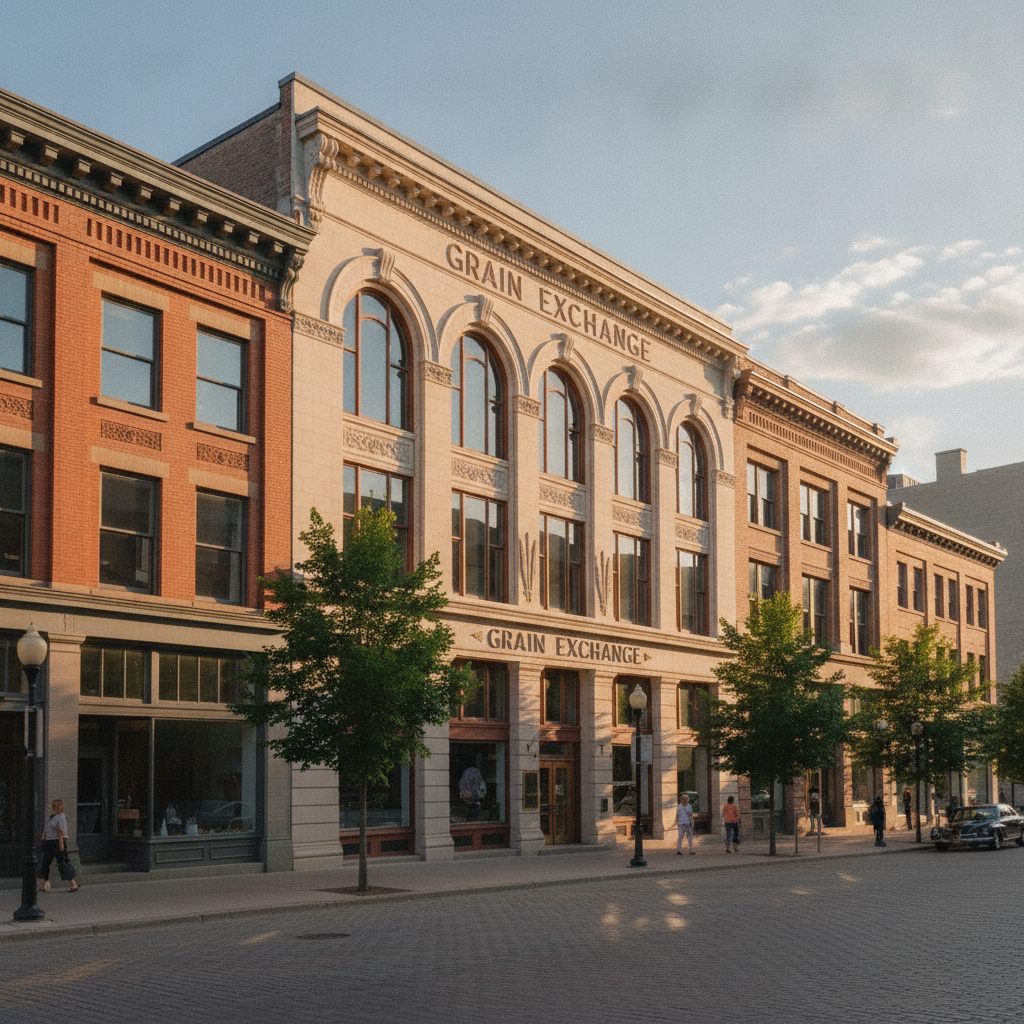
Winnipeg Richardson International Airport, 10 kilometres south of downtown, connects to major Canadian cities and several US destinations with taxi and city bus connections to the downtown. The city is best explored by car or bicycle in summer, with cycling infrastructure improving through the inner city. The transit system, Winnipeg Transit, operates bus routes throughout the metropolitan area with good downtown frequency but limited suburban coverage. The best travel times are June through August for outdoor activities, river festivals, and the Folk Festival held at Birds Hill Park northeast of the city in July, which is one of the best outdoor music festivals in Canada. The winter visit requires warm clothing rated to minus 40 and an appreciation for the stark prairie winter that Winnipeg residents treat as a fact of life rather than a hardship. The Folk Festival campground, where 40,000 attendees camp for four days on a prairie hillside, is one of the most distinctive festival accommodation experiences in Canada. The Winnipeg Fringe Festival in July is the most accessible and affordable arts festival in the city. Hotel accommodation is moderately priced by Canadian capital city standards. The Exchange District is best explored on foot and hosts ghost walks, architecture tours, and summer markets. Saint Boniface is a 10-minute walk across the Esplanade Riel pedestrian bridge from The Forks.
Walk this route with audio
Stories play automatically as you reach each stop — no tapping needed.
More in Winnipeg
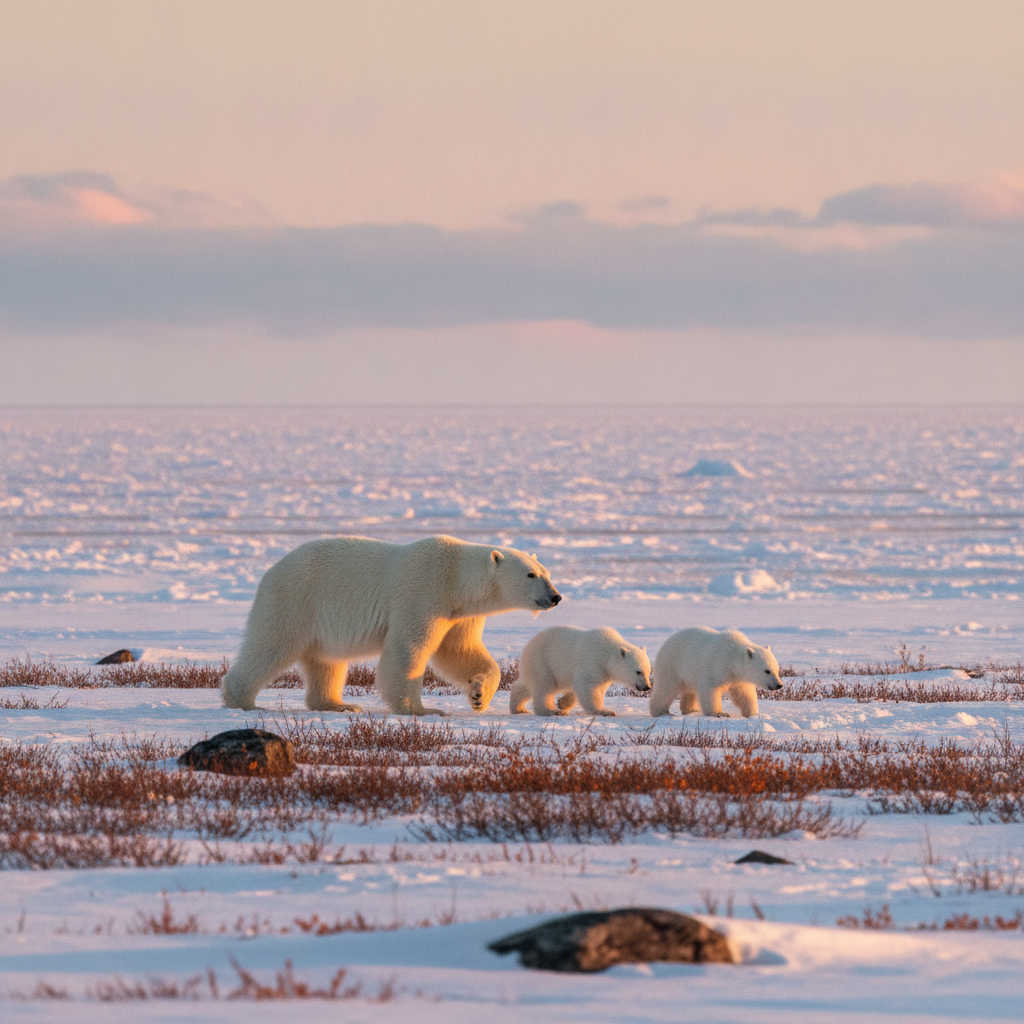
Winnipeg: The Masonic Temple Hiding in the Legislature Dome, 900 Polar Bears Waiting for a Bay That Is Freezing Later Every Year and the City Where Neil Young Learned to Play Guitar
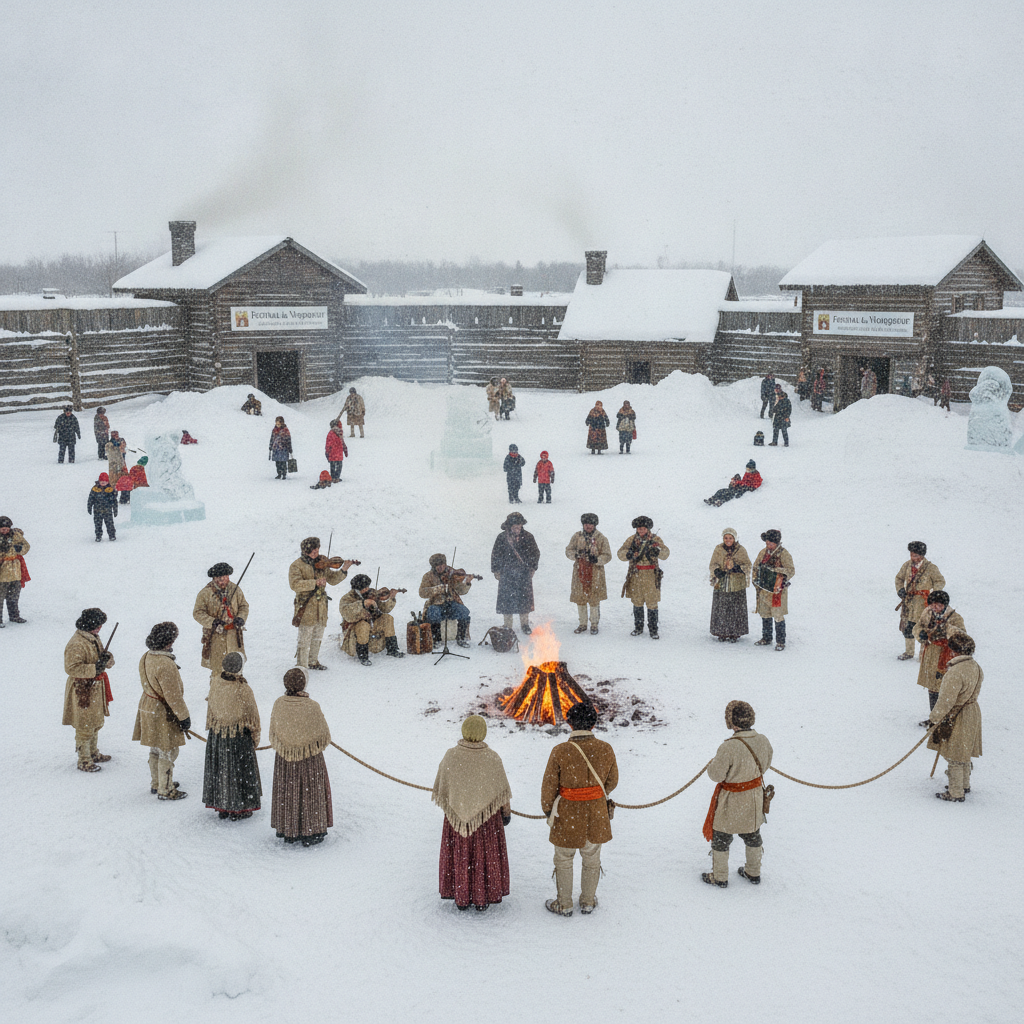
Winnipeg: The Second Largest Bus Manufacturer in North America Building Electric Buses, the World Oldest Multicultural Festival With 40 Pavilions and the Finest Freshwater Beach in Canada 90 Minutes Away
Winnipeg: The Strike That Was Called a Bolshevist Revolution and Created the NDP, the Ballet Company That Is Older Than Many Canadian Provinces and the Hockey Team That Left and Came Back
Winnipeg: The Geographic Centre of North America, the Museum Built on the Site Where Two Rivers Have Met Humans for 6000 Years and the City That Is Colder Than Moscow in January
Winnipeg: The Ship That Founded the Hudson Bay Company in a Museum, the 1870 Land Grants That Were Stolen by Speculators and the Prairie Sky That Displays Lightning Like a Natural Theatre