Winnipeg: The Masonic Temple Hiding in the Legislature Dome, 900 Polar Bears Waiting for a Bay That Is Freezing Later Every Year and the City Where Neil Young Learned to Play Guitar
Hire a local expert to decode the Legislative Building as a Masonic temple where the architect embedded Hermetic symbols and Freemason proportions into the most lavishly decorated public building in Canada while everyone else was just admiring the Golden Boy, understand the Red River Floodway as the 63 million dollar ditch dug around the city in the 1960s that has since prevented billions in flood damage by redirecting the river that flooded 28,000 people in 1997, eat perogies at a Ukrainian church hall and Filipino lechon at a North End restaurant and Jewish smoked meat at a deli that has been making it for generations in the most genuinely diverse food city in western Canada, take a 36-hour VIA Rail train north through boreal forest and tundra to Churchill to see 900 polar bears waiting on shore for the Hudson Bay ice that is forming weeks later every decade, find Guy Maddins My Winnipeg to watch the hallucinatory film that made the world notice what Winnipeg filmmakers were doing in the cold, and understand that the city with the largest urban Indigenous population in Canada also has the most acute concentration of the MMIWG crisis that the 2019 National Inquiry called a Canadian genocide.
- 1
Winnipeg Legislature and Golden Boy
The Manitoba Legislative Building, completed in 1920 in a neoclassical style with a 77-metre dome surmounted by the Golden Boy, a 5.25-metre bronze figure of Hermes covered in gold leaf holding a sheaf of wheat and a torch, is one of the most lavishly decorated public buildings in Canada, with an interior of Tyndall limestone carved with fossils of sea creatures from the Ordovician period, Ionic columns, bronze fixtures, and a program of symbolic decorative elements so complex that a local architect Frank Albo spent 15 years decoding the building as a Masonic temple encoded with the symbols and proportions of Freemasonry in a 2009 book. The Golden Boy on the dome has been the symbol of Manitoba since the building opened and is reproduced on the provincial coat of arms, currency, and official seals. The building sits in a formal park called the Legislative Grounds that serve as the central public ceremonial space of Winnipeg. The Eternal Flame on the Legislative Grounds was lit in 1967 for the centennial of Confederation. The Manitoba legislature has been the seat of several politically significant governments including that of Ed Schreyer, the first NDP government in Manitoba history elected in 1969, which established the Manitoba public automobile insurance corporation and expanded social services.
- 2
Winnipeg Prairie Landscape and Red River
The Red River, running through Winnipeg south to north before turning east to Lake Winnipeg, is one of the great rivers of the North American interior, flowing north from its sources in North Dakota and Minnesota through the flat Red River Valley, the former bed of glacial Lake Agassiz, the largest glacial lake in North American history whose remnant body of water is Lake Winnipeg north of the city. The flatness of the Red River Valley, creating a landscape of absolute horizontal prairie visible to the horizon in every direction, is the defining physical characteristic of Winnipeg that distinguishes it from all other major Canadian cities. The Red River has flooded the Winnipeg area catastrophically in 1950, causing the largest peacetime evacuation in Canadian history to that point, and in 1997, requiring the evacuation of 28,000 people in a flood described as the Flood of the Century. The Red River Floodway, a 47-kilometre diversion channel dug around the east side of Winnipeg between 1962 and 1968 at a cost of 63 million dollars, has been activated multiple times since its completion and prevented billions of dollars of damage, making it one of the most cost-effective infrastructure investments in Canadian history. Lake Winnipeg, 68 kilometres north of the city, is the 10th largest freshwater lake in the world and a major recreational destination.
- 3
Winnipeg Food Scene and Diversity
Winnipeg has developed a restaurant scene that reflects its extraordinary ethnic diversity more authentically than any comparably sized Canadian city, driven by waves of immigration that have layered Ukrainian, Polish, Jewish, Greek, South Asian, Filipino, Vietnamese, Chinese, and more recently African communities into a metropolitan area of 800,000. The Filipino cuisine available in Winnipeg, representing one of the largest per-capita Filipino communities in Canada, includes lechon, sinigang, adobo, and halo-halo at restaurants in the North End and across the city that serve the Filipino community rather than a tourist audience. The Ukrainian food tradition in Winnipeg, deeply embedded through generations of prairie Ukrainian settlement, produces the finest perogies in Canada according to many advocates, with community halls, churches, and restaurants serving the traditional potato and cheese or sauerkraut and onion dumplings. The Winnipeg Jewish community, historically the third largest in Canada and centered in the River Heights neighborhood, has maintained delicatessen and traditional food traditions including smoked meat, challah, and traditional Eastern European Jewish cuisine. The Market Deli on Portage Avenue and several other delis serve this tradition. The North End market tradition centered on Selkirk Avenue includes butchers, bakeries, and specialty food shops serving multiple ethnic communities in close proximity.
- 4
Churchill Manitoba and Polar Bears
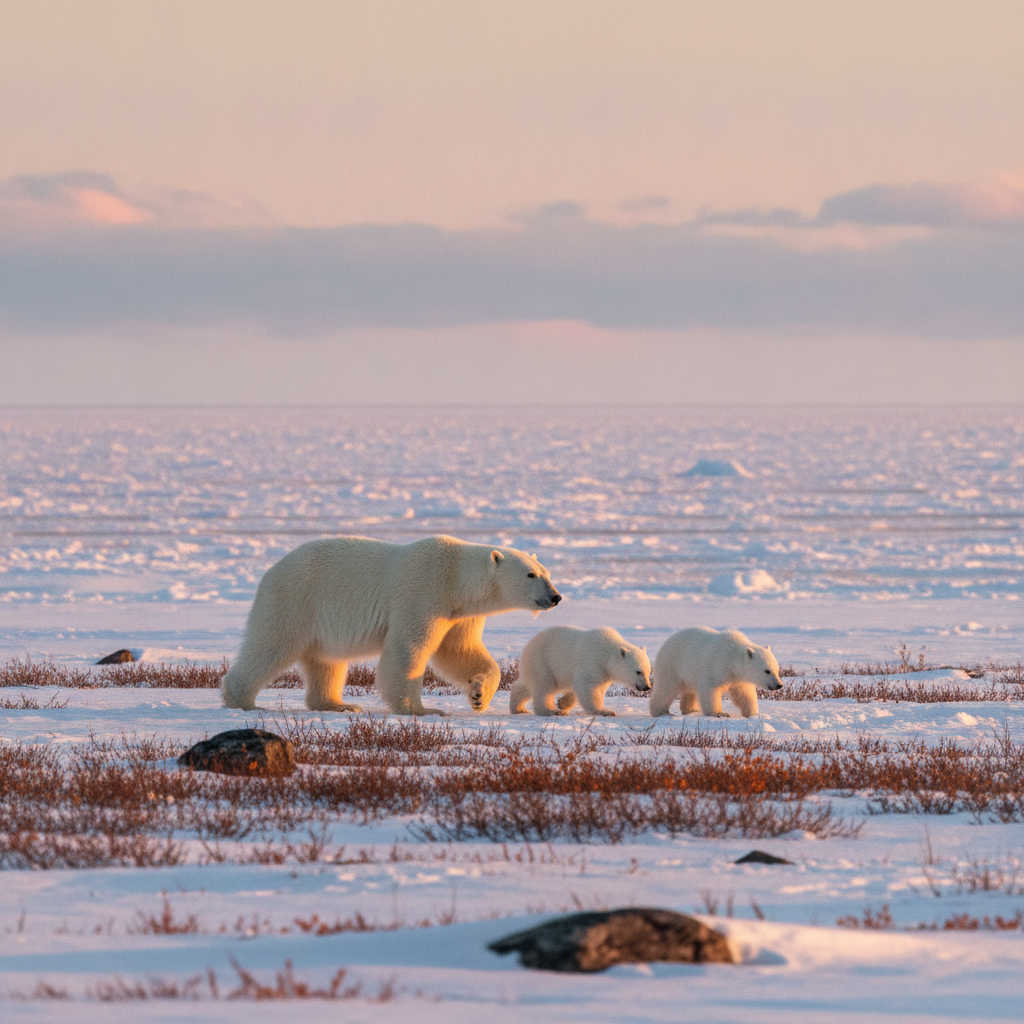
Churchill, a remote town of approximately 900 people on the shore of Hudson Bay 1,000 kilometres north of Winnipeg, is the polar bear capital of the world, where several hundred polar bears from the Western Hudson Bay population gather each October and November on the tundra south of town waiting for Hudson Bay to freeze so they can resume hunting seals on the ice. The bears are visible from specially built tundra vehicles on guided excursions that have made Churchill the primary polar bear tourism destination in the world, drawing visitors from across the world who pay substantial sums for guided bear viewing. The Churchill polar bear population, numbering approximately 900 animals, is one of the most studied populations in the world and has shown declining body condition as Hudson Bay freeze-up dates have moved later in the autumn due to climate warming, with bears spending longer periods on shore without food before ice formation allows seal hunting to resume. Churchill is accessible from Winnipeg by VIA Rail train, a 36-hour journey across the boreal forest and tundra, or by air. In summer, Churchill is a major destination for beluga whale viewing in the Churchill River estuary, where thousands of belugas gather each July and August, and for subarctic birding with over 270 species recorded.
- 5
Winnipeg Film Industry and Neil Young
Winnipeg has produced an extraordinary concentration of major Canadian cultural figures relative to its size, including musicians Neil Young, who grew up in Winnipeg and attended Kelvin High School before leaving for Toronto at 18, the Guess Who whose hit American Woman was written in Winnipeg in 1969, and Bachman-Turner Overdrive. In film, Guy Maddin, a Winnipeg filmmaker known for his expressionist black-and-white films including My Winnipeg in 2007, a hallucinatory documentary on the city that is one of the most celebrated Canadian films of the 21st century, has made Winnipeg filmmaking internationally known. The Winnipeg Film Group, founded in 1974, is one of the longest-running alternative film cooperatives in Canada and has supported generations of independent filmmakers. The Winnipeg art community in the Exchange District has been nationally recognized, and the Plug In Institute of Contemporary Art is among the most significant contemporary art institutions in western Canada. The cultural productivity of Winnipeg is often attributed to the isolation and cold that forces creative people indoors with each other through the long winter, and to the low cost of living that allows artists to survive on modest incomes. Neil Young has spoken about Winnipeg formative role in his artistic development, and the city honors his connection with a high school display and civic recognition.
- 6
Winnipeg Indigenous Communities and MMIWG
Winnipeg has the largest urban Indigenous population of any Canadian city, with approximately 100,000 Indigenous residents representing about 12 percent of the metropolitan population, including First Nations members from northern Manitoba reserves who have migrated to the city, urban Metis, and Inuit. The concentration of Indigenous poverty, housing insecurity, child welfare involvement, and violence in Winnipeg particularly in the North End and inner-city neighborhoods reflects the systemic legacy of residential schools, displacement from traditional territories, and the intergenerational effects of colonization on families and communities. The Missing and Murdered Indigenous Women and Girls crisis has been acutely felt in Winnipeg, which has had a disproportionate number of MMIWG cases and which saw the revelation in 2022 of human remains of murdered women in the Prairie Green landfill north of the city, leading to a prolonged political dispute over whether the landfill should be excavated. The National Inquiry into Missing and Murdered Indigenous Women and Girls, completed in 2019, called the systemic violence against Indigenous women and girls a Canadian genocide. The Bear Clan Patrol, a community organization founded in Winnipeg in 1992 and revived in 2015, conducts nightly street patrols in the North End to find vulnerable people and connect them to services, and has become a model for Indigenous community safety organizations across Canada.
Walk this route with audio
Stories play automatically as you reach each stop — no tapping needed.
More in Winnipeg
Winnipeg: The Second Largest Bus Manufacturer in North America Building Electric Buses, the World Oldest Multicultural Festival With 40 Pavilions and the Finest Freshwater Beach in Canada 90 Minutes Away
Winnipeg: The Strike That Was Called a Bolshevist Revolution and Created the NDP, the Ballet Company That Is Older Than Many Canadian Provinces and the Hockey Team That Left and Came Back
Winnipeg: The Geographic Centre of North America, the Museum Built on the Site Where Two Rivers Have Met Humans for 6000 Years and the City That Is Colder Than Moscow in January
Winnipeg: The Ship That Founded the Hudson Bay Company in a Museum, the 1870 Land Grants That Were Stolen by Speculators and the Prairie Sky That Displays Lightning Like a Natural Theatre
Winnipeg: The Ukrainian Olympic Hockey Champions Who Were Not Allowed to Join the WASP Hockey Establishment, the Most Endangered Ecosystem in North America and the First Provincial Human Rights Code in Canada