Winnipeg: The Geographic Centre of North America, the Museum Built on the Site Where Two Rivers Have Met Humans for 6000 Years and the City That Is Colder Than Moscow in January
Stand at The Forks where the Red and Assiniboine rivers have been a meeting place for Indigenous peoples for over 6,000 years and is now the most visited attraction in Manitoba with a market, skating rink, and the museum dedicated to human rights built into bedrock beside it, walk the Exchange District where 150 buildings from 1880 to 1930 represent the most intact Victorian and Edwardian commercial architecture in North America because Winnipeg went broke before it could demolish them, understand why a city at the geographic centre of a continent that averages minus 16 in January became the third largest city in Canada in 1910 before the prairie wheat economy collapsed its growth, eat at a Filipino restaurant in the North End because Winnipeg has the largest Filipino population per capita of any Canadian city, ride a free shuttle bus through an underground network of downtown tunnels that connect hotels and offices because at minus 40 nobody walks outside, and cross the river to Saint Boniface to find the largest French-speaking community west of Quebec.
- 1
The Forks National Historic Site
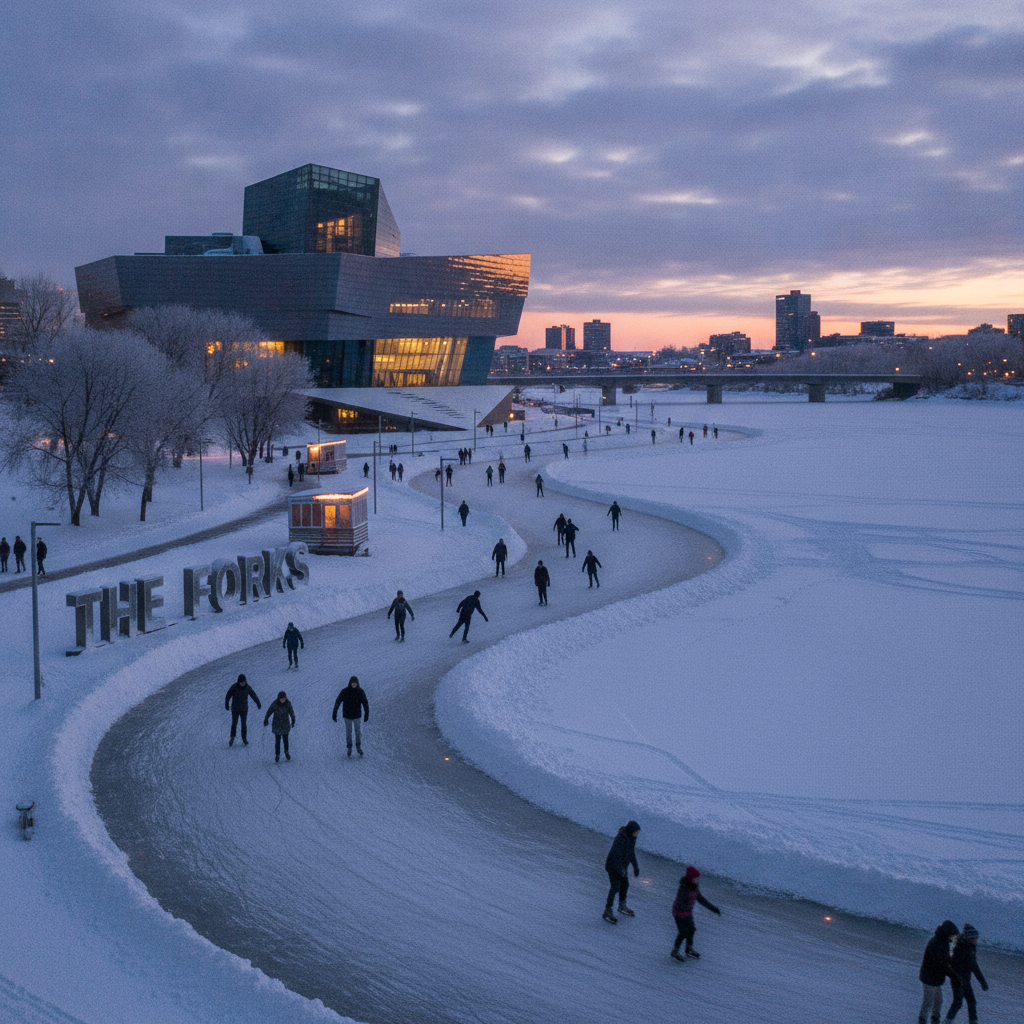
The Forks, where the Red River and Assiniboine River meet in the heart of Winnipeg, has been a gathering and trading place for Indigenous peoples for over 6,000 years, used by successive cultures including the Laurel, Blackduck, Selkirk, and Plains peoples before European contact, and recognized as a national historic site for the continuity of this human use. The current site, covering 56 acres, was developed from a railway maintenance yard into a public market, cultural center, and event space beginning in the 1980s, with the original stone railway workshops converted into shops and restaurants. The Forks Market Hall, The Forks historic railyards, and the outdoor skating trail along the Red River in winter make the site the most visited attraction in Manitoba with over 4 million visits annually. The Red River Mutual Trail along the Assiniboine River, a natural ice skating trail maintained in winter by the city and the Forks organization, is the longest natural ice skating trail in the world, extending up to 10 kilometres through the city along the frozen river. The Canadian Museum for Human Rights, opened in 2014 in a building designed by Antoine Predock emerging from the bedrock beside the Forks, is the only museum in the world dedicated solely to the theme of human rights and is a major national cultural institution.
- 2
Exchange District National Historic Site
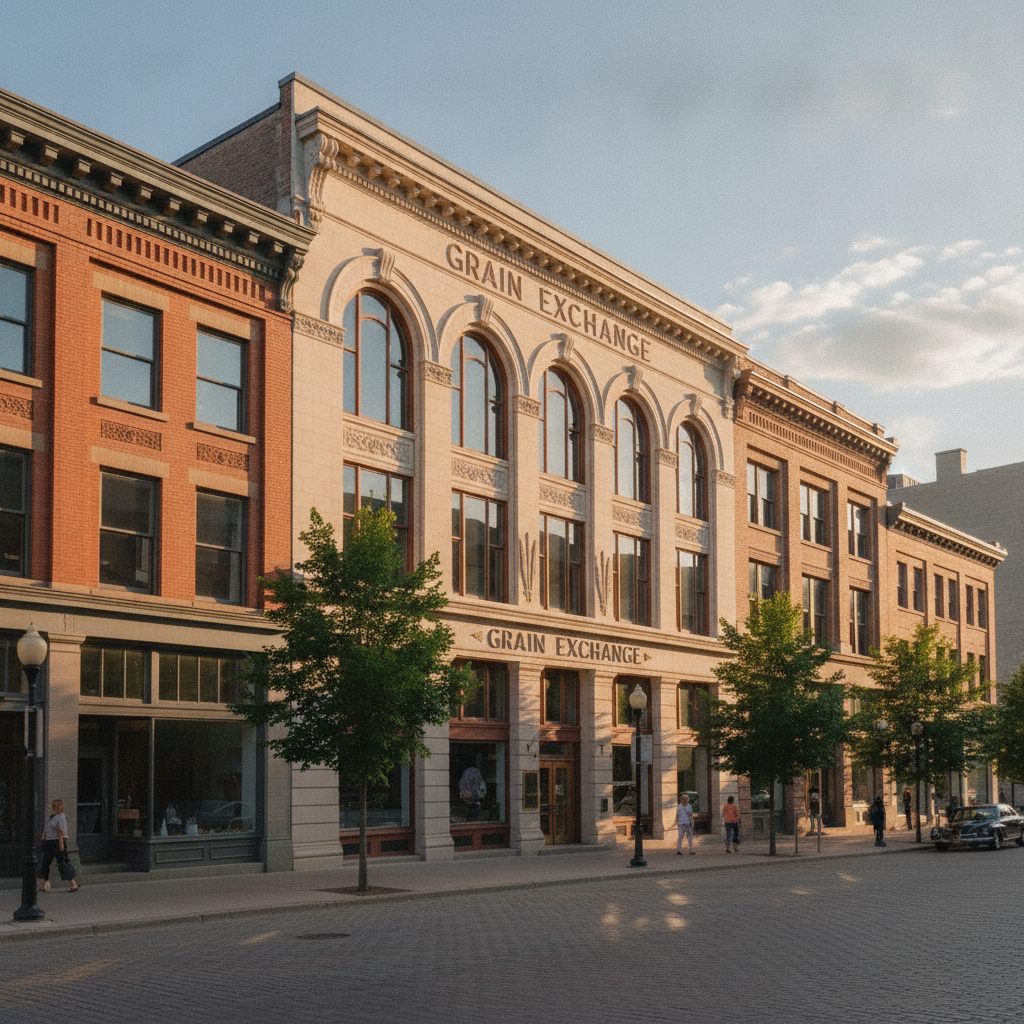
The Exchange District in Winnipeg, a 20-block area immediately north of downtown designated a National Historic Site in 1997, contains the largest and most intact collection of late Victorian and Edwardian commercial architecture in North America, with over 150 warehouses, offices, and department stores from the period 1880 to 1930 surviving because Winnipeg economic growth stalled before the demolition wave of urban renewal reached the district. The architecture represents the confidence of a city that was briefly the third largest in Canada and the fastest growing in North America, the gateway to the prairie West where all goods and people heading to Manitoba, Saskatchewan, and Alberta passed through Winnipeg. The Grain Exchange Building, the Confederation Life Building, the Pantages Theatre, and dozens of terra cotta and brick warehouses of the Ashdown Hardware Company and other wholesalers represent the wholesale trade economy of early Winnipeg. The district is now an arts, restaurant, and creative industry quarter, with galleries, filming locations, and restaurants in the heritage buildings. Cinematographers have used the Exchange District as a stand-in for early 20th century Chicago, New York, and European cities because the scale and architectural character of the streetscape is unique in Canada.
- 3
Canadian Museum for Human Rights
The Canadian Museum for Human Rights, opened in 2014 in a building designed by Antoine Predock of New Mexico on the site of The Forks, is the first national museum established outside the National Capital Region and the only museum in the world dedicated solely to the exploration, exhibition, and contemplation of human rights. The building, rising 100 metres above the Forks confluence and visible from across the city, uses 7,500 tonnes of steel and a glass cloud at its summit to create a form that expresses both darkness and light as metaphors for the human rights experience. The museum has galleries covering subjects including the Holocaust, apartheid, residential schools in Canada, the Truth and Reconciliation process, Indigenous rights, and global human rights achievements and failures. The museum has been controversial since opening due to disputes over the sequencing and framing of the residential schools galleries, with Indigenous critics and Jewish community members both raising concerns about how their respective histories were presented and prioritized. The museum has continuously refined its approach and methodology. The location in Winnipeg is significant because the city is situated at the geographic crossroads of the prairies where Indigenous, Metis, and settler histories have intersected with particular intensity, and the presence of the CMHR reflects the federal government recognition of Winnipeg central place in Canadian human rights history.
- 4
St Boniface French Manitoba
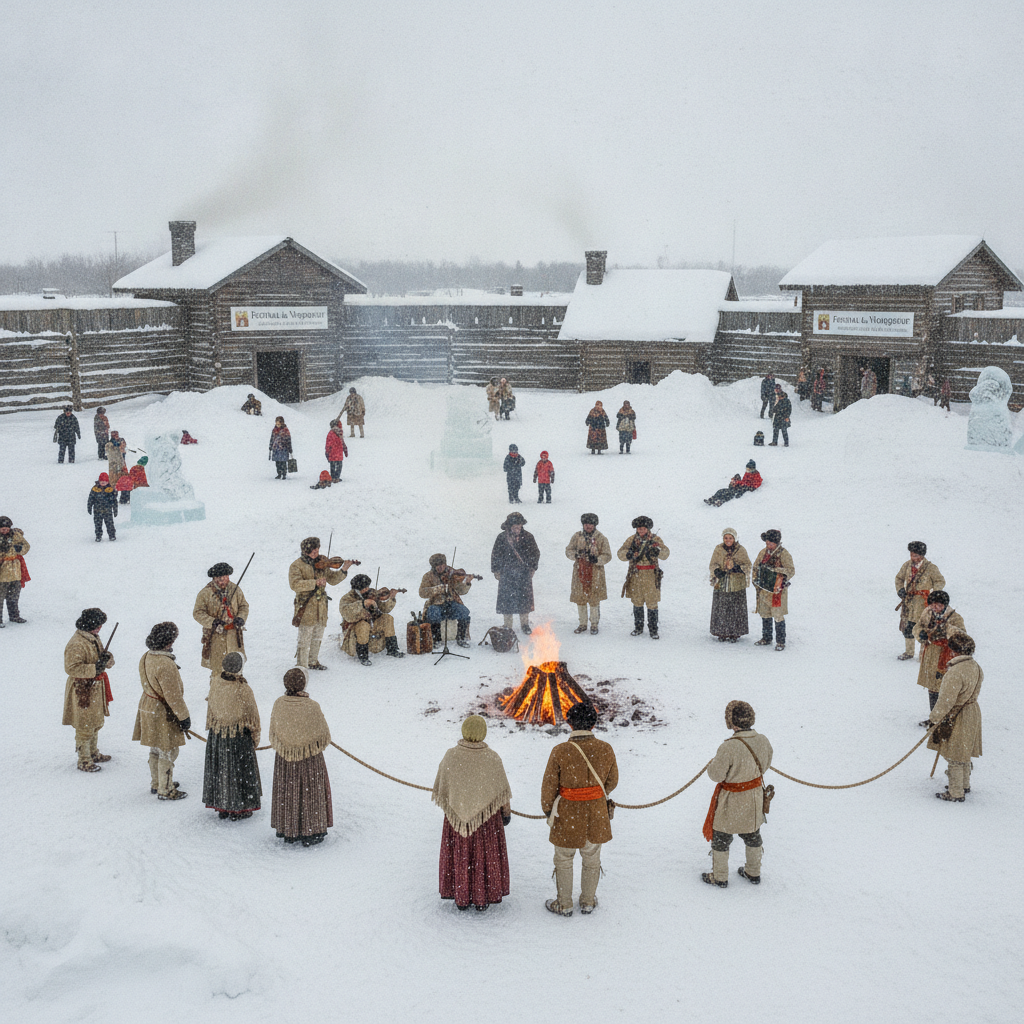
Saint Boniface, the French-speaking quarter of Winnipeg on the east bank of the Red River accessible by the dramatic tusk-shaped Esplanade Riel pedestrian bridge, is the largest French-speaking community west of Quebec with approximately 40,000 French speakers in the greater Saint Boniface area, making Winnipeg the most significant Francophone center in Manitoba since the founding of the Red River Colony by the Selkirk settlers in 1812. The Saint Boniface Basilica, whose ruins of the original 1908 stone facade stand beside the rebuilt cathedral following a 1968 fire, is the burial site of Louis Riel, the Metis leader who led the Red River Resistance of 1869 and the Northwest Resistance of 1885, was captured, tried, and hanged for treason in Regina in 1885, and has since been recognized as a Father of Confederation and a defender of Metis and French-language rights. The grave of Riel, marked by a simple stone in the basilica cemetery, is a pilgrimage site for Metis peoples. The Festival du Voyageur in Saint Boniface each February is the largest French Canadian winter festival in western Canada, celebrating the voyageur heritage with period costumes, traditional music, and outdoor winter activities centered on Fort Gibraltar, a reconstructed 1815 fur trade post.
- 5
Assiniboine Park and Zoo
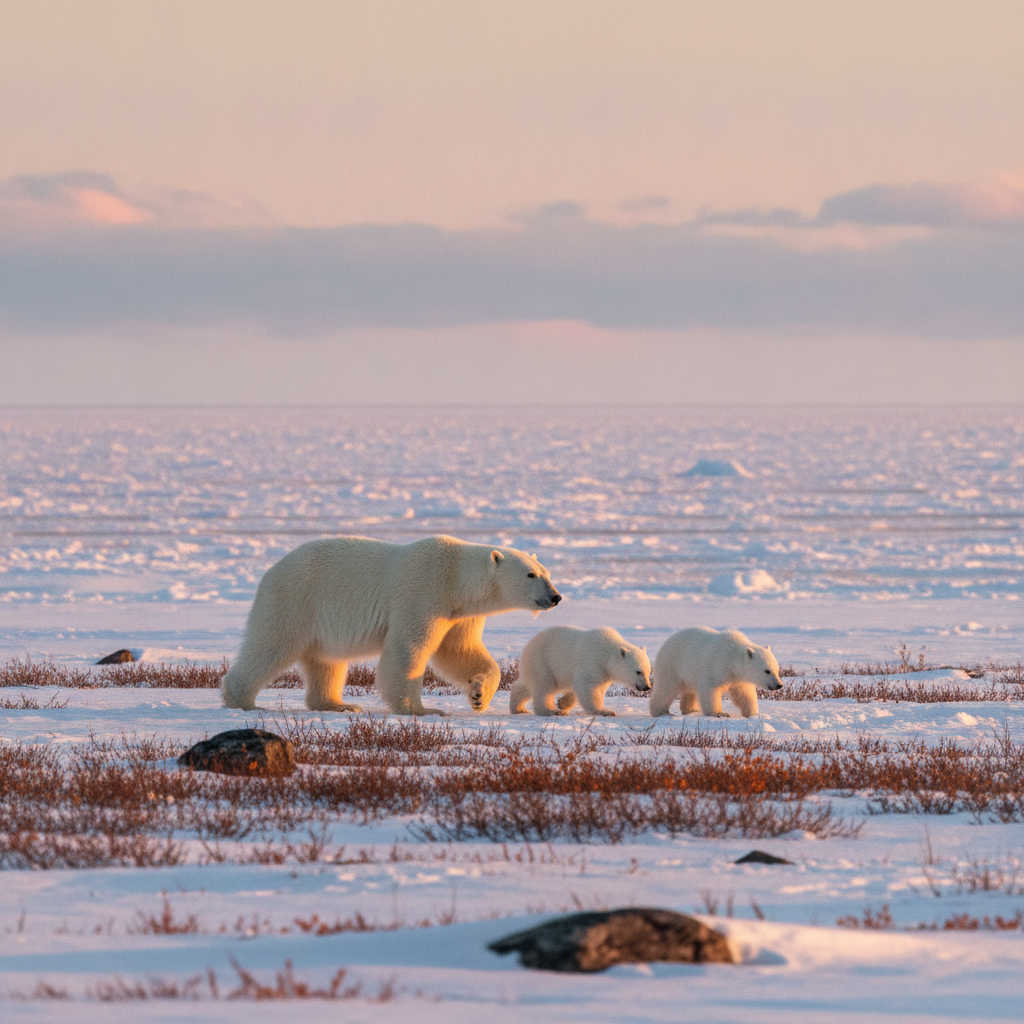
Assiniboine Park, a 1,100-acre public park on the south bank of the Assiniboine River 6 kilometres west of downtown established in 1909, is the largest urban park in the Prairie provinces and contains the Assiniboine Park Zoo, home to one of the largest polar bear displays in North America through the Journey to Churchill exhibit, which reproduces the habitat and behavior of the Churchill area where the Hudson Bay polar bear population gathers each fall before freeze-up. The park also holds the Assiniboine Park Conservatory, the Leo Mol Sculpture Garden with bronze sculptures of wildlife and figures by the Ukrainian-Canadian artist Leo Mol, and the Pavilion Gallery Museum. The English-style garden park, designed with meadows, woodland paths, and a duck pond, was modeled on the English landscape park tradition. The Duck Pond area of Assiniboine Park is the most used public space in the park and a nesting area for Canada geese, mallard ducks, and ring-billed gulls. The park skating trails in winter connect to a groomed pathway network through the Assiniboine Forest, a 280-hectare remnant urban forest immediately south of the park that is the largest urban forest in Canada and one of the last intact aspen parkland ecosystems within a Canadian city.
- 6
Winnipeg North End Diversity
The North End of Winnipeg, the neighborhoods north of the CPR main line tracks above downtown, was the primary reception area for successive waves of immigrants who arrived in Winnipeg from the 1880s to the 1960s: Ukrainian, Polish, German, Jewish, and Slavic immigrants in the first wave, followed by Indigenous peoples from northern Manitoba reserves who migrated to the city, followed by Filipino immigrants from the 1970s onward who have made Winnipeg one of the cities with the highest Filipino population per capita in Canada. The North End contains some of the most significant ethnic heritage institutions in western Canada, including the Ukrainian Labour Temple on Pritchard Avenue, a National Historic Site where Ukrainian and labor activists organized throughout the early 20th century and where the 1919 Winnipeg General Strike leadership met. The 1919 General Strike, a six-week work stoppage by 35,000 Winnipeg workers that shut down the city and was broken by the Royal North-West Mounted Police in a charge that killed two strikers on Bloody Saturday, June 21, 1919, is considered the most significant labour action in Canadian history and shaped the Canadian labour movement and social democratic politics for decades. The North End commercial strips of Selkirk Avenue and Main Street retain the multilingual character of their immigrant heritage.
Walk this route with audio
Stories play automatically as you reach each stop — no tapping needed.
More in Winnipeg
Winnipeg: The Masonic Temple Hiding in the Legislature Dome, 900 Polar Bears Waiting for a Bay That Is Freezing Later Every Year and the City Where Neil Young Learned to Play Guitar
Winnipeg: The Second Largest Bus Manufacturer in North America Building Electric Buses, the World Oldest Multicultural Festival With 40 Pavilions and the Finest Freshwater Beach in Canada 90 Minutes Away
Winnipeg: The Strike That Was Called a Bolshevist Revolution and Created the NDP, the Ballet Company That Is Older Than Many Canadian Provinces and the Hockey Team That Left and Came Back
Winnipeg: The Ship That Founded the Hudson Bay Company in a Museum, the 1870 Land Grants That Were Stolen by Speculators and the Prairie Sky That Displays Lightning Like a Natural Theatre
Winnipeg: The Ukrainian Olympic Hockey Champions Who Were Not Allowed to Join the WASP Hockey Establishment, the Most Endangered Ecosystem in North America and the First Provincial Human Rights Code in Canada