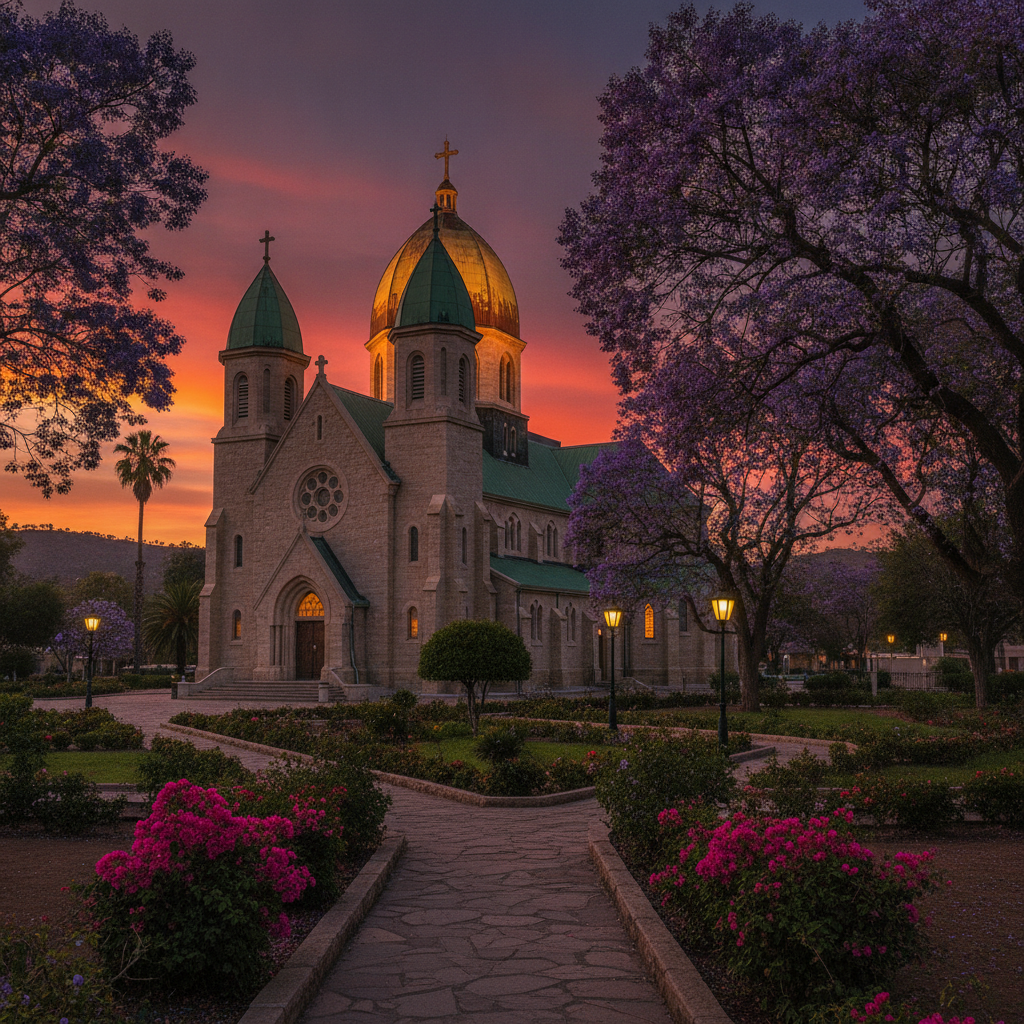
Windhoek: Okahandja Herero Memorial, Ovambo Culture, Namibian Art, Luderitz Penguins, and Independent Travel Guide
Namibia culture and practical: the Okahandja Herero Flag Day and military dress, the Ovambo people (half of Namibia population), John Muafangejo Namibian art, the Luderitz German heritage and African penguin colony, and the complete Namibia independent travel practical guide.
- 1
Okahandja - The Herero Memorial and Namibian History
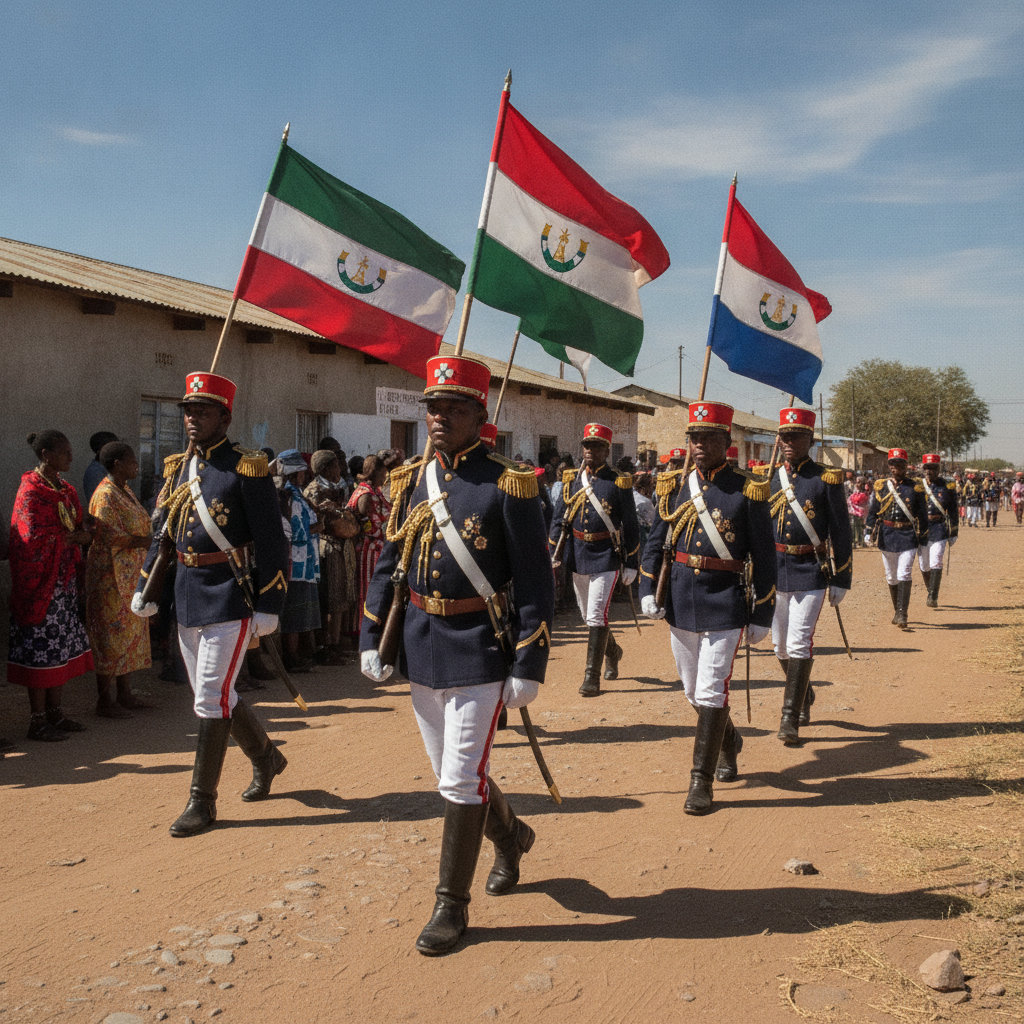
Okahandja: the small town approximately 70 km north of Windhoek on the B1 highway, the most historically significant small town in Namibia for the Herero people. The Okahandja graves: the burial sites of the Herero chiefs Maharero and Tjamuaha are in Okahandja. The Herero Flag Day (the Maharero Day, held annually on the weekend nearest to 26 August in Okahandja): the primary Herero cultural event in Namibia. Approximately 5,000-10,000 Herero men dressed in the Herero military uniform (based on the German Imperial Army uniform adopted by Herero soldiers who served with the German colonial forces before the genocide: the Herero adapted the German uniform as a cultural statement of resistance, wearing the uniform of their oppressors as a form of defiance). Herero women wear the traditional Victorian dress (adopted from the 19th-century missionary wives): the elaborate full-length dress with multiple petticoats and the distinctive horned headpiece (the otjikaiva, shaped like cattle horns as a symbol of the cattle-based Herero culture).
- 2
The Ovambo People - Half of Namibia Population and the Northern Culture
The Ovambo (Aawambo): the largest ethnic group in Namibia, comprising approximately 50% of the total population. The Ovambo live primarily in the Oshana, Oshikoto, Omusati, and Ohangwena Regions of northern Namibia (the Ovamboland). The Ovambo social organization: the matrilineal kinship system (descent and inheritance traced through the maternal line). The Ovambo traditional homestead (the kraal): a circular enclosure of palm poles with a central cattle enclosure. The Ovambo cuisine: the staple is oshifima (a stiff maize or pearl millet porridge) eaten with spinach, beans, or meat. The Oshakati market: the largest market in northern Namibia, one of the most lively and authentic market experiences in Namibia. Sam Nujoma (the first President of Namibia, a Kwanyama Ovambo from the Okahao area of Oshikoto Region): the most significant political figure in Namibian history. SWAPO support was strongest in Ovamboland during the independence struggle.
- 3
The Namibian Art Scene - The Artists of the Omba Studio
The Namibian contemporary art scene: significantly smaller than the South African or Kenyan art markets but with distinctive artists. The Omba Arts Trust (in Swakopmund): the organization that trains and supports artists from the Ovambo and other northern Namibian communities in woodcarving, fabric printing, and painting. The National Art Gallery of Namibia (in Windhoek, adjacent to the Robert Mugabe Avenue): the primary contemporary art museum in Namibia, with a collection of Namibian and southern African modern and contemporary art. John Muafangejo (1943-1987): the most significant Namibian artist; his linocut prints depicting Namibian landscapes, historical events, and biblical themes are internationally recognized and are among the most valuable works by any Namibian artist. The Penduka craft cooperative (near the Goreangab Dam north of Windhoek): the cooperative of women producing embroidery, fabric, and basketwork from the Windhoek township communities.
- 4
The Luderitz Penguins and the Southern Namibian Coast
Luderitz: the small port town in the southern Namib Desert, approximately 800 km south of Windhoek. Luderitz was the site of the first German colonial presence in South-West Africa (the German merchant Adolf Luderitz purchased the bay from the local Nama chief in 1883 in a famously deceptive negotiation). The Luderitz German colonial architecture: a cluster of German Jugendstil and Wilhelmine buildings including the Goerke Haus, the Felsenkirche (the church on the hill), and the diamond-era commercial buildings, now maintained as heritage buildings. The Luderitz Penguin Colony (the African penguin colony at Penguin Island, Halifax Island, and nearby areas): the African penguin (Spheniscus demersus) is endangered, with the population having declined approximately 60% since 2004. Boat tours from Luderitz harbour to the penguin and seal colonies. The Bogenfels rock arch (approximately 100 km north of Luderitz in the Sperrgebiet): a 55-meter-high natural stone arch, accessible only on guided tours.
- 5
Namibia Practical Guide for Independent Travelers
Namibia practical guide. Road network: Namibia has one of the best road networks in Africa (the B-roads are paved; the secondary C-roads and D-roads are gravel but generally well maintained and passable in a standard saloon car during the dry season). Driving on the left. Distances are enormous: Windhoek to Sossusvlei is 380 km (approximately 4.5 hours), Windhoek to Etosha is 440 km (approximately 5 hours), Windhoek to the Caprivi is 1,200 km (approximately 12 hours). Accommodation: Namibia has an excellent network of rest camps in national parks (Etosha rest camps: Okaukuejo, Halali, Namutoni; Sossusvlei rest camps: the Sossusvlei Lodge, Sossus Dune Lodge). Wild camping is permitted in many Namibian locations. Fuel: petrol and diesel are available in all major towns; carry at least 20 litres of extra fuel when traveling remote routes. Water: the tap water in Windhoek is excellent quality; rural areas require water purification. Health: no malaria risk in Windhoek or the south; malaria prophylaxis recommended for the Caprivi Strip and northern regions (especially during the wet season November-April).
- 6
Windhoek Six-Route Final Legacy - The Complete Namibia Reference
Windhoek six-route final complete. Route 1: German colonial Windhoek (Christuskirche, Alte Feste), Herero and Nama genocide, Etosha Big Five, Sossusvlei dunes and Deadvlei, practical overview. Route 2: Himba people of Kaokoveld, San Bushmen tracking, Skeleton Coast, Swakopmund German town, Fish River Canyon. Route 3: SWAPO independence struggle, cheetah CCF (world largest free-roaming cheetah population), NamibRand Dark Sky Reserve, Kolmanskop ghost town, game meat cuisine. Route 4: Walvis Bay flamingo lagoon, Sossusvlei geology, Twyfelfontein rock engravings UNESCO, Caprivi Strip, photography guide. Route 5 (this route): Okahandja Herero memorial and Flag Day, Ovambo people (50% of Namibia population), Namibian art scene (John Muafangejo linocuts), Luderitz German heritage and penguin colony, independent travel practical guide. Route 6 needed: the Namibia final legacy. Namibia statement: one of the most extraordinary countries on earth for the sheer variety of its landscapes (the Namib, the Kalahari, the Caprivi wetlands, the Skeleton Coast), its wildlife density, the astronomical darkness of its skies, the warmth of its peoples, and the haunted beauty of Kolmanskop and the Sperrgebiet. A country where the oldest desert meets the Atlantic Ocean, where the world largest seal colony lives beside the world most dramatic sand dunes, and where the most recently independent nation in Africa confronts the first genocide of the 20th century with open eyes.
Walk this route with audio
Stories play automatically as you reach each stop — no tapping needed.
More in windhoek
Windhoek: Walvis Bay Flamingos, Sossusvlei Geology, Twyfelfontein UNESCO Rock Engravings, Caprivi Strip, and Photography
Windhoek Final Legacy: Namibia Economy, Itinerary Planning, Community Conservancies, Cultural Diversity, and the Complete Reference
Windhoek: SWAPO Independence, Cheetah Conservation, Namibia Stargazing, Kolmanskop Ghost Town, and Game Meat Cuisine