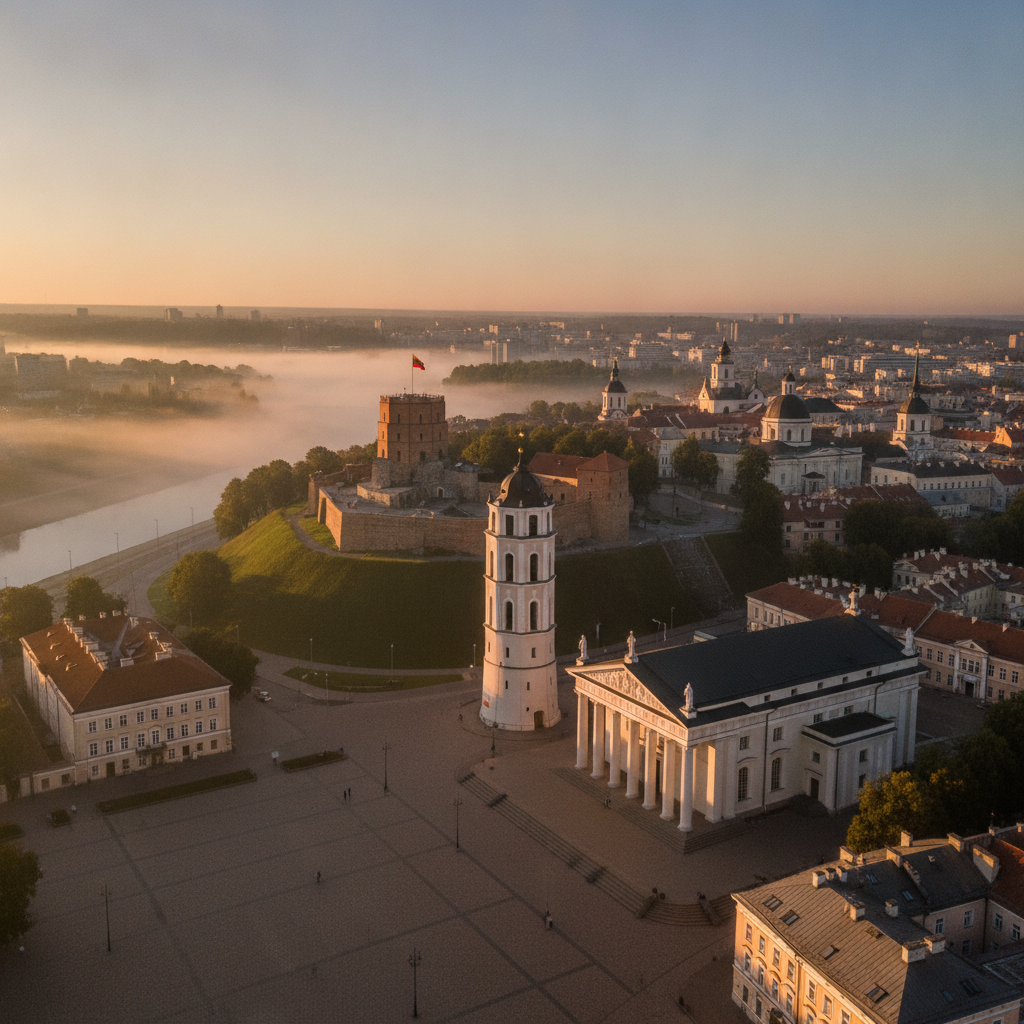
Vilnius — Jerusalem of Lithuania: the Jewish Heritage, the Vilna Gaon & the Paneriai Holocaust Memorial
Vilnius was known as the 'Jerusalem of Lithuania' — the most important Jewish cultural and intellectual centre in Eastern Europe for 500 years, the city producing the Vilna Gaon, the greatest Jewish scholar of the 18th century, and a community of 100,000 before the Holocaust. The near-total destruction of this community in 1941-1944 is the defining tragedy of modern Lithuanian history.
- 1
The Jewish Vilnius — Jerusalem of Lithuania
The Jewish community of Vilnius (established in the 15th century, growing to 100,000 by 1939 — one third of the entire pre-war population of Vilnius — the community the intellectual and cultural capital of Ashkenazi Judaism in Eastern Europe for 300 years, the city known as 'Yerushalayim de Lite' — the Jerusalem of Lithuania — for the density and the quality of its Jewish scholarship, the community producing: the Vilna Gaon — Rabbi Elijah ben Solomon Zalman, 1720-1797, the greatest Talmudic scholar of the modern era, his commentary on the Talmud still the standard reference, the Gaon's approach to Jewish scholarship the model for the Lithuanian yeshiva tradition that shaped Orthodox Judaism worldwide; the YIVO Institute for Jewish Research — founded Vilnius 1925, the most important Yiddish scholarly institution in the world, relocated to New York in 1940; and the Bund, the socialist Jewish workers' movement that organized the Vilna General Strike of 1905): the pre-war Jewish quarter (the area around the Žydų gatvė — Jewish Street — and the Gaono gatvė south of the Cathedral Square, the two synagogue courtyards — the Great Synagogue courtyard at Žydų gatvė 4, the great 17th-century synagogue demolished by the Soviet authorities in 1955, the primary school now occupying the site) and the Great Synagogue plaque (the excavation of 2015-2019 that revealed the foundation columns of the Great Synagogue of Vilna, built 1633, the largest synagogue in Eastern Europe at the time of its construction — the plaque at the school courtyard on Žydų gatvė the only acknowledgment of the site, the excavation findings in the Jewish Museum).
- 2
The Paneriai Holocaust Memorial
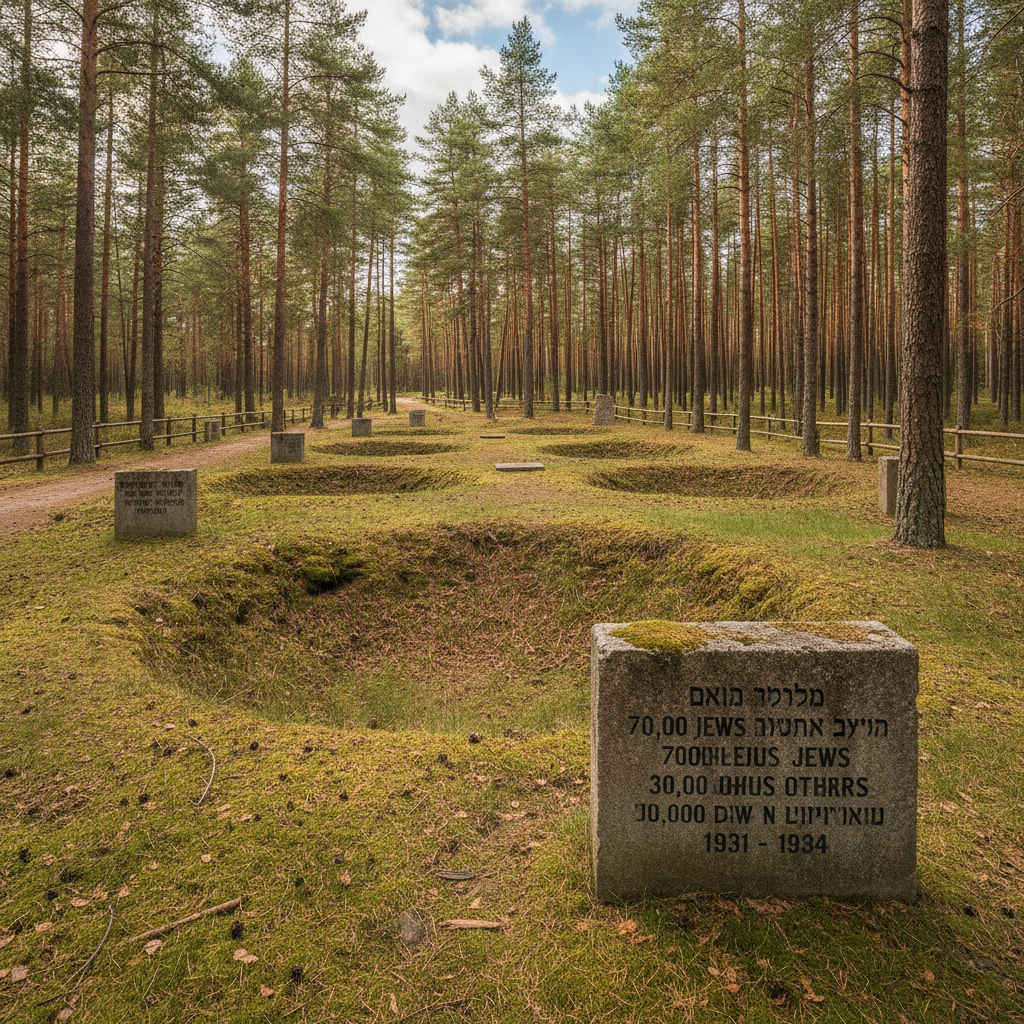
Paneriai (Ponar, the forest site 9km southwest of Vilnius, the site of the largest mass murder in Lithuania's history — 70,000 Jews, 8,000 Soviet prisoners of war, and 2,000 Polish intellectuals and partisans murdered 1941-1944 by the German Einsatzgruppen with the participation of Lithuanian collaborators, the killings beginning July 11 1941 — 10 days after the German occupation of Vilnius — and continuing through August 1944, the site the killing ground for the majority of the Vilna Ghetto population): access (the train from Vilnius station to Paneriai in 20 minutes at €1.50, the memorial 700m walk from the station through the pine forest, the site open daily 9am-5pm, the museum at the entrance with the documentation of the killings, free), the site (the forest clearing with the 7 major pits used as mass graves — the pits originally dug by the Soviet NKVD as fuel storage tanks in 1940, the German forces finding the pits ready-made for the mass killings, the pit edges marked with concrete memorials, the depressions in the forest floor the only visible evidence of the scale of the murders), the Burning Brigade (the Jewish prisoners forced to exhume and burn the bodies in 1943-1944 to erase the evidence — the 80-person team who tunneled out of the pit in April 1944, 15 surviving to tell the story of the exhumation operation, the tunnel the subject of the 2019 excavation that confirmed the escape route) and the memorial (the multi-lingual markers in Lithuanian, Hebrew, Yiddish, and Russian recording the number of victims and the specific months of the mass killings — the most complete Holocaust documentation in Lithuania).
- 3
The Vilnius Ghetto — History and the Jewish Museum
The Vilnius Ghetto (established September 6 1941, the German occupiers dividing the Jewish population of Vilnius between the Small Ghetto in the Žydų gatvė area — liquidated October 1941 with 11,000 people sent to Paneriai — and the Large Ghetto in the block between Vokiečių gatvė, Rūdninkų gatvė, Žydų gatvė, and Antokolskio gatvė, the 40,000 inhabitants of the Large Ghetto maintaining a rich cultural and intellectual life until the ghetto liquidation of September 1943 — the underground archives, the theater and concerts, the schools, the ghetto newspaper, the resistance organization FPO — Fareynike Partizaner Organizatsye — founded February 1942 by Abba Kovner and others, the FPO the first Jewish resistance organization in occupied Europe): the Vilna Gaon State Jewish Museum (the main branch at Naugarduko gatvė 10/2, the collection documenting the pre-war Jewish community, the Holocaust, the ghetto, and the Lithuanian Jewish survivors, €5 adults, Monday-Thursday 9am-5pm, Friday 9am-4pm, Sunday 10am-4pm, the exhibition 'Green House' the specific documentation of the Holocaust in Lithuania, the most essential museum for understanding what was lost in Vilnius) and the Tolerance Centre (the second branch of the Jewish Museum at Naugarduko gatvė 10, the contemporary exhibitions on Jewish heritage and tolerance, the centre the venue for the regular lectures and film screenings on Lithuanian Jewish history).
- 4
The Vilna Gaon and Lithuanian Jewish Intellectual Heritage
The Vilna Gaon (Rabbi Elijah ben Solomon Zalman, 1720-1797, the greatest Talmudic scholar of the modern era, born in Sielec near Brest, living his entire adult life in Vilnius, the Gaon — an honorific meaning 'brilliance' — mastering the complete Talmud and the Kabbalistic tradition by age 10, the Gaon's commentary on the Jerusalem Talmud the definitive reference for all subsequent Talmudic scholarship, the Gaon's approach to Torah study — the Lithuanian method of rigorous textual analysis without reliance on mysticism — the model for the great yeshiva tradition of Telsiai, Ponevezh, Slobodka and Mir that shaped worldwide Orthodox Judaism): the Gaon's house site (the Gaono gatvė — Gaon Street — named for the scholar, the street in the heart of the former Jewish quarter, the original house demolished, the commemorative plaque at no. 4, the Gaon's synagogue destroyed in World War II, the site marked with a plaque at Žydų gatvė 3), the Vilna Gaon Museum (the dedicated room in the Jewish Museum at Pamėnkalnio gatvė 12, the Gaon's portrait, the editions of his commentaries, the genealogical records — free with the Jewish Museum ticket), and the Gaon's impact (the Talmudic academy system the Gaon established surviving today as the world's major Orthodox yeshivot in Israel and the United States — the 'Lithuanian' approach to Jewish scholarship the defining tradition of Modern Orthodox and Haredi Judaism worldwide).
- 5
Vilnius during Soviet Occupation — the Historical Legacy
Vilnius under Soviet rule (1940-1941 and 1944-1990, the occupation shaping the city in ways still visible in 2024): the Soviet architectural legacy (the Lazdynai and Karoliniškės residential districts — the Soviet-era concrete panel apartment blocks of the 1965-1985 period, the award-winning Soviet modernist planning of Lazdynai receiving the Lenin Prize in 1974 — the prize for the best urban planning in the USSR, the terraced hillside layout integrating the blocks with the Neris River valley landscape, the blocks now partly renovated and occupied by a mixed-income population, the district 4km west of the Old Town accessible by trolleybus), the KGB Museum (the Museum of Genocide Victims, Aukų gatvė 2A at Gedimino prospektas, the former KGB headquarters and prison, the most important documentation of the Soviet occupation in Lithuania, €8 adults, Tuesday-Sunday 10am-6pm, the preserved KGB interrogation cells, the execution room with the original fixtures, the isolation cells and the water torture chambers, the names of the 1,000+ people executed in the building during the Soviet period recorded on the wall of the Execution Room) and the January 13 1991 Memorial (the Vilnius Television Tower, Sausio 13-osios gatvė 10, 4km west of the Old Town by trolleybus, the site where Soviet paratroopers killed 14 Lithuanian civilians and injured 700 during the January 13 1991 attempt to suppress the independence movement, the memorial garden and the Museum of January 13 at the tower base, the most emotionally charged independence memorial in Lithuania, €5 adults, daily 10am-8pm).
- 6
The Lithuanian Partisans and Post-War Resistance
The Lithuanian anti-Soviet partisans (the Forest Brothers — miško broliai, the armed resistance to the Soviet occupation that began in 1944 with the return of the Red Army and continued until the last partisan Stasys Guiga surrendered in 1965 — 21 years of armed resistance making the Lithuanian partisan movement the longest armed resistance to Soviet rule in Eastern Europe, the movement at its peak in 1946-1948 numbering 30,000 active fighters across Lithuania, the brutal Soviet suppression including the mass deportation of partisan family members — the March 1949 deportation of 25,000 Lithuanians specifically targeting the partisan support base — the last partisans holding out in the forests after all hope of Western support was abandoned): the documentation (the Genocide and Resistance Research Centre of Lithuania at Didžioji gatvė 17 in the Old Town, the most comprehensive archive of the partisan resistance, the monthly publications and the online database of 20,000+ identified partisans, open Monday-Friday 8am-5pm, the reading room accessible to researchers, the public exhibition on the ground floor free), the Rainiai Massacre Memorial (the site near Telšiai in western Lithuania where the NKVD murdered 74 Lithuanian political prisoners in June 1941 in the most notorious single atrocity of the first Soviet occupation — accessible by car from Vilnius in 3 hours, the site beyond the practical day-trip range but the documentation in the Genocide Research Centre essential context) and the memorial at the Television Tower (as described above, the 14 January 1991 victims — the last deaths of the Lithuanian resistance to Soviet rule).
Walk this route with audio
Stories play automatically as you reach each stop — no tapping needed.
More in vilnius
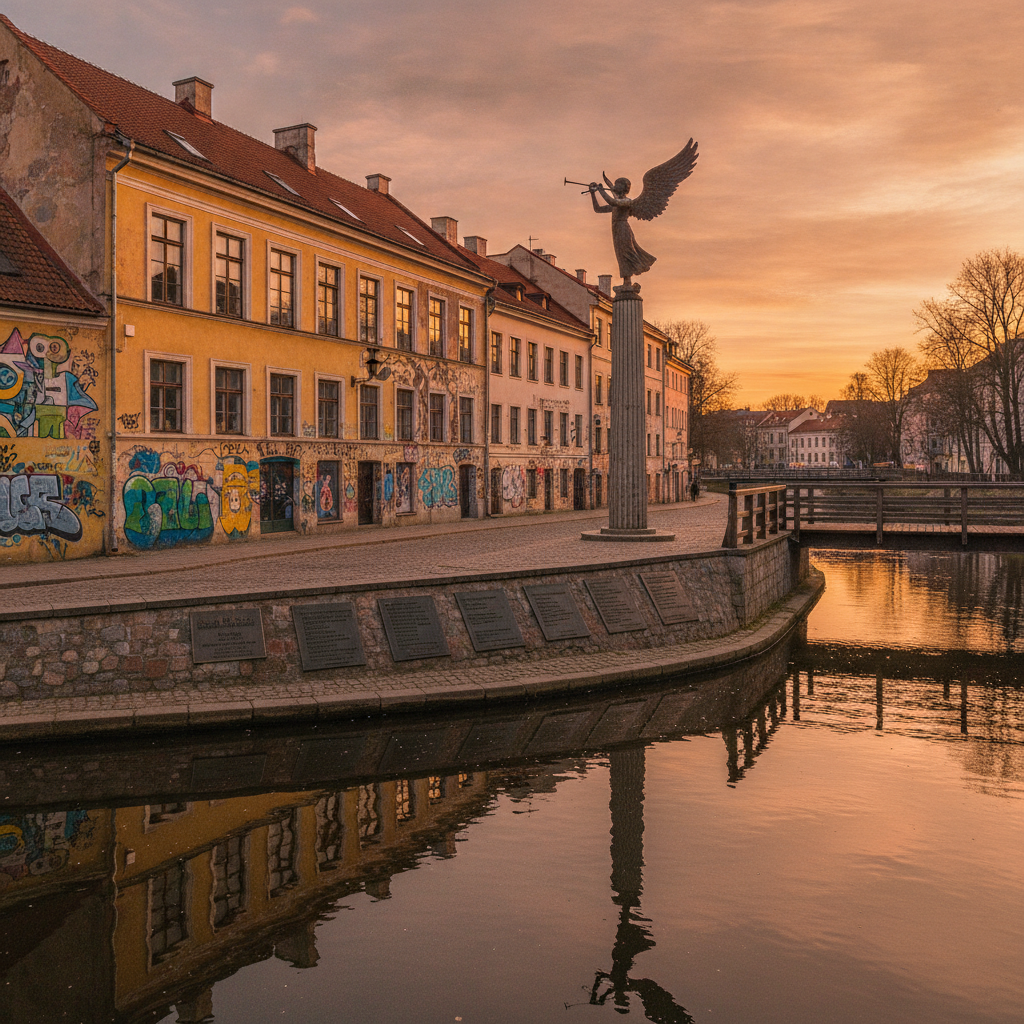
Vilnius Užupis & the Contemporary Art Scene — the Bohemian Republic, Galleries & Creative Vilnius
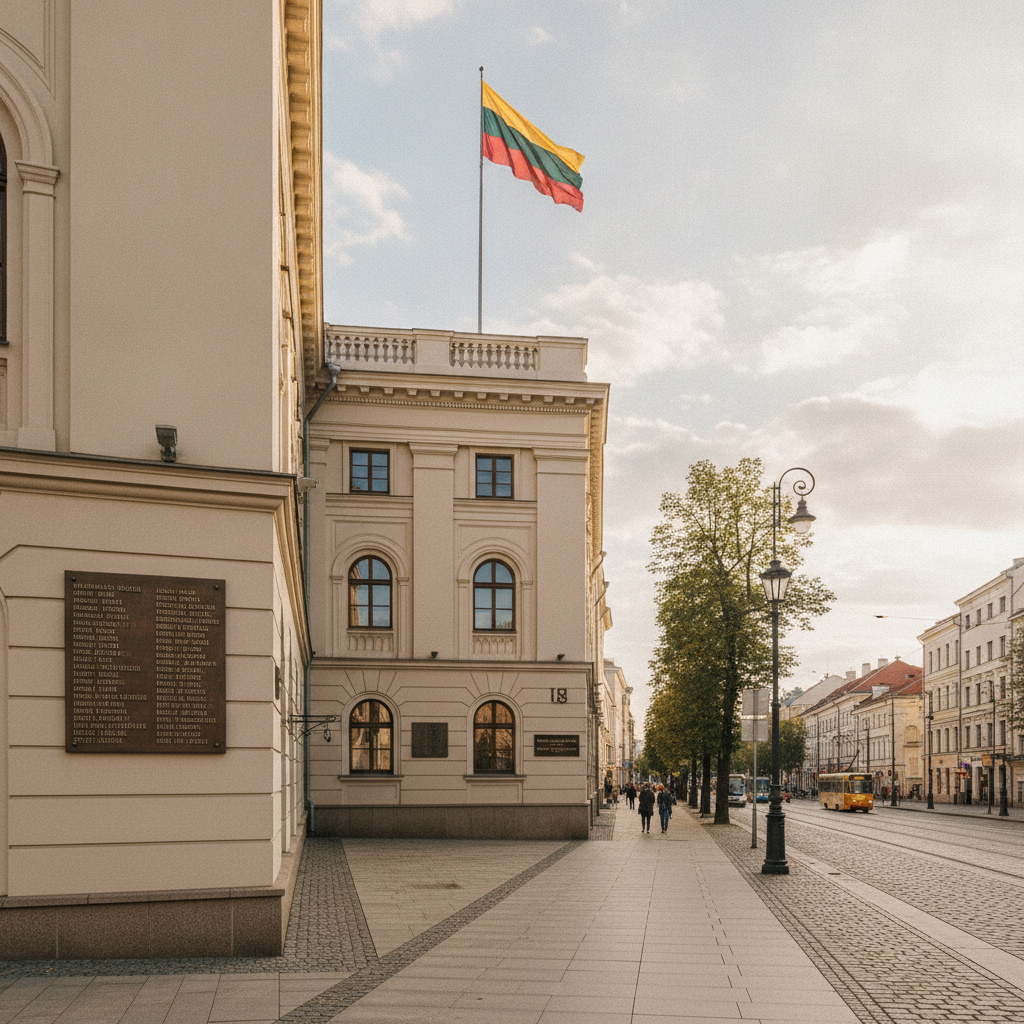
Vilnius — the KGB Museum, Gedimino Prospektas & the Soviet History of Lithuanian Independence
Vilnius Baroque — the University Courtyards, Jesuit Churches & the Most Dense Baroque Heritage in Northern Europe
Vilnius Practical Guide — Access, Seasons, Trakai Island Castle & Day Trips