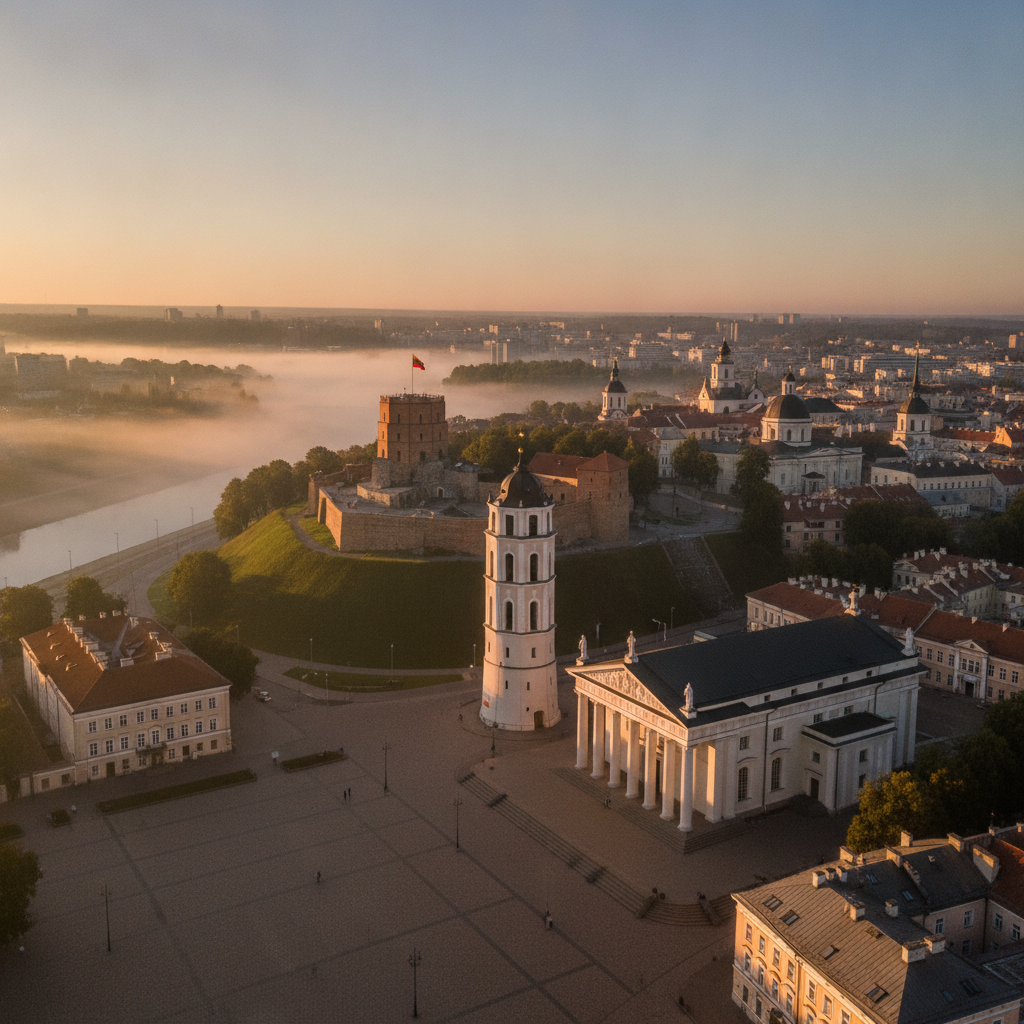
Vilnius Baroque — the University Courtyards, Jesuit Churches & the Most Dense Baroque Heritage in Northern Europe
Vilnius is the most Baroque city in Northern Europe — 65 churches of different denominations in the Old Town alone, the Jesuits making Vilnius the Catholic capital of the Counter-Reformation in northeastern Europe from 1579 onwards. The Vilnius University complex and the sequence of Baroque church interiors are the essential architecture of the city.
- 1
Vilnius University — the Oldest University in the Baltic States
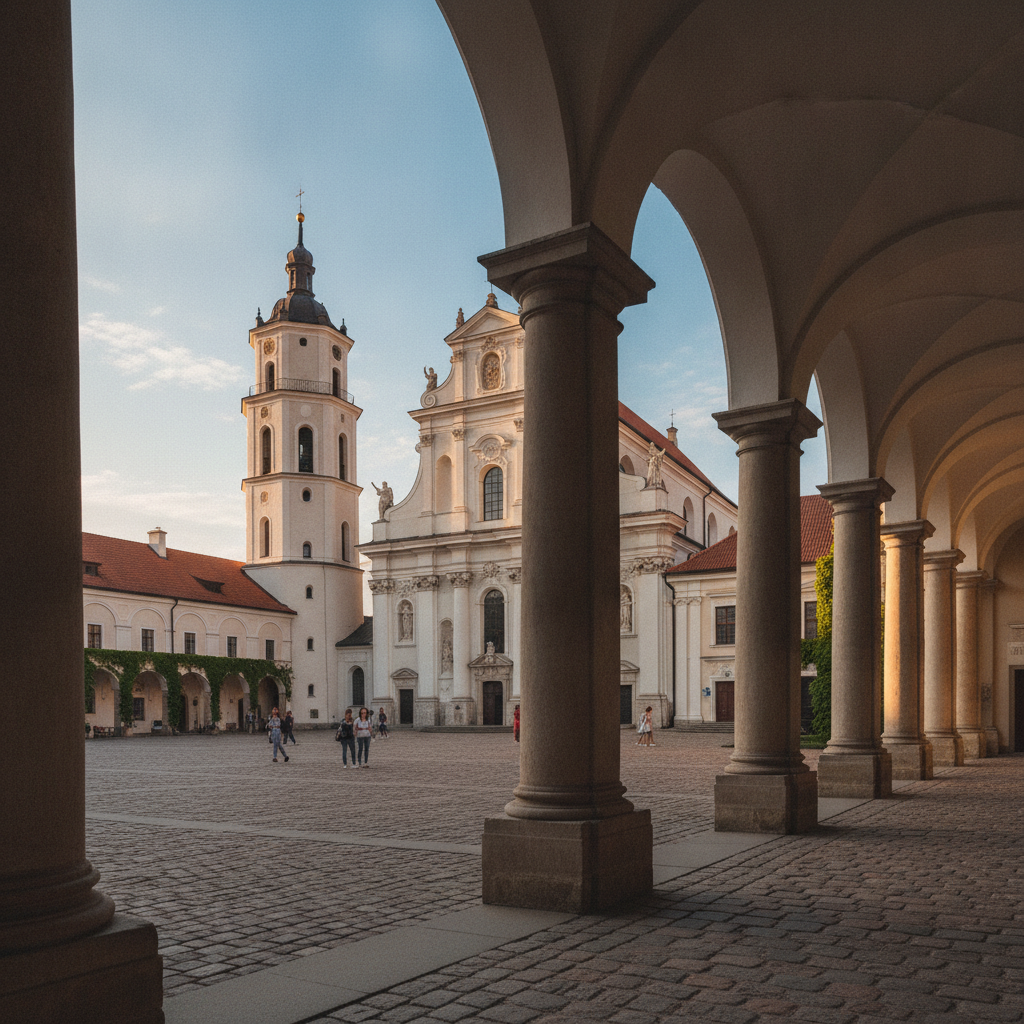
Vilnius University (Vilniaus universitetas, founded 1579 by the Jesuit order and King Stephen Báthory of Poland-Lithuania, the oldest and largest university in the Baltic states, the university the intellectual engine of the Vilna Baroque, the university commissioning and funding the construction of the Baroque churches and buildings that define the Old Town): the university compound (the 12 interconnected courtyards extending between Universiteto gatvė, Šv. Jono gatvė, Pilies gatvė, and Skardinė gatvė — the most extensive academic complex in the Baltic states, €3 adults for the courtyards and the St. John's Church interior, Monday-Saturday 9am-6pm): the Grand Courtyard (Didysis kiemas, the largest courtyard with the Renaissance arcade on 3 sides and the Baroque church facade of St. John's on the fourth, the most harmonious academic courtyard in the Baltic), the Observatory Courtyard (the 18th-century astronomical observatory — the first permanent astronomical observatory in the Russian Empire when built 1753, the meridian line on the courtyard floor, the observatory still operational for public evenings on clear nights in summer, the programme at the observatory website), St. John's Church (the Baroque church interior of 1718-1737, the most elaborate Jesuit Baroque interior in Lithuania — the 11 Baroque altars, the ceiling frescoes of the apotheosis of the Jesuit saints, the library wing with the original 18th-century wooden bookcases, the view from the 63m Bell Tower — the best view of the University quarter from above).
- 2
The Church of St. Peter and St. Paul — the Baroque Masterpiece
The Church of St. Peter and St. Paul (Šv. Petro ir Povilo bažnyčia, Antakalnio gatvė 1, 1km northeast of Cathedral Square in the Antakalnis district, accessible by bus 2 from the Old Town in 10 minutes, the Baroque church built 1668-1704 for the Hetman Mykolas Kazimieras Pacas, considered the finest Baroque church interior in Lithuania and one of the finest in all of Eastern Europe, free, open daily 7am-6pm): the interior (the entirety of the interior — every surface of the walls, the ceiling, the vault springing, the side chapel frames, the triumphal arch and the apse — covered in white stucco figurative sculpture executed 1677-1704 by the Italian masters Giovanni Pietro Galli and Giovanni Maria Galli, approximately 2,000 individual figurative and decorative stucco figures covering the entire church interior in a continuous white relief — the putti and the cherubs, the larger-than-life saint figures in the niches, the narrative scenes from the Life of Christ in the lunettes, the ornamental garlands and the trophies framing the windows — the ensemble the largest and most ambitious sculptural programme in any Lithuanian church, the interior effect simultaneously theatrical and overwhelming), the founder's tomb (the monument to Hetman Pacas in the south wall of the nave, the donor portrayed in full Baroque theatrical splendor, the inscription 'Hic jacet peccator' — Here lies a sinner — the humility of the epitaph contrasting with the vanity of the elaborate monument).
- 3
Vilnius Baroque Churches — the Essential Circuit
The Vilnius Baroque church circuit (the 8 most important Baroque church interiors within the Old Town, walkable in a half-day at a considered pace): starting from Cathedral Square: (1) the Cathedral crypt (the Royal Chapel of St. Casimir 1636, the silver Baroque reliquary of St. Casimir, the oldest Baroque interior in Lithuania — free, open cathedral hours); (2) St. Casimir's Church at Didžioji gatvė 34 (the first Baroque church in Lithuania 1604-1618, the distinctive octagonal dome with the crown — the symbol of the Jagiellonian dynasty — the most recognizable Baroque exterior in Vilnius — free, open daily 9am-7pm); (3) the Church of St. Theresa at Aušros Vartų gatvė 14 (the 17th-century Discalced Carmelite Baroque, the facade the most harmonious in Vilnius, the interior gilded altars — free, open daily 6am-7pm); (4) the Gates of Dawn Chapel (the pilgrimage Madonna above the city gate — free, always open); (5) the Holy Spirit Church and Dominican Monastery at Dominikonų gatvė 8 (the Baroque Dominican interior of 1679, the 16 Baroque altars the most elaborate Dominican church in Lithuania — free, open daily 6am-7pm); (6) the Church of the Assumption at Mykolo gatvė 9 (the small Baroque jewel, the interior the most intimate in the Old Town — free); (7) the Church of St. Anne and the Bernardine Church (the Gothic brick exterior of 1495-1500 and the Bernardine Gothic interior, the double church complex the most visited heritage site in Vilnius — free, open daily 9am-7pm) and (8) the University's St. John's Church (the most elaborate Jesuit Baroque interior, as described above).
- 4
The Vilnius National Museum — Lithuanian History
The National Museum of Lithuania (Lietuvos nacionalinis muzejus, Arsenalo gatvė 1, at the foot of Gediminas Hill, €5 adults, Tuesday-Sunday 10am-6pm, the primary museum for Lithuanian history from the prehistoric period through the present day): the essential collections (the prehistoric Lithuanian collection — the amber ornaments and the bronze weapons of the Baltic tribes, the Lithuanian amber from 3,000 BCE among the oldest worked amber in the world; the Grand Duchy period — the original documents of the Lithuanian state, including a facsimile of the 1253 coronation charter of King Mindaugas — the only Lithuanian king — and the seals and the charters of the Grand Duchy; the Statute of Lithuania 1529 — the first law code of the Grand Duchy, the first codified law in Eastern Europe — and the museum's most important object: the Vilnius Gonfalon of 1514 — the battle standard of the Lithuanian army at the Battle of Orsha, the only surviving military standard of the Grand Duchy of Lithuania, the most valuable object in the museum collections), the ethnographic galleries (the Lithuanian folk art — the carved wooden wayside crosses, the richly decorated wooden furniture, the traditional Lithuanian textiles — the most important collection of Lithuanian material culture, the wooden crosses the most globally distinctive Lithuanian art form, the tradition of the carved wooden roadside cross-shrines recognized by UNESCO as an Intangible Cultural Heritage in 2001), and the 20th-century independence history (the documents and objects of the 1918 and 1990 independence restorations).
- 5
The Vilnius Palace of the Grand Dukes
The Palace of the Grand Dukes of Lithuania (Valdovų rūmai, Katedros aikštė 4, inside the Lower Castle courtyard at the foot of Gediminas Hill, the most ambitious cultural infrastructure project in post-independence Lithuania — the original 15th-century palace of the Grand Dukes built by Alexander Jagiellon in 1497-1522, subsequently expanded and rebuilt into the Renaissance palace of Sigismund II Augustus in the 1550s-1570s — the most important Renaissance palace in the eastern Baltic region at its peak — demolished on the orders of the Russian occupying authorities in 1801, the site used as a parade ground for 200 years, the reconstruction begun 2002 and the museum opened 2009, €8 adults, Tuesday-Sunday 10am-6pm): the reconstructed palace (the Gothic south wing and the Renaissance north wing reconstructed on the original foundations using the excavated evidence — the original window surrounds and door frames, the faience tile floors, the 16th-century wall paintings — the reconstruction both the most expensive and the most contested cultural project in Lithuanian history, the critics arguing the reconstruction replaced the archaeological site with a simulacrum, the supporters arguing the palace the most important missing element of the Vilnius cityscape), the palace collections (the excavated original artefacts from the palace site — the 16th-century faience tiles, the glass, the metalwork — alongside the historical art and the decorative arts of the Grand Duchy period, the Renaissance bronze cannon of 1576 the most impressive single object in the collection).
- 6
Vilnius Practical — Getting Around, Seasons and Nightlife
Vilnius practical information: access (the Vilnius International Airport 7km south of the Old Town, bus 3G to the city centre in 20 minutes at €1.50 or taxi at €10-15, Ryanair the dominant carrier with direct flights from London Stansted, Berlin, Paris Beauvais, Warsaw, Oslo, Copenhagen, Stockholm, Madrid, Barcelona and 40+ other European cities, Wizz Air from London Luton and 20+ Eastern European cities, the airport connections among the best-value in the Baltic states), city transport (the public bus and trolleybus network, the single trip at €1.20, the 24-hour card at €5, purchased on the vehicle by contactless card, the Old Town itself walkable with no public transport needed for the heritage sites — all sites within 1km of Cathedral Square), seasons (summer June-August, the temperatures 20-26 degrees, the warm continental climate — Vilnius 500km from the Baltic has a more continental climate than Tallinn or Riga, the summer nights warmer and the winters colder, the outdoor terrace season June-September, the white nights less pronounced than the northern capitals — the sun setting at 9:30pm rather than 10:30pm; winter November-February, the temperatures -5 to -15 in the coldest weeks, the Christmas market at Cathedral Square December 1-January 6, the cobblestoned Old Town in the frost and the snow the most atmospheric winter city in the Baltic states, the Old Town bars and the heated terraces the social centre of winter life), nightlife (the Vilnius Old Town bar scene on Užupio and Pilies and Vokiečių gatvė, the Bravaria German-style beer hall at Stoties gatvė 3 for the German and Lithuanian craft beer, the Šiauliai Club and the Opium Club the main electronic music venues for the weekend nights).
Walk this route with audio
Stories play automatically as you reach each stop — no tapping needed.
More in vilnius
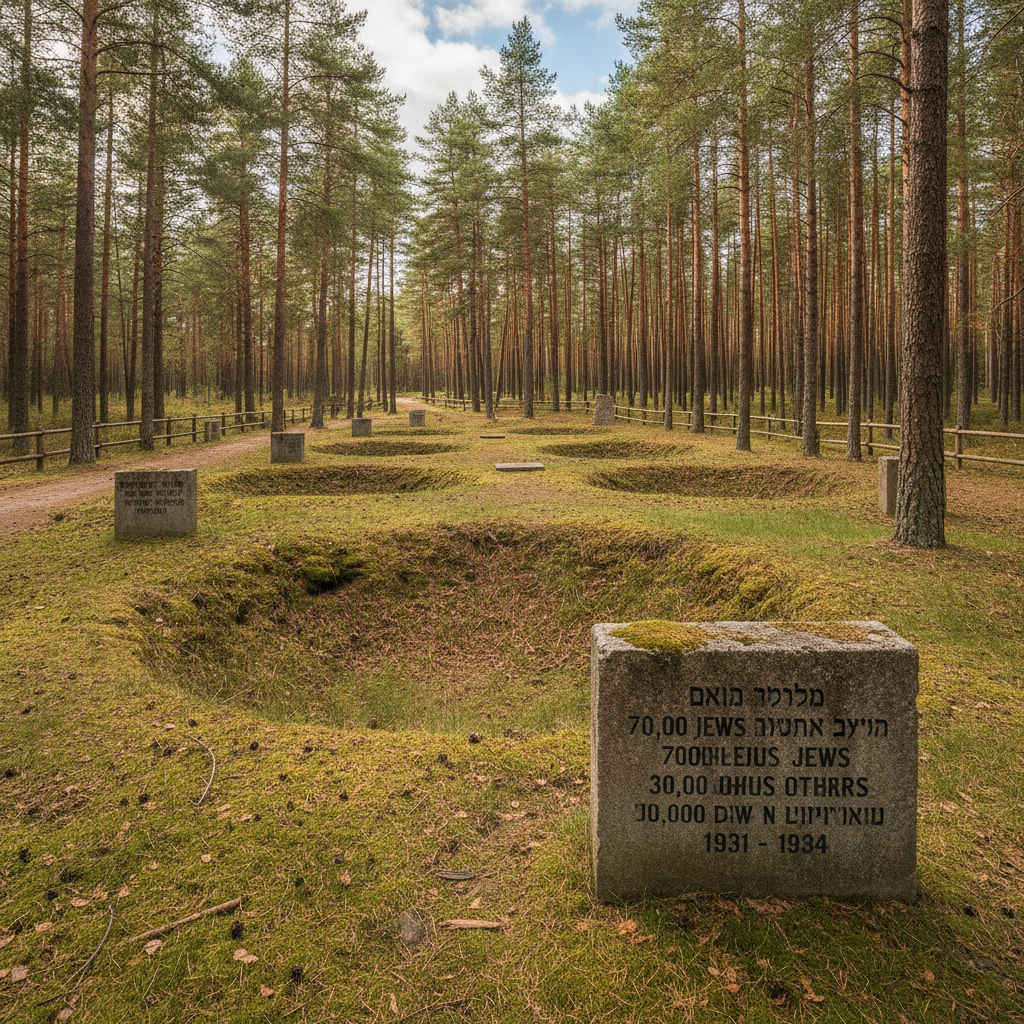
Vilnius — Jerusalem of Lithuania: the Jewish Heritage, the Vilna Gaon & the Paneriai Holocaust Memorial
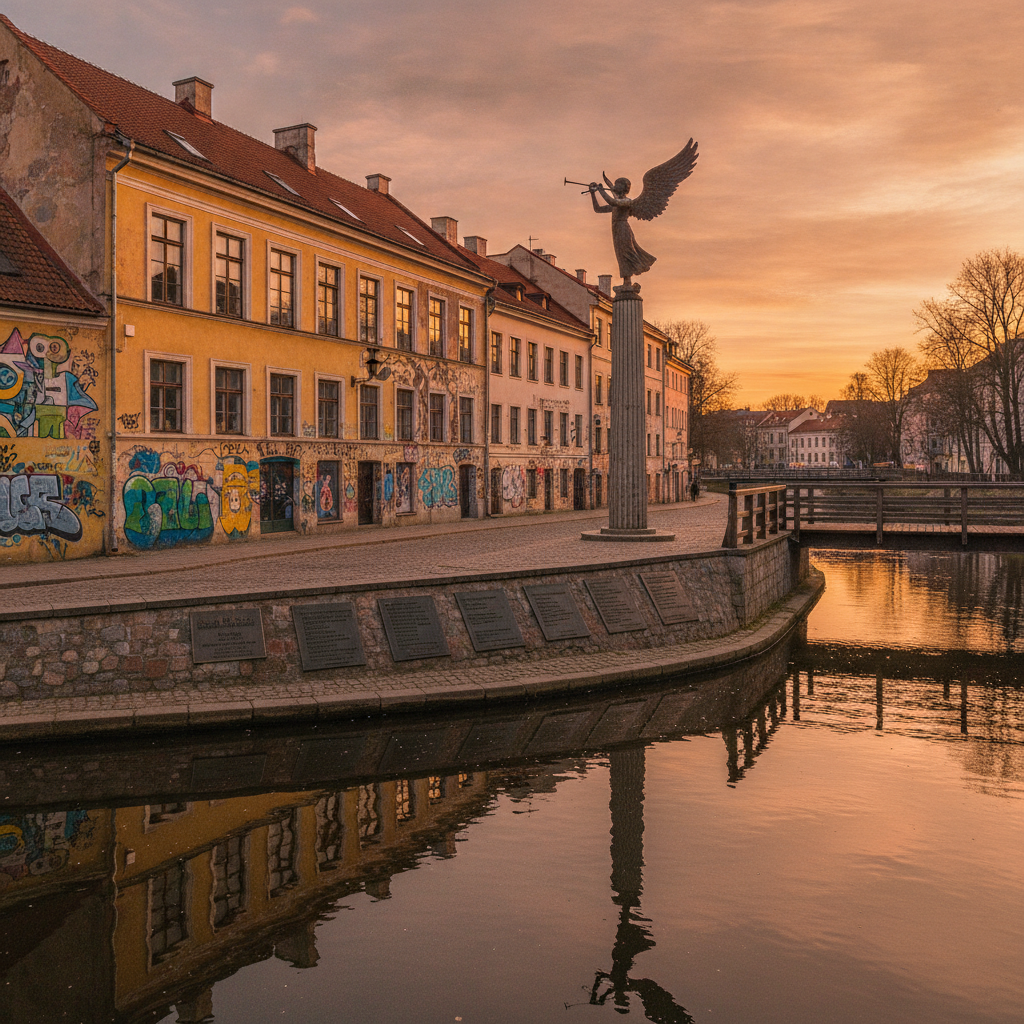
Vilnius Užupis & the Contemporary Art Scene — the Bohemian Republic, Galleries & Creative Vilnius
Vilnius — the KGB Museum, Gedimino Prospektas & the Soviet History of Lithuanian Independence
Vilnius Practical Guide — Access, Seasons, Trakai Island Castle & Day Trips