Imperial Summer: Schönbrunn Palace & Gardens
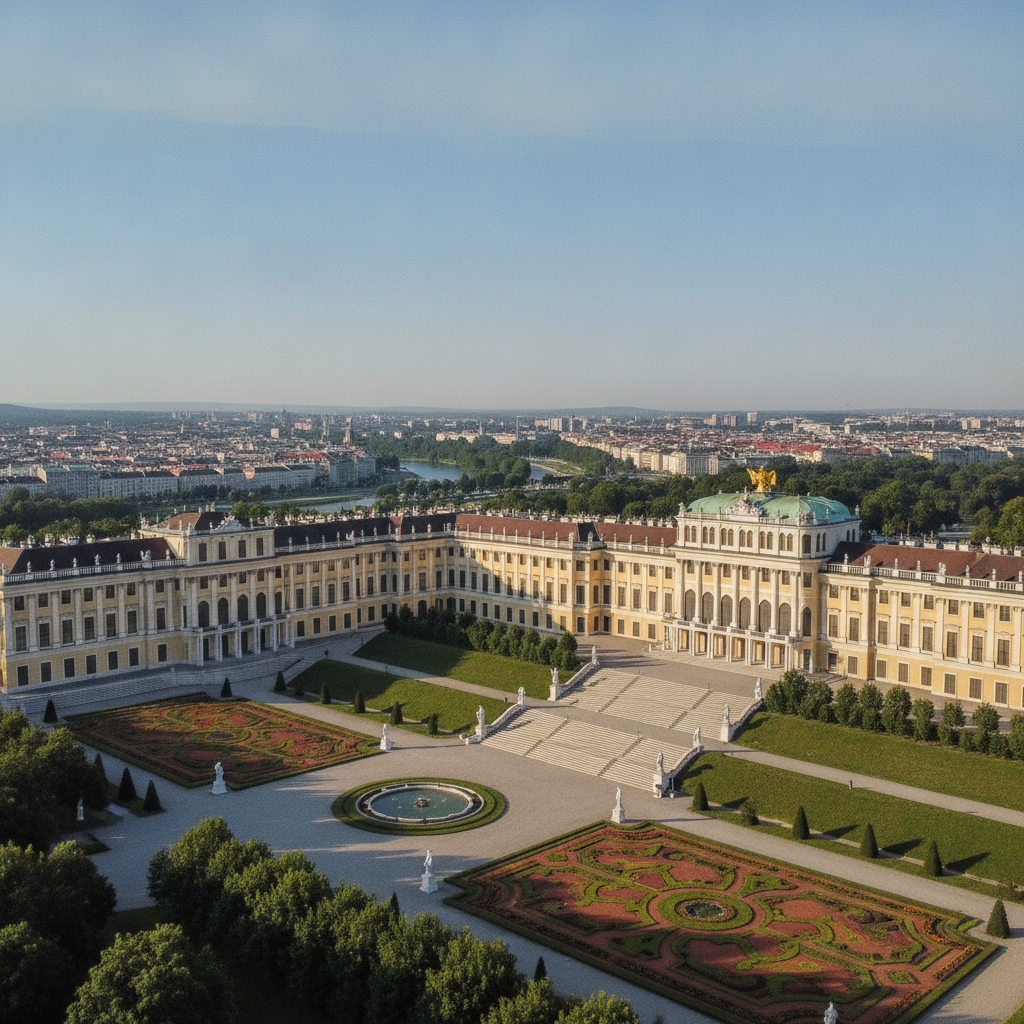
The Habsburg dynasty's summer palace, Schönbrunn was where Empress Maria Theresa raised her 16 children, where the six-year-old Mozart gave his first Vienna performance for the Imperial family, and where Franz Joseph I died in 1916 after 68 years on the throne. Today the palace and its 1.2-kilometer-long formal gardens are a UNESCO World Heritage Site and Vienna's most visited attraction.
- 1
Schönbrunn Palace Main Gate
The approach to Schönbrunn through the palace gate gives the first sense of the building's extraordinary scale: the main facade is 180 meters wide, painted in Empress Maria Theresa's signature Schönbrunn Yellow — a warm ochre that has become inseparable from Austrian imperial identity. The palace was largely rebuilt and expanded by the Empress between 1743 and 1749 from an earlier hunting lodge, and her favorite architect Nikolaus Pacassi created the current building's restrained Baroque exterior. The palace contains 1,441 rooms; the state rooms open to visitors are among the most lavish Rococo interiors in the world. The six-year-old Mozart performed here for the imperial family in 1762; Napoleon used it as his Vienna headquarters in 1805 and 1809.
- 2
Grand Gallery & State Rooms
The Grand Gallery — the Große Galerie — is the centerpiece of Schönbrunn's state rooms: a 43-meter-long mirrored hall that was the setting for Habsburg diplomatic receptions, court balls, and state banquets for 170 years. Its ceiling frescoes by Gregorio Guglielmi (1760) depict the prosperity and power of the Habsburg monarchy under Maria Theresa; the mirrors along the walls multiply the gilded stucco and crystal chandeliers into an infinite glittering recession. The Hall of Mirrors next door is where the young Mozart played; other notable rooms include the Chinese Cabinets inlaid with lacquer panels imported from Asia, and the Napoleon Room, where the French Emperor stayed during his occupation of Vienna.
- 3
Gloriette
The Gloriette colonnade, crowning the hill directly above the palace at the far end of the formal gardens, was built in 1775 as a monument to Habsburg military victory over Prussia in the Seven Years' War. From the Gloriette's central arch, the view extends across the entire Schönbrunn garden — the longest formal garden axis in Austria — to the palace facade below, and beyond to the Vienna plain, the Wienerwald hills, and on clear days the Carpathians far beyond. The Gloriette now contains a café; its roof terrace is the highest publicly accessible viewpoint in Vienna's inner suburbs.
- 4
Schönbrunn Zoo (Tiergarten)
The Tiergarten Schönbrunn, founded in 1752 by Emperor Franz I of Lorraine, is the oldest zoo in the world still in operation. Its 18th-century origin is still visible in the original star-shaped layout — twelve radial paths converging on a central octagonal imperial breakfast pavilion, now converted to a restaurant. The zoo has reinvented itself in the modern era with excellent primate, panda, and polar environments, and regularly ranks among Europe's best. The historic 18th-century animal houses, including the Elephant House and the Fish House (now housing the Aquarium), are remarkable architectural survivals.
- 5
Schönbrunn Palace Gardens
The 1.2-kilometer formal gardens stretching from the palace facade to the base of the Gloriette hill are the most complete surviving Baroque garden in Austria, laid out in their current form by the landscape architect Johann Ferdinand Hetzendorf von Hohenberg in the 1750s. The garden's geometry — symmetric parterres of clipped box hedges, fountains, and allegorical statues — was the theater of Habsburgs' summer court, where diplomats were received and children educated in the arts of courtly behavior. The Neptune Fountain at the garden's far end, built in 1780, features Neptune commanding the seas with a cast of baroque sea-gods in full theatrical display.
- 6
Hietzing Village
The village of Hietzing, now Vienna's 13th district, grew up in the shadow of the Schönbrunn estate as a summer resort for the nobility and upper bourgeoisie who sought proximity to the imperial court. Its main street, Hietzinger Hauptstraße, retains a remarkable number of late 19th- and early 20th-century villas in Historicist, Jugendstil, and early Modernist styles — a suburban gallery of bourgeois Vienna's architectural ambitions. Among the most notable is the Klimt Villa at Feldmühlgasse 11, where Gustav Klimt lived from 1911 until his death in 1918; his last studio has been reconstructed and is open to visitors.
Walk this route with audio
Stories play automatically as you reach each stop — no tapping needed.
More in vienna
Old Vienna: Prater, Riesenrad & Leopoldstadt
Color & Harmony: Hundertwasser, Stadtpark & the Danube Canal
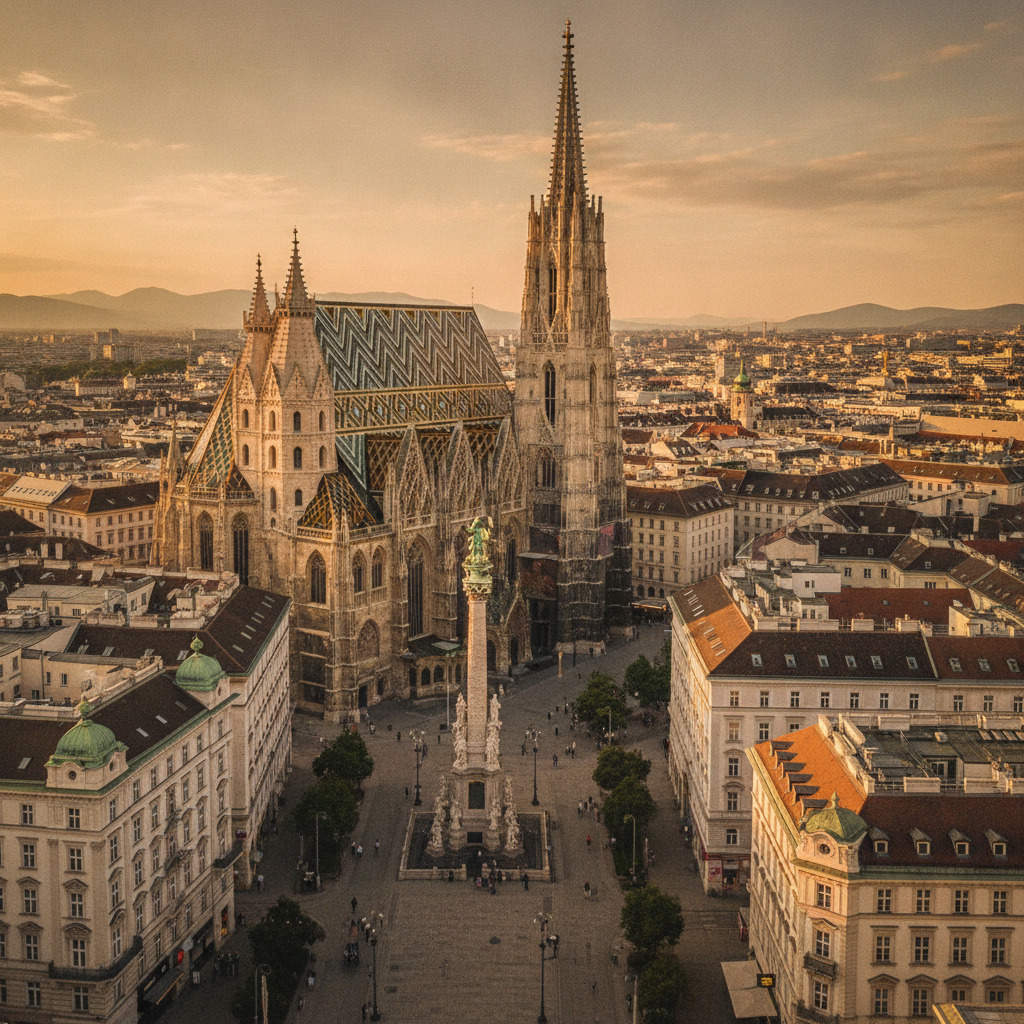
Empire's Heart: Stephansdom & the Innere Stadt
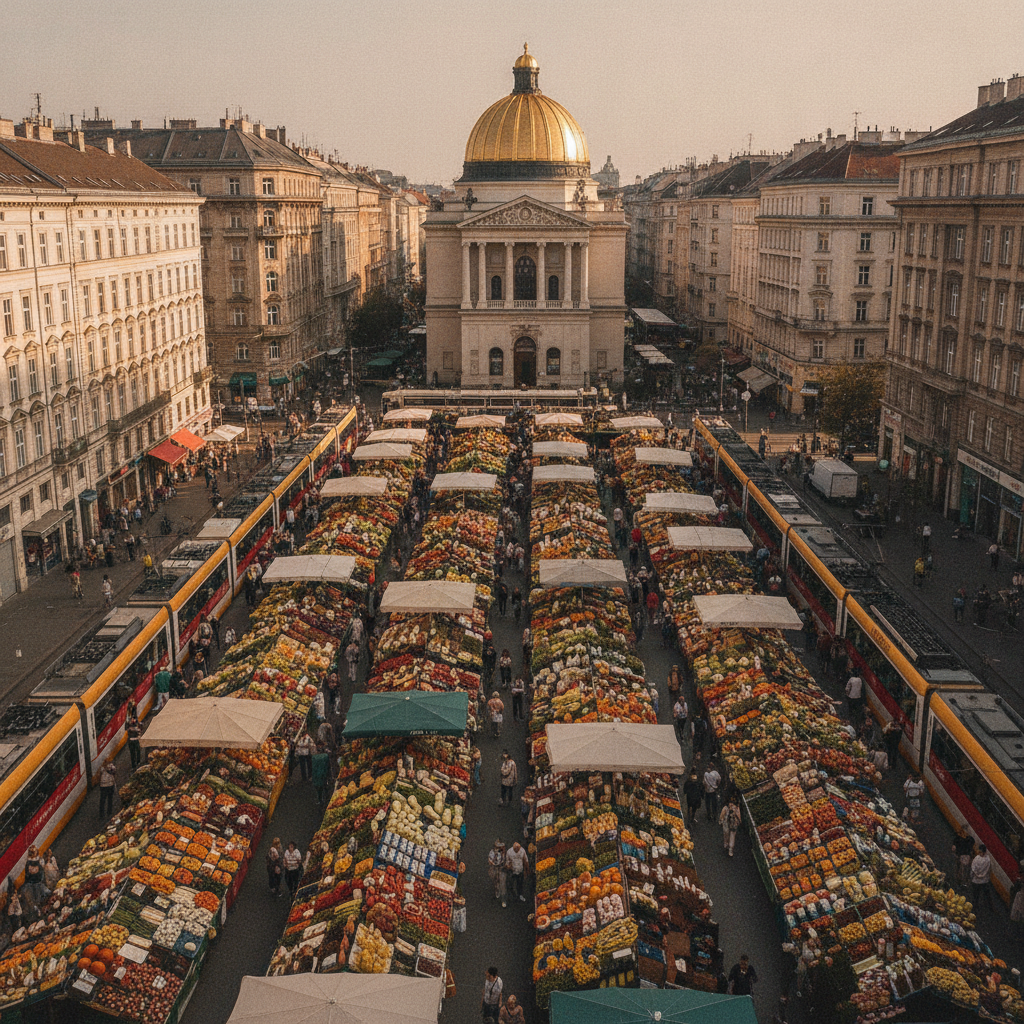
Markets & Modernism: Naschmarkt to MuseumsQuartier
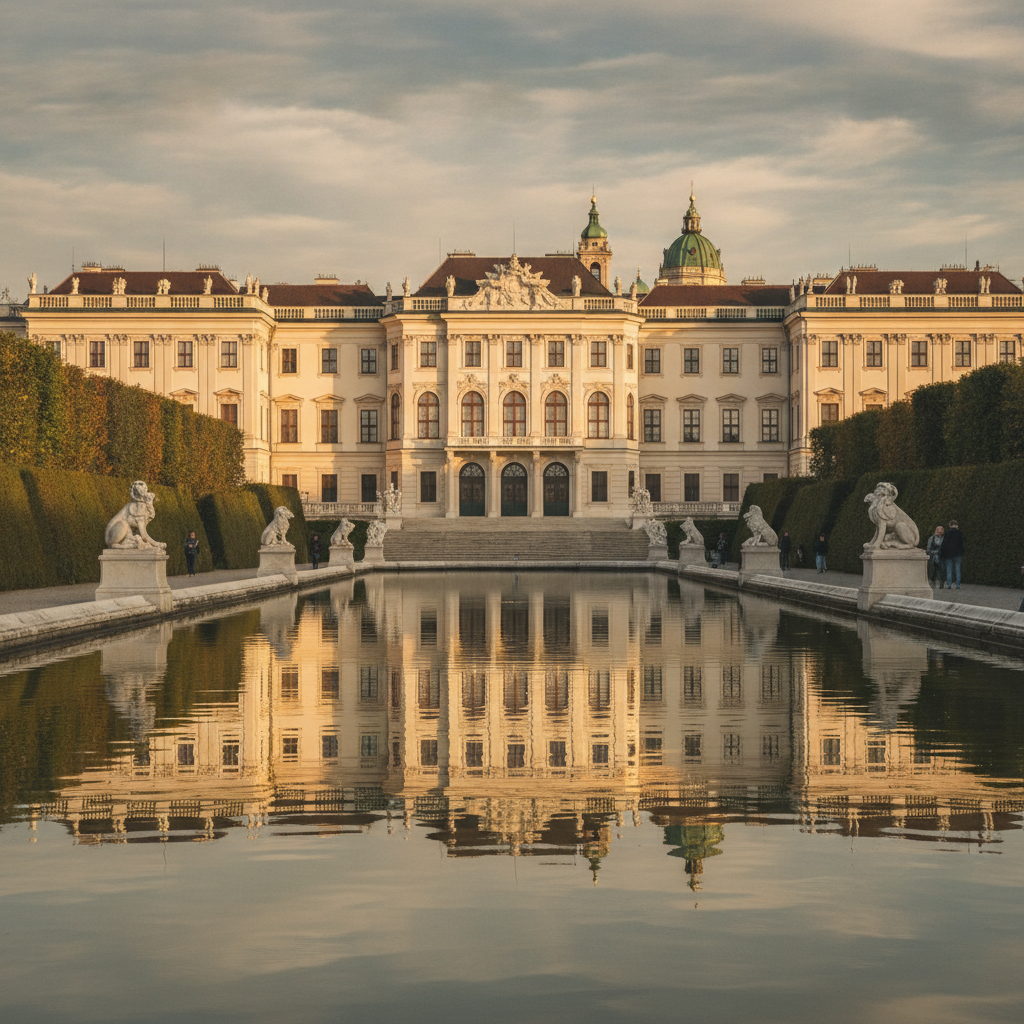
Klimt & Baroque Splendor: Belvedere to Karlskirche