Empire's Heart: Stephansdom & the Innere Stadt
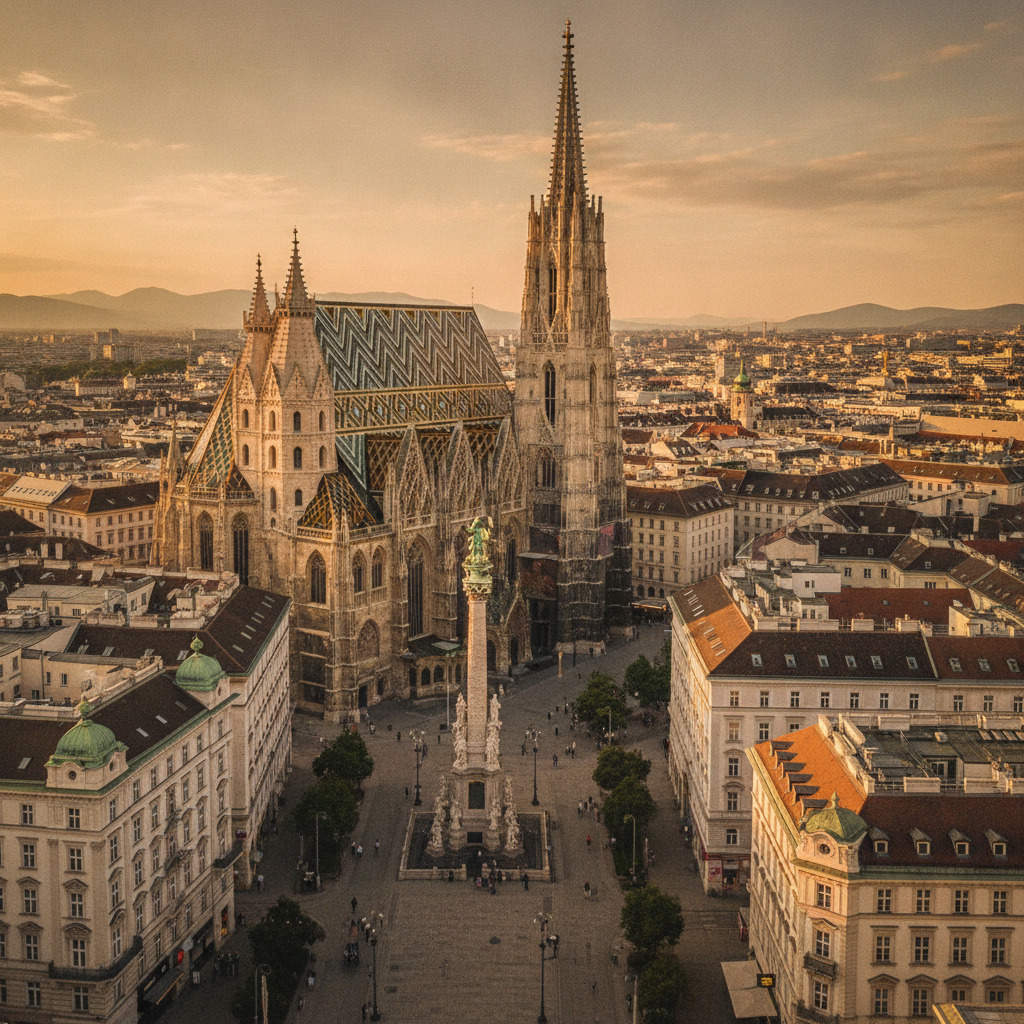
At the center of Vienna's First District, the Gothic spire of St. Stephen's Cathedral has oriented the city for 700 years. This walk through the Innere Stadt — the medieval core that became the capital of the Habsburg Empire — moves between one of Europe's great Gothic cathedrals, the elegant pedestrian boulevards of the Graben and Kohlmarkt, the soaring Baroque interior of the Peterskirche, and the intimate lanes where Mozart composed his greatest works.
1. Stephansdom (St. Stephen's Cathedral)
- 1
Stephansdom (St. Stephen's Cathedral)
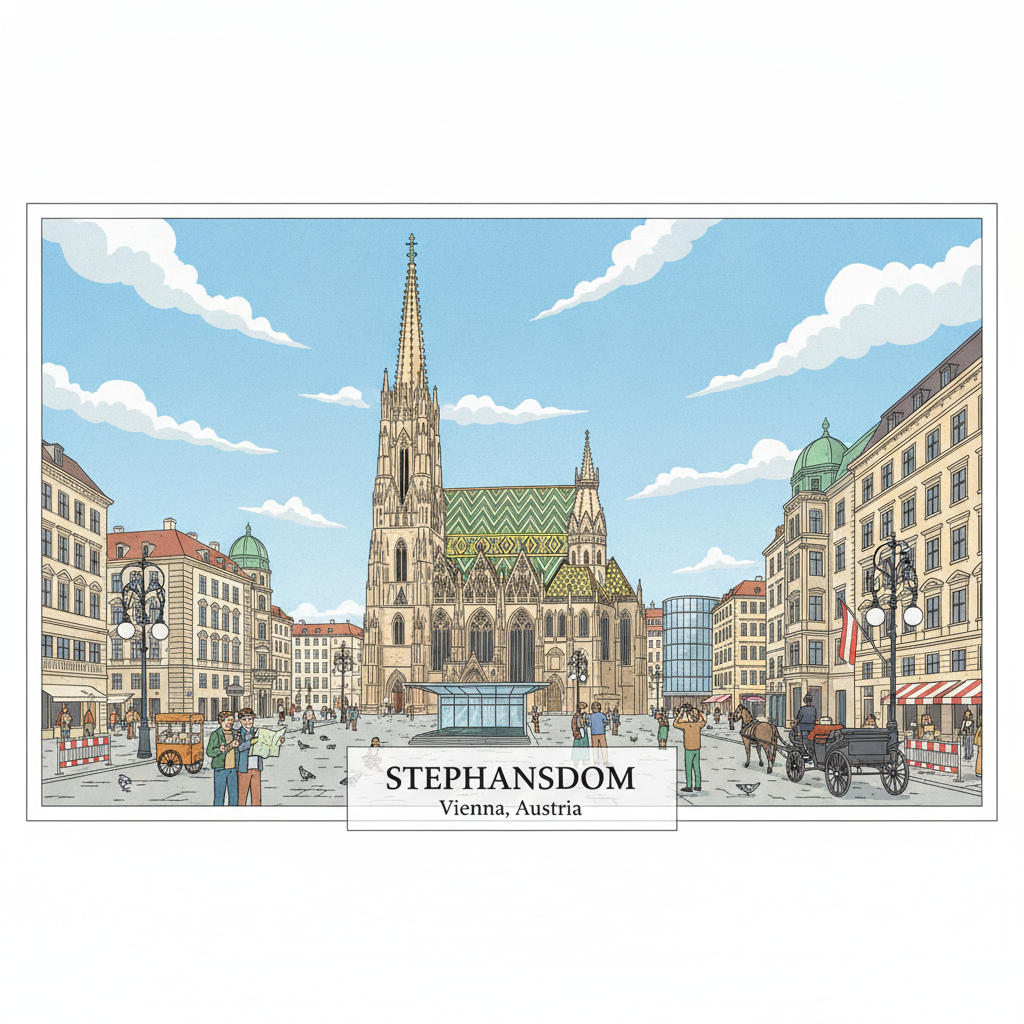
Vienna's defining landmark and Austria's most important Gothic structure, Stephansdom has stood at the center of the city since the 12th century. The current building, largely completed in the 14th and 15th centuries, is renowned for its multicolored diamond-patterned tile roof — a 230,000-tile mosaic of chevrons in green, yellow, and black visible from across the city — and for its 137-meter South Tower, the third-tallest Gothic church spire in the world. Descend to the catacombs beneath the cathedral, where the bones of some 11,000 plague victims are stored alongside the Habsburg family's copper urns containing the hearts and intestines of their emperors. The view from the South Tower, reached by 343 steps, encompasses the entire Inner City and the Vienna Woods beyond.
- 2
Graben
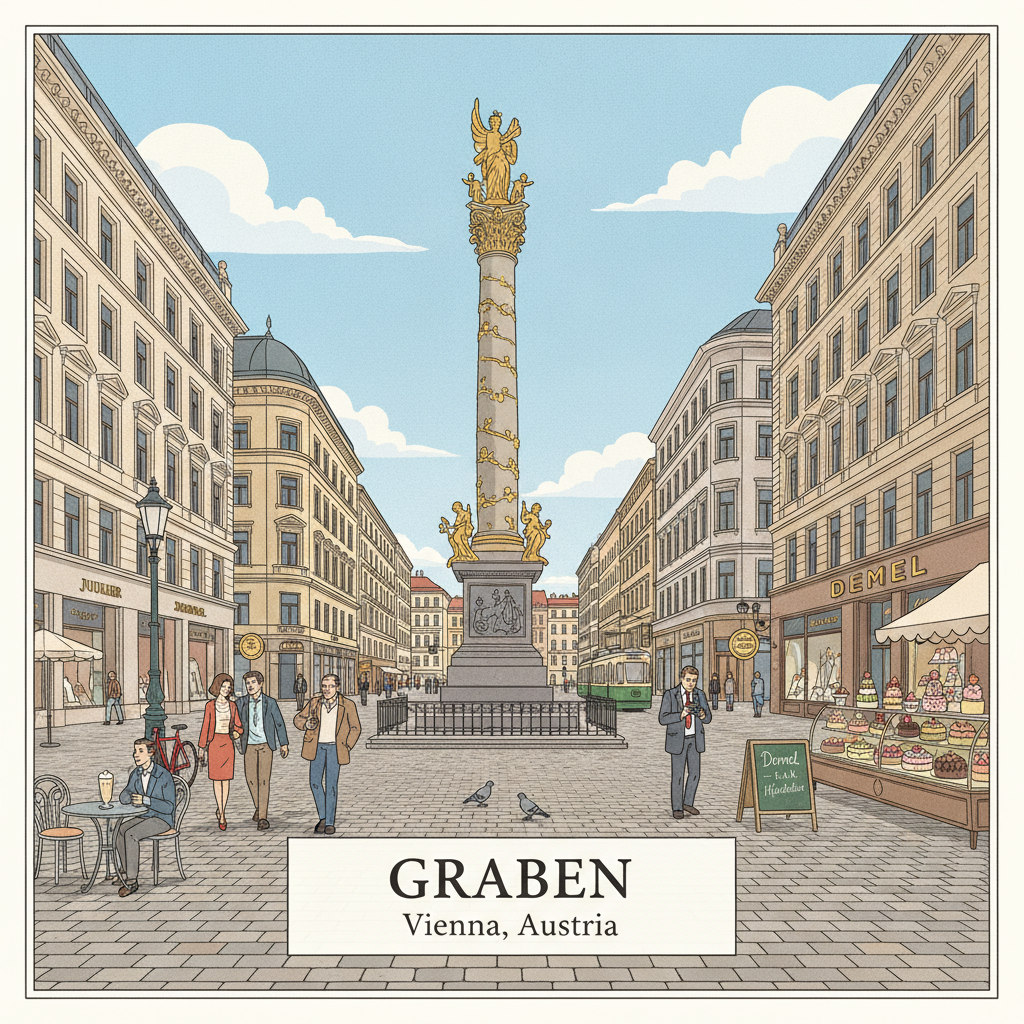
The Graben — literally 'the ditch,' named for the defensive moat that once ran here — is Vienna's most elegant pedestrian boulevard and its de facto outdoor living room. The broad pedestrian street is lined with some of the most important Jugendstil and Historicist commercial buildings in Central Europe, their ground floors occupied by luxury watchmakers, perfumeries, and the pastry shop Demel, purveyor to the Imperial Court since 1786. The street was pedestrianized in the 1970s, transforming it from a traffic artery into a social space. On any afternoon, the Graben fills with Viennese café society — a cross-section of the city's professional, artistic, and tourist populations that has characterized the street for centuries.
- 3
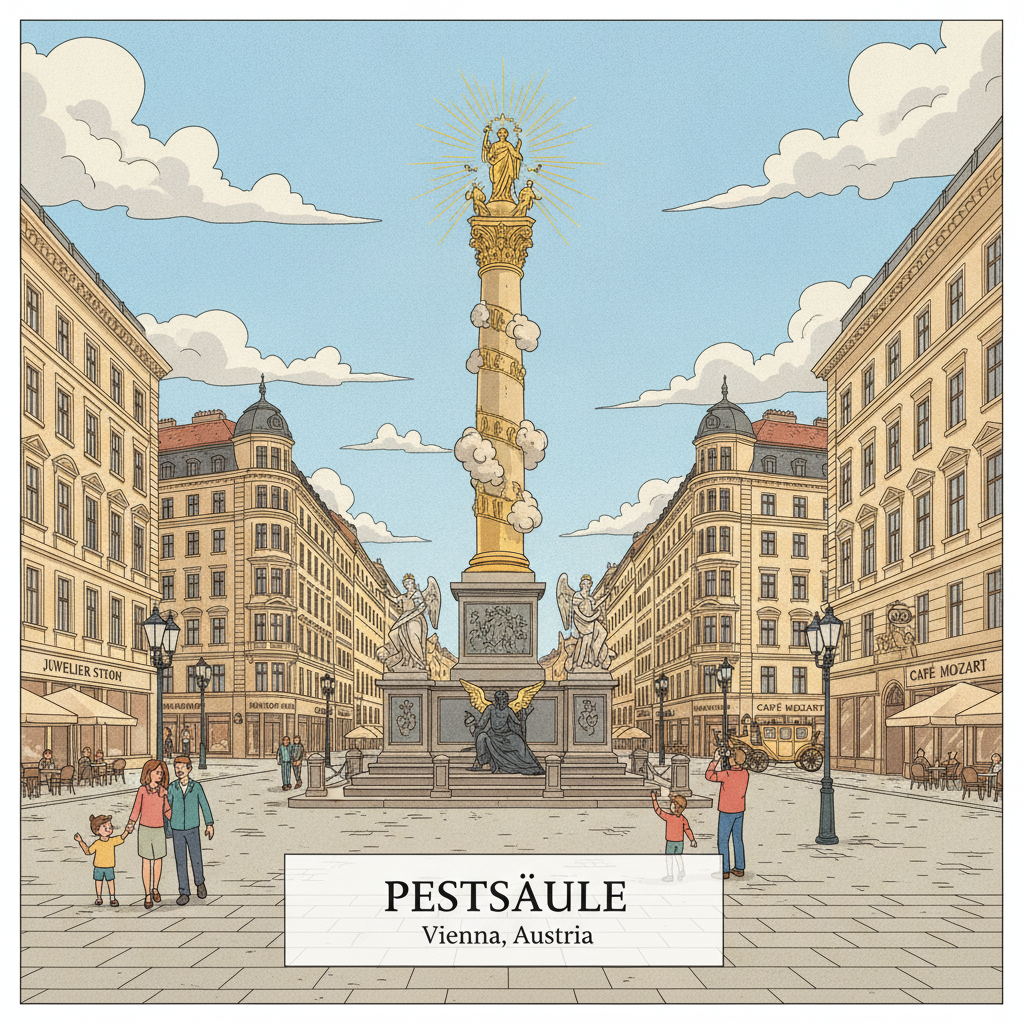
Pestsäule (Plague Column)
Standing in the center of the Graben, the Pestsäule — the Plague Column — is one of the most exuberant Baroque monuments in Europe, erected by Emperor Leopold I in 1693 to thank God for Vienna's deliverance from the bubonic plague that killed a third of the city's population in 1679. The column's sculptural program is dizzyingly complex: allegorical figures representing Faith and the eight provinces of the Habsburg Empire climb a writhing cloud of stone, while the plague personified — a hideous old woman — is thrust into the ground by an angel. At the top, the Holy Trinity floats in a golden cloud. The column was designed in collaboration by three architects and is one of the defining objects of Vienna's Baroque identity.
- 4
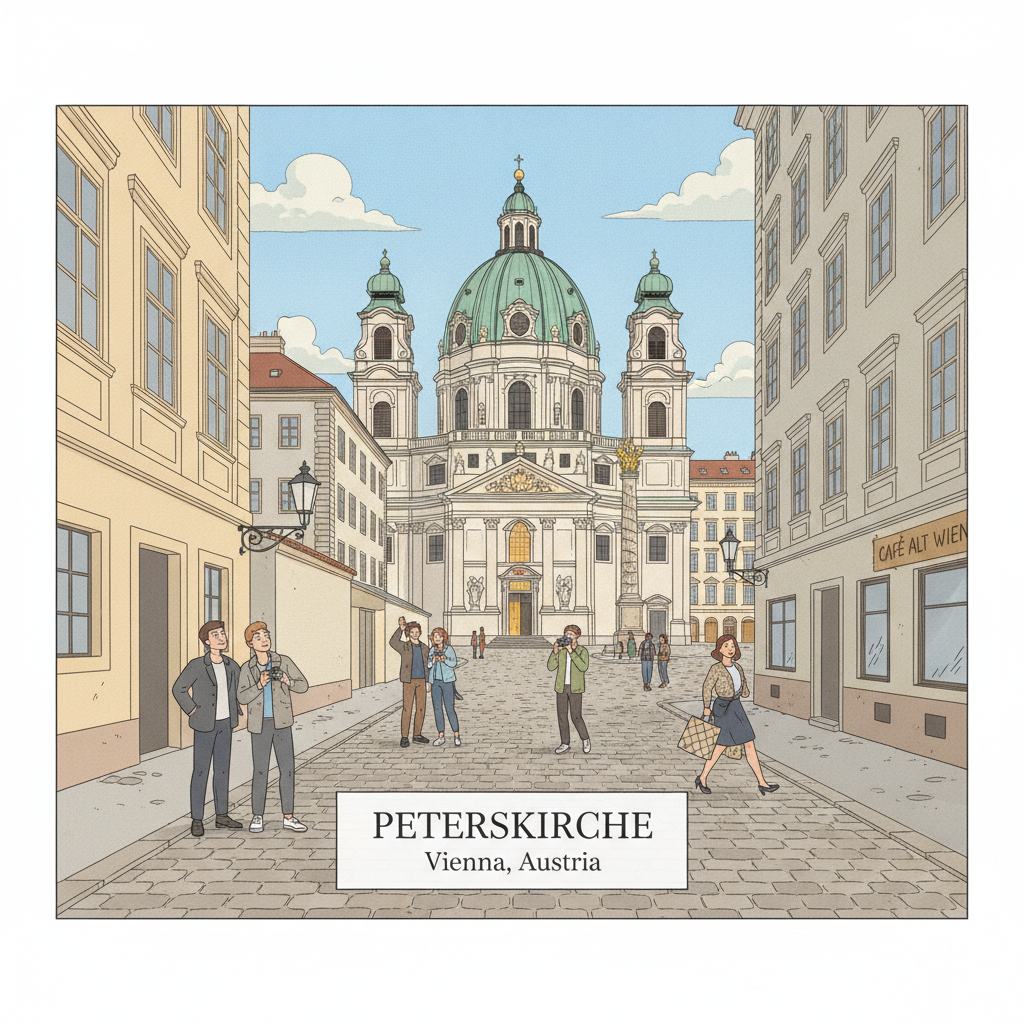
Peterskirche (St. Peter's Church)
Tucked into a narrow alley just off the Graben, the Peterskirche is a compressed masterpiece of Viennese Baroque architecture — its enormous oval dome and theatrical facade squeezed into a space so confined that you cannot see the full building from any single vantage point. Built between 1702 and 1733 to designs influenced by Johann Lucas von Hildebrandt, the interior is one of the most overwhelming in Vienna: gilded stucco, ceiling frescoes, side altars in marble and gold, and a suspended pulpit that seems to float in mid-air. The relics of St. Benedict displayed in a glass case on one of the altars are those of a Roman martyr, donated to the church in 1770.
- 5
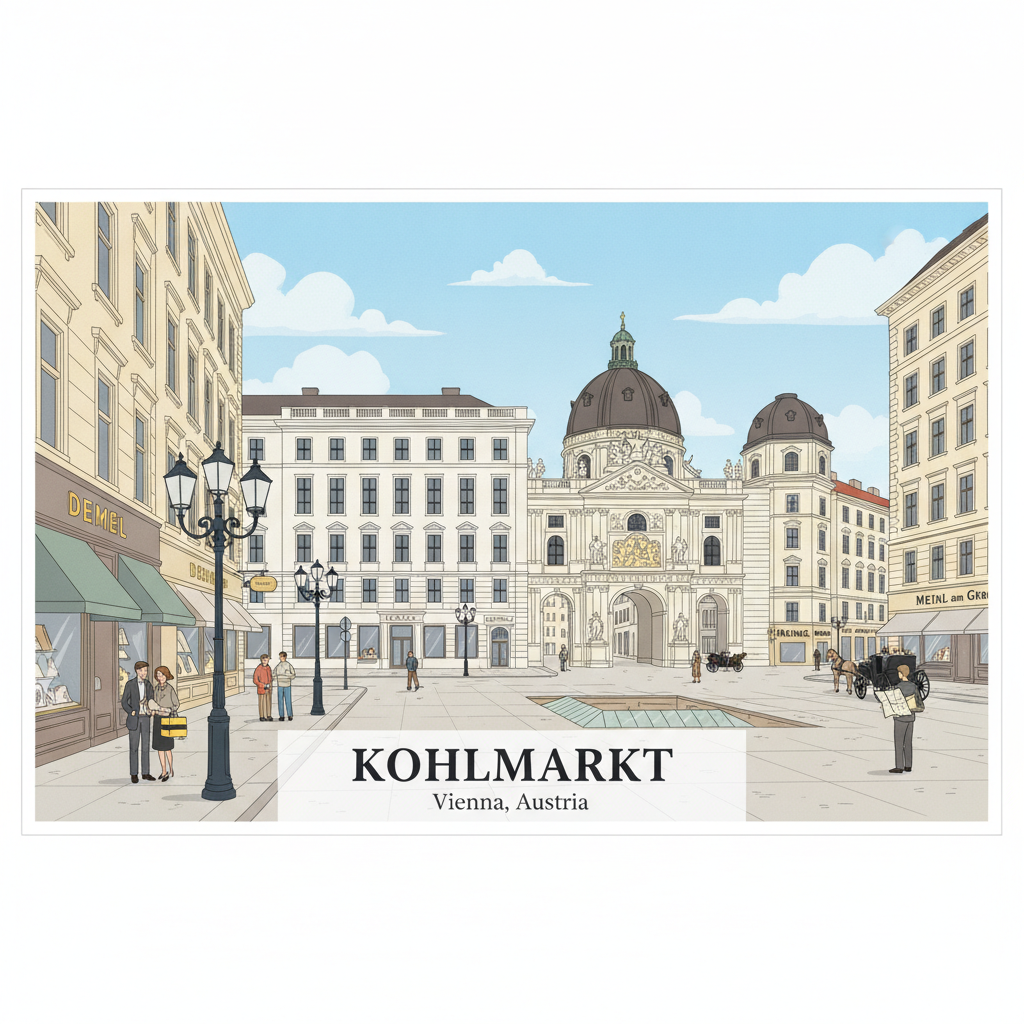
Kohlmarkt
Leading from the Graben toward the Hofburg, the Kohlmarkt is Vienna's most exclusive shopping street — the address of Demel's main salon, Meinl am Graben (the most prestigious delicatessen in Austria), and a concentration of luxury fashion houses that rivals anything on Bond Street or the Rue du Faubourg Saint-Honoré. The street takes its name from the coal market that occupied this spot in medieval times; today it is the antithesis of its origins. At its Hofburg end, the Kohlmarkt opens onto Michaelerplatz, where Adolf Loos's deliberately ornament-free Loos Haus (1912) stands directly opposite the ornate Baroque Michaelertor gateway — a confrontation that caused a scandal at the time and that still reads as one of the defining moments of architectural modernity.
- 6
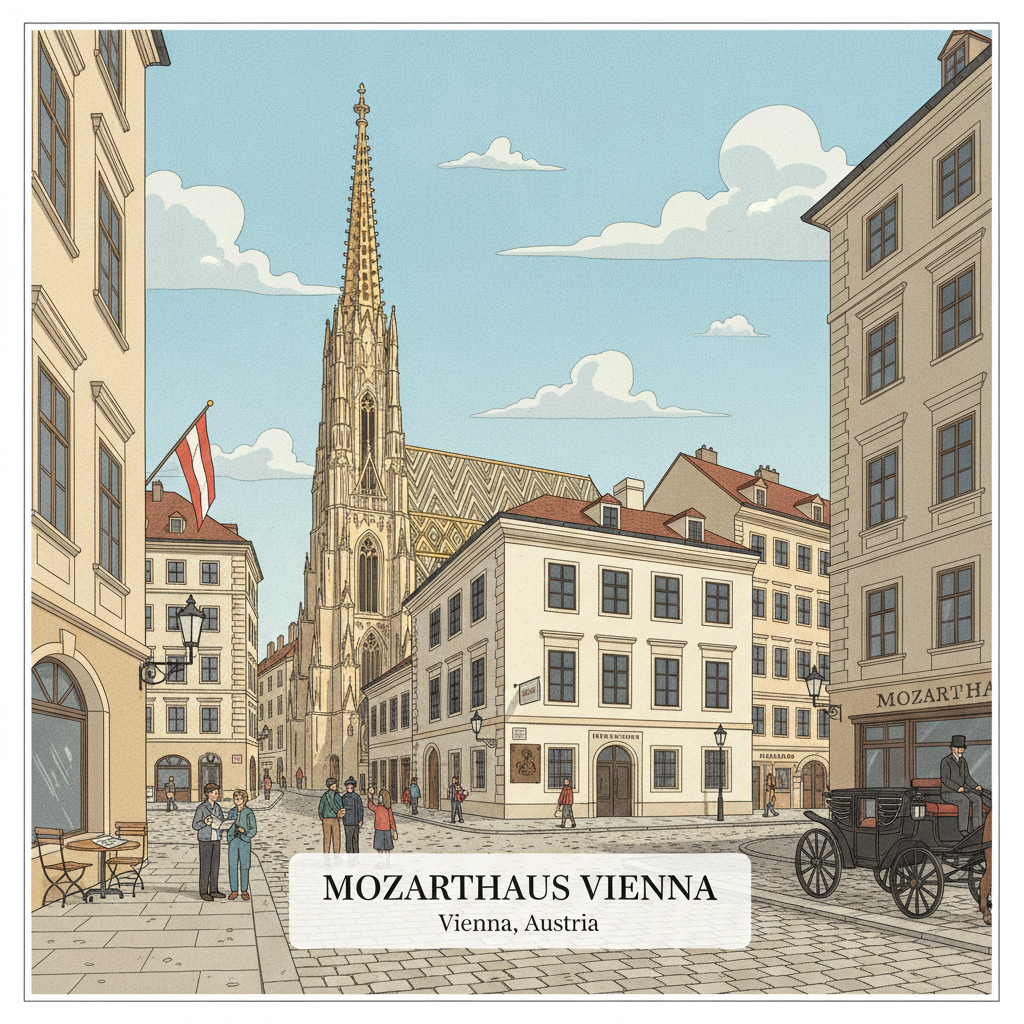
Mozarthaus Vienna
From 1784 to 1787, Wolfgang Amadeus Mozart lived in an apartment in the Domgasse — just behind the cathedral — that is the only one of his many Vienna addresses still intact. During his three years here he was at the height of his powers and popularity: he completed The Marriage of Figaro in these rooms, taught students, entertained Joseph Haydn, and earned enough from concerts and publishing to live in what was then one of the most fashionable addresses in the city. The apartment has been carefully restored and furnished in period style; the Mozarthaus museum occupies the building's upper floors with an exhibition on Mozart's life and times in Vienna. The building is modest by Viennese standards, but standing in the rooms where Figaro was born is an experience of unusual immediacy.
Walk this route with audio
Stories play automatically as you reach each stop — no tapping needed.
More in vienna
Old Vienna: Prater, Riesenrad & Leopoldstadt
Color & Harmony: Hundertwasser, Stadtpark & the Danube Canal
Imperial Summer: Schönbrunn Palace & Gardens
Markets & Modernism: Naschmarkt to MuseumsQuartier
Klimt & Baroque Splendor: Belvedere to Karlskirche