Victoria BC: The Six-Gill Sharks in the Anoxic Fjord Nobody Talks About, the Language With Fewer Than 20 Fluent Speakers That Is Now Being Taught in Schools and the Blue Flower Fields That Fed a People for Thousands of Years
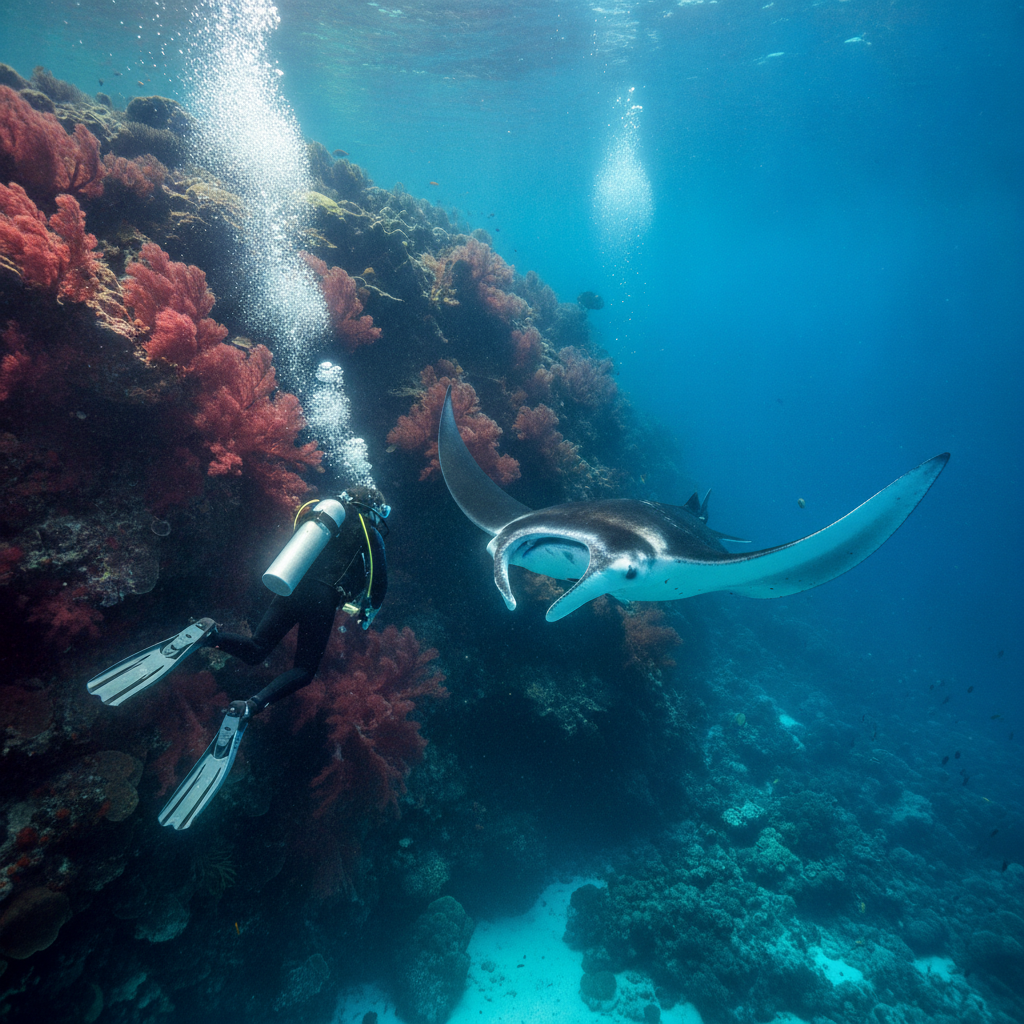
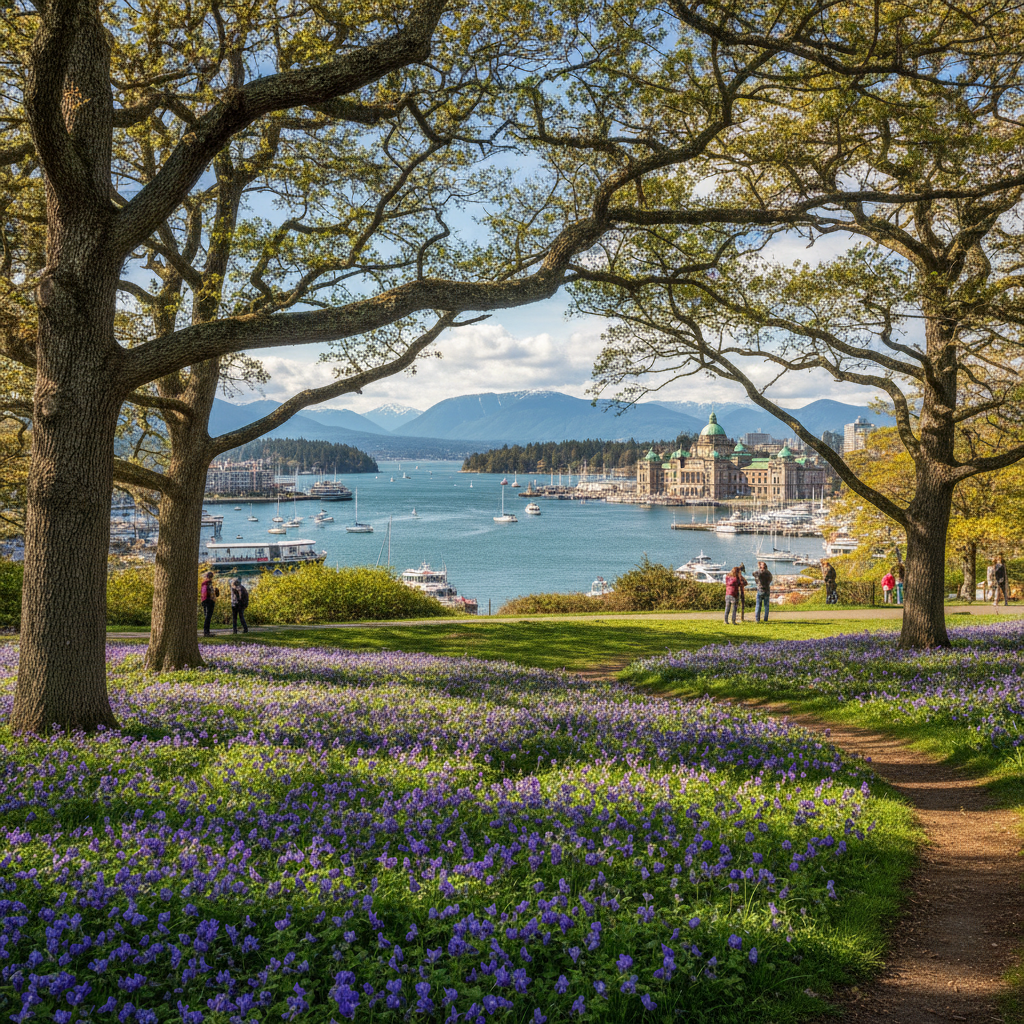
Dive or research the Saanich Inlet anoxic deep zone where six-gill sharks aggregate in numbers larger than anywhere else in the world because the oxygen-free water drives prey fish upward and provides hunting advantage in a fjord that sits under a famous tourist garden, follow the SENCOFEN language revitalization effort that went from fewer than 20 fluent speakers in the 1990s to active school instruction programs because the community decided language survival was non-negotiable, understand that the blue camas flowers blooming in Beacon Hill Park in April and May are the remnant of a managed food landscape that the Lekwungen cultivated with controlled burns for thousands of years before European pasture conversion destroyed almost all of it within two generations, cycle the Marine Drive route 30 kilometres around the southeastern Saanich Peninsula in a city where year-round cycling is a serious alternative to driving rather than a seasonal recreation, watch Kwakwakawakw carvers work on poles in Thunderbird Park in public view maintaining the living tradition of monumental art that colonial observers predicted would disappear within a generation of contact, and recognize that the most English city in Canada is being remade by Filipino nurses and Indigenous language teachers and young families priced out of Vancouver who are changing what Victoria means.
- 1
Victoria Changing Identity and Future
Victoria is a city in identity transition, simultaneously the most English city in Canada by aesthetic and cultural code and a rapidly diversifying metropolitan area where immigration, Indigenous rights, and the housing crisis are reshaping the community. The city that built its tourism brand on afternoon tea, double-decker buses, and hanging flower baskets is increasingly served by Filipino nurses, South Asian technology workers, and Indigenous cultural practitioners who make up the actual working community of the contemporary city. The affordable housing crisis has displaced working families to satellite communities in Langford, Colwood, and View Royal, where growth is rapid and unserviced by the heritage character and walkability of the inner city. The debate about how to increase housing density in a city of heritage neighborhoods where property values are built partly on the low-density character that prevents affordable supply is the central civic political conflict. The Capital Regional District growth management strategy attempts to direct intensification to urban village nodes. The retirement community that shaped Victoria in the late 20th century is being joined by younger migrants who choose the quality of life over the higher wages of Vancouver, creating generational change in the city demographic and cultural orientation. Victoria remains one of the most desirable cities in Canada by lifestyle metrics while simultaneously having some of the most serious affordability and equity challenges.
- 2
Victoria Marine Environment and Pacific Salmon
The Pacific salmon ecology of the southern Vancouver Island marine environment, where five species of Pacific salmon, Chinook, Coho, Sockeye, Pink, and Chum, move through the Strait of Juan de Fuca and Strait of Georgia en route to spawning rivers throughout British Columbia and the Pacific Northwest, makes the Victoria marine area one of the most productive salmon grounds on the Pacific Coast and supports both commercial and recreational fisheries, the whale watching industry whose orca are salmon specialists, and the cultural practices of the Coast Salish peoples for whom salmon has been the foundational food source for thousands of years. The decline of wild Pacific salmon runs, particularly Chinook, through a combination of habitat loss in spawning rivers, overfishing across the marine range, climate warming of river temperatures, and the sea lice and disease pressure from Atlantic salmon aquaculture operations, is the most significant environmental threat to the Victoria marine ecosystem. The Strait of Juan de Fuca is used by the endangered Southern Resident orca for summer hunting, and the decline of Chinook salmon is directly implicated in the population decline of the orca. The restoration of salmon habitat through culvert removal, streamside planting, and flow management in Vancouver Island rivers is supported by federal, provincial, First Nations, and non-government organizations in a collaborative effort that represents one of the largest ecological restoration programs in North America.
- 3
Victoria Brentwood Bay and Saanich Inlet
The Saanich Inlet, a deep fjord extending 24 kilometres north from Brentwood Bay to the town of Mill Bay, is one of the most unusual marine features in the southern Gulf Islands region, being a deep anoxic basin where the water below 100 metres contains no dissolved oxygen and is dominated by sulfur bacteria, while the upper waters support an extraordinary abundance of marine life including Chinook salmon, Dungeness crab, and the largest collection of six-gill sharks in the world, with aggregations of these deep-sea predators observed in the anoxic zone by underwater researchers. The Butchart Gardens sits above the Tod Inlet at the southern end of the Saanich Peninsula adjacent to the inlet. The town of Brentwood Bay on the Saanich Inlet shore provides BC Ferries service to Mill Bay on the Malahat shore, creating a shortcut for Vancouver Island drivers avoiding the Trans-Canada highway through Langford. The Saanich Inlet Provincial Marine Park protects underwater areas where the six-gill sharks aggregate. The Mill Bay ferry terminal at the northern end of the inlet is a quaint vehicle ferry carrying 16 cars that operates as a scenic alternative route. The warm sheltered water of the Saanich Inlet, protected from Pacific swell and enriched by freshwater input from seasonal streams, supports the prawn and crab trapping that makes the area a recreational boating destination.
- 4
Victoria Indigenous Cultural Renaissance
The First Nations of Greater Victoria, primarily the Songhees and Esquimalt Nations of the Lekwungen people, are experiencing a cultural renaissance in language revitalization, governance capacity, and economic development that is transforming their relationship to the city built on their ancestral territory. The SENĆOŦEN language, the Coast Salish language of the Lekwungen, Saanich, and related peoples, is being taught in schools and through immersion programs that aim to revitalize a language that had fewer than 20 fluent speakers remaining by the 1990s. The Saanich Nation, comprising five communities on the Saanich Peninsula north of Victoria, operates the Tsartlip and Tsawout First Nations schools with Indigenous language instruction. The First Peoples House at the University of Victoria provides Indigenous student support and cultural programming. The cultural tourism economy of the Greater Victoria area has been shaped by Indigenous cultural organizations that offer canoe journeys, cultural camps, and guided interpretive walks through traditional territories. The Thunderbird Park beside the Royal BC Museum, where Mungo Martin carved and raised poles beginning in 1952, has been a site of ongoing cultural assertion by Kwakwakawakw and other Northwest Coast carvers who work in the park under public observation, demonstrating the living continuity of monumental art traditions that colonial observers had predicted would disappear within a generation of contact.
- 5
Victoria Cycling Counter-Culture
The strong cycling culture of Victoria, producing some of the highest rates of utilitarian cycling in Canada, has developed partly through geography, the flat terrain of the Saanich Peninsula and the compact downtown, partly through infrastructure investment in the regional trail network, and partly through a civic counter-culture that rejects the car dependence of Canadian suburban development and embraces active transportation as an ecological and social value. The Cyclists Association of Greater Victoria and the Greater Victoria Placemakers Coalition have advocated for protected cycling infrastructure since the 1990s. The protected bike lane on Pandora Avenue through the downtown and the Wharf Street connection to the Inner Harbour are examples of infrastructure installed after sustained advocacy. The Cycle the Scenic Marine Drive route around the eastern and southern shores of the Saanich Peninsula provides 30 kilometres of low-traffic cycling through coastal parkland, residential neighborhoods, and waterfront views of the Gulf Islands. The winter cycling culture of Victoria, where the mild climate allows year-round cycling at a higher participation rate than any other Canadian city, produces a distinctive relationship to bicycle commuting as a serious alternative to driving rather than a seasonal recreation. The cargo bicycle and e-bike adoption rate in Victoria is among the highest in Canada, reflecting both the geography and the values of a city that considers itself environmentally progressive.
- 6
Victoria Indigenous Food and Camas History
The Garry oak meadow ecosystem of Victoria and the southern tip of Vancouver Island supported the Coast Salish peoples as a food-producing landscape for thousands of years through the cultivation and harvest of the camas bulb, the edible root of the great camas, Camassia leichtlinii, and the common camas, Camassia quamash, blue-flowered bulb plants that the Lekwungen, Saanich, and other peoples cultivated through controlled burning of the meadows to suppress competing vegetation, harvested in late spring and summer, and cooked in earth ovens for periods of up to three days to convert the inulin-rich bulb into digestible, sweet-tasting food. The camas meadows of the Saanich Peninsula and the eastern shore of Victoria were among the most productive food landscapes in the Pacific Northwest, and the blue flower fields visible in April and May at Beacon Hill Park and the remaining Garry oak reserve areas are a small remnant of the managed food landscape that European settlement converted to pasture within two generations. The near-total loss of the camas meadow ecosystem through agricultural conversion, urban development, and invasive species represents one of the most complete erasures of an Indigenous food system in Canada. Contemporary Coast Salish cultural practitioners are working with ecologists and land managers to restore camas meadows on public lands in the Greater Victoria area as both ecological restoration and cultural reclamation.
Walk this route with audio
Stories play automatically as you reach each stop — no tapping needed.
More in Victoria
Praslin Island: Vallée de Mai UNESCO Forest & Anse Lazio
Victoria BC: The Most English City in Canada Where 85 Percent of Residents Were Born in Canada, the Afternoon Tea Capital of North America and the Capital of a Province 14 Times the Size of Switzerland
Victoria BC: The First Brew Pub in Canada That Has Been Serving Pints Since 1984, the Oldest Building in Western Canada Outside Quebec and the Intertidal Zone That Has No Equal in British Columbia
Victoria BC: The Architect Who Designed Both the Legislature and the Empress Hotel Was Murdered by His Young Wife Lover in England, Craigdarroch Castle Built by a Coal Baron Who Died Before Moving In and Canada Coldest Water Surfers
Aldabra Atoll: World's Largest Giant Tortoise Colony