Victoria Falls: The Smoke That Thunders, David Livingstone, Zambezi Rafting, Bungee Jump, Wildlife, and Practical Guide
Victoria Falls introduction: the most powerful waterfall in the world and UNESCO World Heritage Site, David Livingstone and the European discovery, Zambezi whitewater rafting, the Victoria Falls Bridge bungee jump and adventure sports, Zambezi wildlife (elephant, Chobe), and the complete Zimbabwe vs Zambia practical planning guide.
- 1
Victoria Falls - The Smoke That Thunders and the World Greatest Waterfall
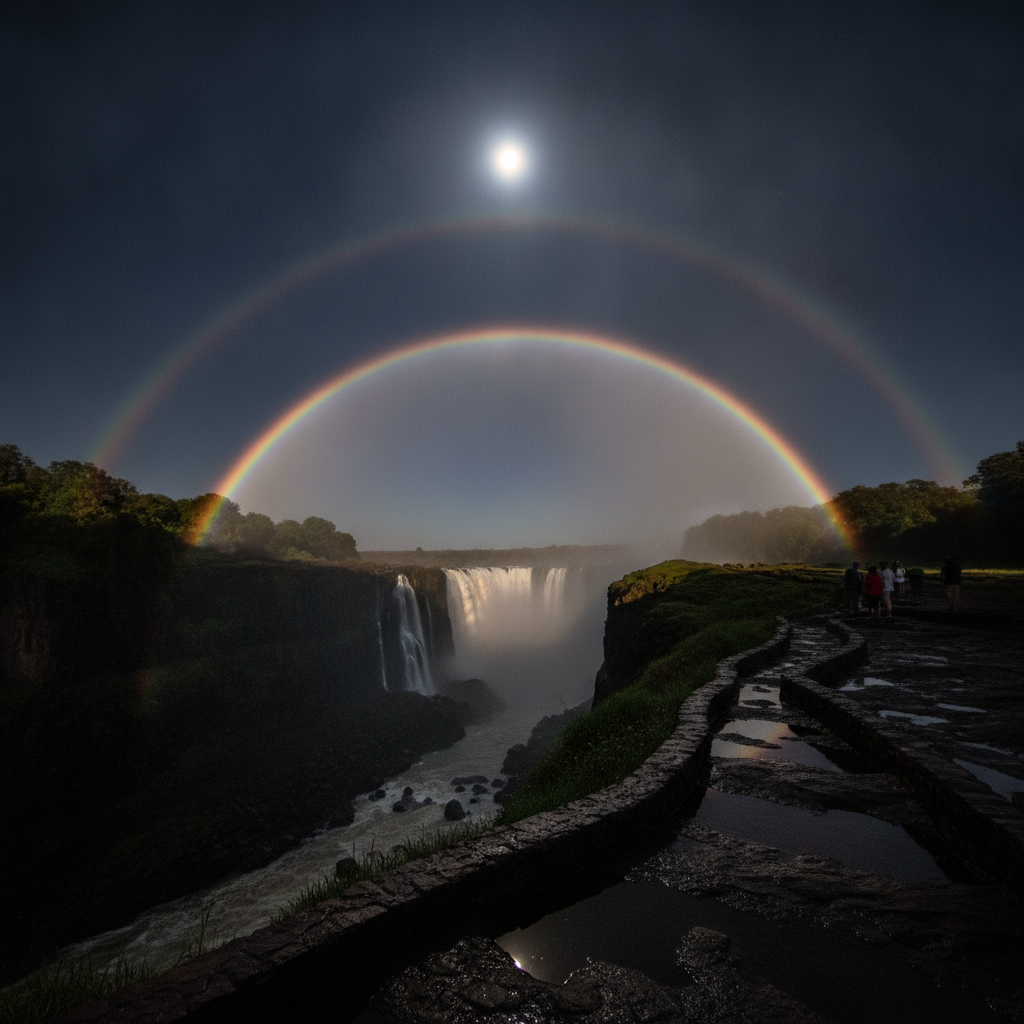
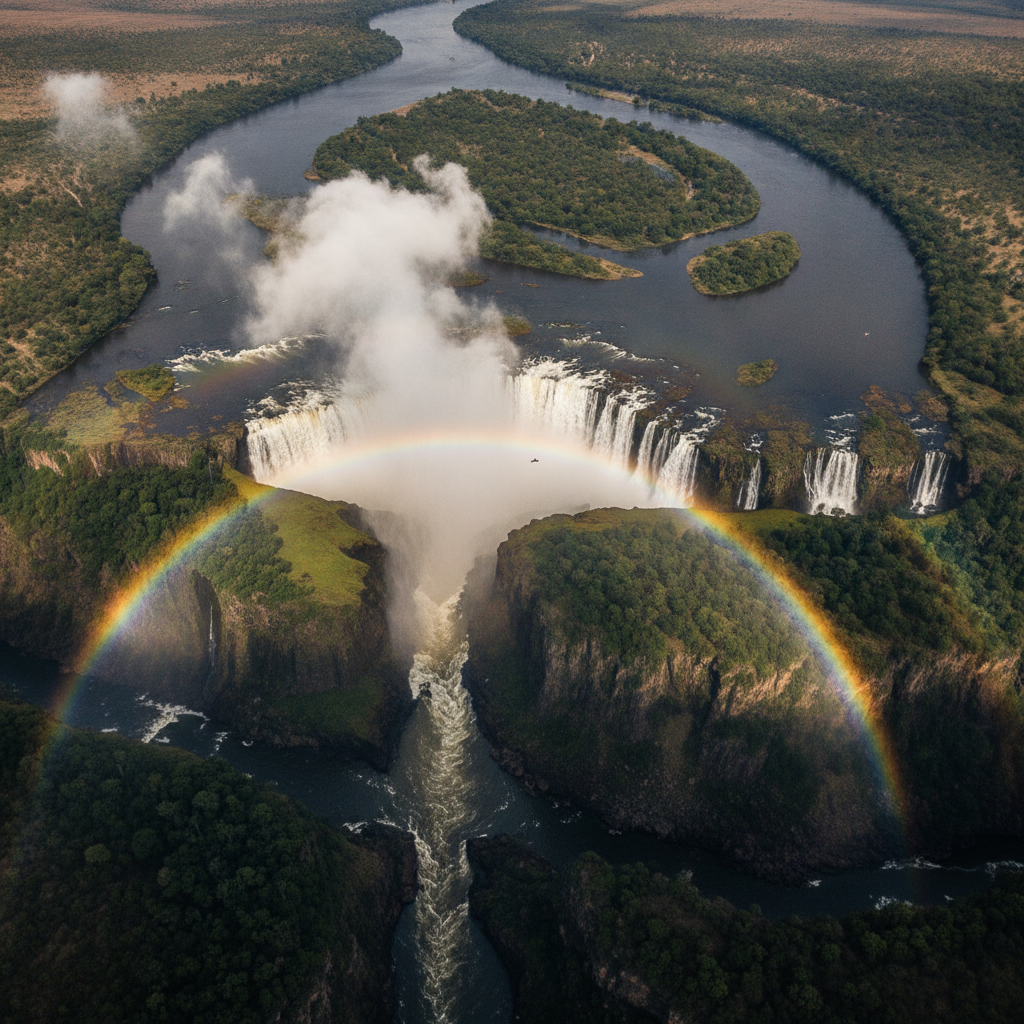
Victoria Falls (Mosi-oa-Tunya: the Smoke That Thunders in the Lozi language): the most powerful waterfall in the world and one of the Seven Natural Wonders of the World. The falls span the full width of the Zambezi River (approximately 1,708 meters wide), dropping approximately 108 meters into the First Gorge below. The volume of water: at peak flow (March-May), the Victoria Falls discharges approximately 500,000 cubic meters of water per minute, creating a spray cloud visible from approximately 50 km away. The UNESCO World Heritage Site (designated 1989): the Mosi-oa-Tunya / Victoria Falls National Park. The falls were formed by the Zambezi River eroding through a series of parallel cracks in the basalt plateau: the current falls are the 5th position in a series of 8 erosion points; the river will eventually erode the 6th crack, shifting the falls approximately 500 meters upstream.
- 2
David Livingstone and the European Discovery of Victoria Falls
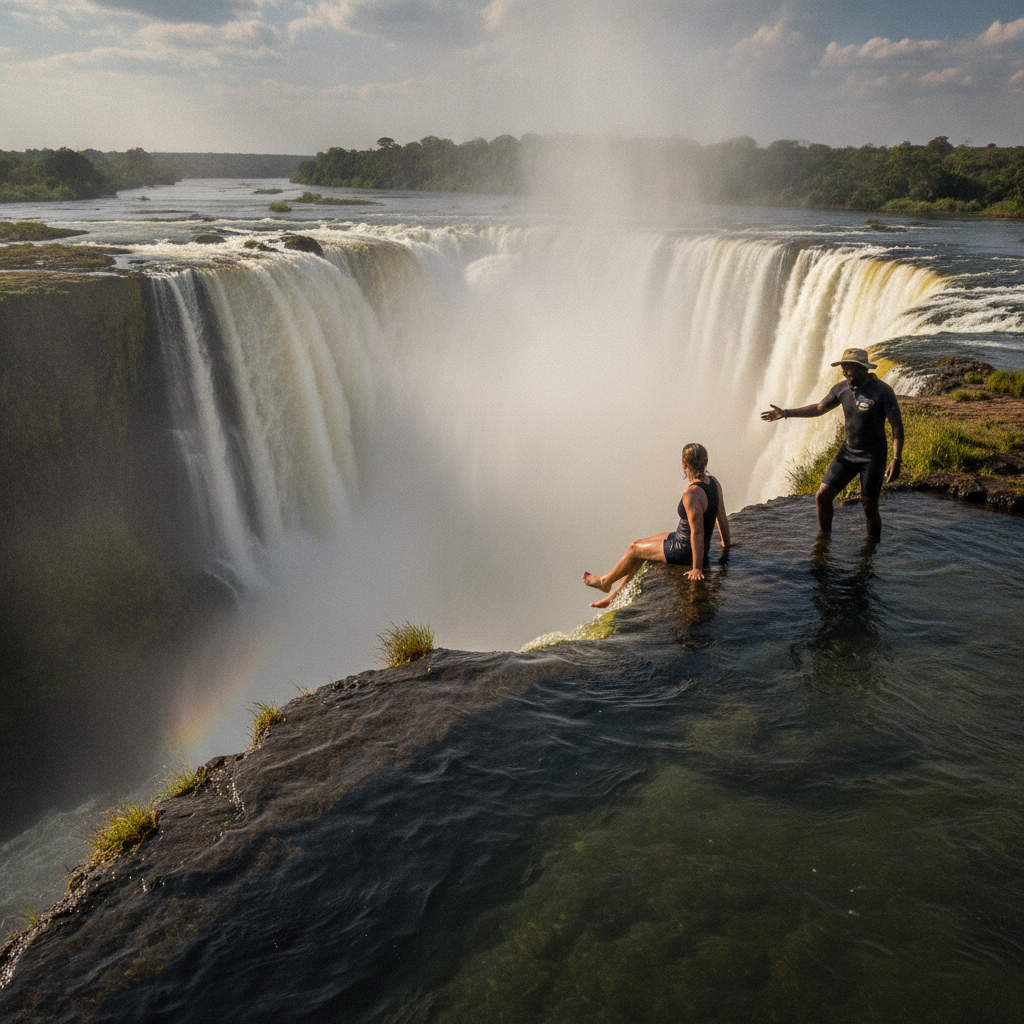
David Livingstone (1813-1873): the Scottish missionary and explorer who became the first European to see Victoria Falls on 16 November 1855, naming them after Queen Victoria. Livingstone arrived at the falls by canoe from the upstream island (now Livingstone Island on the Zambian side). His account: the falls were described as the most wonderful sight I had witnessed in Africa, the scene was such as must have been gazed upon by angels in their flight. The Livingstone Island experience (accessible from Zambia): the guided tour to the island where Livingstone stood to view the falls, including the Devil Pool (the natural infinity pool at the edge of the falls where swimming is possible during low water season July-September). The David Livingstone statue (on the Zambian side at the falls entrance): a bronze statue of the explorer holding his Bible and looking across the falls. The Livingstone Museum in Livingstone (Zambia): the primary museum of Zambian history and the Livingstone personal archive.
- 3
The Zambezi River - Whitewater Rafting and the Gorge Below
The Zambezi River below Victoria Falls: the most significant whitewater rafting destination in Africa and one of the most challenging in the world. The rapids of the Batoka Gorge (the gorge downstream of Victoria Falls): 23 classified rapids, several Grade 5 (commercial maximum). The most famous rapids: No. 5 (Morning Glory), No. 9 (Commercial Suicide), No. 18 (Oblivion). The full-day rafting trip (from the base of the falls through the gorge): approximately 8-10 hours on the water, covering 24 km. The high-water season (December-April: the Zambezi is too high for rafting when the Falls are at peak flow); the best rafting season is May-November (when the water level drops). The Zambezi whitewater experience is considered a rite of passage for adventure travelers visiting southern Africa: it ranks with the Futaleufu in Chile and the Sun Kosi in Nepal as the world most challenging commercially operated rafting rivers.
- 4
The Victoria Falls Adventure Sports - Bungee, Gorge Swing, and the Bridge
The Victoria Falls Bridge (completed 1905, designed by George Hobson, built by the Cleveland Bridge and Engineering Company in the UK, shipped to Africa and assembled on site): the 198-meter-long steel arch bridge connecting Zimbabwe (Livingstone border post, Zambia side) to Zimbabwe over the Batoka Gorge at the Second Gorge below the falls. The Victoria Falls Bridge bungee jump (111 meters, one of the highest commercially operated bungee jumps in the world): operated from the center of the bridge over the Zambezi. The Gorge Swing (a large swing arc across the gorge from the bridge cable): the most graceful of the Victoria Falls adventure sports. The zipline (flying fox) across the gorge: the highest zipline in Africa. The helicopter flight over the falls (the flight of angels): the 12-minute flight that gives the full aerial perspective of the 1,708-meter span of the falls and the rainbow that forms permanently in the spray mist. The Victoria Falls Bridge was one of Cecil Rhodes planned Cape to Cairo railway, intended to link Cape Town with Cairo by rail.
- 5
The Wildlife of Victoria Falls - Elephants on the Zambezi
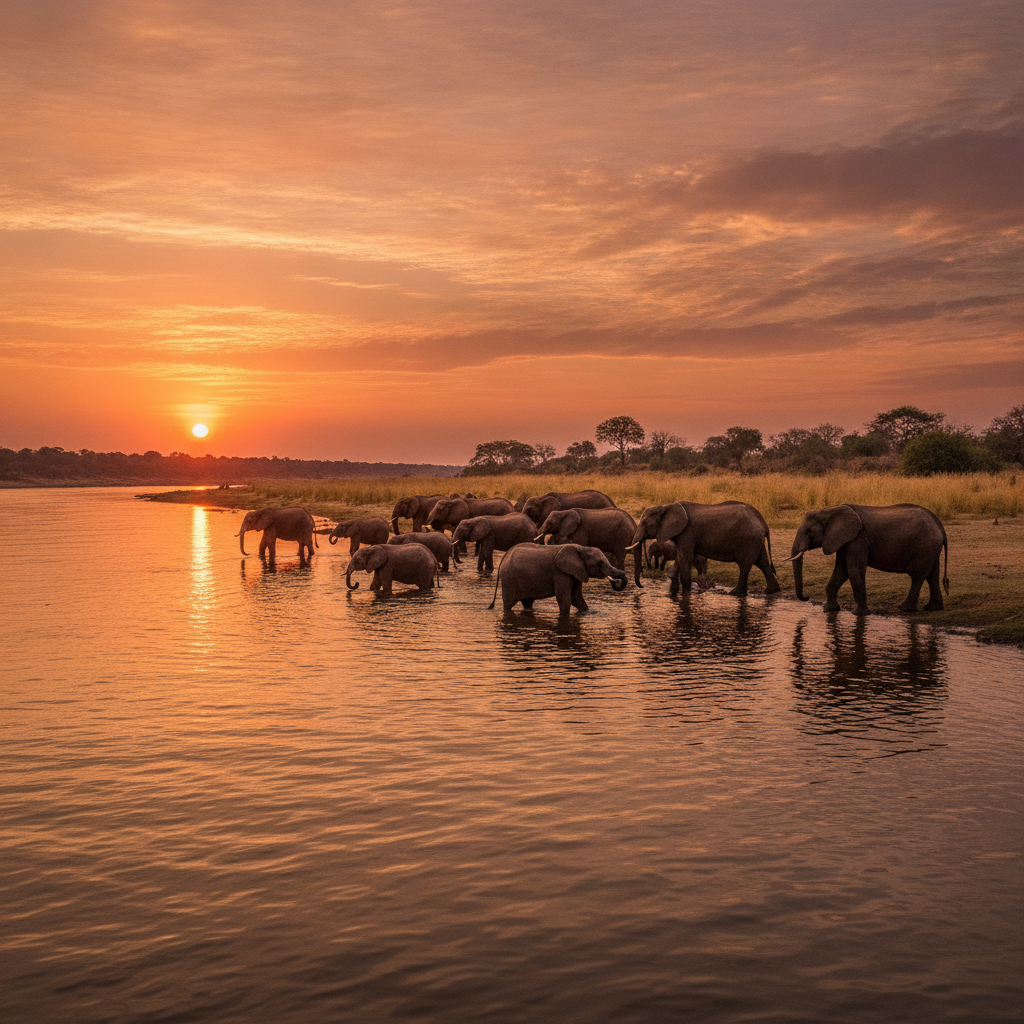
The Victoria Falls region wildlife. The Zambezi National Park (Zimbabwe, adjacent to the Victoria Falls National Park): the wildlife reserve that protects the Zimbabwean bank of the Zambezi upstream of the falls. Elephant: the Victoria Falls area has one of the highest elephant densities in Africa; elephants frequently enter the Victoria Falls town area and are regularly seen on the road between the town and the falls. The Chobe National Park (Botswana, approximately 70 km south of Victoria Falls): the highest elephant density of any national park in Africa (estimated 120,000 elephants). Day trips from Victoria Falls to Chobe by road or speedboat: the Chobe riverboat sunset cruise from Kasane is one of the finest elephant viewing experiences in Africa. The Hwange National Park (Zimbabwe, approximately 100 km east of Victoria Falls): the largest national park in Zimbabwe, with large elephant, lion, and wild dog populations.
- 6
Victoria Falls Practical Guide - Zimbabwe vs Zambia Side and What to Expect
Victoria Falls practical planning. Zimbabwe side vs Zambia side: the falls can be viewed from both the Zimbabwean town of Victoria Falls and the Zambian town of Livingstone. The Zimbabwe side has the most complete view (approximately 75% of the falls face the Zimbabwe bank) and the most developed tourist infrastructure. The Zambia side offers the Livingstone Island experience and the Devil Pool swimming during low water. Crossing the bridge: visas for both Zimbabwe (USD 50) and Zambia (USD 50 or KAZA UniVisa USD 50 for both countries) are available at the border. The best time to visit: May-June (the falls are at near-peak flow from the March-April rainy season, but the spray is not so overwhelming that it prevents photography; the Devil Pool is not accessible). July-September (the water level drops: the Devil Pool swimming is available on Livingstone Island; the falls are smaller but more photogenic). November-January (the low water season: the falls are at their smallest but most photographic). Accommodation: the Victoria Falls Hotel (the historic colonial hotel opened 1904, the most significant Victoria Falls accommodation) and the Livingstone Royal Livingstone (on the Zambian side).
Walk this route with audio
Stories play automatically as you reach each stop — no tapping needed.
More in victoria-falls
Victoria Falls: The Devil Pool, Cape to Cairo Railway, Microlight Flights, Victoria Falls Hotel, and Leya Culture
Victoria Falls: Batoka Gorge Geology, Okavango Delta, Chobe Elephants, Livingstone Zambia Culture, and Tigerfish Fishing
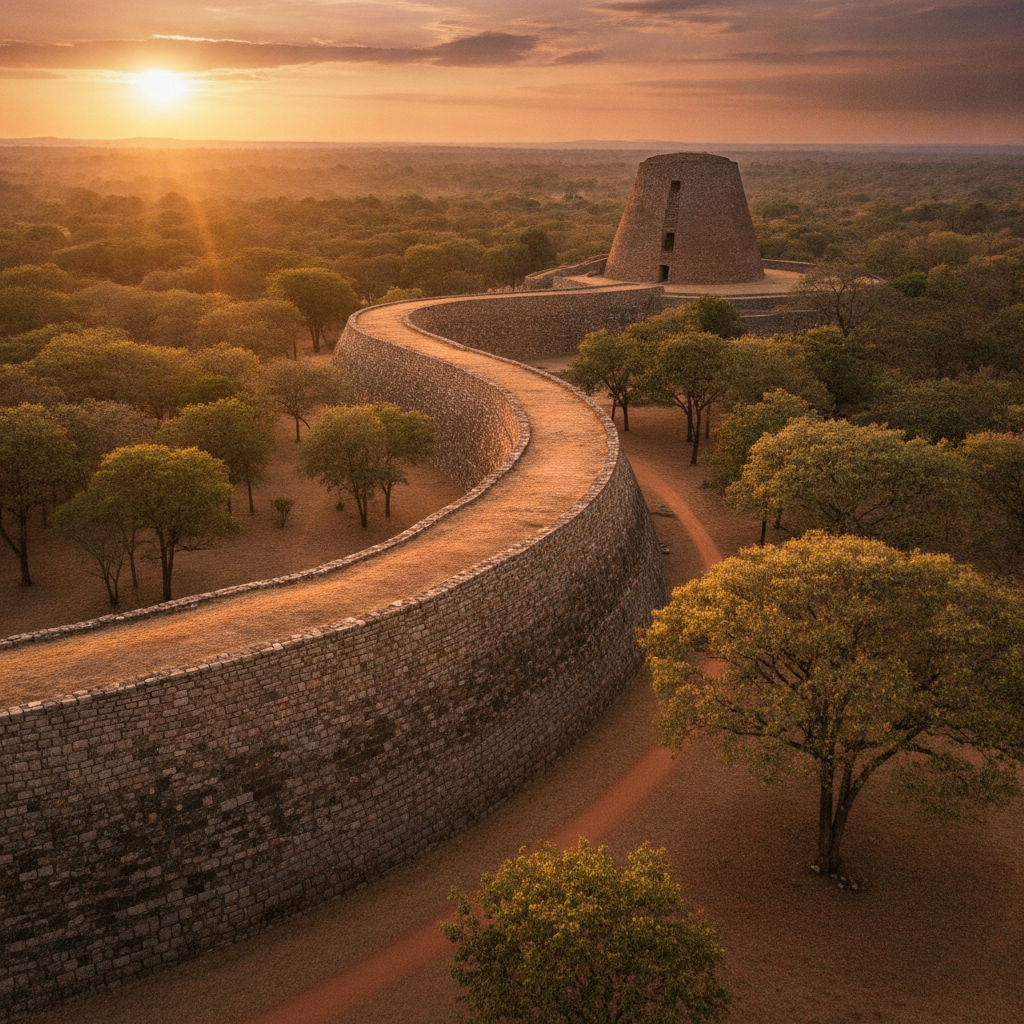
Victoria Falls: Great Zimbabwe UNESCO Monument, Mugabe Economic Collapse, Hwange Wildlife, Zambezi Sunset Cruise, and KAZA
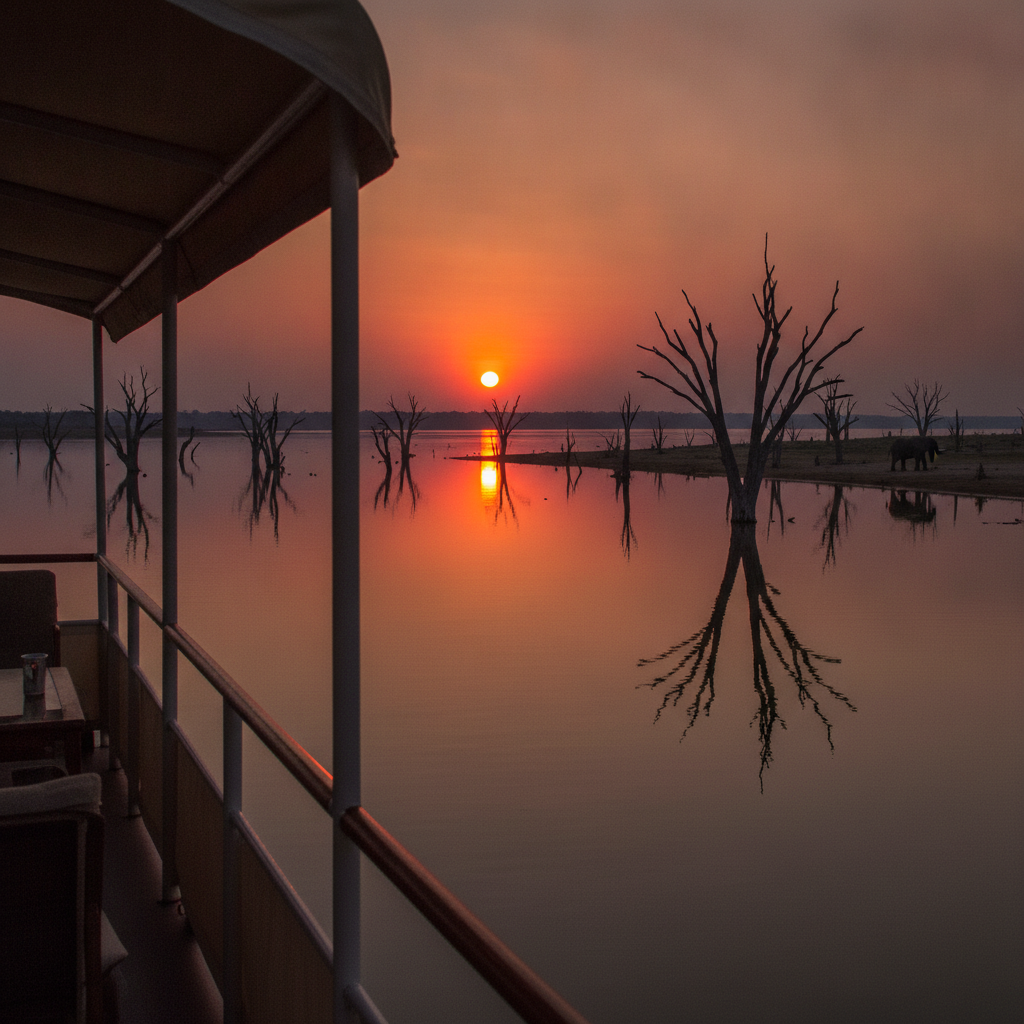
Victoria Falls: Kariba Dam and Operation Noah, Zambezi National Park, Mana Pools, Nile Crocodile, and Kasane Day Trip