Victoria Falls: Great Zimbabwe UNESCO Monument, Mugabe Economic Collapse, Hwange Wildlife, Zambezi Sunset Cruise, and KAZA
Zimbabwe history and nature: Great Zimbabwe ancient Shona civilization, the Mugabe era and Zimbabwe economic collapse, Hwange National Park (elephants and wild dogs), the Zambezi sunset cruise, and the KAZA transfrontier conservation area (the largest wildlife conservation area in the world).
- 1
Zimbabwe - The Ruins of Great Zimbabwe and the Ancient Shona Civilization
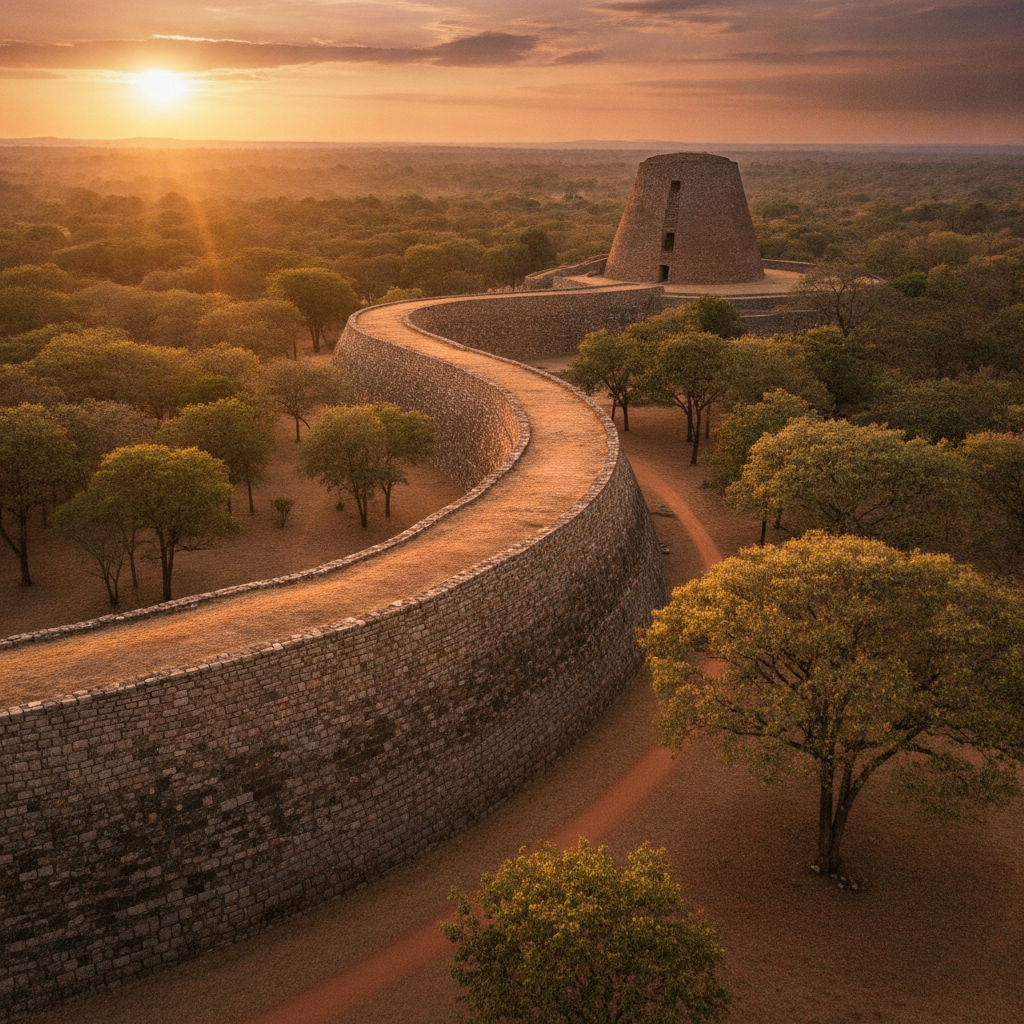
Great Zimbabwe (UNESCO World Heritage Site, approximately 440 km southeast of Victoria Falls near Masvingo): the most significant pre-colonial stone monument in sub-Saharan Africa, the largest ancient stone structure in Africa south of the Sahara. The Great Zimbabwe complex was the capital of the Kingdom of Zimbabwe (approximately 11th-15th century), a trading empire that controlled the gold and ivory trade route from the Zimbabwean interior to the Sofala coast (present-day Mozambique), linking to the Indian Ocean trade network of Arab merchants. The Great Enclosure (the most dramatic element: the 11-meter-high curved stone walls, 255 meters in circumference, built without mortar from precisely fitted granite blocks). The Hill Complex (the royal enclosure on the hill above the valley: the earliest part of the monument, occupied from approximately the 11th century). At peak the Zimbabwe capital housed approximately 10,000-18,000 inhabitants. The word Zimbabwe means great stone houses in Shona.
- 2
Robert Mugabe and the Decline of Zimbabwe - A Cautionary Economic History
Zimbabwe under Mugabe: one of the most dramatic economic collapses of any country not at war in the post-independence era. Zimbabwe (formerly Rhodesia) was known as the breadbasket of Africa at independence (1980): a fertile, well-organized agricultural economy with good infrastructure and a highly educated Black and white professional class. The fast-track land reform program (2000): the violent seizure of white-owned commercial farms by war veterans under government direction. The consequence: the collapse of the commercial agricultural sector (white farmers produced 90% of the commercial food output); the destruction of the tobacco export industry (Zimbabwe was the world fourth-largest tobacco producer); the hyperinflation that peaked at an estimated 89.7 sextillion percent (89.7 x 10 to the 21st power) per month in November 2008, the second-highest hyperinflation ever recorded. The Zimbabwean dollar was abandoned in 2009 in favour of a multi-currency system (using US dollars and South African rand). Zimbabwe adopted the Zimbabwe Gold (ZiG) as a new currency in 2024.
- 3
Hwange National Park - The Zimbabwean Wildlife Capital
Hwange National Park (approximately 180 km southeast of Victoria Falls): the largest national park in Zimbabwe (approximately 14,651 sq km), the primary wildlife reserve of Zimbabwe. Hwange is famous for its large elephant population: estimated 40,000-50,000 elephants, one of the largest concentrations in Africa. The Cecil the Lion incident (2015): the killing of Cecil (a well-known and GPS-tracked lion in Hwange) by an American trophy hunter who paid USD 50,000 for the permit, triggering a worldwide controversy about trophy hunting in Africa and generating intense international scrutiny of Zimbabwean wildlife management. The Hwange safari camps: Davison Camp (the most photographed camp at a water hole), Camp Hwange, and the various National Parks rest camps at Main Camp and Sinamatella. The wild dog (African wild dog, Lycaon pictus): Hwange has one of the most reliable wild dog viewing opportunities in Africa (the wild dog is the most endangered large carnivore in Africa).
- 4
The Zambezi at Sunset - Sunset Cruises and the River Culture
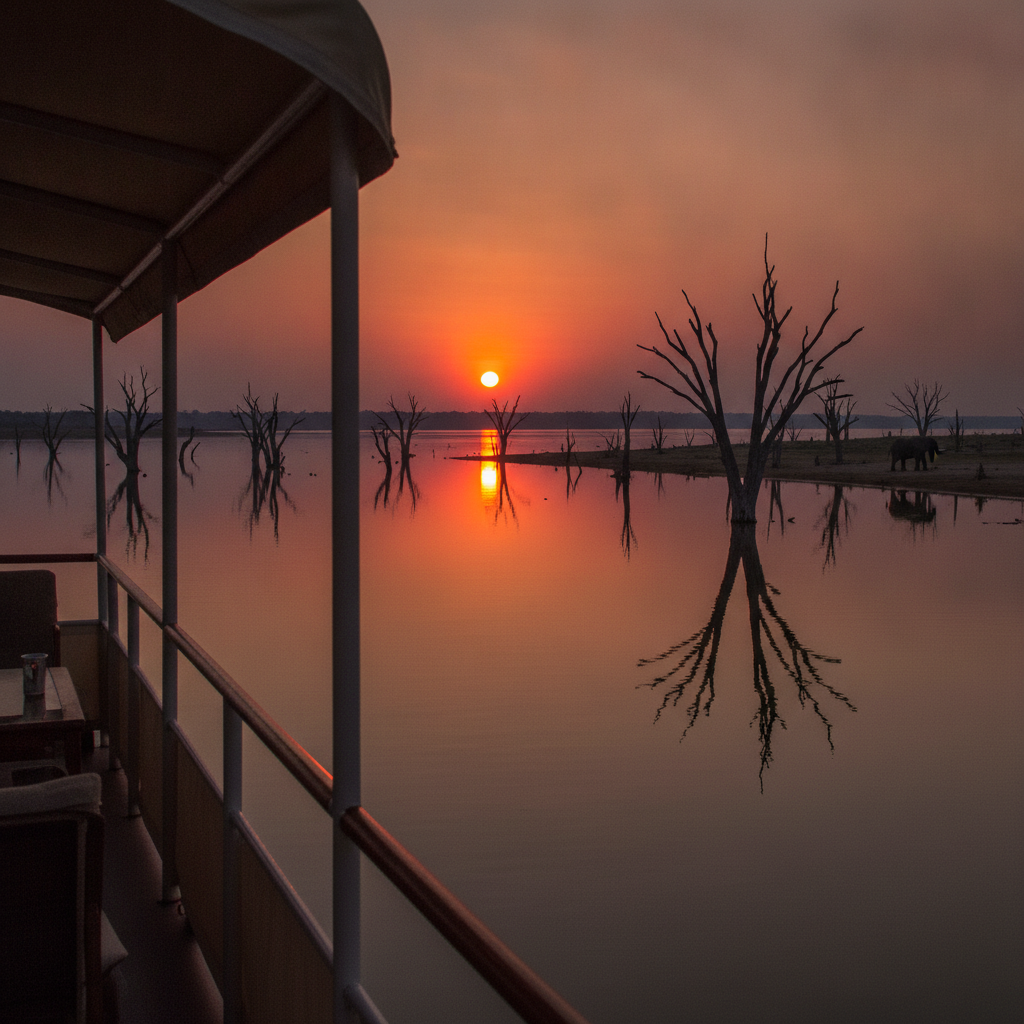
The Zambezi River sunset cruise: the most quintessentially African evening experience available from Victoria Falls. The 2-hour sunset cruise upstream of the falls on the flat, island-studded upper Zambezi (above the falls where the river is calm): the cruise passes by elephant, hippo, crocodile, and African fish eagle (the most iconic African bird call). The hippo (Hippopotamus amphibius): the most dangerous large mammal in Africa (estimated 500-3,000 human deaths annually), present in large numbers in the upper Zambezi. Respectful viewing protocols are essential; hippos defend their river territory aggressively. The African fish eagle: the national bird of Zimbabwe, Zambia, Malawi, and South Sudan. Its call (a high, clear kyu-yelp) is considered the sound of Africa; it is heard on practically every southern African wildlife documentary soundtrack. The kingfisher species of the Zambezi (the giant kingfisher, the pied kingfisher, the malachite kingfisher, and the woodland kingfisher) are among the most beautiful birds of the African river environment.
- 5
The KAZA Transfrontier Conservation Area - Five Countries One Wildlife Space
The Kavango Zambezi Transfrontier Conservation Area (KAZA): the largest transfrontier conservation area in the world, covering approximately 520,000 sq km across five countries (Botswana, Zimbabwe, Zambia, Namibia, and Angola). Established 2011 by the governments of all five countries. The KAZA area protects the ecosystem of the Okavango Delta, the Chobe River, the Zambezi, and the game reserves surrounding Victoria Falls into one contiguous wildlife corridor. The elephant population of KAZA: estimated 250,000 elephants within the KAZA boundaries, the largest elephant population in the world. The wildlife movement: elephants migrate seasonally between the water sources of the Okavango Delta (Botswana), Chobe (Botswana), the Caprivi Strip (Namibia), and the Hwange (Zimbabwe) in response to rainfall and forage. The KAZA UniVisa: the joint tourist visa (USD 50 for Zimbabwe and Zambia) introduced to facilitate tourist movement within the KAZA area.
- 6
Victoria Falls Two-Route Legacy and the Southern Africa Circuit
Victoria Falls two routes complete. Route 1: the Smoke That Thunders (Mosi-oa-Tunya), the world most powerful waterfall, Livingstone and the European discovery, Zambezi whitewater rafting, the bridge bungee jump, Chobe elephant viewing, practical guide (Zimbabwe vs Zambia side, visa advice, best season). Route 2 (this route): Great Zimbabwe UNESCO monument (the ancient Shona trading empire), Zimbabwe under Mugabe and the economic collapse, Hwange National Park (elephants, Cecil the Lion, wild dogs), Zambezi sunset cruise and river wildlife, the KAZA transfrontier conservation area (the largest in the world). Routes 3-6 still needed. Victoria Falls essential planning: 2-3 nights minimum (longer allows the Chobe day trip, Hwange overnight, and Livingstone Island). The Victoria Falls region is the southern Africa adventure sports capital: every significant adventure sports activity available (bungee, raft, swing, zipline, helicopter, microlight). Climate: subtropical (summer November-April, wet season, hot 30-35 Celsius; dry season May-October, cooler 18-25 Celsius, best for rafting and most wildlife viewing).
Walk this route with audio
Stories play automatically as you reach each stop — no tapping needed.
More in victoria-falls
Victoria Falls: The Devil Pool, Cape to Cairo Railway, Microlight Flights, Victoria Falls Hotel, and Leya Culture
Victoria Falls: Batoka Gorge Geology, Okavango Delta, Chobe Elephants, Livingstone Zambia Culture, and Tigerfish Fishing
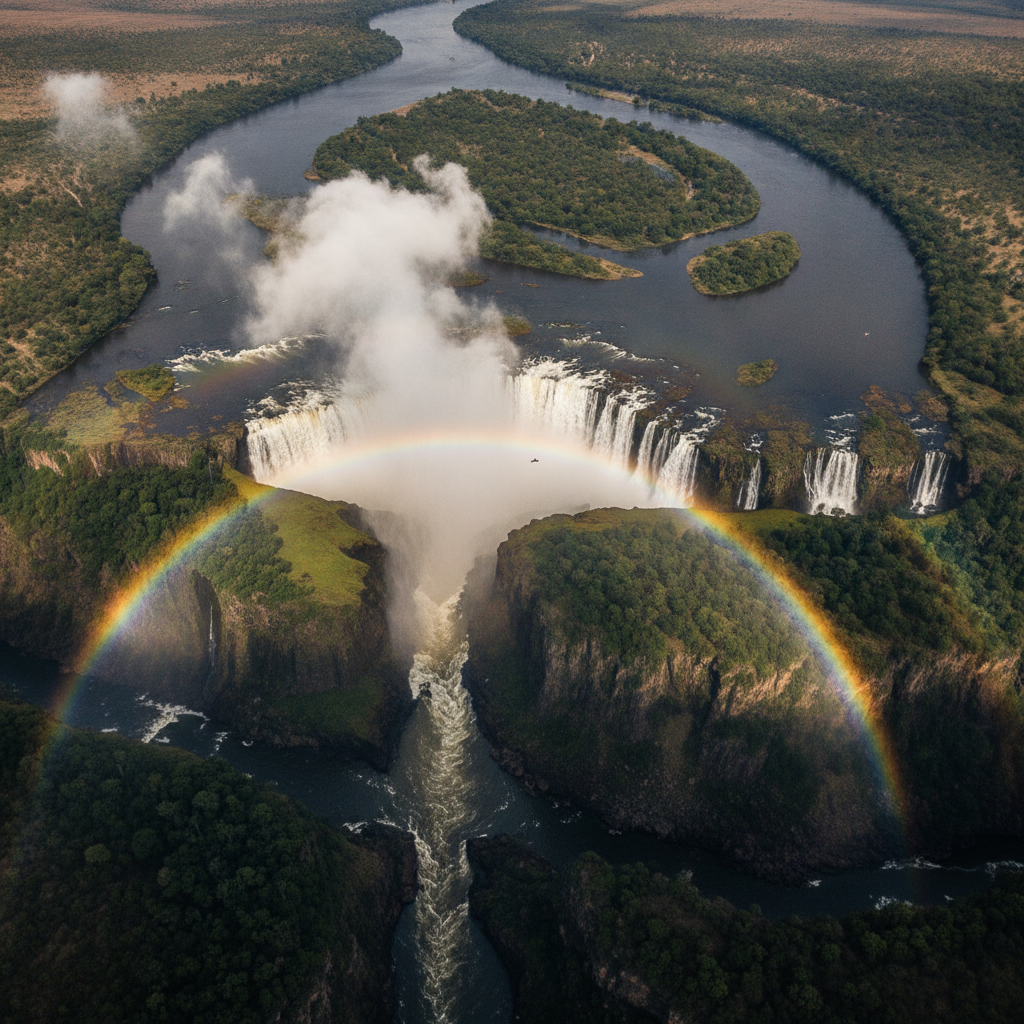
Victoria Falls: The Smoke That Thunders, David Livingstone, Zambezi Rafting, Bungee Jump, Wildlife, and Practical Guide
Victoria Falls: Kariba Dam and Operation Noah, Zambezi National Park, Mana Pools, Nile Crocodile, and Kasane Day Trip