Victoria BC: The Orca Population That 75 Named Animals Have Been Studied Individually Since the 1970s, the City That Is More English Than England and the Cycling Trail Built on the Bed of a Railway That No Longer Runs
Join 75 individually named and studied Southern Resident orca on their summer salmon hunt in the Strait of Juan de Fuca while understanding that the population has been declining for 30 years because the Chinook salmon runs they depend on are also declining, cycle the Galloping Goose Regional Trail from downtown Victoria west through suburban and rural terrain on the flat grade of a railway bed that has not run trains since the 1970s, walk into Oak Bay village to find British china importers and Scotch egg menus in a community that maintains its colonial identity with complete sincerity while the rest of Victoria has become predominantly Canadian-born, understand that the Songhees and Esquimalt Nations signed no treaty and their land was taken without consent with the unresolved claim still legally active, eat fresh Dungeness crab directly from a boat at Fishermens Wharf where the houseboats and fishing vessels coexist in the Inner Harbour, and come in February when daffodils are blooming and the municipality is counting every visible flower in an annual competition because the mildest climate in Canada produces this particular civic ritual.
- 1
Victoria Climate and Gardens
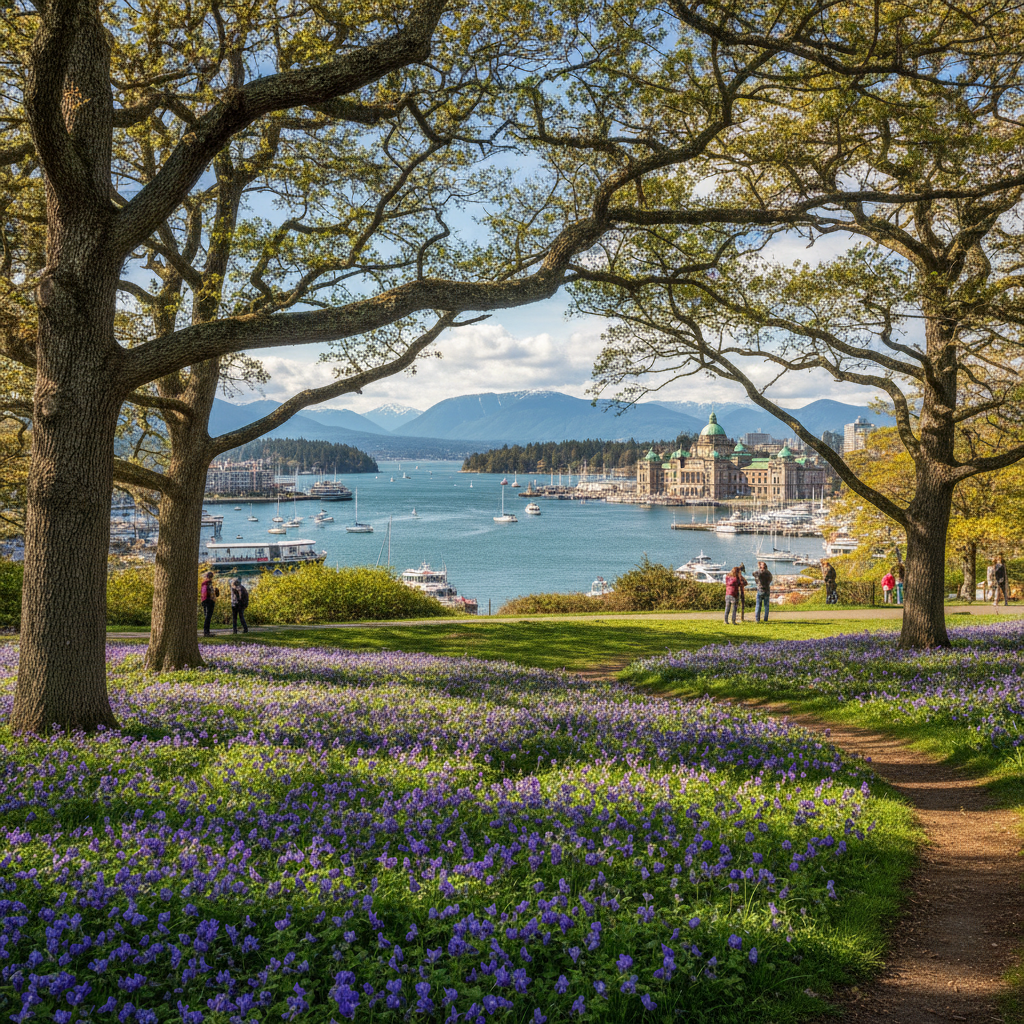
Victoria has the mildest climate of any city in Canada, with an average of 2,183 hours of sunshine annually, average January temperatures above 4 Celsius, and measurable snowfall on average only two to five days per year, creating growing conditions that allow daffodils to bloom in February, camellias to flower through the winter, and palms and New Zealand tree ferns to survive outdoors in protected gardens. The city claims to have more flowers per capita than any other city in the world, a claim difficult to verify but supported by the massive hanging basket program on downtown lamp standards, the front garden culture of Oak Bay and Rockland, and the Butchart Gardens 21 kilometres north. The Garry oak meadow ecosystem in Beacon Hill Park and scattered reserves around the city supports over 100 rare species of plants and insects, including the rare Garry oak itself, the great camas, Camassia leichtlinii, whose blue flowers covered the meadows in spring in quantities that Indigenous peoples harvested as a food staple before European settlement converted the meadows to pasture. The Spring Festival of Bloom in Victoria, from February through April when cherry blossoms, daffodils, magnolias, and tulips provide successive waves of color, draws garden tourists from across Canada and from Washington State. The James Bay neighborhood south of the Legislature has some of the finest residential garden strips in the city.
- 2
Victoria Cycling and the Galloping Goose Trail
The Greater Victoria cycling network, anchored by the Galloping Goose Regional Trail and the Lochside Regional Trail, provides over 100 kilometres of car-free cycling routes through the metropolitan area, from downtown Victoria west to Sooke on the Galloping Goose and north to Swartz Bay ferry terminal on the Lochside, making the region one of the most cycling-friendly metropolitan areas in Canada. The Galloping Goose Trail, built on the right-of-way of the former Victoria and Sidney Railway and the Esquimalt and Nanaimo Railway branches, uses grade-separated railway infrastructure to provide long flat or gently climbing routes through suburban, rural, and wilderness terrain accessible from the urban core without motorized vehicle conflict. The Lochside Trail, similarly built on a rail corridor, connects downtown Victoria through Central Saanich to Swartz Bay, where it connects to the Salt Spring Island ferry and the BC Ferries terminal. Both trails can be connected to create a 70-kilometre loop. The cycling climate of Victoria, with dry summers, mild temperatures, and the relatively flat terrain of the Saanich Peninsula, produces one of the highest rates of everyday cycling in Canada. The Victoria cycling community has advocated successfully for protected lanes on several downtown arterials. The Dallas Road seawall path along the ocean front from Ogden Point to Clover Point is the most scenic urban cycling route in the city.
- 3
Victoria Whale Watching and Marine Life
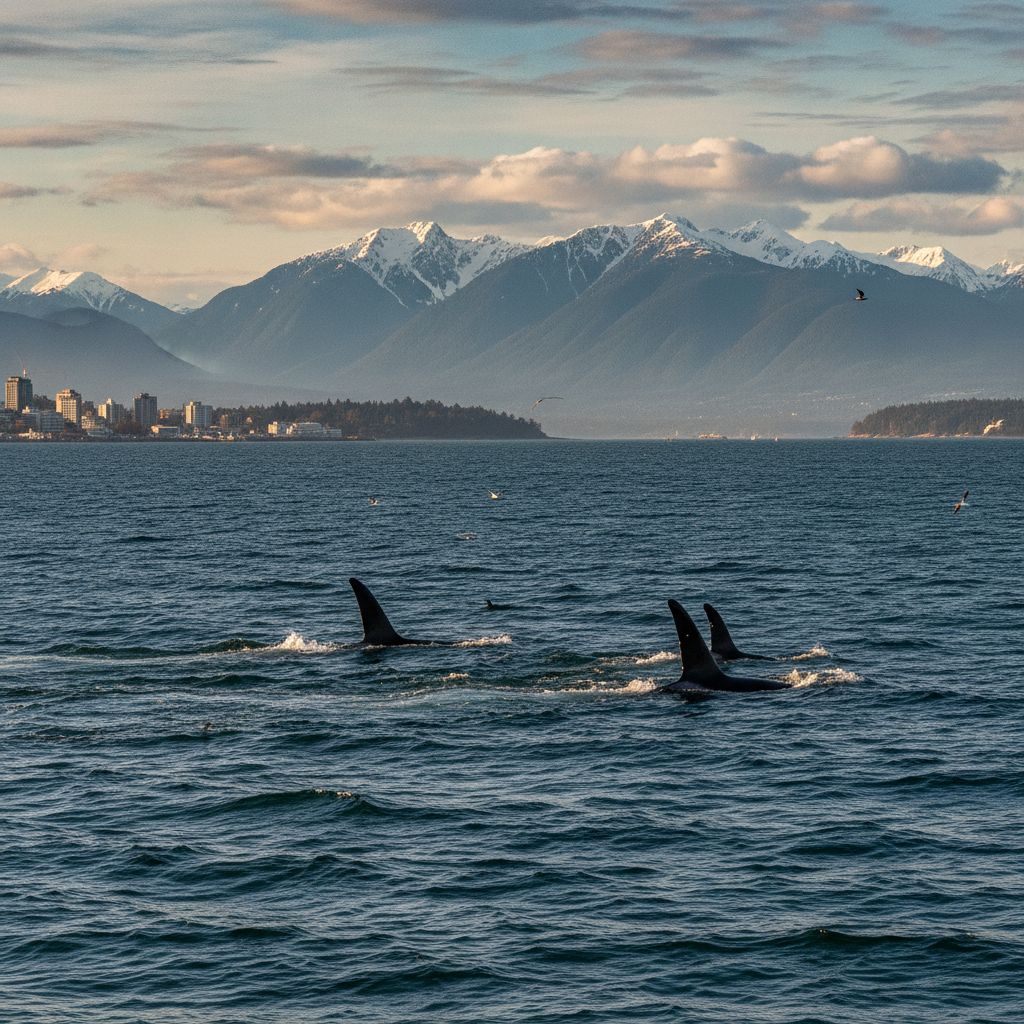
The waters surrounding Victoria, in the Strait of Juan de Fuca, the San Juan Islands, and the southern Strait of Georgia, are among the most productive marine ecosystems on the Pacific Coast and provide some of the most reliable whale watching in the world, with the resident killer whale, or orca, pods of the Southern Resident population, which spend the summer and fall hunting Chinook salmon in the productive waters around the San Juan Islands and Victoria, being the primary attraction. The Southern Resident orca population, which consists of three pods designated J, K, and L with a combined population of approximately 75 animals, is one of the most studied wildlife populations on earth, with individual animals identified by name and dorsal fin shape by researchers who have tracked the population continuously since the 1970s. The Southern Residents are critically endangered, with the population declining since the 1990s due to reduced Chinook salmon runs, noise pollution from vessel traffic, and PCB contamination accumulated through the food chain. Transient killer whales that hunt marine mammals rather than fish also move through the Victoria area. Humpback whales have returned to the Strait in increasing numbers since the 1990s. Minke whales, harbour seals, Steller sea lions, harbour porpoises, and Dall's porpoises are routinely visible on whale watching excursions departing from Victoria Harbour.
- 4
Victoria Oak Bay and British Identity
Oak Bay, an independent municipality of 18,000 people entirely surrounded by Victoria and the sea on the eastern side of the Greater Victoria urban area, has maintained the most self-consciously British character of any community in Canada, with a village commercial district on Oak Bay Avenue containing independent bookshops, British china importers, pubs with Scotch egg menus, and tea shops, a promenade along the Cadboro Bay and Oak Bay shorelines with beach huts and lawn bowling clubs, and a residential architecture of Tudor revival houses surrounded by rose gardens and privet hedges that has been described as more English than England. The Oak Bay Tea Party, an annual community festival on the village green, and the Flower Count competition, in which municipalities across Greater Victoria compete to count the most flowers blooming in their jurisdiction in February, are expressions of the horticultural and civic identity that Oak Bay cultivates with unironic commitment. The Empress Hotel afternoon tea and the Oak Bay Beach Hotel tea service are the two primary expressions of the afternoon tea tradition in the Victoria region. The Victoria inner city has diversified significantly since the 1990s through immigration, and the population of Greater Victoria is now less than 50 percent of British descent in most neighborhoods, but the aesthetic and cultural codes of British colonialist identity persist in civic architecture, street furniture, and visitor marketing.
- 5
Victoria Lekwungen People and Colonial History
The Lekwungen people, comprising the Songhees and Esquimalt Nations, have inhabited the Victoria area for thousands of years, living in permanent winter villages on the shores of the Inner Harbour and along the waterways of the southern tip of Vancouver Island, using the abundant marine resources of the Strait of Juan de Fuca including salmon, herring, camas bulbs, and shellfish harvested from the rich intertidal zones. The Hudson Bay Company established Fort Victoria in 1843 at the direction of HBC Chief Factor James Douglas, who chose the Inner Harbour site because of its natural harbor, its mild climate, and the existing Lekwungen settlements that indicated productive land. The Lekwungen were displaced from the Inner Harbour villages between 1843 and 1911 through a series of negotiations and relocations that moved the Songhees people first to the Esquimalt Harbour, then to their current reserve at the mouth of the Gorge waterway. The Songhees Nation reserve adjacent to the Johnson Street Bridge provides views of the Inner Harbour from the western shore and is the site of ongoing economic development by the Nation. The Esquimalt Nation reserve is adjacent to the Esquimalt naval base. Neither the Songhees nor Esquimalt Nations signed treaties with the Crown, meaning that their land was taken without consent and the legal status of much of Victoria remains under unresolved claim.
- 6
Victoria Food and Restaurant Scene
Victoria food scene, long dismissed as sleepy and colonial in its orientation toward British comfort food, has transformed since 2010 into one of the more dynamic local food scenes in western Canada, driven by the mild growing climate that extends the local produce season, the proximity of the Saanich Peninsula market gardens, the seafood abundance of the surrounding waters, and the arrival of a wave of talented young chefs attracted by the quality of life. The Victoria Public Market in the Hudson building on Douglas Street, a food hall in the former Hudson Bay Company department store, concentrates local food vendors including artisan cheesemongers, fishmongers, produce vendors, and prepared food stalls. The Fisherman's Wharf, a floating community of houseboats and fishing vessel moorage adjacent to the Inner Harbour, sells fresh halibut, salmon, Dungeness crab, oysters, and clam chowder directly from vendors adjacent to the fishing boats. The Johnson Street and Fisgard Street restaurant districts offer concentration of dining. The Sidney-by-the-Sea area north of Victoria on the Saanich Peninsula has a bookshop-and-seafood village character popular for day trips. The Okanagan wine region, accessible by float plane in 45 minutes from Victoria Harbour, provides proximity to BC wine that is available throughout Victoria restaurants. The craft brewery scene has produced several highly regarded operations including Driftwood Brewery and Hoyne Brewing in the Vic West industrial area.
Walk this route with audio
Stories play automatically as you reach each stop — no tapping needed.
More in Victoria
Victoria BC: The Six-Gill Sharks in the Anoxic Fjord Nobody Talks About, the Language With Fewer Than 20 Fluent Speakers That Is Now Being Taught in Schools and the Blue Flower Fields That Fed a People for Thousands of Years
Praslin Island: Vallée de Mai UNESCO Forest & Anse Lazio
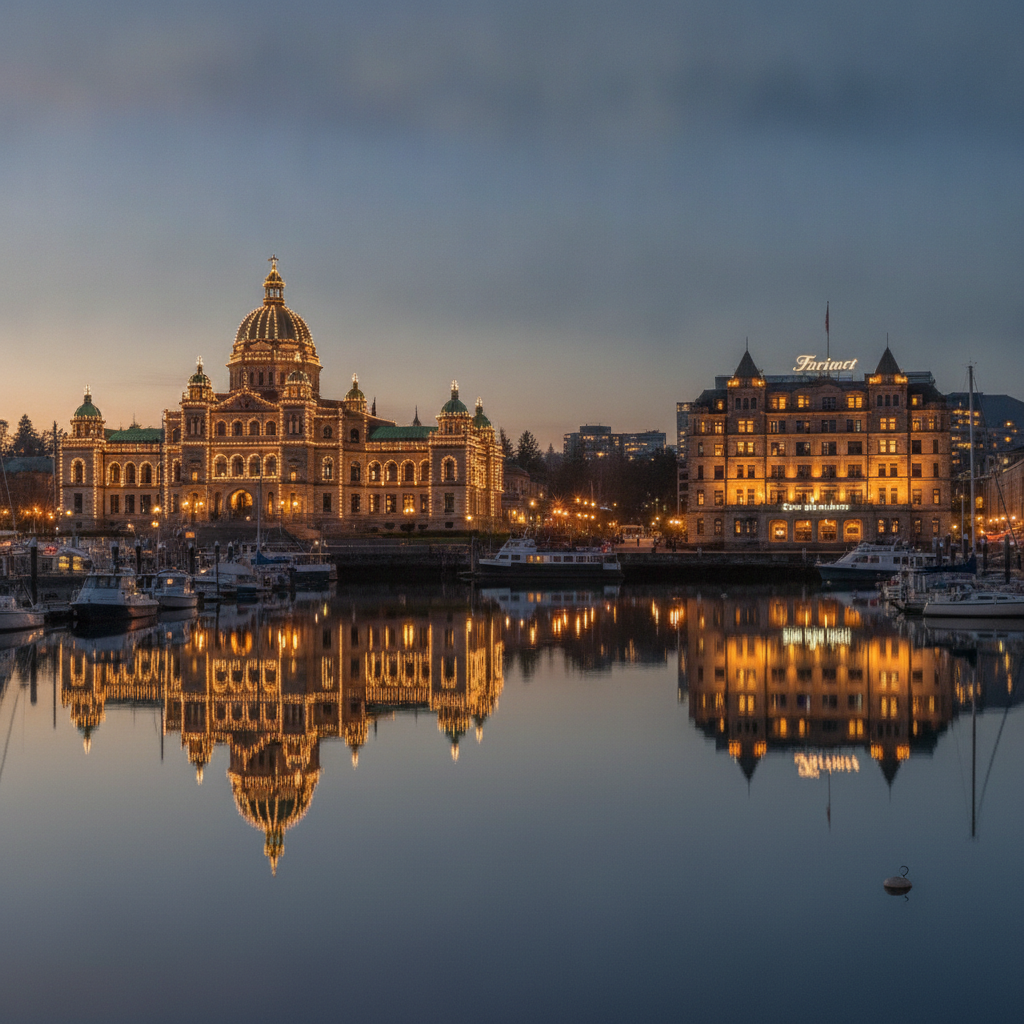
Victoria BC: The Most English City in Canada Where 85 Percent of Residents Were Born in Canada, the Afternoon Tea Capital of North America and the Capital of a Province 14 Times the Size of Switzerland
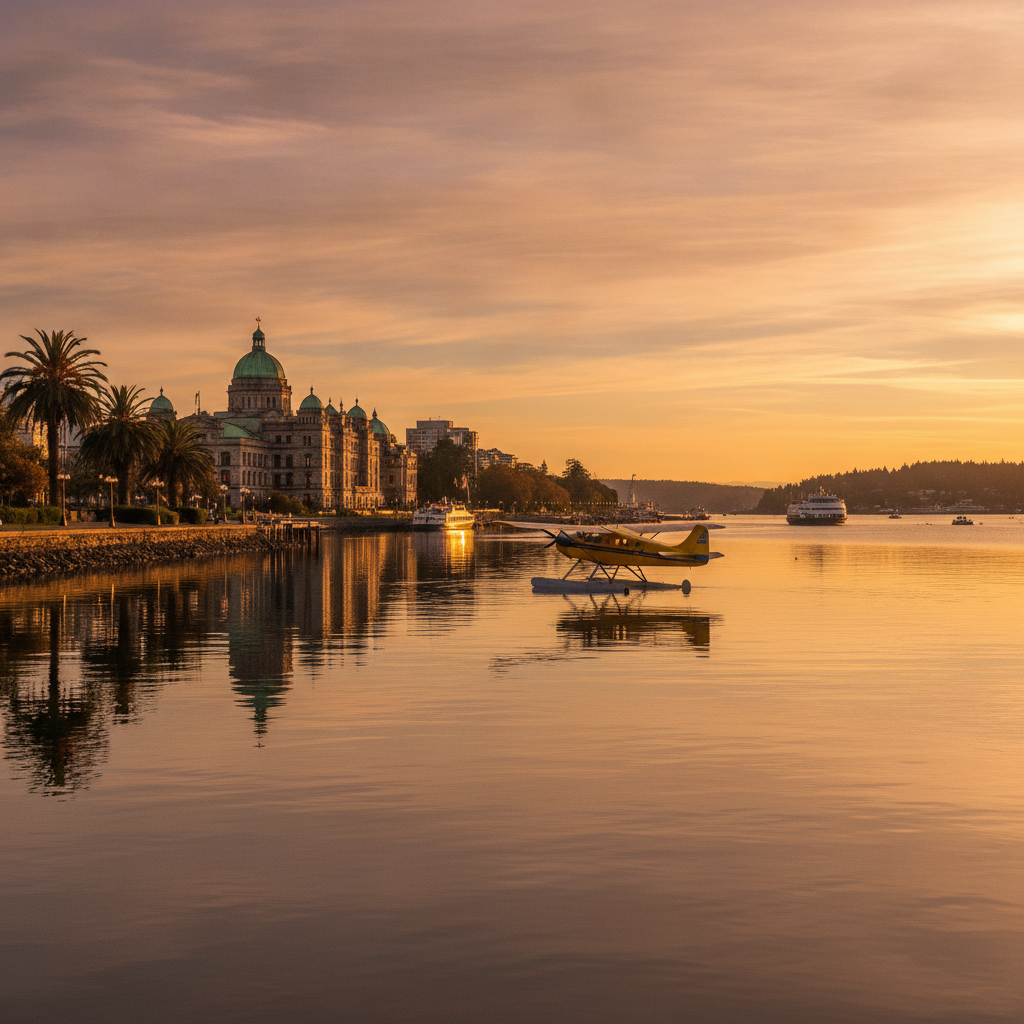
Victoria BC: The First Brew Pub in Canada That Has Been Serving Pints Since 1984, the Oldest Building in Western Canada Outside Quebec and the Intertidal Zone That Has No Equal in British Columbia
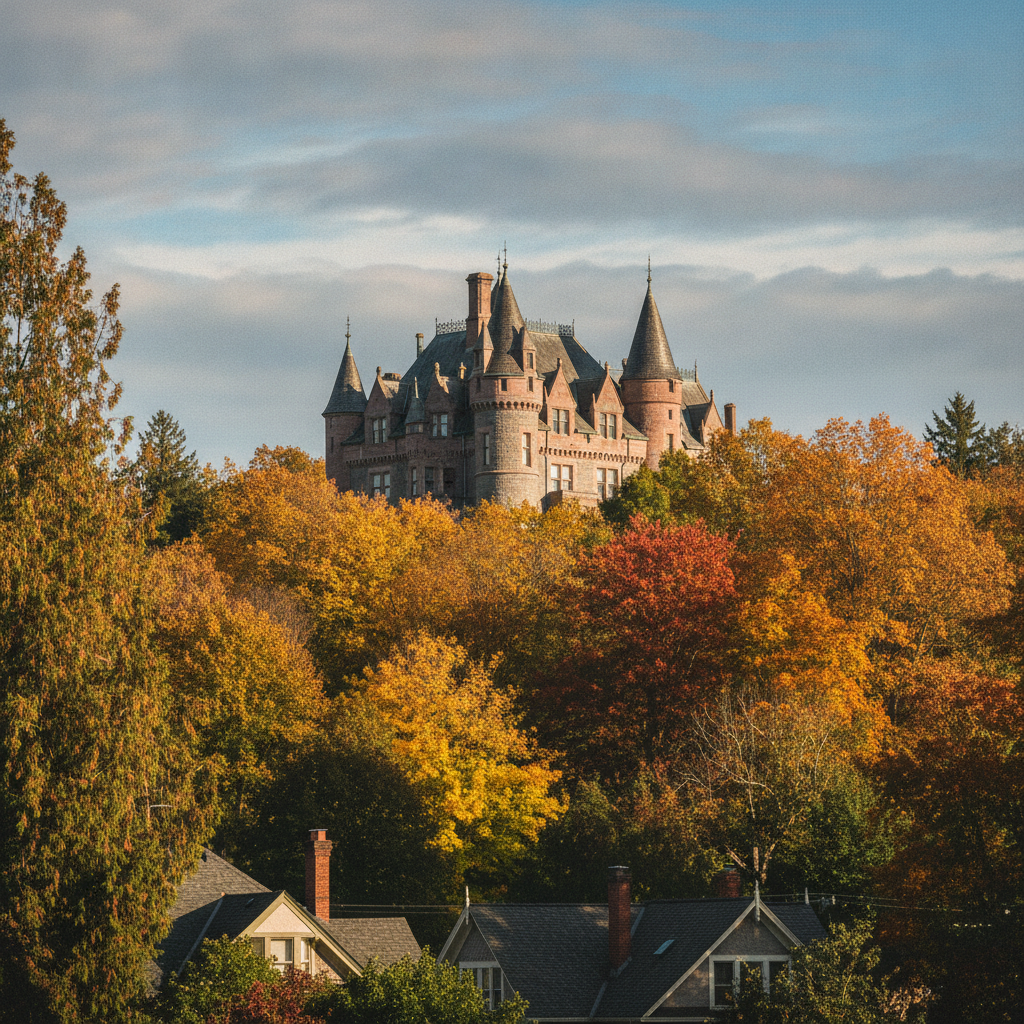
Victoria BC: The Architect Who Designed Both the Legislature and the Empress Hotel Was Murdered by His Young Wife Lover in England, Craigdarroch Castle Built by a Coal Baron Who Died Before Moving In and Canada Coldest Water Surfers