Piazza San Marco, Basilica di San Marco, Palazzo Ducale & the Campanile
The sestiere of San Marco — the administrative and ceremonial heart of the Venetian Republic for over a millennium — preserves the most concentrated ensemble of Byzantine, Gothic, and early Renaissance architecture in Europe: the Piazza San Marco (Napoleon's 'drawing room of Europe'), the Basilica di San Marco (the golden church whose mosaics cover 8,000 square metres of interior surface), the Palazzo Ducale (the Gothic palace that served as the seat of Venetian government for 500 years), and the Campanile (the 99-metre bell tower rebuilt in 1912 after its 1902 collapse) form the symbolic and physical centre of La Serenissima.
- 1
Piazza San Marco (St Mark's Square) — The Drawing Room of Europe
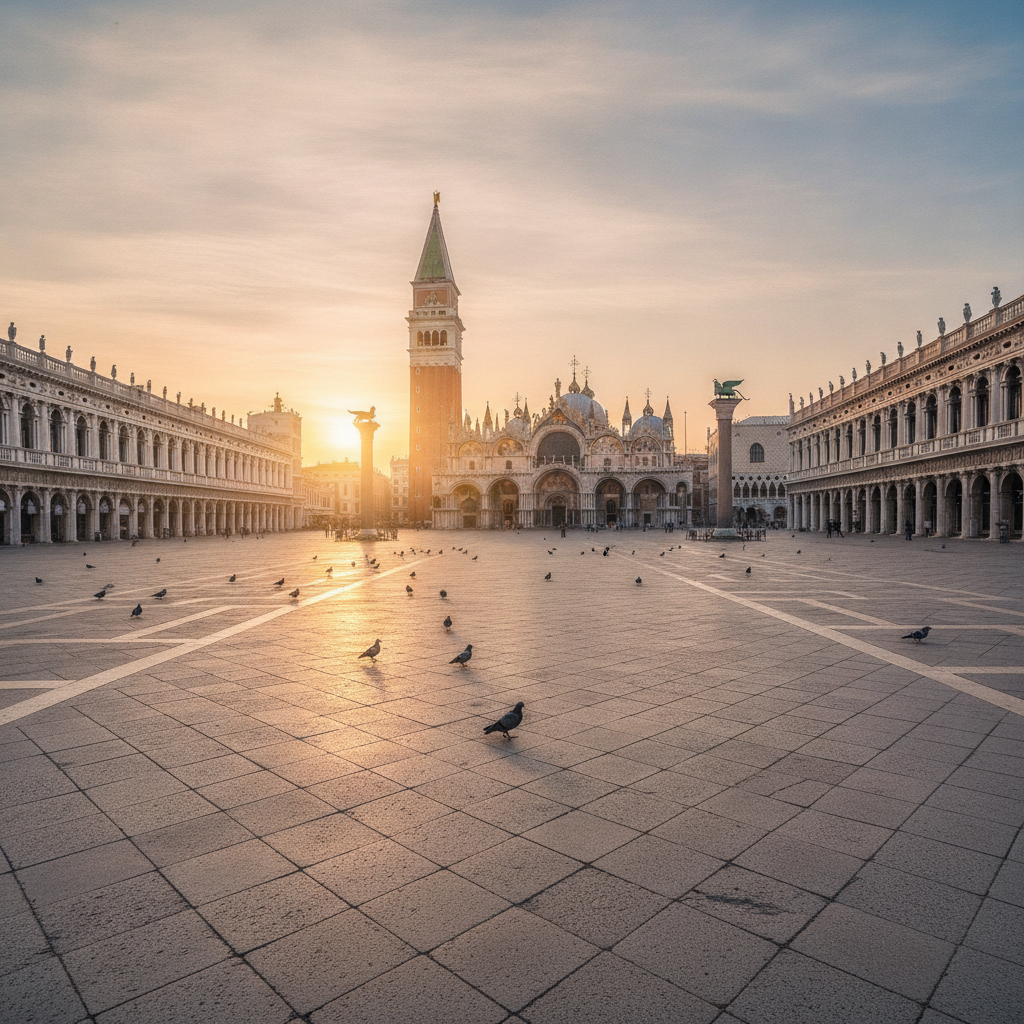
Piazza San Marco (Piazza San Marco, Sestiere San Marco, Venice — the principal public square of Venice and the only space in the city formally titled 'piazza' (all others are called 'campi' or 'campielli', the Venetian diminutive): the piazza occupies approximately 175 metres in length and 82 metres at its widest point and is enclosed on three sides by the continuous arcaded facades of the Procuratie Vecchie (the 'Old Offices', built in the early 16th century as the administrative headquarters of the Procurators of San Marco, the highest-ranking officials of the Venetian Republic below the Doge), the Procuratie Nuove (the 'New Offices', built between 1582 and 1640 in the classical style of Vincenzo Scamozzi and later Baldassare Longhena as an extension of the administrative complex), and the Ala Napoleonica (the Napoleonic Wing, the western closure of the piazza built in 1810 by order of Napoleon Bonaparte after his conquest of Venice in 1797, which replaced the church of San Geminiano demolished on Napoleon's orders to provide an unobstructed view of the square — and which now houses the Museo Correr, Venice's civic museum, on its upper floors); the piazza has been the ceremonial and social heart of Venice since its formation in the 9th century (the original piazza was an orchard called 'the island of the monks' belonging to a Benedictine convent); the current paving of grey and pink trachyte stone arranged in a large herringbone pattern was laid between 1722 and 1735 by the architect Andrea Tirali and replaced earlier paving of brick herringbone (cocciopesto) laid in the medieval period; the famous pigeons of Piazza San Marco have been present since at least the 9th century and were historically fed grain distributed from the public granaries during feast days, though feeding them has been prohibited since 2008.
- 2
Basilica di San Marco — The Golden Church
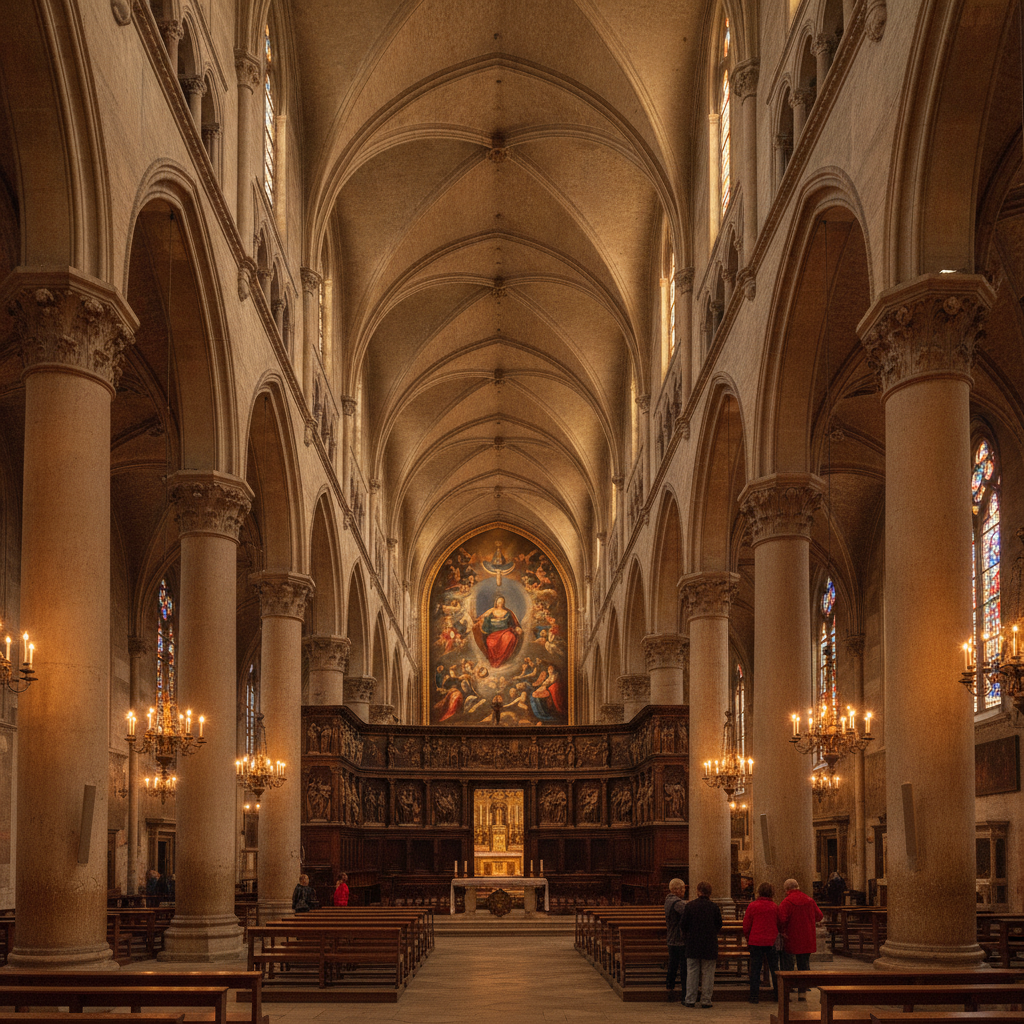
Basilica di San Marco (Piazza San Marco, Sestiere San Marco, Venice — the cathedral of Venice, the patriarchal seat, and the former private chapel of the Doge of Venice built to house the relics of St Mark the Evangelist: the basilica as it stands today was built between 1063 and 1094 on the model of the Church of the Holy Apostles in Constantinople (demolished in 1461) and subsequently enlarged, decorated, and modified throughout the medieval and Renaissance period; the building's dominant architectural character is Byzantine — the central plan with five domes (the largest is the Dome of the Ascension over the central crossing, 42 metres above the floor), the Greek-cross layout, the gold-ground mosaics that cover virtually every surface of the interior (8,000 square metres of mosaic covering the vaults, domes, arches, and walls), and the porphyry and marble inlays on the floor — modified by the addition of pointed Gothic arches and tracery on the facade during the 14th and 15th centuries; the facade of the basilica as currently seen contains five arched portals (the central portal surmounted by reproductions of the famous Triumphal Quadriga — the four ancient bronze horses, probably Greek originals of the 4th century BC, looted from the Hippodrome of Constantinople during the Fourth Crusade of 1204 and installed above the central portal, with the originals now displayed indoors in the Museo Marciano), extensive marble revetment and colonnettes of columns looted from or purchased across the Byzantine and Muslim Mediterranean world, and the earliest existing mosaic on the facade (in the left-most portal, depicting the Translation of the Body of St Mark to Venice, dating from circa 1270); the Pala d'Oro (the Golden Altarpiece) behind the high altar — a Byzantine gold and enamel altarpiece containing 250 enamel plaques, 1,300 pearls, 300 sapphires, 300 emeralds, 400 garnets, and 15 rubies, assembled over several centuries between 976 and 1342 — is one of the greatest surviving examples of Byzantine goldsmith work.
- 3
Palazzo Ducale (Doge's Palace) — The Gothic Seat of the Venetian Republic
Palazzo Ducale (Piazzetta San Marco 1, Sestiere San Marco, Venice — the palace that served as the residence of the Doge of Venice and the seat of the government, courts, and prisons of the Venetian Republic from the 9th century until the fall of the Republic in 1797: the building visible today is primarily the result of construction between 1309 and 1442, representing the most sophisticated and mature example of Venetian Gothic architecture; the exterior arcade of the building creates a characteristic visual inversion of normal structural expectation — the massive upper walls of the piano nobile (decorated with the distinctive diamond-pattern pink and white marble revetment) sit above open arcades of pointed arches at ground level and a delicate lace-like balcony colonnade at the upper level, with the visual weight appearing to be at the top and the structural support apparently at the bottom; the interior of the Palazzo Ducale contains the largest oil painting in the world — Tintoretto's 'Il Paradiso' (Paradise, 1588-1594), painted on a canvas 22 metres wide by 7 metres high for the Sala del Maggior Consiglio (the Hall of the Great Council, the assembly hall of Venice's legislative body); the palace also contains the Armoury (one of the most complete surviving collections of medieval and Renaissance armour in Europe), the extensive judicial and administrative chambers of the government, and access to the Prigioni Nuove (New Prisons) across the Bridge of Sighs.
- 4
Ponte dei Sospiri (Bridge of Sighs) — The Most Romantic Bridge in the World
Ponte dei Sospiri (Bridge of Sighs, connecting the Palazzo Ducale to the Prigioni Nuove (New Prisons), Sestiere San Marco, Venice — the enclosed limestone bridge built between 1600 and 1603 by Antonio Contino, nephew of the architect who designed the Rialto Bridge: the bridge takes its name from the romantic tradition (popularized in the 19th century by Lord Byron and subsequently by countless travel writers) that prisoners crossing the bridge from the interrogation chambers of the Palazzo Ducale to the cells of the New Prisons would sigh upon catching their last glimpse of Venice through the bridge's small barred windows before entering their cells; the historical reality of the bridge's use is more prosaic — the New Prisons (Prigioni Nuove) were built in 1589-1614 as a new, improved incarceration facility replacing the older and more notorious 'Piombi' (Lead) prisons under the palace roof and the 'Pozzi' (Wells) at the building's foundation level (both of which Giacomo Casanova famously escaped from in 1756); the bridge is best viewed from the Ponte della Paglia (the small bridge adjacent to the Palazzo Ducale on the Riva degli Schiavoni), which provides the only external view of the Bridge of Sighs and is consistently one of the most photographed viewpoints in Venice.
- 5
Campanile di San Marco (St Mark's Bell Tower) — Venice's Watchtower
Campanile di San Marco (Piazza San Marco, Sestiere San Marco, Venice — the 99-metre bell tower (campanile) of the Basilica di San Marco, the tallest structure in Venice: the campanile was originally built between 912 and 1173 as a combined watchtower, lighthouse (a beacon was maintained at the top to guide ships into the lagoon), and bell tower; the original tower served these combined functions for over 700 years before the spectacular and unexpected collapse of the entire structure on the morning of July 14, 1902 — the tower fell almost straight down into the piazza, collapsing into a pile of rubble in approximately 4 minutes and miraculously killing only one cat (the Basilica and the Loggetta by Sansovino at the base of the campanile suffered minor damage, and no people were killed); the decision to rebuild 'dov'era, com'era' ('where it was, as it was') was taken immediately by the Venice city council, and the rebuilt campanile — using the same brick construction, the same proportions, and the same visible features as the original — was inaugurated on April 25, 1912 (St Mark's Day, exactly 1,000 years after the founding of the original tower); the campanile houses five historic bells, each with a different traditional function in the governance of the Venetian Republic (the Marangona marked the beginning and end of the working day for the Arsenal shipyard workers; the Trottiera called the Venetian nobility to the Palazzo Ducale; the Nona marked midday; the Mezza Terza announced Senate sessions; and the Renghiera or Maleficio rang during executions); the Loggetta at the campanile's base (a small marble loggia designed by Jacopo Sansovino in 1537) served as the guardroom of the Venetian Arsenal during sessions of the Grand Council.
- 6
Piazzetta San Marco & the Two Columns — Gateway to Venice by Sea
Piazzetta San Marco (the small piazza connecting Piazza San Marco to the Bacino di San Marco and the Grand Canal waterfront, bounded by the Palazzo Ducale on the east and the Biblioteca Nazionale Marciana on the west, Sestiere San Marco, Venice — the formal sea entrance to the city of Venice for nearly a millennium: arriving by sea from the lagoon, the Piazzetta was the first formal public space encountered by visitors arriving in Venice, and the two massive granite columns (approximately 4 metres in diameter and 7 metres in height, erected in the Piazzetta in 1172 after being brought from the Eastern Mediterranean) flanking the waterfront entrance served as the symbolic gateway to the city; the eastern column is topped by the Lion of St Mark (the winged lion symbol of Venice, which was originally a chimera statue of Eastern origin — possibly Persian or Syrian — that was reinterpreted as the symbol of the Evangelist St Mark and given wings when placed on the column); the western column bears the statue of St Theodore of Amasea (the first patron saint of Venice before St Mark's relics arrived in 828-829 AD), shown slaying a dragon (the current marble statue is a composite work using an ancient Roman torso and a head carved in the medieval period); the space between the two columns was historically used for public executions and was consequently considered unlucky by Venetians, who traditionally avoided walking between them; the Biblioteca Nazionale Marciana (Jacopo Sansovino's masterwork of 1537-1583, opposite the Palazzo Ducale) houses the library originally founded by the donation of Cardinal Bessarion's Greek manuscript collection in 1468.
Walk this route with audio
Stories play automatically as you reach each stop — no tapping needed.
More in venice
Cannaregio Sestiere, the Jewish Ghetto & Fondamente Nove Waterfront
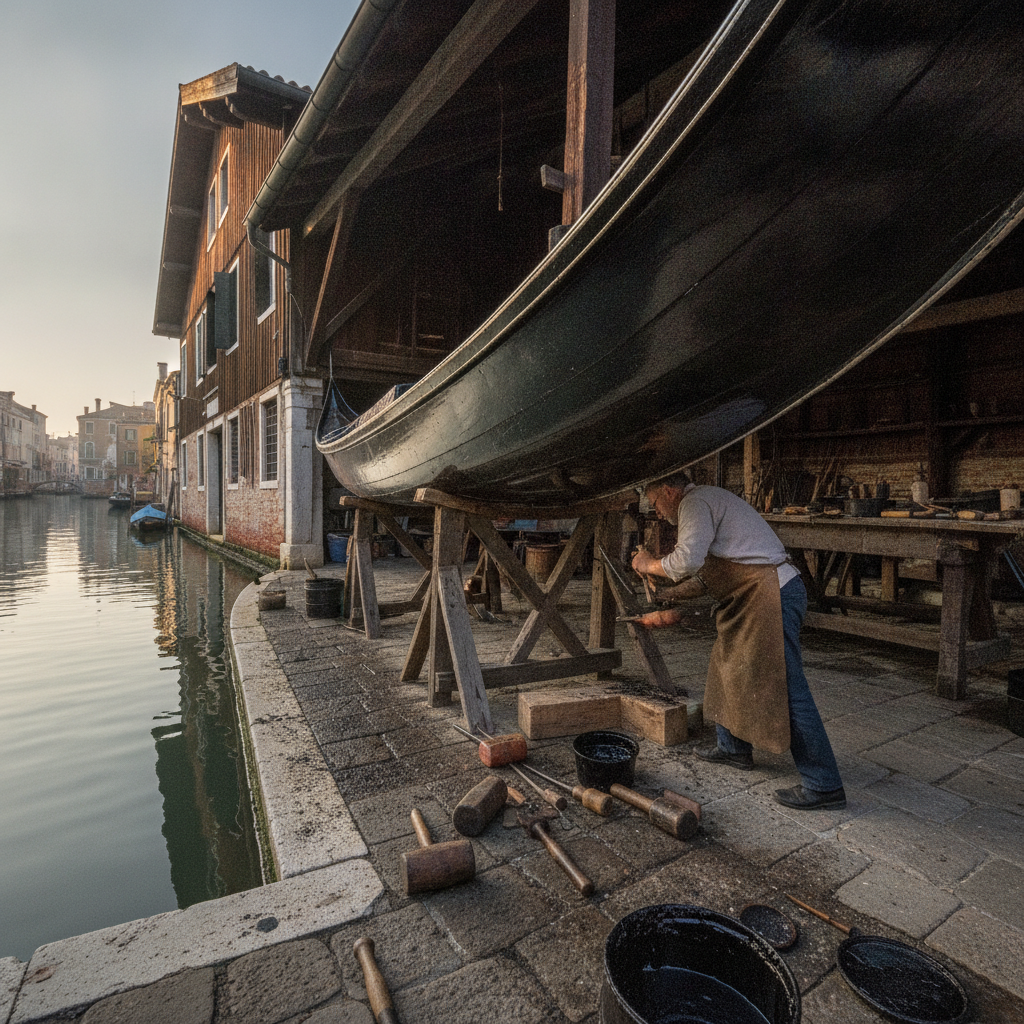
The Gondola: Squero di San Trovaso, the Traghetti & Venice's Working Watercraft
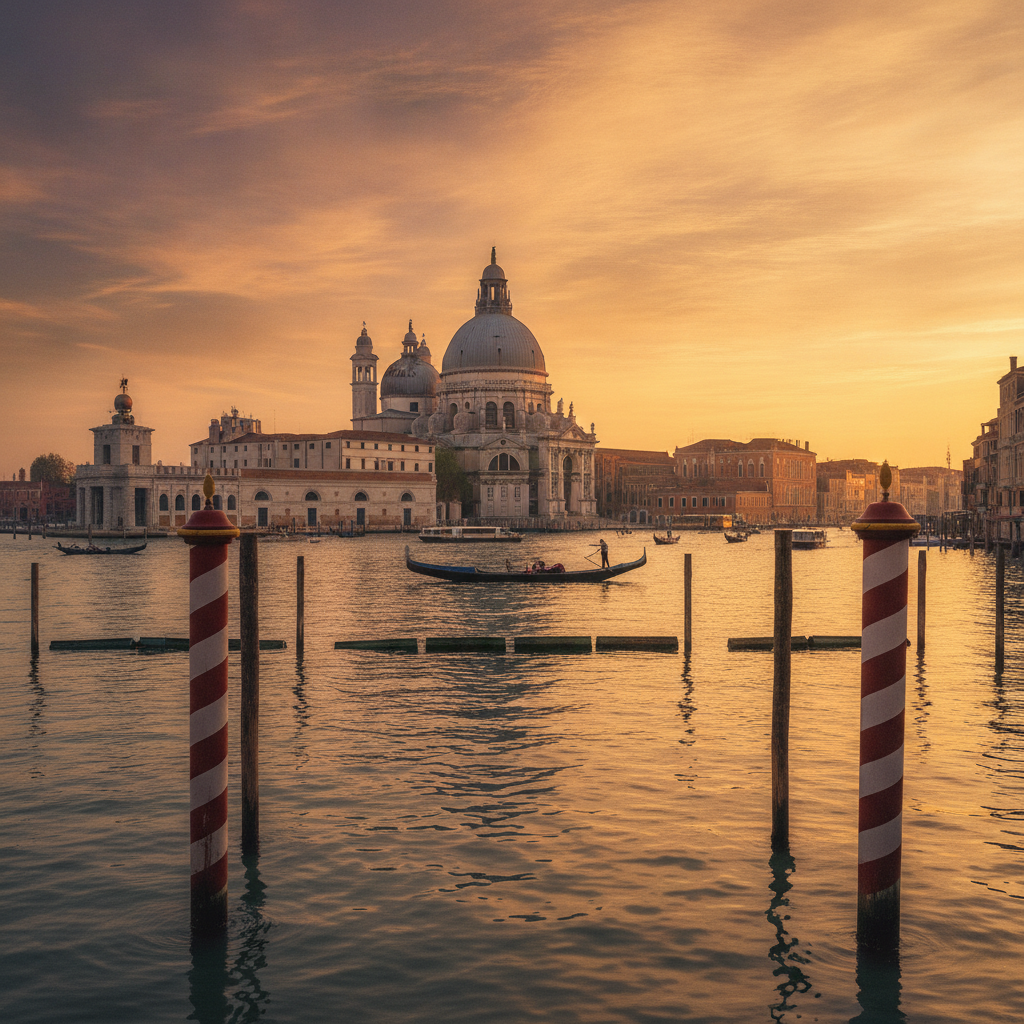
Dorsoduro: Gallerie dell'Accademia, Peggy Guggenheim Collection & Santa Maria della Salute
Castello Sestiere: the Arsenale, Venice Biennale Gardens & San Giovanni e Paolo
Murano, Burano & Torcello — The Venetian Lagoon Island Circuit