Malta's History: Great Siege, Knights, WWII & Caravaggio
Understand why Malta punches so far above its weight in history—the 1565 Ottoman Great Siege that shaped European history, 800 years of the Knights of St John, the George Cross awarded for WWII endurance, Caravaggio's fugitive masterpiece in the cathedral, and the unique Arabic-rooted Maltese language.
- 1
Great Siege of 1565 – Malta's Defining Moment
In 1565 the Ottoman Empire sent 40,000 soldiers to conquer Malta, defended by just 700 Knights and 8,000 Maltese troops. The four-month siege—one of the bloodiest in history—ended in Ottoman withdrawal; a pivotal moment that checked Ottoman expansion into western Europe. The Siege of Malta audiovisual experience in Valletta dramatises the events through contemporary accounts and original artefacts.
- 2
Knights of St John – 800 Years of History
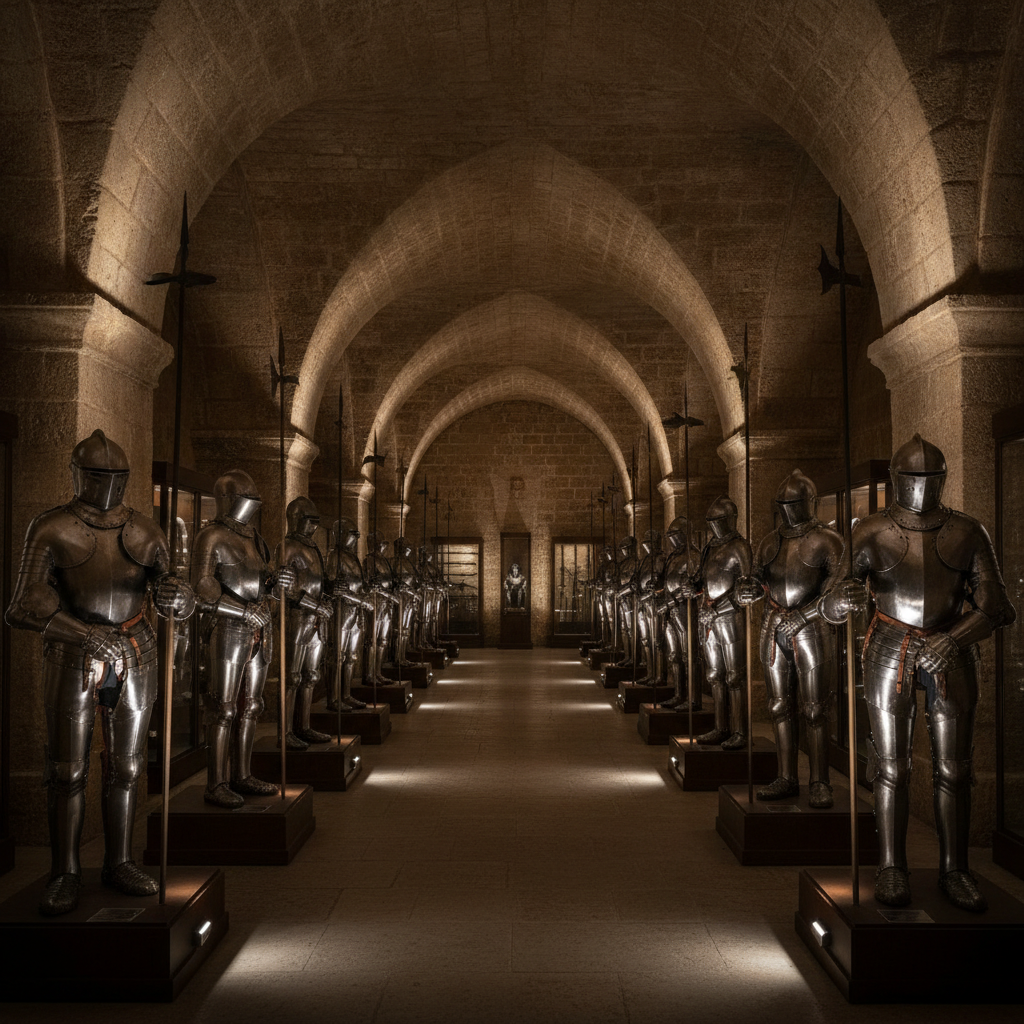
The Sovereign Military Order of Malta was founded before the First Crusade and is the world's oldest continuously operating international humanitarian organisation, now headquartered in Rome. In Malta (1530–1798) the Knights built Valletta, the Three Cities, and an unrivalled system of fortifications. The Palace Armoury's 5,000 pieces of armour constitute their most tangible material legacy.
- 3
World War II – Malta's George Cross
Malta suffered 154 consecutive days of bombing in 1942—more bombs fell on the island than on London during the entire Blitz. The island was strategically vital for Allied North African operations; its survival earned the collective George Cross from King George VI. The Malta at War Museum in Vittoriosa's WWII air raid shelters tells the story through personal testimonies and original equipment.
- 4
Caravaggio in Malta – A Fugitive's Masterpiece
Caravaggio fled to Malta in 1607 hoping the Knights would grant him a knighthood securing a papal pardon. He painted The Beheading of Saint John the Baptist—his largest work and only signed painting—in the oratory of St John's Co-Cathedral. Made a knight, he was later expelled from the Order for unspecified crimes before fleeing to Sicily.
- 5
Maltese Language – Arabic Written in Latin Script
Maltese is the only Semitic language written in the Latin alphabet and the only such language that is an official EU language. It evolved from Arabic brought by 9th-century settlers, layered with Norman French, Sicilian, and English. Hearing Maltese spoken—with its Arabic phonology and Italian cadence—in a Baroque European city is one of the world's most distinctive linguistic experiences.
- 6
British Legacy – Driving Left & Three-Pin Sockets
Malta was a British Crown Colony from 1800 to 1964, leaving deep institutional marks: the legal system, university, language of education, and political structure all derive from British models. Maltese still drive on the left and use British three-pin sockets—practical details that surprise visitors from continental Europe but make the island immediately familiar to British travellers.
Walk this route with audio
Stories play automatically as you reach each stop — no tapping needed.
More in Valletta
Malta Practical Guide: Flights, Buses & Staying Smart
Valletta Classics: Caravaggio's Cathedral, Grand Harbour & Knights' Fortresses
Malta's Ancient World: Hypogeum, Megalithic Temples & Mdina
Valletta Arts & Culture: Theatre, Museums & Noble Palaces