Paella, Mercado Central & Valencia's Gastronomic Soul
Valencia is the birthplace of paella (the rice dish that is the most internationally famous dish of Spanish cuisine — the dish that originated in the Valencian countryside ('la Horta') in the 19th century and that is the defining culinary expression of the Valencian identity) and the home of the Mercado Central de Valencia (the largest covered food market in Europe — the 1928 Art Nouveau market hall that is the gastronomic heart of the city).
- 1
The Authentic Valencian Paella — Rice Dish of the Horta
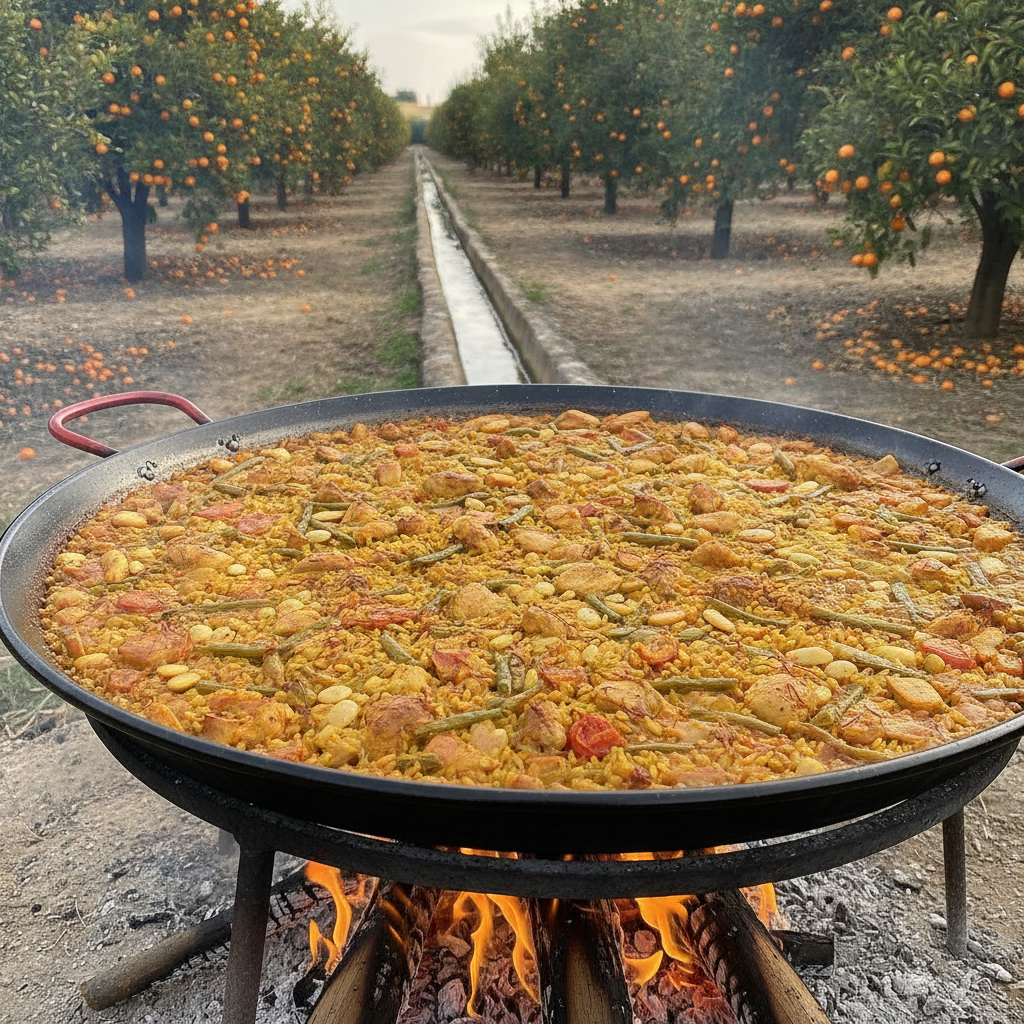
The 'paella valenciana' (the authentic Valencian paella — the rice dish that is the most internationally famous dish of Spanish cuisine and the defining culinary expression of the Valencian identity): the origin (the paella valenciana — the rice dish that originated in the 'Horta de València' (the 'Valencia Garden' — the irrigated agricultural plain surrounding Valencia that has been the rice-growing heartland of the eastern Iberian Peninsula since the Moorish period (the Moors introducing the rice cultivation to the Valencia region in the 8th-10th centuries)): the authentic recipe (the ingredients of the authentic paella valenciana — the dispute over the authentic recipe of the Valencian paella is one of the most heated culinary debates in Spain: the Consell Regulador de la Denominació d'Origen Arròs de Valencia (the regulatory body for Valencia rice) has published the official recipe for the authentic paella valenciana, which includes: the 'arroz de Valencia' (the short-grain Valencia rice — the 'bomba' variety or the 'J. Sendra' variety that absorbs 3 times its volume in broth), the chicken ('pollastre'), the rabbit ('conill'), the 'bajoqueta' (the flat green bean), the 'garrofón' (the dried white lima bean), the tomato, the olive oil, the saffron, the sweet smoked paprika, the rosemary, and the water — the authentic recipe containing neither seafood, chorizo, nor peas (the additions that the Valencians consider the hallmarks of the inauthentic tourist paella)): the socarrat (the 'socarrat' — the golden caramelized crust of toasted rice that forms on the bottom of the paella pan in the final minutes of cooking when the broth is fully absorbed and the heat of the fire caramelizes the bottom layer of the rice, the most prized element of the authentic paella): the wood fire (the traditional cooking method of the authentic Valencian paella — the paella cooked over the wood fire (the orange and carob wood of the Valencia orchards ('huerta') being the preferred fuel), the wood fire that provides the intense heat needed to create the socarrat and the distinctive smoky flavour of the authentic paella.
- 2
Mercado Central de Valencia — Europe's Largest Covered Market
The Mercado Central de Valencia (the 'Central Market of Valencia' — the covered food market at the Plaza del Mercado in the historic centre of Valencia, the largest covered food market in Europe by floor area (approximately 8,000 square metres of market hall)): the building (the Mercado Central de Valencia — the Art Nouveau market hall built 1914-1928 to the design of the architects Alexandre Soler March and Francesc Guàrdia Vial: the building with the extraordinary Art Nouveau facade (the elaborate ceramic tile and stained glass ornament of the building's exterior), the two great glass and iron market domes (the central dome of 30 metres in diameter and 20 metres in height, the light filtering through the coloured glass of the dome onto the market stalls below), and the elaborately decorated entrance portal with the ceramic tile mosaic decoration): the market (the Mercado Central de Valencia — the market stalls covering the floor of the market hall: the 1,200 market stalls selling the fresh produce of the Valencia region (the citrus fruits (the Valencia orange, the mandarin, the lemon), the tomatoes, the artichokes, the broad beans, the rice of the Albufera, and the seasonal vegetables of the Horta de Valencia), the fish and seafood (the Mediterranean fish (the 'dorada' (sea bream), the 'lubina' (sea bass), the 'salmonete' (red mullet), and the 'mero' (grouper)) and the shellfish (the 'gambas rojas de Denia' (the red prawns of Dénia), the 'coquinas' (the wedge clams), and the 'bogavante' (the Mediterranean lobster)), the charcuterie (the 'jamón ibérico', the 'lomo embuchado', and the 'embutidos' of the Valencia tradition), and the cheese: the most vibrant and the most visually spectacular food market in Spain.
- 3
Agua de Valencia & Valencia's Cocktail Culture
The 'Agua de Valencia' (the 'Water of Valencia' — the cocktail invented in Valencia in 1959 by Constante Gil at the Café Madrid bar in the centre of Valencia: the cocktail made from the freshly squeezed Valencia orange juice, the Cava (the Spanish sparkling wine), the vodka, and the gin — the drink that has become the signature cocktail of Valencia and one of the most widely ordered cocktails in Spain): the invention (the 'Agua de Valencia' — created by the barman Constante Gil of the Café Madrid in response to a group of Basque tourists who asked for 'agua de Valencia' (meaning they wanted some authentic Valencian drink), Gil improvising the cocktail on the spot by mixing the Cava with the freshly squeezed local orange juice and adding the spirits for strength): the cocktail (the 'Agua de Valencia' — served in the large glass pitcher ('jarra') or the individual glass, the cocktail the colour of the orange juice with the bubbles of the cava, the drink with the alcohol concealed behind the sweet, fruity, and refreshing character of the Valencia orange): the Café Madrid (the 'Café Madrid' in the Plaza del Ayuntamiento of Valencia — the bar that is the birthplace of the Agua de Valencia, the bar where the authentic recipe is still served in the traditional manner): the Valencia orange (the 'naranja de Valencia' — the Valencia orange, the most famous agricultural product of the Valencia region, the sweet, thin-skinned orange variety ('Navelina', 'Navel', 'Washington Navel') that has been cultivated in the Valencian Horta since the 18th century and that is the most exported fruit in Spain (the Valencia orange the most internationally recognized agricultural product of the Valencian Community)).
- 4
Fallas Festival — Valencia's Fire Festival
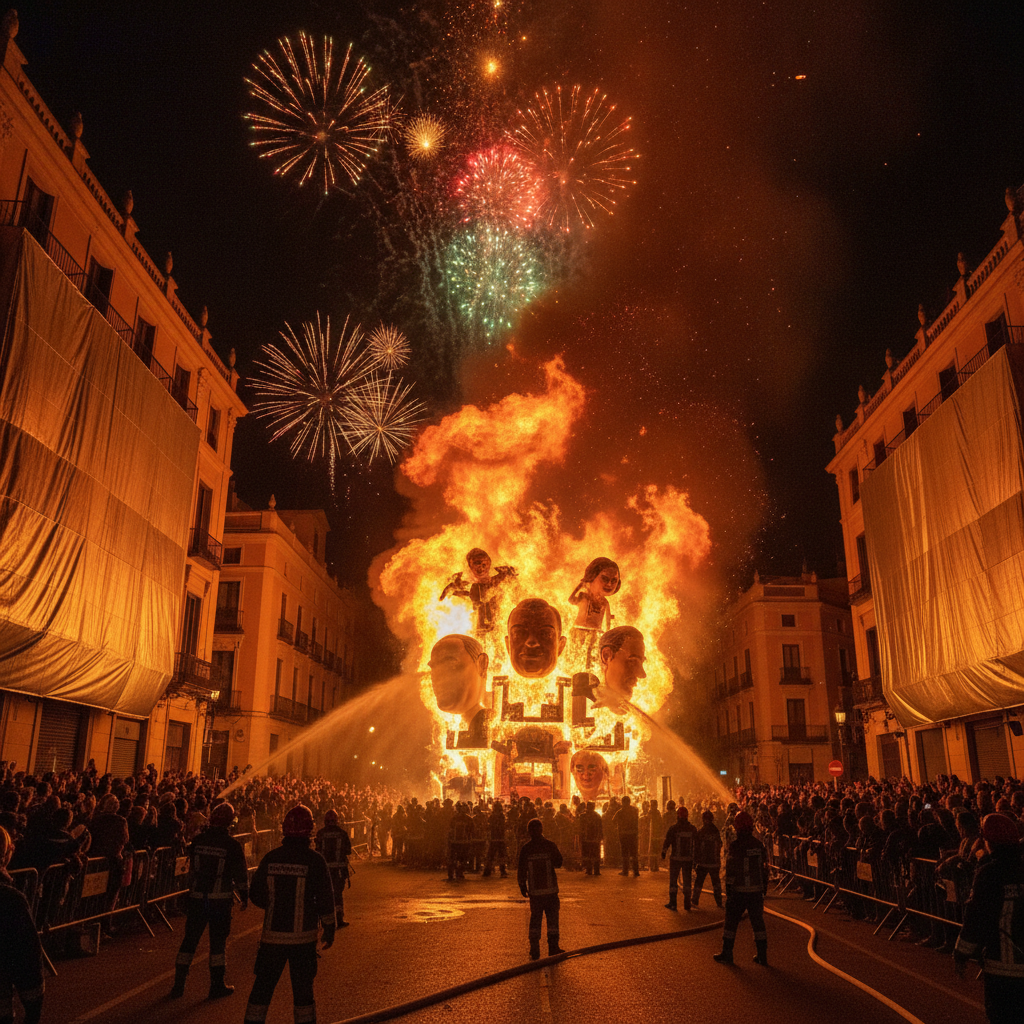
The Fallas (the 'Falles' in Valencian — the annual festival of fire, light, music, and satire in Valencia, held from March 1-19, culminating on the night of March 19 (the feast of Saint Joseph — the patron saint of carpenters): the most spectacular fire festival in Europe and the most celebrated annual event in the Valencian Community): the history (the Fallas — the festival that originated in the 18th century in the tradition of the carpenters of Valencia who burned the wooden stands ('parots') on which they had hung their lamps and tools during the winter, celebrating the arrival of the spring with the bonfire: the tradition that evolved over the 19th and 20th centuries into the most elaborate and the most expensive festival in Spain (the total investment in the Fallas of the major Valencia neighbourhoods regularly exceeding €2 million per neighbourhood)): the 'ninots' (the 'ninots' — the satirical figures that are the defining artistic element of the Fallas: the papier-mâché, wood, and polystyrene figures (the 'ninots' ranging in size from small tabletop figures to the giant 'falla' monuments of 20-30 metres height) that represent the satirical targets of the year: the politicians, the celebrities, the institutions, and the current events): the 'mascletà' (the 'mascletà' — the daily pyrotechnic display in the Plaza del Ayuntamiento at 2 pm from March 1-19: the sequence of firecrackers and aerial shells that produces the most intense noise experience of the Fallas (the 'mascletà' is felt physically as a series of pressure waves as much as it is heard), the competition between the Valencia pyrotechnic companies for the most technically perfect and the most impressive mascletà of the season): the 'la Cremà' (the 'la Cremà' — the 'burning', the climax of the Fallas festival on the night of March 19-20 when all the falla monuments in the city are burned simultaneously, the streets of Valencia lit by the flames of the burning monuments and the fireworks, the most spectacular pyrotechnic event in Europe).
- 5
Valencia's Old Town — Cathedral, Silk Exchange & Medieval Heritage
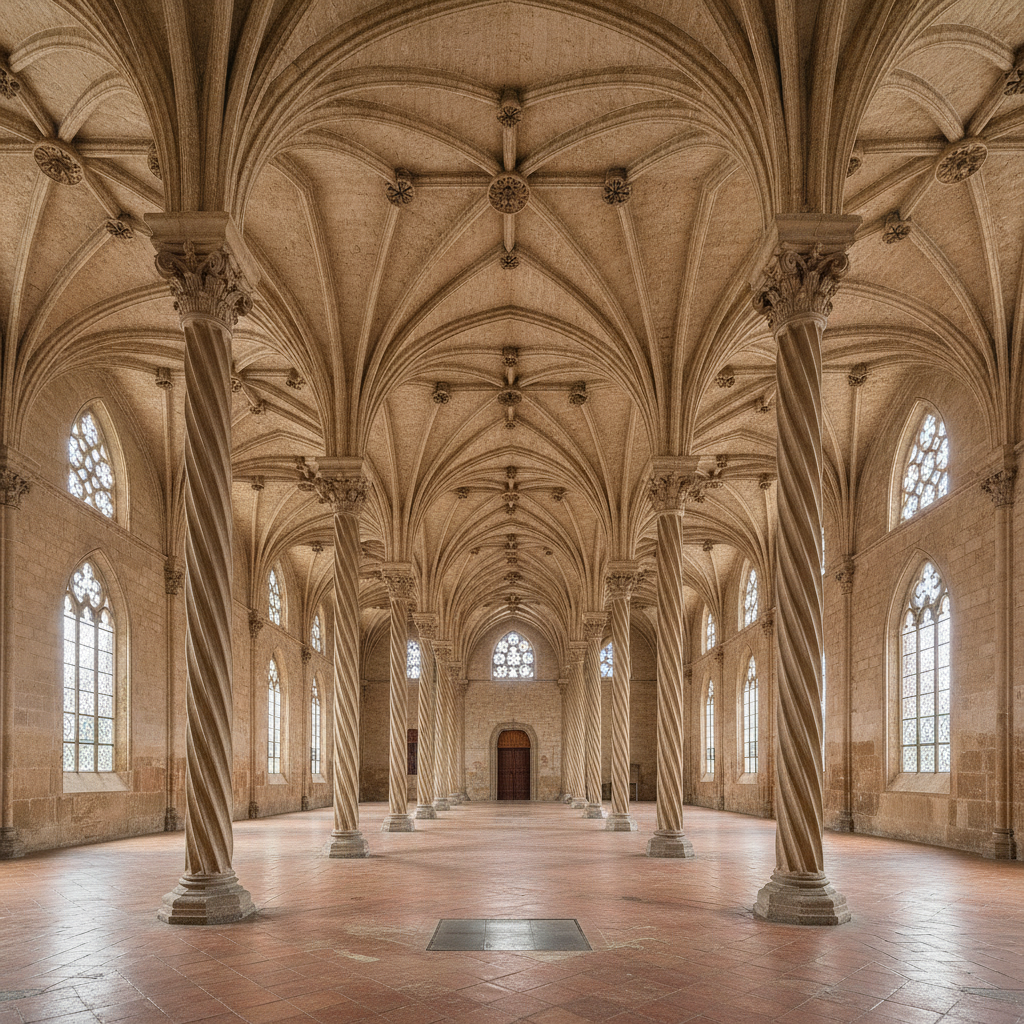
Valencia's old town (the historic centre of Valencia — the compact medieval city centre within the former city walls, the neighbourhood of the narrow streets, the Gothic and Baroque churches, and the medieval civic buildings that was the capital of the Kingdom of Valencia (one of the principal kingdoms of the Crown of Aragón) in the medieval period (the 'Règne de València' — the 'Kingdom of Valencia', founded in 1238 by King James I of Aragón ('El Conquistador') after the Christian reconquest of the Muslim city of Balansiya)): the Catedral de Valencia (the 'Valencia Cathedral' — the Gothic cathedral begun in 1252 on the site of the main mosque of the Muslim city, the cathedral that contains the 'Santo Cáliz' — the agate cup that the Valencia tradition identifies as the Holy Grail (the cup used by Christ at the Last Supper — the Valencian Holy Grail, one of several vessels in Spain and Europe that claim to be the authentic Holy Grail)): the Llotja de la Seda (the 'Silk Exchange' — the UNESCO World Heritage Site Gothic civil building built 1482-1548 as the centre of the Valencia silk trade (the 'Sala de Contratación' — the 'trading room', the great Gothic hall with the twisted 24-metre columns that rise to the vaulted ceiling without any intermediate capitals)): the Torres de Serranos (the 'Serranos Towers' — the 14th-century Gothic gateway, the most impressive surviving element of the medieval city walls of Valencia): the Barrio del Carmen (the 'Carmen Quarter' — the oldest surviving neighbourhood of Valencia, the neighbourhood of the narrow streets, the wall art, and the bohemian bars and restaurants that is the creative heart of the Valencia old town).
- 6
Horchata de Chufa & Valencia's Street Food Tradition
The 'horchata de chufa' (the 'tiger nut milk' — the most distinctive traditional drink of Valencia, the cold, sweet, white beverage made from the ground tiger nuts ('chufas' — the tubers of the plant 'Cyperus esculentus', cultivated in the Horta Nord (the northern Horta de Valencia) since the Moorish period): the drink (the horchata de chufa — the drink made by soaking the dried tiger nuts in water, then grinding them, and squeezing out the white 'milk' (the 'llet de xufa' in Valencian) which is then sweetened with the sugar and served ice cold (traditionally in the 'orxateria' — the horchata shop — in the tall glass with the 'fartons' (the elongated sweet pastry, the 'fingers' of the sweet yeasted dough glazed with the icing sugar that are the traditional accompaniment to the horchata)): the 'orxaterías' (the horchata shops of Valencia — the traditional horchata shops ('orxaterías' in Valencian, 'horchaterías' in Spanish) that serve the horchata fresh (the freshly made horchata, consumed within the same day of production, is a very different drink from the long-life UHT horchata found in supermarkets) with the fartons and the 'buñuelos' (the fried pumpkin fritters that are the traditional autumn accompaniment to the horchata in Valencia)): the Horchatería Santa Catalina (the most famous horchata shop in Valencia — the 'Horchatería de Santa Catalina' on the Plaza de Santa Catalina in the Valencia historic centre, the shop that has been serving the horchata and the buñuelos in the original tile-decorated interior since 1836).
Walk this route with audio
Stories play automatically as you reach each stop — no tapping needed.
More in valencia
Valencia Old Town, Carmen Quarter & Gothic Heritage
National Ceramics Museum, Valencian Tiles & Craft Heritage
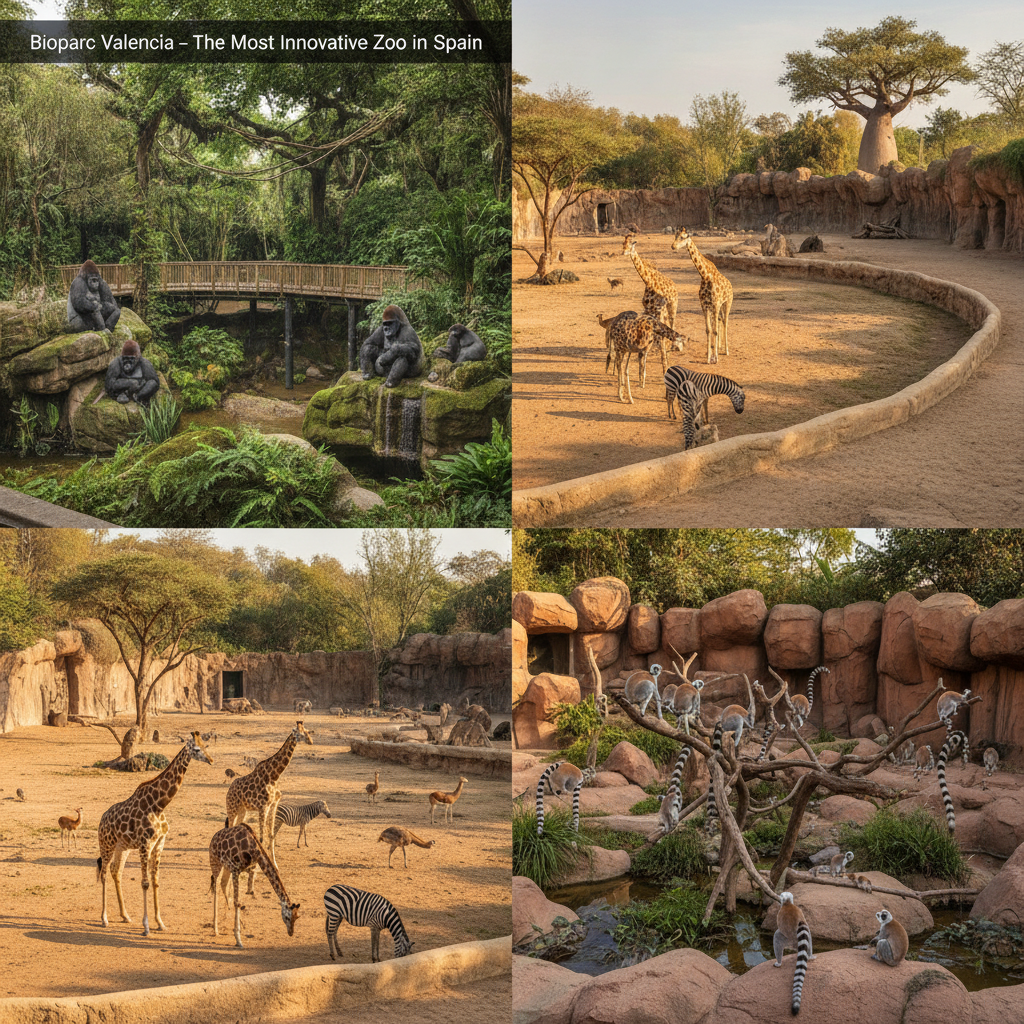
Bioparc Valencia, Cabecera Park & the Modern City
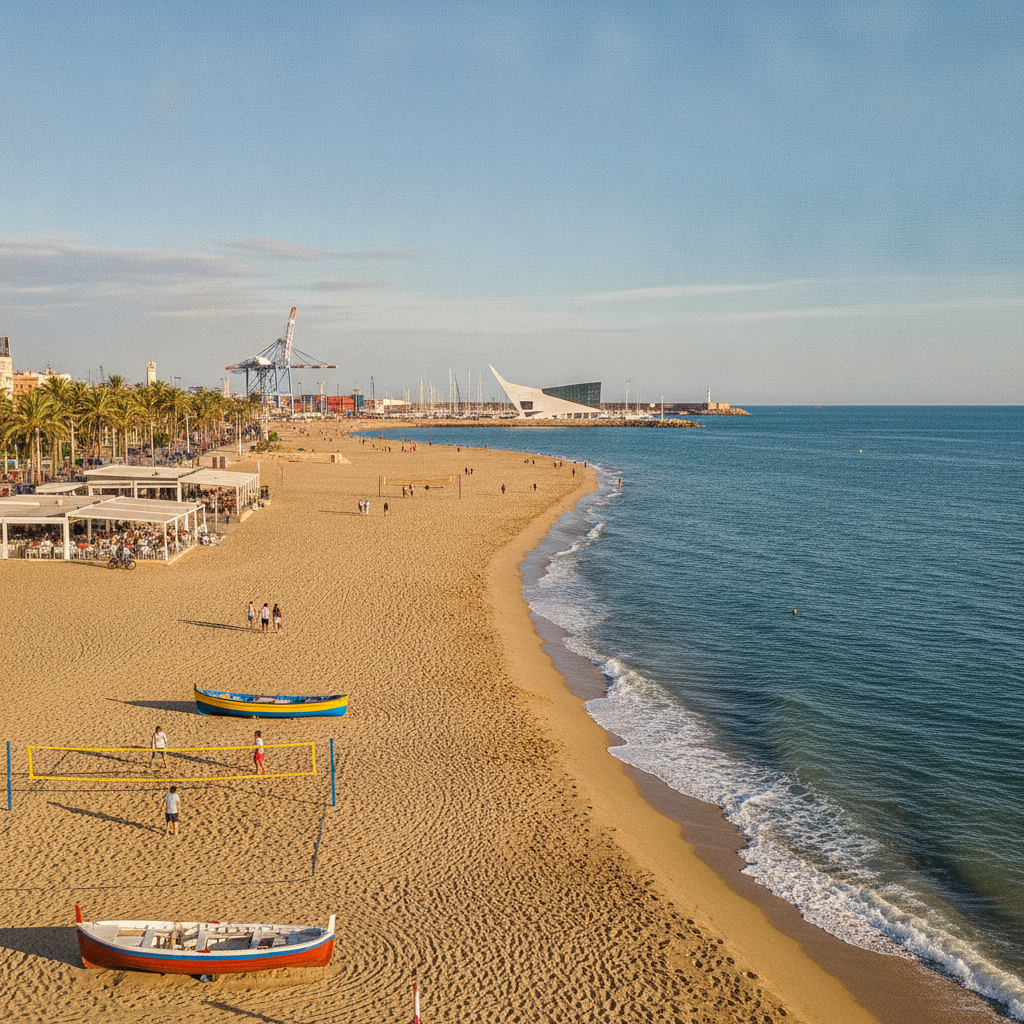
Malvarrosa Beach, Mediterranean Coast & Valencia's Seaside Life
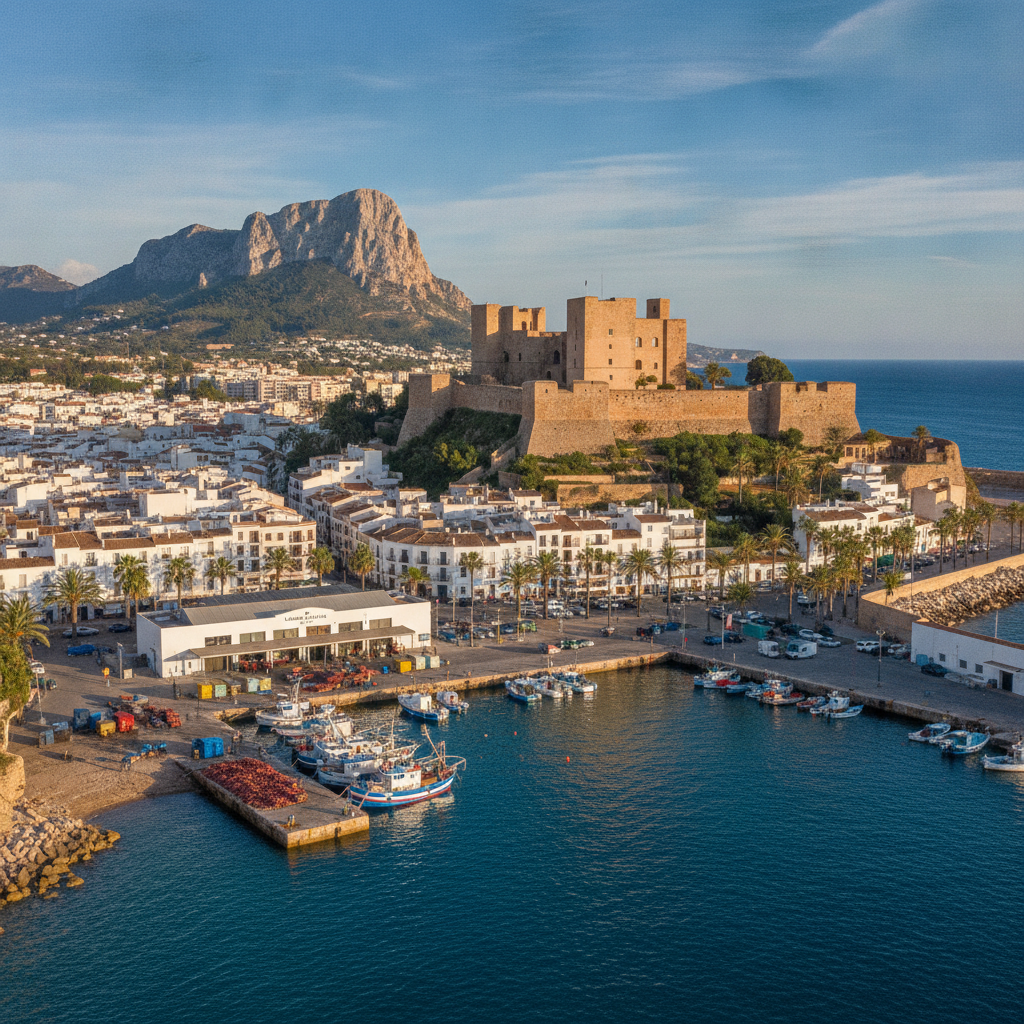
Costa Blanca Day Trip — Dénia, Altea & Alicante