City of Arts and Sciences, Calatrava & Valencia's Futuristic Vision
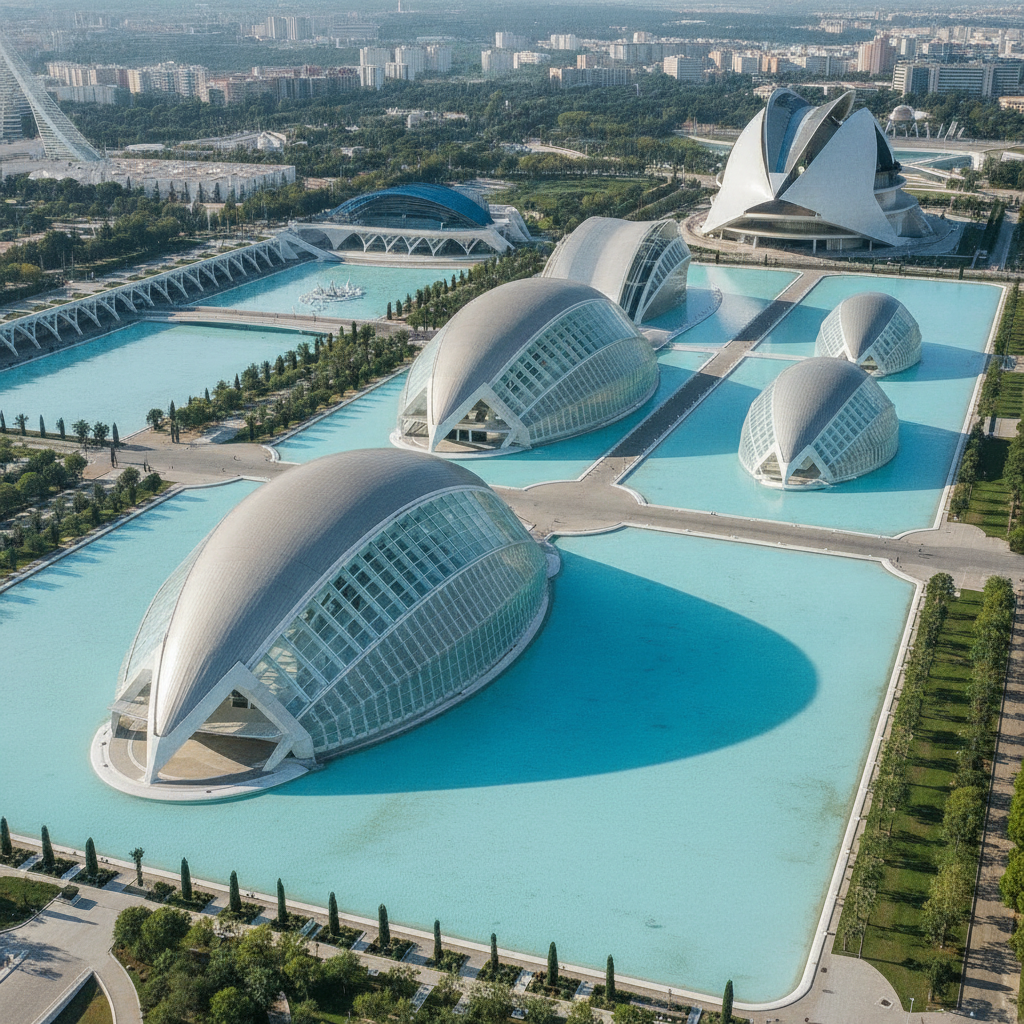
The Ciutat de les Arts i les Ciències (the 'City of Arts and Sciences' — the cultural complex in the former Turia riverbed in Valencia, designed by Santiago Calatrava and Félix Candela and built 1996-2009): L'Hemisfèric (the iMAX planetarium), the Museu de les Ciències (the interactive science museum), L'Oceanogràfic (the largest aquarium in Europe), the Palau de les Arts Reina Sofía (the opera house), and L'Àgora (the multipurpose pavilion) — together the most spectacular complex of contemporary architecture in Spain and one of the most visited tourist attractions in Europe.
- 1
L'Hemisfèric — The Eye of Knowledge
L'Hemisfèric (the 'Hemisphere' — the iMAX cinema, planetarium, and laserium at the western entrance to the City of Arts and Sciences complex, the first of the Calatrava buildings in the complex to be completed (opened January 16, 1998)): the building (L'Hemisfèric — the building designed to resemble a giant human eye: the curved white concrete lower structure (the 'eyelid') that opens to reveal the glass hemisphere of the iMAX screen dome above, the building reflected in the 24,000 square metre reflecting pool that surrounds it (the reflection of the building in the water creating the visual illusion of the complete eye, with the dome above and its reflection below forming the full circle)): the dimensions (L'Hemisfèric — the building of 110 metres in length and 55 metres in width, the IMAX dome of 31 metres in diameter): the programs (the programs inside L'Hemisfèric — the IMAX films projected onto the 900 m² hemispherical screen (the most immersive large-format cinema experience in Valencia), the digital planetarium shows (the digital simulation of the night sky and the astronomy shows projected onto the dome ceiling), and the laserium shows (the laser light and music shows)): the Calatrava design (the Santiago Calatrava design for L'Hemisfèric — the building that established the visual language of the City of Arts and Sciences complex: the white concrete skeleton-like structures, the metallic and glass surfaces, and the precise mathematical geometry of the forms that are the hallmarks of the Calatrava style).
- 2
Museu de les Ciències Príncep Felip — The Whale Skeleton
The Museu de les Ciències Príncep Felip (the 'Science Museum Prince Philip' — the interactive science museum at the centre of the City of Arts and Sciences complex, opened in November 2000): the building (the Museu de les Ciències — the 241-metre long building that is the largest of the Calatrava structures in the complex: the building whose swooping white concrete arched structure resembles the skeleton of a enormous whale or the greenhouse structure of a botanical garden (the 'nacelle' — the boat-shaped plan of the building, the white concrete arches rising on both sides of the central nave to meet at the ridge), the building that is 55,000 square metres in total floor area (the usable exhibition area of approximately 16,000 square metres on four levels)): the exterior (the exterior of the Museu de les Ciències — the white concrete arches covered with the 'trencadís' mosaic tiles (the 'trencadís' — the mosaic technique of covering the surface with the irregular fragments of broken ceramic tile in the tradition of the Valencian architect Antoni Gaudí (whose buildings in Barcelona use the same technique)), the mosaic covering reflecting the Mediterranean sunlight in the warm tones of the ivory, the cream, and the gold): the exhibitions (the permanent exhibitions of the Museu de les Ciències — the interactive science exhibitions on the physics (the mechanics, the electricity, the optics), the biology (the genetics, the evolution, the ecology), the technology (the digital world, the robotics, the space exploration), and the Valencian science and technology heritage): the exterior walkways (the public access to the exterior walkways of the Museu de les Ciències — the walkways on the upper level of the building that offer the panoramic views of the City of Arts and Sciences complex and the surrounding Turia park).
- 3
L'Oceanogràfic — Europe's Largest Aquarium
L'Oceanogràfic (the 'Oceanographic' — the marine park and aquarium at the eastern end of the City of Arts and Sciences complex, the largest aquarium in Europe): the complex (L'Oceanogràfic — the aquarium complex designed by the architect Félix Candela (1910-1997) (the Spanish-born architect and engineer famous for the hyperbolic paraboloid concrete shell structures that are his trademark) in collaboration with the architects Alberto Domingo and Carlos Lázaro: the buildings of L'Oceanogràfic designed as a series of water lily-like concrete umbrella shells ('paraguas' — the 'umbrellas', the thin concrete hyperbolic paraboloid shells that rest on a single central column) floating on the reflecting pool of the complex): the exhibition (L'Oceanogràfic — the aquarium with 45,000 animals of 500 species, the exhibitions organized by the oceanic region: the 'Mediterráneo' (the Mediterranean Sea), the 'Pantanos y Lagos' (the Wetlands and Lakes), the 'Océano' (the Open Ocean — the largest tank, with the capacity of 7 million litres, the tank where the visitors walk through the transparent underwater tunnel surrounded by the oceanic fish (the sharks, the rays, and the schools of tuna)), the 'Ártico-Antártico' (the Arctic-Antarctic — the exhibit of the beluga whales and the walruses), the 'Delfines' (the Dolphins — the dolphin arena with the dolphin shows), and the 'Tortugas' (the Sea Turtles — the rehabilitation centre for injured sea turtles)): the underwater restaurant (the 'Submarino' restaurant — the underwater restaurant inside the Open Ocean tank, the restaurant where the diners eat surrounded by the sharks, the rays, and the schools of fish swimming through the 7 million litre tank).
- 4
Palau de les Arts Reina Sofía — Valencia's Opera House
The Palau de les Arts Reina Sofía (the 'Queen Sofia Palace of the Arts' — the opera house, concert hall, and performing arts centre at the eastern end of the City of Arts and Sciences complex, opened in October 2005): the building (the Palau de les Arts — the most architecturally dramatic building in the City of Arts and Sciences complex: the building that rises to a height of 75 metres (246 feet) above the surrounding Turia park, the building clad in the iridescent mosaic tiles ('trencadís') in the white, cream, and ivory colours that give the building its distinctive shimmering appearance in the Valencia sunlight): the structure (the Palau de les Arts structure — the building composed of two main elements: the 'casca' (the outer shell — the arched concrete shell that covers the entire building, the outer shell that gives the building its dramatic helmet-like profile when seen from the exterior) and the 'nucli' (the inner core — the rectangular volume inside the outer shell that contains the four performance spaces)): the performance spaces (the four performance spaces inside the Palau de les Arts: the 'Sala Principal' (the main opera house auditorium — the 1,400-seat opera house with the orchestra pit and the fly tower for the full production of the grand opera repertoire), the 'Auditori' (the 1,450-seat concert hall for the orchestral concerts and the recitals), the 'Aula Magistral' (the 400-seat chamber music and recital hall), and the 'Martín i Soler' (the small 400-seat theatre for the chamber opera and the recital)): the Orquestra de la Comunitat Valenciana (the resident orchestra of the Palau de les Arts — the orchestra established in 2006 to serve as the pit orchestra and the concert orchestra of the Palau, the orchestra that has attracted the international conductors and the opera stars since its establishment).
- 5
The Former Turia Riverbed — Valencia's Linear Park
The Jardí del Túria (the 'Turia Garden' — the 9 km linear park created in the former riverbed of the Turia River in the centre of Valencia, the most important public park in Valencia and one of the largest urban parks in Spain): the history (the Jardí del Túria — the park created after the devastating flood of October 14, 1957 (the 'Riada de Valencia' — the catastrophic flood of the Turia River that killed at least 81 people and caused massive destruction in Valencia): the Spanish government's response to the flood: the decision to divert the Turia River to the south of Valencia (the 'Plan Sur' — the Southern Plan, the project to build a new concrete channel for the Turia south of the city, completed in 1969) and to convert the former riverbed into a park): the park (the Jardí del Túria — the linear park of 9 km length and 150-200 metres width that runs through the centre of Valencia from the western suburbs (the Parc de Capçalera) to the City of Arts and Sciences in the east (a total area of approximately 110 hectares): the park divided into 18 sections (the 'tramos') each designed by a different landscape architect): the City of Arts and Sciences (the City of Arts and Sciences at the eastern end of the Jardí del Túria — the complex that occupies the final section of the former riverbed, the spectacular terminus of the linear park that transforms from the garden and the playground at the western end to the futuristic architectural complex at the eastern end): the Gulliver playground (the 'Parque Gulliver' — the iconic playground in the Jardí del Túria, the giant sculpture of Gulliver lying on the ground with the slides and the climbing structures built into the figure of the giant, the most popular children's attraction in Valencia).
- 6
L'Àgora & the Architecture of Santiago Calatrava
L'Àgora (the 'Agora' — the multipurpose covered space at the eastern end of the City of Arts and Sciences complex, the last of the major buildings to be completed (opened in 2009)): the building (L'Àgora — the covered pavilion of approximately 6,000 square metres of covered floor area, the building used for sports events (the Valencia Open 500 tennis tournament is held in L'Àgora each October — the indoor tournament that attracts the top-ranked players of the ATP World Tour), concerts, and cultural events): the structure (L'Àgora structure — the ovoid (egg-shaped) building with the tilted concrete columns supporting the roof structure, the building clad in the mosaic tiles in the red, orange, and blue colours (the warmer colour palette of L'Àgora in contrast to the cool whites of the other Calatrava buildings in the complex)): Santiago Calatrava (the architect Santiago Calatrava Valls (b.1951 in Benimamet, Valencia — the architect born in the Valencia metropolitan area who has become the most internationally famous Spanish architect of his generation): the career (Santiago Calatrava — the architect and structural engineer whose practice is divided between Zürich, Paris, New York, and Valencia, the architect famous for the bridges (the 'Puente del Alamillo' in Seville, the 'Pont de l'Europe' in Orléans), the transport infrastructure (the 'Stadelhofen station' in Zürich, the 'Oriente station' in Lisbon, the 'World Trade Center Transportation Hub' in New York), and the cultural buildings (the 'Milwaukee Art Museum' (the 'Quadracci Pavilion'), the 'Palau de les Arts' in Valencia, and the 'Turning Torso' tower in Malmö)).
Walk this route with audio
Stories play automatically as you reach each stop — no tapping needed.
More in valencia
Valencia Old Town, Carmen Quarter & Gothic Heritage
Paella, Mercado Central & Valencia's Gastronomic Soul
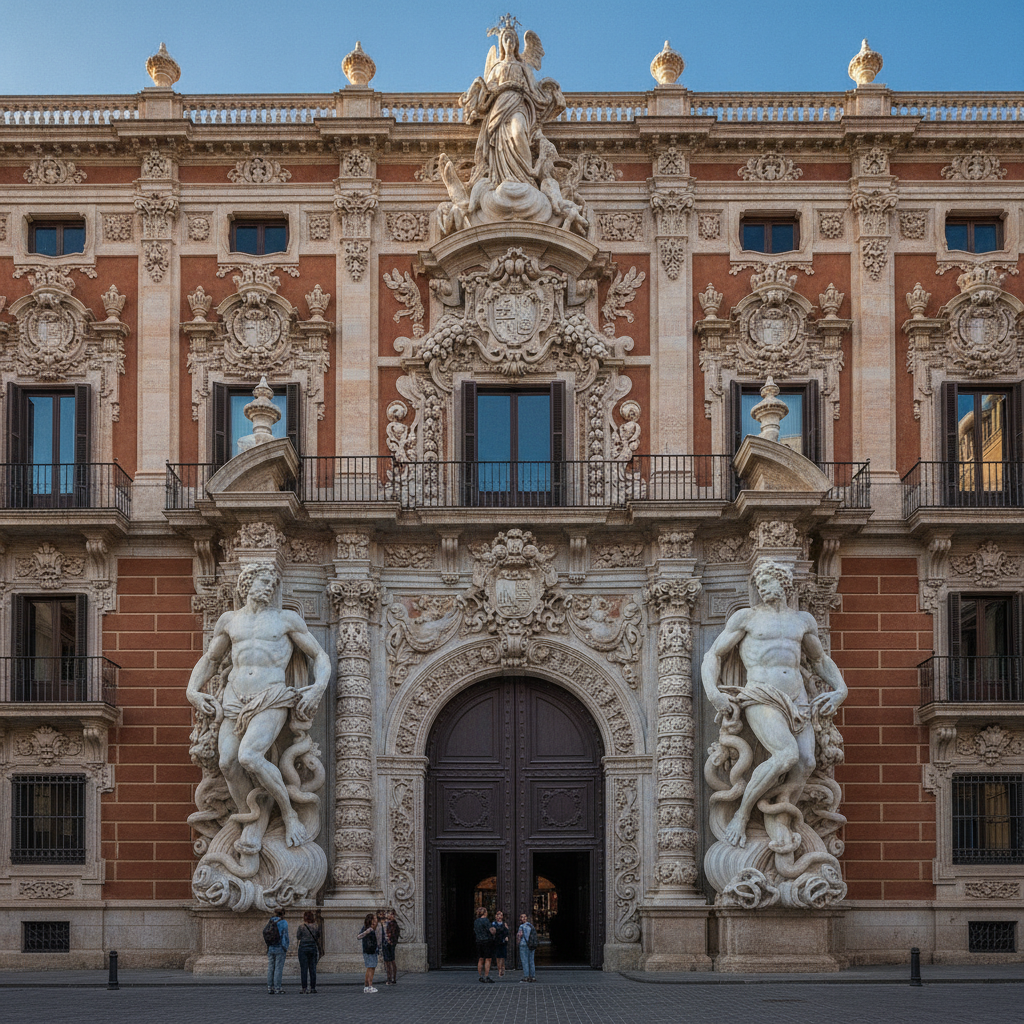
National Ceramics Museum, Valencian Tiles & Craft Heritage
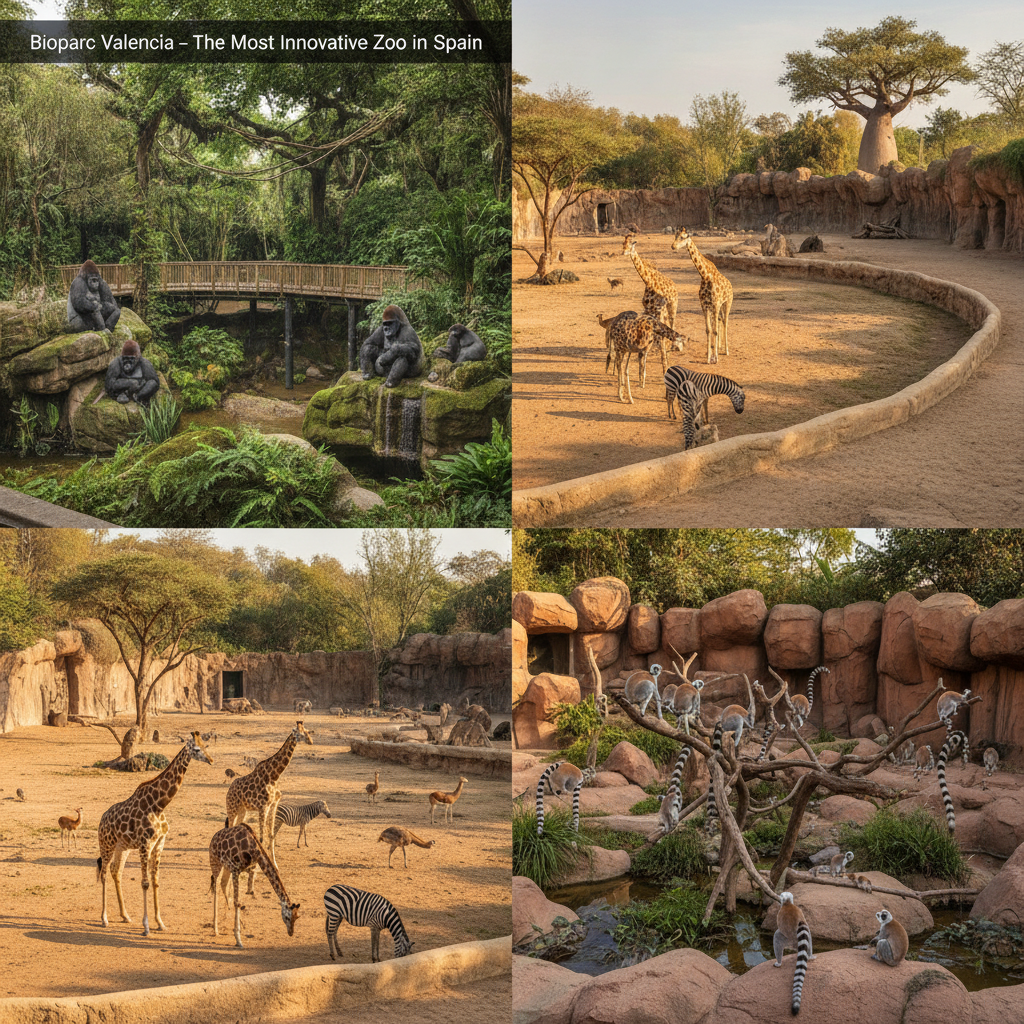
Bioparc Valencia, Cabecera Park & the Modern City
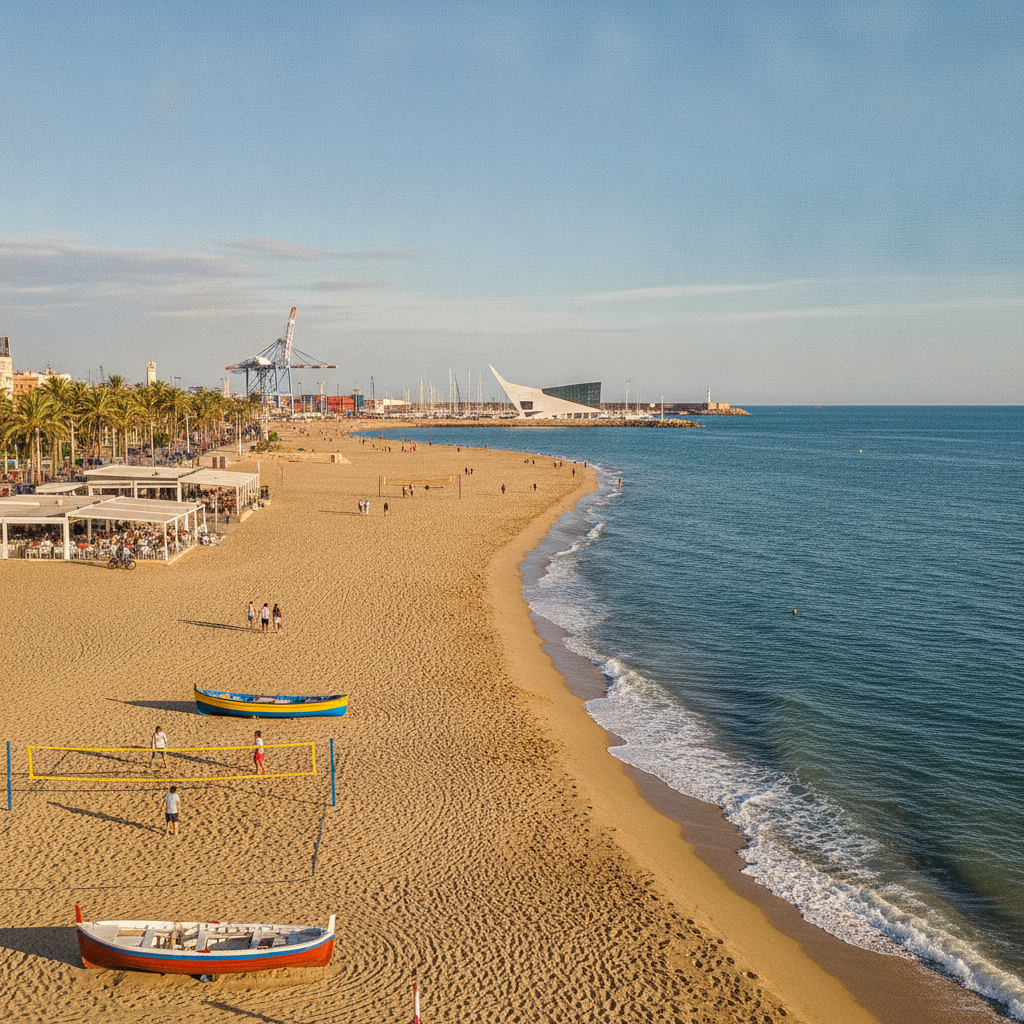
Malvarrosa Beach, Mediterranean Coast & Valencia's Seaside Life