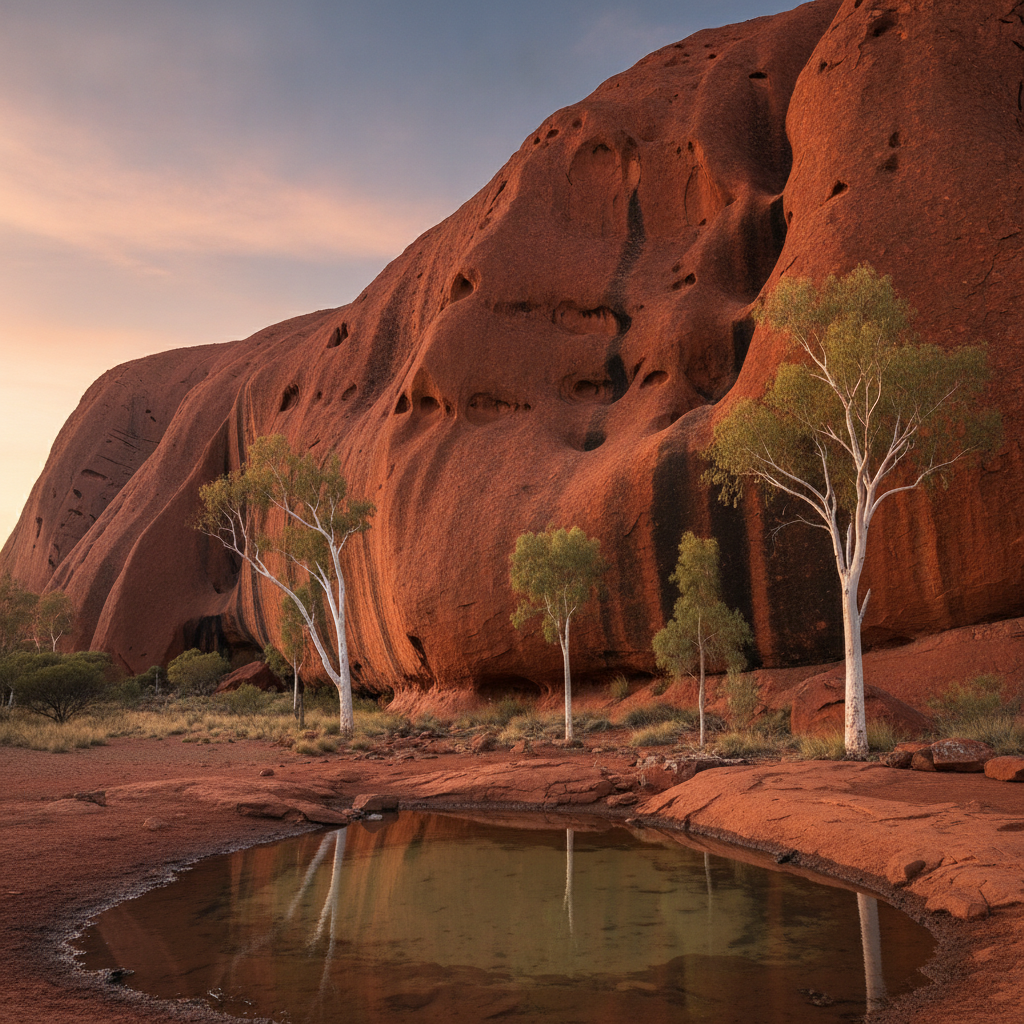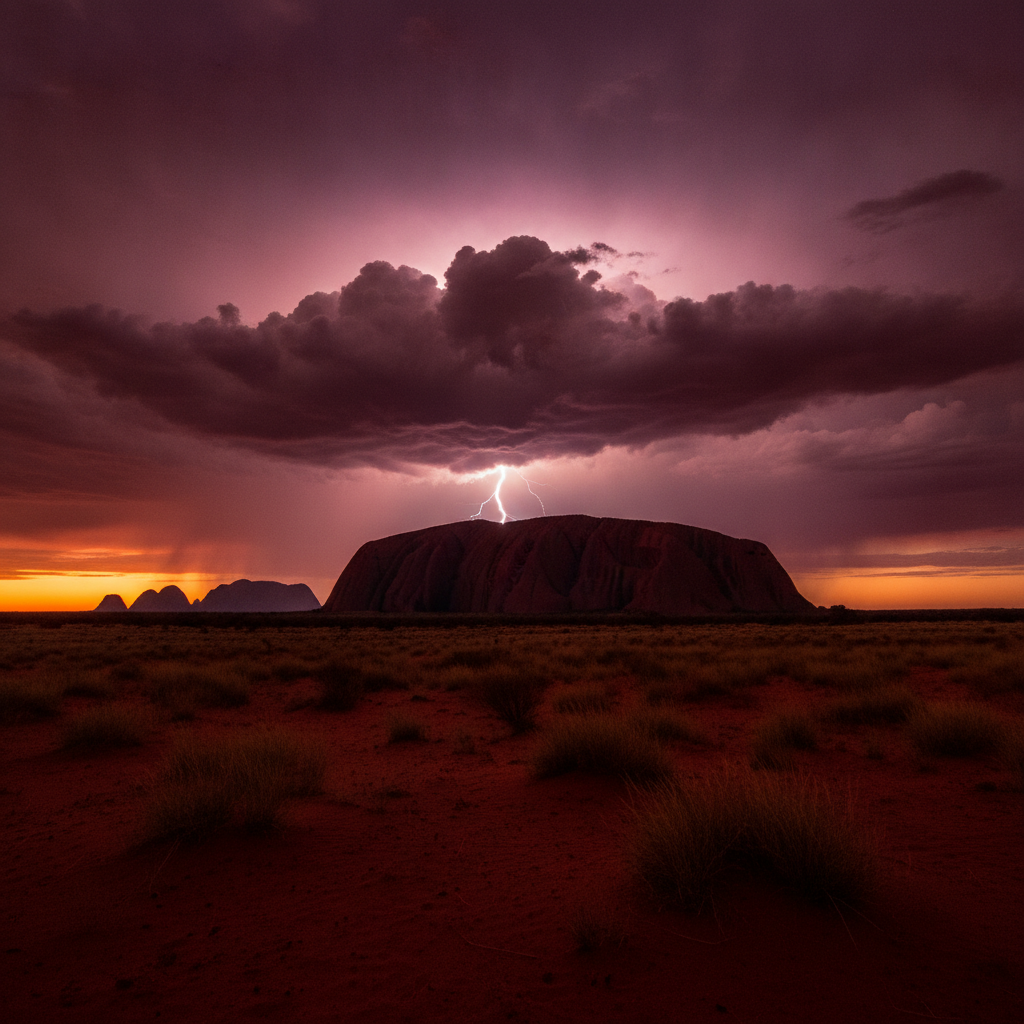
Uluru: Pitjantjatjara Homelands and Anangu Economy, Climate Change in the Red Centre, Tourism Economics and Post-Climbing-Ban Trends, East MacDonnell Ranges and N'Dhala Rock Art, Henley-on-Todd Regatta, and Four-Route Final Ultimate Verdict
Uluru final: Pitjantjatjara homelands and Maruku Arts (ethical art purchasing), climate change impacts on the Red Centre desert ecosystem, Uluru tourism economics (visitor numbers, climbing ban impact, Anangu income), East MacDonnell Ranges (Trephina Gorge, N'Dhala petroglyphs, Emily Gap caterpillar Dreaming), Alice Springs Henley-on-Todd Regatta and cultural life, and the four-route ultimate Uluru verdict.
- 1
Uluru and the Pitjantjatjara Homelands - Living Desert Communities
The Pitjantjatjara homelands (the remote communities across the Western Desert of South Australia, the Northern Territory, and Western Australia): the communities where Pitjantjatjara, Yankunytjatjara, and Ngaanyatjarra people maintain their connection to country. The APY Lands (Anangu Pitjantjatjara Yankunytjatjara Lands, in the northwest of South Australia): the land area of approximately 102,000 sq km managed by the Anangu under the Pitjantjatjara Land Rights Act 1981. A permit is required to enter the APY Lands (obtainable from the APY Executive in Umuwa). The Mutitjulu community (adjacent to Uluru, within the National Park boundary): the small community of approximately 300 Anangu people who are the primary traditional custodians of Uluru; the community has a shop, a health clinic, and the Maruku Arts (the Aboriginal art centre selling authentic Western Desert art). Maruku Arts: the cooperative owned and managed by the Anangu, selling works by artists from communities across the APY Lands and the NT Western Desert. Purchasing art from Maruku directly supports the artists and is the most ethical way to acquire Central Australian Aboriginal art. The Anangu-owned Uluru tour operations: the Anangu-guided walks (including the Dot Art Workshop, the Mala Walk with an Anangu ranger, and the Cultural Centre experiences) provide direct economic benefit to the traditional owners and the most authentic cultural interpretation of Uluru.
- 2
Climate Change and Uluru - the Red Centre in a Warming World
Climate change impacts on the Red Centre: the Red Centre of Australia is already experiencing measurable climate change impacts that are altering the ecology, the water availability, and the visitor experience. Temperature increase: the average temperature in central Australia has increased by approximately 1.4 degrees C since 1910 (compared to the global average of 1.1 degrees C); the Red Centre is warming faster than the global average. Rainfall unpredictability: the already variable rainfall of the desert is becoming more unpredictable, with longer droughts interspersed with more intense rainfall events. The desert ecosystem response: some spinifex grass species are expanding their range southward as temperatures increase; the timing of plant flowering and the emergence of insects (and the timing of bird breeding that depends on insect availability) is shifting. Lake Eyre flooding frequency: the Lake Eyre flood events that have historically occurred approximately three times per century may increase in frequency as the ENSO (El Nino/La Nina) cycle intensifies. The future of Uluru tourism: the increasing frequency of extreme heat events (days above 45 degrees C at Uluru are expected to increase significantly by 2050) will restrict the dry season window for comfortable visiting and will make summer visits increasingly dangerous. The Anangu cultural response to climate change: the Anangu Tjukurpa knowledge of long-term landscape patterns and the traditional land management practices (including patch burning and waterhole maintenance) are increasingly recognized as valuable tools for managing landscape change.
- 3
Uluru Visitor Numbers, Tourism Economics, and the Anangu Economy
Uluru visitor statistics: approximately 250,000-300,000 visitors per year before the COVID-19 pandemic (2019 figures); visitor numbers had not fully recovered to pre-pandemic levels by 2024. The visitor peak: July-August (the middle of the Australian winter, the coolest months at Uluru) is the primary visitor peak, with the resort accommodation often fully booked months in advance. The Uluru-Kata Tjuta National Park entry fee (AUD 38 per adult for a 3-day pass, purchased online in advance): the revenue contributes to park management and the Anangu joint management programs. The Anangu economic interest in Uluru tourism: the Anangu receive a lease payment from the Australian Government for the use of their land (the lease was renewed in 2010 for 99 years at a significantly increased payment, but the exact amount is not publicly disclosed). The Anangu also receive income from the joint management employment (the Anangu rangers and cultural guides), the Maruku Arts cooperative, and the Anangu-owned tourism operations. The Uluru climbing ban economic impact: the October 2019 closure of the climbing route was predicted to reduce visitor numbers; in practice, the visitor numbers did not significantly decline, suggesting that most visitors came for reasons other than the climb. The cultural tourism growth: the Anangu-guided experiences (dot art workshops, bush tucker walks, and the guided cultural walks) have grown significantly since the climbing ban, indicating a genuine visitor interest in the cultural rather than the physical experience of Uluru.
- 4
The East MacDonnell Ranges and Trephina Gorge
The East MacDonnell Ranges (the continuation of the MacDonnell Ranges east of Alice Springs, less visited than the West MacDonnells but equally dramatic): the primary day trip destination from Alice Springs for visitors who have already explored the West MacDonnells. Trephina Gorge (55 km east of Alice Springs): the red quartzite gorge with the wide sandy creek bed and the ghost gum forest, with the Trephina Gorge walk (the 4 km circuit) and the John Hayes Rockhole (the permanent waterhole 7 km from the gorge, the most beautiful swimming location in the East MacDonnells). The N'Dhala Gorge Nature Park (approximately 90 km east of Alice Springs, accessible by 4WD): the sandstone gorge with approximately 6,000 Aboriginal rock engravings (petroglyphs) — one of the highest concentrations of rock art in Australia, with engravings dated to over 10,000 years ago. The Emily Gap (11 km east of Alice Springs) and Jessie Gap (20 km east): the two gorges of the Emily and Jessie Gap Nature Park, with the Caterpillar Dreaming rock art at Emily Gap (the most significant Arrernte art site in the Alice Springs area). The Corroboree Rock Conservation Reserve (45 km east of Alice Springs): the dolomite rock formation that was a sacred ceremonial site for the Arrernte people. Ruby Gap Nature Park (160 km east of Alice Springs, 4WD only): the remote gem-field gorge where garnets (mistaken for rubies in 1886) are found in the quartzite walls.
- 5
Henley-on-Todd Regatta - the Boat Race with No Water
The Henley-on-Todd Regatta (annual in August or September, in the dry bed of the Todd River in Alice Springs): the world only dry river boat race, where the bottom-less boats (the crews carry the boat hull and run the course on foot) race along the sandy riverbed. The Henley-on-Todd was cancelled only once in its history: in 1993, when the Todd River actually flooded (the only time rain fell on the race day since the event began in 1962). Alice Springs events calendar: the Henley-on-Todd (August-September), the Alice Springs Beanie Festival (annual in July, celebrating the beanies and hats made by remote community women), the Alice Springs Masters Games (biennial, October), and the Camel Cup (annual in July: camel racing at the Blatherskite Park). The Alice Springs food scene: the Epilogue Lounge (the primary quality cafe in Alice Springs), the Hanuman (the Thai-Indian restaurant in the Todd Mall precinct), and the Red Ochre Grill (the restaurant specializing in native ingredient bush food). The Alice Springs night patrol: the Alice Springs town camps and the associated social challenges (homelessness, alcohol, and the intergenerational trauma of the Stolen Generations policy) are visible in Alice Springs and are part of the honest picture of remote Australia; the Tangentyere Council (the representative body for the town camp residents) works with the community on these issues.
- 6
Uluru Four Routes Final: The Most Sacred Place in Australia
Uluru four-route final verdict. Route 1: Uluru geology and Anangu people, Tjukurpa living law, sunrise and sunset, Kata Tjuta, Kings Canyon, practical guide. Route 2: Alice Springs, West MacDonnell Ranges, desert ecology, dark sky astronomy and emu constellation, Uluru Statement and national identity. Route 3: Simpson Desert and Lake Eyre, Telegraph Line and Afghan cameleers, Base Walk and Mala Walk cultural sites, Western Desert dot painting art movement, Yulara accommodation guide. Route 4 (this route): Pitjantjatjara homelands and Anangu economy, climate change impacts on the Red Centre, tourism economics and post-climbing-ban visitor trends, East MacDonnell Ranges and N'Dhala Gorge rock art, Henley-on-Todd Regatta and Alice Springs cultural life. Uluru four-route ultimate verdict: the Red Centre of Australia offers the visitor an encounter with geological time, human time, and cosmological time simultaneously. The 550-million-year-old rock is framed by the 10,000-year-old (at minimum) cultural landscape of the Anangu. The silence and the light of the desert reveal why the Anangu regard this place as the centre of the world. No visitor who approaches Uluru respectfully — walking the base, sitting at the Mutitjulu Waterhole at dusk, watching the sunrise from the viewing area — leaves unchanged. It is the most significant landscape in Australia, and one of the most significant anywhere on earth.
Walk this route with audio
Stories play automatically as you reach each stop — no tapping needed.
More in uluru
Uluru: Anangu People and Living Tjukurpa Law, Sacred Monolith Geology, Sunrise and Sunset Light Show, Kata Tjuta Valley of the Winds, Kings Canyon Rim Walk, and Complete Practical Guide with Cultural Respect
Uluru: Alice Springs and Arrernte Country, West MacDonnell Ranges Gorges and Larapinta Trail, Red Centre Desert Ecology, Dark Sky Astronomy and Anangu Star Knowledge, Uluru Statement from the Heart, Albert Namatjira Art, and Complete Red Centre Verdict