The 13th-Century Capital That Had Buddhist Temples, 2 Mosques, a Nestorian Church & a Taoist Temple, the Last Wild Horse Declared Extinct in 1969 & the Coldest National Capital on Earth
Karakorum's religious diversity with 12 Buddhist temples, 2 mosques, a Nestorian church, and a Taoist temple as the most religiously diverse 13th-century settlement; the takhi Przewalski's horse extinct in the wild in 1969 and reintroduced to Khustain Nuruu in 1994; Ulaanbaatar's -22°C January mean as the world's coldest national capital average; Mongolian hip-hop fusion of morin khuur and khoomei throat singing; the 1241 Mongol withdrawal from Europe caused by the Great Khan's death rather than military defeat; and Ulaanbaatar's PM2.5 winter concentrations at 100× WHO limits as Asia's worst urban air quality.
- 1
The Mongolian Empire – The Largest Land Empire in History
The Mongol Empire (Монголын эзэнт гүрэн, 1206–1368 CE): the largest contiguous land empire in history, covering 33 million km² at its greatest extent under Kublai Khaan. The scale (the Mongol Empire covered: China, Korea, Central Asia, Russia, Persia, Iraq, and parts of Eastern Europe—from the Pacific coast of China to the Adriatic Sea in Poland and Hungary—the equivalent of 22% of the world's total land area): the Mongol invasion of Europe (the Mongol invasion of Poland and Hungary (1241 CE)—the Mongol forces under Batu Khaan and the general Subutai defeated the combined Polish and German forces at the Battle of Legnica (Liegnitz—1241 CE) and the Hungarian forces at Muhi—and then withdrew from Europe, not due to military defeat but because of the death of the Great Khan Ögedei in December 1241, requiring Batu to return to Mongolia for the succession kurultai): the Pax Mongolica (the 'Mongol Peace'—the century of relative stability across the Silk Road (1260–1360 CE) when the unified Mongol administration made overland travel from Europe to China safer than at any time before or after: the period when Marco Polo (1271–1295) made his journey).
- 2
Karakorum – The Lost Capital of the Mongol World
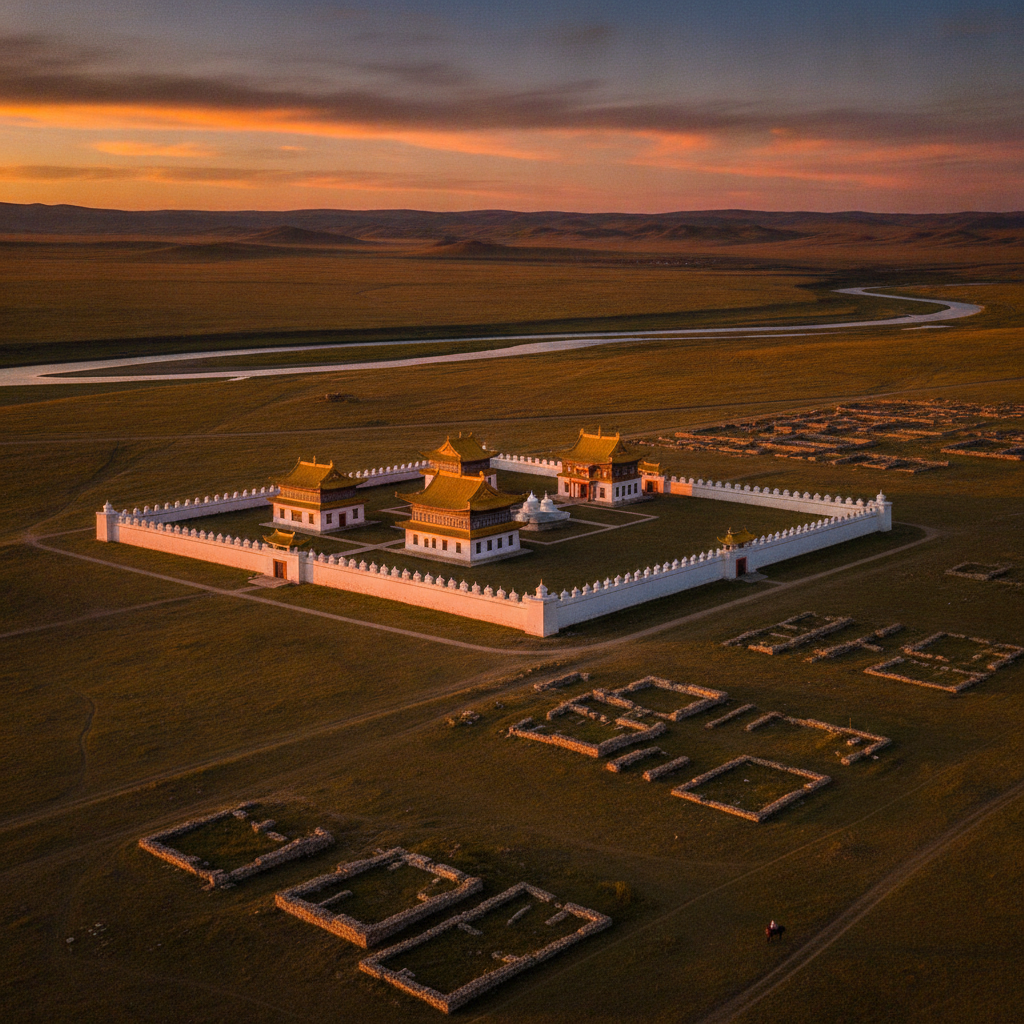
Karakorum (Хархорум—the capital of the Mongol Empire founded by Ögedei Khaan in 1235 CE): 380 km southwest of Ulaanbaatar in the Orkhon Valley (the valley designated UNESCO World Heritage in 2004): the most historically important single site in Mongolia. The city (at its peak (1250 CE), Karakorum hosted the capital administration of the world's largest empire—the foreign diplomats, craftsmen, and merchants of all the conquered nations—William of Rubruck (the Franciscan friar who visited Karakorum in 1254 as an envoy from King Louis IX of France) described a city with 12 Buddhist temples, 2 mosques, a Nestorian Christian church, and 1 Taoist temple—the most religiously diverse single settlement on earth in the 13th century). The destruction (Karakorum was sacked and destroyed by the Chinese Ming Dynasty forces in 1380 and the materials were used to build the Erdene Zuu Monastery (Эрдэнэ Зуу—1586 CE—the first Buddhist monastery in Mongolia, built on and from the ruins of the Mongol capital)): the access (the Erdene Zuu Monastery is accessible from Ulaanbaatar by: the daily domestic flight to Kharkhorin (55 minutes); the road (6–7 hours south + west on the main highway); the organized overnight tour from Ulaanbaatar (the standard 2-day circuit includes the Orkhon Valley, the Khustain Nuruu (Пржевальского takhi) horse sanctuary, and the Erdene Zuu Monastery)).
- 3
Wildlife of Mongolia – Eagles, Snow Leopards & Takhi
The wildlife of Mongolia (the steppe and mountain fauna that is the most under-documented megafauna ecosystem in Asia): the wildlife guide accessible from Ulaanbaatar. The takhi (тахь—Equus ferus przewalskii—Przewalski's horse): the only truly wild horse species on earth (never domesticated): the species was declared extinct in the wild in 1969 (the last wild takhi was sighted in the Mongolian Gobi in 1969—the species survived only in captivity): the reintroduction (the Dutch and German zoo program (Stichting Reserves Przewalski Horse) reintroduced captive-bred takhi to the Khustain Nuruu National Park (Хустайн Нуруу—95 km southwest of Ulaanbaatar) in 1994—the current wild population of takhi at Khustain is approximately 350 individuals): the eagle hunting (the Kazakh eagle hunters (Буркитші—the Mongolian Kazakh minority in the Bayan-Ulgii Province in western Mongolia): the tradition of hunting with golden eagles (алтан бүргэд—Aquila chrysaetos): the eagle hunting festival (the Golden Eagle Festival (Алтан Бүргэдийн Наадам—held annually in the first week of October in Ulgii)—the most dramatic wildlife-human cultural event in Mongolia). The argali (аргаль—Ovis ammon—the wild sheep with the largest horns of any sheep species—the Mongolian Altai argali (Ovis ammon ammon) is the largest subspecies: the horn span can reach 190 cm): the population (approximately 13,000 argali in Mongolia).
- 4
Buddhist & Shamanist Mongolia – Two Traditions
The religious traditions of Mongolia (the 2 primary belief systems that have coexisted and competed across Mongolian history): the religious culture guide. Tengrism (Тэнгэрт шүтэх—the ancient shamanic belief system of the Mongolian and Turkic peoples): the core belief (the veneration of the Eternal Blue Sky (Мөнх Хөх Тэнгэр) as the supreme deity and the Earth Mother (Эх Дэлхий) as the complementary power—the shaman (бөө—böö) as the intermediary between the human and spirit worlds): the shamanic revival (Tengrism is experiencing a cultural revival in post-communist Mongolia—approximately 6% of Mongolians identify as practicing Tengerists (2020 census)). Tibetan Buddhism (the dominant religion in Mongolia from the 16th century when the 3rd Dalai Lama converted the Altan Khan in 1578—the conversion was mutual: the Dalai Lama title was created by the Altan Khan at the same meeting): the pre-communist Buddhism (Mongolia had approximately 700 monasteries and 110,000 monks (approximately 1/3 of the adult male population) before the 1937 Stalinist purge): the post-1990 revival (the number of monasteries in Mongolia has recovered to approximately 200—the monastic population remains at approximately 5,000 monks—a fraction of the pre-communist level). The syncretic practice (most Mongolian Buddhists also incorporate Tengrist elements (the worship of mountain spirits (уулын сахиус) and the ovoo (овоо—the cairn shrine on hilltops and mountain passes where travelers add a stone and walk clockwise 3 times for blessing)).
- 5
Ulaanbaatar's Contemporary Art & Music Scene
Ulaanbaatar's contemporary culture (the arts and music scene of the post-Soviet generation of Mongolian artists and musicians): the contemporary guide. The Mongolian contemporary art movement (the Mongolian contemporary visual art scene is centered on the Union of Mongolian Artists (Монголын уран бүтээлчдийн эвлэл) and the Zanabazar Museum of Fine Arts (Занабазарын нэрэмжит дүрслэх урлагын музей—the museum housing the most important collection of traditional Mongolian Buddhist art (the thangkas and sculptures of Zanabazar (Öndör Gegeen Zanabazar, 1635–1723—the greatest artist of Mongolia and the 1st Jebtsundamba Khutuktu—the reincarnate head of Mongolian Buddhism))). The Mongolian hip-hop (the most globally recognized contemporary Mongolian music genre—Mongolian hip-hop artists including Gee (Гээ), Lumino (Лумино), and the group Tatar (Татар) fuse traditional morin khuur (морин хуур—'horse head fiddle') melodies with hip-hop beats and Mongolian throat singing (хөөмий—khoomei)): the morin khuur (the 2-string bowed instrument with a horse head carved at the top of the neck—the primary instrument of Mongolian folk music): the khoomei (Mongolian throat singing—the vocal technique of producing 2 simultaneous pitches from a single human voice—the UNESCO Intangible Cultural Heritage tradition since 2010).
- 6
Ulaanbaatar Winters – Extreme Cold & Beautiful Ice
Ulaanbaatar in winter (the capital city with the most extreme winter climate of any national capital on earth—the most dramatic seasonal experience in Mongolia): the winter guide. The climate (Ulaanbaatar averages a January temperature of -22°C (the daily mean)—the lowest average January temperature of any national capital in the world: the record low temperature is -49.6°C (February 2001)—colder than the Antarctic winter average temperature): the Dzud (дзуд—the combined summer drought and winter blizzard that kills mass livestock populations—the most catastrophic climate event on the Mongolian steppe, occurring approximately every 7–10 years): the air pollution (Ulaanbaatar's winter air quality is the worst of any major city in Asia—the ger district residents burn coal in their traditional stoves in winter, generating the PM2.5 concentrations that regularly exceed 100× the WHO air quality guideline in January–February—the most urgent environmental crisis facing the Mongolian capital). The winter experience (despite the cold and pollution, Ulaanbaatar in winter offers: the Mongolian Ice Festival (the festival on the frozen Tuul River in January, with ice sculpting, dog sled racing, and the ice polo tournament—the world's coldest polo match); the winter horseback riding (the steppe in snow—the landscape that Mongolian nomads have navigated for 3,000 years); the hot pot restaurant scene (the Mongolian winter restaurant culture of communal hot pot (shabu-shabu style with mutton broth and thin mutton slices)—the most warming urban eating experience in the coldest capital).
Walk this route with audio
Stories play automatically as you reach each stop — no tapping needed.
More in Ulaanbaatar
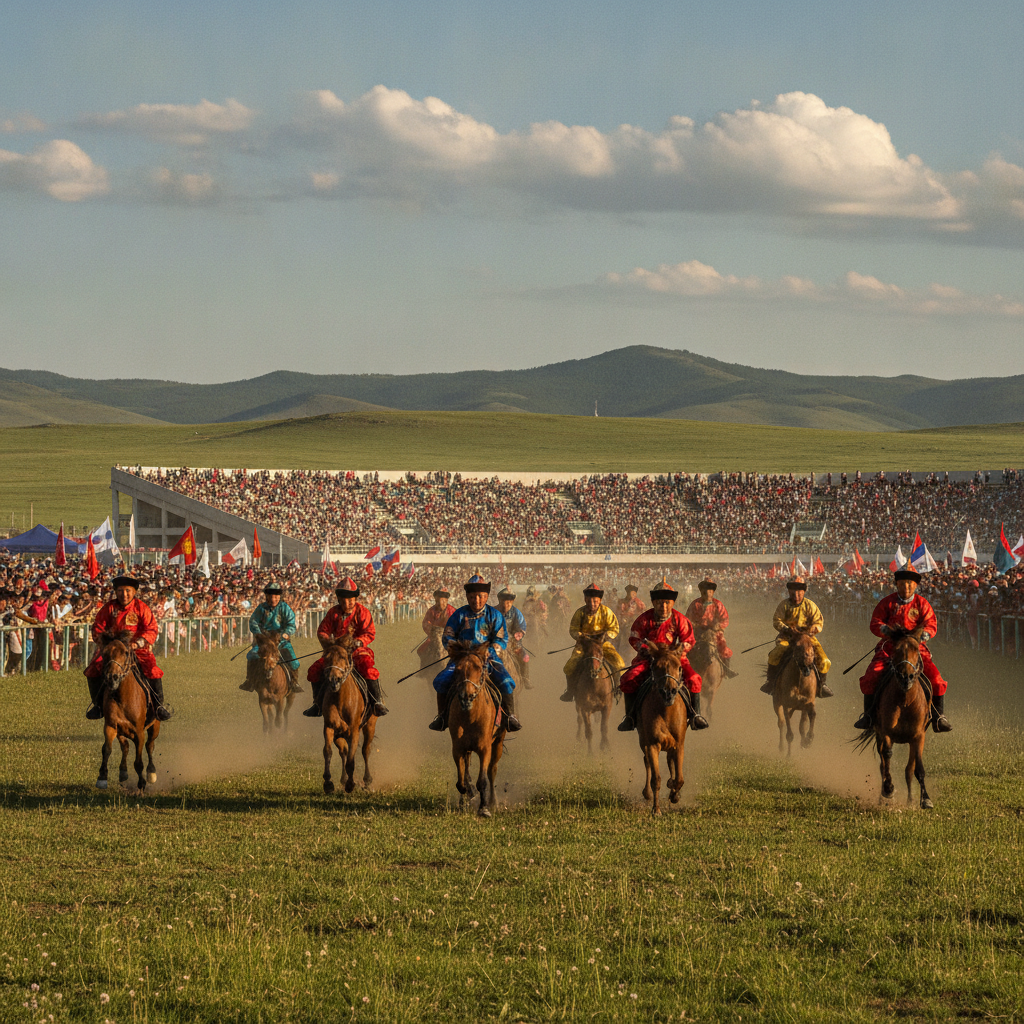
The Child Jockeys Who Race 30 Kilometers, the Dinosaur Eggs Found in 1922 That Proved Dinosaurs Were Not Viviparous & the Bogie-Changing Border Crossing That Takes 4 Hours
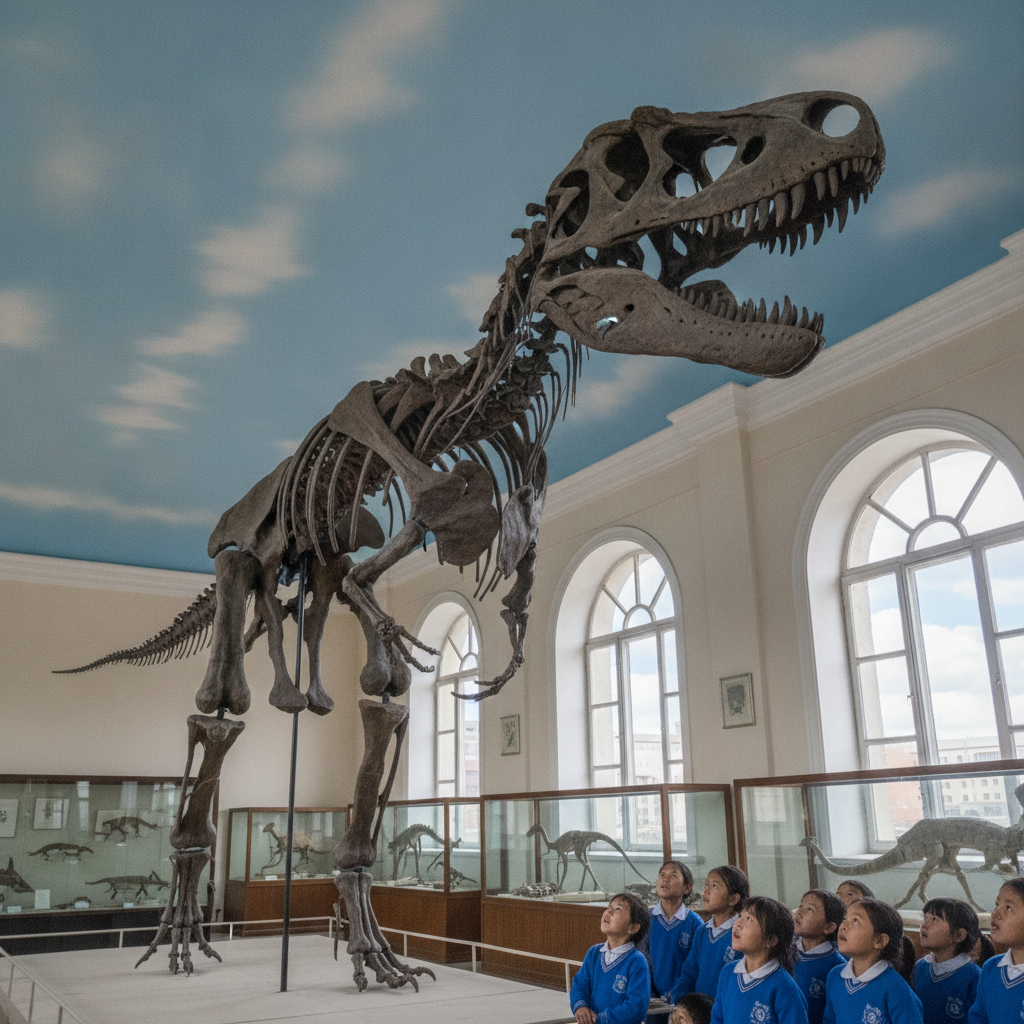
The 1924 Velociraptor 3× Smaller Than Jurassic Park Showed, the 13th-Century Deel Still Worn Daily by 30% of Ulaanbaatarians & the Bortle Class 1 Sky Where the Milky Way Casts Shadows
The 6,000-Year-Old Domestication That Made the Mongol Empire Possible, the Open-Chest Wrestling Jacket That Proves the Competitor Is Male & the 1989 Hunger Strike That Ended Communism Without Violence
The 17,000 Monks Executed in 1937 and the Single Monastery That Survived, the Secret Burial Site Never Found & the Peaceful Revolution That Made Mongolia the First Democracy in East Asia