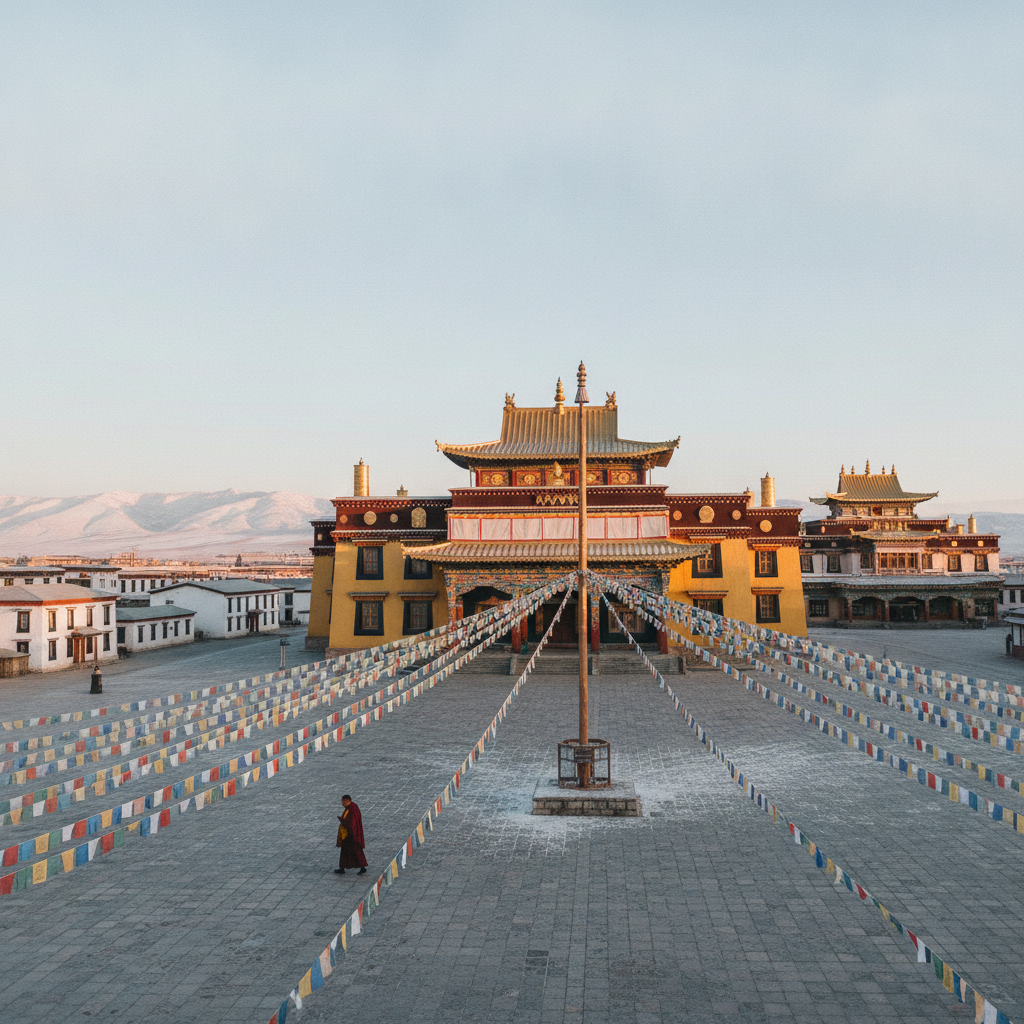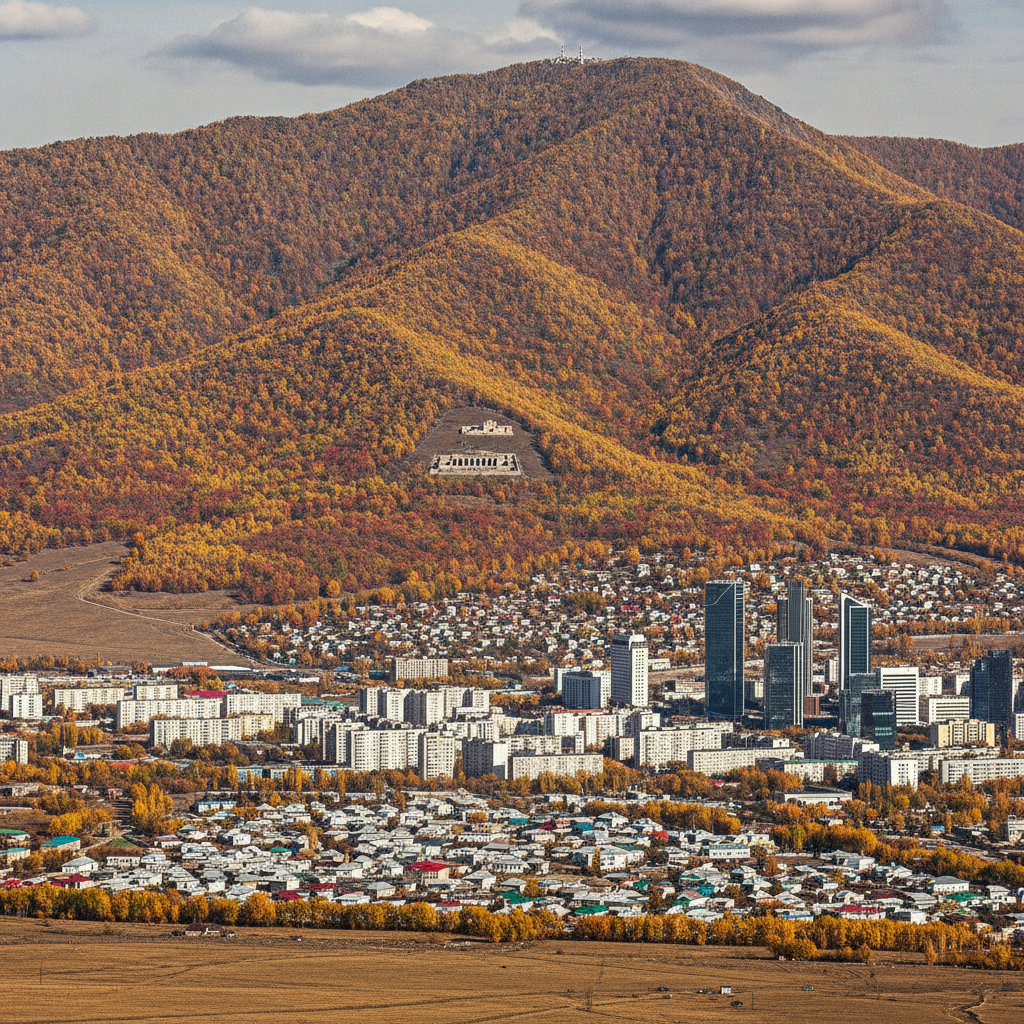
The 1778 Nature Reserve That Is the World's Oldest Legal Conservation Area, the Zanabazar Bronze Taras Equal to Tang Dynasty Craftsmanship & Why Mongolian Cashmere at 15 Microns Is Finer Than Any European Commercial Grade
The Bogd Khan Uul 1778 protection decree as the world's oldest legally designated nature reserve predating Yellowstone by 94 years; Zanabazar's 21 bronze Tara sculptures at a technical level equal to the finest Tang Dynasty bronzes; Mongolian cashmere at 15 microns as the finest regular commercial grade globally; the Ger to Ger program as the most authentic Mongolian experience at any budget level; the Three Camel Lodge at USD 350 facing the Khongoryn Els as the most acclaimed Gobi luxury; and the Ulaanbaatar public bus at USD 0.15 as Asia's cheapest urban transport.
- 1
Mongolian Cashmere – The Softest Luxury from the Steppe
Mongolian cashmere (Монгол кашмир—the luxury fiber that is Mongolia's most valuable export after mining): the cashmere guide for travelers and shoppers. The fiber (cashmere is the underdown (qiviut) of the Cashmere goat (Capra hircus laniger)—the fine inner coat combed out (not sheared) each spring from the neck and underbelly of the goat): Mongolia's position (Mongolia produces approximately 8,000 tonnes of raw cashmere per year—the world's 2nd largest cashmere producer after China (which produces 60% of global supply): the Mongolian cashmere is considered the world's finest by quality (the average Mongolian cashmere fiber diameter is 15–15.5 microns—the finest regular commercial cashmere grade): the Gobi brand (Gobi Cashmere (Говь ХК)—the state-established Mongolian cashmere company (1981)—the largest single cashmere brand in Mongolia with the retail flagship store on Peace Avenue (Энхтайваны өргөн чөлөө) in Ulaanbaatar—the most reliable quality guarantee in the Mongolian cashmere retail market). Shopping in Ulaanbaatar (the State Department Store (Их Дэлгүүр—the 7-floor Soviet-era department store on Sukhbaatar Square): the best single location for Mongolian cashmere retail (4th floor dedicated cashmere section): the price advantage (Mongolian cashmere sweaters retail at USD 80–150 in Ulaanbaatar vs. USD 200–500 for equivalent quality garments in European or US boutiques—the price advantage of buying at source).
- 2
The Zanabazar Fine Arts Museum & Buddhist Sculpture
The Zanabazar Museum of Fine Arts (Занабазарын нэрэмжит дүрслэх урлагын музей): the primary visual arts museum of Mongolia, housing the most important collection of traditional Mongolian Buddhist art. Zanabazar (Öndör Gegeen Zanabazar, 1635–1723): the most accomplished Buddhist sculptor in Mongolia and the 1st Jebtsundamba Khutuktu (the reincarnate head of Tibetan Buddhism in Mongolia—a position created by the Qing Emperor for Zanabazar to give the Khalkha Mongols their own high lama independent of Tibet): the sculptures (the Zanabazar Museum collection includes 20 original Zanabazar bronze sculptures—the most concentrated collection of his work in any single museum): the Tara series (the 21 Tara (Дагина—the female Bodhisattva) sculptures cast by Zanabazar in the 1680s—the most technically accomplished bronze casting in Mongolian history, with the detailed draping of the bodhisattva's celestial silks rendered in bronze at a standard equal to the finest Tang Dynasty bronzes). The museum's other collection highlights (the museum contains: the Mongolian folk art collection (the traditional embroidery, metalwork, and woodcarving of the nomadic craft tradition); the revolutionary art gallery (the Socialist Realist paintings commissioned by the Mongolian communist government from the 1930s–1980s—the most extensive Socialist Realist art collection in Asia outside Russia)).
- 3
Ulaanbaatar's Eating Scene – From Soviet Canteen to Japanese Sushi
The Ulaanbaatar restaurant scene (the most diverse restaurant landscape in Central Asia—the unexpected cosmopolitan dining of a steppe city): the food guide. The evolution (the Ulaanbaatar restaurant scene has transformed from Soviet canteens (гуанзууд) serving grey mutton soup in institutional settings (1990) to a contemporary dining scene with Japanese, Korean, Italian, and American restaurants): the current best (the top contemporary Mongolian restaurants: Mongolian Grill (the most upscale traditional Mongolian experience, the Interactive grill with self-selected raw ingredients cooked on the central grill); Grand Khaan Irish Pub (the most popular expat gathering point in Ulaanbaatar, serving imported beer and surprisingly good burgers on the Sukhbaatar Square edge); Modern Nomads (the contemporary Mongolian bistro in the CBD serving updated takes on buuz and tsuivan). The Korean food (the Korean-Mongolian cultural connection—South Korean investment in Mongolia has been substantial since the 1990s and the Korean community has established the best Korean restaurant district in Ulaanbaatar along the Peace Avenue—the Korean BBQ (삼겹살—samgyeopsal) restaurants are the most popular restaurant type among young Mongolian professionals). The Japanese (the sushi bars in the Zaisan Hill district—the residential area for diplomats and NGO workers—serving the highest-quality Japanese food in Central Asia).
- 4
Ulaanbaatar for Families – Activities & Adventures
The Ulaanbaatar family travel guide (the destination with more hands-on nomadic cultural experiences for children than any other Asian capital): the family guide. The Gandantegchinlen Monastery morning visit (the morning puja with the chanting monks in the assembly hall—children aged 8+ typically find the rhythm and visual spectacle of the prayer ceremony compelling): the National Museum of Mongolia (the ger assembly demonstration—the National Museum offers daily demonstrations of ger assembly for school and family groups—the most child-friendly museum activity in Ulaanbaatar). The horse riding (the Terelj National Park (60 km from Ulaanbaatar): the ger camp horse riding circuit (the ger camps in Terelj offer 1–2 hour guided riding circuits on Mongolian horses for children 5+ years): the safest and most accessible horse riding experience for non-riders in Central Asia). The eagle hunting demonstration (the trained golden eagle performances at the Terelj ger camps—the Kazakh eagle hunter demonstrations available year-round at some Terelj camps—the most dramatic wildlife encounter accessible from Ulaanbaatar). The Mongolian wrestling (the Mongolian wrestling (bökh) demonstration at the National Sports Palace (Үндэсний спортын ордон)—the professional wrestling demonstrations available at the arena on the west side of the city: the children's wrestling ring in the stadium courtyard where children can try the basic bökh throws under the guidance of a trainer).
- 5
The Bogd Khan Mountain – Sacred Summit & City Border
The Bogd Khan Mountain (Богдхан уул—'The Mountain of the Holy Khan'): the sacred mountain that forms the southern boundary of Ulaanbaatar and the oldest nature reserve in the world established by legal decree. The mountain (the Bogd Khan Uul Strict Nature Reserve (Богдхан уулын байгалийн цогцолборт газар)—the mountain range rising to 2,268m directly above the southern edge of Ulaanbaatar: the strictest nature reserve in Mongolia (no hunting, no livestock grazing, camping only in designated areas): the first legal protection date (the Bogd Khan Uul was designated a protected area by the Mongolian theocratic government in 1778 CE—the oldest legally protected nature area in the world (247 years in 2025—predating Yellowstone by 94 years)). The Manzushir Monastery (Манзушир хийд—the 18th-century Tibetan Buddhist monastery on the northern slopes of the Bogd Khan Uul): the original monastery was a complex of 20 temples and 300 monks before the 1937 Stalinist purge—the ruins (only one building survived the purge—the main temple, which is now a museum): the hiking (the Bogd Khan Uul has 3 main hiking routes accessible from the southern edge of Ulaanbaatar: the Tsetseegum Peak (1,949m) hike (4–5 hours round trip from the Manzushir Monastery road): the most popular day hike from Ulaanbaatar with panoramic views of the city and the steppe to the north).
- 6
Mongolia on a Budget & Luxury Comparison
The Mongolia travel budget guide (the country with the widest variation in travel cost between budget and luxury of any Central Asian destination): the financial framework. Budget (USD 30–50/day): the Ulaanbaatar budget (the cheapest dorm beds in the city center backpacker hostels: USD 8–15/night; the buuz shop lunch: MNT 5,000 (USD 1.50) for 5 buuz; the local transport (the Ulaanbaatar public bus network covers most of the city center for MNT 500 (USD 0.15) per trip)): the steppe budget (the ger camp stays outside Ulaanbaatar: USD 20–30/night including 3 meals): the most affordable multi-day nomadic experience in Asia. Mid-range (USD 100–200/day): the boutique ger resort circuit (the Terelj National Park ger resorts with hot showers and en-suite facilities: USD 80–120/night including meals): organized day trips from Ulaanbaatar (the standard 2-day Karakorum circuit with driver/guide and ger accommodation: USD 150–200 total). Luxury (USD 300–800/day): the Three Camel Lodge (Gobi Desert: USD 350–450/night—the most acclaimed luxury tented camp in Mongolia with en-suite tents facing the Khongoryn Els dunes): the Ger to Ger program (the independent nomadic circuit where travelers stay with actual nomadic families and move between families by horse or foot—USD 50–80/day including accommodation and meals with a real Mongolian family—the most authentic Mongolian experience available at any budget level).
Walk this route with audio
Stories play automatically as you reach each stop — no tapping needed.
More in Ulaanbaatar
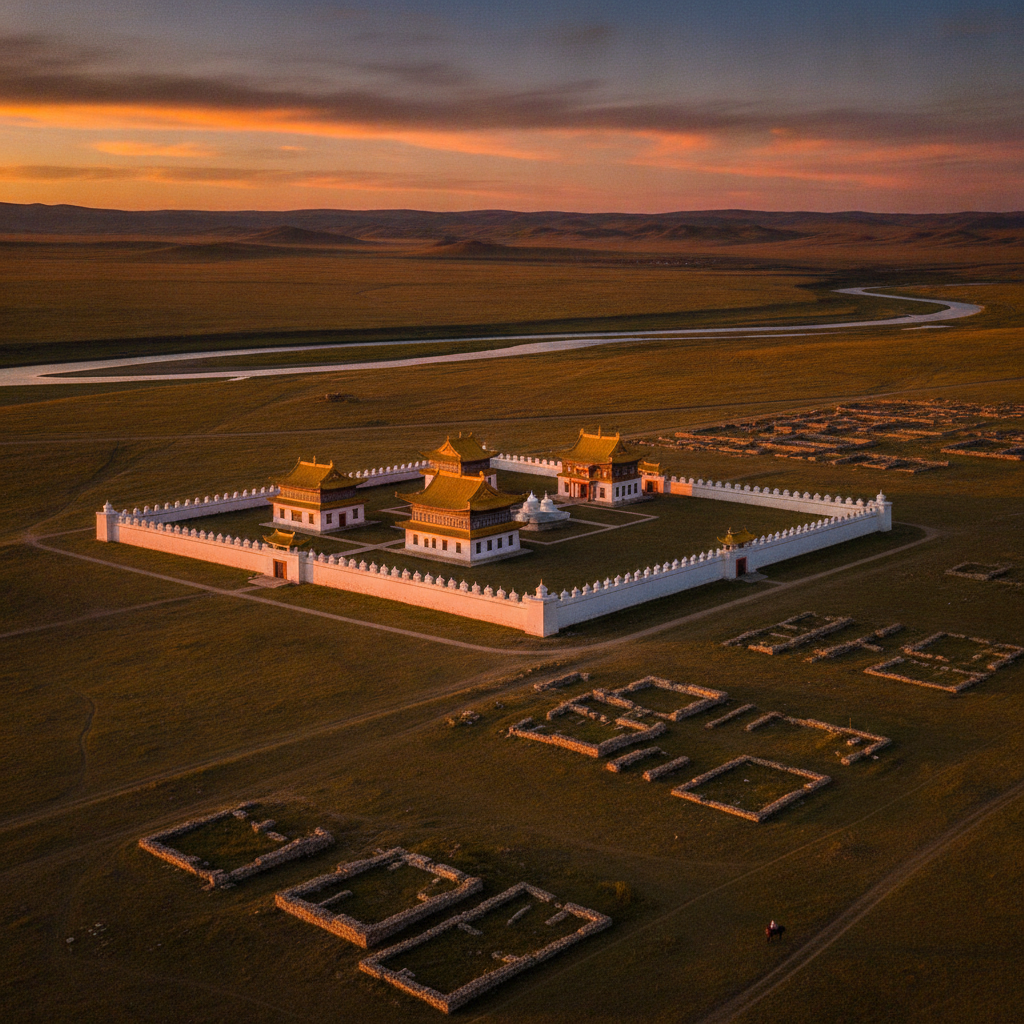
The 13th-Century Capital That Had Buddhist Temples, 2 Mosques, a Nestorian Church & a Taoist Temple, the Last Wild Horse Declared Extinct in 1969 & the Coldest National Capital on Earth
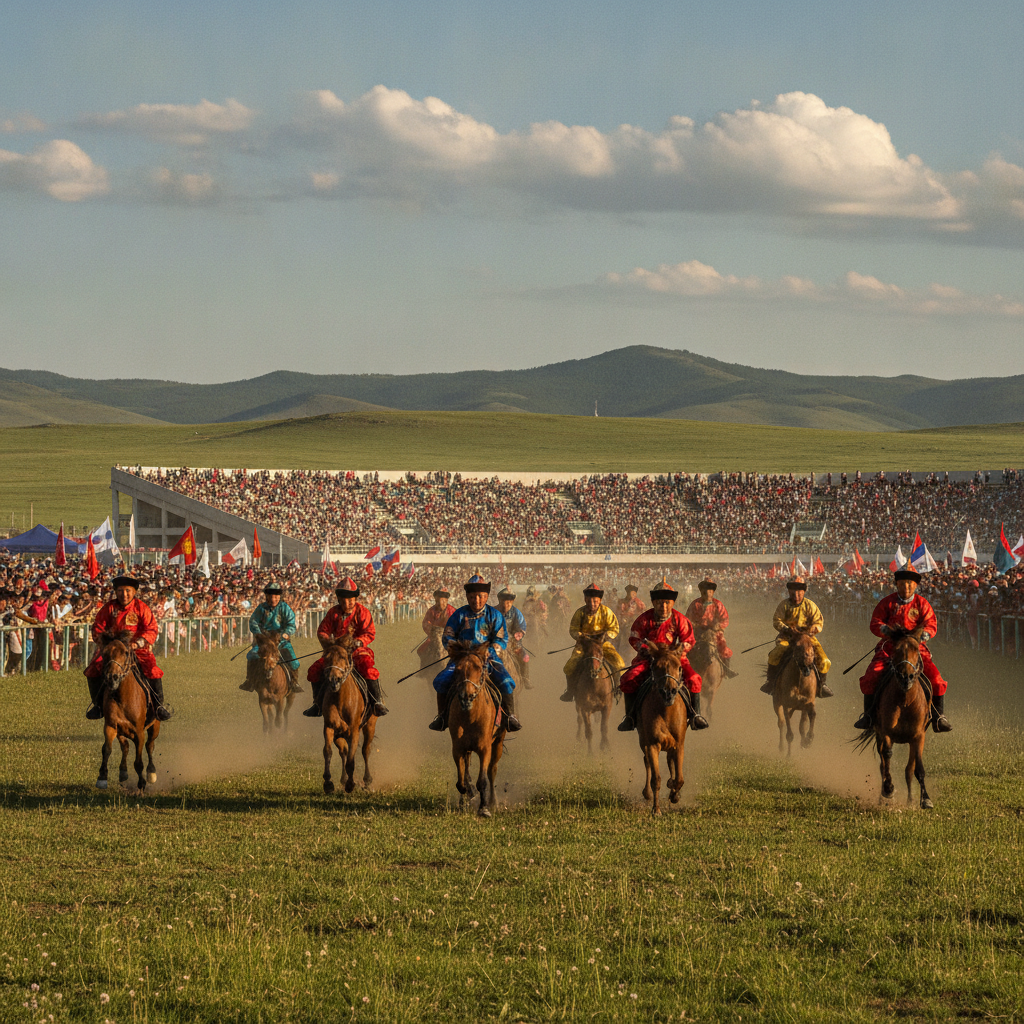
The Child Jockeys Who Race 30 Kilometers, the Dinosaur Eggs Found in 1922 That Proved Dinosaurs Were Not Viviparous & the Bogie-Changing Border Crossing That Takes 4 Hours
The 1924 Velociraptor 3× Smaller Than Jurassic Park Showed, the 13th-Century Deel Still Worn Daily by 30% of Ulaanbaatarians & the Bortle Class 1 Sky Where the Milky Way Casts Shadows
The 6,000-Year-Old Domestication That Made the Mongol Empire Possible, the Open-Chest Wrestling Jacket That Proves the Competitor Is Male & the 1989 Hunger Strike That Ended Communism Without Violence