Udaipur Essentials: Lake Pichola at Sunset, James Bond's Floating Palace Hotel & 400 Years of Mewar Architecture
Fall under the spell of Rajasthan's most romantic city—Lake Pichola's sunset boat ride with the City Palace walls turning gold above the water and the Lake Palace Hotel glowing white in the middle like a mirage, the largest royal complex in Rajasthan built over 400 years with a Peacock Courtyard of glass mosaic and Mewar miniature paintings, the island where Shah Jahan hid from his father in 1623 (possibly influencing his later Taj Mahal designs), James Bond filming Octopussy from the hotel you cannot visit without paying ₹80,000 a night, and Fateh Sagar Lake for everyone else: ₹30 boat rides and solar observatory.
- 1
Lake Pichola & the City Palace – The Venice of the East
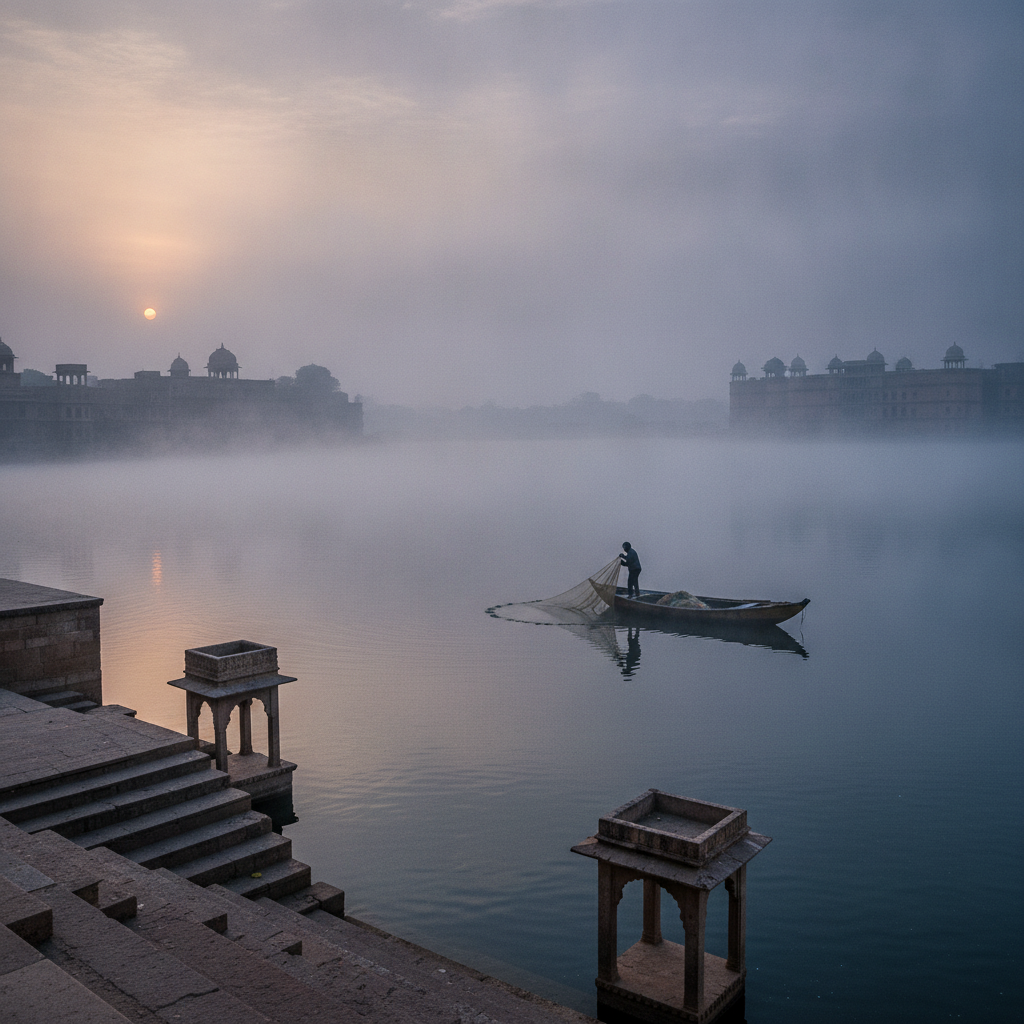
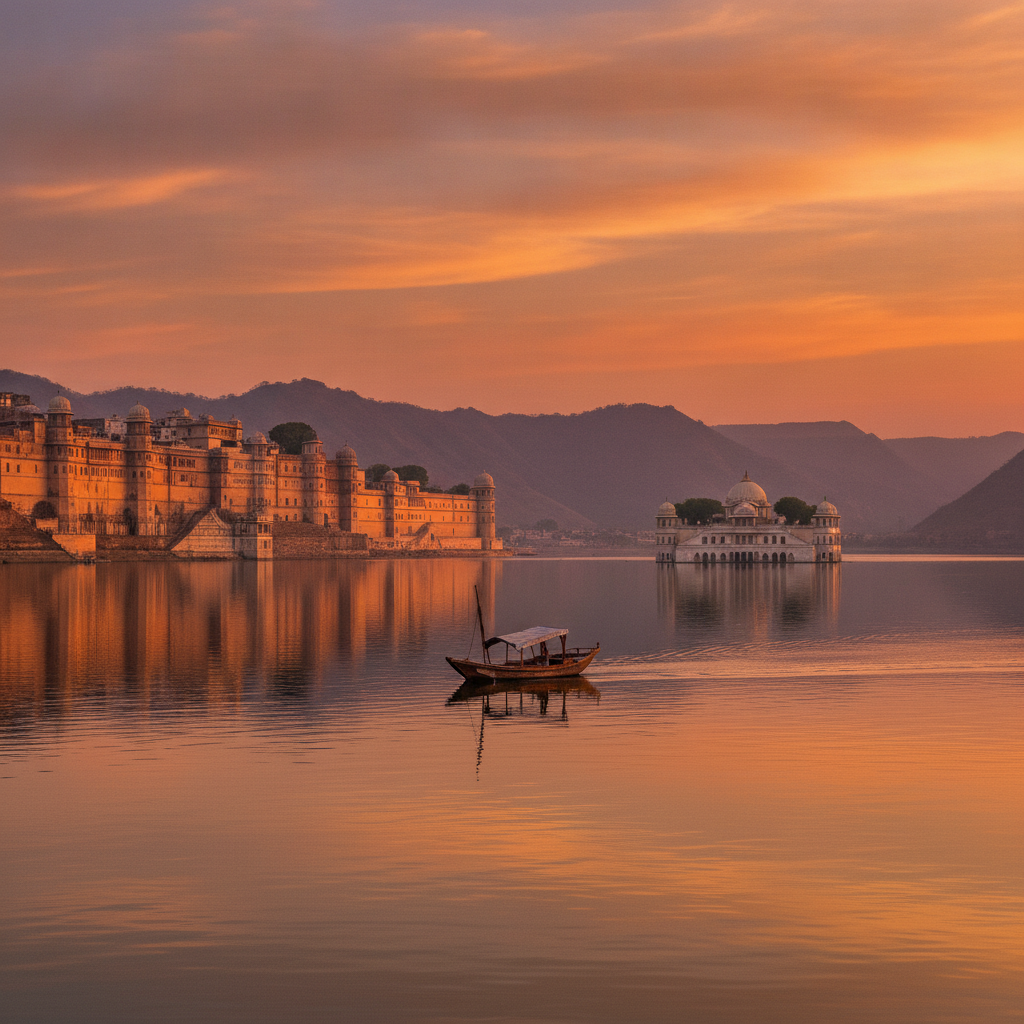
Lake Pichola—the largest and most beautiful of Udaipur's seven lakes, constructed artificially in 1362 by Maharana Lakha—is the centrepiece of the city's extraordinary landscape: a 4 km lake surrounded by the Aravalli Hills, the City Palace complex rising on its eastern bank, and two island palaces (Jag Mandir and Jag Niwas, the latter now the Lake Palace Hotel) floating in the middle. The boat ride on Lake Pichola at sunset—the City Palace walls turning gold above the water, the Aravalli hills purple behind, the Lake Palace glowing white in the middle of the lake—is one of the most beautiful half-hours available in India. The lake's water level varies dramatically with monsoon rainfall; in drought years the islands become peninsulas.
- 2
The City Palace – 400 Years of Mewar Architecture
The City Palace—Udaipur's largest palace complex, begun by Maharana Udai Singh II in 1559 and expanded continuously for 400 years by his successors—is the largest royal complex in Rajasthan, extending 244 metres along the eastern shore of Lake Pichola. Unlike many Indian palaces converted to museums, the City Palace contains three hotels (Fateh Prakash Palace, Shiv Niwas Palace, and Kankarwa Haveli) alongside the museum. The museum section contains the famous Mor Chowk (Peacock Courtyard)—five glass mosaic peacocks in stunning blue and green inlay; the Krishna Vilas section (paintings of the Mewar school); and the views from the ramparts over Lake Pichola and across to the Lake Palace Hotel. Entry: ₹300 (€3.30) for foreigners.
- 3
The Lake Palace Hotel – James Bond's Hotel on the Water
The Lake Palace Hotel—built in 1746 by Maharana Jagat Singh II as a summer palace (Jag Niwas), on a 1.5-hectare island in the middle of Lake Pichola—was converted into one of India's first palace hotels in 1963 by the Taj Hotels group. It achieved worldwide fame as the location for the James Bond film Octopussy (1983); the lake, the palace, and Udaipur's old city are prominently featured. The hotel (currently around ₹40,000–80,000/night, €437–875) is accessible only by hotel boat; non-guests cannot visit (there is no public access to the island). The view of the Lake Palace from the City Palace ramparts or from the Ambrai Ghat opposite bank is free and equally spectacular. The hotel is consistently listed among the world's most beautiful hotels.
- 4
Jag Mandir Island & Mughal History
Jag Mandir—the smaller island palace in Lake Pichola, built between 1551 and 1652—has a specific historical significance: it was the refuge of the Mughal prince Khurram (later Shah Jahan) in 1623 when he rebelled against his father Emperor Jahangir and sought protection from Maharana Karan Singh of Mewar. The Mewar clan—who had never fully submitted to Mughal power—provided asylum; the experience of Jag Mandir's Mughal-influenced garden design (the island gardens have a strongly Persian character) influenced Shah Jahan's later design sensibilities, possibly including the Taj Mahal. Today Jag Mandir is open to visitors by boat (₹700/€7.70 including return boat transfer) and contains a restaurant, garden restaurant, and the atmospheric Gul Mahal pavilion.
- 5
Udaipur's Old City – Ghats, Havelis & Bazaars
Udaipur's old city—the area of winding lanes between the City Palace and Jagdish Temple—is one of the most rewarding urban environments in Rajasthan for walking. The Jagdish Temple (1651, dedicated to Vishnu, the largest temple in Udaipur)—an Indo-Aryan shikhara temple with elaborate carved panels covering the entire exterior—is the spiritual centre of the old city. The ghats on Lake Pichola (Gangaur Ghat and Ambrai Ghat particularly) are the social heart of Udaipur at sunset, with vendors, musicians, and locals watching the light on the lake. The Hathi Pol Bazaar and Bapu Bazaar sell local crafts; Udaipur is known for silver jewellery (fine filigree), miniature paintings (the Udaipur/Mewar school), and hand-painted furniture.
- 6
Udaipur's Lakes – Beyond Pichola
Udaipur's city planning incorporated an extensive lake system for water storage and aesthetic enhancement: besides Lake Pichola, the lakes include Fateh Sagar Lake (4 km north, with Nehru Island and a public park, the most popular recreation area for Udaipur residents), Lake Badi (7 km north, the oldest, built in 1652), Swaroop Sagar (connecting Pichola and Fateh Sagar), and Rang Sagar. Fateh Sagar Lake is the best-value experience in Udaipur: the lakeside promenade, boat rides (₹30–100/€0.33–1.10), solar observatory on Nehru Island, and the Moti Magri hill (Maharana Pratap's equestrian statue and hilltop gardens overlooking both lakes) are all excellent and non-touristic. The Udaipur City Railway Station provides the classic long-distance view of the city across Fateh Sagar Lake.
Walk this route with audio
Stories play automatically as you reach each stop — no tapping needed.
More in Udaipur
Udaipur's Layers: Bhil Tribal Crafts, Haveli Hotels with Lake Views & the Sanskrit Inscription That Covers 25 Ghats
Udaipur's Mewar Legacy: Maharana Pratap's Battle of Haldighati, Ranakpur's 1,444 Pillar Temple & the 36km Fort Wall
Udaipur Deeper: Chittorgarh's Three Mass Self-Immolations, India's Most Spectacular Destination Wedding City & Kathputli Puppets