Udaipur Deeper: Chittorgarh's Three Mass Self-Immolations, India's Most Spectacular Destination Wedding City & Kathputli Puppets
Confront Mewar's epic history—Chittorgarh's three Jauhar episodes when Rajput women burned themselves to death in preference to capture, the Tower of Victory with 600 deities carved across nine storeys in India's largest fort, rooftop restaurants above Lake Pichola serving laal maas with the City Palace walls reflected below, the Kathputli puppet tradition depicting Maharana Pratap and Chetak in folk performances at Gangaur Ghat, the $60 million Mittal wedding that made Udaipur famous to everyone who wasn't already a Rajasthan devotee, and the silver filigree and Mewar miniature painting workshops that sustain the old city's artisan economy.
- 1
Chittorgarh Fort – Rajputana's Most Epic Citadel
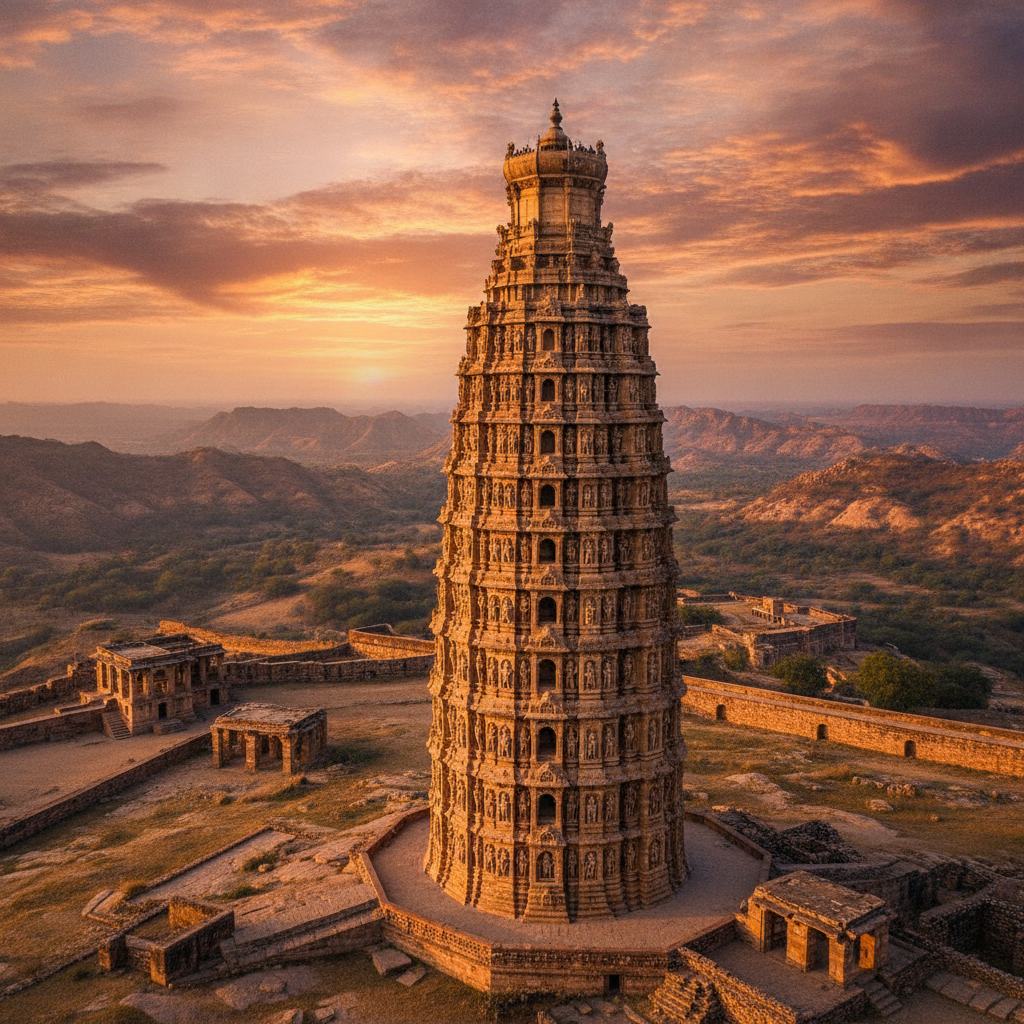
Chittorgarh Fort—112 km northeast of Udaipur (2 hours), UNESCO World Heritage Site (2013)—is the largest fort in India (covering 700 acres, perimeter 13 km), the former capital of Mewar, and the site of three legendary Jauhar (mass self-immolation) episodes when Rajput women burned themselves to death rather than surrender to invading armies. The three Jauhars: (1) 1303—when Alauddin Khalji of the Delhi Sultanate besieged the fort, Maharani Padmini and thousands of Rajput women performed Jauhar; the men rode out to battle and were killed. (2) 1535—when Bahadur Shah of Gujarat besieged the fort. (3) 1568—when Akbar's army captured the fort; 8,000 warriors died in battle after the women performed Jauhar. The Padmini Palace (the queen's palace on a lake island) and the Tower of Victory (Vijay Stambha, 1440, 37 metres, carved with 600+ deities) are the architectural highlights.
- 2
Udaipur's Food Scene – Rajasthani Cuisine & Rooftop Restaurants
Udaipur's restaurant scene is among the most atmospheric in India, concentrated in the old city above Lake Pichola—rooftop restaurants (The Jheel, Ambrai, Upré) provide dramatic views of the City Palace, Lake Palace, and the lake at sunset and after dark. Rajasthani cuisine in Udaipur: dal baati churma (the state dish), laal maas (fiery mutton curry), gatte ki sabzi (chickpea flour dumplings in yoghurt curry), and ker sangri (desert bean and berry pickle/curry). The Lotus Restaurant at Fateh Prakash Palace (inside the City Palace) is the most atmospheric for a special evening; the Crystal Gallery at the same hotel contains the extraordinary Maharana Sajjan Singh's crystal collection (1880s Osler crystal furniture—reportedly the largest crystal collection in private hands). Street food near the Jagdish Temple (kachori, jalebi, chai) is excellent and inexpensive.
- 3
Udaipur's Puppet Tradition & Folk Arts
Rajasthan's puppet tradition (Kathputli—from kath, wood, and putli, puppet)—the characteristic string puppets manipulated from above by Bhatt community puppeteers, traditionally performed at festivals and for travelling audiences—is one of the most recognisable folk arts of Rajasthan. The puppets depict characters from the epics and from Rajasthani history (Maharana Pratap and his horse Chetak are a standard feature). Udaipur's Bharatiya Lok Kala Museum (Folk Art Museum) contains one of the largest puppet collections in Rajasthan alongside masks, tribal costumes, and folk musical instruments. Live puppet shows are performed nightly at the museum and at venues in the old city. The Mewar Festival (March–April, 2 days at Gangaur Ghat, celebrating Gangaur—the Rajasthani goddess of marital happiness) is the most important folk festival unique to Udaipur.
- 4
Udaipur for Weddings – The Destination Wedding Capital of India
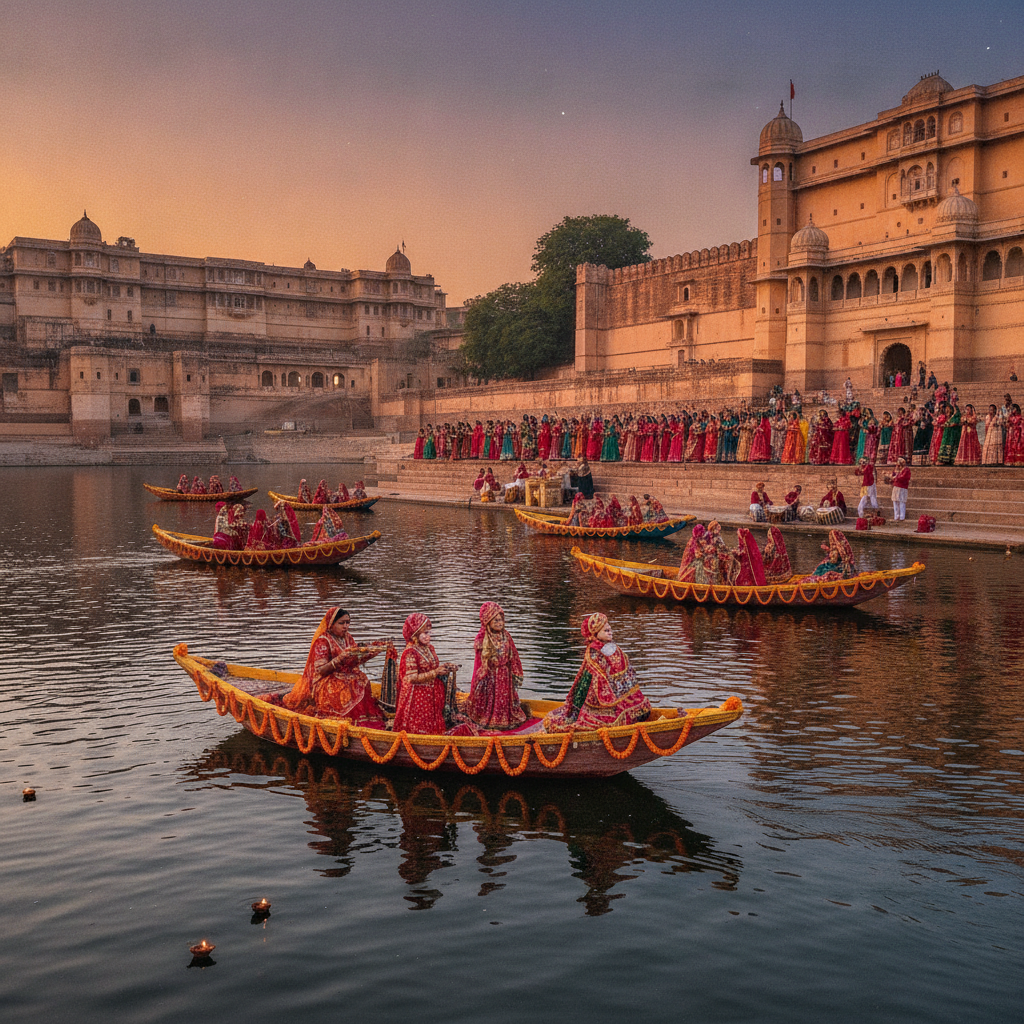
Udaipur is India's premier destination wedding location—and has been for decades before 'destination wedding' became a global trend. The City Palace, Lake Palace Hotel, Oberoi Udaivilas, and Taj Lake Palace provide the world's most spectacular wedding backdrops; the ceremonial boat procession across Lake Pichola (bride arriving by boat from Jag Mandir) is a specific Udaipur wedding tradition. Indian film stars and industrial dynasties (the Mittal family used the City Palace for Lakshmi Mittal's daughter's $60 million wedding in 2004; the Ambani and Piramal families have held Udaipur ceremonies) have reinforced the city's wedding prestige. The wedding industry (catering, decoration, photography, entertainment, accommodation) is estimated to contribute ₹3,000–5,000 crore (€330–550 million) annually to Udaipur's economy.
- 5
Practical Udaipur – Getting There, Accommodation & What to Skip
Udaipur is served by Maharana Pratap Airport (UDR), 22 km from the city centre (taxi ₹600–900/€6.60–9.90); flights connect to Delhi (1 hour), Mumbai (1 hour), and Jaipur (40 minutes). By train: Udaipur City railway station is 3 km from the old city; the Chetak Express to Jaipur takes 12 hours; to Ahmedabad 6 hours. Getting around the old city and lake area: auto-rickshaws (₹50–200/€0.55–2.20 for short distances), cycles, and walking. Hotels with lake views: the cheapest lake-view guesthouses (Kesar da Dhaba roof, Lal Ghat area) are ₹1,000–2,000 (€11–22)/night; the Lake Palace Hotel is ₹80,000+ (€875+)/night. What to skip: the 'crystal gallery' at Fateh Prakash Palace (₹350 entry for middling collection); the 'vintage car collection' museum (mediocre). The boat ride on Lake Pichola (₹400/€4.40 for 1 hour) is not skippable.
- 6
Udaipur's Arts & Crafts Economy
Udaipur's craft economy is diverse and less dominated by a single product than Jaipur (gems) or Varanasi (silk). The major crafts: miniature painting (Mewar school, sold in dozens of galleries in the Jagdish Temple area and the old city lanes); silver jewellery (traditional Mewar-style filigree and tribal silver from the Bhil and Garasia communities); hand-painted furniture and fabric; block-printed textiles; and clay pottery from the Kumhar caste workshops. The Shilpgram Crafts Village (3 km west)—a government-supported complex of demonstration workshops from Rajasthan's tribal and folk communities—provides authentic context alongside commercial sales. The Rajasthan government's fixed-price Rajasthali emporiums (several in Udaipur) are reliable for quality; individual workshops and galleries in the old city require bargaining judgment.
Walk this route with audio
Stories play automatically as you reach each stop — no tapping needed.
More in Udaipur
Udaipur's Layers: Bhil Tribal Crafts, Haveli Hotels with Lake Views & the Sanskrit Inscription That Covers 25 Ghats
Udaipur Essentials: Lake Pichola at Sunset, James Bond's Floating Palace Hotel & 400 Years of Mewar Architecture
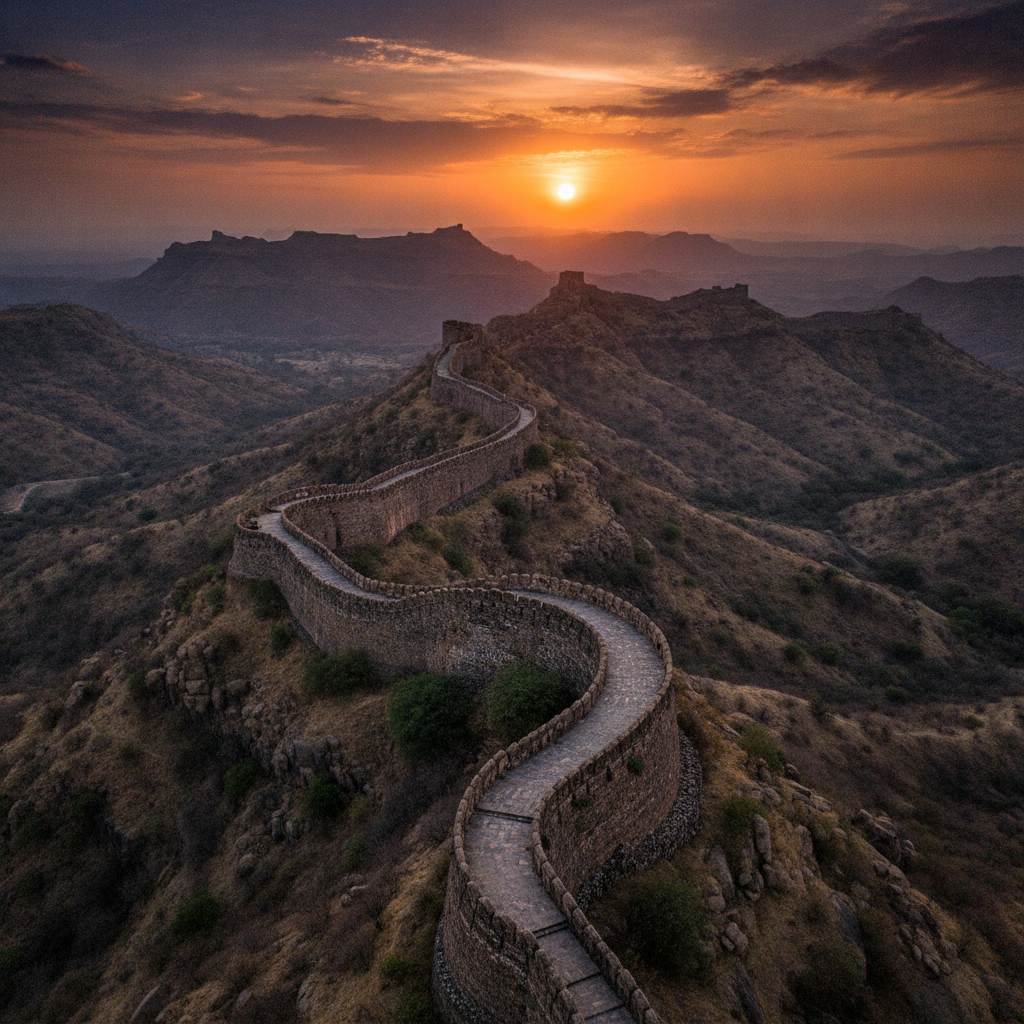
Udaipur's Mewar Legacy: Maharana Pratap's Battle of Haldighati, Ranakpur's 1,444 Pillar Temple & the 36km Fort Wall