Habib Bourguiba Issued the Arab World's Most Progressive Women's Rights Code Just 6 Months After Independence in 1956 Banning Polygamy and Repudiation While Egypt and Syria Maintained Traditional Islamic Family Law; Kairouan's Great Mosque Founded 670 CE Has the Oldest Surviving Minaret in the World; Star Wars Tatooine Was Named for the Real Tunisian City of Tataouine and Multiple Star Wars Scenes Were Filmed Near Matmata and Ong Jemal
Bourguiba banning polygamy and Islamic repudiation divorce just 6 months after Tunisian independence in 1956; Kairouan's Great Mosque (670 CE) with the world's oldest surviving minaret; Star Wars naming Tatooine after the real Tunisian city of Tataouine and filming the Lars Homestead at the Hotel Sidi Driss in Matmata; Paul Klee visiting Sidi Bou Said in 1914 and writing I and colour are one; Dougga UNESCO site with the best-preserved Roman Capitol outside Italy; and the complete 3-day Tunis itinerary with TGM train to Carthage and Sidi Bou Said.
- 1
Sidi Bou Said – The Blue and White Village Above the Bay
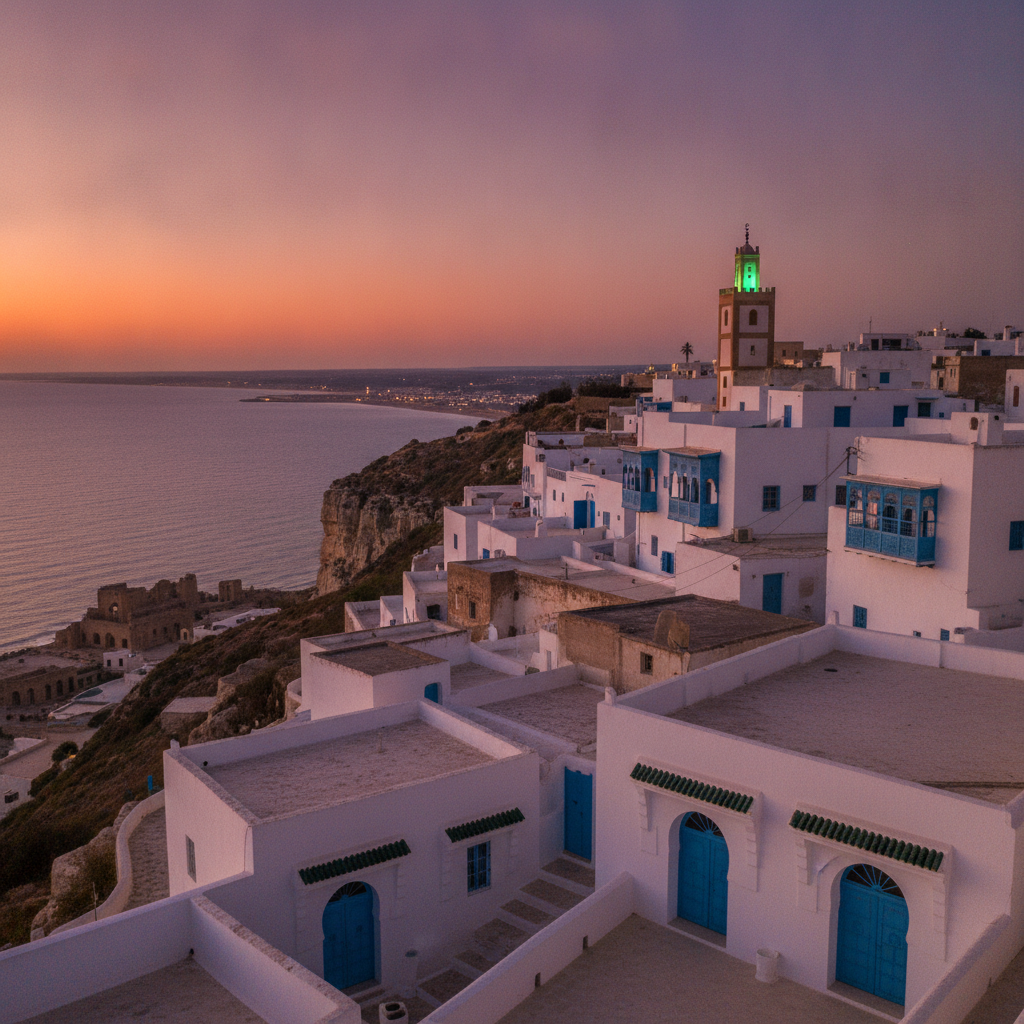
Sidi Bou Said (سيدي بوسعيد) — 19 km northeast of Tunis: the whitewashed hilltop village with brilliant blue doors and windows overlooking the Bay of Tunis and the ruins of Carthage: the village guide. The village (Sidi Bou Said (named for Abu Said al-Beji — a 13th century Sufi mystic whose tomb is in the village): the village sits on a limestone cliff at 130m altitude with panoramic views over the Bay of Tunis, the Lake of Tunis, and the Mediterranean: the architecture (the village architecture is the most photographed in Tunisia: whitewashed (lime-washed) cubic buildings: the characteristic blue-painted carved wooden grilles (mashrabiyya) and blue-painted doors: the blue pigment (the specific shade of blue used in Sidi Bou Said is a Majorelle-style cobalt blue: the blue-and-white color scheme was made mandatory for the village by Baron Rodolphe d'Erlanger (a French-Tunisian baron and musicologist) in the 1920s to protect the village's visual character: the artists (Sidi Bou Said attracted European and North African artists from the early 20th century: the painter Paul Klee visited in April 1914 and described the experience as his first encounter with real color: I and colour are one in his diary: the Zitouna-related heritage (the village contains the shrine of its eponymous saint Abu Said al-Beji: the Ennejma Ezzahra Palace (the Baron d'Erlanger palace — built 1912-1922 in a synthesis of Andalusian and Tunisian architectural styles: now the Centre of Arab and Mediterranean Music (CMAM) with a collection of traditional Arab musical instruments: the practical visit (the TGM suburban railway (Tunis-Goulette-Marsa) stops at Sidi Bou Said station: 30 minutes from Tunis Marine station: the village is a 10-minute walk uphill from the station: the primary street (Rue Habib Thameur) is a tourist strip with cafes, souvenir shops, and galleries).
- 2
The Aghlabids and Kairouan – The Founding of North African Islam
Kairouan (القيروان) — 165 km south of Tunis: the fourth holiest city in Sunni Islam and the city whose founding marks the beginning of Arab-Islamic civilization in the Maghreb: the historical guide. The foundation (Kairouan was founded in 670 CE by the Arab general Uqba ibn Nafi al-Fihri during the Arab conquest of the Maghreb: the legend of the foundation (Uqba ibn Nafi reportedly struck a golden cup into the ground and a spring of water appeared — the same water that had been hidden beneath the well of Zamzam in Mecca: Kairouan was established as the first Arab-Islamic city in the Maghreb: the Great Mosque of Kairouan (Masjid Uqba — the Mosque of Uqba) — the oldest mosque in the Maghreb (founded 670 CE, repeatedly rebuilt): the mosque as it stands was primarily constructed by the Aghlabid dynasty (9th century): UNESCO World Heritage Site 1988: the minaret is the oldest surviving minaret in the world: the Aghlabids (the Aghlabid dynasty (800-909 CE) — the rulers of Ifriqiya (roughly modern Tunisia) under nominal Abbasid suzerainty: the Aghlabids built the city of Kairouan into the primary center of Islamic learning in the western Mediterranean: the Aghlabid Pools (two large circular water storage basins outside Kairouan — engineering marvels of the 9th century for collecting and distributing rainwater in an arid environment): the Aghlabids also conquered Sicily in 827 CE (and held it until the Norman conquest in 1072 CE): the religious significance (Kairouan's traditional religious significance: seven pilgrimages to Kairouan were historically considered the spiritual equivalent of one hajj to Mecca in the Maliki legal tradition followed throughout the Maghreb: the makroudh pastry (the Kairouan makroudh — the primary traditional sweet of Kairouan: deep-fried semolina dough filled with date paste and soaked in honey).
- 3
Dougga – The Best Preserved Roman City in North Africa
Dougga (Thugga, ancient Numidian and Roman city) — 110 km southwest of Tunis in the Tell Atlas mountains: the best preserved Roman provincial city in North Africa: the archaeological guide. The history (the site of Dougga (ancient Thugga) was occupied by a Numidian (Berber) city-state before the Roman period: the Numidian period (the city was a significant Numidian administrative center as evidenced by the Libyco-Berber-Punic bilingual inscription (the Dougga Stele) discovered in 1631 CE — the inscription (in Punic and Libyco-Berber scripts) was crucial to the decipherment of the Libyco-Berber script: the Roman city (the Roman period city of Thugga grew rapidly from the 2nd century CE and reached a population of approximately 3,000-5,000 at its peak: the theatre (the Roman Theatre of Dougga (168-169 CE) — built in the reign of Marcus Aurelius: capacity approximately 3,500 spectators: one of the best preserved Roman theatres in North Africa: the Capitol (the Capitol of Dougga (166 CE) — the Roman temple dedicated to the Capitoline Triad (Jupiter, Juno, Minerva): the best-preserved Roman Capitol outside Italy: the six Corinthian columns of the temple portico are the primary visual symbol of Dougga: the Libyco-Berber Mausoleum (the Numidian tower mausoleum (2nd century BCE) — one of the few well-preserved Numidian monuments: a three-story tower tomb: the original Punic-Libyco-Berber bilingual inscription was removed by the British consul Thomas Reade in 1842 (the inscription is now in the British Museum): the UNESCO inscription (Dougga UNESCO World Heritage Site 1997).
- 4
Habib Bourguiba – The Father of Tunisia and Modern Arab Feminism
Habib Bourguiba (الحبيب بورقيبة — 1903-2000) — the founder of the Republic of Tunisia and the leader who implemented the most progressive women's rights legislation in the Arab world: the biography guide. The biography (Habib Bourguiba (full name: Habib ibn Ali ibn Ammar Bourguiba): born August 3, 1903 in Monastir: educated in French colonial schools in Tunis and at the Institut des Etudes Politiques in Paris: the independence struggle (Bourguiba founded the Neo-Destour Party (New Constitution Party) in 1934 which led the Tunisian independence movement: Bourguiba was repeatedly imprisoned by the French colonial authorities but escaped and continued his independence campaign from exile: Tunisia achieved independence from France on March 20, 1956: Bourguiba became Prime Minister and then President: the women's rights revolution (the Code of Personal Status (Majallat al-Ahwal al-Shakhsiyya) issued by Bourguiba on August 13, 1956 — six months after independence — was the most progressive reform of women's legal status in the Arab world: the Code prohibited polygamy (legal under Islamic law): the Code banned repudiation (the Islamic divorce by triple talaq): the Code required the consent of both parties for marriage: the Code gave women the right to divorce on the same grounds as men: the Code raised the legal marriage age to 15 (subsequently raised to 18): these reforms were implemented in 1956-1957 while Egypt, Syria, and other Arab countries maintained traditional Islamic family law: Bourguiba explicitly framed the reforms as an interpretation of Islamic values consistent with modernity rather than as a rejection of Islam: the removal (Bourguiba was removed from office by his Prime Minister Zine El Abidine Ben Ali in November 1987 on grounds of mental incapacity: Ben Ali ruled Tunisia for 23 years (1987-2011) until the Jasmine Revolution).
- 5
The Sahara Desert – Tunisia's Southern Frontier
The Tunisian Sahara (the southern two-thirds of Tunisia is Sahara desert — the most accessible section of the Sahara for European visitors): the Sahara guide. The geography (Tunisia is geographically divided: the northern Tell region (Mediterranean climate, agriculture): the Sahel coastal strip (olive groves, fishing): the Chott el-Jerid salt flat: the southern desert proper: the Chott el-Jerid (the Chott el-Jerid (Chott al-Jarid — Salt Lake of the Palm Tree Tribe) — the largest salt flat in North Africa: 5,000 km2: 16m below sea level at its lowest point: the Chott is a seasonal shallow salt lake that dries completely in summer and fills partially with rainfall in winter: the causeway road across the Chott (the road from Tozeur to Kebili crosses the Chott: the road appears to float on the glittering white salt surface with heat shimmer visible above the salt: Star Wars connection (George Lucas filmed significant portions of the Star Wars universe in southern Tunisia: the Lars Homestead (the moisture farm home of Luke Skywalker) is near Matmata (the Hotel Sidi Driss in Matmata was used as the interior of the Lars homestead): the planet Tatooine is named for the Tunisian city of Tataouine: the Mos Espa slave quarters exterior was filmed near Ong Jemal: the Douz (the Douz (Dubai of the Sahara) — the primary gateway town to the Grand Erg Oriental sand dunes: the Douz international festival of the Sahara (held each December — camel racing, traditional Bedouin culture, music): the camel trekking (the standard camel trekking circuit from Douz into the Grand Erg Oriental: 1-2 hours for the sunset dune experience: multi-day overland to Ksar Ghilane oasis: the Berber architecture (the ksar plural ksour — the Berber fortified grain storage structures built on hilltops throughout southern Tunisia: the primary ksour: Ksar Ouled Soltane (the most spectacular ksour in Tunisia — four levels of ghorfas (grain storage cells) around a central courtyard): Ksar Hadada (used as a backdrop in Star Wars Episode I).
- 6
Tunis 3-Day Itinerary – Medina to Sidi Bou Said
The Tunis 3-day itinerary (the optimal program for first-time visitors to Tunis combining the Medina, Bardo Museum, Carthage, and Sidi Bou Said): the itinerary guide. Day 1 (Medina and Bardo): morning: the Medina (begin at Bab el-Bhar, the Sea Gate: the Souk al-Attarine (perfume souk): the Zitouna Mosque courtyard: the Souk al-Chechia (red felt cap souk): lunch in the medina: afternoon: the Bardo National Museum (15:00-18:00 — the Roman mosaic collection: the Ulysses and the Sirens mosaic: the Virgil portrait: evening: the Avenue Habib Bourguiba for the evening stroll (the Tunisian evening ritual of promenading the boulevard): the Municipal Theatre exterior: Day 2 (Carthage and Sidi Bou Said): the TGM train from Tunis Marine (09:00): Carthage-Hannibal station: the Carthage circuit (the Byrsa Hill museum: the Roman baths of Antoninus: the Tophet: the Punic ports: the Antonine Baths): lunch at a restaurant near the Carthage-Hannibal station: the TGM to Sidi Bou Said (one stop): the village circuit (15:00-18:00 — the Rue Habib Thameur: the Cafe des Nattes (the primary traditional cafe on the main square — known for its pine nut tea): the Ennejma Ezzahra Palace: the overlook terrace with Bay of Tunis views: return to Tunis Marine by TGM: Day 3 (day trip to Dougga): private taxi or organized tour to Dougga (110 km, approximately 1.5 hours): the Capitol: the Roman Theatre: the Libyco-Berber Mausoleum: the forum: the Cyclops Baths: lunch at the Dougga village restaurant: return to Tunis by 17:00: the logistics: the TGM suburban train ticket costs approximately 1.5 TND single: taxis in Tunis use meters and are inexpensive by European standards.
Walk this route with audio
Stories play automatically as you reach each stop — no tapping needed.
More in Tunis
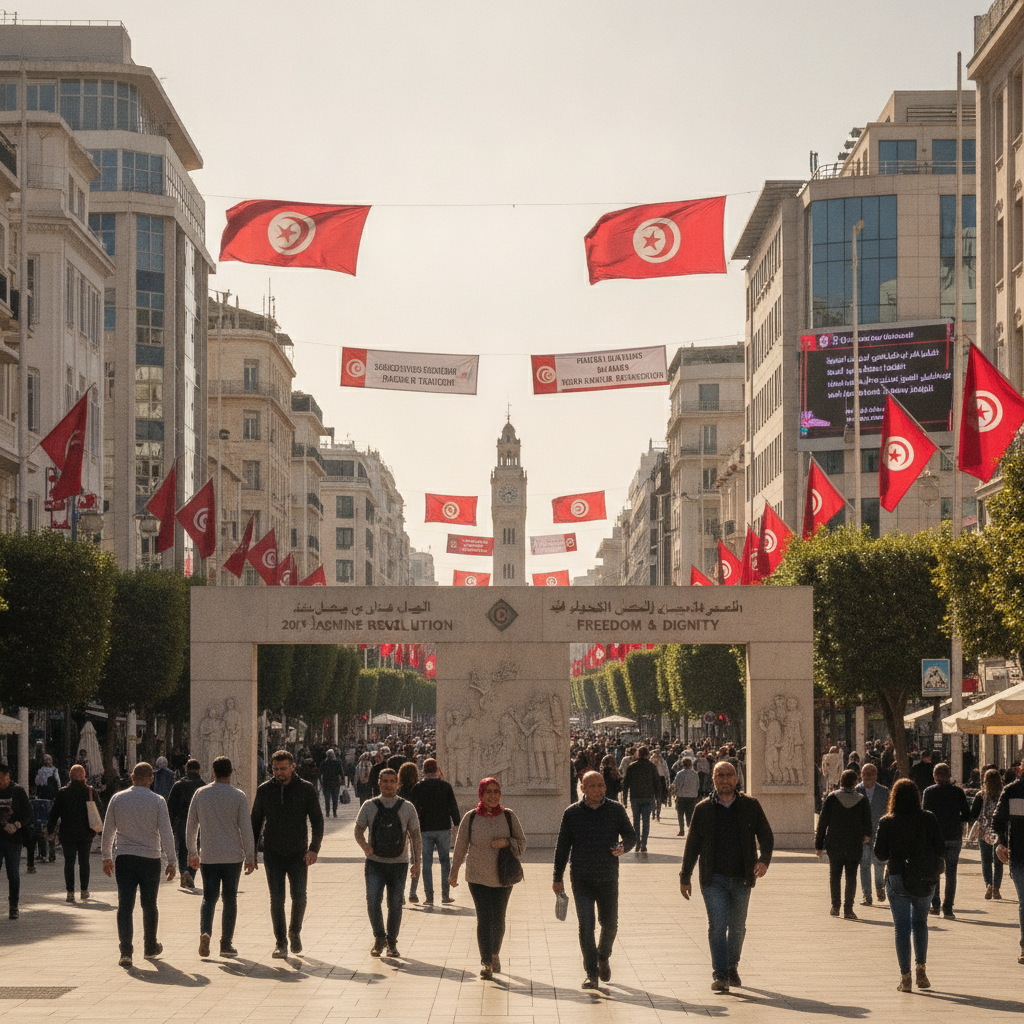
Tunis Modern History: The Arab Spring Jasmine Revolution, the Ben Ali Regime, the Bourguiba Legacy, the Transitional Democracy, and Contemporary Tunisia
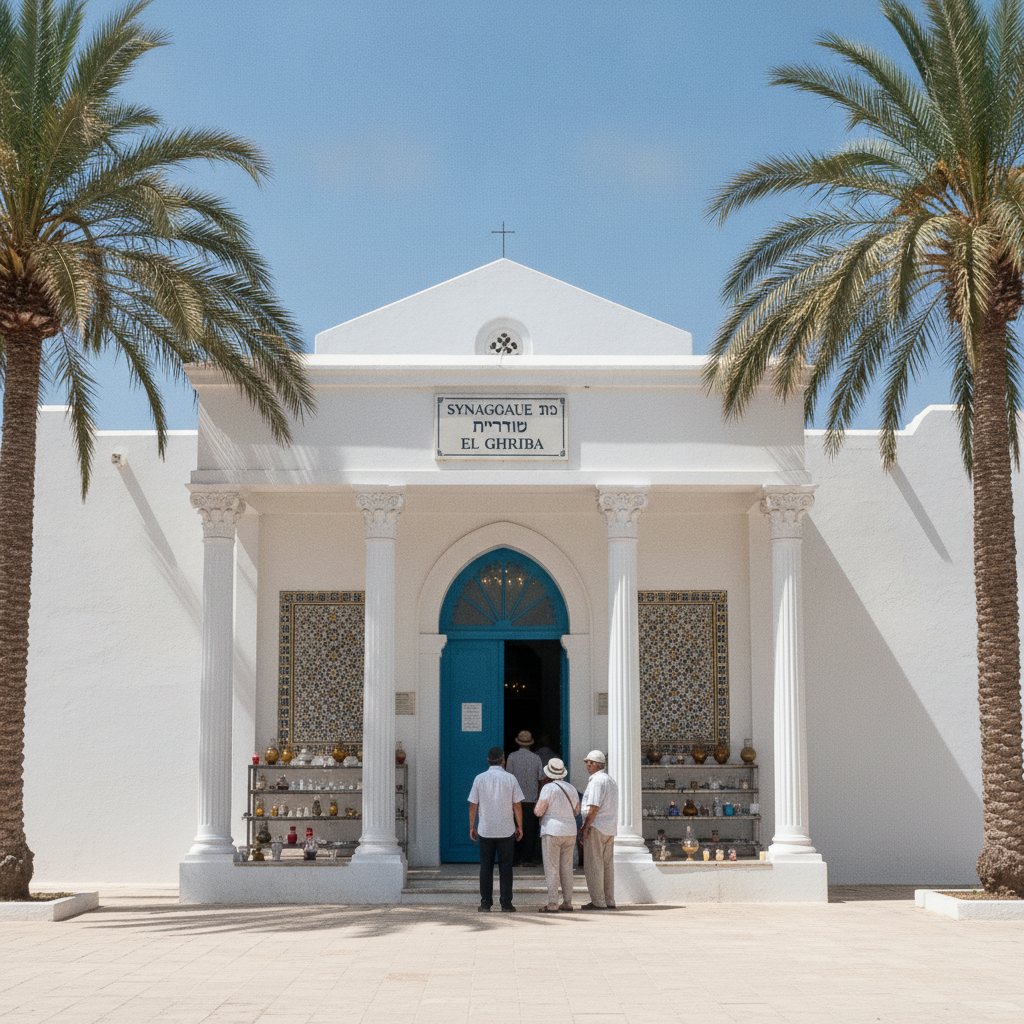
Mohammed Bouazizi Set Himself on Fire on December 17, 2010 and Ben Ali Fled Tunisia 28 Days Later Triggering Arab Spring Revolutions Across 6 Countries; El Ghriba Synagogue on Djerba Has a Legendary Founding Date of 586 BCE Making It the Oldest Synagogue in Africa; the Tunisian Rapper El General's Track Rayes Lebled Criticizing Ben Ali Became the Anthem of the Revolution After Going Viral on Facebook
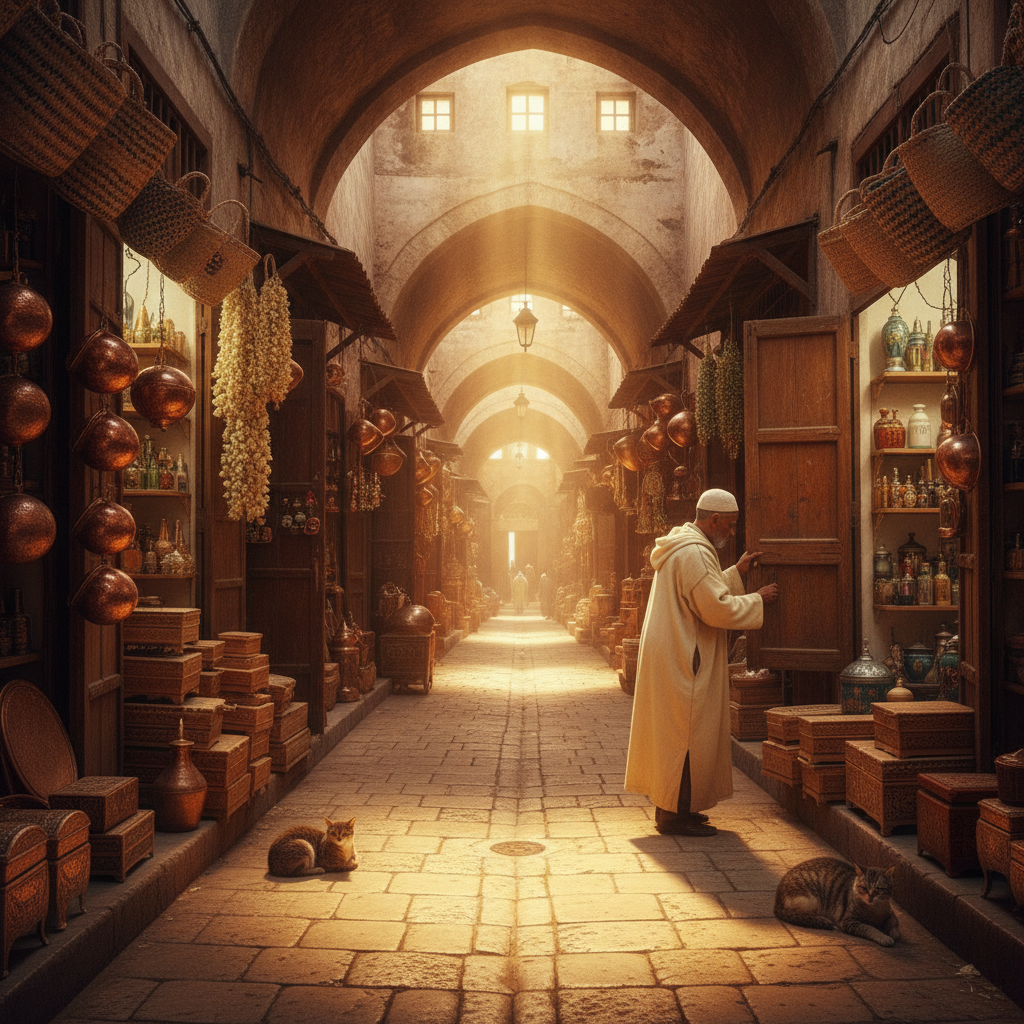
The Punic Language Survived as a Spoken Vernacular in Roman North Africa Until the 5th Century CE When Augustine of Hippo Mentions Punic Speakers in His Parish; The Vandals Sacked Rome in 455 CE from Their Base in Carthage and May Have Taken the Temple Treasures of Jerusalem; the Arab Berber Queen Dihya (Kahina) Defeated an Arab Army and Is Honored Both as a Brave Enemy in Muslim Tradition and as a National Hero in Berber Tradition
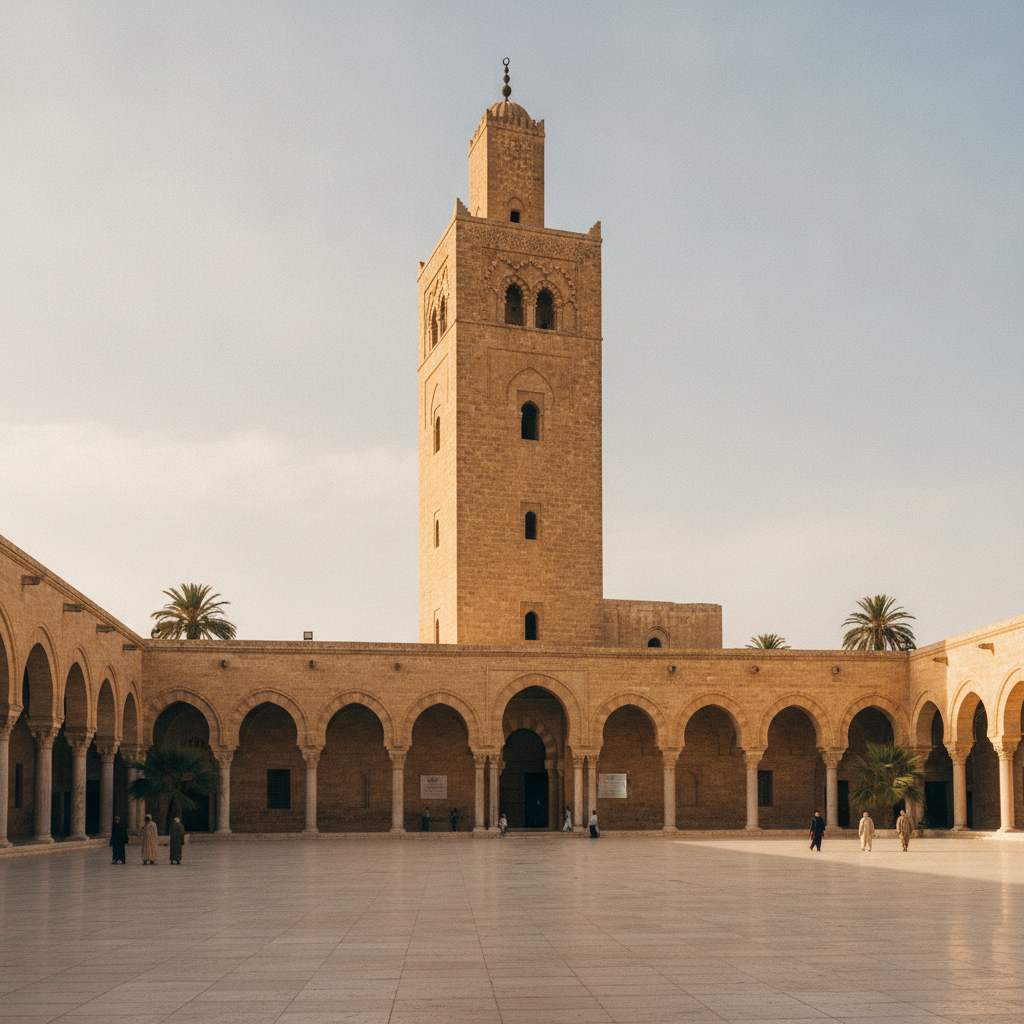
Tunis Day Trips: Kairouan the Holy City, the Great Mosque of Kairouan, the Aghlabid Basins, the Ribat of Monastir, and the Sahel Coast Circuit
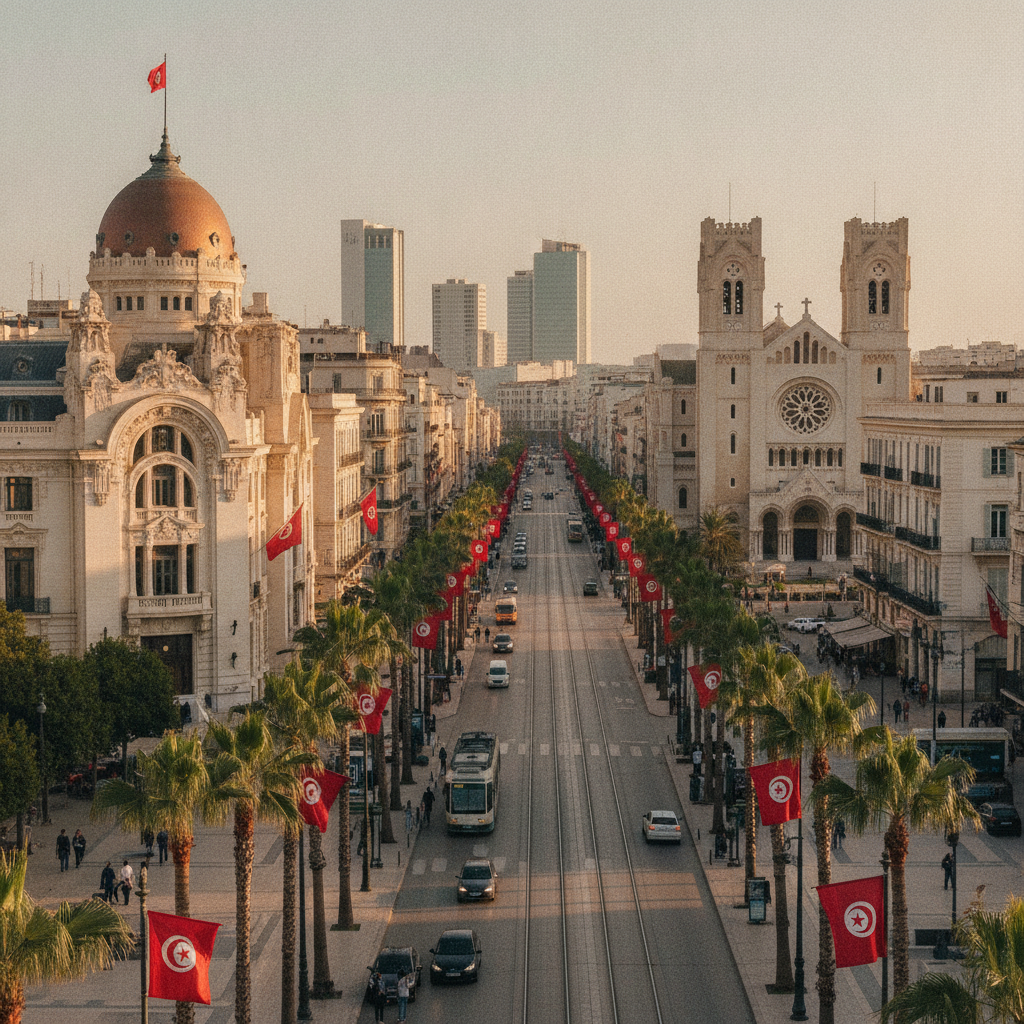
Tunis History: The Aghlabid Founders, the Hafsid Golden Age, the Ottoman Regency, the Husseinid Beys, and the French Protectorate Avenue Habib Bourguiba