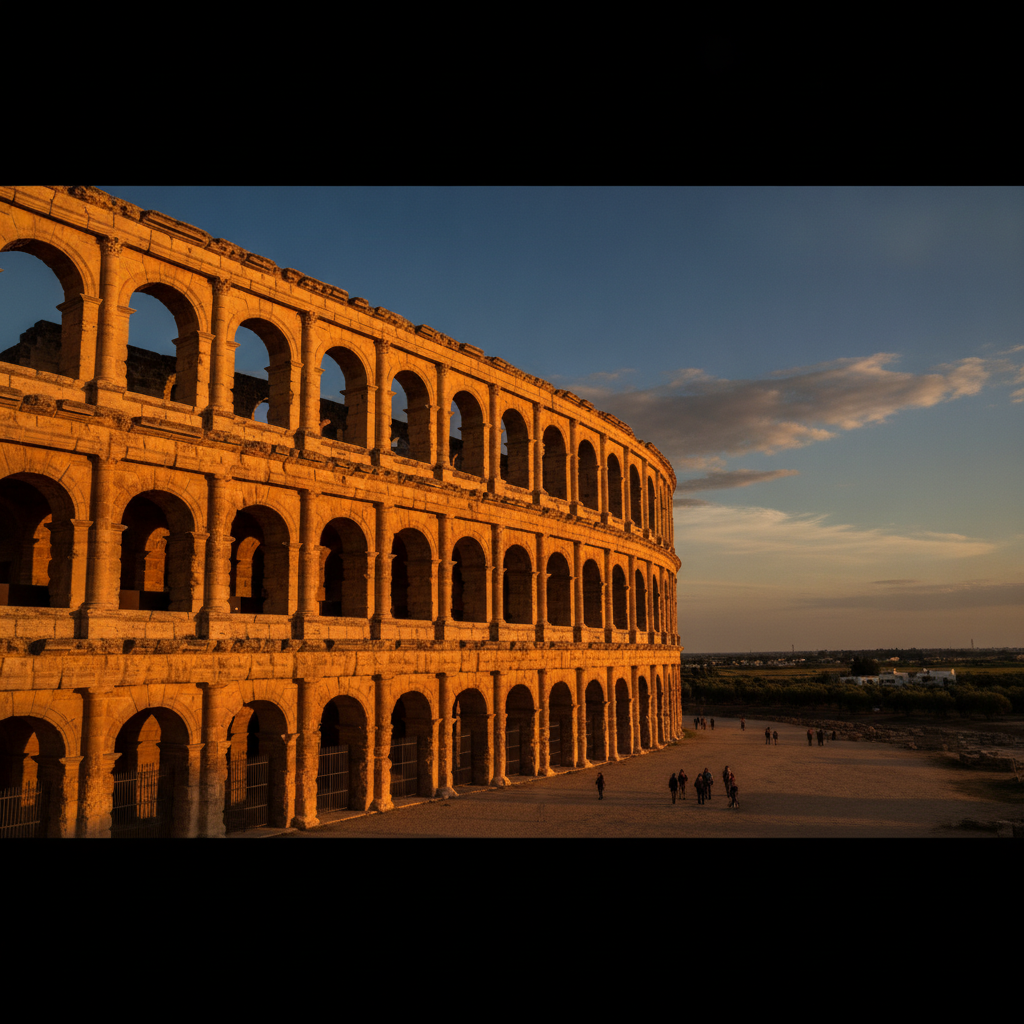
The Punic Language Survived as a Spoken Vernacular in Roman North Africa Until the 5th Century CE When Augustine of Hippo Mentions Punic Speakers in His Parish; The Vandals Sacked Rome in 455 CE from Their Base in Carthage and May Have Taken the Temple Treasures of Jerusalem; the Arab Berber Queen Dihya (Kahina) Defeated an Arab Army and Is Honored Both as a Brave Enemy in Muslim Tradition and as a National Hero in Berber Tradition
Punic language surviving as a vernacular until the 5th century CE with Augustine of Hippo mentioning Punic speakers; the Vandals sacking Rome in 455 CE from Carthage potentially taking the Jerusalem Temple treasures; Berber queen Dihya (Kahina) defeating an Arab army around 688-703 CE; Tunisian film Halfaouine (1990) winning Critics Week at Cannes; the chechia red felt cap becoming the Turkish fez; and the Tunis photography guide from morning medina to sunset Sidi Bou Said.
- 1
The Punic Language – Carthage's Tongue and Its Survival Into Late Antiquity
The Punic language (the Semitic language of Carthage — a dialect of Phoenician — and its remarkable survival as a spoken language in North Africa until at least the 5th century CE): the language history guide. The language (Punic (Latin: Punicus — Phoenician) is the name given to the Phoenician dialect spoken in Carthage and the Western Phoenician colonies: Punic is closely related to Hebrew, Aramaic, and Biblical Phoenician: the Punic alphabet has 22 consonants (no vowels) — the same as the Phoenician alphabet: the Punic script influenced the development of the Tifinagh script used by the Berbers of the Sahara: the Neo-Punic period (the Neo-Punic period (2nd century BCE - 5th century CE): after the Roman destruction of Carthage in 146 BCE the Punic language continued to be spoken by the rural population of the Roman province of Africa: the Roman-Punic bilingual inscriptions (the numerous Latin-Punic bilingual inscriptions found across Roman North Africa demonstrate that Punic literacy continued for centuries after the Roman conquest: the survival (the Church Father Augustine of Hippo (354-430 CE — born in Thagaste in modern Algeria) mentions Punic-speaking people in his parish in Hippo Regius: Augustine himself may have had some knowledge of Punic: the Neo-Punic survival is documented in Augustine's letters and sermons: the Plautus evidence (the Roman playwright Plautus (254-184 BCE) wrote a comedy called Poenulus (The Carthaginian) that contains a scene where a Carthaginian character speaks approximately 60 words of genuine Punic dialogue — the longest surviving text of spoken Punic: the decipherment (the Punic language was fully deciphered in the 19th century using bilingual inscriptions (Punic and Latin): the connection to Hebrew (Punic and Hebrew are so closely related that Punic speakers and Hebrew speakers were reportedly able to understand each other in the Roman period).
- 2
The Vandals – The Germanic Tribe That Sacked Rome from Africa
The Vandals in Tunisia (the Germanic Vandal kingdom of North Africa (429-534 CE) — the barbarian kingdom that used the former province of Carthage as its base to sack Rome and control the western Mediterranean): the historical guide. The migration (the Vandals were a Germanic people who had migrated from their homeland in Scandinavia/Baltic through Central Europe to Iberia: the Crossing of Africa (429 CE): the Vandal king Gaiseric (428-477 CE) led approximately 80,000 Vandals (including women and children — approximately 15,000-20,000 warriors) across the Strait of Gibraltar from Spain to North Africa at the invitation of the Roman governor of Africa Boniface (who was in rebellion against the Western Roman Emperor): the North African kingdom (the Vandals captured Carthage in 439 CE: Gaiseric made Carthage the capital of the Vandal kingdom: the Vandals quickly built a powerful naval fleet using Carthage's harbor infrastructure: the Sack of Rome (the Sack of Rome by the Vandals (455 CE) — Gaiseric led his fleet from Carthage to Rome in 455 CE: Rome was sacked over 14 days: the Vandals loaded an enormous amount of plunder on their ships including the Temple treasures of Jerusalem that had been brought to Rome by Titus after the sack of Jerusalem in 70 CE: the word Vandalism (the modern word vandalism derives from this event: the Vandals' reputation for wanton destruction was primarily a post-event literary construction by Roman historians: modern historians generally consider the Vandal sack of Rome to have been less destructive than the Visigoth sack of 410 CE: the fall (the Byzantine Emperor Justinian I sent the general Belisarius with approximately 15,000 men to reconquer North Africa in 533 CE: Belisarius destroyed the Vandal kingdom in two battles (Ad Decimum and Tricamarum): the last Vandal king Gelimer surrendered in 534 CE: the Vandal kingdom had lasted 95 years).
- 3
The Byzantine and Arab Conquest of Ifriqiya
The Byzantine reconquest and the Arab Islamic conquest of North Africa (534-698 CE) — the sequence of imperial changes that transformed the former Roman province of Africa into the Islamic province of Ifriqiya: the historical guide. The Byzantine reconquest (the Byzantine general Belisarius conquered the Vandal kingdom of North Africa in 533-534 CE restoring the former Roman province of Africa to the Eastern Roman (Byzantine) Empire: the century of Byzantine rule (the Byzantine period in North Africa (534-698 CE) was characterized by heavy tax burdens, religious controversy (the Donatist and Monophysite disputes), and Berber (Amazigh) tribal resistance: the Arab conquest (the Arab-Islamic conquest of North Africa: the first Arab raids into North Africa from Egypt began under the Caliph Umar ibn al-Khattab in 642-643 CE: the Arab general Uqba ibn Nafi al-Fihri founded Kairouan in 670 CE as the Arab garrison city for the conquest of the Maghreb: the Berber resistance (the most significant resistance to the Arab conquest was led by the Berber queen-warrior Dihya (also called Kahina — the Prophetess) approximately 688-703 CE: Dihya led a Berber confederation that defeated an Arab army and temporarily pushed the Arabs back: Dihya was eventually defeated and killed: the Arab Muslim tradition honors her as a brave enemy: the Berber historical tradition venerates her as a national hero: the fall of Carthage (the Byzantine city of Carthage fell to the Arab forces in 698 CE — ending Byzantine rule in North Africa: the Arab general Hassan ibn al-Numan destroyed the remaining fortifications of Carthage and founded a new city at Tunis (Tunis) which gradually replaced Carthage as the primary urban center of the region).
- 4
Tunisian Craft Heritage – Pottery, Carpet, and the Chechia
The Tunisian traditional crafts (the living craft traditions of Tunisia — among the oldest continuously practiced craft industries in the Mediterranean world): the craft guide. The chechia (the chechia (شاشية) — the red felt cap that is the primary traditional headgear of Tunisia (and the basis of the Turkish fez): the chechia is made from fine merino wool felted and shaped on wooden molds: the primary color is deep red (achieved with cochineal dye): the chechia production: Tunis is the historical center of chechia production: the Souk al-Chechia in the Tunis Medina is dedicated to chechia makers and sellers: the chechia was exported throughout the Ottoman Mediterranean and became the fez (the Turkish national hat): the pottery (the Tunisian pottery tradition: the primary centers: Nabeul (30 km from Tunis): Nabeul produces colorful painted earthenware with geometric and floral patterns in yellow, blue, and green: the Guellala pottery (Djerba): earthenware oil lamps and storage jars made from local clay: the carpet (the Tunisian carpet tradition: the primary types: the kilim (a flat-woven carpet without pile — the Berber tradition): the knotted pile carpet (the Kairouan tradition): the maqroudh (the Kairouan maqroudh): the chechia (Tunis): the Nabeul tilework (the hand-painted ceramic tiles of Nabeul are the primary architectural decoration of modern Tunisian domestic interiors): the embroidery (the Tunisian embroidery tradition: the primary types: the Tunis embroidery (fine silk embroidery on white linen — the primary form of domestic textile decoration in the Tunis medina): the Nabeul embroidery: the Gafsa embroidery: the silver jewelry (the traditional Berber silver jewelry: the khomsa (the hand of Fatima amulet): the krater (large silver headdress worn by Berber women on ceremonial occasions): the main centers of silver jewelry production: Sfax: Monastir: Djerba).
- 5
Tunisian Cinema and Literature – The Arab World's Art House
Tunisian cinema and literature (Tunisia's disproportionate contribution to Arab art cinema, literary modernism, and the representation of women's voices in Arab culture): the cultural guide. The cinema (Tunisian cinema has produced more internationally recognized art films per capita than any other Arab country: the primary Tunisian film: Halfaouine: Child of the Terraces (Halfaouine — L'enfant des terrasses, 1990 — directed by Ferid Boughedir): the most celebrated Tunisian film: set in the Halfaouine working-class neighborhood of Tunis: follows a 12-year-old boy coming of age in a traditional Tunisian quarter: won multiple international awards including the Critics Week prize at Cannes: the tradition (Tunisian cinema is notable for its frank treatment of subjects taboo in other Arab cinema: sexuality: religious hypocrisy: women's autonomy: the film Bezness (Business, 1992 — directed by Nouri Bouzid) addresses male prostitution and Western sex tourism in Sousse: the literature (Tunisian literature in Arabic and French: the Tahar Ben Jelloun connection (Tahar Ben Jelloun is the most internationally famous North African writer — though Moroccan rather than Tunisian, he is central to the Francophone Maghrebi literary tradition: the Tunisian writers: Hedi Bouraoui (born 1932 — Franco-Tunisian poet): the women writers (post-revolution Tunisia saw an explosion of women's writing in Arabic: the prominent women's voices: Raja Ben Slama: Emna Ben Miled: the music revolution (the post-revolution Tunisian music scene: the Tunisian hip-hop/rap scene: Balti (the most commercially successful Tunisian rap artist): psychedelic rock: the Bardo Museum attack created an outpouring of artistic response).
- 6
Tunis Photography Guide – Morning Medina to Sunset Sidi Bou Said
The Tunis photography guide (the optimal photography locations, timing, and approaches for capturing the visual character of Tunis): the photography guide. The medina morning (06:30-09:00 — the medina before the tourist crowds: the bread delivery men with large circular loaves balanced on wooden boards on their heads: the souk shopkeepers raising their metal shutters: the Zitouna Mosque ablutions courtyard in the first morning light: the Souk al-Attarine in the horizontal morning light — the hanging incense burners, the stacked wooden perfume boxes, the copper vessels: the morning is the only time to photograph the medina without large tour groups: the Zitouna Mosque (photography permitted in the courtyard from the colonnaded galleries: the courtyard is most photogenic when the morning light is oblique (08:00-10:00) creating long shadows across the marble floor: the minaret is best photographed from the souk rooftop cafes that overlook the mosque complex: the medina rooftops (the medina rooftop circuit: the best views over the medina labyrinth are from the rooftop cafes and hotel terraces: the Terrasse des Saveurs (above the Souk al-Attarine) and the Cafe M'Rabet (the oldest cafe in the medina — a converted 17th century zaouia on the main Rue Jemaa Zitouna): the blue doors (the painted wooden doors of the medina residential quarter: the best concentration is in the Hafsia quarter north of the medina: the Bardo Museum (the Roman mosaics: a close-up photography approach is most effective — the detail of the Ulysses mosaic: the fish scales in the Neptune mosaic: the vine tendrils in the Virgil mosaic: the Sidi Bou Said sunset (17:00-19:30): the terrace above the village with the Bay of Tunis panorama: the blue-and-white facade detail: the mashrabiyya shadows on whitewashed walls: the Ennejma Ezzahra Palace garden with its jasmine perfume).
Walk this route with audio
Stories play automatically as you reach each stop — no tapping needed.
More in Tunis
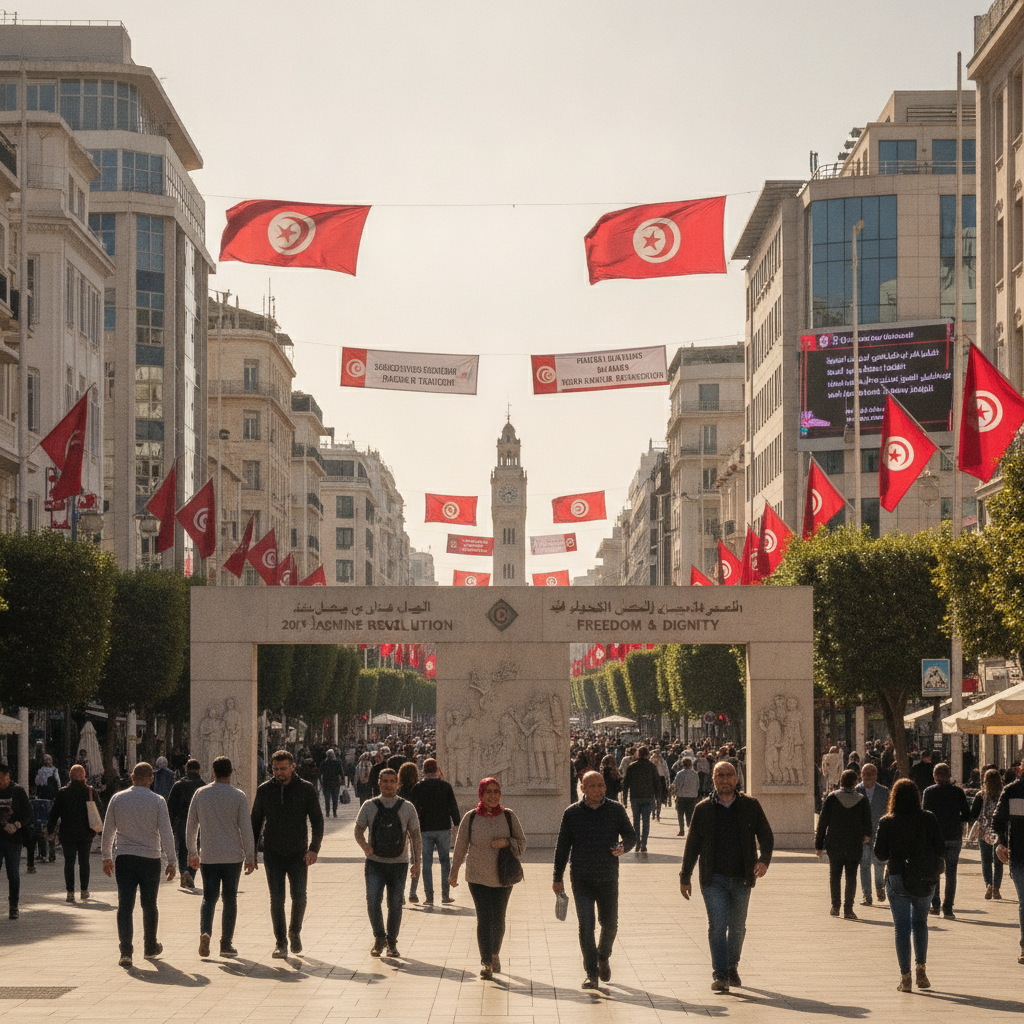
Tunis Modern History: The Arab Spring Jasmine Revolution, the Ben Ali Regime, the Bourguiba Legacy, the Transitional Democracy, and Contemporary Tunisia
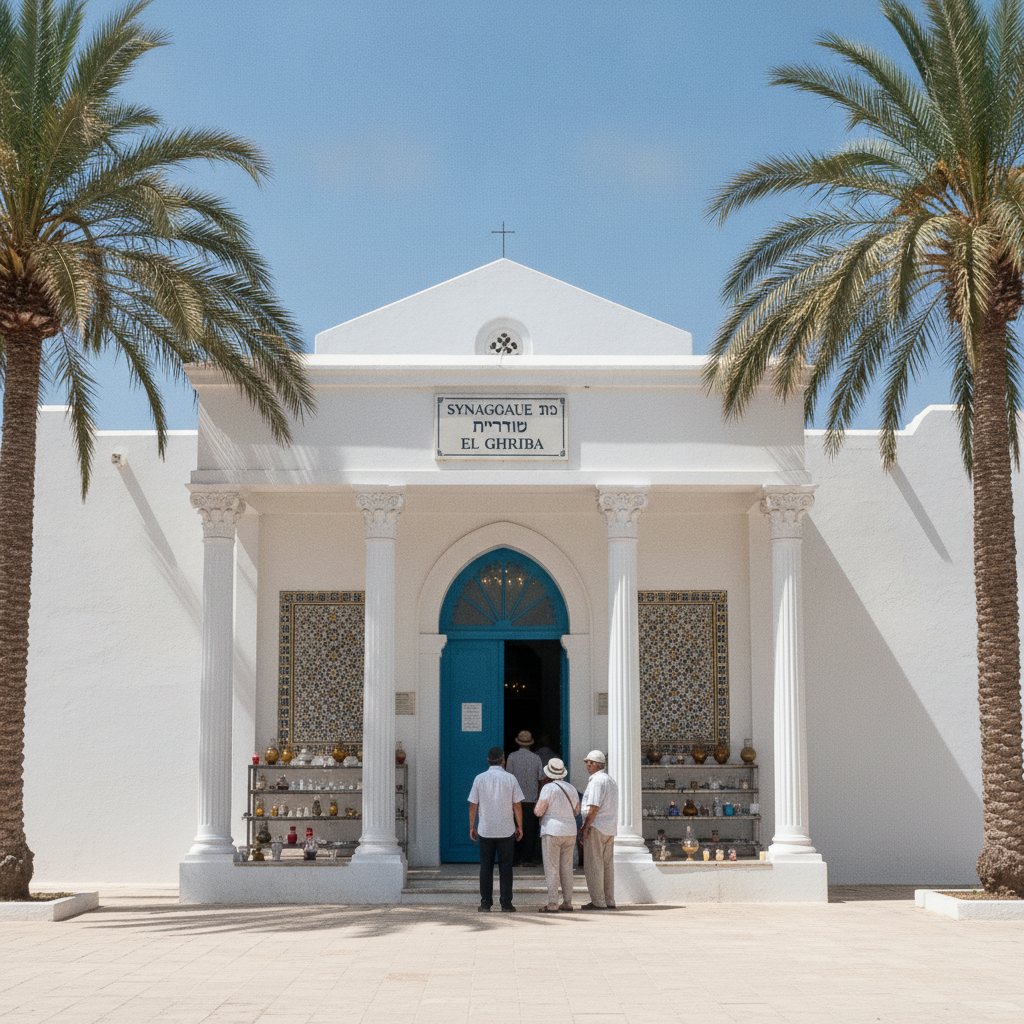
Mohammed Bouazizi Set Himself on Fire on December 17, 2010 and Ben Ali Fled Tunisia 28 Days Later Triggering Arab Spring Revolutions Across 6 Countries; El Ghriba Synagogue on Djerba Has a Legendary Founding Date of 586 BCE Making It the Oldest Synagogue in Africa; the Tunisian Rapper El General's Track Rayes Lebled Criticizing Ben Ali Became the Anthem of the Revolution After Going Viral on Facebook
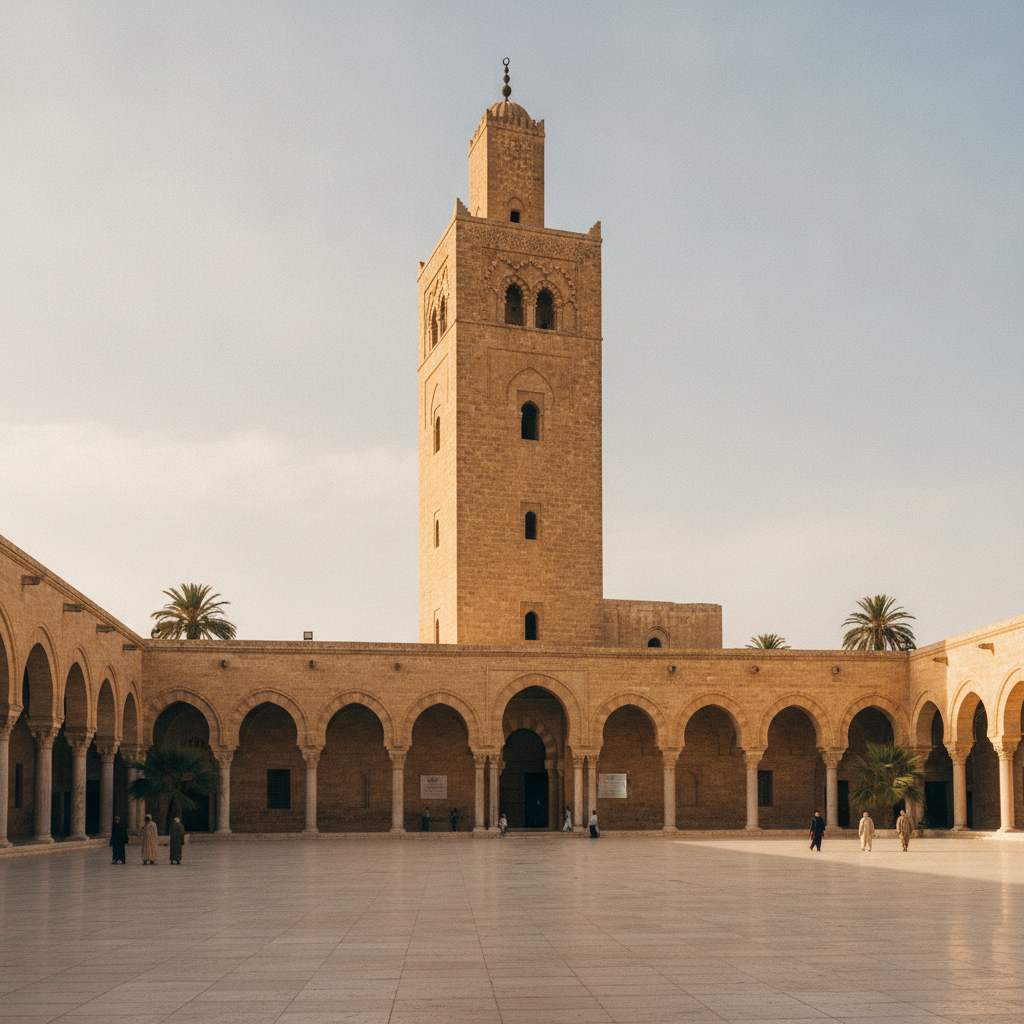
Tunis Day Trips: Kairouan the Holy City, the Great Mosque of Kairouan, the Aghlabid Basins, the Ribat of Monastir, and the Sahel Coast Circuit
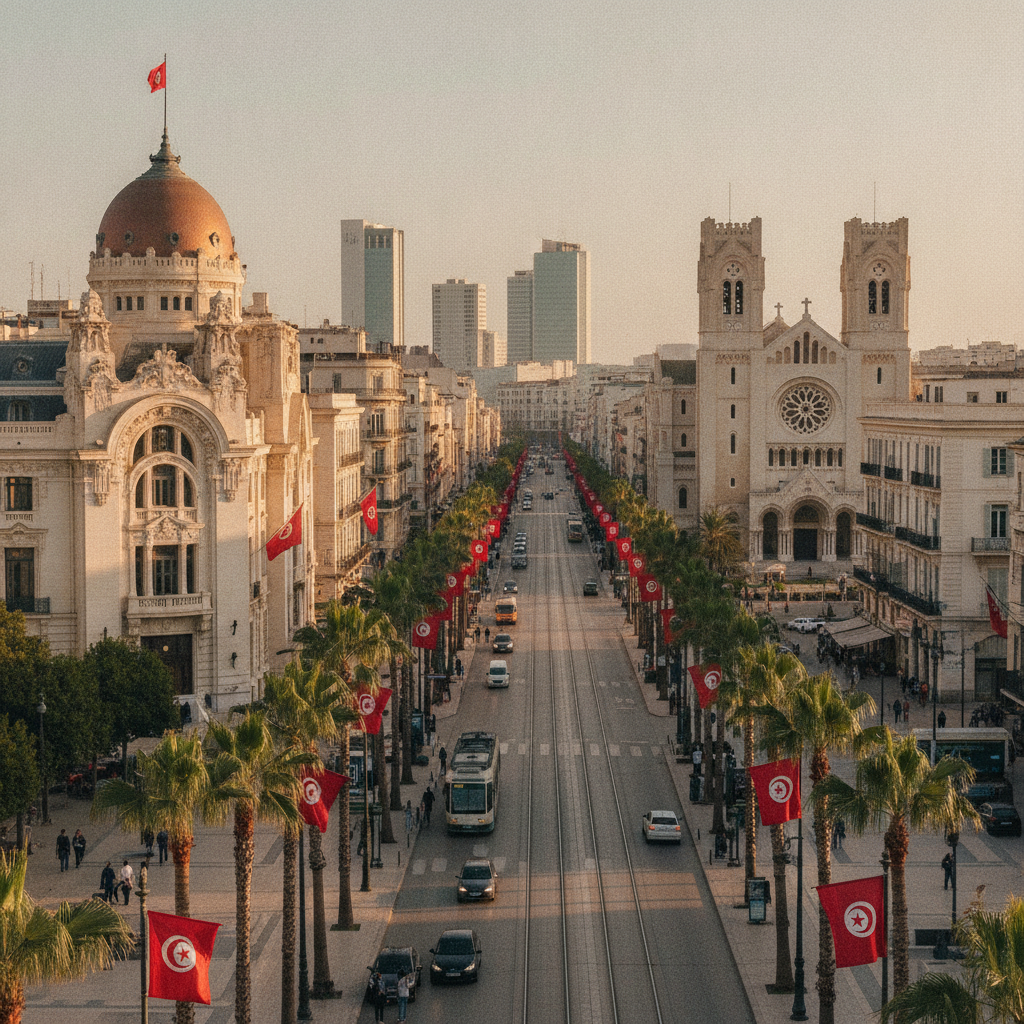
Tunis History: The Aghlabid Founders, the Hafsid Golden Age, the Ottoman Regency, the Husseinid Beys, and the French Protectorate Avenue Habib Bourguiba
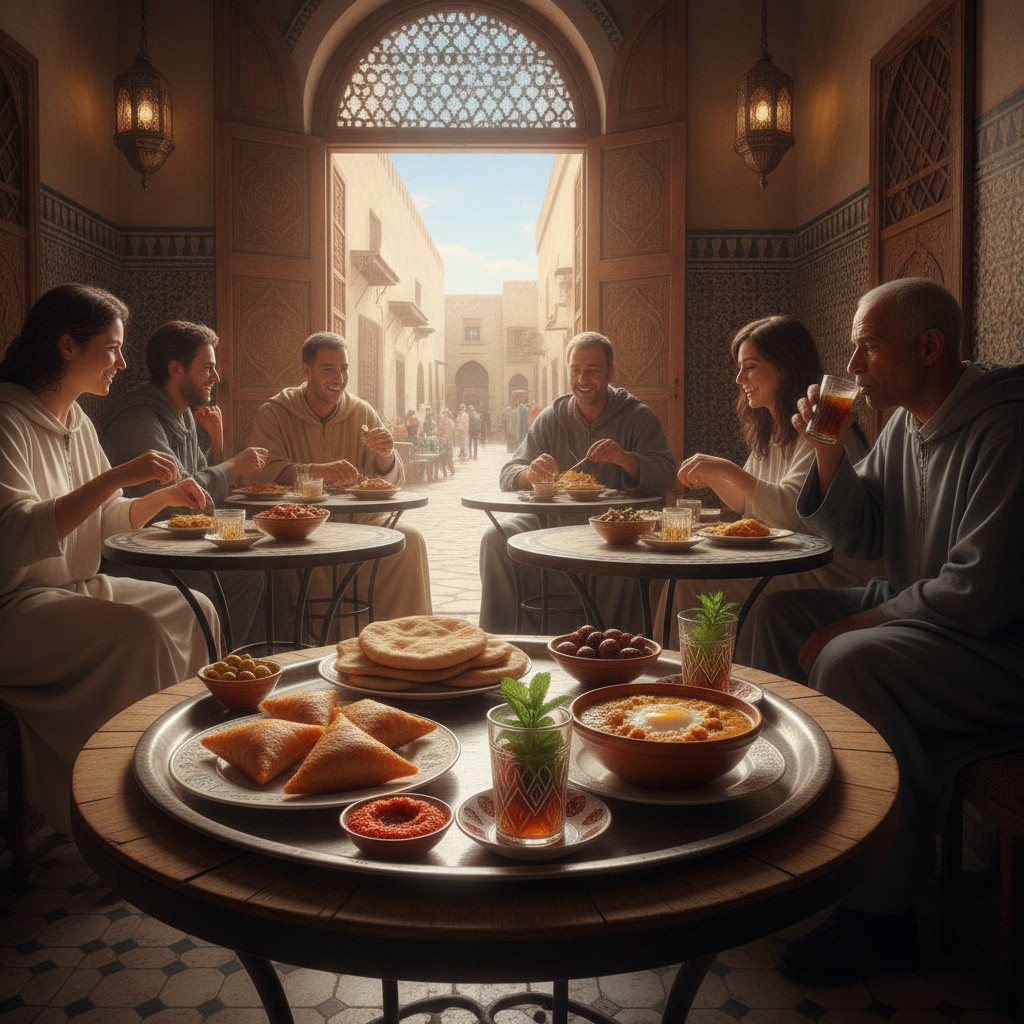
Tunis Food and Culture: The Brik, the Harissa, the Lablabi, the Malouf Andalusian Music, and the Tunis Cafe Culture