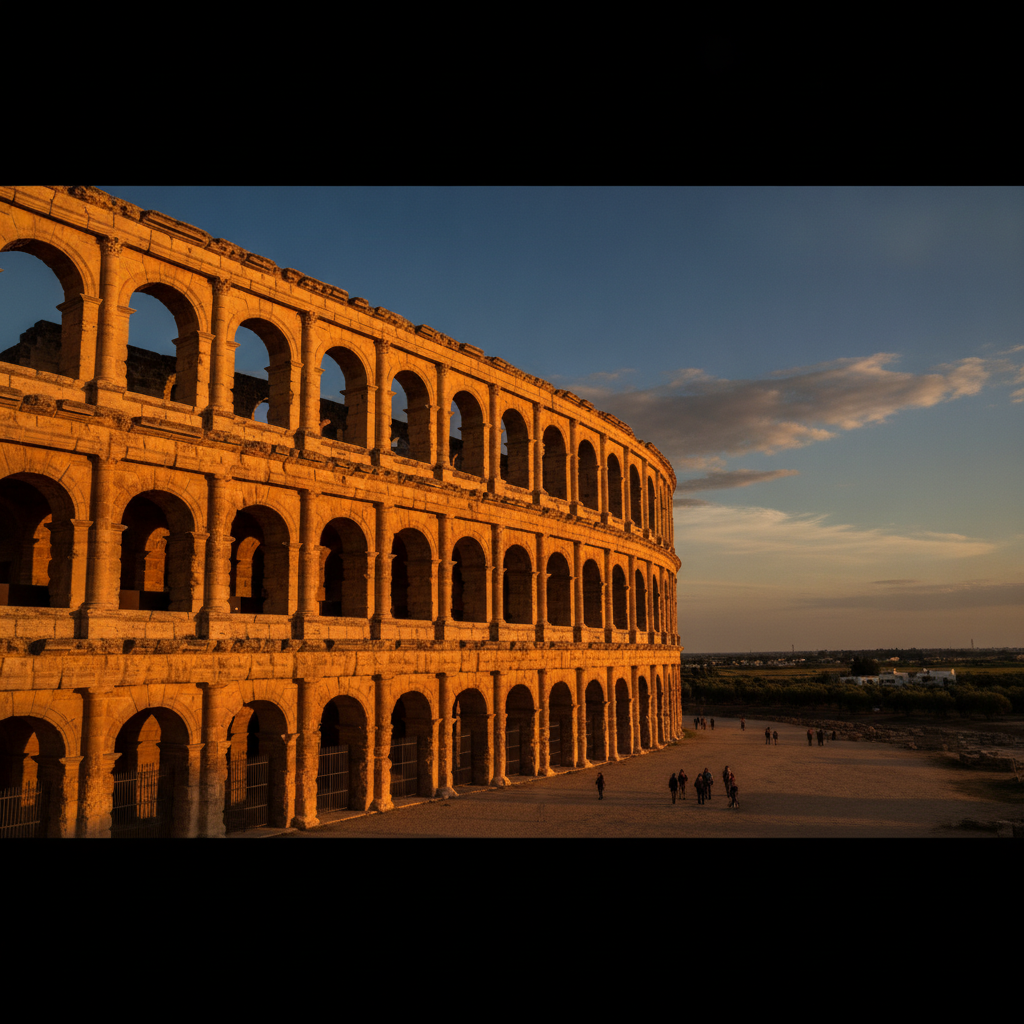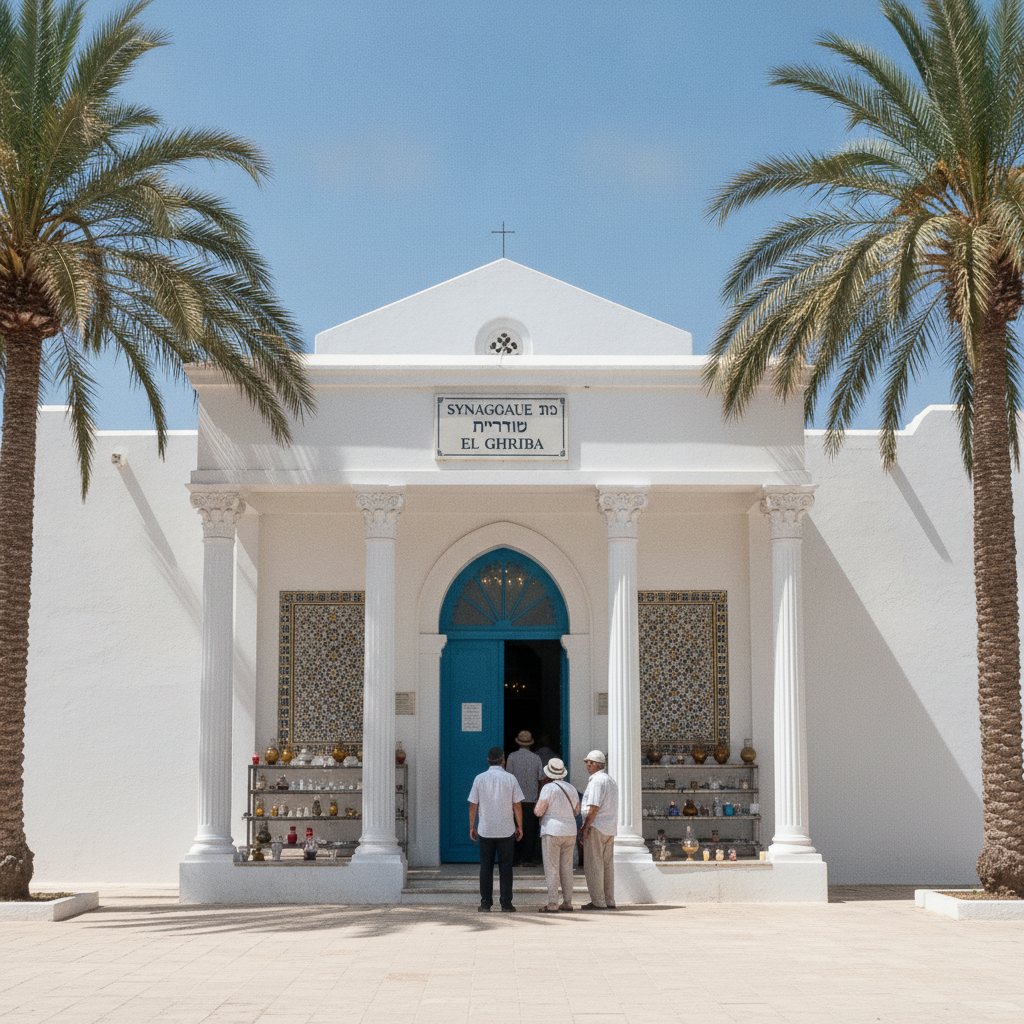
Mohammed Bouazizi Set Himself on Fire on December 17, 2010 and Ben Ali Fled Tunisia 28 Days Later Triggering Arab Spring Revolutions Across 6 Countries; El Ghriba Synagogue on Djerba Has a Legendary Founding Date of 586 BCE Making It the Oldest Synagogue in Africa; the Tunisian Rapper El General's Track Rayes Lebled Criticizing Ben Ali Became the Anthem of the Revolution After Going Viral on Facebook
Mohammed Bouazizi's self-immolation on December 17, 2010 and Ben Ali fleeing with 1.5 tonnes of gold 28 days later triggering revolutions in Egypt, Libya, Yemen, Bahrain, and Syria; El Ghriba Synagogue on Djerba with legendary founding date of 586 BCE; the Sousse Catacombs with 15,000 burials in 240 galleries (the largest early Christian burial complex in Africa); Tunisian rapper El General's Rayes Lebled going viral on Facebook as the revolution's anthem; the Moriscos expelled from Spain in 1609 preserving Andalusian Maluf classical music in Tunisia; and the Tunisia budget guide with TND exchange rates and transport costs.
- 1
The Jasmine Revolution – How a Street Vendor Changed the Arab World
The Jasmine Revolution (the Tunisian Revolution of December 2010 - January 2011) — the first successful Arab Spring uprising and the event that sparked revolutions across the Arab world: the political history guide. The background (Tunisia under President Zine El Abidine Ben Ali (1987-2011): Ben Ali established a police state with systematic torture, arbitrary detention, and media censorship: economic growth (3-5% annually) was undermined by endemic corruption, high youth unemployment (24-30% among educated youth), and concentrated wealth among the Ben Ali and Trabelsi families: the Wikileaks cables (the US State Department diplomatic cables published by Wikileaks in late 2010 revealed frank assessments of Ben Ali's corruption by US diplomats that were read widely in Tunisia: the catalyst (Mohammed Bouazizi (June 29, 1984 - January 4, 2011): a street vendor of fruit and vegetables in Sidi Bouzid: his cart and scales were confiscated by a municipal inspector on December 17, 2010: Bouazizi reportedly went to the regional government offices to complain and was dismissed and slapped: he stood in front of the government building, doused himself with paint thinner, and set himself on fire: Bouazizi died on January 4, 2011 in hospital: President Ben Ali visited his hospital bedside in a televised gesture that was widely seen as cynical: the revolution (protests began in Sidi Bouzid immediately and spread nationwide: on January 14, 2011 — 28 days after Bouazizi's self-immolation — Ben Ali fled to Saudi Arabia with his family and an estimated 1.5 tonnes of gold from the Tunisian Central Bank: the Arab Spring (the Tunisian Revolution directly inspired: the Egyptian Revolution (January 25, 2011 — 11 days after Ben Ali fled — the first Tahrir Square protests): the Libyan Civil War (February 2011): the Yemeni Revolution (January 2011): the Bahraini uprising (February 2011): the Syrian Revolution (March 2011).
- 2
Djerba – The Island of a Thousand Years of Jewish Presence
Djerba (Jerba — جربة) — the largest island of North Africa, 500 km south of Tunis: a Mediterranean island with distinct Berber, Jewish, and Ibadi Muslim communities that has maintained its cultural distinctiveness for over 2,500 years: the island guide. The geography (Djerba is a flat Mediterranean island 25 km x 25 km connected to the mainland by a Roman causeway (the original Roman causeway has been replaced by a modern road): the island is classified as a Biosphere Reserve by UNESCO: the El Ghriba synagogue (the El Ghriba Synagogue (the Wonderful or Strange) in the village of Er-Riadh (formerly Hara Sghira): the most ancient functioning synagogue in Africa: the legendary founding date is 586 BCE when Jewish refugees fled Jerusalem after the destruction of Solomon's Temple by Nebuchadnezzar: the archaeological evidence suggests continuous Jewish presence since at least the 3rd century BCE: the annual pilgrimage (the Lag BaOmer pilgrimage to El Ghriba attracts approximately 5,000 Jewish pilgrims annually from Tunisia (the remaining 1,500-strong Jewish community), Israel, France, and other countries: the pilgrims leave candles and eggs inscribed with wishes at the shrine of the Rabbi Shimon Bar Yochai: the Ibadi Islam (the Djerba community includes a significant Ibadi Muslim community (followers of the Ibadi branch of Islam — a distinct early Islamic sect predating the Sunni-Shia split, more numerous in Oman): the Djerba Ibadi community has maintained their distinct mosque architecture (no minarets on Ibadi mosques on Djerba — a distinctive local tradition): the Berber villages (the Berber villages of the interior: Guellala (the pottery village): Midoun: the traditional Djerba architecture: low whitewashed lime houses with blue grilles and flat roofs: distinct from the high North African Maghreb urban architecture.
- 3
Sousse – The Pearl of the Sahel and Hannibal's Port
Sousse (Susah — سوسة) — 140 km south of Tunis on the Mediterranean coast: the third largest city in Tunisia and the center of the Sahel olive oil growing region: an important Phoenician and Roman city and the site of the most extensive early Christian underground burial complex in Africa: the guide. The history (the Phoenician city of Hadrumetum (the Phoenician name: Adarm — probably meaning The Port): founded approximately 9th century BCE as a Phoenician trading post: Hadrumetum supported Carthage during the Punic Wars but switched sides to Rome before the Third Punic War (149-146 BCE) and survived: the Roman city (the Roman city of Hadrumetum was renamed Colonia Julia Concordia Ulpia Traiana Augusta Frugifera Hadrumentina (approximately 117 CE under Trajan — one of the longest place names in Roman epigraphy): the Catacombs of Sousse (the Catacombs of Sousse — the largest early Christian underground burial complex in Africa: approximately 240 underground galleries covering an area of 5 km: the catacombs date from the 2nd-4th centuries CE: approximately 15,000 burials: the Medina of Sousse (UNESCO 1988): the Ribat of Sousse (a fortified monastery (ribat) built in 821 CE by the Aghlabid ruler Ziyadat Allah I as a coastal defense against Byzantine raids): the ribat is one of the oldest surviving Islamic fortifications in the Maghreb: the kasbah (the 9th century Aghlabid kasbah (citadel) housing the Sousse Archaeological Museum with the Ulysses and the Sirens mosaic — one of the finest Roman mosaics in the world).
- 4
Tunisian Music – Maluf, Malouf, and the Voices of the Medina
Tunisian music (the Maluf classical music tradition, the Maqam modal system, and the music that survived the expulsion from Andalusia): the music guide. The Maluf (the Maluf (also spelled Malouf from the Arabic word for familiar or traditional) — the classical music tradition of Tunisia that derives from the Andalusian musical heritage brought to Tunisia by Moorish refugees expelled from Spain in 1609 (the expulsion of the Moriscos under Philip III of Spain): the Andalusian musical tradition (the Andalusian muwashshah (strophic poetry set to music) was the primary classical musical form of Islamic Spain from approximately the 9th century: the muwashshah poetry was written in a mixture of classical Arabic and Andalusian colloquial Arabic and Spanish dialect (kharjas): the transmission (the Moriscos who settled in Tunis brought their Andalusian musical instruments and repertoire: the instruments: the oud (lute): the rebab (two-string fiddle): the qanun (plucked zither): the darbuka (hand drum): the form (the Maluf suite (nawba) consists of a sequence of pieces in different rhythms and meters performed in a fixed order: the suite covers a full evening performance of approximately 3-4 hours: the 13 nawbat (suites) of the Tunisian Maluf cover the 13 primary maqamat (modal scales): the contemporary music (Tunisian popular music: the mezoued (folk dance music using the mezoued — a traditional double-chanter reed instrument with goatskin bag (a bagpipe): the pop singers: Saber Rebaï: Latifa: the hip-hop (Tunisian hip-hop played a role in the 2010-2011 revolution: the rapper El General (Hamada Ben Amor) released the rap track Rayes Lebled (President of the Country) in November 2010 directly criticizing Ben Ali: the track went viral on Facebook and became the anthem of the revolution).
- 5
Tunisian Architecture – White Cities and Ottoman Palaces
Tunisian architecture (the distinctive visual language of Tunisian urban space — a synthesis of Berber, Arab, Andalusian, Ottoman, and French colonial influences): the architecture guide. The medina typology (the Tunisian medina (Arabic: madina — city) is organized according to a consistent spatial hierarchy: the Great Mosque at the center: the noble souks (books, perfume) adjacent to the mosque: the manufacturing souks (blacksmiths, leather) further away: the residential quarters (hara) surrounding the commercial core: the residential streets narrow progressively from the main souk to the cul-de-sac dead-end lanes (the driba — private street) leading to family house entrances: the courtyard house (the Tunisian dar (house) typology: a blank white exterior wall presenting no windows to the street (for privacy): the entrance through a bent passageway (skifa) that prevents views into the interior: the central courtyard (the wast al-dar — middle of the house): the courtyard has a central fountain, orange and jasmine trees: the rooms open onto the courtyard rather than the street: the Ottoman influence (the Ottoman Husainid palace architecture: the distinctive Husainid palace tiles (the blue-and-white Turco-Tunisian ceramic tile panels that line the lower walls of Husainid reception rooms): the ablution basins in polychrome marble mosaic (the zellij ceramic mosaic floors and lower wall panels): the Andalusian element (the Moorish plasterwork (jis) used in medina palace interiors: the muqarnas (stalactite) stucco ceilings: the arched arcade forms (the horseshoe arch derived from Andalusian Islamic architecture): the French colonial layer (the French Protectorate city (la ville nouvelle) built adjacent to the medina from 1880s: the Avenue Habib Bourguiba: the Municipal Theatre: the French colonial administrative buildings in a Neo-Moorish hybrid style (mixing French Beaux-Arts and Tunisian Islamic architectural elements).
- 6
Tunisia Budget Guide – Costs, Transport, and the Value Destination
The Tunisia budget guide (Tunisia is one of the most affordable Mediterranean destinations and offers exceptional value for visitors from Euro and USD denominated economies): the practical budget guide. The currency (the Tunisian Dinar (TND): approximately 3.2 TND per USD (2025): the Dinar is not freely convertible outside Tunisia — exchange on arrival: the ATMs (ATMs are reliable in Tunis and major tourist cities: international Visa and Mastercard accepted at most ATMs: the exchange rate at ATMs is generally fair: accommodation (the budget options in Tunis: the Medina hotels (traditional Tunisian riad-style guesthouses in the medina of Tunis): the Dar Ben Gacem (a traditional guesthouse in the medina): budget from approximately 60-100 TND per night (USD 19-31): mid-range: the Hotel Carlton (a French-era colonial hotel on Avenue Habib Bourguiba): approximately 120-180 TND per night (USD 37-56): the food costs (a full traditional Tunisian meal at a local restaurant: 15-25 TND (USD 5-8): a harissa and tuna brik: 3-5 TND (USD 1-1.5): a coffee at a medina cafe: 1-2 TND: the transport within Tunisia (the train system (SNCFT — Societe Nationale des Chemins de Fer Tunisiens): direct trains from Tunis to Sousse (1.5 hours, approximately 8 TND): Tunis to Sfax (3.5 hours, approximately 15 TND): the louage (the louage — shared intercity taxi: the primary long-distance public transport outside the train network: each louage departs when full (5-7 passengers): Tunis to Kairouan approximately 10-15 TND: the buses (SNTRI — national bus company): comfortable air-conditioned buses for all intercity routes: the arrival (Tunis-Carthage Airport TUN: taxis to the city center approximately 15-25 TND at day rate: the tipping culture (tipping is not obligatory in Tunisia but approximately 10% in restaurants is appreciated).
Walk this route with audio
Stories play automatically as you reach each stop — no tapping needed.
More in Tunis
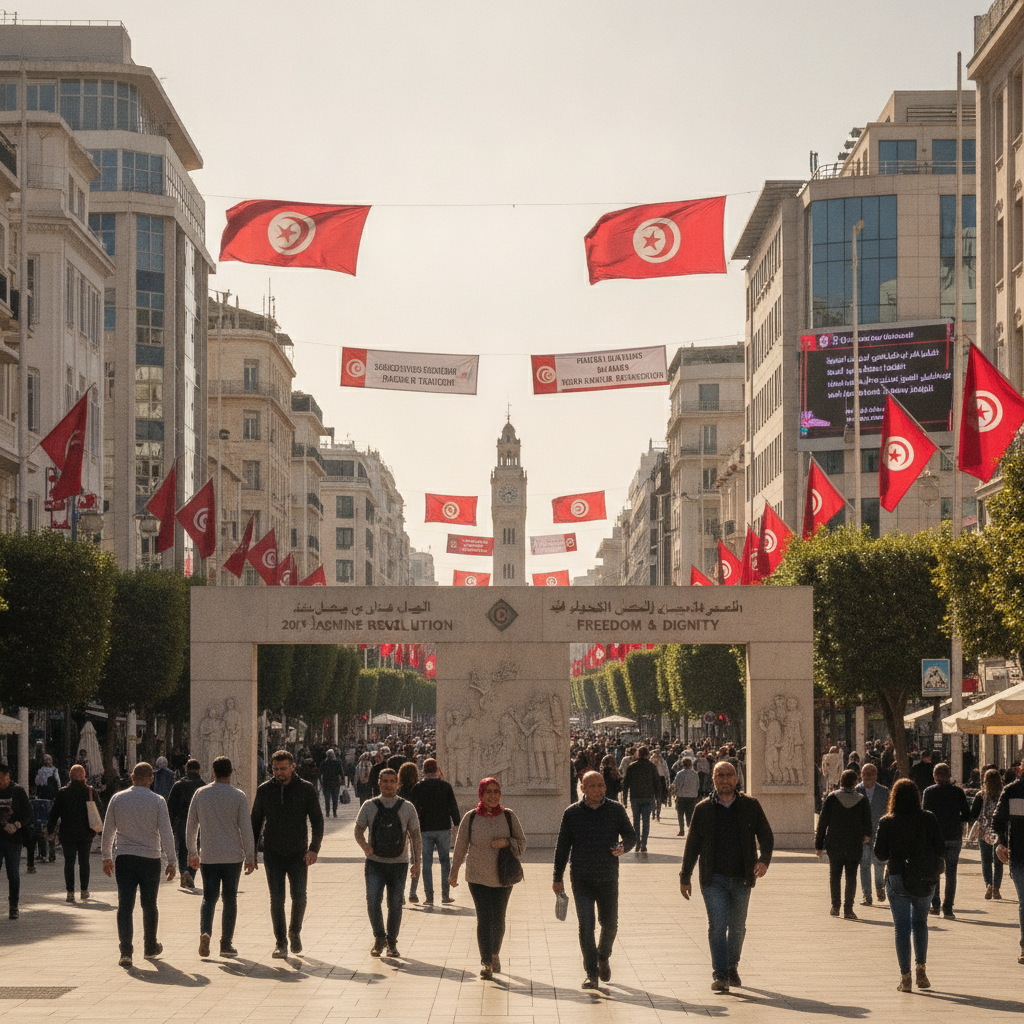
Tunis Modern History: The Arab Spring Jasmine Revolution, the Ben Ali Regime, the Bourguiba Legacy, the Transitional Democracy, and Contemporary Tunisia
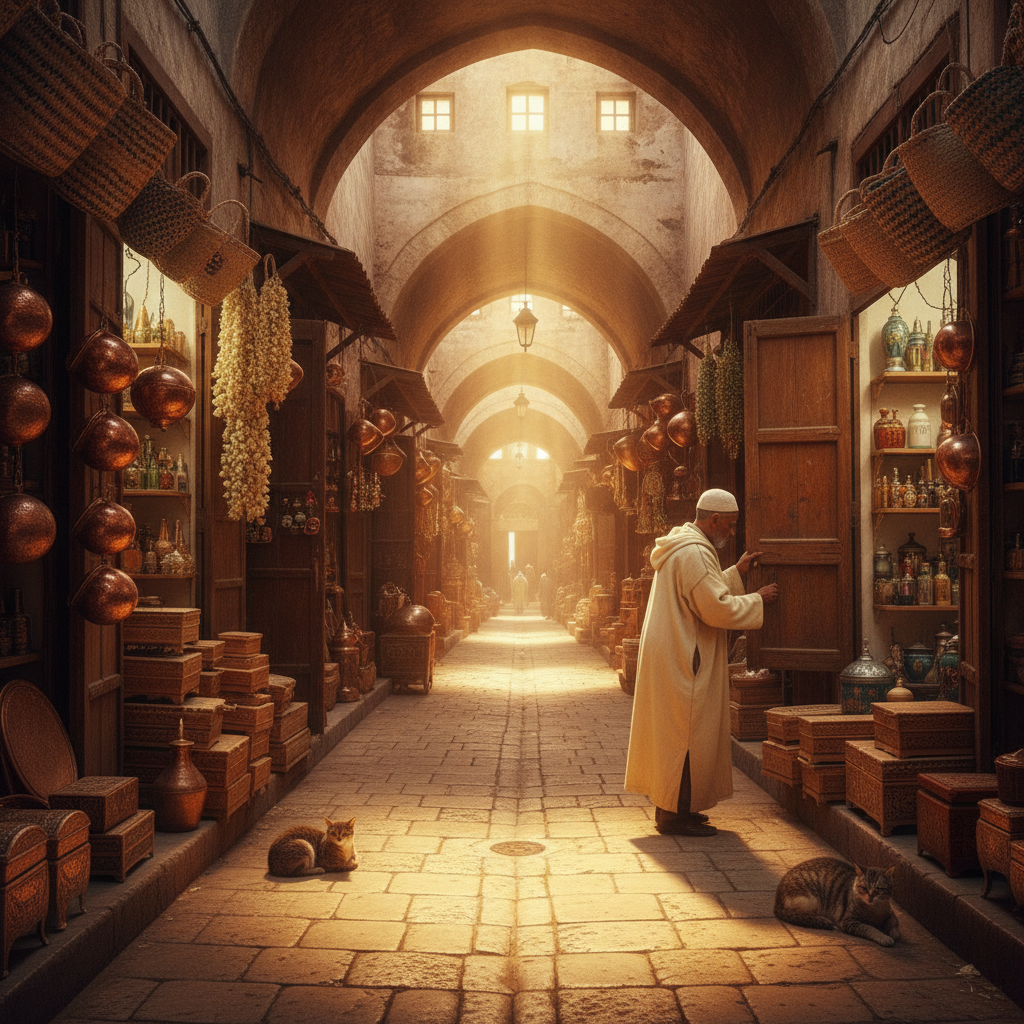
The Punic Language Survived as a Spoken Vernacular in Roman North Africa Until the 5th Century CE When Augustine of Hippo Mentions Punic Speakers in His Parish; The Vandals Sacked Rome in 455 CE from Their Base in Carthage and May Have Taken the Temple Treasures of Jerusalem; the Arab Berber Queen Dihya (Kahina) Defeated an Arab Army and Is Honored Both as a Brave Enemy in Muslim Tradition and as a National Hero in Berber Tradition
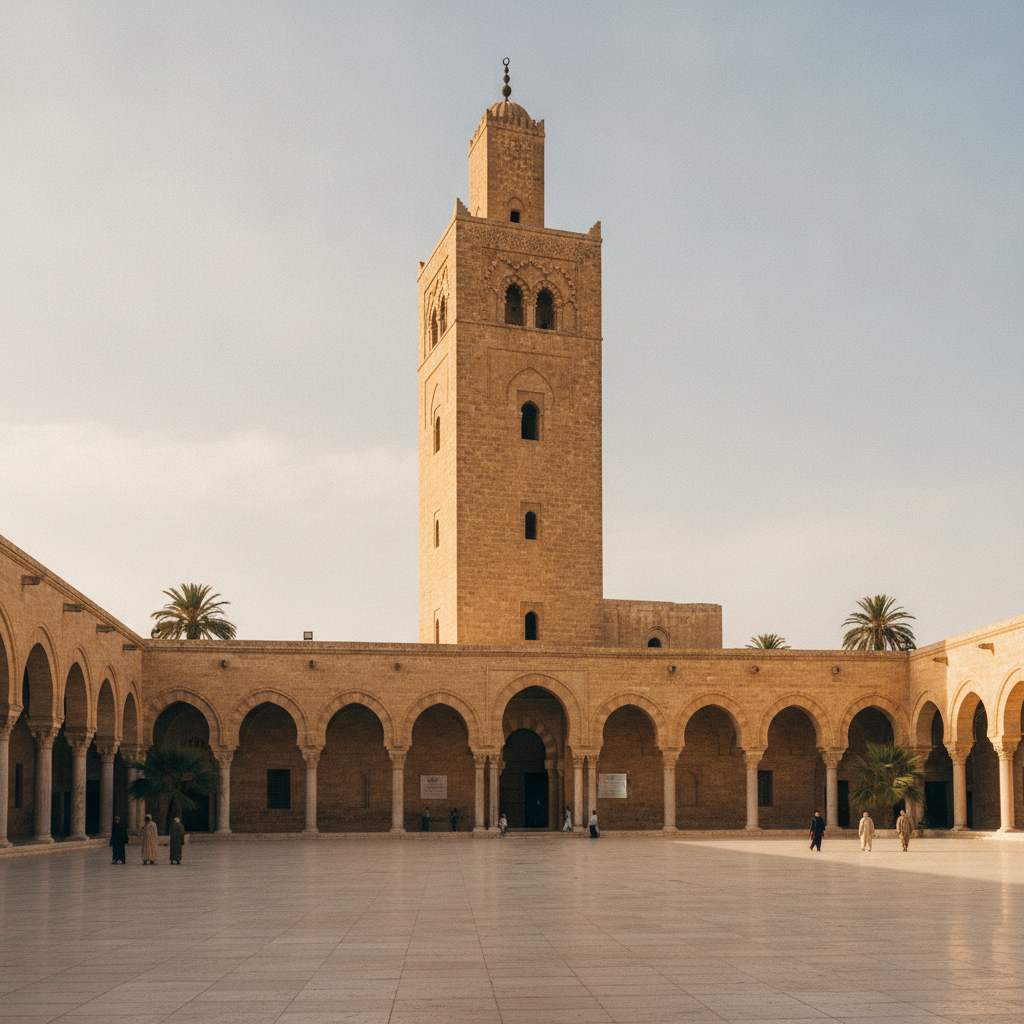
Tunis Day Trips: Kairouan the Holy City, the Great Mosque of Kairouan, the Aghlabid Basins, the Ribat of Monastir, and the Sahel Coast Circuit
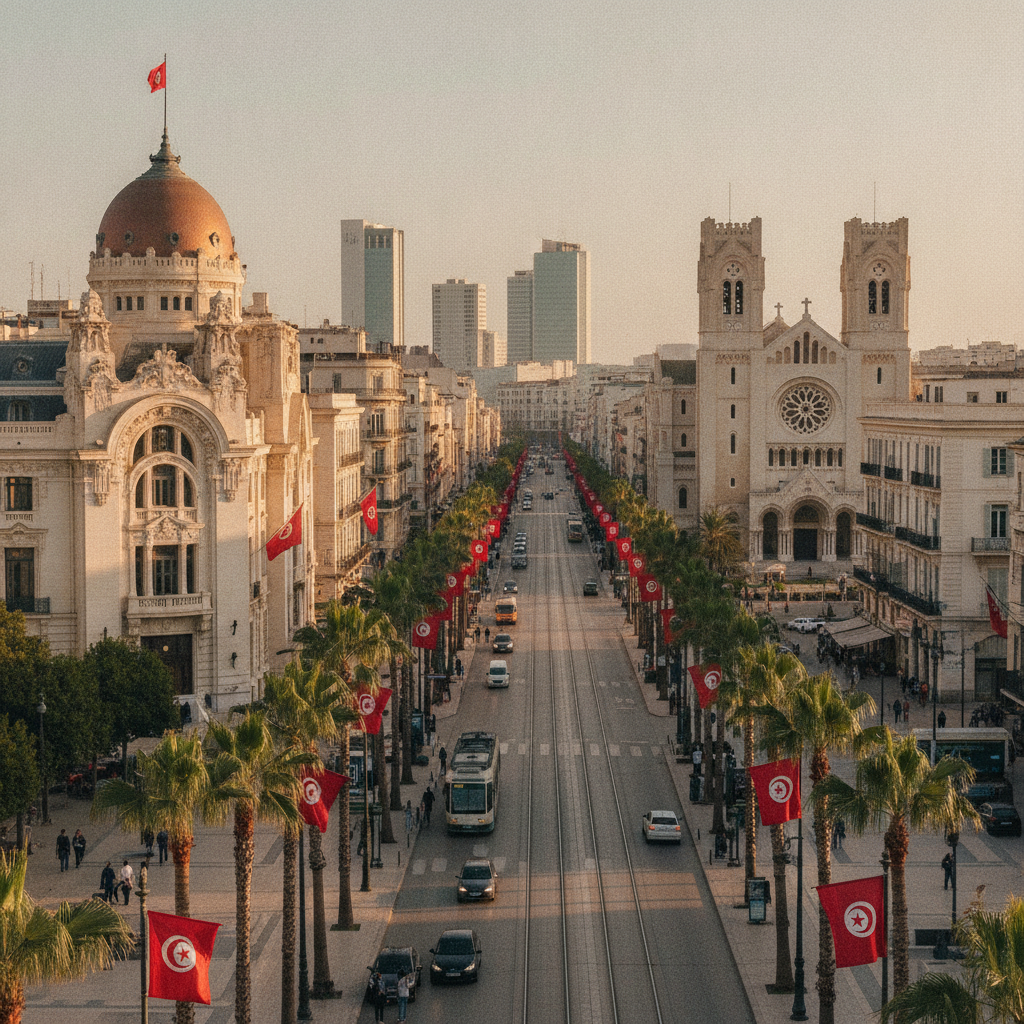
Tunis History: The Aghlabid Founders, the Hafsid Golden Age, the Ottoman Regency, the Husseinid Beys, and the French Protectorate Avenue Habib Bourguiba
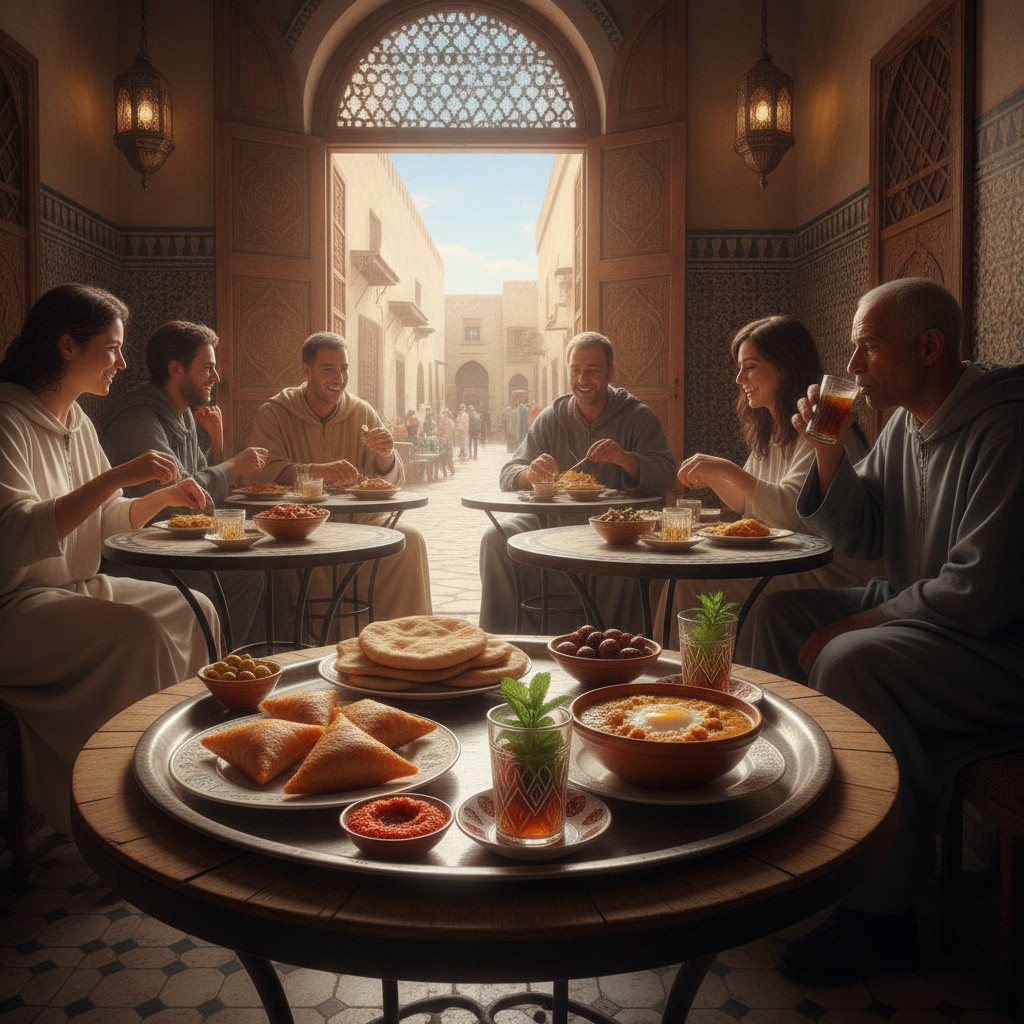
Tunis Food and Culture: The Brik, the Harissa, the Lablabi, the Malouf Andalusian Music, and the Tunis Cafe Culture