Tulum Riviera Maya Circuit Akumal Xel-Ha Xcaret and the Full Caribbean Coast Experience From the Cancun Hotel Zone to the Sian Kaan Biosphere Reserve
The Riviera Maya coast from Cancun south to the Sian Kaan biosphere reserve boundary constitutes the Caribbean coast tourism circuit of Mexico, 130 kilometres of coastline whose development progression from the full-service mass tourism of the Cancun hotel zone through the boutique mid-range of Playa del Carmen, the eco-luxury of Tulum, and the community ecotourism of the Sian Kaan reflects the full spectrum of Caribbean Mexico tourism models. The Riviera Maya tourism development began with the Cancun hotel zone in 1974, when the Mexican government computer-selected the Cancun sand bar as the optimal site for a planned tourist resort, and has spread south continuously since then, with Playa del Carmen developing from a small town to a city of 350,000 in 30 years and Tulum transforming from a fishing village to an international destination in 15 years. The cruise ship tourism that originates from the Cozumel port, the island 20 kilometres off the Playa del Carmen coast where 3 million cruise passengers per year disembark for excursions to the mainland, is the volume end of the Riviera Maya tourism spectrum, with the cruise day-trip busses carrying passengers to the Tulum ruins, the Xel-Ha eco-park, and the cenotes in numbers that set the daily visitor count records at these sites. Akumal, the small bay community 25 kilometres north of Tulum where the resident sea turtle population of the seagrass beds provides the in-water turtle encounter that the international wildlife tourism market values, has developed the most significant marine wildlife tourism product on the Riviera Maya coast outside the Cozumel dive circuit. The Xel-Ha natural park and the Xcaret cultural park south of Playa del Carmen represent the managed eco-park model of the Riviera Maya, where the natural cenote and inlet environments are organized for tourist access at all-inclusive entry prices that provide the financial model for maintaining the ecological and cultural interpretation programs.
- 1
Akumal and Sea Turtle Bay Snorkeling
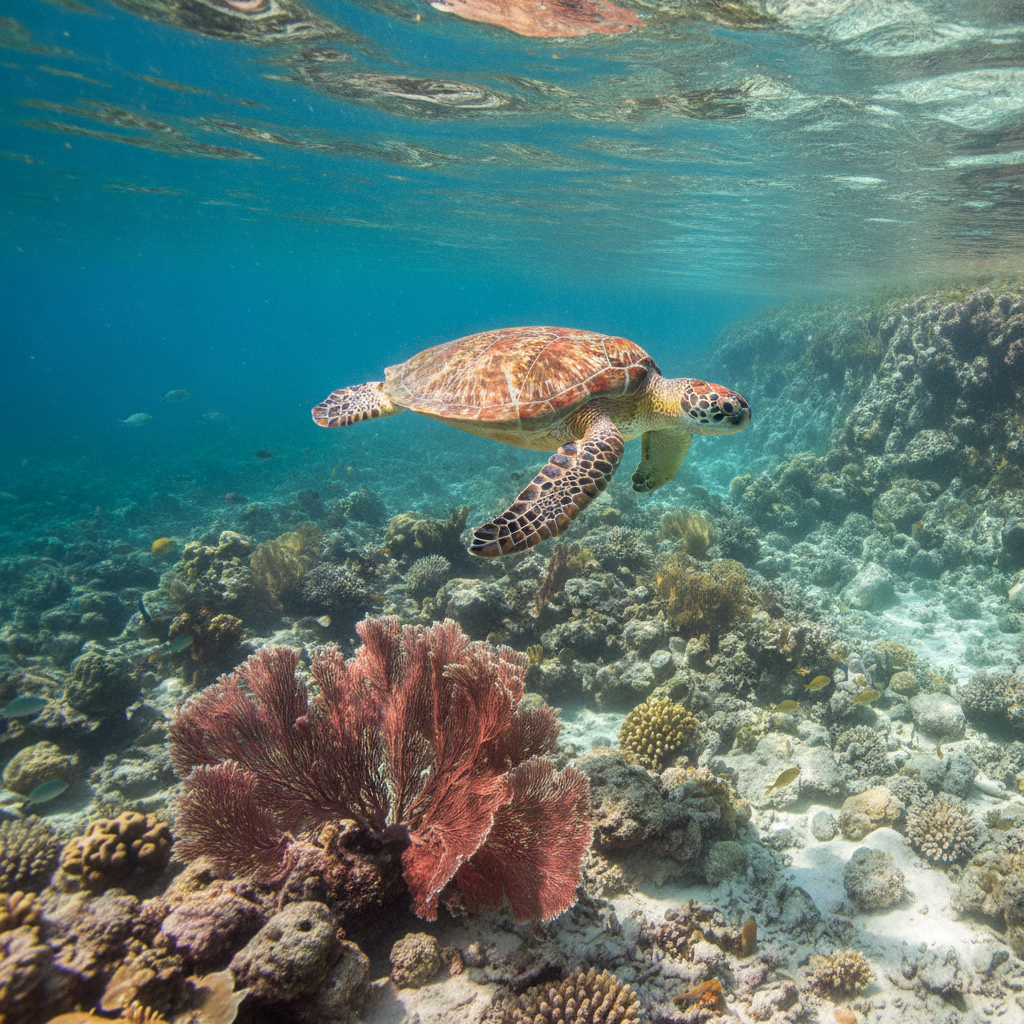
Akumal Bay, 25 kilometres north of Tulum on the Riviera Maya coast, is the most visited in-water wildlife encounter on the Mexican Caribbean, where the resident population of green sea turtles that feeds on the seagrass beds of the protected bay provides the snorkeling experience of swimming alongside wild sea turtles in shallow water that has attracted an estimated 800 to 1,200 swimmers per day during the peak season. The green turtle population of Akumal Bay has been monitored by the Centro Ecologico Akumal since the 1990s, with the individual turtle identification database documenting the multi-year residency of specific animals in the bay and the behavioral responses of the turtle population to the increasing density of snorkelers. The management crisis of the Akumal sea turtle snorkeling experience became acute in 2016 when visitor density, the application of chemical sunscreen in the turtle feeding area, and the physical disturbance of snorkelers blocking turtle access to the surface for air generated the legal action by environmental organizations that resulted in the temporary closure of the bay and the subsequent management plan imposing guide requirements, number limits, and rash guard requirements. The current Akumal Bay management protocol requires snorkelers to be accompanied by a licensed guide, limits the number of simultaneous snorkelers to below 200, prohibits chemical sunscreen within 30 minutes of entry, and requires rash guard coverage for UV protection rather than sunscreen application in the water. The turtle encounter at Akumal, when managed within the protocol, provides the closest contact with wild green turtles that the Caribbean Mexico coast offers, with the turtles habituated to snorkeler presence in a way that allows approach to within 2 to 3 metres without disturbing their feeding behavior.
- 2
Xel-Ha and Xcaret Eco-Parks
Xel-Ha, the Grupo Xcaret eco-park at the natural inlet 10 kilometres north of Tulum, and Xcaret, the original Grupo Xcaret cultural and ecological theme park at the Playa del Carmen entrance to the Riviera Maya, represent the managed eco-park model that has organized the natural assets of the Riviera Maya coast, including cenotes, inlets, reef snorkeling, and cultural performance, into all-inclusive admission products at 100 to 180 US dollars per person. The Xel-Ha inlet, a natural saltwater cove connected to the Caribbean through a reef channel and fed by freshwater springs from the aquifer, provides the snorkeling environment in the halocline zone where the fresh and salt water meet, with the tropical fish communities of the inlet accessible without the scuba equipment or the boat trip required for the offshore reef. The Xcaret cultural park, built on the site of a Maya trading port adjacent to the Playa del Carmen harbor, combines the ecological experience of underground river swimming in the cenote system with the cultural performance of the Xcaret spectacular, the nightly two-hour show presenting Mexican cultural history from the pre-Hispanic period through the Revolution in a theatrical production that the park operates as the signature evening experience. The business model of the Grupo Xcaret parks, which acquire the natural and cultural assets through government concessions and package them as all-inclusive experiences for the cruise ship and resort tourist market, has generated the revenue to maintain the ecological management and cultural programming that the parks operate, while also creating the criticism that the commercialization of natural and cultural heritage in a private concession format excludes the Mexican resident population who cannot afford the admission prices. The cenote swimming opportunities within the Xcaret park, including the underground river that flows from the cenote interior to the Caribbean, represent the most accessible cenote experience for the visitor on the organized Riviera Maya resort package.
- 3
Playa del Carmen and the Quinta Avenida Social Scene
Playa del Carmen, the city of 350,000 residents 68 kilometres north of Tulum that developed from a ferry terminal village for the Cozumel boat connection to the second most visited destination on the Riviera Maya after Cancun, offers the urban social infrastructure that Tulum lacks: a walkable pedestrian shopping and dining street, a concentrated beach club strip, a year-round population of expat residents and seasonal visitors, and the ferry connection to Cozumel that provides the premier Caribbean dive destination within 20 minutes of the shore. The Quinta Avenida of Playa del Carmen, the pedestrian shopping street that runs parallel to the beach through the centro area, is the most socially animated street on the Riviera Maya, with the international restaurant, bar, shop, and performance venue density that serves the tourist market with the social energy of a European resort town's main promenade. The beach club circuit of Playa del Carmen, concentrated on the Mamita's Beach and the hotel zone beach sections north of the 5th Avenue area, provides the Caribbean beach experience in the day club format with lower minimum spends than the comparable Tulum venues, making the Playa beach club experience more accessible to the mid-range international tourist market. The Playa del Carmen ferry to Cozumel, running every 60 to 90 minutes throughout the day at a cost of 200 to 250 pesos round trip, connects to the island where the Palancar Reef and the El Garrafon marine reserve provide the premier coral reef dive and snorkel experience of the Mexican Caribbean. The Playa del Carmen alternative of the Alux restaurant and cave bar in the natural cenote cave system under the 5th Avenue area provides the cenote dining experience that positions Playa as the only destination where you can eat dinner in an underground Maya cave within walking distance of your hotel.
- 4
Cozumel Island and the Caribbean Reef Dive
Cozumel, the Mexican Caribbean island 20 kilometres east of Playa del Carmen, is the scuba diving capital of the Western hemisphere, with the drift diving on the Santa Rosa Wall, the Palancar Reef, and the Colombia Shallows providing the current-driven reef experience in water visibility of 30 to 40 metres that the Caribbean drift diving community considers the standard against which all Caribbean diving is measured. The Mesoamerican Barrier Reef in the Cozumel section is in significantly better ecological condition than the mainland reef north of Tulum, benefiting from the distance from the mainland aquifer contamination and the lower density of waterfront development that the island's protected park status has limited, making Cozumel the priority destination for the serious coral reef diver who wants to see the Caribbean reef in its relatively healthy state. The cruise ship economy of Cozumel, with the island receiving 4 to 5 cruise ships per day in peak season bringing a combined daily passenger count of 8,000 to 15,000, has transformed the town of San Miguel de Cozumel into a duty-free shopping and excursion booking center oriented primarily to the cruise passenger day visitor rather than the overnight independent traveler who is the dive tourism market. The Cozumel Marine Park, encompassing the full western reef system of the island from the El Garrafon southern point to the northern tip, is managed by the Cozumel Park Authority with the visitor fee system that funds the mooring buoy maintenance, the park ranger patrol of the reef zone, and the coral restoration program that the dive tourism depends on for the long-term viability of the reef product. The Cozumel night dive, conducted on the shallow reef sections where the nocturnal reef life including octopus, moray eels, nurse sharks, and the bioluminescent plankton provide a completely different visual experience from the daytime reef, is one of the most recommended activities in the Cozumel dive circuit for the certified diver staying more than one day on the island.
- 5
Cancun Hotel Zone History and the Planned Resort City
Cancun was created by the Mexican government in 1974 on the basis of a computer analysis that identified the Cancun sand bar on the northeastern tip of the Yucatan Peninsula as the optimal site for a planned international tourist resort, with the criteria of beach quality, weather, water temperature, and accessibility from the US market all optimizing on the 14-kilometre sand barrier that connects the mainland to the Yucatan coast in a narrow strip between the Caribbean and the Nichupte Lagoon. The development of Cancun from the original hotel infrastructure of the 1970s to the current hotel zone of 30,000 hotel rooms and 6 million annual visitors represents the most successful planned resort development in the history of global tourism, generating the Mexican Caribbean tourism industry that now accounts for the majority of Mexico's international tourism revenue. The archaeological heritage of the Cancun hotel zone, concentrated in the El Rey and Yamil Luum Maya sites within the hotel zone area, documents the late post-Classic Maya trading settlements that the Cancun development displaced and preserved as archaeological parks within the hotel zone urban fabric. The Nichupte Lagoon behind the Cancun hotel zone, the saltwater lagoon that the hotel zone road bridges cross on the causeway connecting the sand bar to the mainland, preserves the mangrove and seagrass ecosystems that serve as nursery habitat for the juvenile fish populations of the reef, protected within the Nichupte Lagoon natural reserve area from the development pressure that the hotel zone has applied to every adjacent natural system. The Cancun airport, the primary international gateway of the Mexican Caribbean, handles over 25 million passengers annually and is the single most important piece of tourism infrastructure in Mexico, without which the Riviera Maya tourism economy that extends from Cancun to the Sian Kaan biosphere would not exist at its current scale.
- 6
Riviera Maya Practical Multi-Destination Circuit
The practical multi-destination circuit of the Riviera Maya for the visitor spending one to two weeks on the Caribbean Mexico coast is organized around the Cancun arrival, with the hotel zone or the Playa del Carmen base providing the first nights before the southward movement to Tulum for the ruins, cenotes, and biosphere experience, and the optional day trip to Cozumel for the reef diving. The ADO bus service connecting Cancun Airport Terminal 2 to Playa del Carmen in 45 minutes and to Tulum in 2 hours provides the backbone of the overland transport, with the ferry from Playa del Carmen to Cozumel adding the island connection. The accommodation strategy of staying in Playa del Carmen for the northern circuit including Cancun, Xel-Ha, Xcaret, and Cozumel, then relocating to Tulum town for the ruins, cenote, and biosphere experience, minimizes the packing and unpacking while maximizing the range of the two zones. The budget allocation for the two-week Riviera Maya circuit, at mid-range accommodation of 60 to 120 US dollars per night, bus transport, cenote admissions, the Cozumel day trip, one Xel-Ha eco-park day, and the restaurant circuit, totals approximately 2,000 to 3,000 US dollars for two people excluding the international airfare. The sustainability dimension of the Riviera Maya circuit is most meaningfully addressed by choosing the Sian Kaan community ecotourism tour over the private boat options, selecting accommodation with documented sewage treatment, using reef-safe sunscreen, and directing at least one restaurant meal per day to the Tulum town or Playa del Carmen local market rather than the tourist circuit, practices that represent the minimal behavioral adjustment that the ecological and social crisis of the Riviera Maya makes relevant for the conscientious visitor.
Walk this route with audio
Stories play automatically as you reach each stop — no tapping needed.
More in Tulum
Tulum Practical Guide Getting There Transport Budget Safety and How to Visit the Riviera Maya Without Paying New York Prices for Mexican Beach Sand
Tulum Real Estate Speculation Narco Investment Organized Crime and the Political Economy of How the Most Beautiful Beach in Mexico Was Sold to Money Launderers Hedge Funds and Instagram Influencers
Tulum Maya Heritage Valladolid Chichen Itza Ek Balam and the Post-Classic Coastal Trade Network That Connected the Caribbean to the Heart of Mesoamerica
Tulum Maya Ruins on the Caribbean Cliff Gran Cenote Sian Kaan Biosphere and the Beach Town That Became the Worlds Most Instagrammed Destination and Its Own Ecological Crisis
Tulum Sea Turtles Coral Reef Manatees Jaguars and the Caribbean Marine Ecosystem That Surrounds the Worlds Most Photographed Beach Town