Tucson: Catalina Park Hiking, Tubac Arts Colony and Anza Expedition, Food Culture, Mexican-American Heritage, Film/Literature, and the Water Future
Tucson: Catalina State Park (5,493 acres foot of Santa Catalinas, Romero Pools 10.4km granite pools October-June, Fifty Year Trail 56km 6,000m elevation change desert to summit, bighorn sheep reintroduced 2013 after 1990s die-off, Finger Rock Trail 7.2km 700m closest challenging hike to central Tucson), Tubac (70km south 1752 Presidio San Ignacio de Tubac first Arizona European settlement 23 years before Tucson, Juan Bautista de Anza born 1736 died 1788 led 240 colonists 1775-1776 Tubac to San Francisco 1,800km founded Mission Dolores, Anza National Historic Trail 1,200km NPS Arizona to California, Tumacacori 12km south day trip Camino Real corridor), food (UNESCO Gastronomy 2015, Native Seeds SEARCH 1983 Gary Nabhan 2,000+ heirloom varieties most important indigenous seed bank North America, Tohono O'odham tepary bean 4,000+ years cultivation, Elvira 1927 oldest continuous Tucson restaurant, Hamilton Distillers mesquite smoked Whiskey del Bac, Rillito Sunday Market 200+ vendors largest), Mexican-American (Gadsden Purchase December 30 1853 USD 10M southern AZ, All Souls Procession November since 1990 80,000-100,000 participants 3km Barrio Viejo to communal fire most celebrated Dia de los Muertos US, Tucson Meet Yourself 1974 60+ ethnic communities longest-running multicultural festival Arizona, Pascua Yaqui Tribe 4,000 members fled Sonora religious persecution 1880s oldest refugee community SW), film/literature (Old Tucson Studios 1939 300+ productions Rio Bravo 1959 Howard Hawks John Wayne Dean Martin, fire 1995, Barbara Kingsolver born 1955 Bean Trees 1988 Poisonwood Bible 1998 Pulitzer, Edward Abbey 1927-1989 Desert Solitaire 1968 Monkey Wrench Gang 1975 died Oracle AZ buried secretly in Sonoran Desert), water future (1.1M metro 1.5-2% growth, CAP canal 540km Lake Havasu 1992 USD 4.7B largest AZ water project, 250,000-acre-foot underground water bank, Lake Mead Powell 27-28% 2022 Tier 2 cuts 2023, Tucson 120 gallons/person/day vs Phoenix 150+ Las Vegas 200+, USD 2,000 rainwater harvesting rebate, 21 consecutive days 110F+ June-July 2023 cooling centers permanent infrastructure).
- 1
Catalina State Park and Tucson's Day Hiking Scene
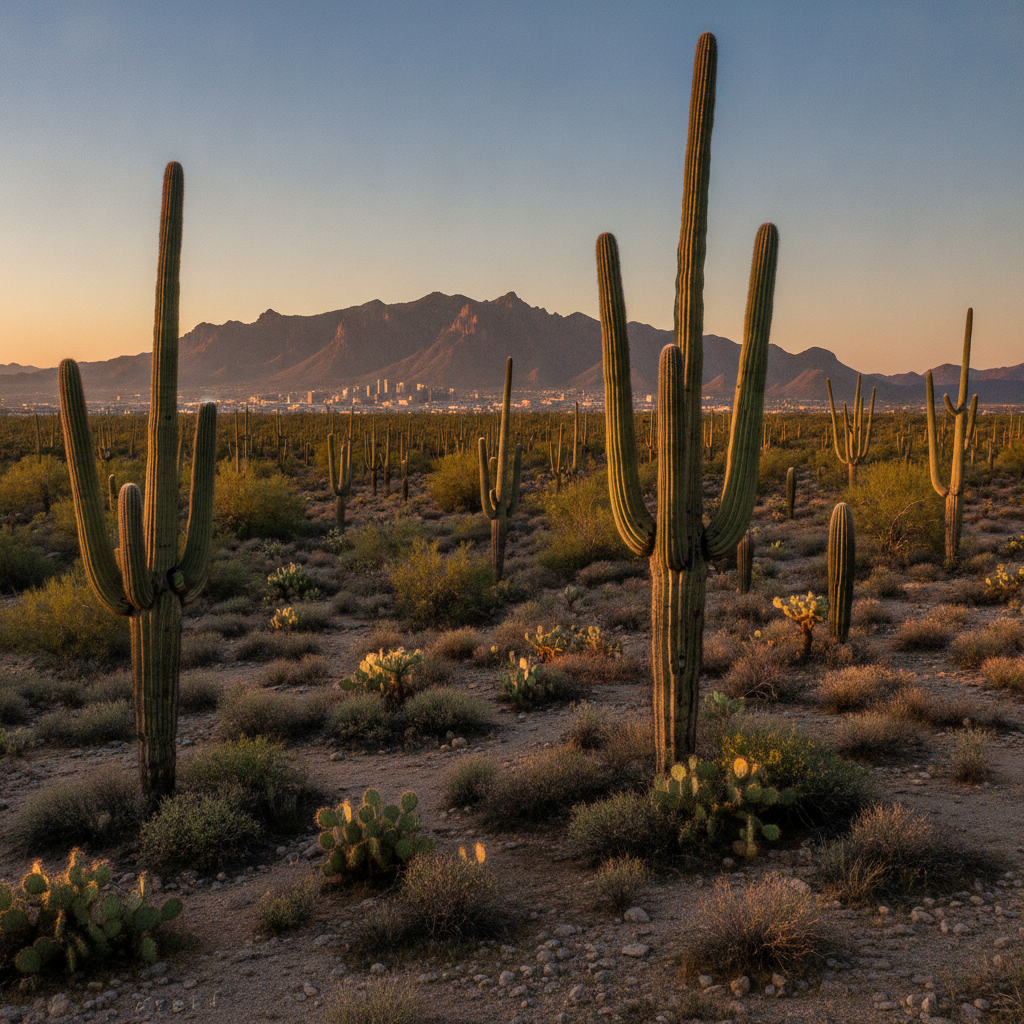
Catalina State Park (at 11570 North Oracle Road, Tucson, at the foot of the Santa Catalina Mountains, established 1983, 5,493 acres): the state park offering the most accessible mountain hiking from Tucson, with 64 km of trails from the desert floor at 900 m into the Sutherland Wash canyon system and the rocky bajadas of the Catalinas. The Romero Pools: the most popular hiking destination in the park, a 10.4-km round-trip trail (moderate, 400 m elevation gain) leading to a series of shallow granite pools in the Romero Canyon, typically filled with water from October through June and popular with families and casual hikers. The Fifty Year Trail (the 56-km trail network connecting Catalina State Park to the summit of Mount Lemmon): the most ambitious single-day or multi-day hiking route in the Tucson area, requiring 6,000 m of total elevation change over 56 km and offering the full desert-to-summit ecological transect. The Pusch Ridge Wilderness (the wilderness area within Catalina State Park): the bighorn sheep (Ovis canadensis) population reintroduced to the Santa Catalinas in 2013 (after a 1990s die-off from pneumonia spread by domestic sheep in the area) roams the Pusch Ridge -- typically visible from the park trails in early morning. The Finger Rock Trail (at the northern end of the Alvernon Way, Tucson, trailhead at 7600 North Alvernon Way, 7.2 km round-trip, 700 m elevation gain): the most challenging half-day hike with the closest trailhead to central Tucson, climbing directly up the south face of the Santa Catalinas to a dramatic rocky viewpoint above the entire Tucson Basin. The saguaro hiking experience: all Tucson-area desert trails pass through saguaro forest at lower elevations, providing the experience of hiking in a landscape of 150-year-old living monuments up to 15 m tall.
- 2
Tubac and the Artists of the Santa Cruz Valley
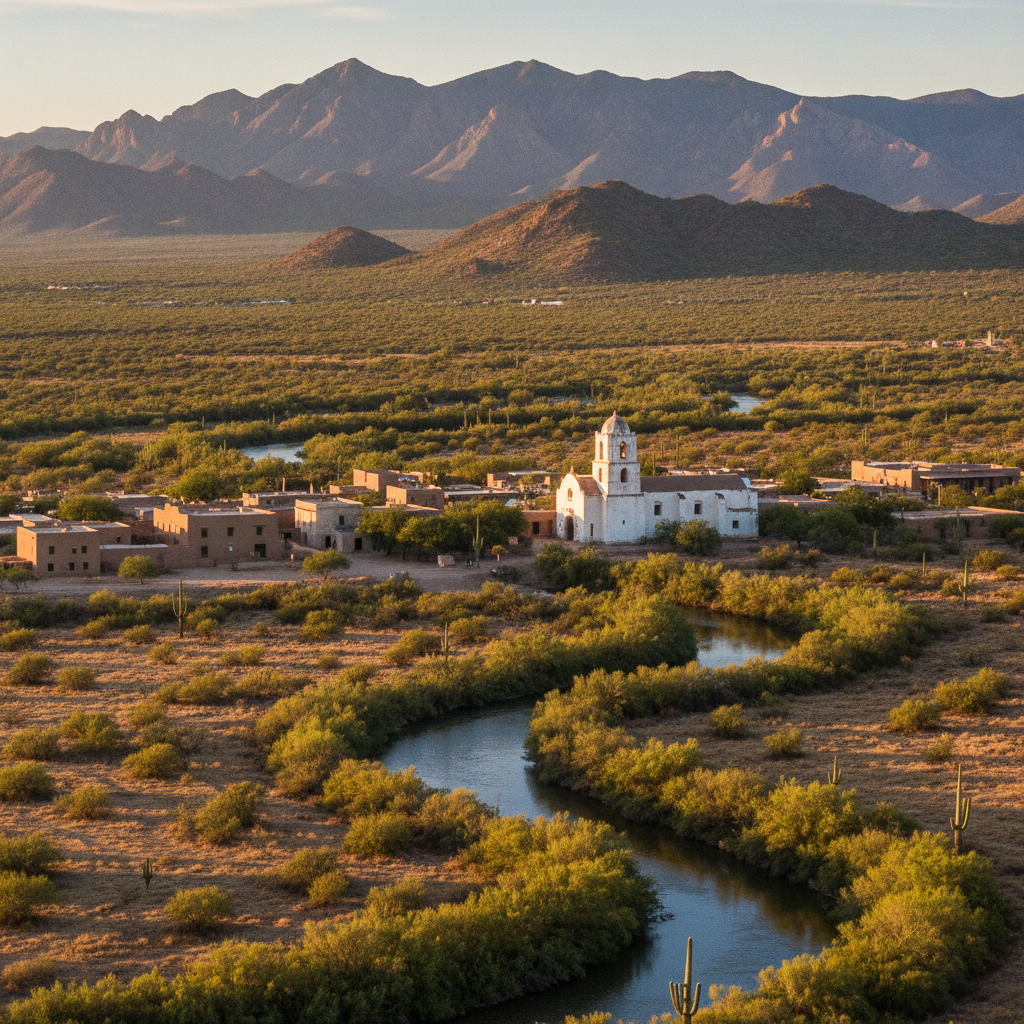
Tubac (the village at 2 Plaza Road, Tubac, AZ, 70 km south of Tucson on I-19 and the historic Camino Real corridor): the site of the Presidio San Ignacio de Tubac (established 1752 as the first European settlement in present-day Arizona -- predating Tucson by 23 years), now an arts colony of approximately 1,400 residents with 100+ galleries and studios making it the largest arts community in rural Arizona. The history of Tubac: the Spanish presidio (military fort) at Tubac was established to protect the Pima mission communities of the upper Santa Cruz Valley from the Apache, and it was from Tubac that Juan Bautista de Anza (born July 27, 1736, Fronteras, Sonora; died December 19, 1788, Arizpe, Sonora) led his famous 1775-1776 overland expedition of 240 colonists from Tubac to San Francisco, California (1,800 km through unknown desert and mountain terrain) -- the expedition that established the presidio and mission of San Francisco de Asis (Mission Dolores) and led directly to the founding of San Francisco in 1776. The Juan Bautista de Anza National Historic Trail (the 1,200-km trail marking the route of the 1775-76 expedition from Tubac to San Francisco): the National Park Service trail connecting Arizona and California, tracing the route of the first European overland crossing to California. Tubac Presidio State Historic Park (at 1 Burruel Street, Tubac): the archaeological site of the original 1752 presidio foundations, with a museum presenting the Spanish Colonial history. The Tumacacori National Historical Park (see above): 12 km south of Tubac on I-19, accessible as part of a day trip from Tucson that follows the exact corridor of El Camino Real from Tucson to Nogales.
- 3
Tucson Food Scene Beyond the Basics
Tucson as UNESCO Creative City of Gastronomy: the depth of the Tucson food culture extends well beyond the Sonoran hot dog and flour tortilla (described in Route 1) to encompass a restaurant ecosystem of remarkable variety for a city of 545,000. The Pima County Farmers Market network: in addition to the Mercado San Agustin (described above), Tucson has multiple weekly farmers markets including the Santa Cruz River Farmers Market (at 100 South Avenida del Convento, Menlo Park), the Rillito Regional Park Farmers Market (at 3500 North Oracle Road, the Sunday market with 200+ vendors, the largest in Tucson), and the Heirloom Farmers Markets brand (operating 5 markets weekly, specializing in certified naturally grown produce). The heirloom tepary bean: the Tohono O'odham tepary bean (Phaseolus acutifolius, the drought-adapted bean cultivated in the Sonoran Desert for 4,000+ years) is being revived as a heritage crop by Native Seeds/SEARCH (the nonprofit seed bank at 3584 East River Road, Tucson, established 1983 by Gary Nabhan and Mahina Drees, preserving 2,000+ heirloom seed varieties of the American Southwest and northwestern Mexico): the most important seed bank of indigenous crop varieties in North America. The Tucson restaurant scene highlights: Prep and Pastry (the most popular brunch destination), The Parish (New American with Gulf and Southern influences), and Elvira's (the Nogales, Sonora-style Mexican restaurant at 3070 North Oracle Road, established 1927 -- the oldest restaurant in continuous operation in Tucson). The local beer and spirits: Sentinel Peak Brewing Company (at 4746 East Grant Road), Ten55 Brewing Company (at 110 East Congress Street), and Crooked Tooth Brewing Co. (at 228 East 6th Street) lead a craft beer scene of 20+ independent breweries. Hamilton Distillers (at 6955 South Friebus Avenue) produces the acclaimed Whiskey del Bac Mesquite Smoked Whiskey, using local mesquite wood to smoke the malted barley before distillation.
- 4
Tucson's Mexican-American Heritage and the Barrio Viejo
Tucson as a Mexican-American city: despite being part of the United States since the Gadsden Purchase (signed December 30, 1853, for USD 10M, adding present-day southern Arizona and the southern strip of New Mexico to the United States to provide a southern railroad route to California), Tucson has maintained a Mexican-American cultural character that distinguishes it from Phoenix (which was founded by Anglo-American settlers after Arizona became a U.S. territory in 1863). The Barrio Viejo (see Route 1): the surviving fragment of the original Mexican-American urban fabric. The Dia de los Muertos (Day of the Dead) celebration in Tucson: the annual All Souls Procession (held the first Sunday of November since 1990, organized by Many Mouths One Stomach, a local arts collective): the most celebrated Dia de los Muertos event in the United States outside Mexican-American cities, with 80,000-100,000 participants walking through downtown Tucson in a procession honoring the dead, with handmade altars, decorated skulls, and offerings carried in a 3-km procession from the Barrio Viejo through downtown to a communal fire. The Tucson Meet Yourself festival (held annually in October on the Jácome Plaza, downtown Tucson, since 1974): the multicultural folk arts festival presenting the food, music, dance, and craft traditions of 60+ ethnic communities in Tucson -- the longest-running multicultural festival in Arizona and a demonstration of the extraordinary cultural diversity of the Tucson basin (Tohono O'odham, Yaqui, Apache, Mexican-American, Chinese-American, Japanese-American, African-American, and more). The Yaqui community of Tucson (in the Pascua Yaqui Tribe reservation, at 7474 South Camino de Oeste, Tucson): the federally recognized tribe of approximately 4,000 enrolled members whose ancestors fled religious persecution in Sonora, Mexico beginning in the 1880s, making the Tucson Yaqui community one of the oldest refugee communities in the American Southwest.
- 5
Tucson in Film, Literature, and the Southwest Imagination
Tucson in film and literature: the Sonoran Desert landscape and the borderlands location have attracted filmmakers and writers to southern Arizona since the earliest Hollywood era. The Old Tucson Studios (at 201 South Kinney Road, 25 km west of downtown, established 1939 as the set of the film Arizona directed by Wesley Ruggles with William Holden, used subsequently as a film set for 300+ productions): the movie set built in 1939 on the western edge of Tucson that served as a filming location for some of the most important Westerns in cinema history, including Rio Bravo (1959 Howard Hawks, with John Wayne and Dean Martin), El Dorado (1966 Howard Hawks, John Wayne), Hombre (1967 Martin Ritt, Paul Newman), and television series including Gunsmoke, Have Gun Will Travel, and Little House on the Prairie. The facility operated as a tourist attraction (Western theme park) and active film set simultaneously until it was severely damaged by fire in 1995 and partially rebuilt. The literary tradition: Barbara Kingsolver (born April 8, 1955, Annapolis, Maryland; lives in Tucson and Virginia): the author of The Bean Trees (1988, set partly in Tucson) and the Pulitzer Prize-winning The Poisonwood Bible (1998), who lived in Tucson for many years and whose work is deeply shaped by the Sonoran Desert landscape. Edward Abbey (born January 29, 1927, Home, Pennsylvania; died March 14, 1989, Oracle, AZ, near Tucson): the most celebrated nature writer of the American Southwest, author of Desert Solitaire (1968, his meditation on Arches National Monument) and The Monkey Wrench Gang (1975, the novel that inspired the environmental direct action movement), who lived much of his adult life in Tucson and was buried (illegally, at his request, in the desert) by friends who took his body to a secret location in the Sonoran Desert. The Sonoran Desert remains as he described it.
- 6
Tucson Today - Growth, Water, and the Future of a Desert City
Tucson's growth and its constraints: the Tucson metropolitan area (population approximately 1.1 million in 2024) has been growing at approximately 1.5-2% per year since 2015, significantly slower than the Phoenix metro (3-4% per year) but substantial enough to challenge the foundational resource constraints of a desert city. The Colorado River water allocation: Tucson is one of the largest cities in the United States to have made a successful transition from groundwater dependency to surface water, completing the Central Arizona Project (CAP) canal transition in the 1990s -- a 540-km concrete-lined canal from Lake Havasu on the Colorado River to Tucson (completed 1992 at USD 4.7B, the largest single water project in Arizona history). The Tucson Water Groundwater Replenishment Project: Tucson recharges its CAP water allotment into underground aquifers during wet years and withdraws it during drought, creating a 250,000-acre-foot underground water bank that provides supply security in drought years. The water future: the Colorado River system is in crisis (Lake Mead and Lake Powell were at 27-28% capacity in 2022, the lowest since they were filled), and the Bureau of Reclamation imposed Tier 2 water cuts on Arizona in 2023, reducing Tucson's CAP allocation. Tucson responded with aggressive water conservation (Tucson uses approximately 120 gallons per person per day, significantly less than Phoenix at 150+ and Las Vegas at 200+ gallons), and the Tucson Water rainwater harvesting rebate program (offering USD 2,000 rebates for residential rainwater harvesting systems) has placed Tucson at the forefront of desert water innovation. The heat: Tucson recorded 21 consecutive days above 110F (43.3C) in June-July 2023, the most extreme heat event in Tucson recorded history, and the city has established cooling centers and an extreme heat response plan as a permanent municipal infrastructure.
Walk this route with audio
Stories play automatically as you reach each stop — no tapping needed.
More in tucson

Tucson: Titan Missile Museum, Dark Skies, Hotel Congress, Neighborhoods, Kartchner Caverns, and Practical Info
Tucson: Mount Lemmon, Tombstone, Colossal Cave, the Border at Nogales, Bisbee, and the Desert Monsoon
Tucson: UNESCO Food Heritage, Cold War Missiles and Sky Island Summits
Tucson: Saguaro National Park, University of Arizona, Tohono O'odham Nation, San Xavier Mission, Biosphere 2, and Sonoran Food
Tucson: Giant Cactus Wilderness, Desert Science and Sonoran Heritage