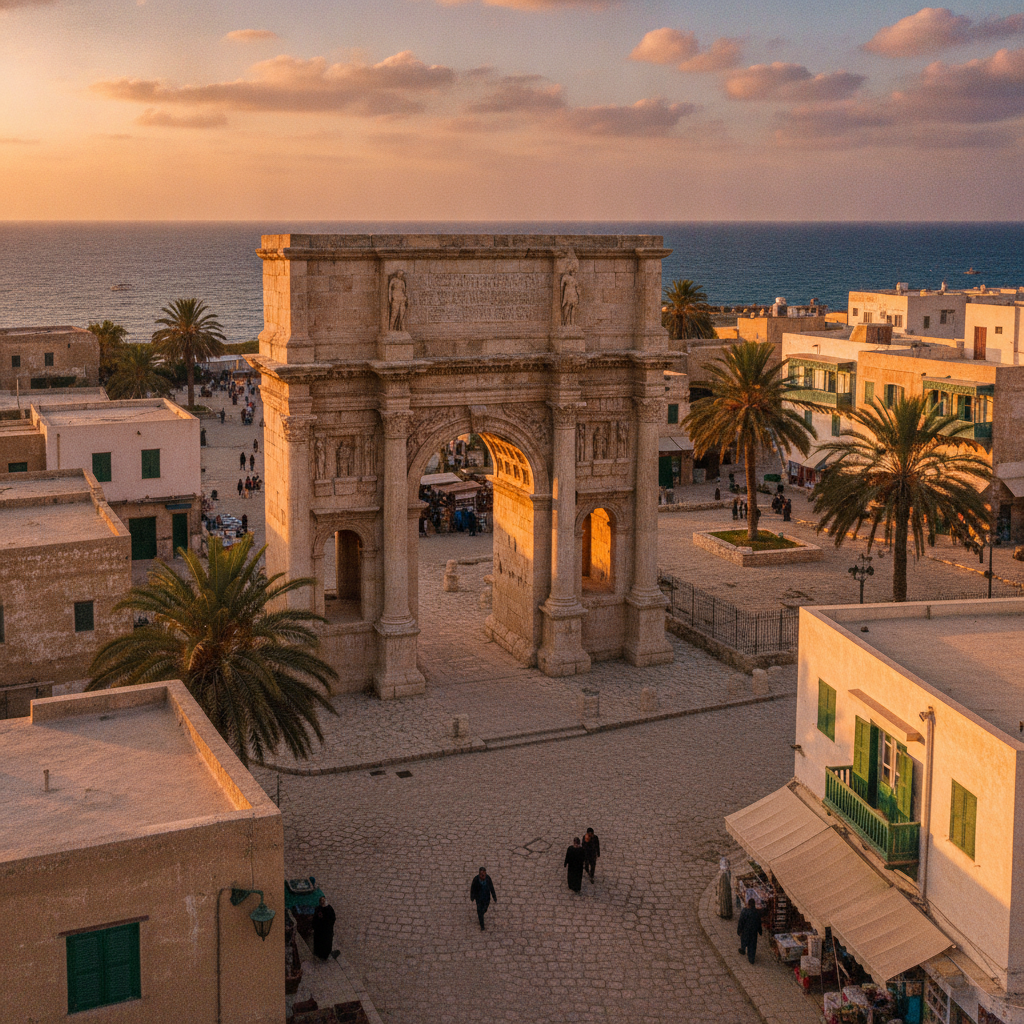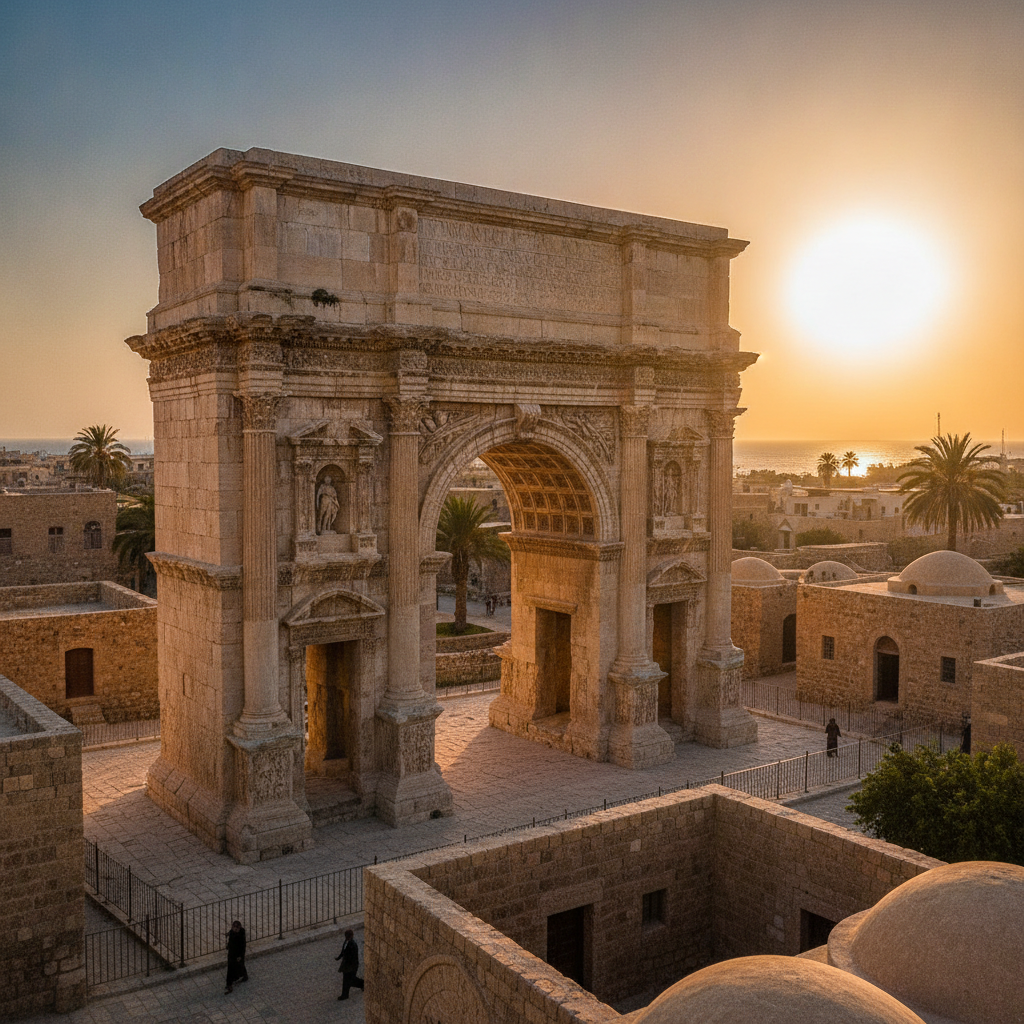
Tripoli Complete Reference - Jamahiriya, Lockerbie, Roman Mosaics, and the Libyan Sahara
The complete Tripoli reference: how Gaddafi Green Book dismantled all Libyan institutions creating the post-2011 vacuum; the Lockerbie bombing (270 killed 1988) and Libya rehabilitation 2003-2011; the Zliten gladiatorial mosaic and the extraordinary Tripoli museum Roman mosaic collection; Tripoli vs Tunis vs Cairo; the Ubari Lakes and the Libyan Sahara extreme landscapes; and the essential facts for planning a future visit to Libya most extraordinary heritage destination.
- 1
Tripoli vs Tunis vs Cairo - Three North African Capitals Compared
Tripoli (population approximately 1.1-1.3 million) vs Tunis (approximately 2.5 million metro) vs Cairo (approximately 21-22 million metro): the three great North African capitals compared across history, culture, and traveler experience. The historical depth (Tripoli: 2,500 years of Phoenician-Roman-Arab-Ottoman-Italian urban continuity: the finest concentration of Roman sites in Africa: currently inaccessible due to civil conflict: Tunis: the most accessible North African capital: lightest French colonial impact: the Medina of Tunis (UNESCO) most accessible of North African medinas: the Bardo Museum with the finest Roman mosaic collection in the world outside Italy: Cairo: the largest city in Africa and the Arab world: 5,000 years of continuous civilization: the Pyramids of Giza and the Egyptian Museum: the most complex and layered urban landscape in North Africa). The Roman heritage (Tripoli wins decisively: Libya Leptis Magna, Sabratha, and Cyrene are far superior to anything in Tunisia or Egypt in scale and preservation). The Islamic heritage (Cairo wins: the medieval Islamic city of Cairo with the al-Azhar mosque and university (970 CE), the Khan el-Khalili bazaar, and the Mamluk and Fatimid architecture is the finest Islamic urban heritage in Africa). The modern experience (Tunis wins for independent travelers: easiest visa, best tourism infrastructure, most accessible combination of Roman (Carthage, Dougga), Islamic (Tunis medina, Kairouan), and beach (Hammamet, Djerba) experiences in North Africa).
- 2
The Libyan Arab Jamahiriya - How Gaddafi Built a State Without Institutions
The Libyan Arab Jamahiriya (1977-2011): how Gaddafi dismantled all Libyan state institutions and created a system that had no army, no police, no civil service, and no political parties - producing the post-2011 institutional vacuum that made reconstruction impossible. The theory (Gaddafi Green Book (1975-1979) argued that all state institutions (parliaments, armies, political parties, bureaucracies) were forms of oppression that prevented the direct rule of the masses through People Basic Congresses: Gaddafi abolished the Libyan army (replacing it with the People Militia): abolished the police (replacing them with Revolutionary Committees): abolished political parties: abolished the civil service as a permanent institution: the Revolutionary Committees (the Revolutionary Committees were Gaddafi primary enforcement mechanism: young ideological loyalists organized outside any legal structure to enforce the revolution: they had arbitrary arrest powers and could act outside any law). The result (when Gaddafi was overthrown in 2011 there was no Libyan army to become the national army: no police force to become the national police: no bureaucracy to run the state: the power vacuum was filled by the armed militias that had won the revolution: these militias had no incentive to disarm: the result was the complete fragmentation of the Libyan state into competing armed groups that has persisted to the present: the Jamahiriya was a system designed to be ungovernable by anyone other than Gaddafi: when he was removed, there was nothing left).
- 3
The Roman Mosaics of Tripoli Museum - The Zliten Gladiatorial Mosaic and the Villa Silene
The Roman mosaic collection of the Tripoli National Museum (Jamahiriya Museum): one of the three or four finest collections of Roman mosaic art in the world. The Zliten gladiatorial mosaic (the Roman villa at Zliten, east of Tripoli: the famous 15-meter narrative mosaic depicting gladiatorial combats, animal hunts (venationes), and criminals condemned to the beasts (damnatio ad bestias): one of the primary documentary sources for Roman gladiatorial games and arena spectacle: the mosaic shows gladiators fighting, arena hunters (venatores) combating lions and leopards, and condemned criminals (noxii) being thrown to wild animals: now in the Tripoli National Museum). The Villa Silene mosaics (the Villa Silene near Leptis Magna: extraordinary late Roman mosaic floors with personifications of the Four Seasons, Dionysian subjects, and hunting scenes: some of the finest figurative Roman mosaics surviving in situ). The Hunting Baths mosaics of Leptis (the Terme della Caccia at Leptis Magna: the painted vault mosaics with hunters and exotic African animals: the marine mosaics with fish and sea creatures: among the finest painted bath mosaics in the Roman world). The significance (the Tripoli museum Roman mosaic collection rivals the Bardo National Museum in Tunis, the Naples National Archaeological Museum, and the Vatican Museums for completeness and quality: it is the outstanding collection of specifically African Roman provincial art in the world).
- 4
The Lockerbie Bombing and Libya International Relations - From Pariah to Rehabilitation
The Lockerbie bombing (Pan Am Flight 103, December 21, 1988: 270 killed (259 on the aircraft, 11 on the ground in Lockerbie, Scotland): the largest terrorist attack in British history and the second-largest in American history at the time: Libya was found responsible after a long international investigation: Gaddafi agreed to hand over the two suspects in 1999 (the Lockerbie trial): Abdelbaset al-Megrahi was convicted in 2001 and sentenced to life imprisonment: his co-accused was acquitted: al-Megrahi was released by the Scottish government on compassionate grounds in 2009 due to prostate cancer (he died in 2012): Libya paid approximately USD 2.7 billion in compensation to the families of the victims in 2003: the rehabilitation (in exchange for the compensation payments and the surrender of chemical weapons (the Weapons of Mass Destruction agreement of December 2003 in which Gaddafi agreed to dismantle Libya WMD programs in exchange for international rehabilitation): Libya was removed from the US State Sponsors of Terrorism list in 2006: diplomatic relations were normalized: Tony Blair visited Gaddafi in his tent in 2004: Condoleezza Rice visited Tripoli in 2008: major Western oil companies (BP, Shell, ExxonMobil, Total) signed new oil contracts with Libya: the rehabilitation lasted until the 2011 revolution: the subsequent civil war has effectively re-isolated Libya from international investment and diplomatic normalization).
- 5
The Libyan Sahara - The Rebiana Sand Sea, the Ubari Lakes, and Extreme Desert Landscapes
The Libyan Sahara: the extreme desert landscapes of the world most hyperarid country. The Eastern Sahara (the Libyan Desert - the southeastern Libyan territory adjoining Egypt and Sudan: the most hyperarid part of the entire Sahara: annual rainfall less than 1mm in some areas: the Rebiana Sand Sea (Ramlat Rabyanah) - one of the largest ergs (sand seas) in Africa: the Kufra oasis (the southernmost major Libyan oasis, 1,100 km south of Benghazi: historically an important trans-Saharan trade and Senussi order center: extremely remote): the Calansho Sand Sea). The Fezzan (southwestern Libya: the region of oases, ancient Garamantian civilization, and extraordinary Saharan landscapes: the Ubari Sand Sea with the Ubari Lakes (the Gaberoun, Um el-Ma, Mandara, and Dawada lakes - a series of saline lakes in the Libyan Sand Sea: brilliant turquoise-green water surrounded by orange sand dunes: visually extraordinary: the lakes are fed by fossil groundwater: the Dawada Lake has a unique population of artemia (brine shrimp) that the local Dawada people (Tubu) have traditionally harvested as a food source). The Akakus (the Tadrart Acacus sandstone mountains: dramatic weathered sandstone formations (arches, mushroom rocks, and canyon systems) combined with the prehistoric rock art: the landscape itself is extraordinary independent of the paintings). The Murzuq Sand Sea (the Murzuq ergs in the central Fezzan: one of the largest continuous sand seas in the Sahara).
- 6
Tripoli Final Complete Reference - Essential Facts and the Vision for Libya Future
Tripoli final complete reference: the essential information and the vision of what Libya and its capital could offer the world when political stability returns. The essential facts (Libya: official name: State of Libya (Dawlat Libya): population: approximately 7-7.5 million (2024): area: 1,759,541 square km: 4th largest country in Africa: Arabic official: Sunni Islam 97%+: currency: Libyan dinar (LYD): oil reserves: approximately 48 billion barrels (largest in Africa): Tripoli (Tarabulus) is the capital and largest city: population approximately 1.1-1.3 million: Mitiga International Airport (MJI)). The cultural inheritance (Tripoli is the capital of a country with: 5 UNESCO World Heritage Sites (Leptis Magna, Sabratha, Cyrene, Tadrart Acacus, Ghadames Old City - all on the List of World Heritage in Danger): the finest Roman cities in Africa: the most important unvisited ancient Greek city in Africa (Cyrene): the most extraordinary prehistoric rock art in the eastern Sahara (Acacus, Wadi Mathendous): the most remarkable ancient underground water civilization in Africa (the Garamantes): the most intact pre-Saharan oasis architecture in the eastern Maghreb (Ghadames): outstanding Islamic architecture (Tripoli medina, Gurgi Mosque): all in a country that currently receives almost zero international tourism). The future (Libya potential as a heritage tourism destination is unmatched in the Mediterranean world: the resolution of the political conflict, security normalization, and infrastructure investment are the necessary conditions: the Roman sites alone at Leptis Magna and Sabratha would make Libya an extraordinary destination: the complete package of Roman, Greek, prehistoric, Islamic, Saharan, and coastal heritage makes Libya one of the most significant untapped cultural tourism opportunities in the world).
Walk this route with audio
Stories play automatically as you reach each stop — no tapping needed.
More in Tripoli
Tripoli: Cyrene, the Garamantes, Ghadames, and the Italian Colonization of Libya
Tripoli Day Trips: Nafusa Mountains, Garian Underground Houses, Acacus Rock Art, and Practical Libya Guide
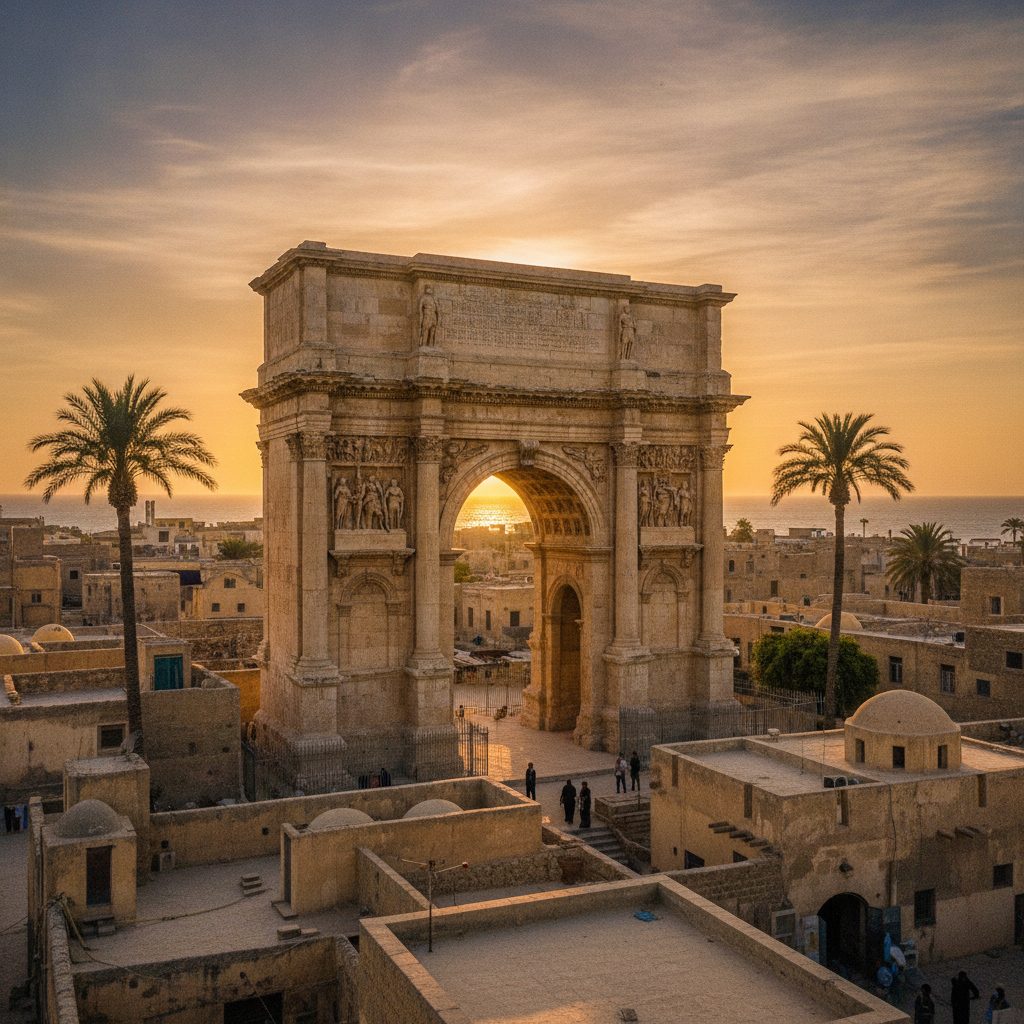
Tripoli: Omar Mukhtar, King Idris, the Oil Discovery, and Modern Libya
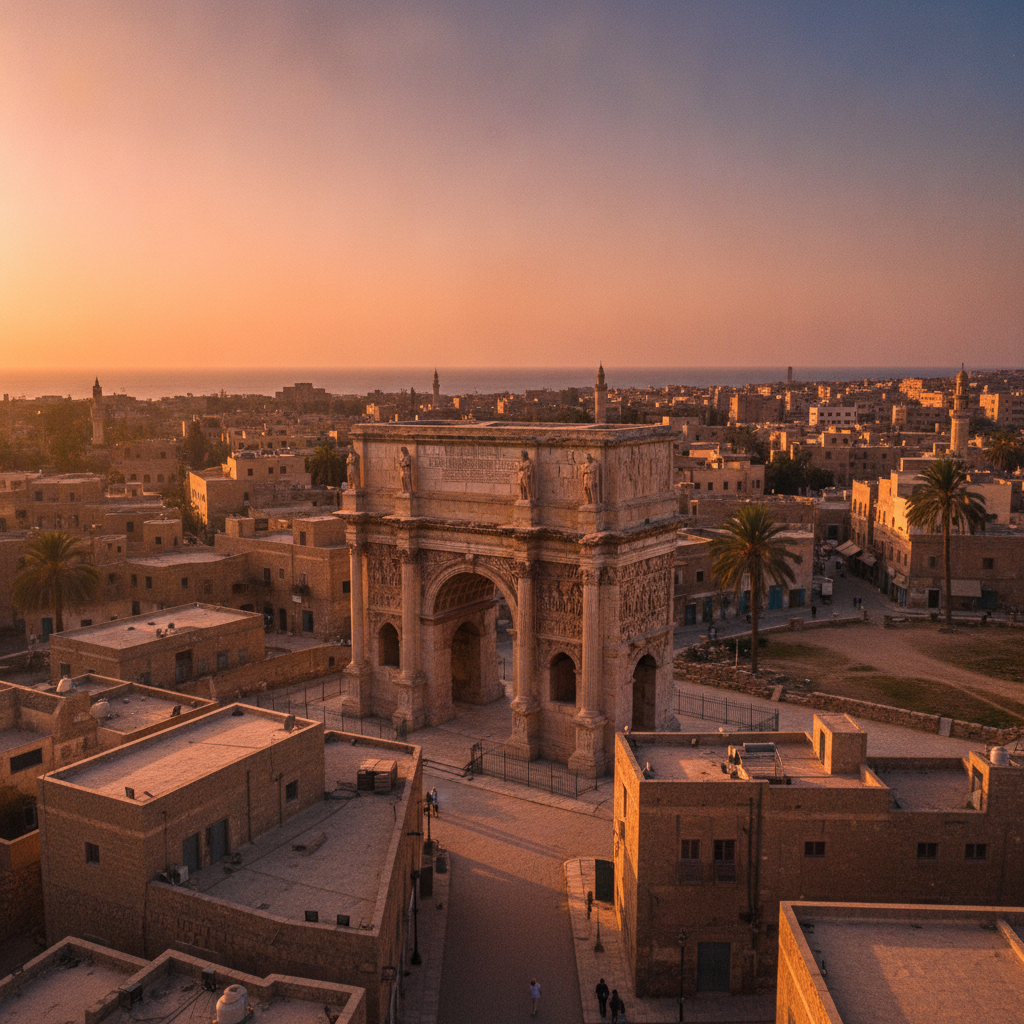
Tripoli: Cyrene, Benghazi, the Garamantes, Ghadames, and the Complete Libyan Heritage