Odaiba & Tokyo Bay: Rainbow Bridge, Futuristic Architecture, Science Museums & the Best View of the City
Odaiba is a man-made island in Tokyo Bay, created by reclaiming land from the bay in the 1850s for coastal defense fortresses (the 'Daiba', or 'gun batteries') and expanded massively in the 1980s–1990s as a futuristic urban development zone. The result—connected to central Tokyo by the Rainbow Bridge and the Yurikamome automated rail line—is a landscape unlike anywhere else in Japan: broad waterfront boulevards, futuristic convention centers and shopping malls, science museums, a massive Gundam statue, and the finest panoramic view of Tokyo's skyline available from any publicly accessible location.
- 1
Rainbow Bridge — Walking Across Tokyo Bay
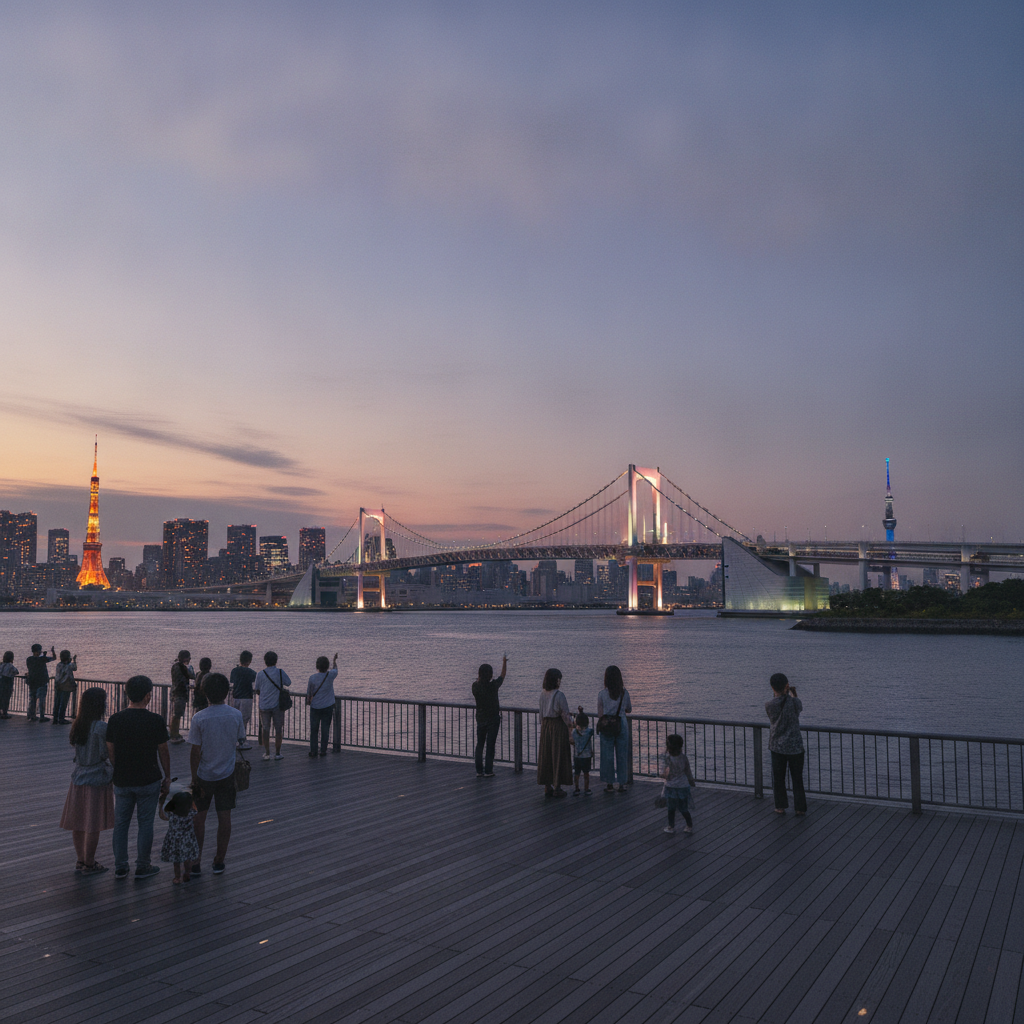
Rainbow Bridge (レインボーブリッジ), completed in 1993, is a 918-meter suspension bridge connecting Shibaura (mainland Tokyo) to Odaiba across Tokyo Bay: it carries two levels of traffic—the upper level carries the Yurikamome automated rail line and the Shuto Expressway; the lower level carries two lanes of road traffic. A pedestrian walkway on both sides of the lower level allows visitors to walk across the bridge (approximately 1.7 km, 30–45 minutes in each direction; open from 9 AM, last entry varies seasonally)—the views from the walkway, looking west to the central Tokyo skyline and east to Tokyo Bay and the container port, are spectacular. The bridge is illuminated at night (white, blue or green LEDs, changed occasionally for special occasions) and is one of the most photographed structures in Tokyo. The south anchorage (accessible from Odaiba) contains a free observation room with some of the best views of the bridge from below. The name 'Rainbow Bridge' refers to the LED illumination scheme, not to a naturally occurring phenomenon.
- 2
Odaiba Seaside Park — The Beach with a City View
Odaiba Seaside Park (お台場海浜公園) is a 28-hectare waterfront park on the northeast side of Odaiba island, containing a sandy beach, a waterfront promenade, and the best panoramic view of Tokyo from outside central Tokyo: looking northwest across the bay, the view encompasses the Rainbow Bridge in the foreground, the Shiodome skyscraper cluster and Tokyo Tower in the middle distance, and (on clear days) the entirety of the western Tokyo skyline including the Shinjuku skyscrapers. The park is free and open at all times. Sunset here—the sun sets directly behind the central Tokyo skyline from early spring through autumn—is one of the most dramatic visual experiences in the city. The park contains two surviving Daiba gun batteries (Daiba No. 3, the largest of the surviving original fortifications, is accessible on weekends), a small shrine, and rental bicycles. In summer, the beach is used for beach volleyball (there are permanent courts) and occasionally for fireworks viewing (the Sumida River fireworks are visible across the bay).
- 3
teamLab Borderless / Miraikan — Digital Art and the Science of the Future
Two of Odaiba's most significant institutions stand side by side on its southeastern edge: teamLab Borderless (MORI Building DIGITAL ART MUSEUM) is the world's largest permanent digital art installation, with 60 works spread across 10,000 square meters of dark immersive rooms—visitors walk through walls of water, forests of light, seas of flowers and cascades of numbers that respond to their presence, all created by the art collective teamLab (the museum attracts over 2 million visitors per year, making it the most visited single-artist museum in the world; note: teamLab Borderless moved to Azabudai Hills in 2024—confirm current location before visiting). The National Museum of Emerging Science and Innovation (Miraikan), run by JAXA (the Japan Aerospace Exploration Agency), is Japan's most interactive science museum, displaying Honda's ASIMO robot, a full-scale International Space Station module, and the Geo-Cosmos—a 6.5-meter spherical display showing real-time Earth data. Guided tours in English available at Miraikan.
- 4
DiverCity Tokyo & the Unicorn Gundam — Where Anime Meets Urban Reality
DiverCity Tokyo Plaza is a large shopping and entertainment complex on Odaiba's central area, notable for the Unicorn Gundam statue installed permanently on its terrace: a 19.7-meter statue of the RX-0 Unicorn Gundam mobile suit from the 'Mobile Suit Gundam Unicorn' anime series (2010–2014), placed here in 2017 following the enormous success of the temporary RX-78-2 Gundam that preceded it. The statue performs LED light and sound shows daily (4 PM, 7 PM, and 8 PM; confirm schedule on arrival) during which it 'transforms' from its white Unicorn mode to its red-and-black Destroy mode—an event that draws hundreds of spectators. The statue is 1/1 scale (a full-size representation of the fictional mobile suit), making it one of the most immediately visceral experiences available in Japanese pop culture tourism. The adjacent Gundam Base Tokyo (in the same building) is the largest Gundam model kit shop and exhibition space in Japan.
- 5
Toyosu Market — The World's Largest Fish Market
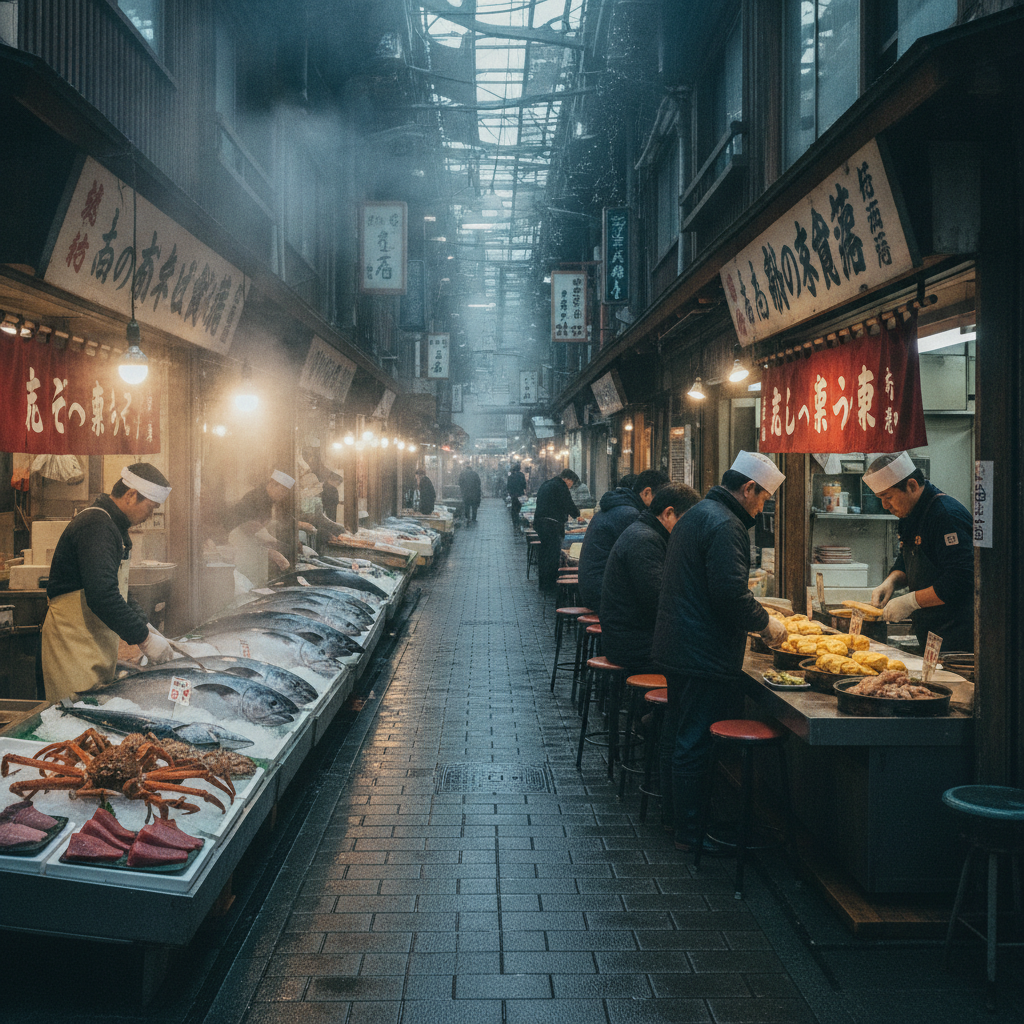
Toyosu Market (豊洲市場) is the wholesale fish market to which the Tsukiji Inner Market relocated in October 2018: the largest wholesale fish and seafood market in the world, handling approximately 1,600 tonnes of fish per day and generating annual turnover of over ¥600 billion. The market is most famous for its daily bluefin tuna auction (maguro seri), in which individually labeled whole tuna—most from the Atlantic, Pacific and Southern oceans, some weighing over 300 kg—are auctioned to the buyers who stand before them, bidding with a system of hand signals. The auction runs from approximately 5:30 AM; a limited number of visitor observation slots are available (register 60 days in advance; waiting list available). The market complex also contains a public observation area in the vegetable and fruit building (free, open from 9 AM), a restaurant floor, and a rooftop garden. The market's design (by Nikken Sekkei, 2018) is a significant architectural work in its own right: a vast complex of clean processing halls and logistics infrastructure that makes the movement of fish from sea to city visible.
- 6
Venus Fort & the Odaiba Waterfront Loop — Indoor Italy Meets Tokyo Bay
Venus Fort was a themed shopping mall in Odaiba that replicated an Italian townscape on its interior—cobblestone lanes, painted sky ceilings that simulated the passage of the day, a piazza with a fountain—and became one of the most photographed mall interiors in Asia. (Note: Venus Fort closed in 2022 to make way for redevelopment; the site is now part of Toyota Mega Web / a Toyota mobility showroom complex.) The Odaiba waterfront loop—the boardwalk and cycling path that encircles the island's perimeter—provides the most complete overview of Odaiba's mix of futures (the Fuji TV headquarters building with its spherical observation room, the waterfront Oedo Onsen Monogatari public bath, the Olympic rings sculpture that appeared for the 2020/2021 Tokyo Olympics) and is best completed by bicycle (rental available at multiple points around the island) or by the Yurikamome monorail, whose entire loop of the island takes approximately 30 minutes and provides elevated views of the entire complex.
Walk this route with audio
Stories play automatically as you reach each stop — no tapping needed.
More in tokyo
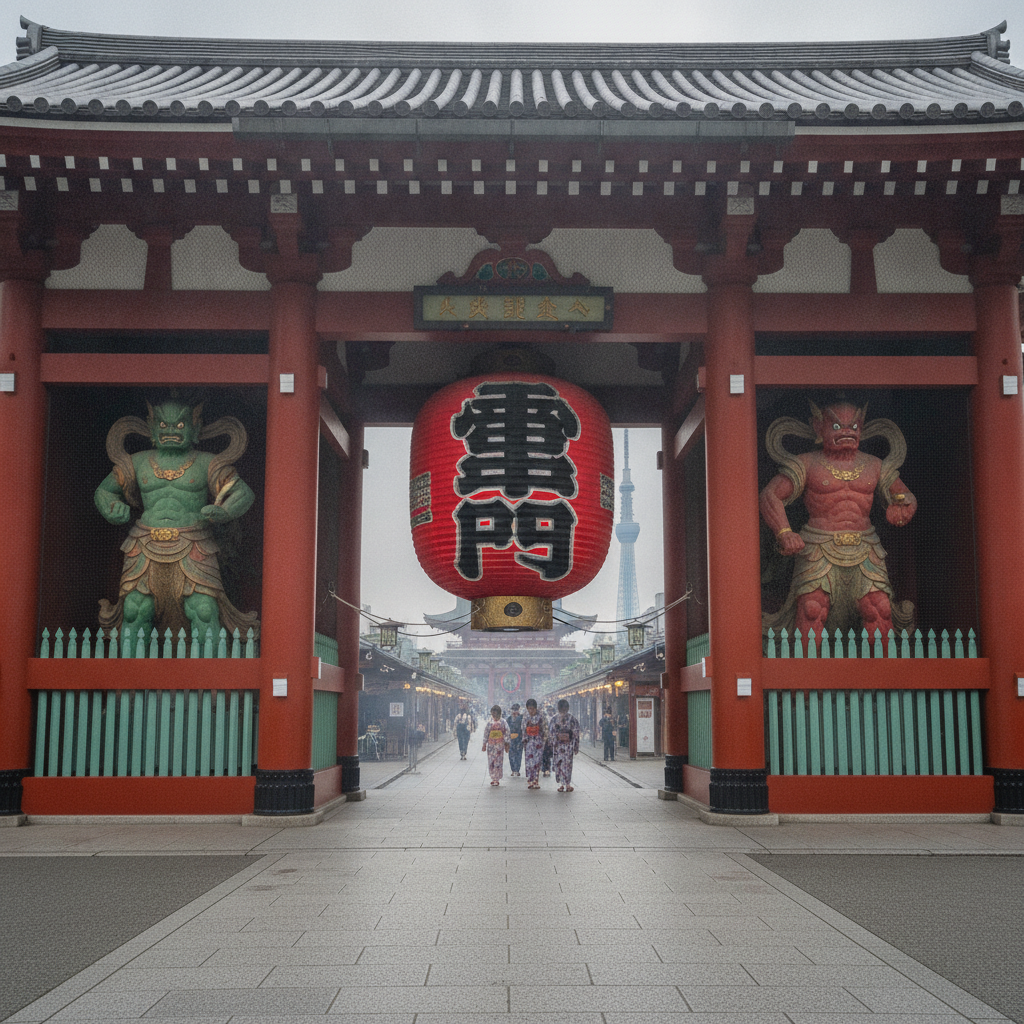
Asakusa & Tokyo Skytree: Ancient Temple, Nakamise Street & the World's Tallest Tower
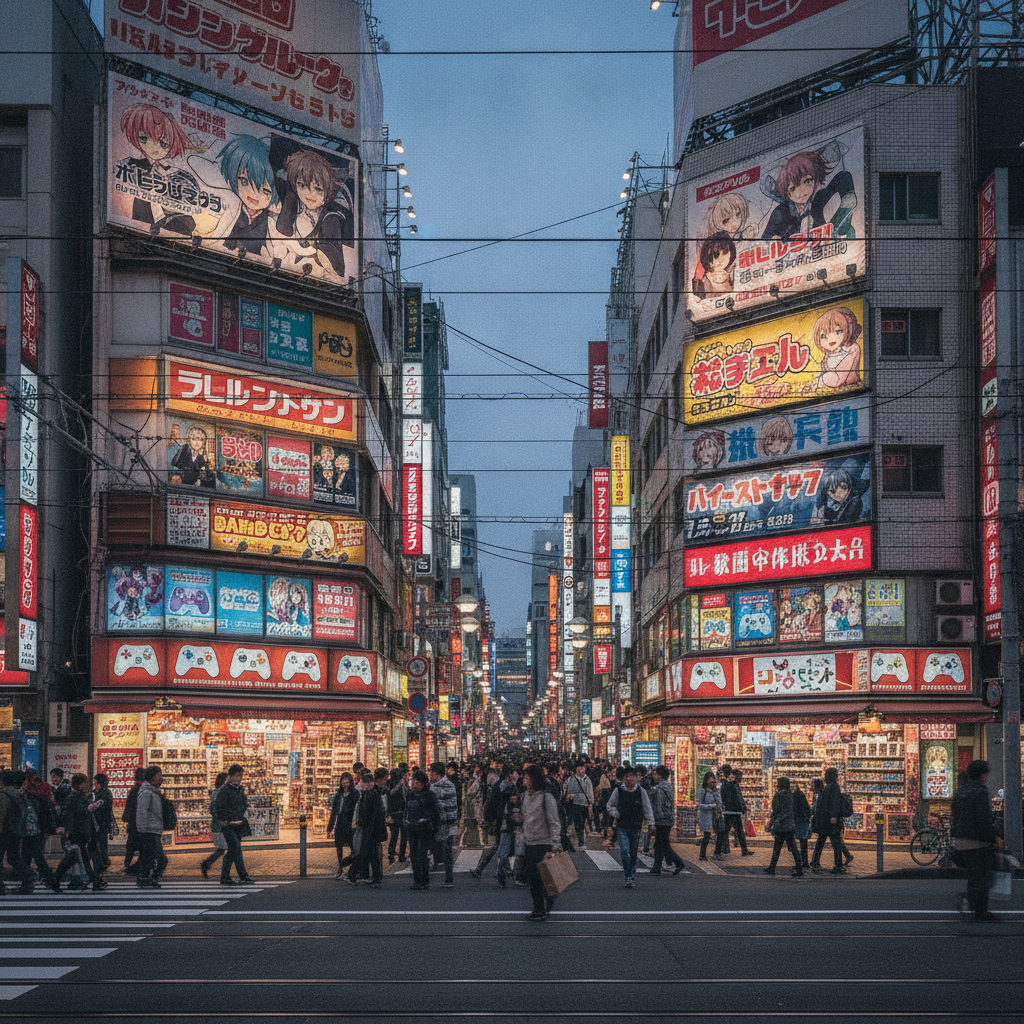
Akihabara & Ueno: Electric Town, Japan's Greatest Museum Mile & Ameyoko Market
Shinjuku: Golden Gai, Kabukicho & the Garden at the Heart of the Neon City
Shibuya & Harajuku: Youth Culture, Sacred Forests & the World's Busiest Crossing
Roppongi Arts District & Tokyo Tower: World-Class Museums, Contemporary Architecture & the City's Most Iconic Silhouette