Akihabara & Ueno: Electric Town, Japan's Greatest Museum Mile & Ameyoko Market
The Akihabara-Ueno corridor, running between two of Tokyo's most distinct neighborhoods, covers two completely different sides of Japanese popular culture: Akihabara ('Electric Town') is the global center of anime, manga, video gaming, and consumer electronics—a vertical city of specialist retailers stacked eight stories high; Ueno is the cultural and intellectual center of eastern Tokyo, containing Japan's greatest concentration of national museums (five in one park), Ueno Zoo (Japan's oldest, 1882), and Ameyoko—a street market descended directly from the black market that operated on this spot after World War II.
- 1
Akihabara Electric Town — The Global Capital of Anime & Electronics
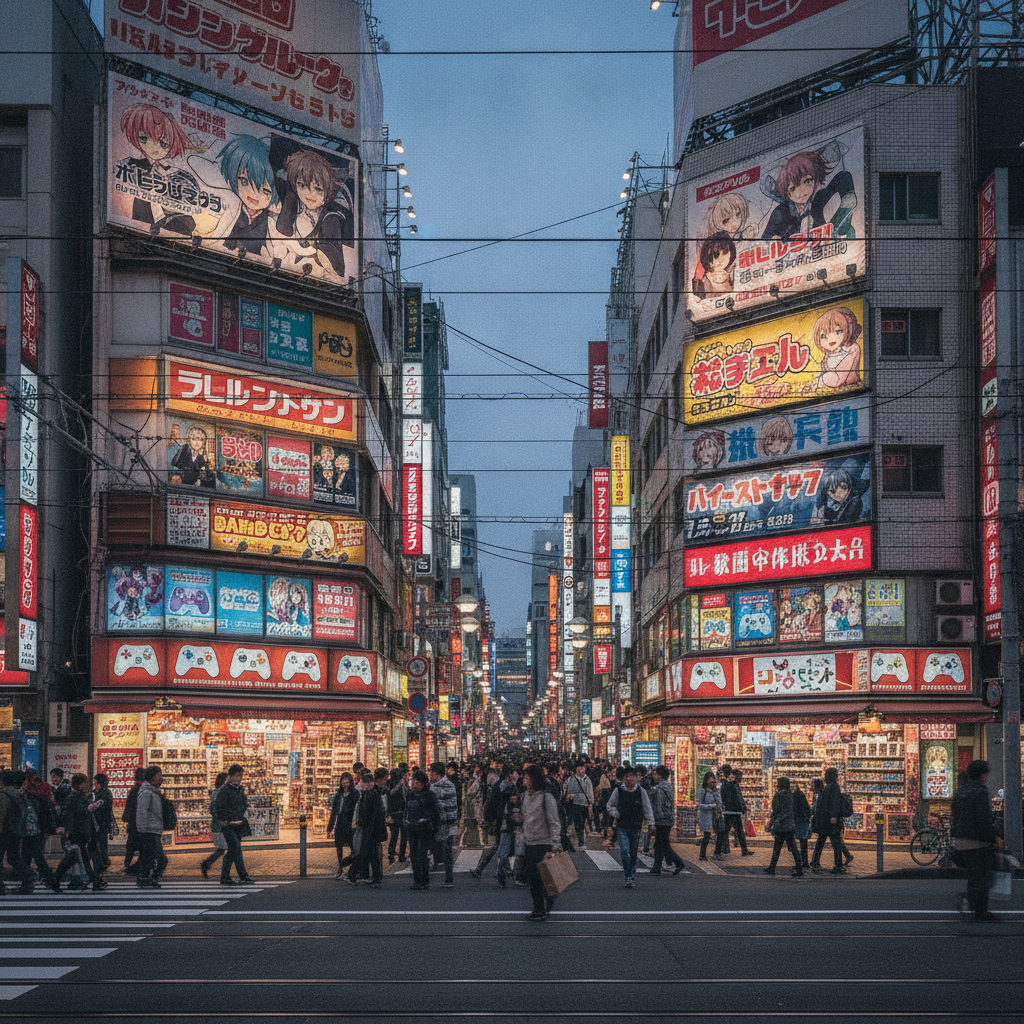
Akihabara (秋葉原) developed from a postwar black market in electronic components into the world's densest concentration of electronics retail by the 1980s; in the 1990s–2000s it evolved further into the global center of otaku culture (anime, manga, video games, figurines). The main shopping street (Chuo Dori, closed to traffic on Sundays 1–6 PM creating a pedestrian festival) is flanked by 8-story retail towers: Yodobashi Akiba (the largest electronics retailer in Tokyo), Super Potato (vintage video games from the 1970s to 1990s on the upper floors, new games and consoles below), Mandarake (doujinshi—fan-produced manga—and used anime merchandise), Kotobukiya and Good Smile Company (collectible figures from 5,000 yen to 500,000 yen). The side streets have high concentrations of specialist component shops (for electronics hobbyists) and maid cafés (where waitresses in French maid costumes serve food and perform songs; a 45-minute session for two costs around ¥3,000–¥5,000; Maidreamin and AKB48 Cafe are the largest chains). Akihabara is at its most active on weekend afternoons.
- 2
2K540 Aki-Oka Artisan — Craft Workshops Under the Railway Arches
2K540 Aki-Oka Artisan is a 60-shop craft and design complex built under the elevated JR Yamanote Line railway arches between Akihabara and Okachimachi stations (the name refers to the distance—2,540 meters—from Tokyo Station). The brick-arched vaults have been converted into clean, modern studios where craftspeople work and sell directly to the public: leather goods, wooden objects, jewelry, ceramics, Japanese paper goods. The complex contrasts sharply with the neon excess of nearby Akihabara and represents a different strand of Japanese material culture—the emphasis on handmade craft and the preservation of traditional skills. Free to enter; most shops open 11 AM–8 PM, closed Tuesday.
- 3
Ueno Park — Five National Museums in One Green Space
Ueno Park (上野公園), a 53-hectare public park established in 1873 on the grounds of Kan'ei-ji temple (whose predecessor was razed in the final battle of the Edo-Meiji transition in 1868), contains Japan's greatest concentration of national institutions: the Tokyo National Museum (the oldest and largest art museum in Japan, with 120,000 objects and 3,000 works on permanent display—the Honkan building's collection covers Japanese art from the Jomon period to the Edo period), the National Museum of Western Art (by Le Corbusier, 1959—a UNESCO World Heritage building containing Rodin's Gates of Hell and The Thinker in the courtyard), the National Museum of Nature and Science, the Tokyo Metropolitan Art Museum, and the National Museum for Western Art. The park is Tokyo's most famous cherry blossom site (mid-March to early April: the blue tarpaulin staked out for the hanami parties begin appearing weeks in advance); Shinobazu Pond in the south, with its lotus beds and rowing boats, is one of the most pleasant spots in all of Tokyo.
- 4
Tokyo National Museum — 120,000 Years of Japanese Art
The Tokyo National Museum (東京国立博物館), founded in 1872, is the oldest and largest museum in Japan and holds 120,000 objects covering every period and medium of Japanese art and archaeology. The main building (Honkan, by Jin Watanabe, 1938, in the 'Imperial Crown' architectural style that fused Western neoclassical forms with Japanese temple roof profiles) displays the permanent collection: Jomon-period clay figurines (dogu), Yayoi bronze bells, Nara-period Buddhist sculpture, Kamakura-period armor, screens and scrolls from the Muromachi through Edo periods. The Heiseikan (1999) displays Japanese archaeological finds, including Jomon pottery considered among the most sophisticated prehistoric ceramic art in the world. The Toyokan (1968) displays Asian art from China, Korea, Central Asia, Southeast Asia and India. National Treasure galleries on the second floor of the Honkan display rotating selections from the museum's 89 National Treasures and 648 Important Cultural Properties. Allow at least 3 hours; the museum café has a terrace view over the garden.
- 5
Ameyoko Market — The Postwar Black Market That Never Left
Ameyoko (アメ横), a 500-meter covered and semi-covered street market running parallel to the Yamanote Line between Ueno and Okachimachi stations, developed directly out of the black market that operated in this location in the years immediately following World War II (when American military surplus goods, including chocolate—'ame' in Japanese—were traded illegally here). It transitioned into a legitimate market in the early 1950s and has remained essentially unchanged since: 400 stalls and shops selling fresh fish, dried goods (large-scale displays of dried squid, sea cucumber, kombu seaweed), fresh produce, cosmetics, fashion (including counterfeit goods, openly sold), military surplus, and cheap confectionery. The market is at its busiest in the days before New Year (hatsuuri season, late December), when the combination of end-of-year bargaining, fish stalls stacking up sea bream and lobster for osechi New Year's dishes, and the sheer density of people makes it one of the most intense urban experiences in Tokyo. On ordinary weekdays it is much calmer and a good place to buy fresh fish, snacks, and cheap casualwear.
- 6
Yanaka Cemetery & the Shitamachi Walk
Yanaka Cemetery (谷中霊園), a 26-hectare public cemetery established in 1874 on the former grounds of Tenno-ji temple, is one of the most atmospheric places in Tokyo: a vast grid of grave monuments—Buddhist, Shinto, and Christian—under a canopy of large cherry and zelkova trees, with the Meiji-era graves of politicians, artists, and intellectuals sitting alongside ordinary family plots. The cemetery is one of Tokyo's top cherry blossom sites (the main central avenue becomes a tunnel of pink blossoms in late March). Adjacent to the cemetery, the Yanaka neighborhood—one of the few parts of Tokyo that survived both the 1923 Great Kanto Earthquake and the 1945 firebombing largely intact—has preserved a scale and street pattern from the Meiji and Taisho eras: narrow lanes, wooden machiya townhouses, family-run tofu shops, a dyer, a calligrapher. The Yanaka Ginza (a 170-meter shopping street) has been listed as one of the best shopping streets in Tokyo for local character.
Walk this route with audio
Stories play automatically as you reach each stop — no tapping needed.
More in tokyo
Asakusa & Tokyo Skytree: Ancient Temple, Nakamise Street & the World's Tallest Tower
Shinjuku: Golden Gai, Kabukicho & the Garden at the Heart of the Neon City
Shibuya & Harajuku: Youth Culture, Sacred Forests & the World's Busiest Crossing
Roppongi Arts District & Tokyo Tower: World-Class Museums, Contemporary Architecture & the City's Most Iconic Silhouette
Tsukiji, Hamarikyu & Ginza: Dawn Seafood, the World's Most Expensive Shopping Street & a Garden by the Bay