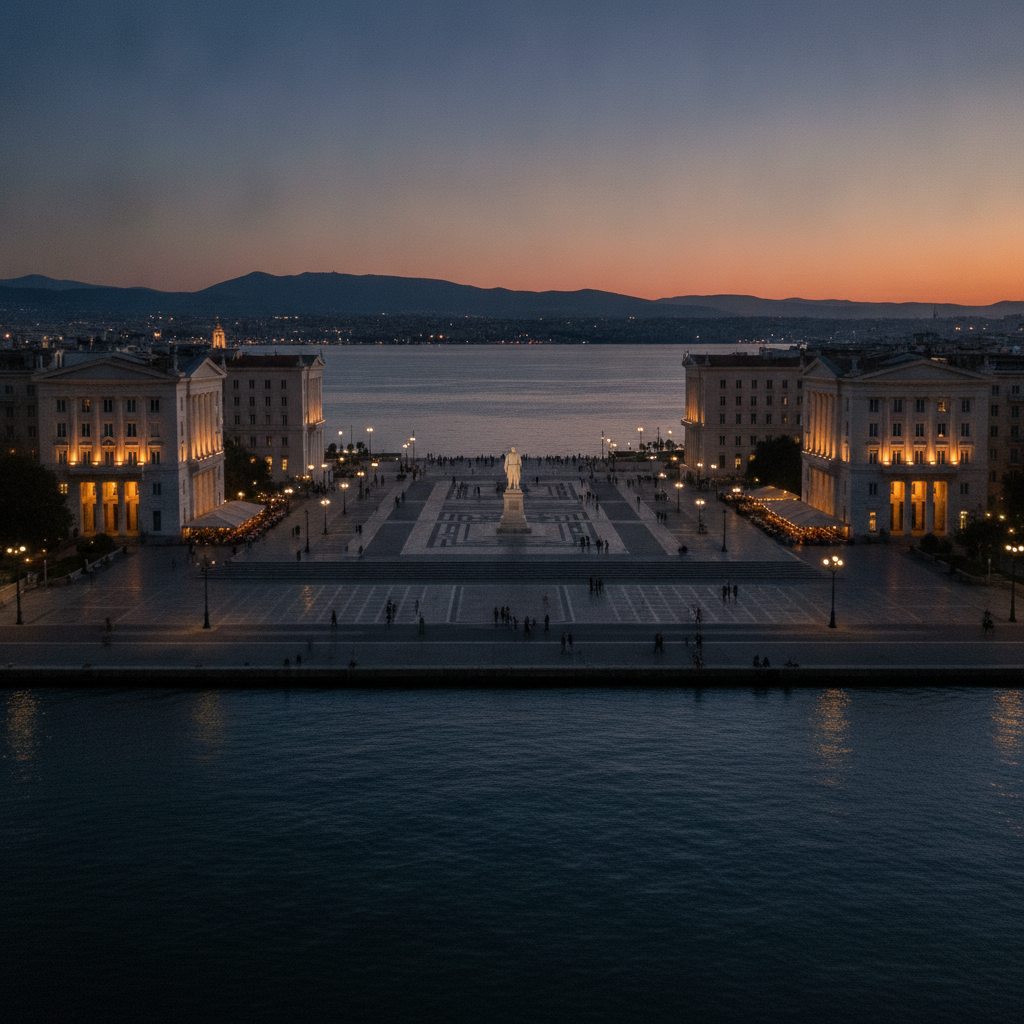
Thessaloniki Waterfront & Roman Legacy — the White Tower, Galerius Complex & Byzantine Walls
Thessaloniki (the second-largest city in Greece, population 325,000 in the city proper and 1.1 million in the metropolitan area, founded in 315 BCE by King Cassander of Macedonia who named it after his wife Thessalonike, the half-sister of Alexander the Great, built on the Thermaic Gulf with the Axios river delta to the west and the Chalkidiki peninsula to the east) is Greece's second cultural capital — the Byzantine monuments, the Ottoman heritage, and the Roman remains coexisting in a living city rather than an archaeological museum.
- 1
The White Tower — Thessaloniki's Landmark
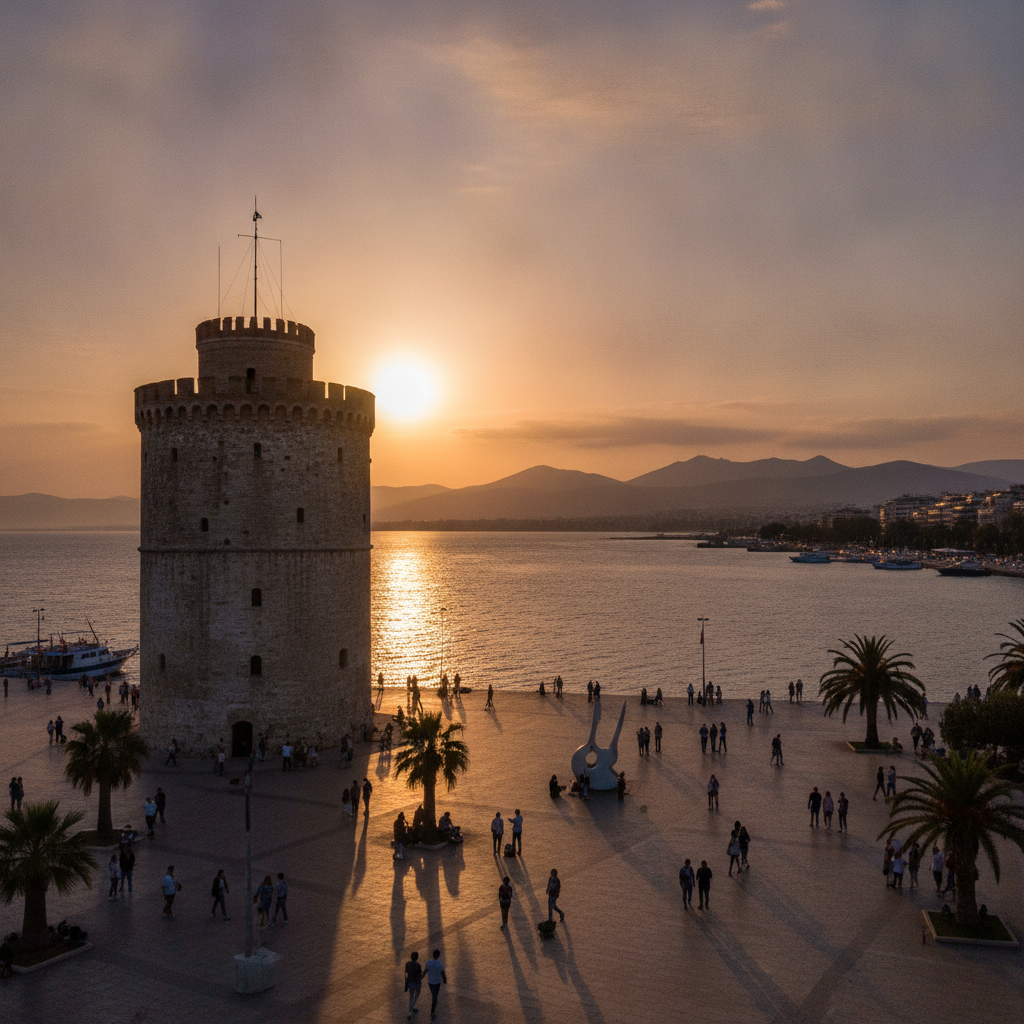
The White Tower (the cylindrical 15th-century Ottoman watchtower and prison on the Thessaloniki waterfront, 34m tall, 6 floors, built on the site of an earlier Byzantine sea tower in the late 15th century after the Ottoman conquest of 1430, the tower serving as a prison and a site of mass executions in the 19th century — the 'Tower of Blood' as it was known until the 1890 whitewashing by a freed convict — now housing the Byzantine Museum of the White Tower, €4 adults, daily 8am-8pm, the collection of Byzantine and post-Byzantine objects found in Thessaloniki organized across 6 floors, the rooftop terrace the best elevated view of the waterfront, the Chalkidiki peninsula, and the Pieria Mountains) is the correct starting point for the Thessaloniki visit. The waterfront promenade (the 4km esplanade from the White Tower east to the New Harbour, the evening volta — the traditional Greek promenade walk — beginning at 7pm when the Thessalonikians emerge for the pre-dinner walk, the most sociable public space in northern Greece) is the linear route connecting the city's waterfront landmarks.
- 2
The Arch of Galerius and the Rotunda — the Roman Imperial Quarter
The Galerian Complex (the late Roman imperial palace complex built by Emperor Galerius in Thessaloniki between 298 and 311 CE, the most extensive late Roman imperial monument in Greece, the complex including the Arch of Galerius — the triumphal arch on the main Roman road, the Egnatia Odos — the Octagonal Mausoleum of Galerius — later converted to the Rotunda — and the Palace of Galerius, the remains of which were excavated and left in situ below the modern city): The Arch of Galerius (the Kamara, the triumphal arch celebrating Galerius' victory over the Sassanid Persians in 298 CE, the four surviving piers with the relief sculptures of battle scenes still clearly legible at street level, the arch now straddling the pedestrianized Egnatia Odos, the most used meeting point in Thessaloniki — 'at the Kamara' the standard instruction for meeting anyone in the city centre) and the Rotunda (the circular drum mausoleum converted first to a Christian church in the 4th century and then to a mosque in 1591, the interior mosaics fragmentary but including the most important surviving 4th-century AD Christian mosaics in Greece).
- 3
The Byzantine Walls and the Ano Poli
The Byzantine walls of Thessaloniki (the 4th-century CE land walls built by Theodosius I, largely intact on the northern and eastern sides of the city, the walls running from the sea in the east to the Eptapyrgio fortress on the northern hill, the wall circuit of 8km making Thessaloniki the most completely walled Byzantine city in Europe after Istanbul) define the upper boundary of the old city. The Ano Poli (the Upper Town, the neighbourhood inside and below the northern walls, the only part of Thessaloniki that survived the 1917 fire that destroyed 70 percent of the lower city, the traditional timber-frame Ottoman and Greek houses of the 18th-19th centuries intact on the steep hillside lanes, the neighbourhood overlooking the entire city and the Thermaic Gulf below) is accessible by bus from the city centre in 15 minutes or on foot in 30 minutes (steep climb). The Eptapyrgio fortress (the Seven Towers, the Byzantine-Ottoman citadel at the highest point of the Ano Poli, the most complete Byzantine fortification in northern Greece, free access to the exterior, the view from the tower walls over the city and the gulf the most dramatic panorama in Thessaloniki).
- 4
Hagia Sophia and the Early Christian Basilicas
Thessaloniki contains the highest concentration of UNESCO-listed early Christian and Byzantine monuments in the world — 15 monuments inscribed collectively in 1988. The primary churches: Hagia Sophia of Thessaloniki (the 8th-century domed basilica modelled on the Hagia Sophia of Constantinople, the mosaic of the Ascension in the dome and the Virgin and Child in the apse the most important Byzantine mosaics in Greece outside Istanbul, free, open daily 8am-8pm), the Basilica of Agios Dimitrios (the 5th-century basilica on the site of the martyrdom and tomb of Saint Demetrius — the patron saint of Thessaloniki, the most important Orthodox church in northern Greece, the crypt containing the saint's tomb, the earliest known votive mosaics in the world in the nave pillars, free, open daily 8am-8pm, the marble-clad interior the most atmospheric Byzantine space in the city), and Hosios David (the 5th-century monastery church in the Ano Poli, the oldest surviving Byzantine monument in Thessaloniki, the 5th-century apse mosaic of the Vision of Ezekiel considered the finest early Christian mosaic in Greece — the Christ in the vision surrounded by the four evangelists' symbols).
- 5
The Roman Forum and the Archaeological Museum
The Roman Forum of Thessaloniki (the agora of the Roman period, excavated and partially displayed in situ below the modern Dikastirion Square in the centre of the city, €4 adults, Tuesday-Sunday 8am-3pm, the underground Roman cryptoporticus the most intact element, the column stumps of the porticoes visible at street level in the open-air section) and the Archaeological Museum of Thessaloniki (the purpose-built museum at the eastern end of the main museum quarter, €8 adults, Tuesday-Sunday 8am-8pm, the most important archaeological collection in northern Greece — the Macedonian gold: the gold wreath, the gold larnax, and the burial goods from the Macedonian royal tombs at Vergina and Derveni, the Derveni Krater — the world's most complex ancient bronze vessel, a 4th-century BCE volute krater with mythological reliefs around the body, inscribed 'property of Astion of Larissa' — the finest example of Hellenistic metalwork in existence) together provide the pre-Byzantine historical context for Thessaloniki's 2,300-year urban history.
- 6
Thessaloniki Food — the Capital of Greek Gastronomy
Thessaloniki's claim as the food capital of Greece (consistently made by Greek food writers, contested by Athens, validated by the density of excellent eating per square kilometre): the Modiano and Kapani markets (the covered markets of the city centre, the Modiano market built in 1922 by the Jewish architect Eli Modiano, the central market hall with its meat, fish, cheese, and spice vendors, open Monday-Saturday 7am-3pm, the Kapani market next door for the fresh produce and the traditional spice shops), the bougatsa tradition (the Thessaloniki bougatsa — the phyllo pastry filled with warm semolina custard, the definitive Thessaloniki breakfast, available from 6am at the bougatsa shops of the city centre, the Serraikos bakery on Komninon Street and the Bantis shop on Tsimiski Street the two established institutions, €2.50-3.50 for a portion), and the evening taverna circuit (the Ladadika district — the former oil-press warehouse quarter converted to restaurants and bars in the 1990s, the most animated evening dining quarter in northern Greece, the grilled meats and mezedes at the established tavernas filling from 9pm).
Walk this route with audio
Stories play automatically as you reach each stop — no tapping needed.
More in thessaloniki
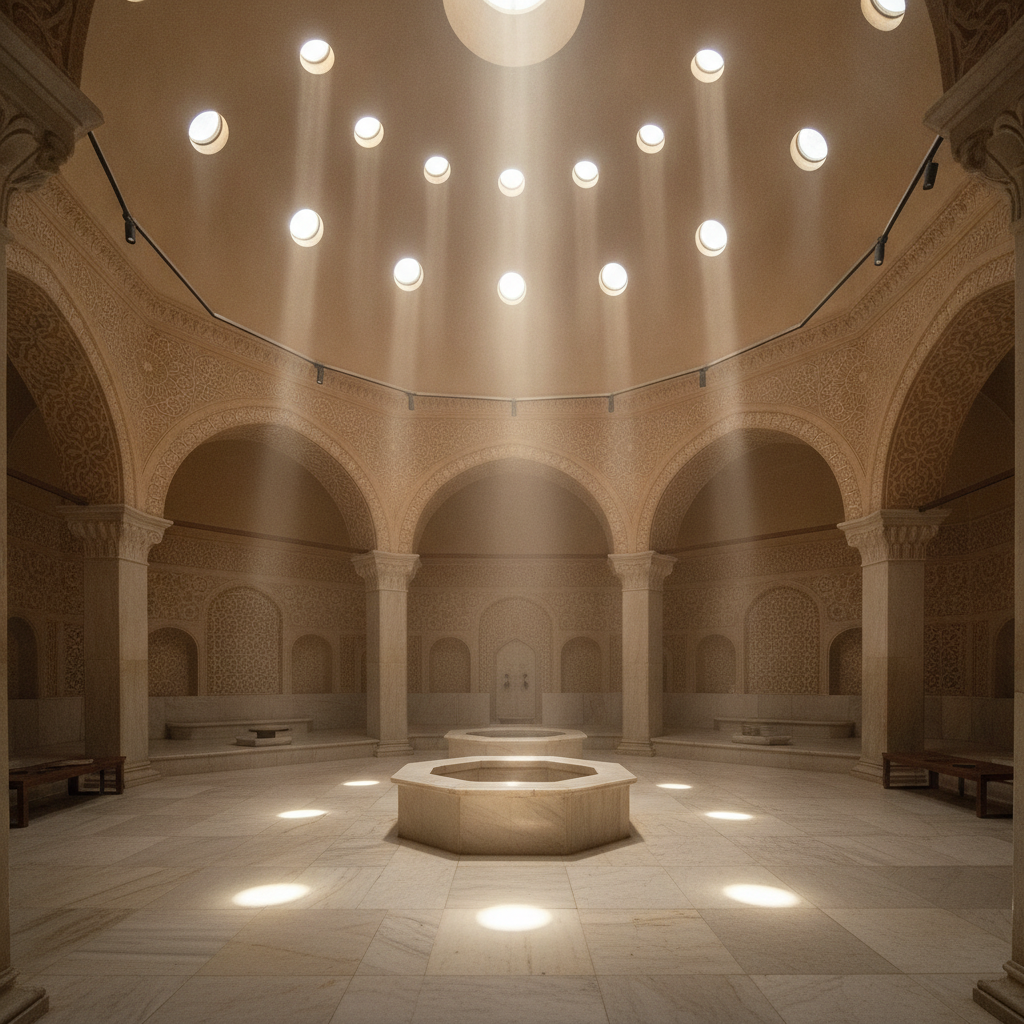
Thessaloniki Ottoman & Jewish Heritage — Hamams, the Bezesteni & the Multicultural City
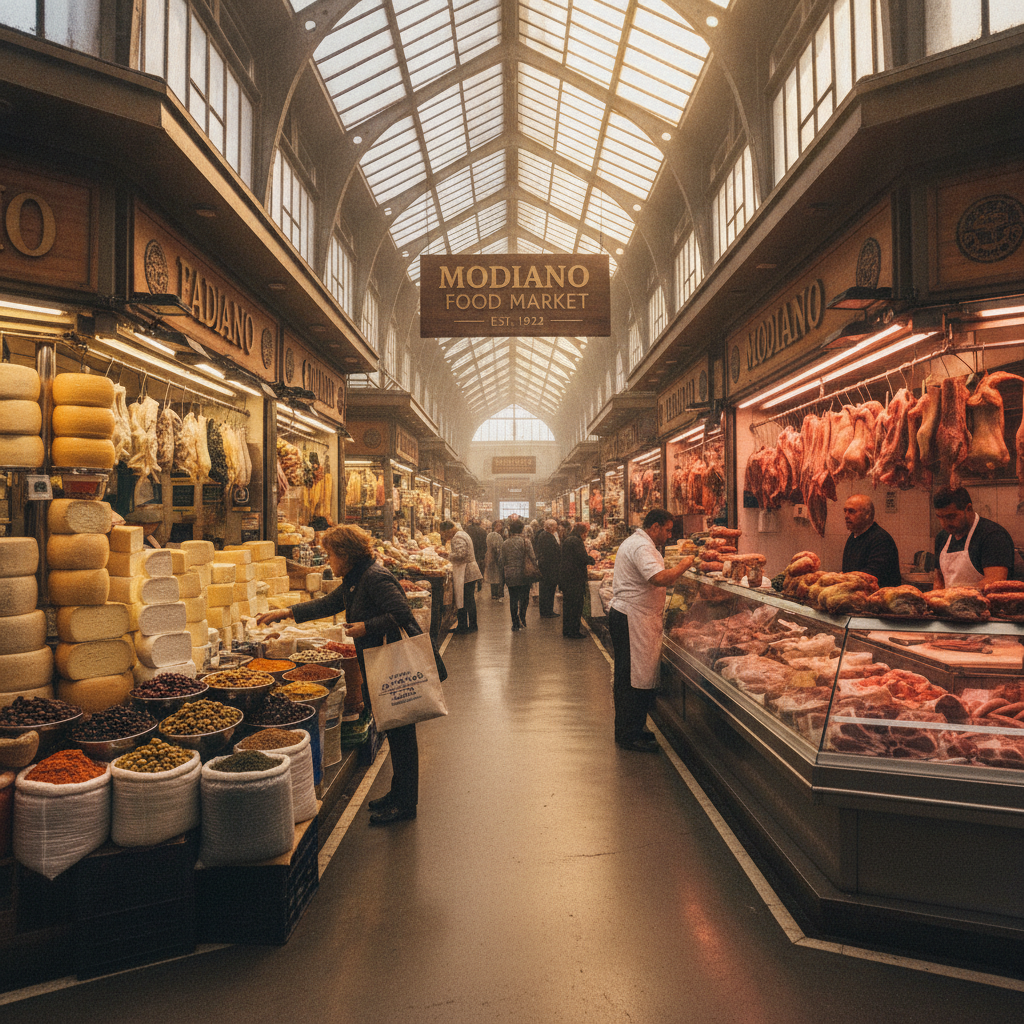
Thessaloniki Food — Markets, Bougatsa, Mezedes & the Greek Food Capital
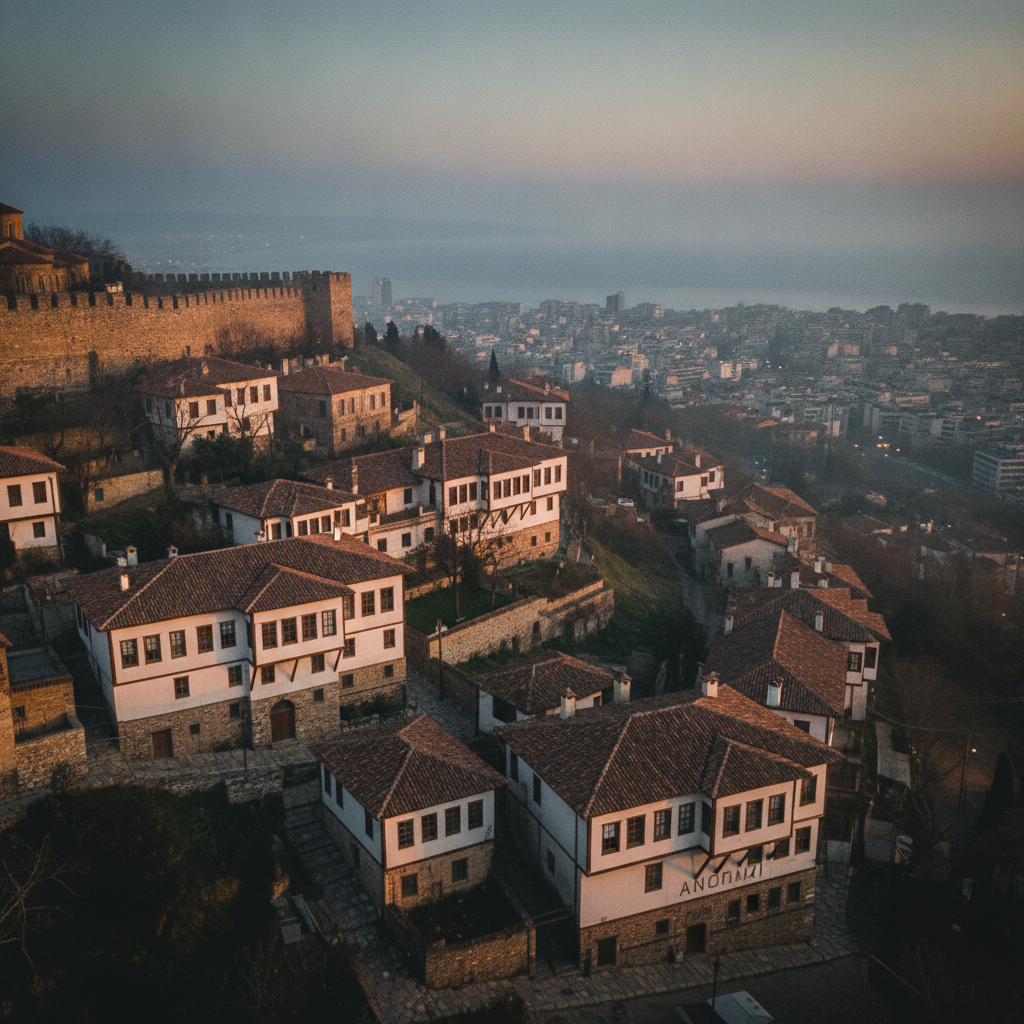
Thessaloniki Ano Poli — the Ottoman Upper Town, Byzantine Walls & the View Over the Gulf
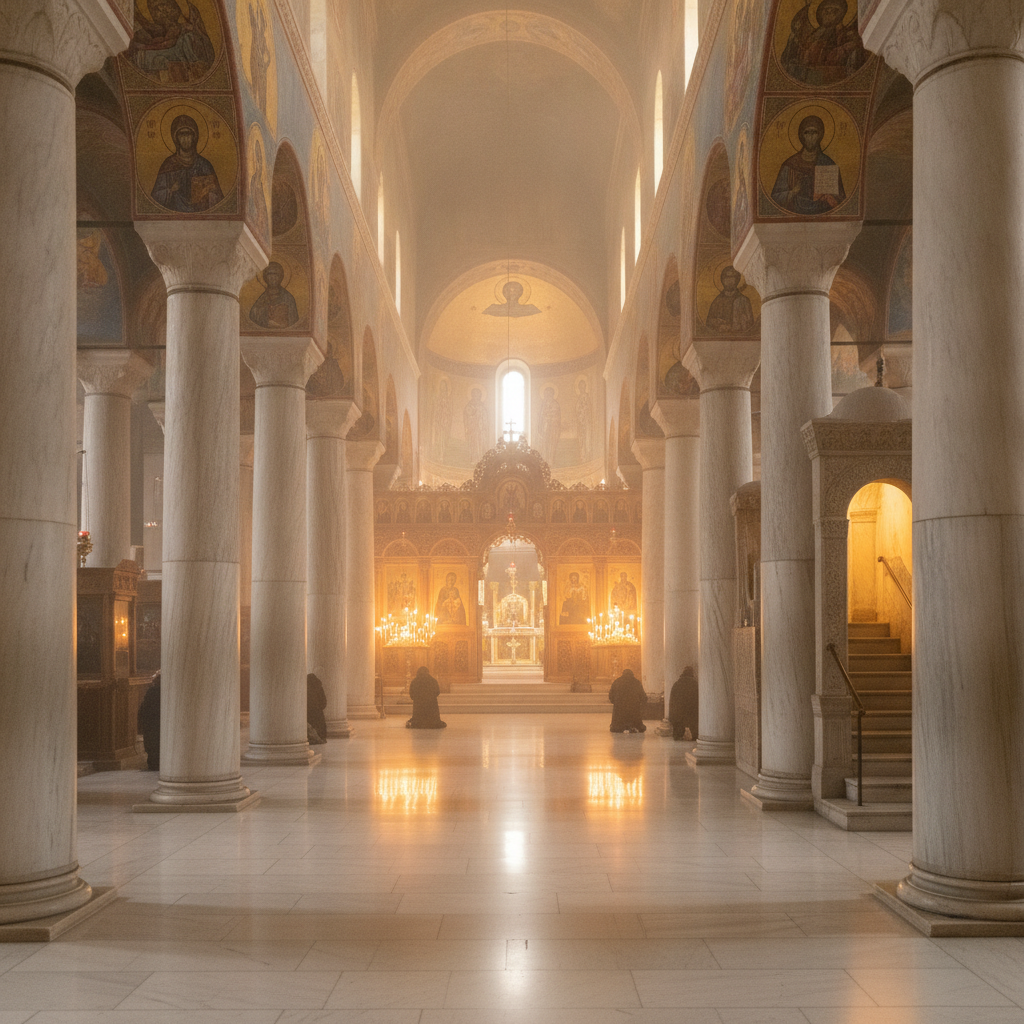
Thessaloniki Byzantine Monuments — UNESCO Sites, Mosaics & the Archaeological Museum