The Atash Bahram Sacred Fire in Yazd Burning Continuously Since 470 CE (1,500+ Years), Zoroastrianism Influencing the Jewish Heaven Hell Angels Devil and Messiah Concepts & the 1639 Treaty of Zuhab Still Defining the Iran-Iraq Border Today
The Zoroastrian sacred fire in Yazd burning continuously since 470 CE (1,500 years); Zoroastrian theological inventions (Last Judgement, Heaven and Hell, Angels, the Devil, the Messiah) influencing Judaism, Christianity, and Islam; the 1639 Treaty of Zuhab between Safavid Persia and Ottoman Turkey still largely defining the modern Iran-Iraq border; 25–30% of standard Turkish vocabulary being Persian loanwords; the Shah Mosque dome (42m, 7-color tile mosaic) as the supreme achievement of Persian mosque architecture; and Tehran rewarding logistical preparation with authentic interactions unspoiled by mass tourism.
- 1
Shia Islam – Theology, Practice & Iranian Identity
The Shia Islam heritage (the Twelver Shia theology that is the state religion of Iran and the primary framework of Iranian cultural identity): the theological heritage guide. The Shia-Sunni split (the primary division in Islam originates in the question of the succession of the Prophet Muhammad (died 632 CE): the Sunni position (the majority — approximately 85% of Muslims worldwide — holds that the Prophet's successor was elected by the community — Abu Bakr was the first Caliph): the Shia position (the minority — approximately 15% of Muslims worldwide — holds that the Prophet's rightful successor was his son-in-law and cousin Ali ibn Abi Talib — the Shia are the Shi'at Ali — the Party of Ali): the Twelve Imams (the Twelver Shia theology (the primary Shia tradition — the state religion of Iran since 1501) holds that there were 12 rightful Imams descended from Ali — the 12th Imam (Muhammad al-Mahdi) went into occultation (gheybat) in 874 CE and will return at the end of time as the Mahdi (the Guided One): the Karbala (the Battle of Karbala (October 10, 680 CE — Ashura — the 10th day of Muharram) — the foundational tragedy of Shia Islam: the Prophet's grandson Husayn ibn Ali and 72 companions were massacred by the Umayyad Caliph Yazid's army at Karbala (in modern Iraq): the Ashura mourning (the Ashura mourning rituals (the tazieh — the traditional Persian passion play dramatizing the Karbala martyrdom) are the most emotionally powerful public rituals in Iran — the streets of Tehran fill with mourning processions for the first 10 days of Muharram): the Velayat-e Faqih (the Guardianship of the Islamic Jurist — Khomeini's political theology that a Shia Islamic jurist (the Supreme Leader) should govern the state in the absence of the 12th Imam).
- 2
Tehran's Architecture – From Safavid to Postmodern
The Tehran architectural heritage (the architectural history of Tehran — the transformation from a minor Safavid town to the capital of a 16-million-person megacity in 250 years): the architectural heritage guide. The Safavid Tehran (the earliest surviving architectural heritage of Tehran dates to the late Safavid period — the Golestan Palace garden was first laid out by Shah Tahmasp I (r. 1524–1576) as a royal garden: the Qajar Tehran (the Qajar dynasty (1785–1925) transformed Tehran from a minor walled town (population 15,000 in 1785) into the capital of the Qajar Empire: the Qajar architectural contributions: the Golestan Palace complex (1794–1865): the old city walls (demolished in the 1930s): the Pahlavi modernization (the Reza Shah Pahlavi (r. 1925–1941) demolished the old city walls and bazaar areas of Tehran and replaced them with European-style boulevards and government buildings: the primary Pahlavi architects: the German architect Karl Cramer (who designed the National Museum of Iran building — 1937) and the French architect Andre Godard (who oversaw multiple government buildings): the Islamic Republic architecture (the most significant buildings of the Islamic Republic period: the Imam Khomeini Shrine (south of Tehran) — the largest religious complex in Iran — begun 1989, still under construction: the Milad Tower (2007) — 435m — the sixth-tallest tower in the world: the Tehran Metro stations (particularly the Imam Khomeini, Darvaze-e Dowlat, and Saadabad stations with their tile murals and traditional Persian decorative motifs): the Azadi Tower (Borj-e Azadi — the Freedom Monument (1971) — the primary landmark of pre-revolutionary Tehran — the concrete hyperbolic-paraboloid tower designed by Hossein Amanat for the 2,500th anniversary of the Persian Empire).
- 3
Isfahan Connection – The Road South from Tehran
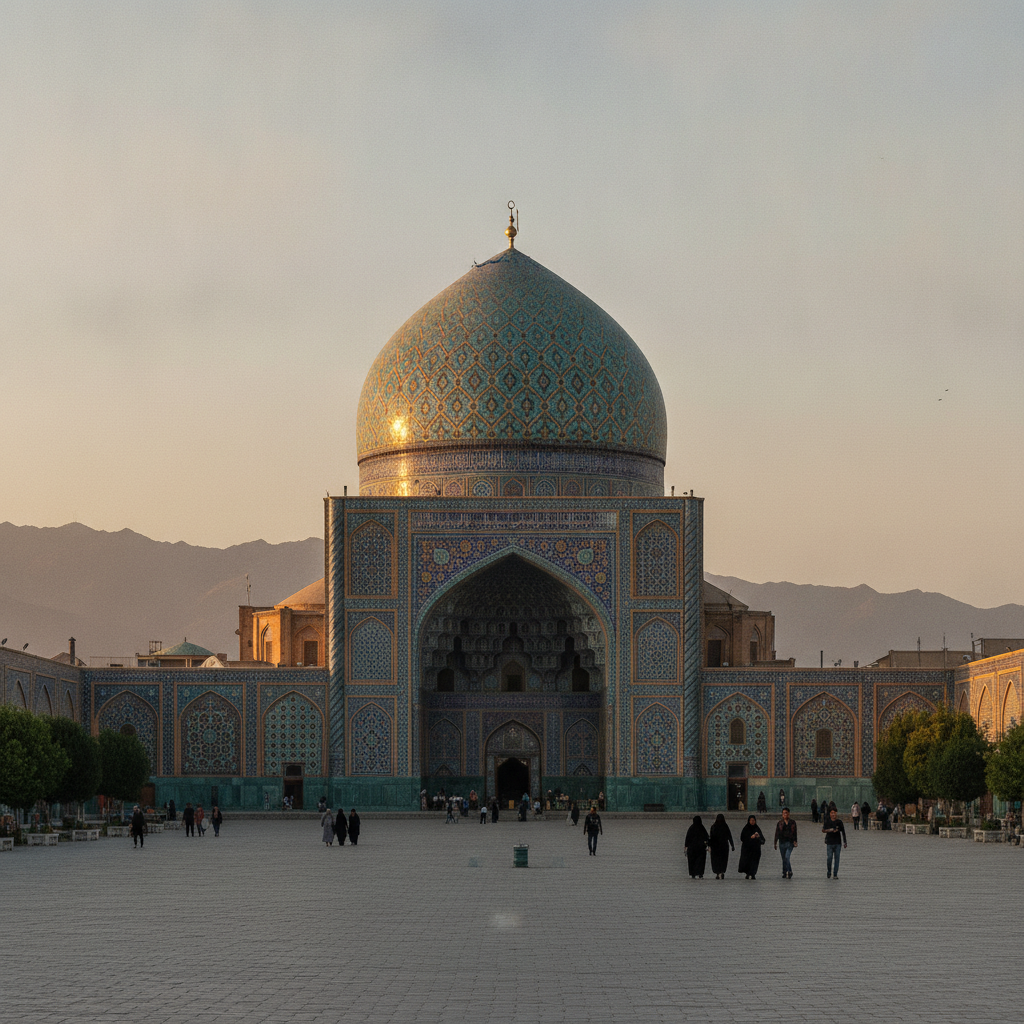
The Isfahan day trip heritage (the UNESCO World Heritage sites of Isfahan — the primary architectural destination accessible from Tehran (400 km south) and the most complete surviving example of Safavid urban design): the connection guide. The Safavid Isfahan (the Safavid dynasty (1501–1736) made Isfahan (Esfahan — اصفهان) their capital from 1598 — Shah Abbas I (r. 1588–1629) transformed Isfahan into one of the most spectacular cities in the world: the proverb (Isfahan nesf-e jahan — اصفهان نصف جهان — Isfahan is half the world — the Persian proverb reflecting the city's importance in the Safavid period): the Naqsh-e Jahan Square (the Imam Square (Meydan-e Naqsh-e Jahan — میدان نقش جهان) — UNESCO World Heritage — the second-largest public square in the world (after Tiananmen Square) at 512m x 163m — surrounded by the Shah Mosque, Ali Qapu Palace, Sheikh Lotfollah Mosque, and Qaysariyeh Portal: the Shah Mosque (the Masjed-e Shah (Shah Mosque — now Imam Mosque) on the south side of Naqsh-e Jahan Square — built 1611–1629 by Shah Abbas I — considered the supreme achievement of Persian mosque architecture: the dome (the Shah Mosque dome (42m high, 7-color tile mosaic) is the most technically complex tiled dome in Iran): the transport (Tehran to Isfahan: VIP bus from the Southern Terminal (Payan-e Mosaferat-e Jonub) — 5–6 hours — the most comfortable option at IRR 3,000,000–5,000,000 (USD 4–7): the train (the Tehran-Isfahan train — 7 hours — scenic route through the salt desert).
- 4
Iranian Music – Classical Persian & Contemporary
The Iranian musical heritage (the classical Persian music tradition — one of the world's most complex and ancient musical systems — and the contemporary music scene operating under Islamic Republic restrictions): the music heritage guide. The classical tradition (the classical Persian music (Musiq-e Sonnati — موسیقی سنتی) — the traditional Iranian modal music system: the dastgah (the fundamental organizing principle of classical Persian music — the dastgah is a modal framework combining a specific scale, a set of characteristic melodic phrases (gusheh), and an emotional affect (hal) — approximately equivalent to the Indian raga system: the primary dastgahs (the 12 primary dastgahs of the Persian radif (the repertoire): Shur, Abu Ata, Bayat-e Tork, Dashti, Afshari, Segah, Chahargah, Homayun, Bayat-e Esfahan, Nava, Rast-Panjgah, Mahur): the primary instruments (the primary instruments of classical Persian music: the tar (a 6-string plucked lute): the setar (a 4-string plucked lute — lighter than the tar): the santur (the Persian hammered dulcimer — 72 strings arranged in groups of 4): the kamancheh (the spiked fiddle with 4 strings — the primary bowed instrument of Persian classical music): the ney (the open-end blown flute — the instrument most associated with mystical Sufi music through Rumi's Masnavi which opens with the ney's cry of separation from the reed bed): the contemporary scene (Iranian pop music (Musiqui-ye Pop) is officially banned in Iran but widely consumed through Persian satellite television channels (Manoto, GEM TV) based in Los Angeles and London).
- 5
Zoroastrianism – Iran's Ancient Religion
The Zoroastrian heritage (Zoroastrianism — the ancient Iranian religion founded by the prophet Zoroaster (Zarathustra) — the world's first monotheistic religion and the primary religious tradition of Iran for 1,500 years before Islam): the religious heritage guide. The Zoroaster (Zoroaster (Zarathustra in the Avestan language) — the prophet who founded the Zoroastrian religion: the date (the date of Zoroaster is disputed — the traditional Zoroastrian date is 6000 BCE: the academic consensus date is approximately 1500–1000 BCE (the Bronze Age): the primary innovation (Zoroaster's primary theological innovation was the reduction of the Iranian polytheistic pantheon to a single supreme deity (Ahura Mazda — the Wise Lord) and the elevation of the cosmic dualistic struggle between good (Spenta Mainyu — the Holy Spirit) and evil (Angra Mainyu — the Evil Spirit / Ahriman) to the central theological concept: the sacred fire (the sacred fire (atash — آتش) is the primary symbol of Zoroastrianism — the fire represents the divine light of Ahura Mazda and is kept permanently burning in fire temples (atashkadeh): the Yazd fire (the Atash Bahram (the Victorious Fire) in Yazd (southeast of Tehran) — the primary fire temple of Iran — the flame has been burning continuously since 470 CE (1,500+ years): the community (the Zoroastrian community in Iran numbers approximately 25,000–30,000 — the Parsi community in India (descended from Iranian Zoroastrian refugees who fled the Arab-Islamic conquest in the 8th century) numbers approximately 60,000–70,000): the influence (Zoroastrian theology influenced Judaism, Christianity, and Islam through the Zoroastrian concepts of: the Last Judgement (Frashokereti): Heaven and Hell: Angels (Yazatas — the divine helpers of Ahura Mazda): the Devil (Ahriman): the Messiah (the Saoshyant)).
- 6
Tehran vs Istanbul – Comparing Two Great Muslim Capitals
The Tehran vs Istanbul comparison (the comparative guide to the two greatest cities of the Muslim world — Tehran (Iran) and Istanbul (Turkey) — 2,600 km apart but historically and culturally intertwined): the comparative city guide. The historical interrelation (Tehran and Istanbul are the two capitals of the two great Muslim empires that dominated the Middle East for 400 years — the Safavid Persian Empire and the Ottoman Turkish Empire (1501–1736 for the Safavid-Ottoman rivalry period): the wars (the Safavid-Ottoman War series (1514–1639) — the longest-running interstate military conflict in early modern history — fought primarily over control of Mesopotamia (modern Iraq), the Caucasus, and eastern Anatolia: the treaty (the Treaty of Zuhab (1639) established the definitive Safavid-Ottoman border — the modern Iran-Iraq border is largely still the 1639 border): the linguistic comparison (Turkish is a Turkic language: Persian (Farsi) is an Iranian language — the two languages are completely unrelated: however, 25–30% of standard Turkish vocabulary consists of Persian loanwords (absorbed through 800 years of Persian literary and court influence): the accessibility comparison (Istanbul is significantly more accessible to Western tourists: visa-free or e-visa for most Western nationals; multiple international flights; full integration with international banking; no religious dress code required: Tehran requires advance visa planning (no US/UK citizens); cash-only economy due to sanctions; mandatory headscarf for women): the cultural experience (both cities offer extraordinary historical depth, complex culinary traditions, and sophisticated contemporary cultural scenes — but the Tehran experience requires more logistical preparation and rewards the effort with authentic interactions largely unspoiled by mass tourism).
Walk this route with audio
Stories play automatically as you reach each stop — no tapping needed.
More in Tehran
The Tehran Grand Bazaar Bazaaris Financing Both the 1905 Constitutional Revolution and the 1979 Islamic Revolution, Mount Damavand the Highest Volcano in Asia at 5,610m & the Tochal Gondola the Highest Gondola-Served Skiing Area in the World
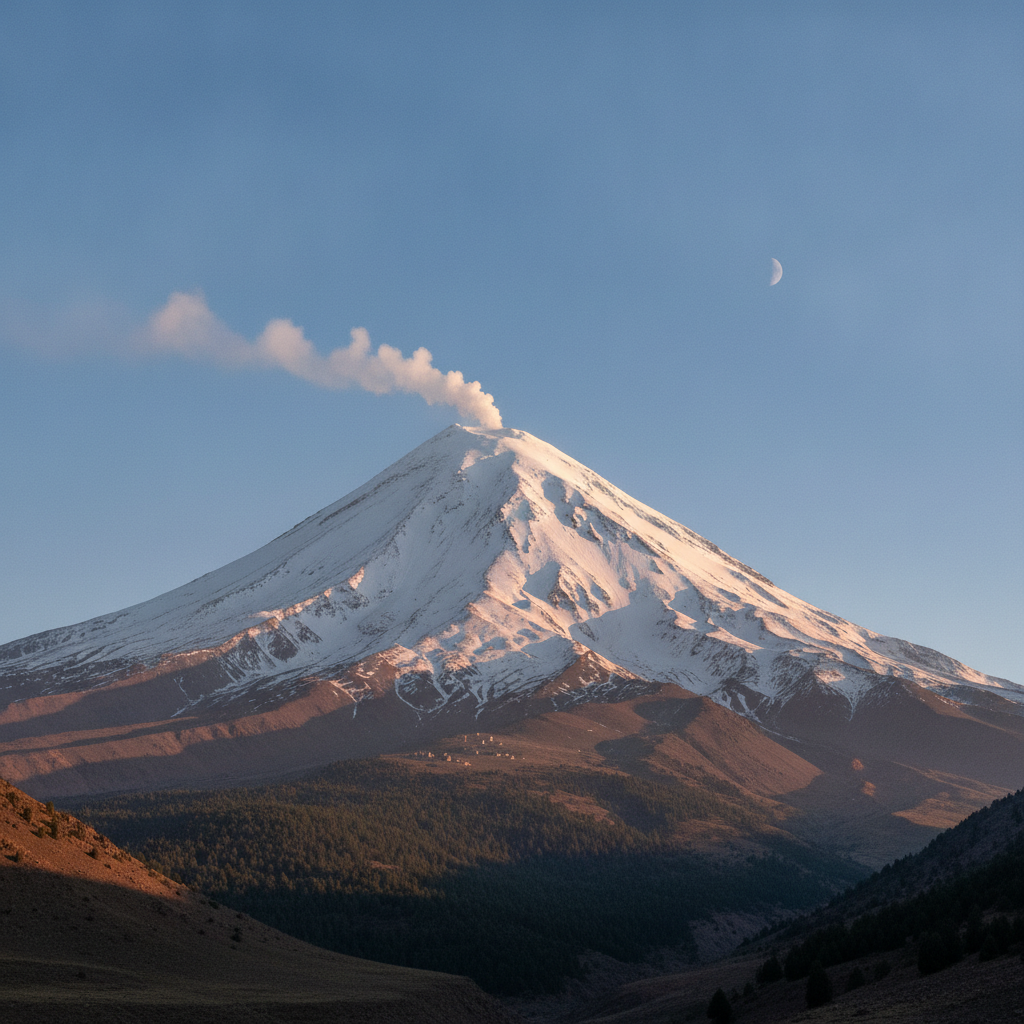
The Bazaaris Funding the Tobacco Protest, Constitutional Revolution, Mosaddegh's Oil Nationalization AND the 1979 Revolution, Damavand's Zahhak Prophecy Paralleling Norse Ragnarok & 70% of Iranian Internet Users on VPN Daily

Tehran Modern: The Northern Districts, the Jordan Street Cafe Scene, the Elahiyeh Lifestyle, Shopping, and the Most Cosmopolitan Single Iranian Urban Culture

Tehran History: The Pahlavi Era, the 1979 Revolution, the Islamic Republic, and the Most Politically Complex Single Modern Iranian Capital
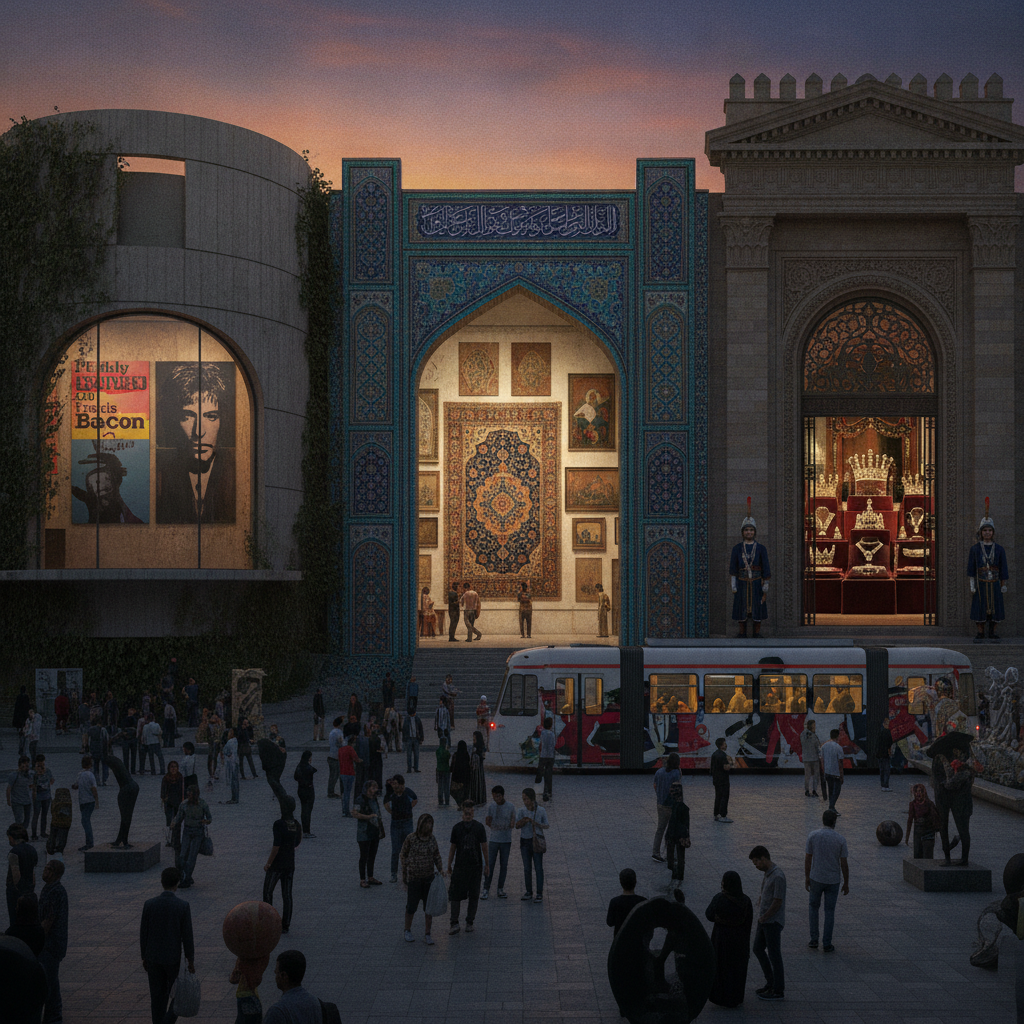
Tehran Museums: The National Jewelry Treasury, the Carpet Museum, the Tehran Museum of Contemporary Art, and the Most Museum-Rich Single Iranian Capital