The Tehran Grand Bazaar Bazaaris Financing Both the 1905 Constitutional Revolution and the 1979 Islamic Revolution, Mount Damavand the Highest Volcano in Asia at 5,610m & the Tochal Gondola the Highest Gondola-Served Skiing Area in the World
The Tehran Grand Bazaar bazaaries financing the Tobacco Protest (1891), Constitutional Revolution (1905–1911), and 1979 Islamic Revolution — the October 1978 bazaar strike as the decisive blow ending the Shah's rule; Mount Damavand (5,610m) as the highest volcano in Asia and highest peak in the Islamic world; the Tochal gondola (3,900m terminus) as the highest gondola-served skiing area in the world 45 minutes from central Tehran; the Cyrus Cylinder (539 BCE) permitting exiled Jews to return to Jerusalem (often cited as the first human rights declaration); the Salt Man from the Chehrabad mine preserved since 500 BCE; and Iran producing 90% of the world's saffron.
- 1
The National Museum of Iran – 7,000 Years of Persian Civilization
The National Museum of Iran (the Iran Bastan Museum — the most important archaeological museum in Iran and one of the most significant in the Middle East): the museum heritage guide. The museum (the National Museum of Iran (Muzeh-ye Melli-ye Iran — موزه ملی ایران) on Imam Khomeini Street in central Tehran — Iran's premier repository of pre-Islamic artifacts: the building (the museum building was designed by the French architect Andre Godard and completed in 1937 in a distinctive style that references the Sassanid palace of Ctesiphon (the arch of the Taq-i Kisra near Baghdad): the primary collections (the museum holds approximately 300,000 objects from 7,000 years of Iranian prehistory and history: the most significant items: the Salt Man (Mard-e Namaki) — the naturally mummified man found in the Chehrabad salt mine in 1994 — the natural salt preservation preserved the body and its belongings perfectly: the earliest salt man dates to approximately 500 BCE): the Cyrus Cylinder (a replica of the Cyrus Cylinder — the original held in the British Museum — the cylinder records the decree of Cyrus the Great permitting the exiled Jews of Babylon to return to Jerusalem (539 BCE) — often cited as the first human rights declaration): the Sassanid silver (the silver collection of Sassanid-era royal hunting and banquet scenes): the prehistoric section (the 6th-century BCE pottery from Sialk (near Kashan) and the 4th-millennium BCE artifacts from the Burnt City (Shahr-e Sukhteh) — one of the world's earliest urban settlements).
- 2
Golestan Palace – The Qajar Imperial Complex
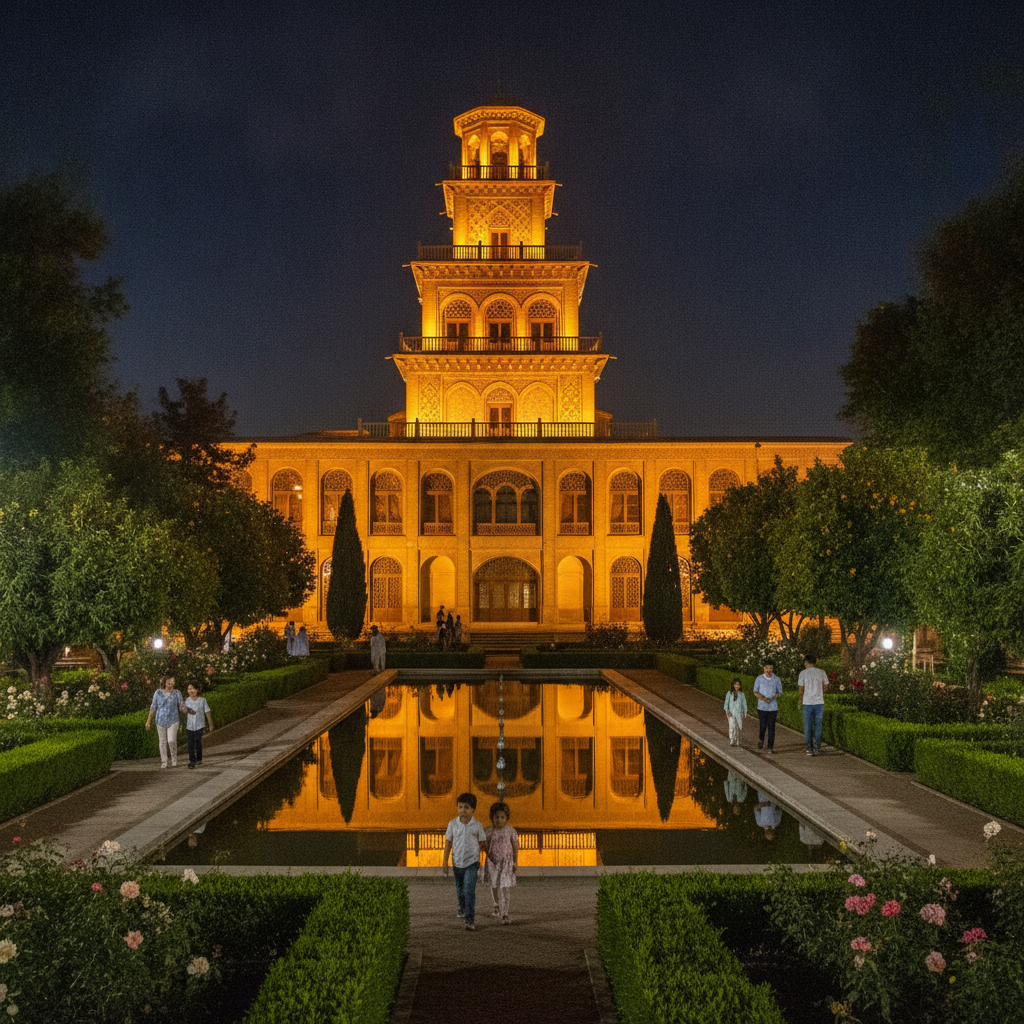
The Golestan Palace heritage (the Golestan (Palace of Roses) — the royal complex of the Qajar dynasty that was the center of Iranian imperial court life for 150 years): the palace heritage guide. The Golestan (the Golestan Palace (Kakh-e Golestan — کاخ گلستان) in the heart of old Tehran — the primary surviving complex of the Qajar dynasty (1785–1925): the UNESCO inscription (the Golestan Palace was inscribed on the UNESCO World Heritage List in 2013 — the inscription cited the palace as the most important example of Qajar architectural achievement): the complex (the Golestan Palace is not a single building but a walled complex of 17 structures set in a garden: the primary buildings: the Marble Throne Hall (Takht-e Marmar) — the primary ceremonial throne room of the Qajar shahs: the throne (the Marble Throne (Takht-e Marmar) — the outdoor throne platform with a colonnade of yellow marble columns supporting a roof: the throne was used for coronations and the Nowruz (New Year) royal audience — the Qajar shahs sat on the throne to receive the New Year's congratulations from the court: the Edifice of the Sun (Shams al-Emareh — Shamsolemareh) — the five-story tower built by Naser al-Din Shah in 1867: the first building in Tehran taller than two stories — the shah had the tower built so he could see the city from above: the Hall of Mirrors (Talar-e Aineh) — the room whose walls and ceiling are entirely covered with mirror mosaic — the mirror decorations were introduced to Iran by the French diplomat Comte de Gobineau in 1856).
- 3
The Alborz Mountains – Ski Resorts Above Tehran
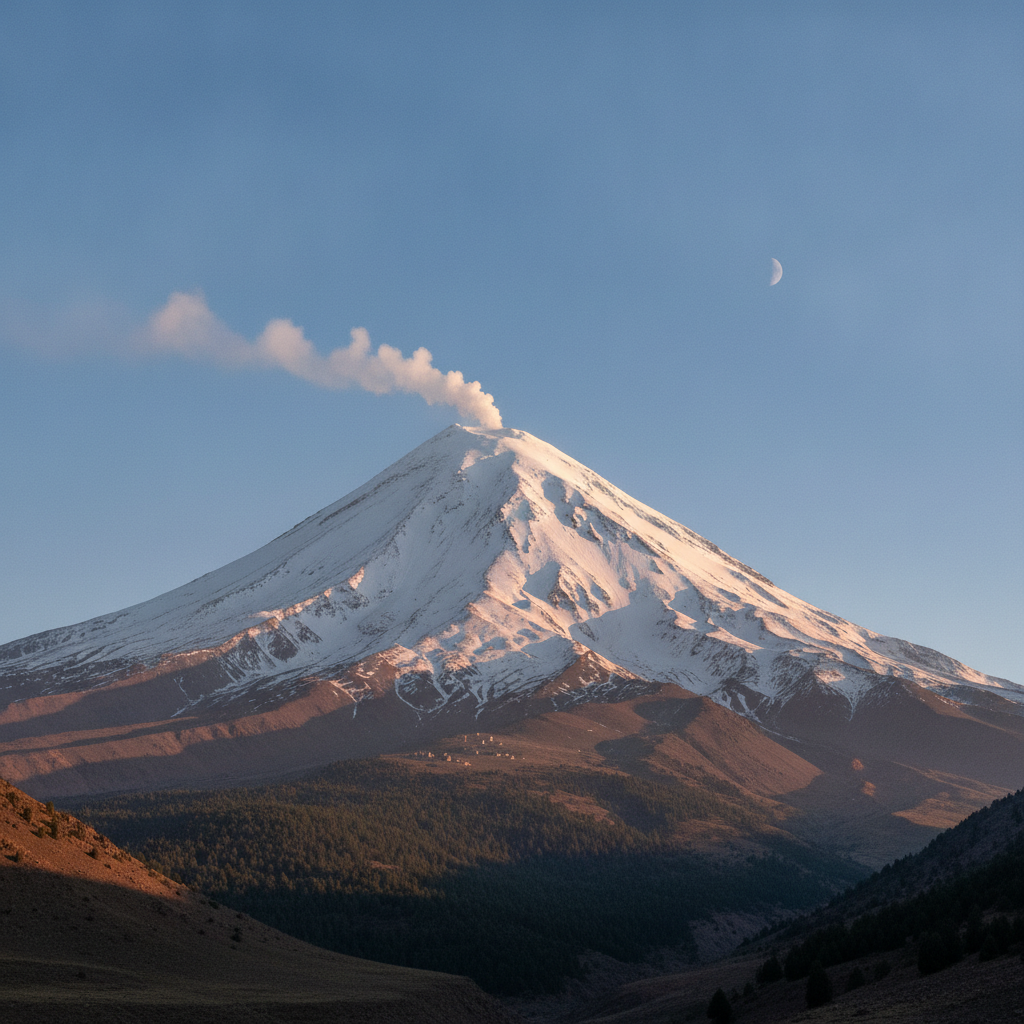
The Alborz mountain heritage above Tehran (the Alborz mountain range rising immediately north of Tehran to 5,610m at Mount Damavand — the most dramatic urban mountain backdrop in the Middle East): the mountain guide. The Alborz (the Alborz Mountains (Reshteh-ye Alborz — رشتهکوه البرز) — the mountain range forming the northern wall of the Tehran plateau: the range stretches 900 km east-west along the southern shore of the Caspian Sea: the altitude (the highest point is Mount Damavand (Kuh-e Damavand — کوه دماوند) at 5,610m — the highest volcano in Asia and the highest peak in the Middle East and the Islamic world: the Tehran ski resorts (the unique characteristic of Tehran is the existence of world-class ski resorts within 50–90 minutes of the city center: the Dizin Ski Resort (the primary ski resort above Tehran (75 km from the city center at 2,650–3,600m altitude): the resort has 23 pistes covering 1,000 vertical meters of skiable terrain — the lift-served vertical is comparable to European resorts: the snow season is December–April: the Shemshak Ski Resort (55 km from Tehran at 2,550–3,050m): the Tochal Ski Resort (the most accessible — the Tochal gondola departs from the Velenjak neighborhood in northern Tehran and ascends to 3,900m (the highest gondola-served skiing area in the world): the gondola ride (12 stops, 45 minutes) is itself a major attraction with views over all of Tehran).
- 4
Tehran Grand Bazaar – The Commercial Heart of Iran
The Tehran Grand Bazaar (the Bazar-e Bozorg-e Tehran — بازار بزرگ تهران — the largest bazaar in Iran and one of the largest covered markets in the world): the bazaar heritage guide. The bazaar (the Tehran Grand Bazaar is a covered arcade market in the heart of old Tehran — the bazaar covers approximately 10 km² and consists of 10+ km of covered arcades (timcheha — the covered vaulted arcades that are the fundamental structural unit of the Persian bazaar): the history (the Tehran Grand Bazaar has existed in some form since the 15th century when Tehran was a small settlement: the current bazaar structure dates primarily to the Qajar period (19th century) and the early Pahlavi period (1920s–1940s): the organization (the Tehran Grand Bazaar is organized by trade: the Carpet Bazaar (Bazar-e Farsh) — the most visited section by foreigners — the largest single carpet market in the world: the Gold Bazaar (Bazar-e Tala): the Copper Bazaar (Bazar-e Mess) — the traditional copper and brassware vendors: the Spice Bazaar: the Textile Bazaar): the political role (the Tehran Grand Bazaar (the bazar) has historically been the primary political power base outside the government — the bazar merchants (bazaaries) financed the Tobacco Protest of 1891 and the Constitutional Revolution of 1905–1911 and the 1979 Islamic Revolution — the strike of the bazaaries in October 1978 was the decisive economic blow that ended the Shah's rule): the Mosque of the Bazaar (the Imam Mosque (Masjed-e Imam) in the south gateway of the Grand Bazaar).
- 5
Tehran Street Food – Koofteh & Dizi
The Tehran street food and culinary culture (the food scene of Tehran — the most diverse and sophisticated urban food culture in the Persian-speaking world): the food guide. The Persian cuisine (the Iranian cuisine is one of the world's oldest complex culinary traditions — Iranian cooking is characterized by: the use of fresh herbs (sabzi — fresh parsley, fenugreek, coriander, and dried fenugreek (shanbalileh) as primary flavoring agents: the use of sour fruit to balance savory dishes (pomegranate molasses, dried sour cherries, dried barberries (zereshk), dried limes (limu omani), and tamarind): the use of saffron (Iran produces approximately 90% of the world's saffron — the saffron of the Khorasan region is the most valuable agricultural product of Iran: the primary Tehran dishes (the primary dishes of Tehran and Iranian cuisine: Dizi (Ab-gusht — آبگوشت): the lamb and chickpea and potato stew served in the traditional metal or stone vessel (the dizi): the dizi is a two-part dish — the broth is drunk from the vessel first, then the solid ingredients are mashed with a pestle and eaten with flatbread: the Koofteh Tabrizi (the giant meatball of Tabriz): a large meatball the size of a grapefruit stuffed with hard-boiled eggs, dried fruits, and nuts — a signature dish of the northwestern Iranian culinary tradition): the ash-e reshteh (the hearty noodle soup with herbs, lentils, and whey — the most important traditional dish of Iranian New Year (Nowruz)): the Tajrish Bazaar (the primary food market of northern Tehran — the Tajrish Bazaar in the Shemiran district serves as the freshest-produce market for northern Tehran).
- 6
Tehran Practical Guide – Getting Around the Mega-City
The Tehran practical travel guide (the logistics and planning information for independent travel to Tehran — the Middle East's largest city and most complex urban environment for foreign visitors): the practical guide. The airport (the Imam Khomeini International Airport (IKA) is 35 km south of central Tehran — the primary international airport: the Metro Line 1 connection (the Tehran Metro Line 1 connects the airport to the city center (Imam Khomeini Station) in approximately 45 minutes — the cheapest and fastest airport connection: the fare TRX 60,000 (approximately USD 1.40): the visa (Iranian visas are available on arrival for nationals of most European countries and many Asian countries at Imam Khomeini Airport — the visa on arrival costs approximately IRR 5,000,000 (approximately USD 12) and takes 30–90 minutes to process: note (US, UK, and Canadian passport holders are NOT eligible for visa on arrival and must arrange a visa in advance through an Iranian consulate or an Iranian tour operator: the currency (the Iranian Rial (IRR) — the exchange rate is approximately 1 USD = 700,000–800,000 IRR in the unofficial market (the official rate is significantly lower and unavailable to tourists): the Metro (the Tehran Metro has 8 lines and 124 stations — the most extensive metro system in the Middle East: the Metro covers the entire city and operates from 06:00 to 23:00: the women's carriage (the first and last carriages of each train are reserved for women — men are not permitted in these carriages: the hijab (a headscarf is legally required for all women in Iran regardless of nationality or religion — the rule is enforced at all public places).
Walk this route with audio
Stories play automatically as you reach each stop — no tapping needed.
More in Tehran
The Atash Bahram Sacred Fire in Yazd Burning Continuously Since 470 CE (1,500+ Years), Zoroastrianism Influencing the Jewish Heaven Hell Angels Devil and Messiah Concepts & the 1639 Treaty of Zuhab Still Defining the Iran-Iraq Border Today
The Bazaaris Funding the Tobacco Protest, Constitutional Revolution, Mosaddegh's Oil Nationalization AND the 1979 Revolution, Damavand's Zahhak Prophecy Paralleling Norse Ragnarok & 70% of Iranian Internet Users on VPN Daily

Tehran Modern: The Northern Districts, the Jordan Street Cafe Scene, the Elahiyeh Lifestyle, Shopping, and the Most Cosmopolitan Single Iranian Urban Culture

Tehran History: The Pahlavi Era, the 1979 Revolution, the Islamic Republic, and the Most Politically Complex Single Modern Iranian Capital
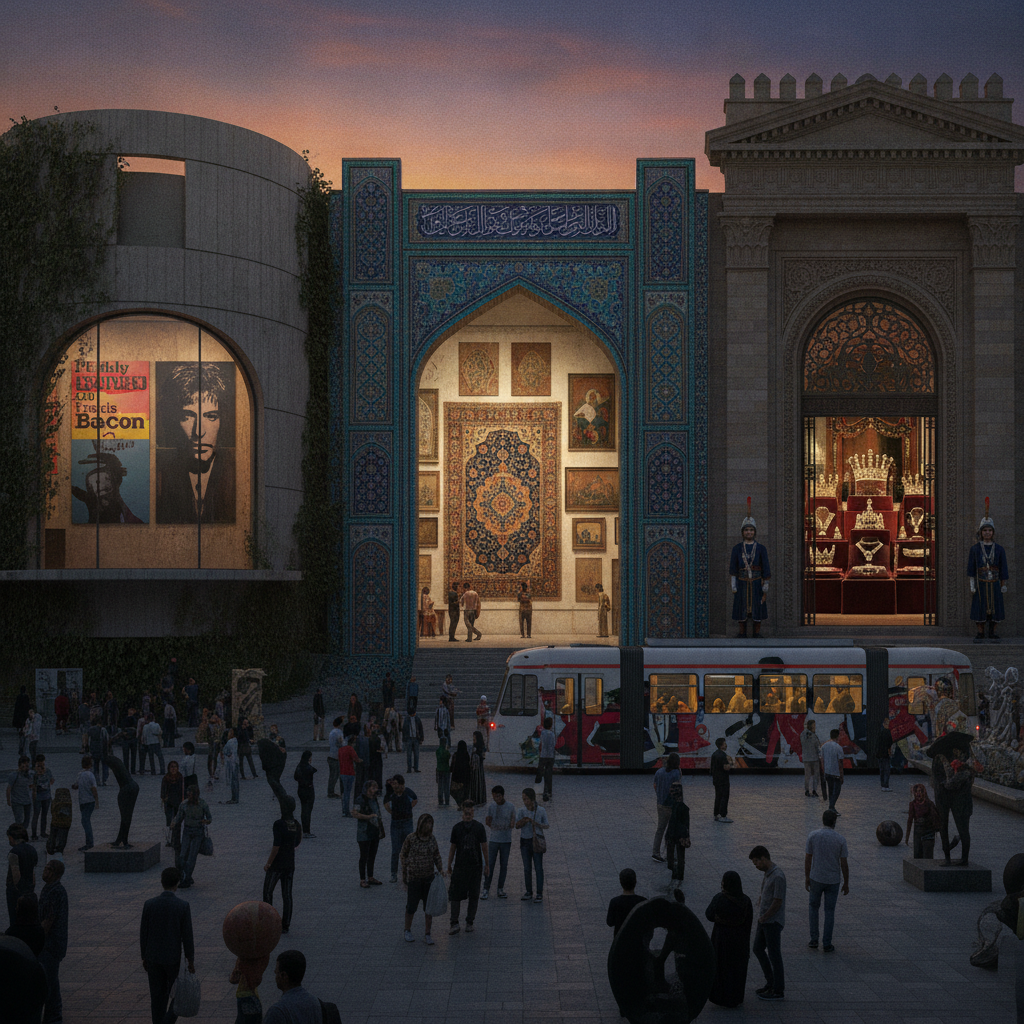
Tehran Museums: The National Jewelry Treasury, the Carpet Museum, the Tehran Museum of Contemporary Art, and the Most Museum-Rich Single Iranian Capital