The Falcon That Fell Into a Hot Spring and Emerged Cooked Inspiring King Vakhtang I to Found Tbilisi, the 1827 Lightning Strike on the Russian Ammunition Depot That Destroyed the Narikala Fortress Interior & the Georgian Visa That Allows 365-Day Stays for 95 Countries
King Vakhtang I's hunting falcon falling into a hot spring and emerging cooked in 447-502 CE, inspiring the city's founding on the warm springs site; the 1827 lightning strike on the Russian ammunition depot in Narikala destroying the fortress interior and leaving the ruined shell visible today; Georgia's world-record 365-day visa-free entry for 95 countries; the Orbeliani bath's Safavid-style facade from the 17th century over a natural 43°C spring; the Kartlis Deda aluminum statue holding wine for friends and a sword for enemies as the symbol of Georgian hospitality; and the 1984 Tengiz Abuladze film Repentance suppressed until 1987 as the most significant Georgian film.
- 1
Old Tbilisi – The Carved Balcony City
The Old Town (Dzveli Tbilisi—the historic core of Tbilisi that preserves the distinctive wooden-balcony architecture and the multicultural neighborhood character of the medieval Georgian-Persian-Russian city): the architectural heritage guide. The wooden balconies (the defining architectural element of Old Tbilisi: the ornamented projecting wooden balconies (ejari)—the carved lattice and fretwork balconies that project 1–2m over the narrow streets of the old town: the function (the balcony extends the living space into the street and allows air circulation in the hot summer; the lattice carving shades the interior while allowing views out): the construction (the balconies are built in the traditional Georgian carpentry tradition using walnut or mulberry wood, with turned posts supporting the projecting floor and carved lattice panels screening the sides—the most elaborate examples have multiple layers of carved geometric patterns): the neighborhood character (the Old Town contains three historic neighborhoods that represent Tbilisi's multicultural heritage: the Abanotubani (the sulfur bath district—the primary Persian-era architectural heritage zone, centered on the domed sulfur bath buildings and the Metekhi Church cliff); the Kala (the walled city core—the original medieval Georgian settlement with the Narikala Fortress above); the Sololaki (the 19th-century Russian Imperial residential district—the colonnaded and decorated apartment facades): the preservation (Old Tbilisi was partially damaged by the 2002 earthquake (magnitude 4.5) and has seen variable-quality restoration under both Soviet and post-independence governments—the UNESCO monitoring program since 2007 tracks the preservation quality of the 750 officially listed heritage buildings).
- 2
The Sulfur Baths of Abanotubani – Tbilisi's Origin Story
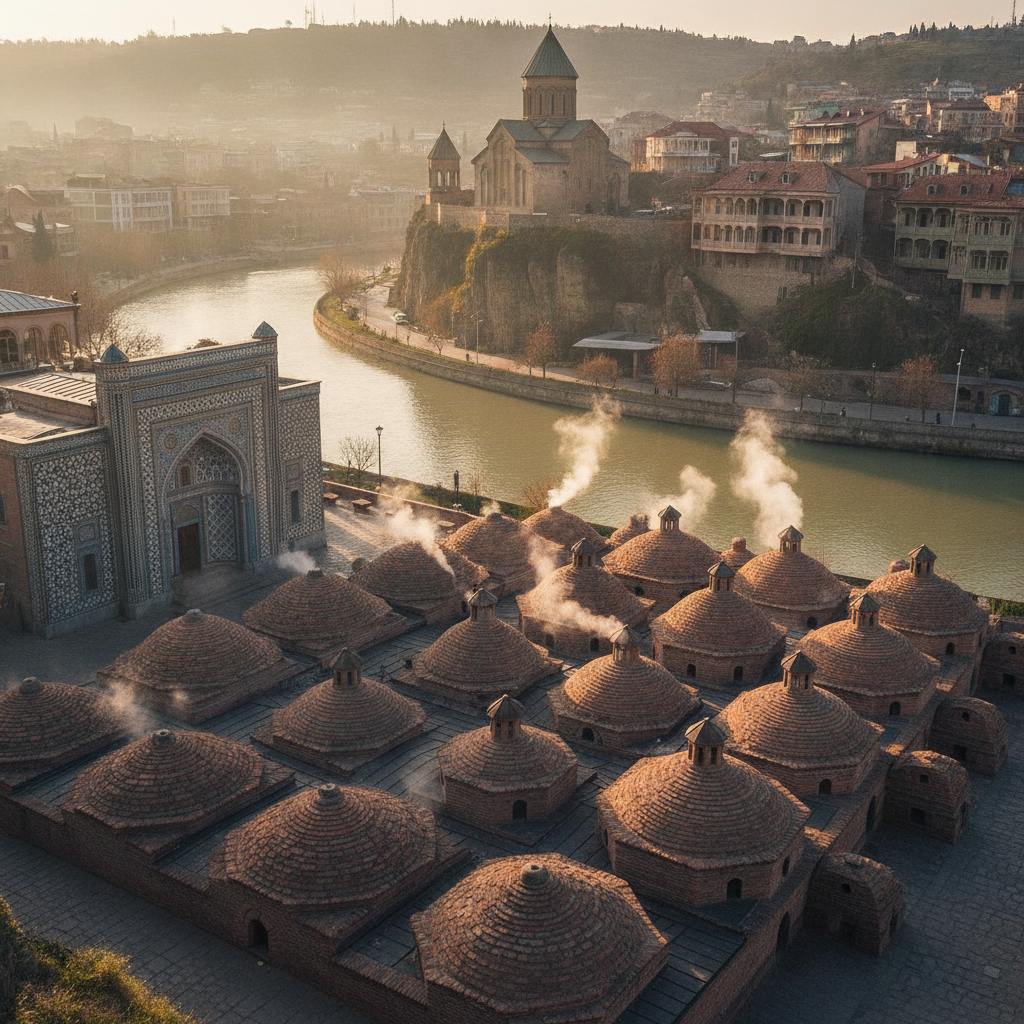
The Abanotubani sulfur baths (the cluster of natural hot-spring bathhouses in the Abanotubani (Bath District) of Old Tbilisi—the reason the city exists and the continuous source of its name): the sulfur bath guide. The origin story (the founding legend of Tbilisi: King Vakhtang I Gorgasali (r. 447–502 CE) of Kartli (eastern Georgia) was hunting in the Kura River valley when his falcon caught a pheasant and both fell into a hot spring—the pheasant emerged cooked; the king recognized the strategic value of the hot water site and founded the city (then called Tbilisi—from the Georgian word tbili (თბილი)—'warm'): the geology (the Tbilisi hot springs emerge from the volcanic fault zone beneath the Tabori hill at the base of the Metekhi cliff—the water temperature at source is 37–43°C; the sulfur content (hydrogen sulfide—H₂S) gives the water its characteristic egg smell and its claimed therapeutic properties for skin conditions, joint pain, and respiratory problems): the bath buildings (the 5 surviving bathhouse complexes in the Abanotubani: the Orbeliani (the most architecturally elaborate—the facade in the Persian Safavid style with glazed tile exterior and muqarnas doorway arches); the Gulo; the Chreli-Ubani; the Royal Baths; the Old Maidan baths—all built in the 17th–19th century over the natural spring vents): the bath experience (a private room in the Orbeliani or Chreli-Ubani baths: 1 hour, USD 15–25 including the massage (kisi—the exfoliating scrub with a rough-fiber mitt) performed by the bathhouse attendant (mekise)).
- 3
Narikala Fortress – Tbilisi's 1,600-Year Guardian
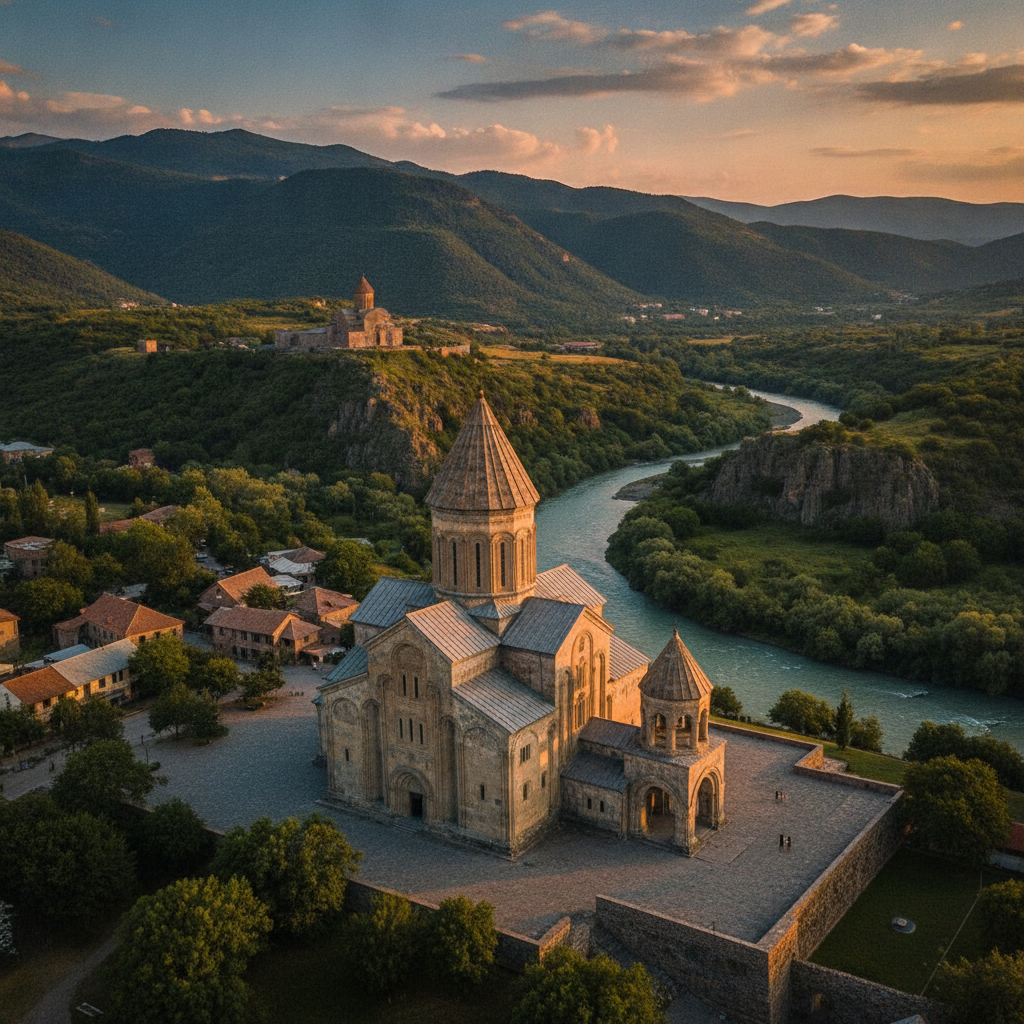
The Narikala Fortress (the ancient citadel above Old Tbilisi—the fortification that has guarded the Kura River crossing since the 4th century CE): the fortress heritage guide. The history (Narikala (ნარიყალა—'little fortress' or 'dear fortress' in Old Georgian, from the Persian Narin Qala—'small fortress')—the fortress was first constructed in the 4th century CE during the Sassanid Persian occupation of eastern Georgia; significantly expanded by the Arab governors (Eristavi) in the 7th–9th century CE; reached its greatest extent under the Georgian kings David the Builder (r. 1089–1125) and Queen Tamar (r. 1184–1213): the structure (the fortress consists of two sections: the lower fortress (facing the Kura River) and the upper fortress (at the summit ridge)—the total area approximately 4 hectares; the walls are constructed in the Georgian rubble masonry style (undressed limestone blocks in lime mortar): the 1827 explosion (the Russian Imperial Army ammunition depot in the lower fortress was struck by lightning in 1827 and the resulting explosion destroyed most of the lower fortress interior, leaving the shell of walls visible today—the Orthodox Church of St. Nicholas within the lower fortress was rebuilt in 1996–2004 by Georgian craftsmen): the cable car (the Tbilisi cable car from Rike Park (the park on the left bank of the Kura) to the Narikala ridge: the 500m cable car provides the fastest ascent to the fortress and the Kartlis Deda ('Mother of Georgia') statue (20m aluminum figure, 1958)—the statue's left hand holding a bowl of wine (for friends) and right hand holding a sword (for enemies) is the symbol of Georgian hospitality).
- 4
Rustaveli Avenue – Georgia's Cultural Spine
Rustaveli Avenue (the primary boulevard of Tbilisi—the 1.5km tree-lined avenue named for the 12th-century poet Shota Rustaveli that serves as the main axis of Georgian civic and cultural life): the avenue guide. The institutions (the major institutions on Rustaveli Avenue: the Georgian National Museum (the primary museum of Georgia—the Saunje (Treasury) collection includes the most important gold and jewelry artifacts from the Colchian, Iberian, and medieval Georgian kingdoms, including 6th-century BCE Colchian gold torques and the Aladastri icon collection); the Rustaveli National Theater (founded 1921—the primary dramatic theater of Georgia, in a classical building designed by Alexander Shimkevich (1901); the Shota Rustaveli State Film Studio (Kartuli Pilmi—the Georgian film studio established 1927 that produced some of the most internationally acclaimed Soviet films, including Tengiz Abuladze's Repentance (1984—the most significant Georgian film, a parable of Stalinist terror that was suppressed until 1987 and then became a sensation of the Gorbachev glasnost period)): the architecture (Rustaveli Avenue's architecture spans three periods: the Russian Imperial neoclassical (1880s–1910s—the Parliament building, the Opera House (Teatro Rustaveli), the Caravanserai arcade); the Soviet modernist (1920s–1970s—the Rustaveli Cinema palace (1938), the Communist Party headquarters (now the parliament annex)); the post-Soviet commercial: the Marriott Courtyard and the gallery-storefronts).
- 5
Mtatsminda – The Sacred Mountain Above Tbilisi
Mtatsminda (the mountain above Tbilisi—the forested hill that rises immediately west of the old town to 770m): the mountain heritage guide. The Mtatsminda Pantheon (the Georgian Pantheon of writers and public figures on the terrace of the Mamadaviti Church (the Church of St. David of Gareji) on the Mtatsminda slope: the pantheon contains the graves of the most celebrated Georgians of the 19th–20th century: the poet Akaki Tsereteli; the writer Ilia Chavchavadze (the founder of modern Georgian literary nationalism, canonized by the Georgian Orthodox Church as a saint); the composer Zakaria Paliashvili; the playwright and novelist Giorgi Eristavi): the cable car (the Mtatsminda Park funicular (built 1905, rebuilt 1938, last renovated 2012)—the funicular from Freedom Square to the Mtatsminda Park (10 minutes): the Mtatsminda Park at the summit contains the amusement park rides (the Ferris wheel at 770m with the panoramic view of Tbilisi and the Greater Caucasus mountains to the north is the most spectacular vantage point in the city): the TV tower (the Mtatsminda TV Tower (274m—built 1972 in reinforced concrete on the 770m hilltop: total height 1,044m above sea level): the Tbilisi panorama (the view from Mtatsminda Park in clear weather (best in October–November) extends: north to the Greater Caucasus mountains (the main ridge 100 km away, with Mount Kazbek (5,047m) visible on clear days); east across the Kura River valley; south to the Trialeti mountains).
- 6
Tbilisi Practical Guide – Arrival, Orientation & Budget
The Tbilisi practical guide (the essential logistics for visiting the capital of Georgia—the most visited country in the South Caucasus): the practical handbook. The airport (Tbilisi International Airport (TBS)—14 km east of the city center: direct connections to Istanbul (3h30m, multiple daily (Turkish Airlines, Pegasus)); Tel Aviv (3h30m, daily (Israir, Wizz Air)); Vienna (4h, daily (Austrian Airlines)); Warsaw (4h, daily (LOT, Wizz Air)); Dubai (5h, daily (FlyDubai)); Moscow (2h45m, daily (Georgian Airways, S7)); Paris (4h30m, 3× weekly (Air France)): the visa (citizens of 95 countries (including all EU, USA, UK, Canada, Australia) can enter Georgia without a visa for stays up to 365 days—the most liberal entry policy in the world): the currency (the Georgian Lari (GEL): 1 USD = approximately 2.7 GEL (2024)): the transport in the city (the Tbilisi Metro (2 lines, 23 stations)—the primary transport for most major sights; the cable car (Narikala: from Rike Park); the funicular (Mtatsminda): the cost of living (Tbilisi is among the most affordable European-standard capitals: a full restaurant dinner USD 10–20; a taxi within the center USD 3–5 via the Bolt or Yandex Go app; a hostel dorm USD 10–15): the seasonal advice (the optimal seasons are May–June (warm, lush vegetation, the rose blooming season) and September–October (harvest season, the wine pressing (rtveli) in the Kakheti wine region 2 hours east of Tbilisi)).
Walk this route with audio
Stories play automatically as you reach each stop — no tapping needed.
More in Tbilisi
Tbilisi Soviet Heritage: The Soviet Architecture, the Stalin Era, the Rose Revolution, and the Most Complex Single Post-Soviet Caucasus Capital Transformation
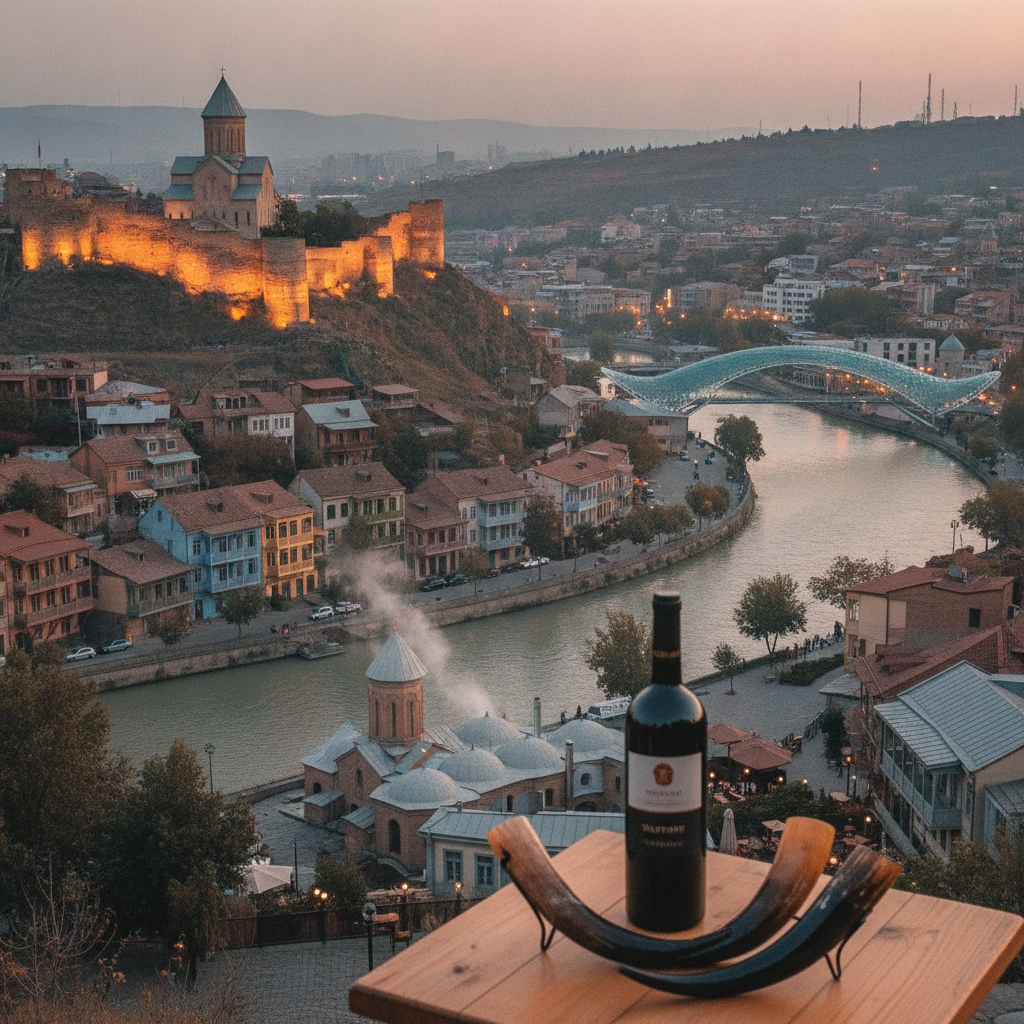
Tbilisi Essential: The Old Town, Narikala Fortress, the Sulfur Baths, Metekhi Church, the Georgian Wine, and the Most Romantically Atmospheric Single Caucasus Capital
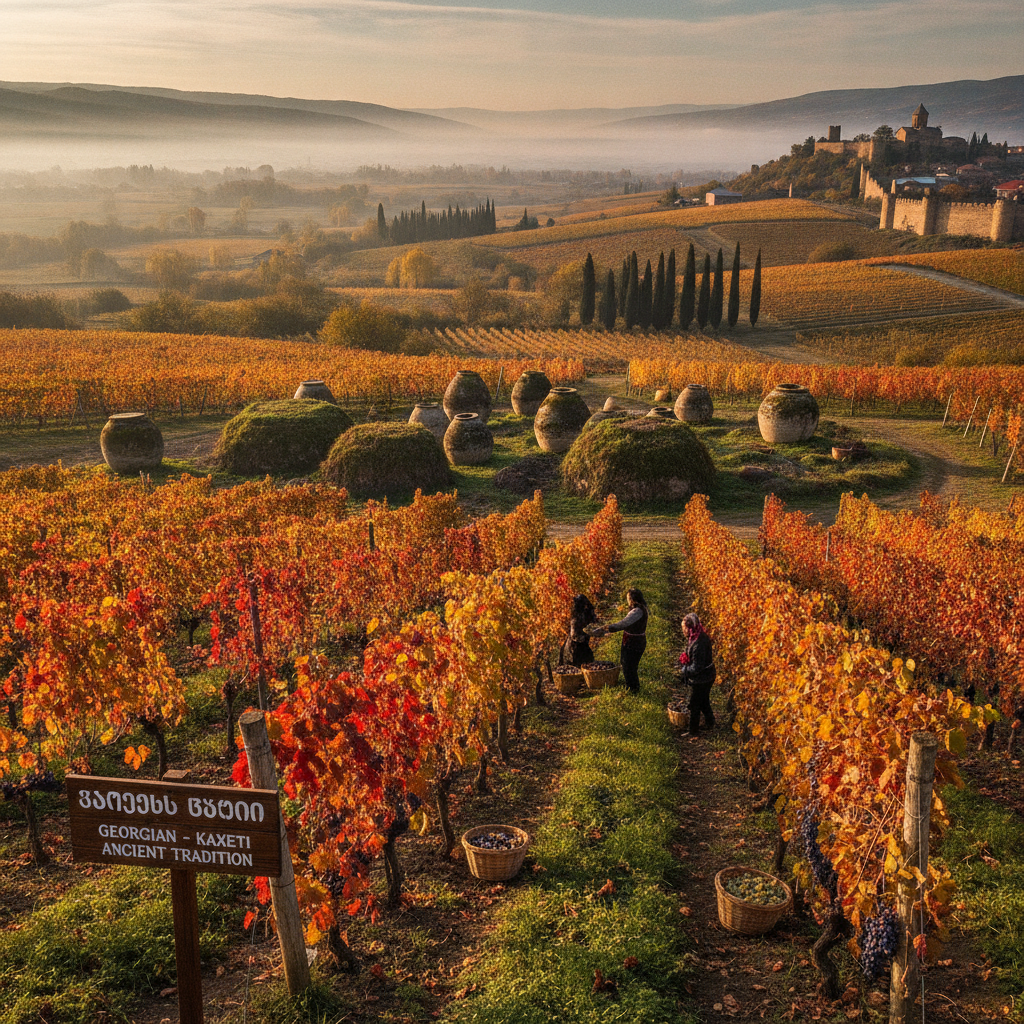
Georgia Wine Country: The Kakheti Region, Signagi, Telavi, the Wine Tasting, and the Most Ancient Single Wine Culture Day Trip from Tbilisi
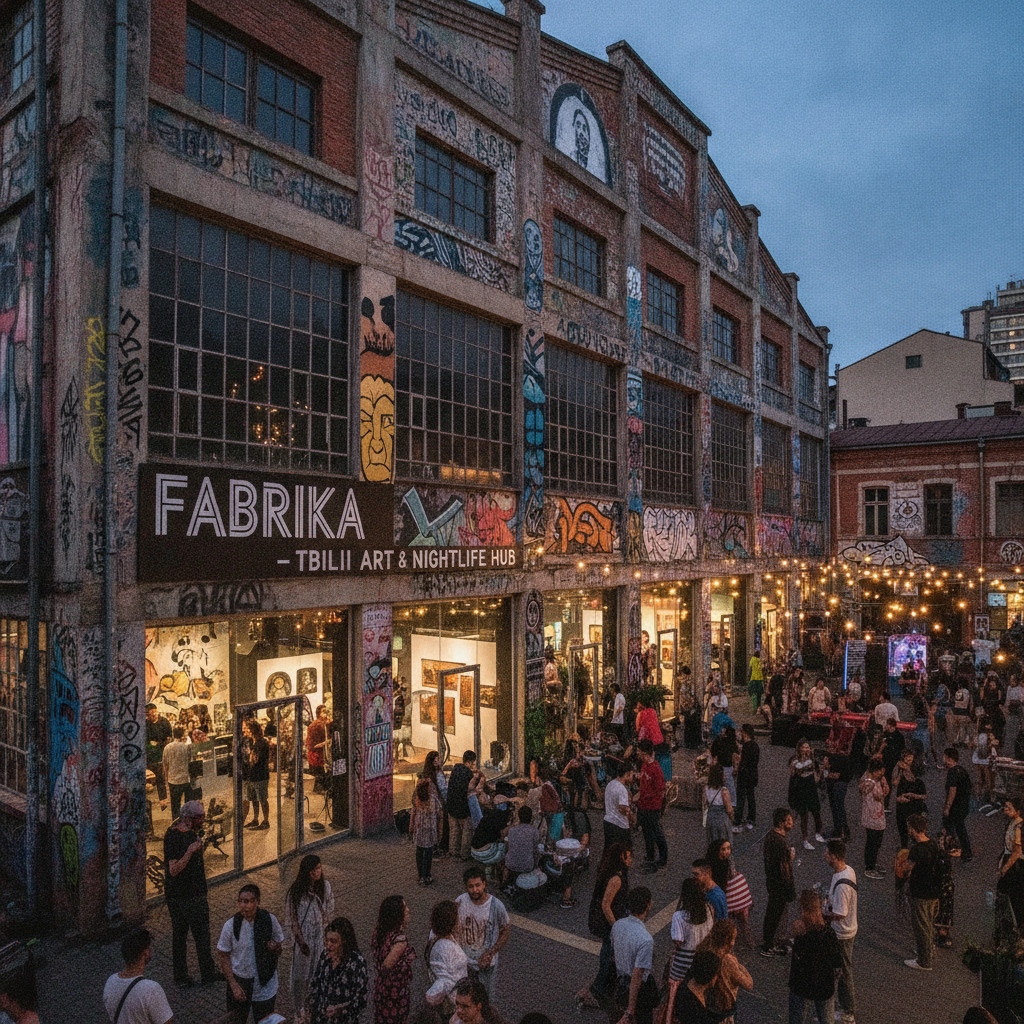
Tbilisi Arts: Fabrika, the Contemporary Gallery Scene, the Nightlife, the Creative Hub, and the Most Artistically Vibrant Single Caucasus Capital
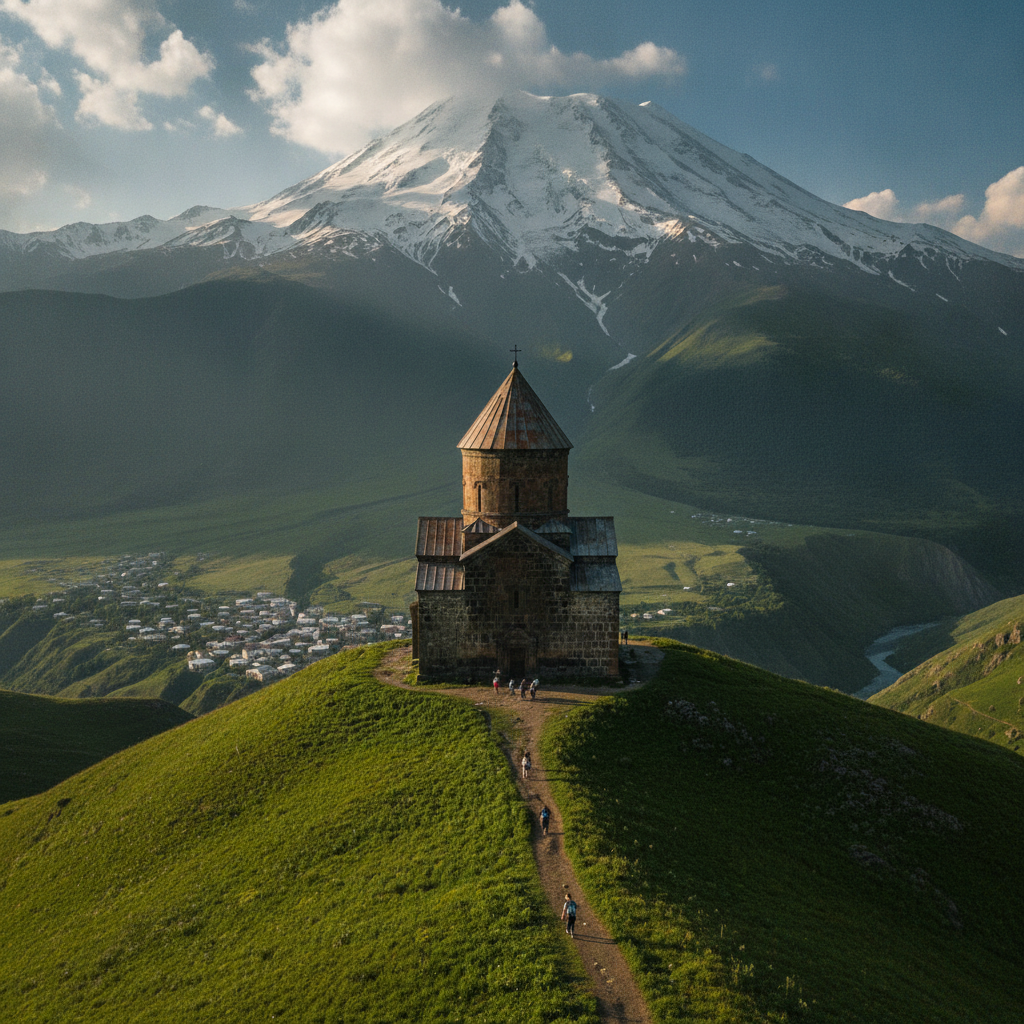
The 6,000 BCE Gadachrili Gora Wine Residue Making Georgia the World's Oldest Winemaking Civilization, the Khinkali Dumpling Broth Drunk Through a Bite Before Eating & the Gergeti Trinity Church at 2,170m With Kazbek at 5,047m Directly Behind