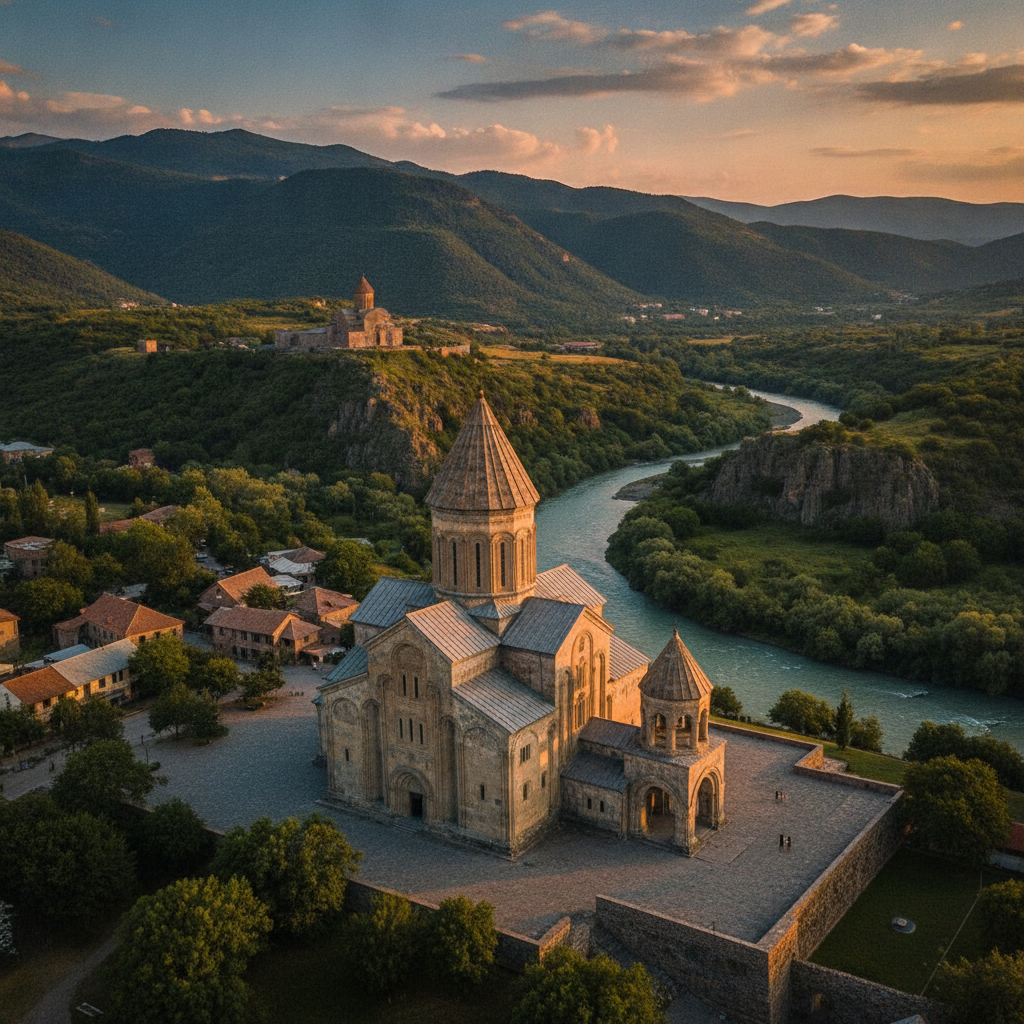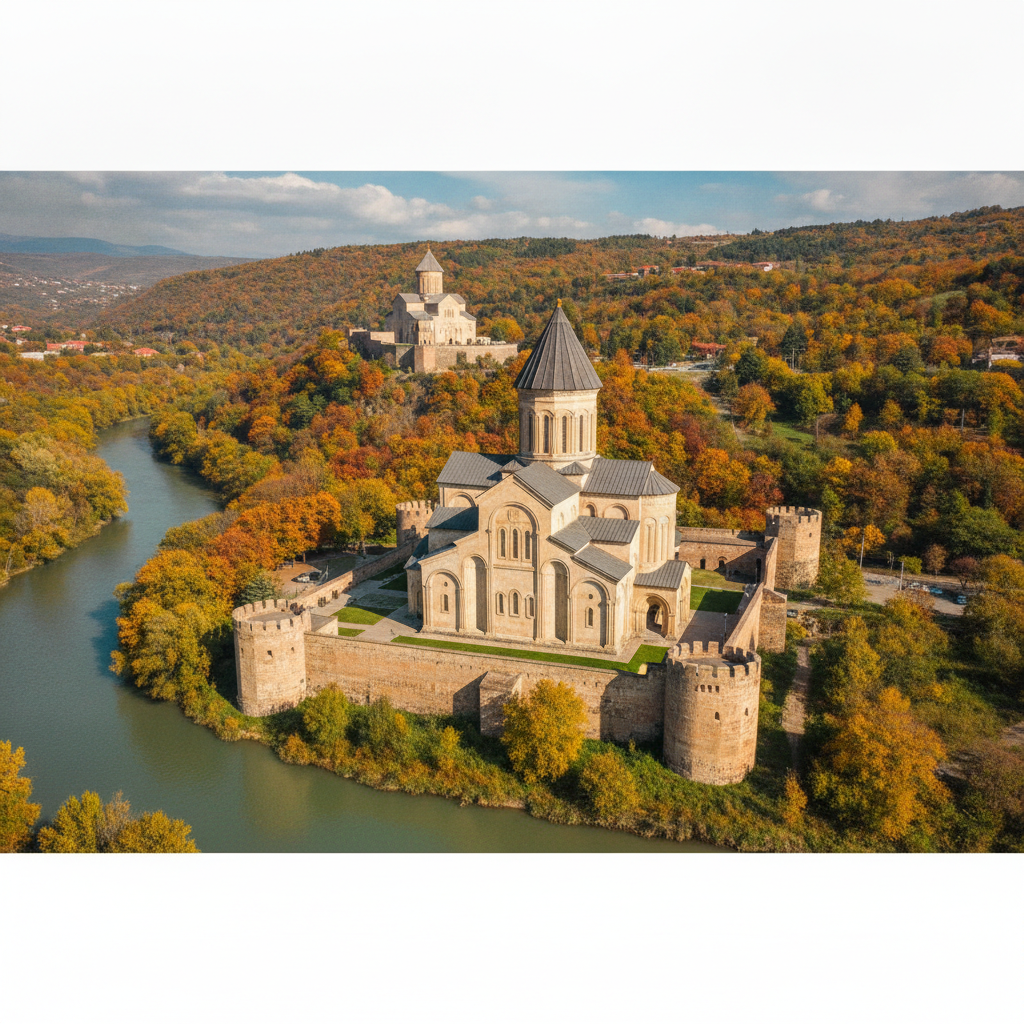
Nona Gaprindashvili the First Female World Chess Champion (1962-1978) From Georgia Making the Country the Most Chess-Successful Nation Per Capita, Dinamo Tbilisi's 1981 UEFA Cup Winners Cup & the 2008 War That Brought Russian Forces to Within 40km of the Georgian Capital
Georgia's Nona Gaprindashvili winning the Women's World Chess Championship in 1962 and holding it until 1978 — making Georgia the most chess-successful country per capita by a wide margin; Dinamo Tbilisi winning the 1981 UEFA Cup Winners Cup as the only Georgian club to win a major European trophy; Russian forces advancing to 40km from Tbilisi in August 2008 before the French ceasefire; Chidaoba wrestling producing 10 Olympic gold medals since 1952 and inscribed UNESCO ICH in 2018; the Saakashvili Ministry of Justice transparent glass building expressing anti-corruption symbolism through architecture; and the Barbarestan restaurant menu derived from an 1874 cookbook found in a Tbilisi market.
- 1
Tbilisi in Literature – Pushkin, Lermontov & Gamsakhurdia
The literary heritage of Tbilisi (the city that inspired some of the most celebrated works of Russian and Georgian literature): the literary guide. The Russian Romantic writers (Tbilisi was the primary destination for Russian Romantic writers seeking the exotic South—the Caucasus as the Russian Orient: Alexander Pushkin visited Tbilisi in 1829 during the Russo-Turkish War and described the city in Voyage to Erzurum (1836): 'I entered and found myself in narrow streets and single-story houses. I was constantly reminded of Kishinev': Mikhail Lermontov was stationed in the Caucasus twice (1837 and 1840–1841) as punishment for his poem Death of a Poet (1837): Lermontov's poem Mtsyri (1840) and the prose poem A Hero of Our Time (1840) are the defining literary works of the Russian Caucasus Romanticism—set primarily in the Caucasus landscape that Lermontov knew from his military postings in and around Tbilisi): the Georgian literary tradition (the defining work of Georgian literature: Shota Rustaveli's The Knight in the Panther's Skin (ვეფხისტყაოსანი—Vepkhistqaosani, 1220 CE)—the 12th-century epic poem considered the national poem of Georgia: the poem's protagonist Tariel, a panther-skin-wearing knight, undertakes a quest for his imprisoned beloved—the poem's themes of friendship, loyalty, and the celebration of women as equals to men are unusual in medieval European literature: the poem's opening lines are quoted in the Parliament of Georgia: the Gamsakhurdia (Zviad Gamsakhurdia—the first elected president of independent Georgia (1991) and the son of the novelist Konstantine Gamsakhurdia—the political and literary dynasty is uniquely Georgian).
- 2
The Tbilisi Hippodrome & Sport Heritage
The sport and recreation heritage of Tbilisi (the city's distinct sporting culture—particularly Georgian wrestling, chess, and the horse culture of the Caucasus): the sport heritage guide. The Georgian wrestling (Chidaoba (ჭიდაობა)—the Georgian national style of wrestling, one of the oldest martial arts traditions in the world with continuous documented practice from the 3rd century BCE (depicted on Greek-period pottery from the Colchian archaeological sites on the Black Sea): the rules (Chidaoba competitors stand upright and grip each other's belt—the bout is won by throwing the opponent to the ground with both shoulder blades touching): the contemporary status (Chidaoba was inscribed on the UNESCO Intangible Cultural Heritage List in 2018; the Georgian national wrestling team has produced 10 Olympic gold medalists in freestyle wrestling since 1952): the chess tradition (Georgia is the most successful chess nation per capita in the world—the Georgian women's team has won the Women's Chess Olympiad 5 times; the Georgian grandmasters include Nona Gaprindashvili (the first female world chess champion, 1962–1978), and Maya Chiburdanidze (world champion 1978–1991)—both from Georgia): the Dinamo Tbilisi (the Dinamo Tbilisi football club—the winner of the UEFA Cup Winners' Cup in 1981—the only Georgian football club to win a major European trophy: the Dinamo Tbilisi stadium (Boris Paichadze National Stadium) capacity 54,000 is the largest stadium in the South Caucasus).
- 3
Families in Tbilisi – Children's Guide to Georgia
The Tbilisi families guide (the practical guide for visiting Tbilisi with children—the attractions, activities, and child-appropriate experiences): the families travel guide. The Mtatsminda amusement park (the Mtatsminda Park at 770m—reached by the 1905 funicular (a heritage transport experience in itself): the amusement park has 20+ rides including the Ferris wheel (the view is the most spectacular family attraction in Tbilisi); the rollercoaster; and the children's carousel): the Fabrika food court (the Fabrika creative hub food court (6 restaurants in the former factory courtyard)—the most family-friendly dinner venue in Tbilisi: the courtyard has space for children to run; the food options include pizza, Georgian food, burgers, and ice cream; open until 23:00): the botanical garden (the Tbilisi Botanical Garden on the slope below the Narikala Fortress: 128 hectares of planted gardens with a waterfall (the Leghvtakhevi waterfall in the ravine below the garden—accessible via the garden or the Chardakhi Street path from the Old Town): the garden has a children's playground and a coffee kiosk and is one of the few free green spaces in the Old Town area): the khinkali making class (the most popular children's food experience in Tbilisi—the khinkali-making class at the cooking schools in the Old Town (the Culinary Studio Culinarium, the Georgian Food Studio)—children twist the khinkali dough knot (kudi) which requires 26 pleats by tradition): the Narikala (the fortress walls are accessible and safe to walk for older children; the cable car is an accessible mode of ascent for young children).
- 4
Georgia's Conflict Zone – Tbilisi & the August 2008 War
The context of Georgia's territorial conflicts (the background to the 2008 Russo-Georgian War and the frozen conflicts that define Georgia's geopolitical situation): the contemporary geopolitics guide. The breakaway regions (Georgia has two Russian-backed breakaway regions: South Ossetia (capital Tskhinvali—a region of 3,900 km² with approximately 50,000 inhabitants, recognized as independent by Russia and 4 other UN member states but by no others; the de facto Russian protectorate since 2008); Abkhazia (the Black Sea coast region of 8,660 km² with approximately 240,000 inhabitants, similarly recognized only by Russia and 4 others): the August 2008 war (the Five-Day War (August 7–12, 2008): the Georgian military attack on Tskhinvali on August 7–8 (responding to South Ossetian provocations) prompted a Russian military counter-offensive that advanced to within 40 km of Tbilisi before a French-brokered ceasefire on August 12—the war resulted in the Russian recognition of South Ossetian and Abkhazian independence and a permanent Russian military presence in both territories): the impact on Tbilisi (the Russian advance to within 40 km of Tbilisi created mass panic in the capital—approximately 100,000 Tbilisi residents fled the city in the 4 days of the Russian advance; the war significantly reduced Georgia's NATO membership prospects and increased Russia-Georgia tensions that persist): the current situation (the Administrative Boundary Lines (ABL) between Georgia and the two Russian-backed regions are de facto international borders—crossing from Georgia proper into South Ossetia or Abkhazia from the Georgian side is currently not possible for foreign visitors).
- 5
Tbilisi's Architecture of Boom & Change
The contemporary architecture of Tbilisi (the buildings constructed since Georgian independence in 1991 that have dramatically altered the city's skyline and urban character—for better and worse): the contemporary architecture guide. The Saakashvili-era (2004–2013) buildings (the most radical architectural transformation in Georgian history since the Russian Imperial period: the Peace Bridge (2010—Michele De Lucchi's steel-and-glass pedestrian arch bridge over the Kura, 150m span, covered with a glass canopy in LED lighting—the most discussed single contemporary building in Tbilisi); the Ministry of Internal Affairs (2004—a bizarre glass building with two large domes on a podium, directly adjacent to the Rustaveli Avenue; the Ministry of Justice (2009—the transparent glass building in the Gldani district expressing the Saakashvili anti-corruption symbolism through architectural transparency)); the Presidential Palace (2004—a white stone building with a large glass-and-steel dome on the Avlabari hill, visible from across the city): the Towers of Tbilisi (the twin 200m towers in the Vake district (under construction 2024)—the tallest buildings under construction in Georgia): the renovation controversy (the Old Town renovation program 2010–2016 replaced authentic vernacular buildings with high-quality but artificial-feeling reconstructions in the Shardeni Street tourist zone—the most contested heritage conservation decision in recent Georgian history): the Irakli's Palace (the Avlabari Presidential Palace complex—the palatial complex criticized as an inappropriate symbol of presidential excess built during the 2006–2009 economic boom).
- 6
Georgia in Three Days – The Tbilisi-Mtskheta-Kazbegi Circuit
The Georgia 3-day circuit (the optimal itinerary for a first visit to Georgia, combining Tbilisi's urban experience with the two most essential day trips): the circuit itinerary guide. Day 1 (Tbilisi): morning: arrive from airport (metro line 1 to Liberty Square—GEL 1); check in at Old Town hostel or guesthouse: 10:00 — walk the Old Town: Shardeni Street, the Abanotubani sulfur bath entry (Orbeliani bath, 1h private room, USD 20); 13:00 — khinkali lunch at Machakhela (the most reliable and tourist-friendly khinkali restaurant, 4 locations): 15:00 — Narikala by cable car from Rike Park; 16:00 — Kartlis Deda statue and fortress walls; 17:30 — return to old town by foot via the Nariqala steps; 19:00 — dinner at Barbarestan or Shavi Lomi; 21:00 — wine bar (the wine bars on Shardeni Street (G.Vino, the Winery, or Taste Georgia) serve Georgian natural wine by the glass from USD 3–6). Day 2 (Mtskheta): 09:00 — marshrutka from Didube (GEL 1.50, 30 min); Svetitskhoveli Cathedral (1h); Jvari Monastery (1h drive + hike); lunch in Mtskheta: Samikitno restaurant (the best traditional Georgian food in Mtskheta); return to Tbilisi by 16:00; evening: Fabrika creative hub (dinner, gallery, bar). Day 3 (Kazbegi): 08:00 — marshrutka or taxi from Didube (3h to Stepantsminda); 11:30 — hike to Gergeti Church (2h30m uphill); 14:00 — lunch at Stepantsminda village; 17:00 — return marshrutka to Tbilisi; 20:30 — Tbilisi for final dinner at the Mtsvadi grill.
Walk this route with audio
Stories play automatically as you reach each stop — no tapping needed.
More in Tbilisi
Tbilisi Soviet Heritage: The Soviet Architecture, the Stalin Era, the Rose Revolution, and the Most Complex Single Post-Soviet Caucasus Capital Transformation
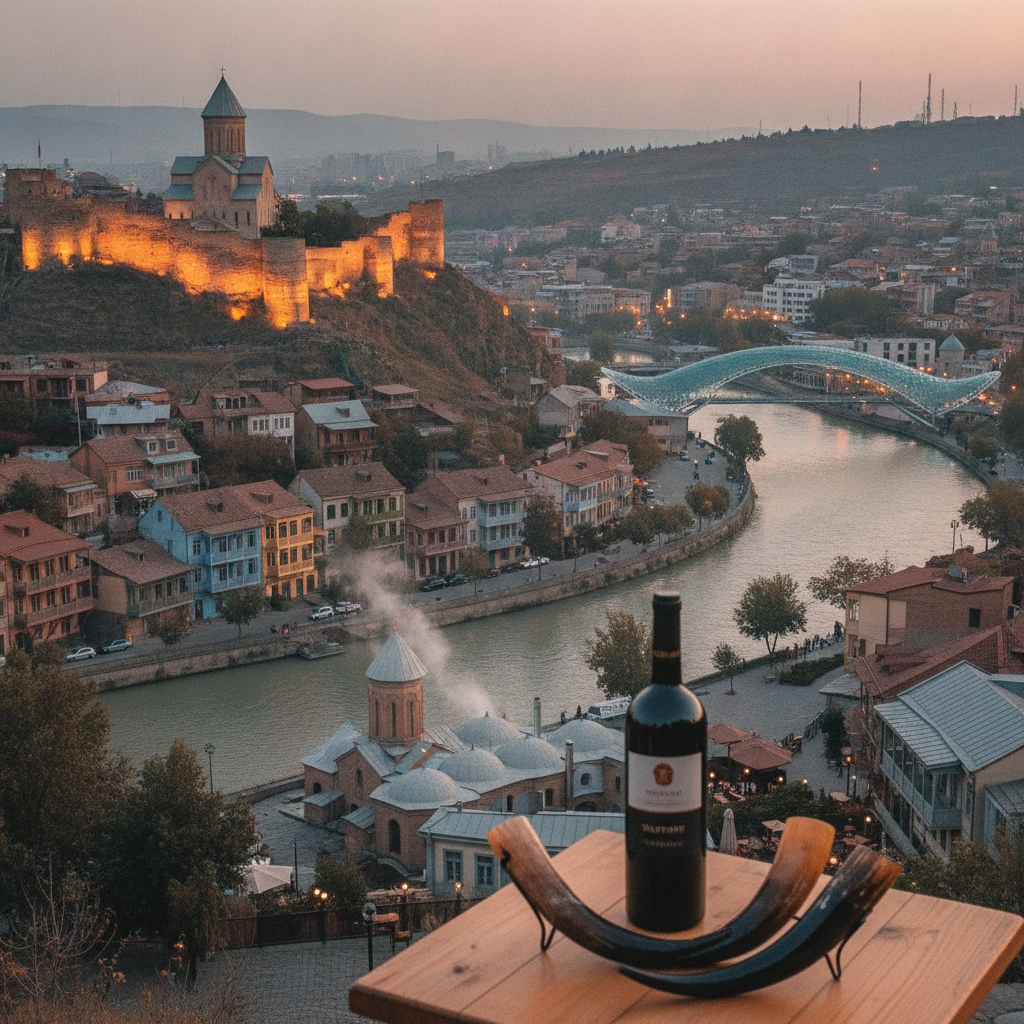
Tbilisi Essential: The Old Town, Narikala Fortress, the Sulfur Baths, Metekhi Church, the Georgian Wine, and the Most Romantically Atmospheric Single Caucasus Capital
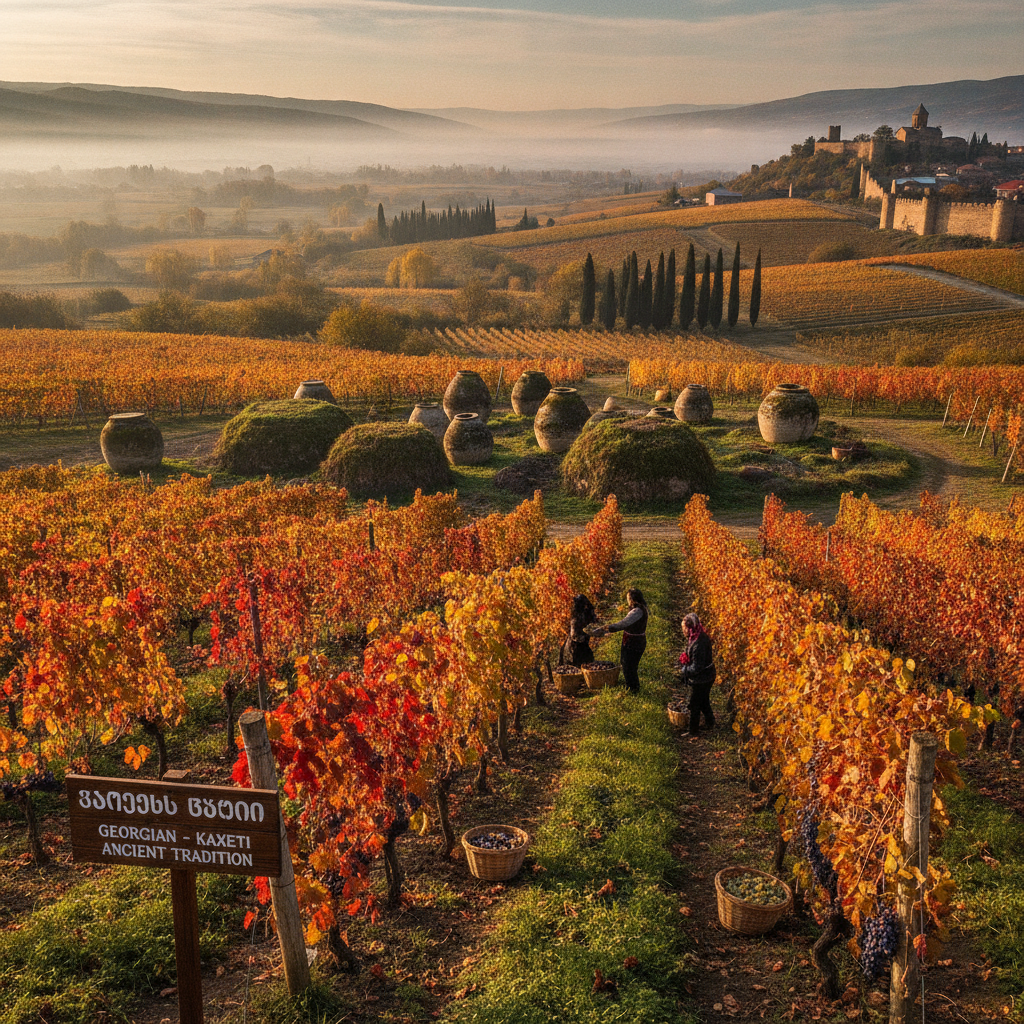
Georgia Wine Country: The Kakheti Region, Signagi, Telavi, the Wine Tasting, and the Most Ancient Single Wine Culture Day Trip from Tbilisi
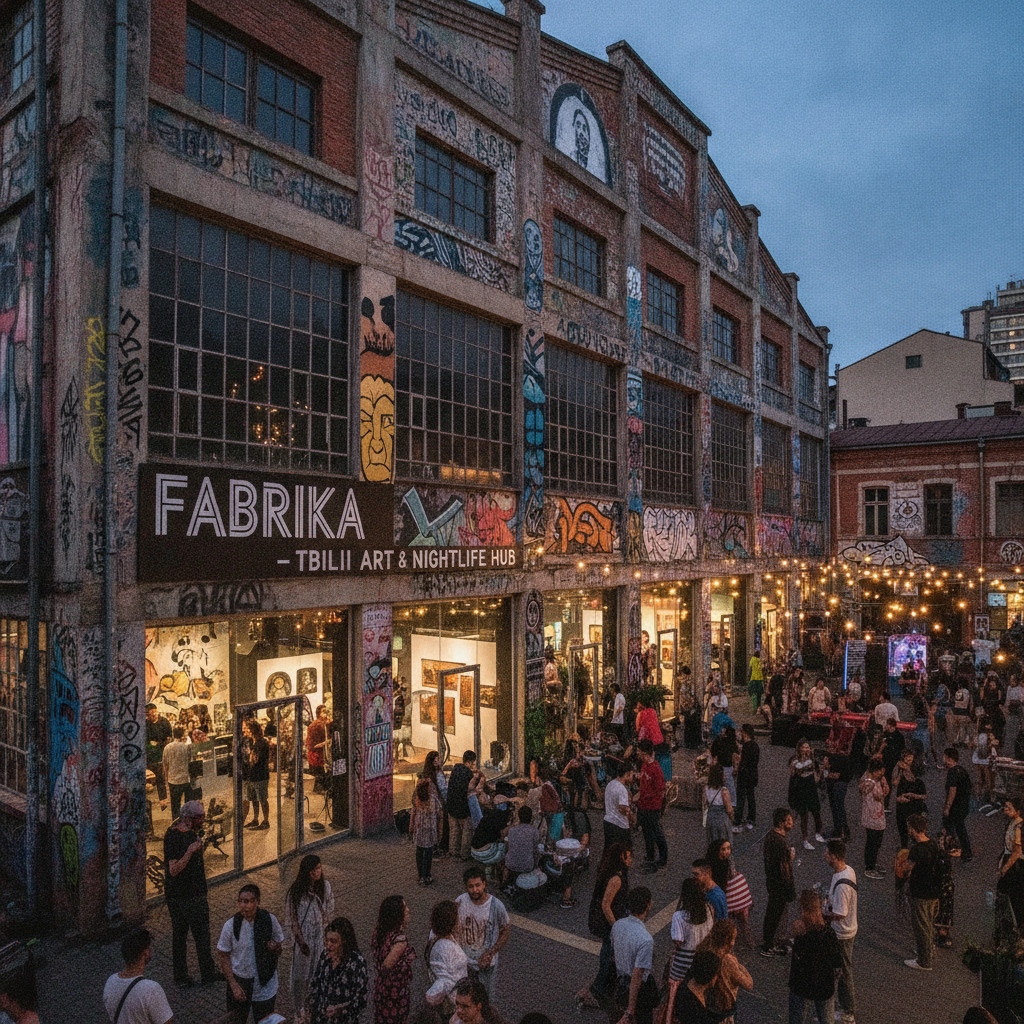
Tbilisi Arts: Fabrika, the Contemporary Gallery Scene, the Nightlife, the Creative Hub, and the Most Artistically Vibrant Single Caucasus Capital
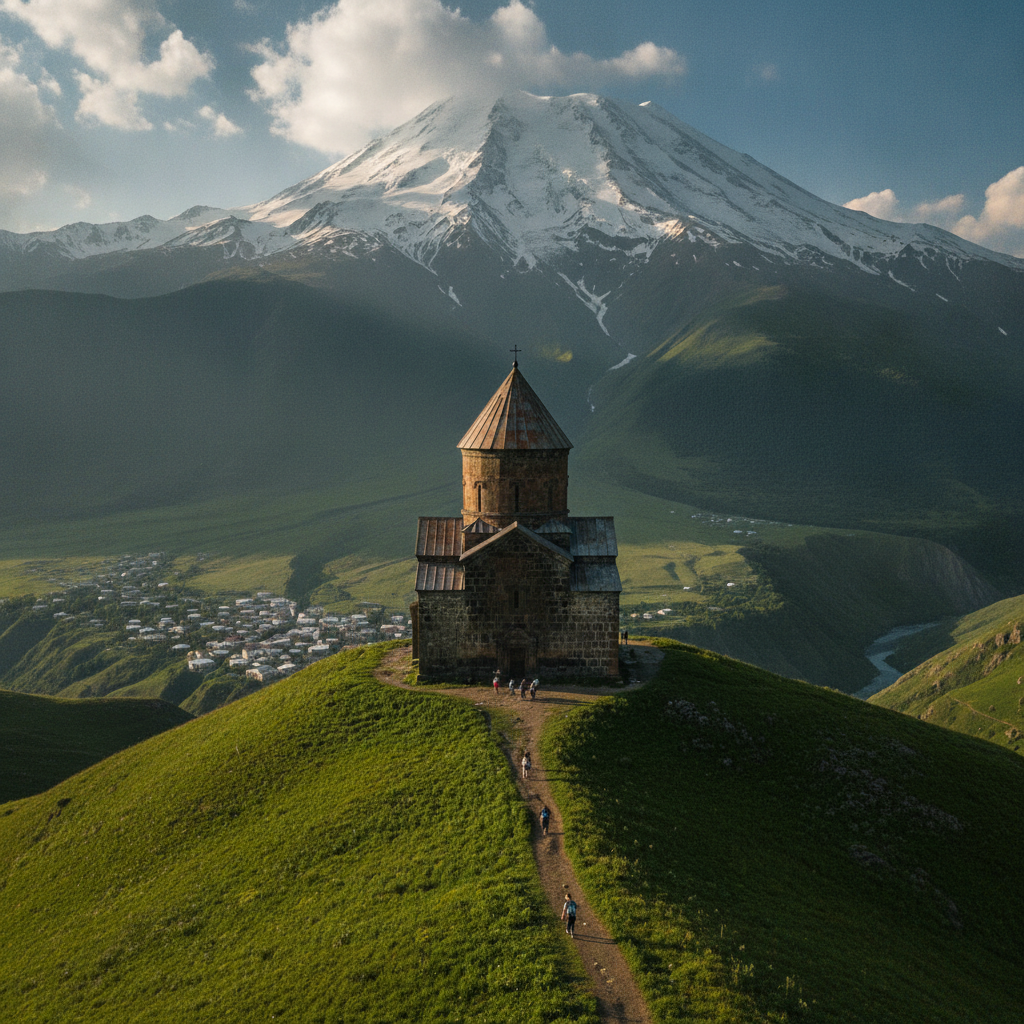
The 6,000 BCE Gadachrili Gora Wine Residue Making Georgia the World's Oldest Winemaking Civilization, the Khinkali Dumpling Broth Drunk Through a Bite Before Eating & the Gergeti Trinity Church at 2,170m With Kazbek at 5,047m Directly Behind