The Battle of Ankara Where Timur Captured the Ottoman Sultan, the Solar Furnace That Reaches 3,000°C Using Only Mirrors & the Hashar Community Labor Tradition Where Neighbors Build Your House Together
The 1402 Battle of Ankara as the most complete Ottoman military defeat before the 20th century and the only time an Ottoman Sultan was captured; the Parkent Solar Furnace's 2-acre parabolic mirror array reaching 3,000°C for materials testing; the hashar collective labor tradition as the most direct expression of Uzbek mahalla community bonds; the Children's Railway operated by actual 14-17 year old student railway workers since 1935; sumalak cooked for 24 hours with women singing while stirring as Nowruz's most labor-intensive food tradition; and Tashkent for Silk Road culture vs. Almaty for Tian Shan mountains as the Central Asia comparison.
- 1
Amir Timur – Tashkent's Imperial Patron
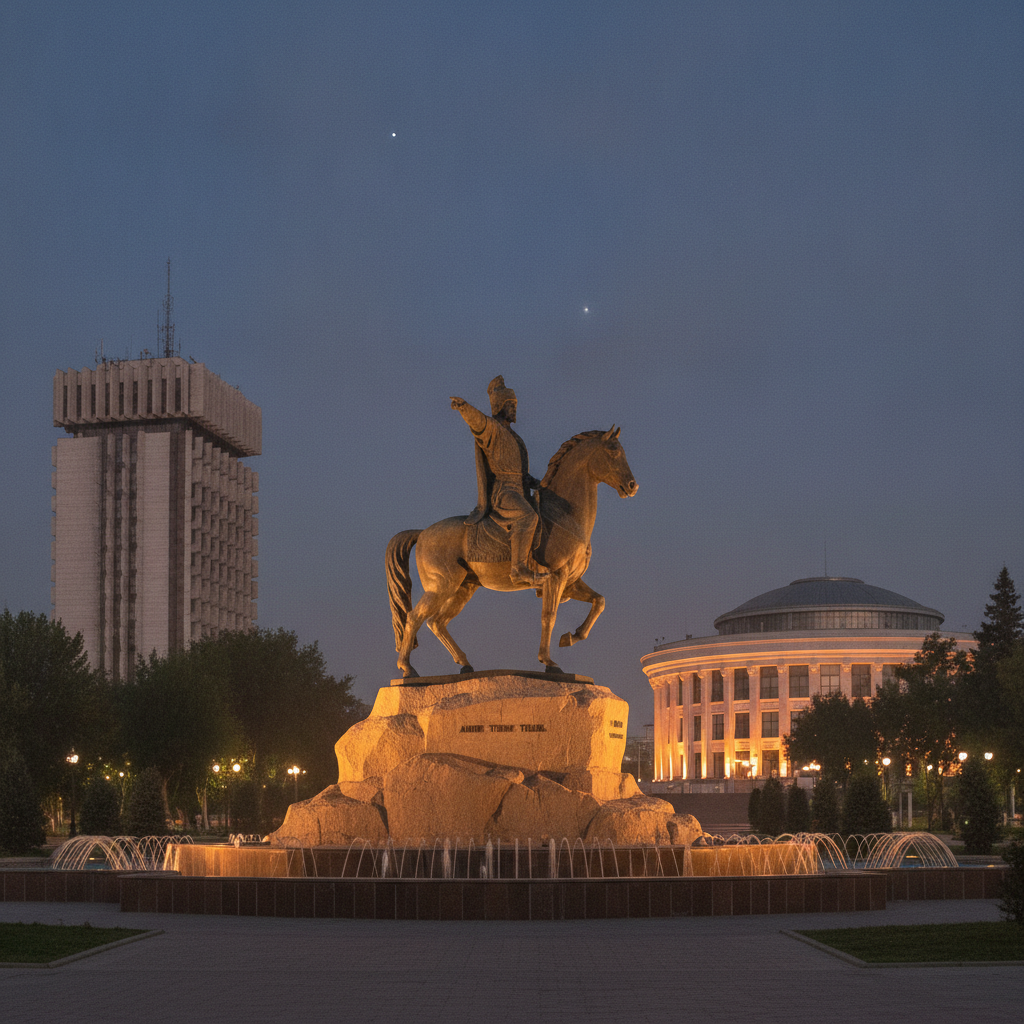
Amir Timur (Амир Темур—also known as Tamerlane or Timur the Lame, 1336–1405): the Timurid ruler who made Samarkand the capital of an empire stretching from Turkey to India and who transformed Central Asia into the most culturally productive region in the Islamic world. The life (Amir Timur was born in Kesh (modern Shahrisabz, 80 km south of Samarkand) in 1336—he rose from a minor Barlas Mongol clan chief to conquer the entire former Mongol Empire by 1370): the conquests (the Timurid conquests: Russia (the 1395 defeat of the Golden Horde at the Terek River), Persia (1381–1387), India (the Delhi Sultanate (1398)—the sack of Delhi killed an estimated 100,000 people and brought enough loot to build the Gur-e-Amir mausoleum in Samarkand), the Ottoman Empire (1402—the Battle of Ankara where Timur defeated and captured the Ottoman Sultan Bayezid I—the most complete military defeat of the Ottoman state before the 20th century)). The culture (the Timurid Renaissance (1370–1506): the period when Samarkand and Herat under Timurid patronage became the intellectual and artistic center of the Islamic world—the architecture (the Bibi-Khanym Mosque, the Registan, the Shah-i-Zinda): the literature (the Khamsa of Alisher Navoi): the astronomy (the Ulugh Beg Observatory)). The monument (the Amir Timur equestrian statue in Amir Timur Square (Амир Темур хиёбони) in central Tashkent—the statue that replaced the Marx and Engels busts, which replaced the Lenin statue—the 3 iterations of the same Tashkent central plaza monument as a compressed history of Uzbek political identity).
- 2
Tashkent for Families – Amusement Parks & Educational Sites
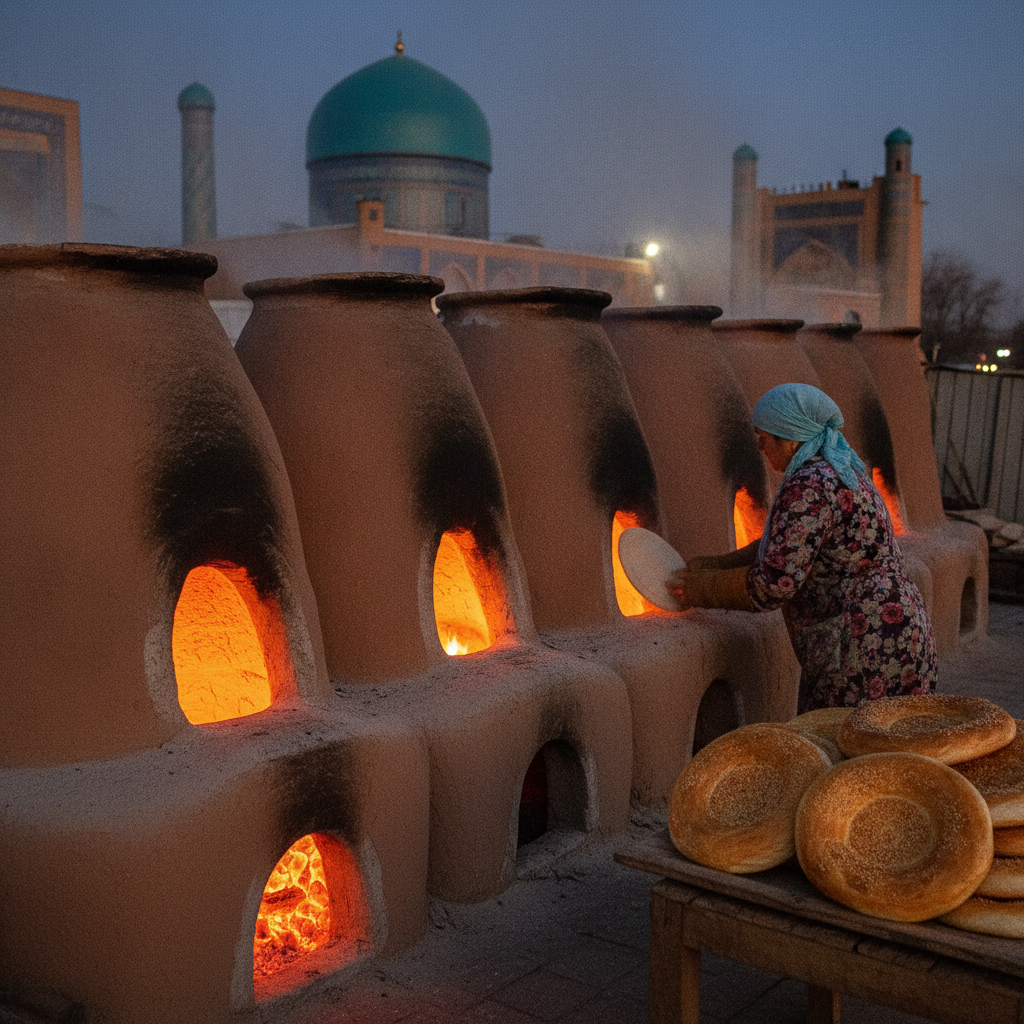
The Tashkent family travel guide (the capital with more child-friendly educational and entertainment sites than any other Central Asian city): the family guide. The Children's Railway (Болалар темир йули—the narrow-gauge children's railway in Tashkent Children's Park (Болалар боги), the miniature steam railway operated since 1935 by children (actual student railway workers aged 14–17 who are trained at the railway school)—the most Soviet-era child-educational experience surviving in Tashkent): the Tashkent Zoo (the oldest zoo in Central Asia (founded 1924)—the Bactrian camel enclosure and the Central Asian wildlife section (snow leopard, Bukhara deer (hangul), and the Kyzylkum desert monitor lizard)—the most representative collection of Central Asian wildlife in any zoo). The Tashkent Planetarium (Тошкент планетариуми—the Soviet-era domed planetarium—the star projector shows in Uzbek and Russian): the Aquapark Tashkent (the indoor-outdoor water park in the Yunusabad district—the most popular family destination in Tashkent in summer). The bread-baking experience (the tandoor bread (lepeshka) baking experience at the Chorsu Bazaar tandoor bakeries—the most sensory-memorable family activity in Tashkent: the child can press the decorative stamp into the raw dough before the baker slaps the bread onto the inner wall of the clay tandoor oven).
- 3
Tashkent's Soviet Legacy – Space Program & Science
The Soviet science legacy in Tashkent (the research institutions and scientific heritage of the USSR's Central Asian capital): the science guide. The space program connection (Tashkent was a significant center for Soviet aerospace engineering—the Chkalov Aviation Plant (Ташкент авиация ишлаб чиқариш бирлашмаси) produced the Ilyushin Il-76 wide-body military transport aircraft from 1973—the aircraft that became the Soviet and Russian military airlift workhorse): the Ulugbek Nuclear Reactor (the research reactor at the Ulugbek (Учкудук) site near Tashkent—the Soviet-era nuclear research program centered on uranium extraction from the Kyzylkum Desert reserves (Uzbekistan has the world's 12th largest uranium reserves)): the Solar Furnace (Уз ФА Физика-техника институти Қуёш печи—the world's largest solar furnace (1,000 kW output) at the Uzbekistan Academy of Sciences Physics-Technical Institute, 45 km from Tashkent in the Parkent mountains—the 2-acre parabolic mirror array that concentrated solar energy to reach temperatures of 3,000°C for materials testing): the Tashkent Astronomical Observatory (1873—one of the oldest observatories in Central Asia, established by the Russian Imperial government): the medical legacy (the Tashkent Medical Academy was the primary medical training institution for the Soviet Central Asian and Caucasian republics—the institution trained the majority of doctors for the region from 1935 onward).
- 4
Central Asian Hospitality – The Code of the Guest
Central Asian hospitality culture (the most distinctive and most frequently cited aspect of Uzbek and Central Asian cultural experience by international visitors): the hospitality guide. The code (Uzbek hospitality is organized around 3 primary obligations: mehmon (мехмон—the guest): the obligation to receive any guest with maximum generosity regardless of the host's material circumstances: the phrasing (the standard Uzbek hospitality formula when a visitor appears: Keling, keling, hush kelibsiz (Келинг, келинг, хуш келибсиз—Come, come, you are welcome)): the food obligation (the minimum hospitality offering for any guest: green tea (kok choy) served immediately on arrival; non (flatbread); fruit (dried apricots, raisins, fresh fruit in season)—the obligation to offer food to a guest before any business or conversation begins is the most universal Uzbek social norm). The hashar (хашар—the collective neighborhood labor tradition): the community obligation to contribute labor (rather than money) to a neighbor's construction project, wedding, or funeral—the most direct expression of the mahalla social bond. The Dasturxon (дастурхон—the traditional table setting): the Uzbek term for the cloth spread on the table or floor for a meal—by extension, the term for the entire hospitality offering: the most successful description of Central Asian hospitality in a single word. The etiquette (accepting all food and drink offered is essential; refusing is a significant social slight in Central Asian hospitality culture—the exception: explicit medical dietary restrictions are respected if stated at the beginning of the visit).
- 5
The Uzbek Calendar of Festivals & Events
The Uzbek annual events calendar (the festivals and events that most reward a visit timed to coincide with them): the events guide. Nowruz (Навруз—the Persian New Year, celebrated on March 21—the vernal equinox): the most important cultural festival in Uzbekistan—the city-wide celebration with outdoor concerts, sumalak preparation (суммалак—the traditional Nowruz dessert made from sprouted wheat, flour, and oil cooked for 24 hours in a kazan while women take turns stirring and singing): the festival food (the outdoor plov preparation for neighborhood celebrations): the Navbahor (early spring) Nowruz markets (the most concentrated outdoor market activity of the Uzbek year). The Silk and Spices Festival (Ипак ва Зираворлар байрами—Samarkand, May or June): the annual festival celebrating the Silk Road heritage, with craft demonstrations, musical performances, and the national equestrian game Ulak-Tartysh (козлодрание—the Central Asian game where riders compete to grab and control a headless goat carcass—the most dramatic sporting spectacle in Central Asia). Independence Day (September 1—Мустақиллик куни): the national holiday with the largest single public event of the Uzbek year (the independence ceremony and parade at Independence Square in Tashkent).
- 6
Tashkent vs. Almaty – Central Asia's Two Capitals
The Tashkent versus Almaty comparison (the 2 largest cities in Central Asia and the primary choice for travelers entering the region): the analytical comparison. Population and scale: Tashkent (3.2 million—the largest city in Central Asia): Almaty (2.1 million—the former capital of Kazakhstan): both are significantly larger than Ashgabat, Bishkek, and Dushanbe. History: Tashkent (the oldest continuously inhabited city in Central Asia—2,000+ years of documented settlement; the center of Timurid culture): Almaty (established as a Russian military fort in 1854—a younger city with less pre-Russian history but a more cosmopolitan Soviet-era cultural legacy). Economy: Tashkent (the larger economy—Uzbekistan's GDP (USD 90 billion, 2023) dwarfs Kazakhstan's per capita): Almaty (the more developed financial sector—Almaty is Kazakhstan's financial capital despite the government relocating to Astana/Nur-Sultan in 1997). Accessibility: Almaty (better-connected international airport with more European direct services): Tashkent (better-connected within Central Asia—the Afrosiyob Silk Road circuit is the most rewarding single rail journey in the region). Recommendation: Tashkent for Silk Road culture and the Samarkand-Bukhara circuit; Almaty for the Tian Shan mountains and the Kazakh steppe; combine both for the most complete Central Asia experience.
Walk this route with audio
Stories play automatically as you reach each stop — no tapping needed.
More in Tashkent
The Unauthorized Military Conquest Ratified Because the Tsar Couldn't Undo It, the Cotton Boycott by 250 International Brands & the IT Park Targeting USD 5 Billion in Exports From a USD 300 Million Base
The Quran Stained With the Caliph's Blood Returned by Lenin, the Earthquake That Killed 10 People While Destroying 100,000 Homes & the Metro Banned From Photography for 40 Years Due to Nuclear Shelter Function
The 2,500-Year Jewish Community Now Mostly in Queens New York, the Fedchenko Glacier Retreating 1.3 km Since 1990 & the Authentication Trick of Turning the Suzani Over to Check the Back
The Cotton Monoculture That Emptied the World's 4th Largest Lake, the Rusting Ship Fleet Stranded 100 km From the Sea & the Suzani Embroidered Collectively by Every Woman in the Bride's Family