Royal Botanic Gardens, The Domain & Art Gallery NSW: Sydney's Cultural Heart
The Royal Botanic Gardens, The Domain, and the Art Gallery of New South Wales form Sydney's cultural and parkland heart — 56 hectares of continuous green space from Farm Cove to Hyde Park, containing Australia's oldest scientific institution, its most visited state art gallery, the historic Macquarie Street precinct (including Sydney Hospital, the Mitchell Library, and NSW Parliament House), and Hyde Park (the oldest public parkland in Australia).
- 1
Hyde Park (1810) — Australia's Oldest Public Parkland
Hyde Park (named after London's Hyde Park, the 16-hectare public space at the center of the CBD, set aside as public land in 1810 by Governor Lachlan Macquarie, the oldest public parkland in Australia) — contains the Archibald Fountain (1932, the largest bronze fountain in Australia, designed by French sculptor François-Léon Sicard and given to Sydney by J.F. Archibald, founder of The Bulletin magazine, as a gift symbolizing the alliance between Australia and France in World War I; Neptune, Apollo, Theseus, Diana, and Pan are among the figures), the ANZAC War Memorial (1934, Art Deco, the most important memorial to Australian service in World War I, in the southern section of the park, designed by Bruce Dellit with interior sculptures by Rayner Hoff, the three Hoff figures — the figure of a soldier lying on a shield raised by three women representing sacrifice — is the most powerful of any war memorial in Australia), and the Sandringham Garden (a tribute to King George VI, with a pond and the original Moreton Bay fig trees planted by Governor Macquarie in 1810). Hyde Park is divided by Park Street into two sections; the northern section (St James Road) contains the Archibald Fountain and is surrounded by the St James Church (1819, the oldest church in Sydney, designed by Francis Greenway, a convict architect) and the Hyde Park Barracks (1819, Greenway, now the Hyde Park Barracks Museum, UNESCO World Heritage Site as part of the Australian Convict Sites inscription in 2010).
- 2
Macquarie Street Precinct (1810s) — The Oldest Street in Australia
Macquarie Street (named for Governor Lachlan Macquarie, the father of Australia, who transformed the penal colony into a civic settlement between 1810 and 1821) — the most historically significant street in Australia, containing the greatest concentration of early colonial sandstone public buildings — is lined on its eastern side (facing The Domain) by a sequence of buildings representing the first generation of public institutions in the country: NSW Parliament House (1816, Francis Greenway, the colony's first public building, originally a convict hospital wing, containing the oldest parliament building in Australia currently in use and the site of Australia's oldest continuous legislative assembly since 1856), the State Library of NSW / Mitchell Library (1906-1942, housing the most important collection of Australiana in the world, including Abel Tasman's 1644 chart of the Australian coastline, Captain Cook's Endeavour journal, the Blaxland-Lawson-Wentworth journal of the first crossing of the Blue Mountains in 1813, and Arthur Phillip's original dispatches establishing the colony in 1788), Sydney Hospital (1816, the first hospital in Australia), and the State Archives.
- 3
The Domain (1788) — The People's Park
The Domain (the 34-hectare public park immediately east of Macquarie Street, set aside as Government Domain by Governor Phillip in 1788 and opened to the public by Governor Macquarie in 1810) — the oldest public parkland in the colony, initially reserved as a buffer between the Governor's residence and the town — is now Sydney's primary outdoor events space: the site of the Sydney Festival (January), the annual Domain concerts (free outdoor performances by Opera Australia and the Sydney Symphony Orchestra, drawing 70,000+ people to a single performance on summer evenings, the world's largest free outdoor classical music event), and the Tropfest short film festival (since 1993). The Domain's massive Moreton Bay fig trees (Ficus macrophylla), many planted in the 1870s and 1880s, have trunk circumferences of up to 15 meters and are among the largest trees in any city park in the world. The Domain Soapbox (a tradition of public oratory dating back to the 1930s, held on Sunday afternoons at the northern end of The Domain) is one of the last surviving examples of traditional free-speech corners in Australia.
- 4
Art Gallery of New South Wales (1874/1909)
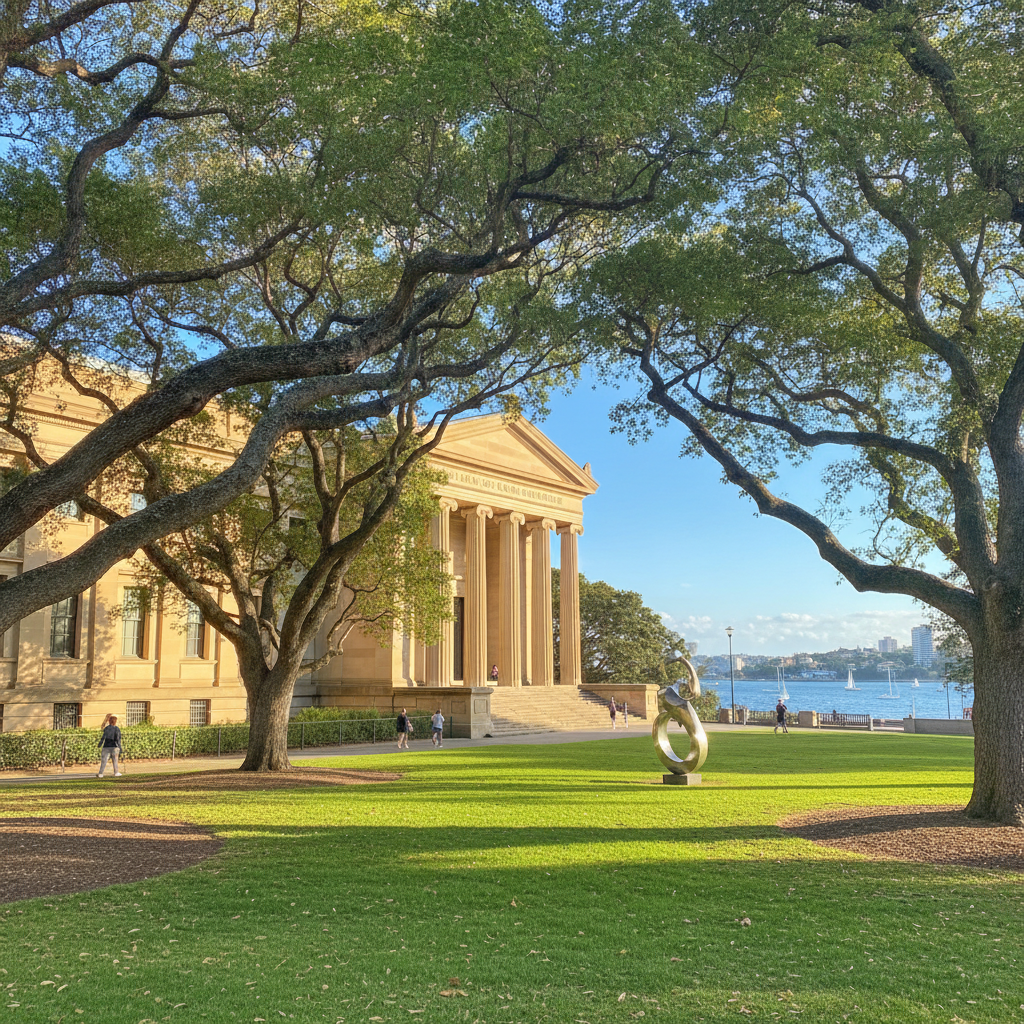
The Art Gallery of New South Wales (Art Gallery Road, The Domain, founded 1874, the current neoclassical sandstone building opened 1909, designed by Walter Liberty Vernon) — the most visited museum in New South Wales (1.7 million visitors per year) and one of the major art museums in the Asia-Pacific region — holds the most significant collection of Australian art in the world: 35,000+ works including the definitive collection of colonial Australian painting (John Glover, Conrad Martens, Eugene von Guerard, Louis Buvelot), the Impressionist and modernist Australian canon (Tom Roberts, Arthur Streeton, Frederick McCubbin, Hans Heysen, Grace Cossington Smith), and significant collections of Asian art (particularly the Japanese art collection, donated by Sydney Kyodo News in 1926, one of the finest outside Japan). The gallery's most famous work is Arthur Streeton's 'Fire's On' (1891, depicting a dynamite explosion in the Blue Mountains railway tunnel, the painting that defined Australian Impressionism), housed in the gallery since 1891. The Sydney Modern Project (2022) added a new gallery building (designed by SANAA, the Japanese firm responsible for the Tate Modern Turbine Hall extension) underground and adjacent to the Domain.
- 5
Andrew (Boy) Charlton Pool & Woolloomooloo
The Andrew (Boy) Charlton Pool (Mrs Macquaries Road, The Domain, opened 1924, named for the Australian swimmer who won four gold medals at the 1924 Paris Olympics, reconstructed in 1995) — a heated 50-meter saltwater pool built on a floating pontoon on the harbour at the eastern edge of The Domain, with views of Garden Island naval base and Woolloomooloo Bay — is the finest public swimming pool setting in Sydney, if not Australia. Woolloomooloo (the suburb immediately north of the CBD in the bay between the Botanic Gardens and Kings Cross, once Sydney's most notorious red-light district and now a mix of heritage-listed terrace houses, the W Sydney Hotel in the former Finger Wharf (1915, the largest timber structure in the Southern Hemisphere, converted to apartments and hotel in 2000), and the studio of Brett Whiteley (Brett Whiteley Studio, 2 Raper Street, now a museum of Whiteley's work, the most important studio museum in Australia).
- 6
St Mary's Cathedral (1821/1882-2000) & College Street Heritage Precinct
St Mary's Cathedral (College Street, facing Hyde Park, begun 1821, the current Gothic Revival building opened in stages from 1882 to 2000, designed by William Wardell and completed with the addition of the twin spires in 2000) — the seat of the Catholic Archbishop of Sydney, the largest Gothic Revival church in the Southern Hemisphere (107 meters long, 56 meters wide, 75-meter towers) — was funded entirely by private subscription over 179 years. The surrounding College Street heritage precinct includes the Great Synagogue (187 Elizabeth Street, 1878, the most significant Jewish congregation in Australia, designed in Romanesque Revival style, where Australia's chief rabbis have served since 1878), the Australian Museum (1827/1874, College Street, the oldest museum in Australia and the largest natural history museum in the Southern Hemisphere: 21.9 million objects, the best collection of Aboriginal and Torres Strait Islander cultural objects in the world), and the NSW Police Headquarters (College Street, 1923, Art Deco, one of the finest government buildings in Sydney).
Walk this route with audio
Stories play automatically as you reach each stop — no tapping needed.
More in sydney
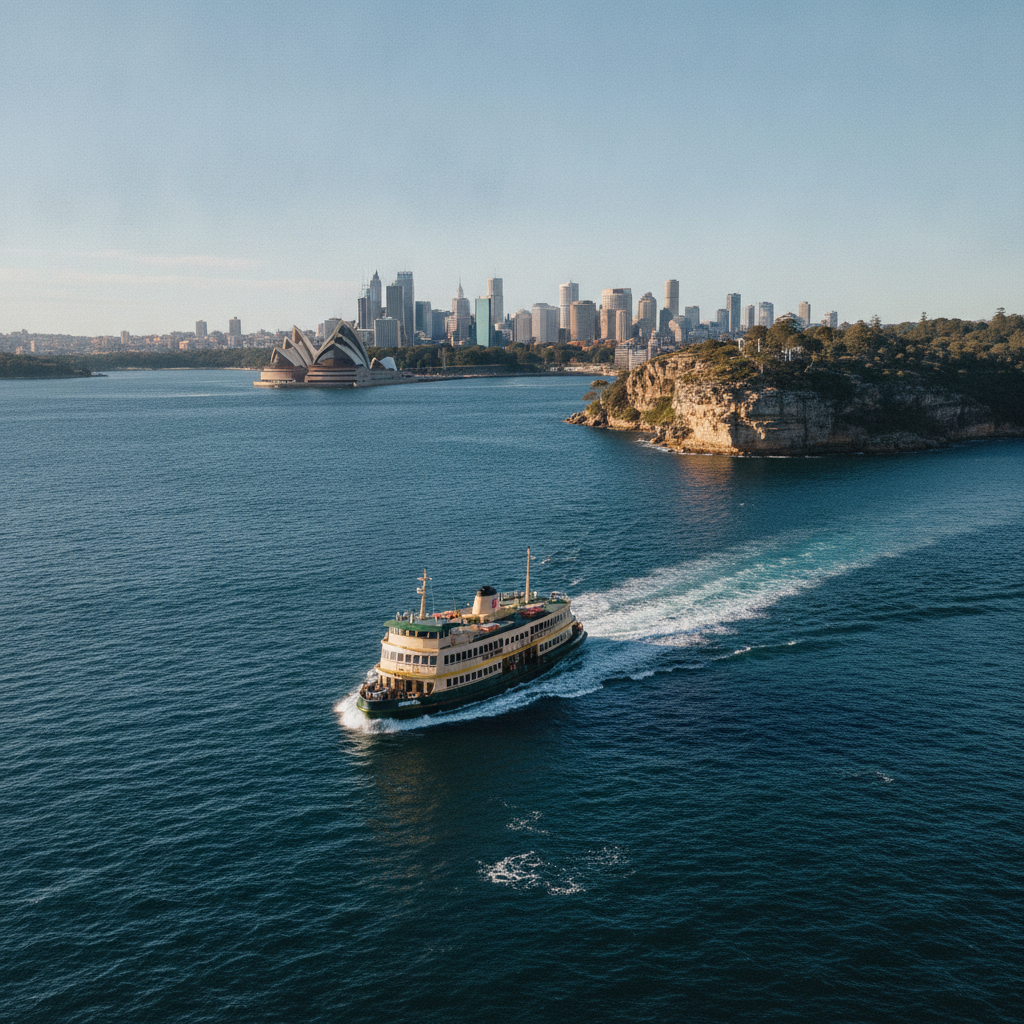
Manly Ferry, North Head & Scenic Headland: The World's Most Beautiful Ferry Crossing
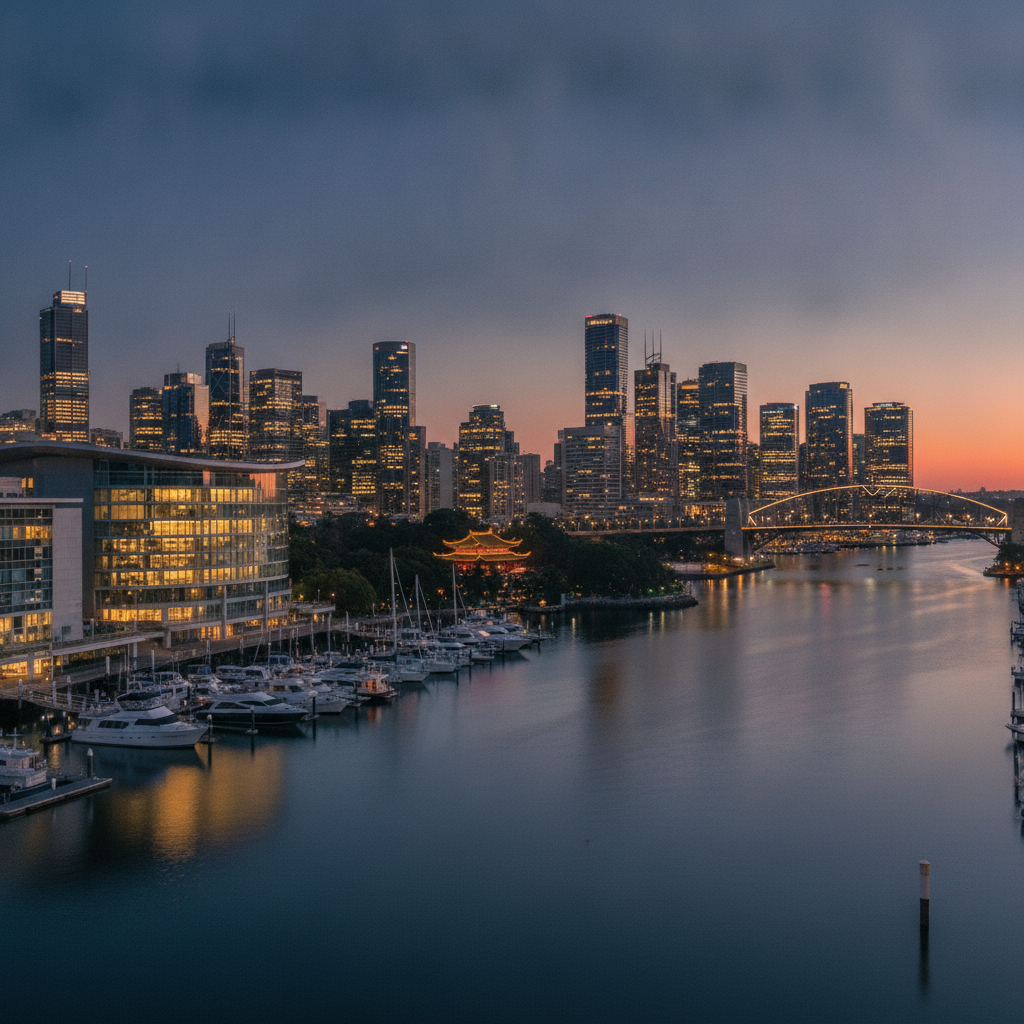
Darling Harbour, Chinatown & Barangaroo: Sydney's Western Waterfront
Blue Mountains, Katoomba & Jenolan Caves: A World Heritage Day Trip from Sydney
Sydney Opera House, Circular Quay & The Rocks: The Iconic Harbour Foreshore
Newtown, Surry Hills & Paddington: Sydney's Inner City Cultural Corridor