Gamla Stan — Stockholm's Medieval Old Town & Royal Palace
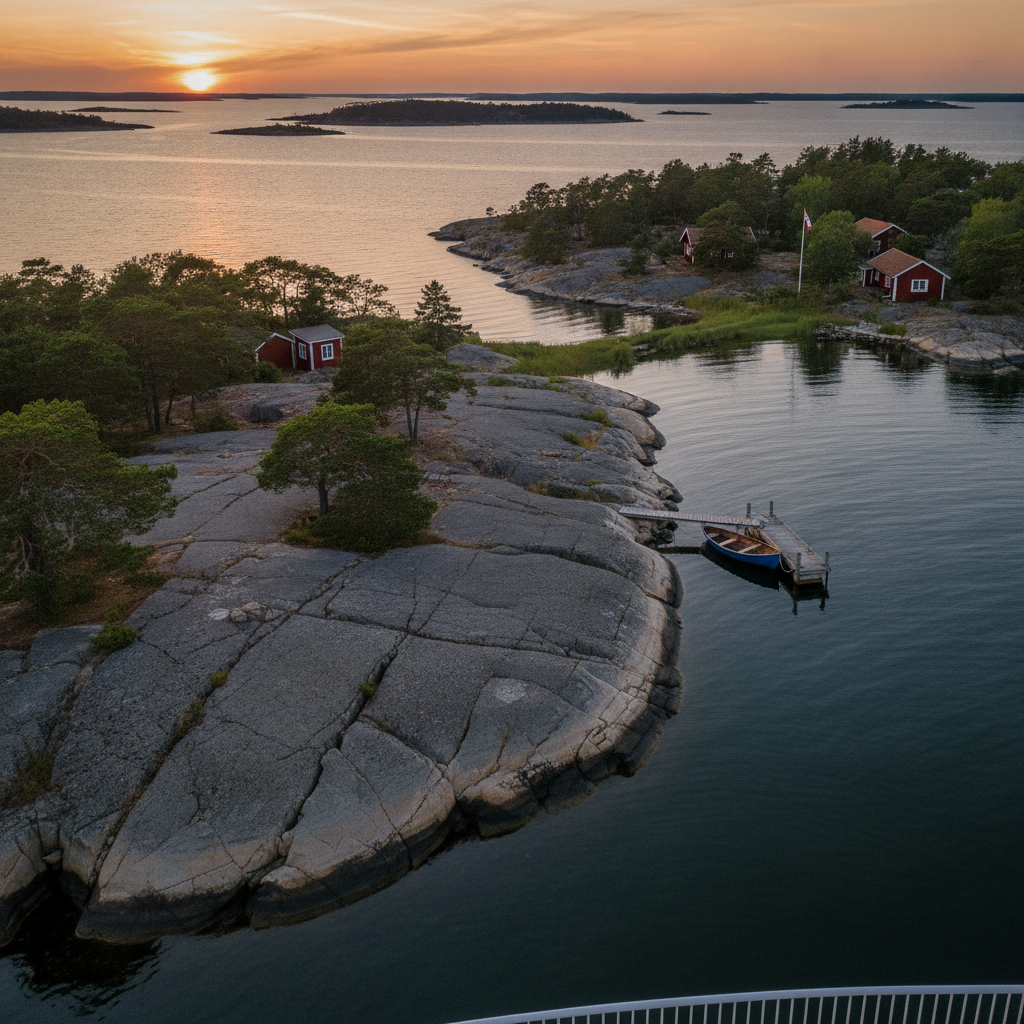
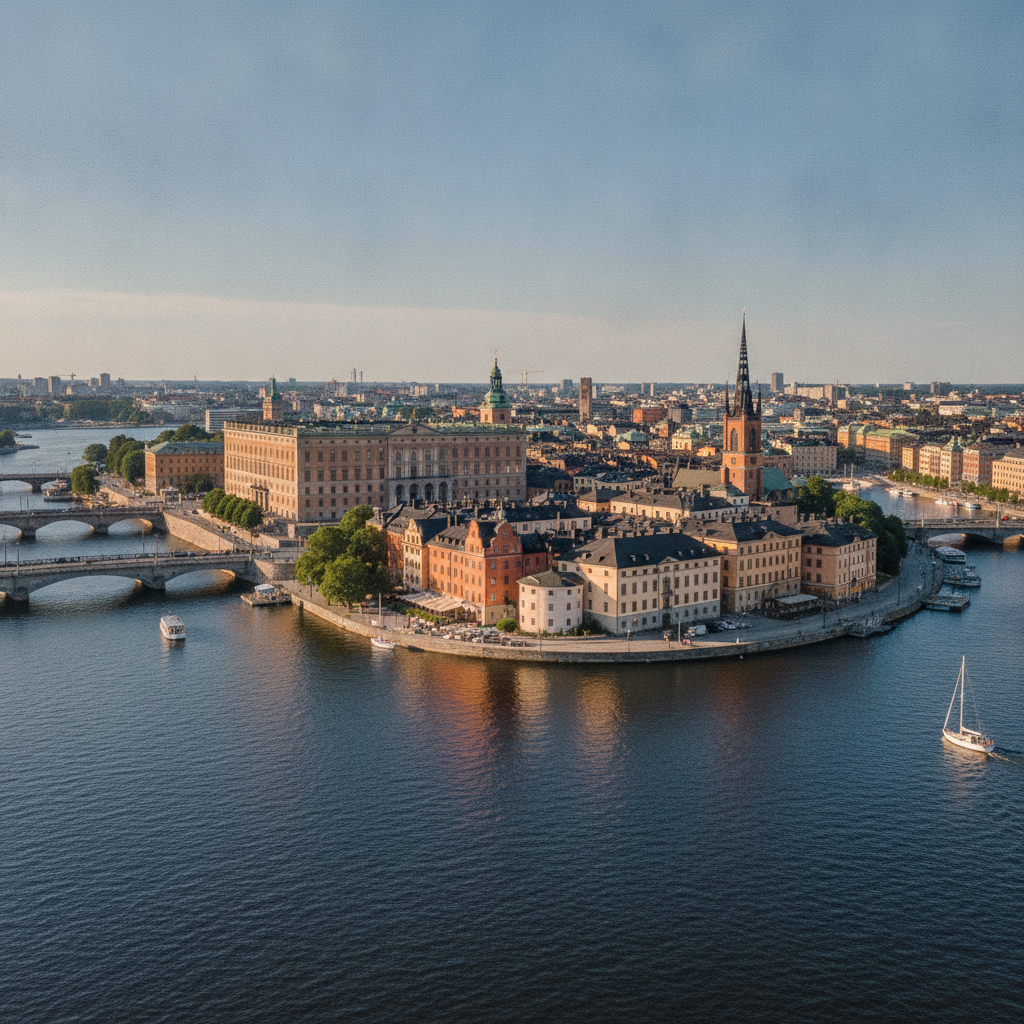
Stockholm (the capital and largest city of Sweden, population 975,000 in the city proper (2.4 million in the wider metropolitan area), built across 14 islands where Lake Mälaren meets the Baltic Sea — the 'Venice of the North,' consistently ranked among the most liveable and most beautiful capital cities in the world): the historic core of Stockholm is Gamla Stan (Old Town), a medieval island city of cobblestone alleys, Baroque palaces, and the Royal Palace — the founding site of the city, traditionally dated to 1252.
1. Royal Palace (Kungliga Slottet) — The World's Largest Royal Residence
- 1
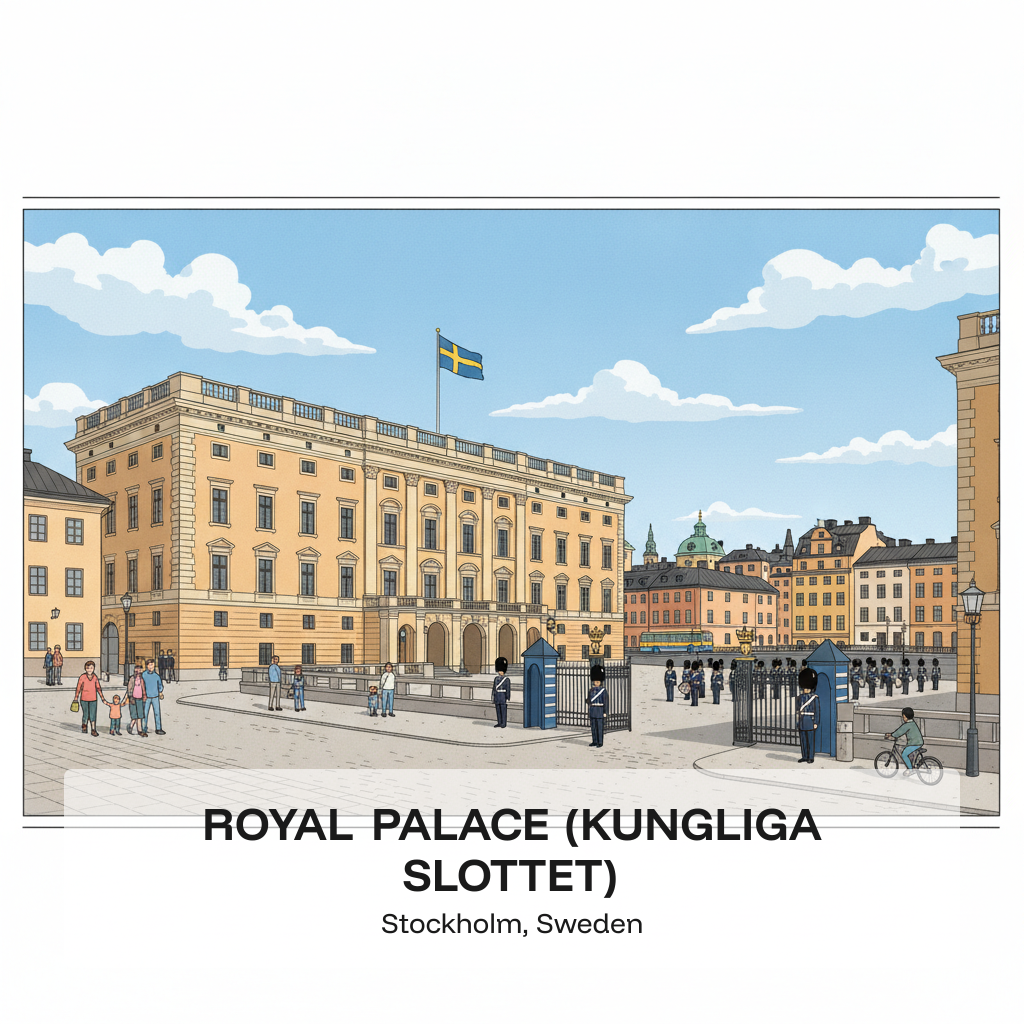
Royal Palace (Kungliga Slottet) — The World's Largest Royal Residence
Kungliga Slottet (The Royal Palace — Slottsbacken 1, Gamla Stan — the official residence of the Swedish monarch (currently King Carl XVI Gustaf, who acceded to the throne in 1973), the largest palace in the world still used as an official royal residence by a head of state, with 608 rooms): the current palace was built 1697-1760 after the original Three Crowns Castle (Tre Kronor) burned down in 1697, designed by the court architect Nicodemus Tessin the Younger in the Italian Baroque style (a rectangular block with identical facades on all four sides, a unique design in European palace architecture); the palace contains several museums open to the public: the Royal Apartments (the state rooms used for official functions), the Treasury (Skattkammaren — the Swedish Crown Jewels, including the crown of Gustav Vasa (1561) and the Riksäpple (orb)), the Tre Kronor Museum (the medieval castle remains preserved in the palace cellars), and the Livrustkammaren (the Royal Armoury, the oldest museum in Sweden, founded 1628); the Changing of the Guard (Högvaktsparaden) takes place in the outer courtyard daily in summer, with the Royal Guard band.
- 2
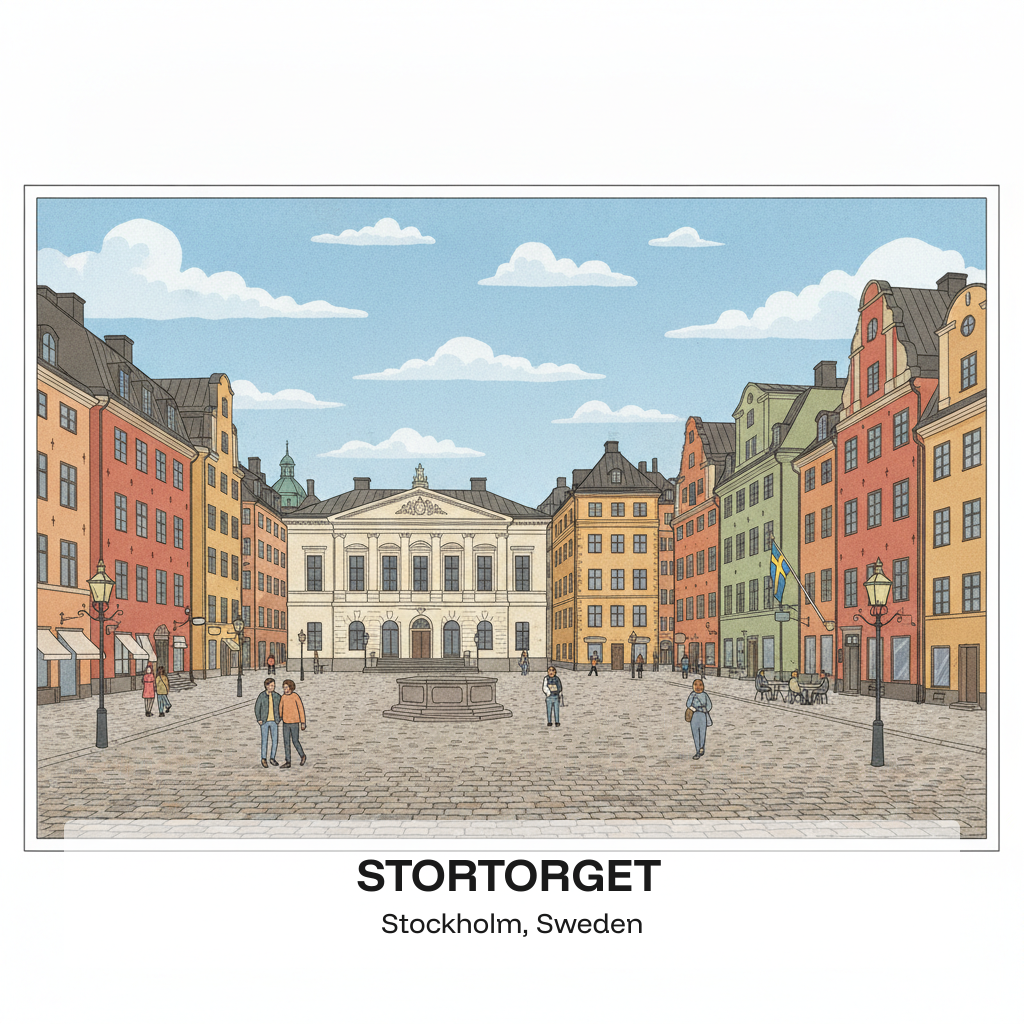
Stortorget — The Great Square & the Stockholm Bloodbath
Stortorget (the Great Square — the central square of Gamla Stan, surrounded by colourful 17th-18th century townhouses in terracotta, ochre, yellow, and green, and the Nobel Museum (Nobelmuseet, in the former Stock Exchange building (Börsen, built 1776)): Stortorget is one of the most picturesque squares in Scandinavia, but also the site of one of the most traumatic events in Scandinavian history — the Stockholm Bloodbath (Stockholms blodbad) of November 8-10, 1520, in which the Danish King Christian II (who had just conquered Sweden) executed 82 Swedish nobles, bishops, and burghers in Stortorget over three days, in violation of a promise of amnesty; the event (the most important single date in Swedish national mythology) directly caused the Swedish War of Liberation led by Gustav Vasa, who became the first King of Sweden (1523) and founded the Vasa dynasty; the Nobel Museum (in the former Stock Exchange where the Stockholm Bloodbath executions took place) chronicles the history of the Nobel Prize (awarded annually since 1901) and the life and legacy of Alfred Nobel (1833-1896, the Swedish inventor of dynamite and founder of the Nobel Prize).
- 3
Storkyrkan — Stockholm Cathedral
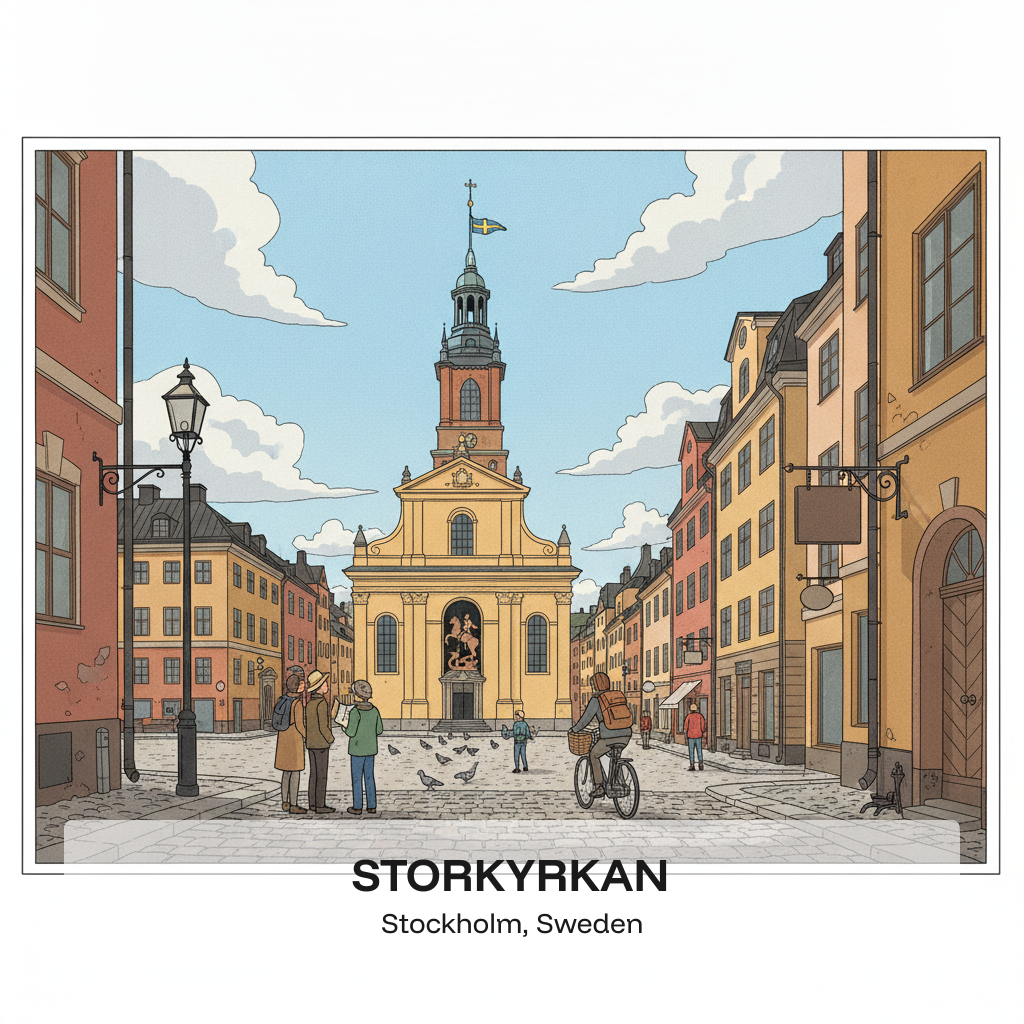
Storkyrkan (Stockholm Cathedral — Trångsund 1, adjacent to the Royal Palace — the oldest church in Stockholm, founded in the 13th century and the coronation church of Swedish monarchs): the cathedral's current exterior dates primarily from 1736-42 (given a Baroque renovation), while the interior preserves important medieval elements: the most important artwork in the cathedral is the sculpture of Saint George and the Dragon (Riddarholmskyrkans Sankt Göransskulptur — the polychrome oak sculpture of c.1489, by the German-Danish sculptor Bernt Notke, one of the masterpieces of late Gothic wooden sculpture in Northern Europe); the Parhelion Painting (Vädersolstavlan — the painting depicting a remarkable atmospheric optical phenomenon (a sun dog display) seen over Stockholm on April 20, 1535, the earliest known colour depiction of Stockholm's cityscape and one of the earliest meteorological images in European art history) is displayed in the south nave.
- 4
Mårten Trotzigs Gränd — The Narrowest Alley in Stockholm
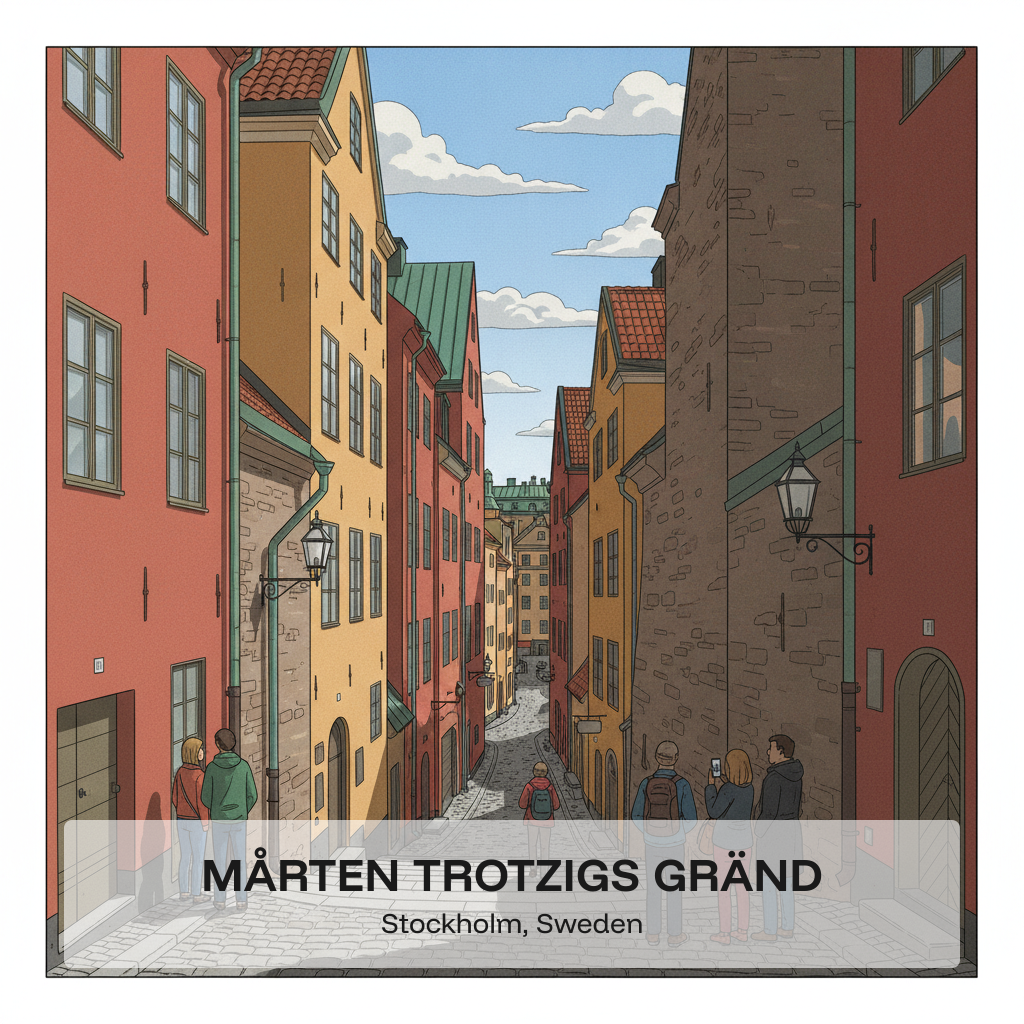
Mårten Trotzigs Gränd (the narrowest alley in Stockholm, located in Gamla Stan — 90 cm wide at its narrowest point, a medieval stepped passageway running between Västerlånggatan and Prästgatan, named after a German merchant Mårten Trotzig who owned properties in the area in the early 17th century): the alley (11 metres high on one side at its deepest point, cutting between medieval buildings that crowd in above) is the most atmospheric of the many medieval lanes of Gamla Stan, giving a visceral sense of the density and scale of the medieval city; Gamla Stan's street network (essentially unchanged since the 13th century) is defined by two main streets (Västerlånggatan and Österlånggatan, the western and eastern long streets) running north-south through the island, with dozens of alleys (gränder) cutting between them; the island of Stadsholmen (the Old Town island) was the entirety of Stockholm until the 17th century expansion to the surrounding islands.
- 5
Riddarholmen Church — The Royal Necropolis of Sweden
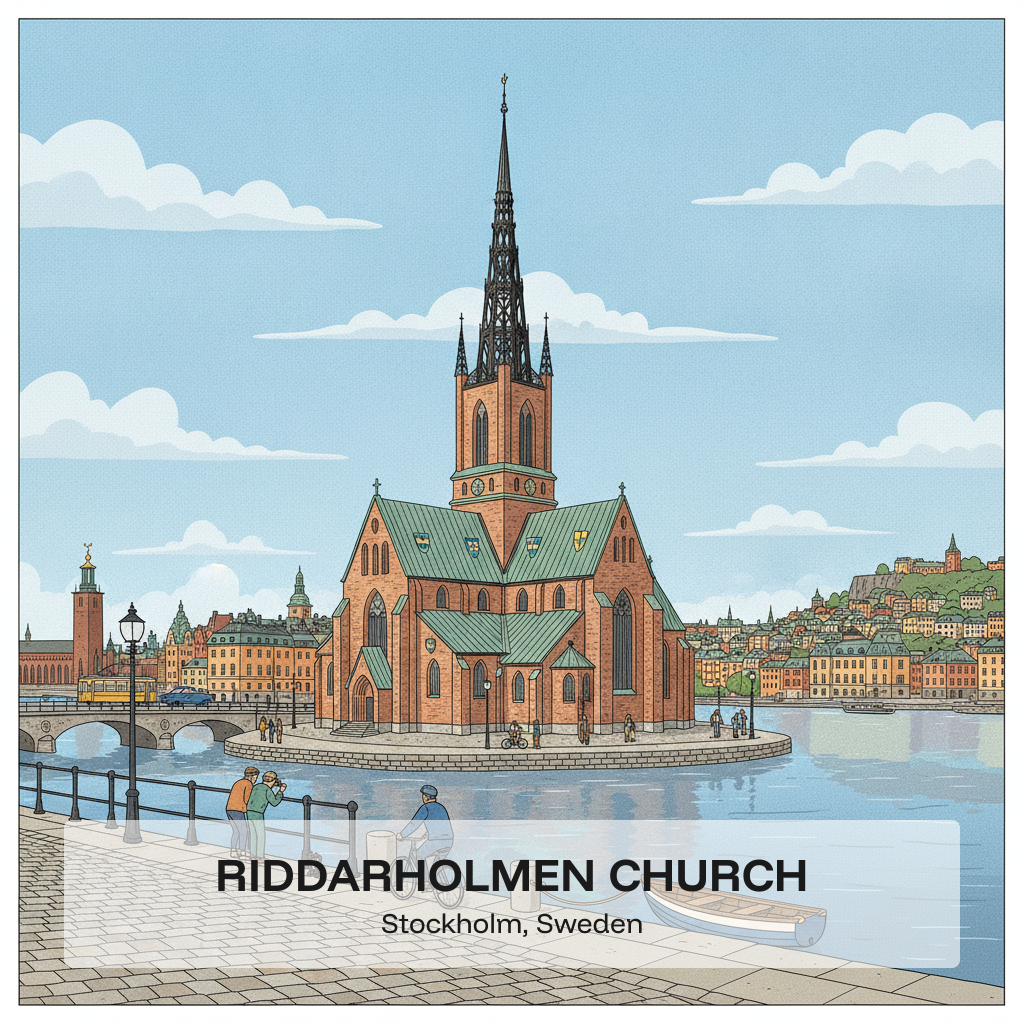
Riddarholmskyrkan (Riddarholmen Church — on the small island of Riddarholmen, accessible from Gamla Stan via a short bridge — the burial church of the Swedish monarchs, the Royal Pantheon of Sweden, containing the graves of virtually every Swedish monarch from Gustav II Adolf (died 1632) to Gustav V (died 1950)): Riddarholmskyrkan is the only surviving medieval Franciscan friary church in Scandinavia (founded c.1270, the church was given to the Swedish state at the Reformation in 1527 and converted to a royal burial church in 1634); the church's distinctive cast-iron spire (the original medieval stone spire collapsed in 1835 and was replaced by the current neo-Gothic iron spire) is one of the most recognizable skyline elements of central Stockholm; the royal sarcophagi fill the chapels added along the flanks of the medieval nave, with each Swedish dynasty (Vasa, Wittelsbach, Pfalz-Zweibrücken, Holstein-Gottorp) having its own chapel; the view from Riddarholmen across the Riddarfjärden to the Södermalm heights is one of the finest in Stockholm.
- 6
Gamla Stan Restaurants & Swedish Cuisine
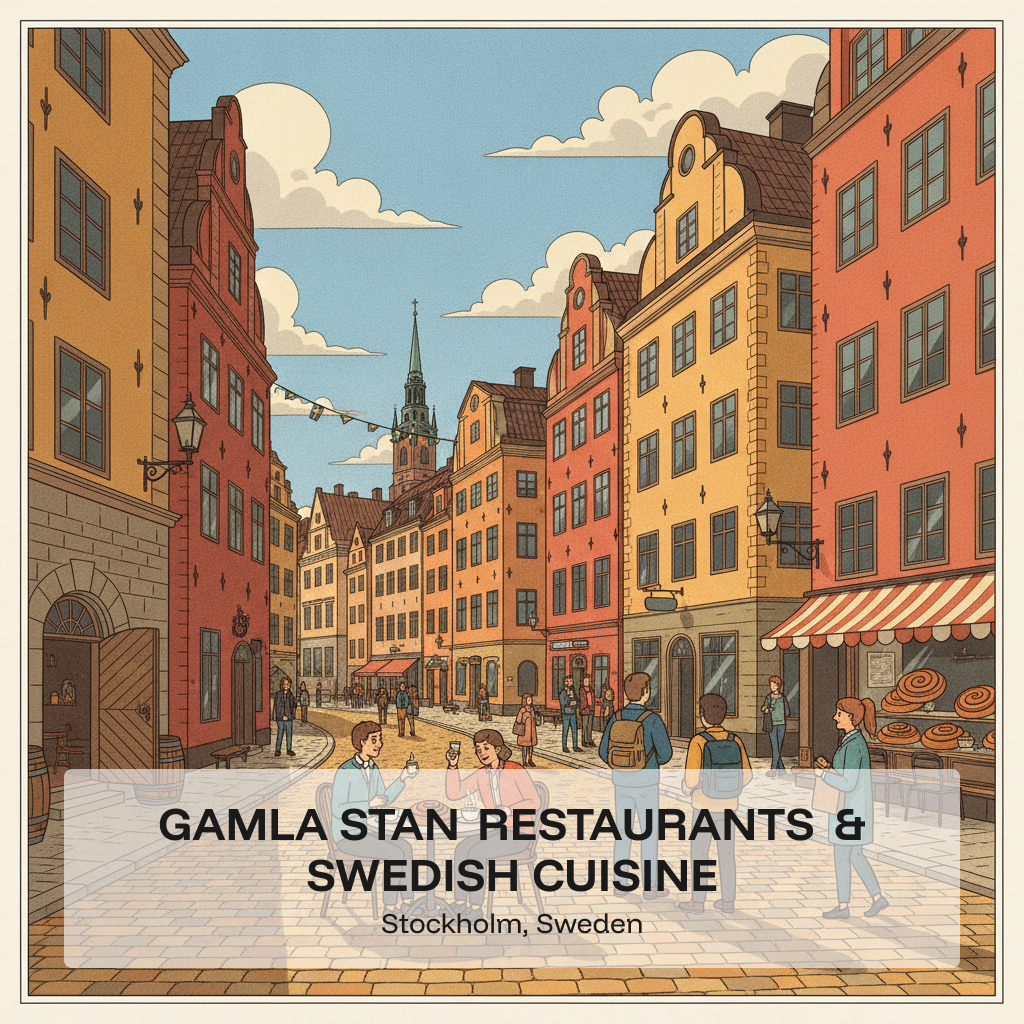
Gamla Stan's food culture (the island concentration of Swedish traditional restaurants, from herring cellars to contemporary New Nordic): the essential food experiences in and around Gamla Stan include: Aifur (Västerlånggatan 68 — the Viking-themed restaurant in a 17th-century cellar, serving mead (mjöd) and traditional Scandinavian food in a setting designed to evoke the Viking Age Norse hall); Den Gyldene Freden (Österlånggatan 51 — the restaurant founded 1722, the oldest continuously operating restaurant in the world according to the Guinness World Records, famous for its Swedish husmanskost (traditional home cooking) including the classic Swedish Thursday lunch of yellow pea soup (ärtsoppa) with pancakes and lingonberries, the classic Friday lunch of pickled herring with aquavit); and Chokladkoppen (Stortorget 18 — the most beloved cafe in Gamla Stan, on the square, famous for its hot chocolate and the kanelbulle (cinnamon roll, a Swedish national obsession and the most consumed pastry in Sweden)).
Walk this route with audio
Stories play automatically as you reach each stop — no tapping needed.
More in stockholm
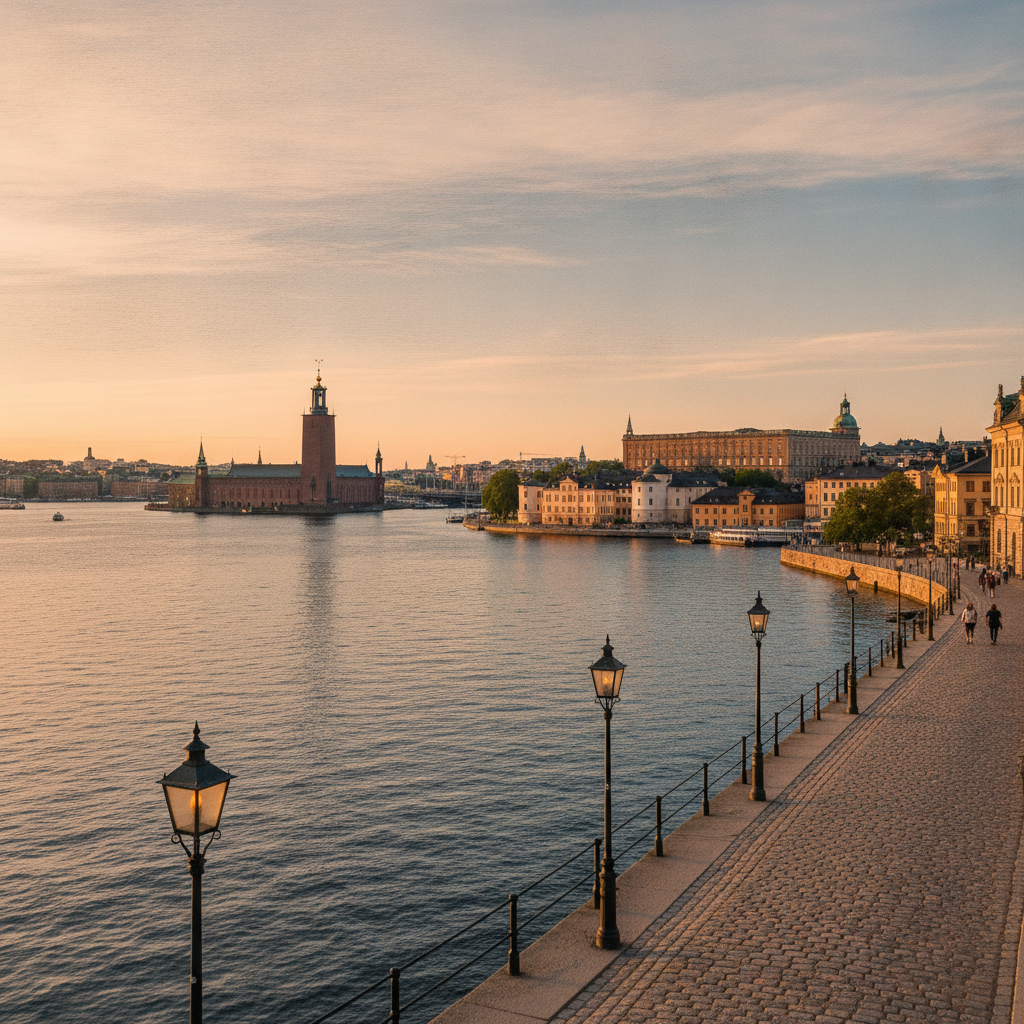
Södermalm — Stockholm's Creative Quarter, Fotografiska & City Hall
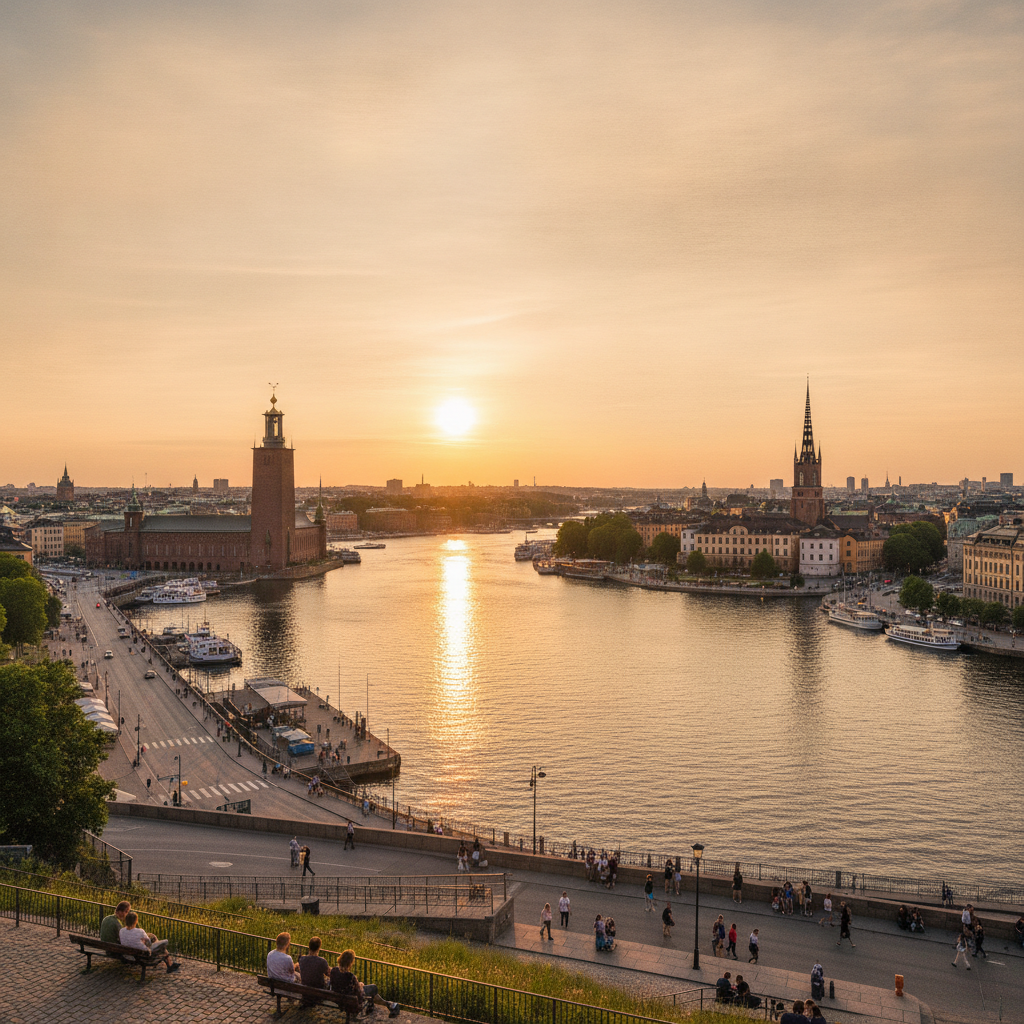
Midnight Sun, Midsommar & Stockholm's Seasons
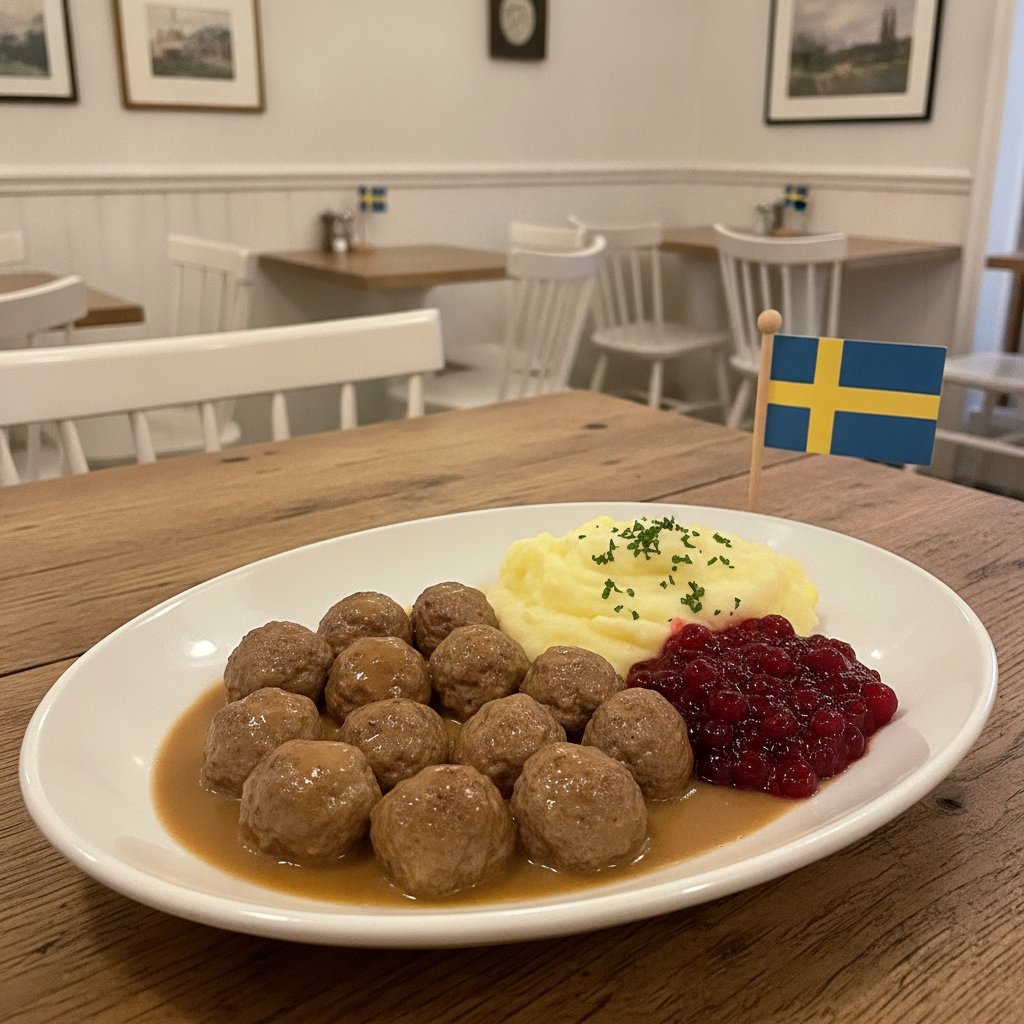
Swedish Food in Stockholm — Meatballs, Husmanskost & New Nordic
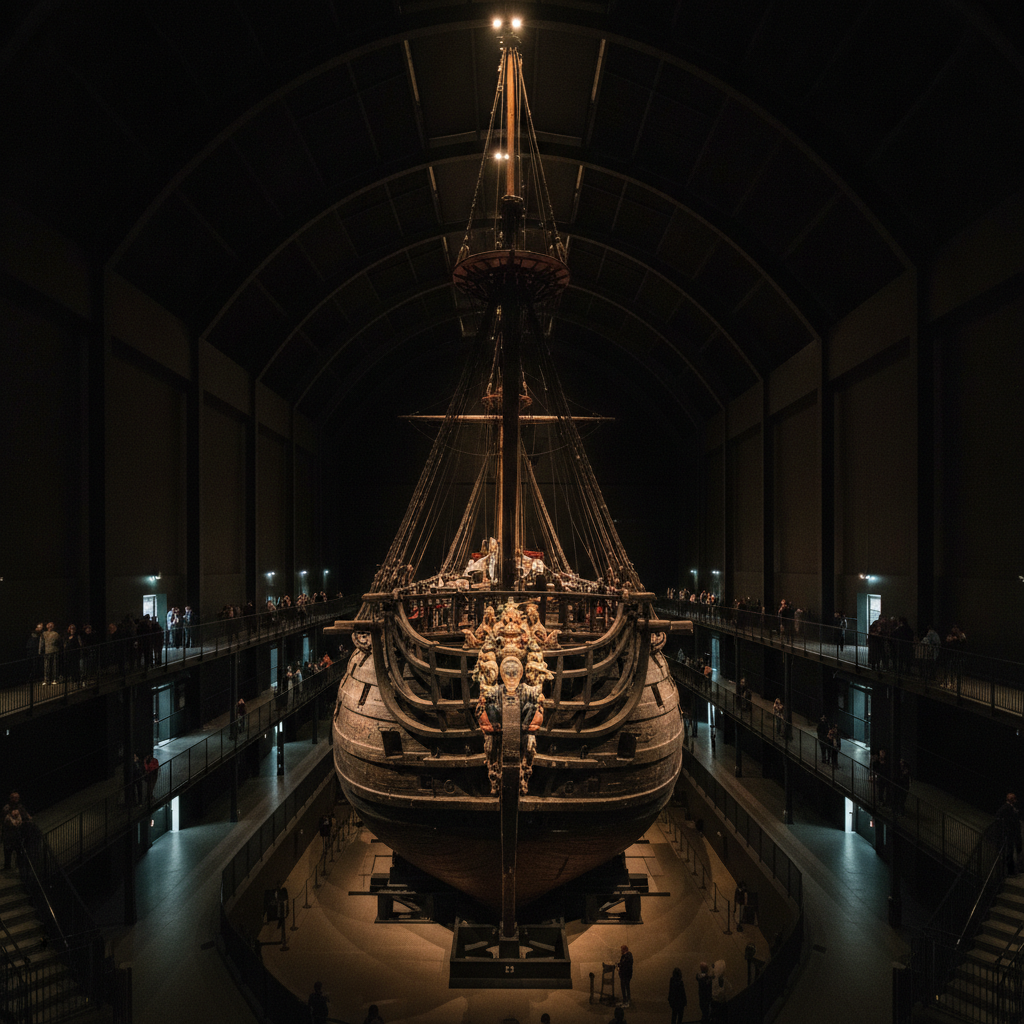
Vasa Museum, ABBA Museum & Djurgården — Stockholm's Museum Island
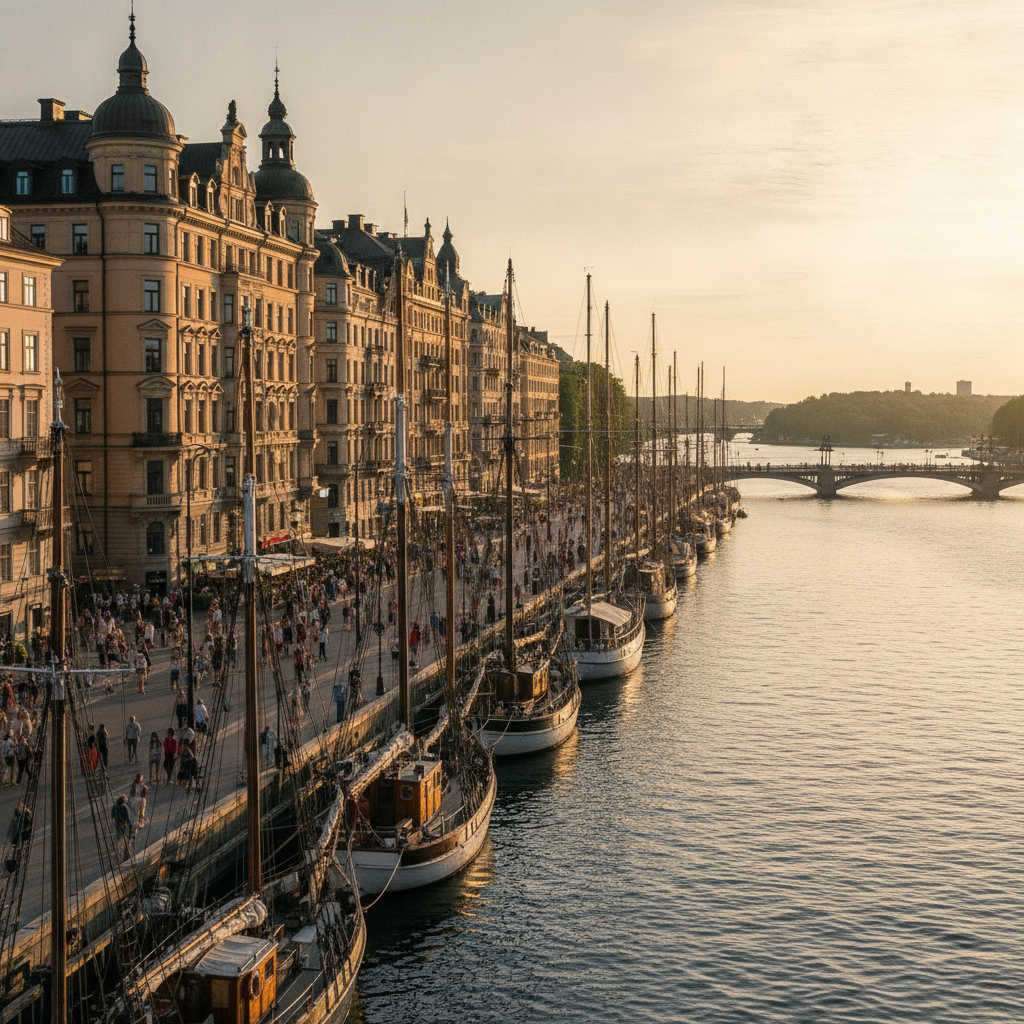
Strandvägen, Östermalm & the Stockholm Waterfront