St. Louis R4: Lewis and Clark (Corps Discovery May 14 1804, York Clark enslaved manservant voted on decisions, 178 plant 122 animal species new to science, first systematic Western mapping, opened Oregon Trail, displaced Native peoples), Missouri Botanical Garden (founded 1859 Henry Shaw Sheffield England hardware fortune retired 40, 79 acres 5000 species, Climatron 1960 Gyo Obata geodesic dome Buckminster Fuller disciple, Seiwa-en 14 acres largest traditional Japanese garden North America), St. Louis Symphony (1880 second oldest US after NY Philharmonic 1842, Leonard Slatkin 1979-1996 top 10 US, Powell Hall 1925 Byzantine Baroque 2600 seats, Fox Theatre 4500 seats second largest US 1929), Civil War (Missouri divided both sides, Bleeding Kansas 1854-1861 Border Ruffians John Brown Pottawatomie May 1856, Arsenal Seizure May 10 1861 Lyon 40,000 muskets prevented Confederate capture, Camp Jackson Affair 28 killed), Ulysses Grant (born Ohio 1822, Jefferson Barracks met Julia Dent, Hardscrabble farm failed sold firewood 1858, Grant National Historic Site White Haven free admission), Practical (STL airport 24km Metrolink 35min USD 2.50, Westin Busch Stadium Moonrise Hotel Loop, free Forest Park museums Art Zoo History, spring fall best, Cahokia 20min Hermann wine 90min KC 4hrs).
St. Louis R4: Lewis and Clark (May 14 1804 Camp Dubois, York Clark enslaved voted on decisions, 178 plants 122 animals new science, Oregon Trail opened, Native displacement), Botanical Garden (1859 Henry Shaw retired 40 hardware fortune, 79 acres 5000 species, Climatron 1960 geodesic dome, Seiwa-en 14 acres largest traditional Japanese garden North America), symphony (1880 second oldest US, Slatkin 1979-1996 top 10, Powell Hall 1925 2600 seats, Fox 4500 seats 1929 second US at opening), Civil War (Missouri divided both sides, Bleeding Kansas Border Ruffians John Brown, Arsenal Seizure May 10 1861 40,000 muskets saved, Camp Jackson 28 killed), Grant (Jefferson Barracks met Julia, Hardscrabble farm failed sold firewood 1858, White Haven National Historic Site free), practical (STL 24km Metrolink 35min, Westin Moonrise Hotel, Forest Park free museums art zoo history, spring fall best, Cahokia 20min KC 4hrs).
- 1
St. Louis and the Lewis and Clark Legacy
The Lewis and Clark Expedition in detail: Meriwether Lewis (born August 18, 1774, Albemarle County, Virginia; died October 11, 1809, Nashville, Tennessee — in circumstances that may have been suicide or murder) and William Clark (born August 1, 1770, Caroline County, Virginia; died September 1, 1838, St. Louis) led the Corps of Discovery of 33 men (including York, Clark's enslaved manservant — the only Black member of the expedition, who participated fully in the journey including voting on major decisions, and who interacted with Native peoples along the route) from Camp Dubois (Wood River, Illinois) on May 14, 1804. The expedition route: up the Missouri River to its headwaters in the Rocky Mountains of Montana (Lolo Pass, at the Montana-Idaho border, the most grueling section of the journey), then down the Columbia River system to the Pacific Ocean at Cape Disappointment, Washington (where they wintered at Fort Clatsop). The expedition discovered and described 178 plant species and 122 animal species previously unknown to Western science, made the first systematic mapping of the West, established diplomatic contact with approximately 50 Native tribes, and returned with geographical and ethnological information that is still studied today. The consequences of the expedition: the Lewis and Clark expedition established the legal basis for US territorial claims to the Pacific Northwest (which Britain also claimed), opened the Oregon Trail (by demonstrating the overland route was feasible for travel), and directly led to the displacement and near-extermination of the Native peoples of the Great Plains and Pacific Northwest. The Lewis and Clark Monument (at Riverfront Park, near the Gateway Arch): the bronze statue group depicting Lewis, Clark, York, and Sacagawea.
- 2
The Missouri Botanical Garden
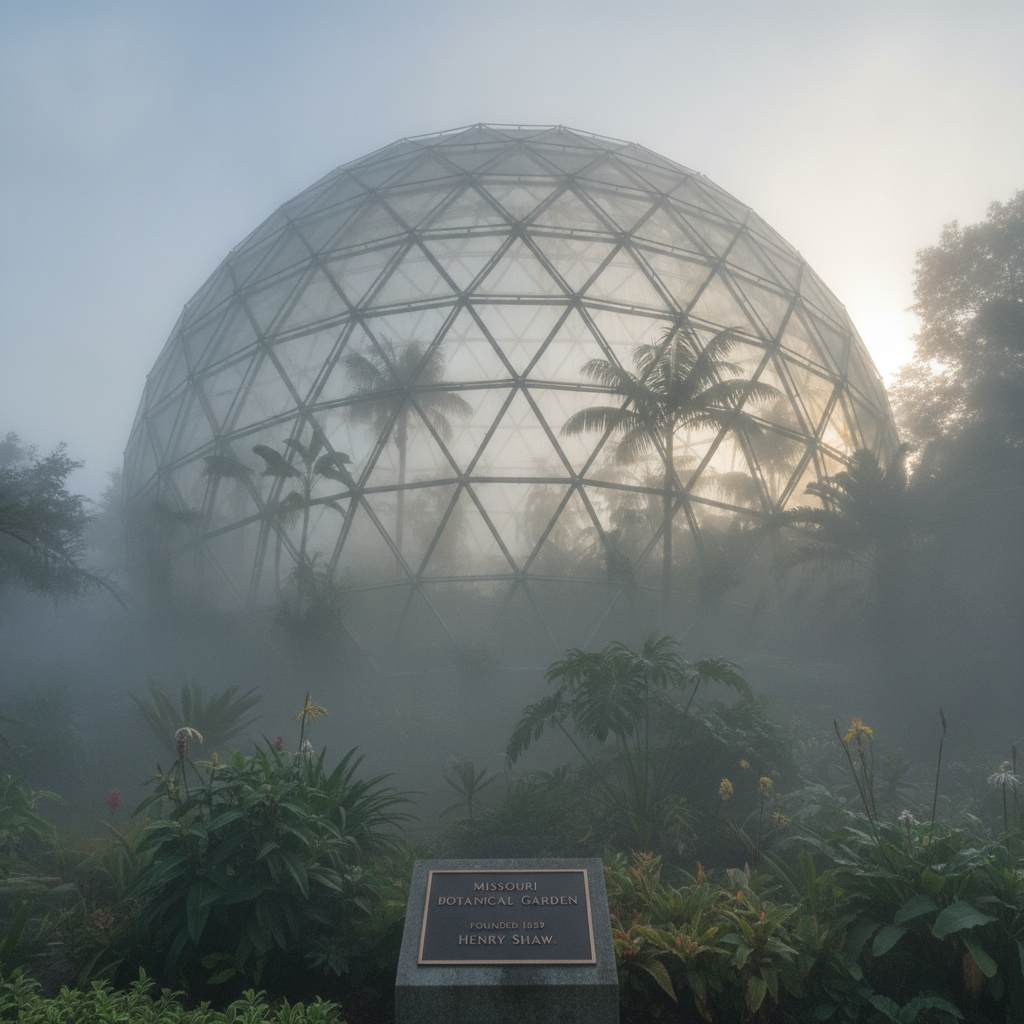
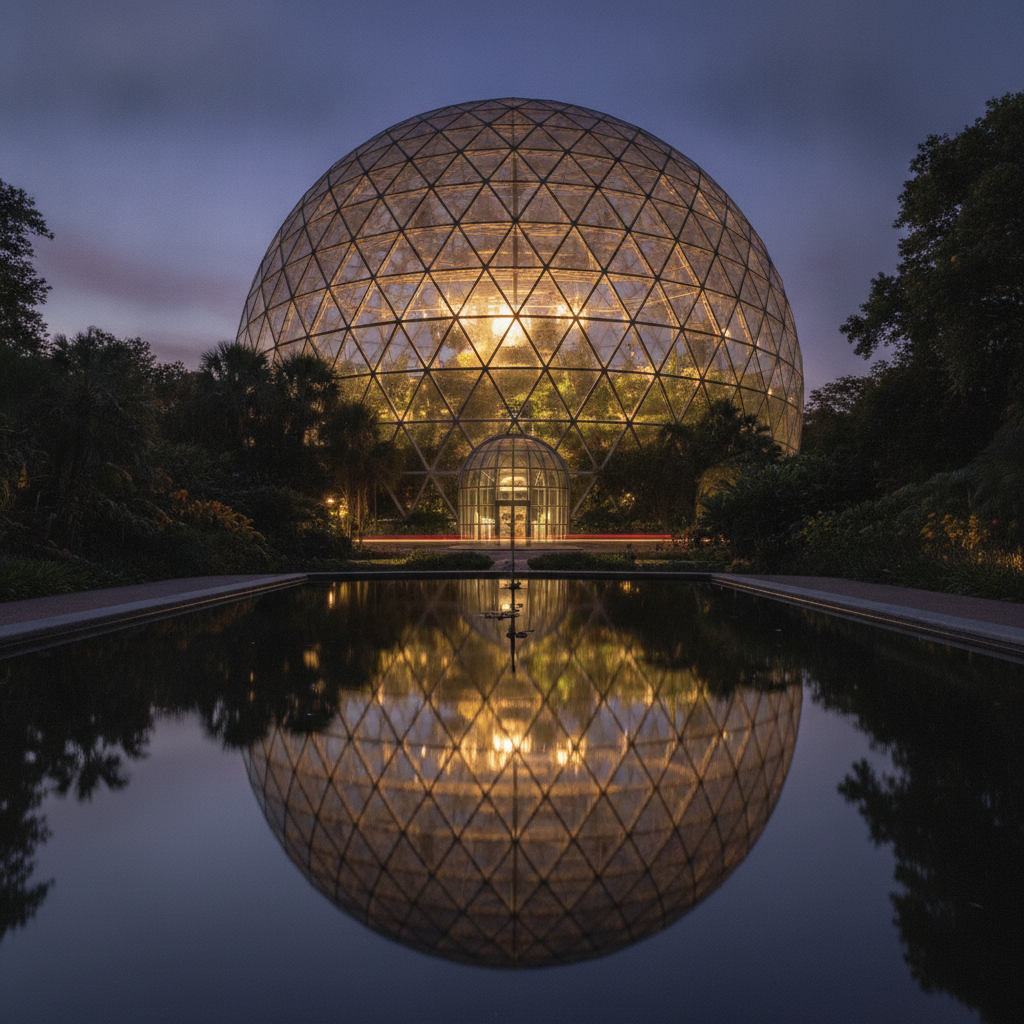
The Missouri Botanical Garden (at 4344 Shaw Boulevard, St. Louis, founded 1859 by Henry Shaw): the oldest botanical garden in continuous operation in the United States and one of the three or four finest botanical gardens in the world (alongside Kew Gardens in London, the New York Botanical Garden, and the Royal Botanic Garden Edinburgh). Henry Shaw (born July 24, 1800, Sheffield, England; died August 25, 1889, St. Louis): the British-born merchant who made a fortune in the hardware business in St. Louis in the 1820s-1840s, retired at age 40, and devoted the remainder of his life and most of his fortune to creating a world-class botanical garden in St. Louis. Shaw donated the garden to the public in 1889 and endowed it with a permanent trust fund for its maintenance. Garden statistics: the Missouri Botanical Garden covers 79 acres, with a living collection of approximately 5,000 plant species, including one of the world's finest orchid collections, the Climatron (a geodesic dome greenhouse designed by Buckminster Fuller disciple Gyo Obata, opened 1960, covering 0.56 acres with rainforest plants and recreating a tropical environment), the Kemper Center for Home Gardening, and the Japanese Garden (Seiwa-en, at 14 acres the largest traditional Japanese garden in North America). The William T. Kemper Center for Home Gardening (the demonstration gardens for home horticulture) and the 54-acre Shaw Nature Reserve (at Gray Summit, Missouri, 60 km west of St. Louis): the satellite property of the Botanical Garden, with reconstructed prairie, wetland, and piney woods habitats. The Sophia M. Sachs Butterfly House (at 15193 Olive Boulevard, Chesterfield, 30 km west of downtown): the 0.6-acre glass conservatory with over 150 butterfly species in a tropical setting.
- 3
St. Louis Symphony Orchestra and the Performing Arts
St. Louis Symphony Orchestra (at Powell Hall, 718 N Grand Boulevard, the Fox Theater building, founded 1880): the second oldest symphony orchestra in the United States (after the New York Philharmonic, founded 1842), with a history of distinguished conductors including Vladimir Golschmann (1931-1958), Walter Susskind (1958-1975), Leonard Slatkin (1979-1996, the period of the orchestras greatest international reputation), and Stéphane Denève (2019-present). Leonard Slatkin (born September 1, 1944, Los Angeles): the conductor who built the SLSO into one of the top 10 American orchestras during his 17-year tenure, recording extensively for RCA Red Seal and winning multiple Grammy Awards. Powell Hall (at 718 N Grand Boulevard, the former Fox Theater, built 1925 in Byzantine Baroque style and converted to concert use in 1968): the most beautiful concert hall interior in the Midwest, with its 2,600-seat auditorium decorated with Moorish arches, marble columns, and elaborate gilded plasterwork. The Fox Theatre St. Louis (at 527 N Grand Boulevard, opened 1929, a separate venue from Powell Hall): the 4,500-seat movie palace (the second largest movie theater in the United States at its opening, after the Roxy in New York) that survived the decline of downtown movie houses to become the most active touring Broadway theater in the Midwest. The Sheldon Concert Hall (at 3648 Washington Boulevard, built 1912 by the Ethical Culture Society): the intimate 700-seat concert hall with acoustics described by many musicians as among the finest in the United States for chamber music. The St. Louis Black Repertory Theater and the Repertory Theatre of St. Louis (REP, at 130 Edgar Road, Webster Groves).
- 4
St. Louis and the Civil War - Missouri as a Border State
Missouri as a Civil War border state: Missouri was the most bitterly divided state in the Civil War, officially remaining in the Union (through the actions of a pro-Union state government that expelled the pro-Confederate governor Claiborne Jackson in 1861) while providing soldiers and guerrilla fighters to both sides. The Missouri-Kansas Border War (Bleeding Kansas, 1854-1861): the violent conflict between pro-slavery Missouri Border Ruffians (who crossed into Kansas Territory to vote in favor of slavery and to attack Free-State settlers) and anti-slavery settlers in Kansas (including John Brown, who conducted the Pottawatomie Massacre of May 24-25, 1856, killing five pro-slavery settlers) that was the bloodiest preview of the Civil War. Wilson's Creek National Battlefield (at 6424 Farm Road 182, Republic, Missouri, 280 km southwest of St. Louis): the site of the first major Civil War battle west of the Mississippi (August 10, 1861), in which Confederate forces killed Union General Nathaniel Lyon — the first Union general to die in combat in the Civil War. The Arsenal Seizure (St. Louis, May 10, 1861): the action in which Captain Nathaniel Lyon (later General) seized the St. Louis Arsenal (at 2401 Arsenal Street, now a park in the Dutchtown neighborhood) from Confederate-sympathizing Missouri State Guard militia, preventing 40,000 muskets and artillery pieces from falling to the Confederacy — one of the most consequential small-unit actions of the Civil War. The Camp Jackson Affair (May 10, 1861): the immediate aftermath of the Arsenal Seizure, in which Lyon's forces marched Confederate militia prisoners through St. Louis and were attacked by a pro-Confederate mob — killing 28 civilians and soldiers and permanently dividing the city along pro- and anti-Union lines.
- 5
Ulysses S. Grant and St. Louis
Ulysses S. Grant in St. Louis: the Civil War general and 18th President of the United States (born April 27, 1822, Point Pleasant, Ohio; died July 23, 1885, Mount McGregor, New York) spent the most difficult and formative years of his life in the St. Louis area, where his failures as a farmer and businessman in the 1850s gave no indication of the military genius he would display in the Civil War. Grant's St. Louis years: Grant was stationed at Jefferson Barracks (the oldest US Army post west of the Mississippi, at 222 Worth Road, Lemay, Missouri, 15 km south of downtown St. Louis) as a young officer, where he met Julia Dent (born January 26, 1826, St. Louis; died December 14, 1902), whose family farm White Haven (at 7400 Grant Road, Grantwood Village, Missouri) became the focus of Grant's civilian life. Grant married Julia on August 22, 1848, in St. Louis. After his resignation from the Army in 1854, Grant attempted to farm White Haven (which he renamed Hardscrabble), failed, tried and failed to sell real estate in St. Louis, and was reduced to selling firewood on the street corners of St. Louis by 1858 before moving to Galena, Illinois, in 1860 to work in his father's leather goods store. The Civil War rescued him: he was commissioned as colonel of an Illinois regiment in June 1861, captured Fort Henry and Fort Donelson in February 1862 (earning the nickname Unconditional Surrender Grant), fought at Shiloh in April 1862, captured Vicksburg on July 4, 1863, and was named general-in-chief of all Union forces in March 1864. The Ulysses S. Grant National Historic Site at White Haven (open daily, free admission) preserves the farm buildings and landscape of his St. Louis years.
- 6
St. Louis Practical Guide - Getting Around and Day Trip Distances
St. Louis visitor practical guide: complete planning information for the metropolitan area. Lambert-St. Louis International Airport (IATA: STL, at 10701 Lambert International Boulevard, Hazelwood, Missouri, 24 km northwest of downtown): served by all major US airlines, Southwest Airlines hub (the busiest airline at STL), with approximately 10M passengers per year. Metrolink (the St. Louis light rail system): connects the airport (two stations: Terminal 1 and Terminal 2) to downtown St. Louis (35-minute journey, single-ride fare approximately USD 2.50) and to Clayton (the county seat of St. Louis County, 10 km west of downtown, with a compact walkable downtown and several excellent restaurants), Brentwood, Maplewood, and the University of Missouri-St. Louis (UMSL) campus. Accommodation: the Westin St. Louis (at 811 Spruce Street, adjacent to Busch Stadium), the Moonrise Hotel (at 6177 Delmar Boulevard, The Loop, boutique hotel with a rooftop bar), and the Cheshire Inn (at 6300 Clayton Road, a British-themed boutique hotel in the Clayton/Richmond Heights area). Best seasons: spring (April-May, mild temperatures 16-22 degrees Celsius, Cardinals baseball opening, blooms in the Botanical Garden) and fall (September-October, Cardinals playoff contention, Forest Park foliage). What to do free: the Gateway Arch grounds (walking along the riverfront), Forest Park (all the major museums: Art Museum, History Museum, Zoo, Science Center), the Soulard Market, the Loop walking. Day trip distances: Cahokia Mounds 20 minutes, Hermann wine country 90 minutes, Meramec Caverns 90 minutes, Springfield Missouri 2.5 hours, Kansas City 4 hours.
Walk this route with audio
Stories play automatically as you reach each stop — no tapping needed.
More in st-louis
St. Louis R3: Scott Joplin (King of Ragtime born 1868 Texarkana, Maple Leaf Rag 1899 first sheet music 1M copies, Entertainer 1902 revived The Sting 1973 7 Oscars, Pulitzer 1976 posthumous, 2658 Delmar House State Historic Site), Josephine Baker (born 1906 St. Louis, Paris 1925 banana dance Folies Bergere most photographed woman 1920s, French Resistance Croix de Guerre Legion d'Honneur, March on Washington August 28 1963 only woman official speaker, French state funeral Notre-Dame April 15 1975 Rainbow Tribe 12 adopted children), Tennessee Williams (Glass Menagerie 1944 set St. Louis family 4633 Westminster Place 1918), Vincent Price (born 1911 St. Louis horror films), Eads Bridge (1874 first steel bridge in world, chromatic steel, pneumatic caissons 33m bedrock first US use, Grant ceremonial July 4 1874, Boeing 14,000 engineers Hazelwood), German food heritage (Forty-Eighters 1848 Missouri Rhineland vineyards, Hill neighborhood Italian toasted ravioli Charlie Gitto's, provel cheese St. Louis pizza Imos Pi Pizzeria Obama 2008, gooey butter cake 1930s mistake), St. Louis decline (856,000 1950 to 300,000 65% largest US city decline, city-county separation 1876, Cortex USD 2B Washington Avenue lofts 3000 units), day trips (Meramec Caverns Jesse James, Elephant Rocks 1.5B year granite, Missouri Wine Country Hermann Norton grape, Grant Hardscrabble farm 1850s).
St. Louis: Garden City, World Fair Parks and American Music Roots
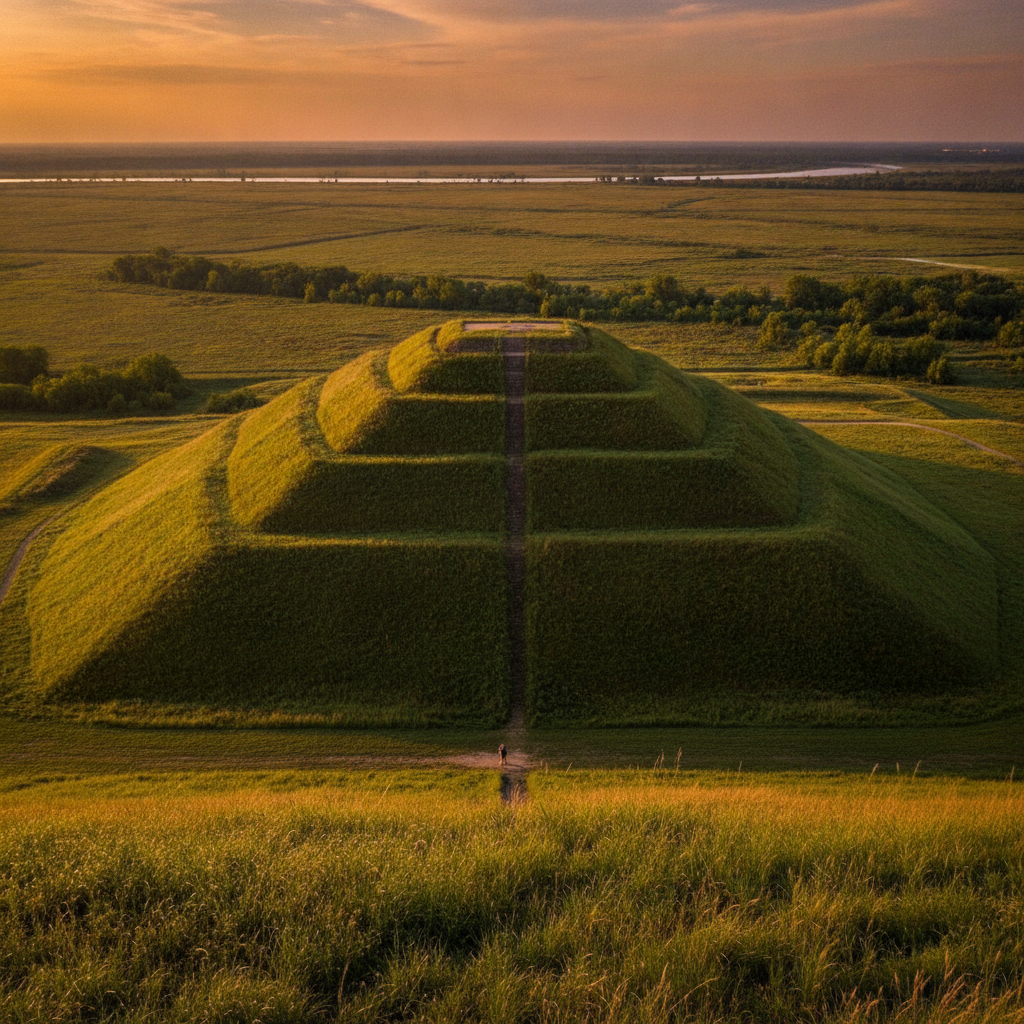
St. Louis: World-Class Art, Ancient Cities and Neighborhood Soul
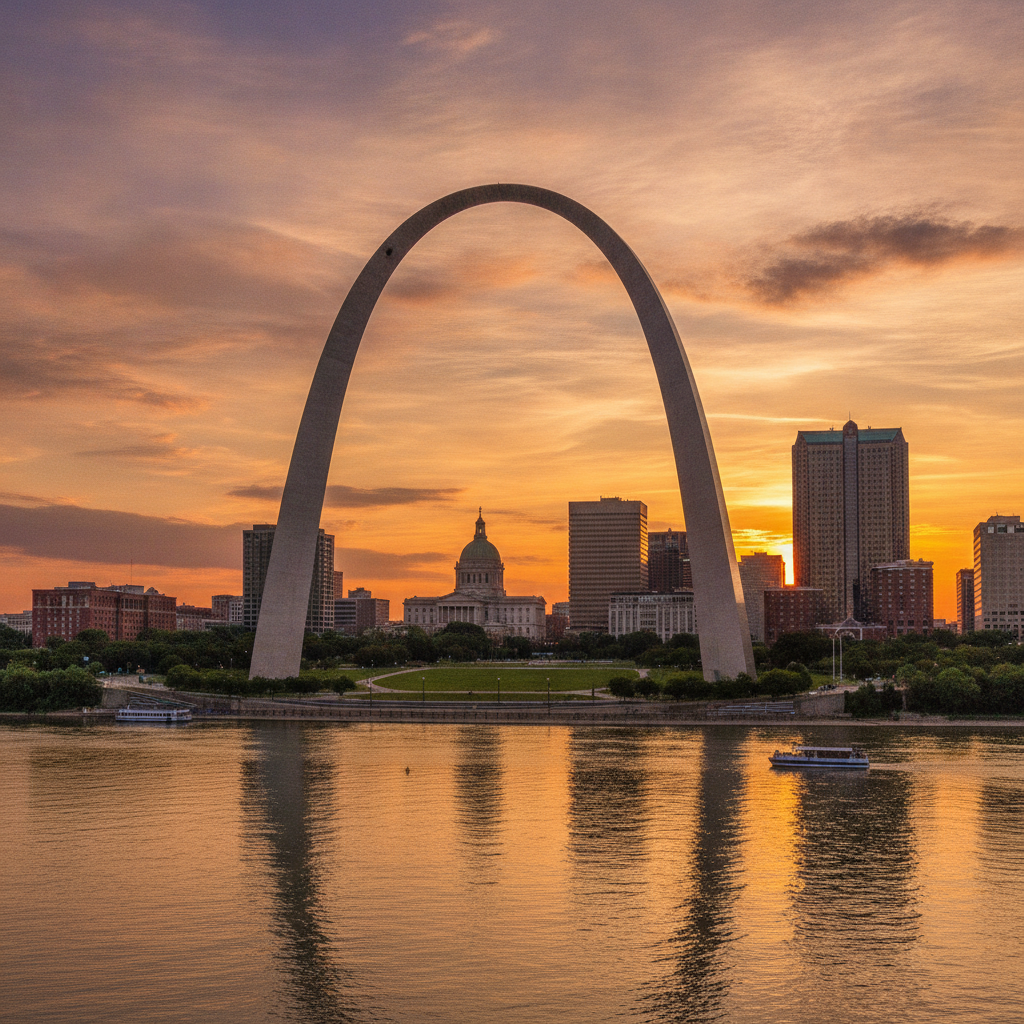
St. Louis: Gateway Arch, founding history, Forest Park, music, sports, and food
St. Louis: Victorian Parks, Rock and Roll Sidewalks and the Gateway West