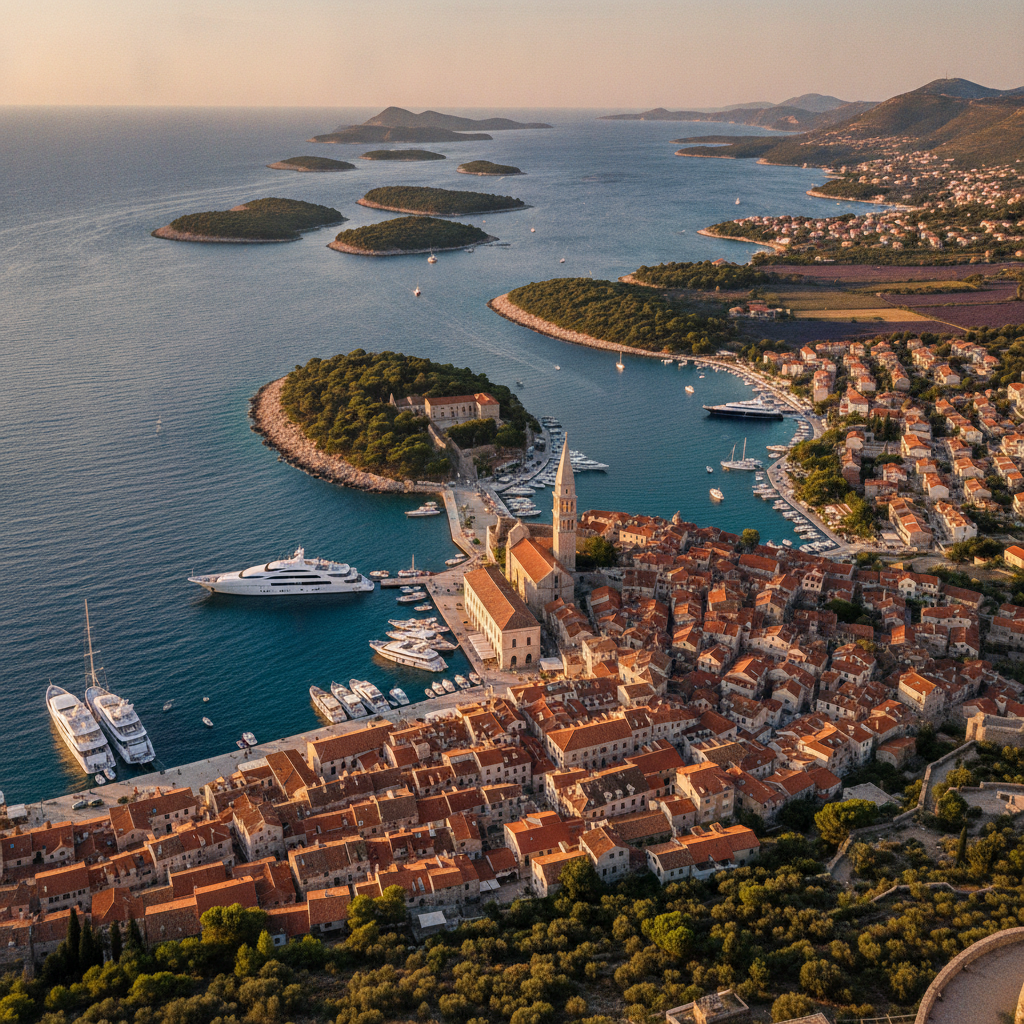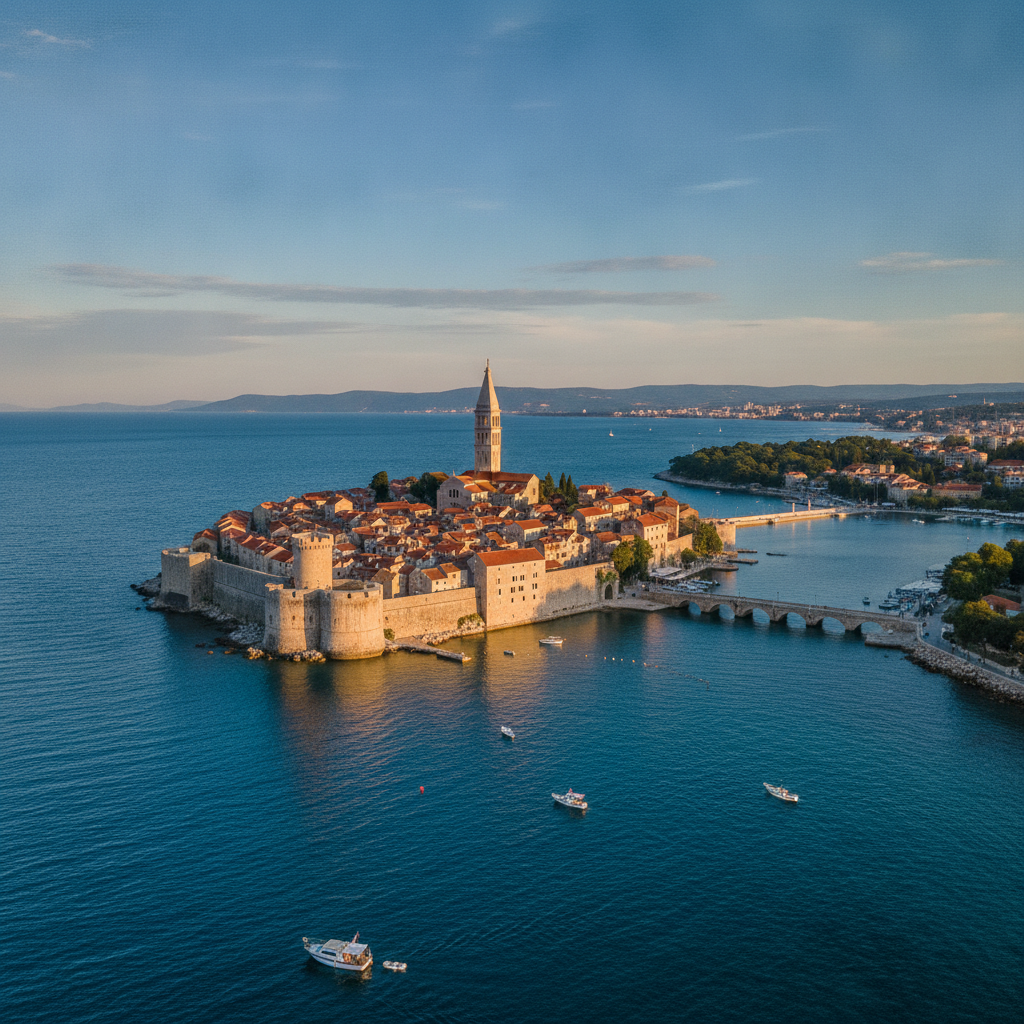
Trogir — the Second UNESCO Town, Kamerlengo Fortress & the Kastela Riviera
Trogir (the medieval walled city on an islet between the Dalmatian mainland and the island of Ciovo, 27km west of Split, accessible by bus 37 from Split bus station in 30 minutes at €2.50 or by taxi at €35, the UNESCO World Heritage Site since 1997 with a 3,000-year continuous inhabited history, the Venetian-influenced medieval architecture the finest surviving example of Venetian Gothic in the Adriatic) is the most culturally rich day trip from Split.
- 1
Cathedral of St Lawrence — the Radovan Portal
The Cathedral of St Lawrence (Katedrala Svetog Lovre, Trg Ivana Pavla II, the main square of Trogir, construction began 1213 and continued over 5 centuries, the Romanesque-Gothic transition cathedral, €4 adults, daily 9am-7pm May-September) contains the Radovan Portal (the west portal carved by the Croatian master Radovan and completed in 1240, the most important Romanesque sculpture in Dalmatia — the doorway lintel depicting the nativity cycle, the jambs covered with the months of the year as agricultural scenes, the supporting columns resting on carved lion bases with the figures of Adam and Eve at shoulder height, the portal inscription identifying Radovan as 'the most distinguished master of his art in this region and time') and the Blessed John of Trogir Chapel (the Gothic chapel on the north side of the nave, the tomb of the city's patron saint, the Romanesque polyptych above the altar, the 15th-century Gothic choir stalls). The bell tower (3 stories built in 3 centuries — the ground floor Romanesque, the first floor Gothic, the second floor Renaissance, a unique compressed history of architectural development, €2 additional to climb) is the tallest structure in Trogir.
- 2
Kamerlengo Fortress — the Venetian Castle on the Water
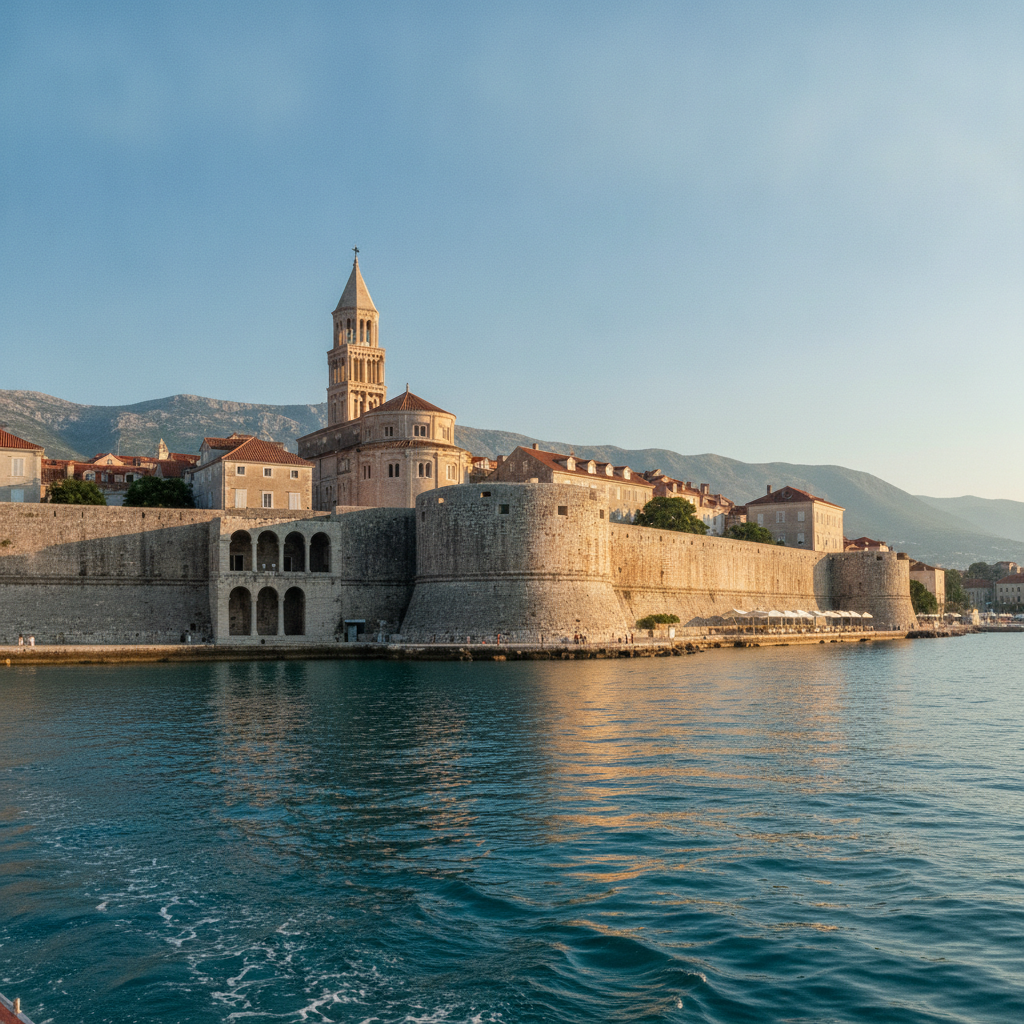
Kamerlengo Fortress (the 15th-century Venetian fortification at the northwest corner of the Trogir islet, accessible from the Old Town via the Via Castrum, €5 adults, daily 9am-9pm May-September, the fortress named after the Venetian official title of Kamerlengo — the treasurer of the city, the fortress built 1420-1437 in the decade after the Venetians took control of Trogir from the Kingdom of Hungary) is the most completely preserved Venetian military fortification in Dalmatia. The circular tower (the 25-metre round tower on the sea, the view from the top encompassing the Trogir islet, the Ciovo island, and the Kastela Riviera to Split) and the interior courtyard (the arena used for open-air cinema and concerts in summer, the cliff-edge promenade walkway connecting the fortress to the small beach to its south) are the fortress's key elements.
- 3
Kastela Riviera — the Seven Medieval Fortified Villages
Kastela (the 9km stretch of coastline between Trogir and Split, the site of 7 medieval fortified villages — Kastel Stafilic, Kastel Novi, Kastel Stari, Kastel Luksic, Kastel Kambelovac, Kastel Gomilica, and Kastel Sucurac — each village built by a different noble family of the Republic of Split in the 15th-16th century as fortified summer residences to protect against Ottoman raids, the 7 village watchtowers all in a line along the coast creating a 9km chain of medieval fortifications visible from the Split-Trogir road) is the least-visited historic site in the immediately accessible Dalmatian coast. The Kastel Gomilica village (the fortified village built on a small islet connected to the shore by a 15th-century stone bridge, the intact 16th-century defensive tower and the church of Our Lady of the Sea, the most photogenically positioned of the 7 villages, free access) is the starting point.
- 4
Ciovo Island — the Bridge Connection to Trogir
Ciovo (the island immediately south of Trogir, connected to the Trogir islet by a bridge and to the mainland at Okrug Gornji by a second bridge, 15km long, the island of 6,000 permanent residents and a significant summer tourist population attracted by the island's calm bay swimming and the residential villa tourism) is the most accessible uninhabited-feeling island from Split and Trogir — the northern shore of Ciovo (the 6km drive from the Trogir bridge to Okrug Gornji, passing through the olive groves and small fishing villages) and the Okrug Gornji beach (the long pebble beach on the north shore of Ciovo, the most popular swimming beach within easy distance of Trogir, accessible by water taxi from Trogir waterfront in 10 minutes at €5 or on foot in 30 minutes) are the island's primary draws.
- 5
The Trogir Fish Barbecue — the Riva Night Market
The Trogir Riva (the waterfront promenade of Trogir, on the north side of the islet facing the mainland shore, the evening korzo promenade, the outdoor fish restaurant tables set on the quay from May-October) is the correct evening destination after visiting the Old Town monuments during the day. The fresh fish grilled on outdoor charcoal grills (the aromas of olive oil and grilled brancin audible and visible from 100m along the Riva, the characteristic Dalmatian outdoor grilling method — the fish whole, the grill over oak charcoal, the fish turned once, dressed with olive oil and lemon at the moment of serving) and the local Kastela wine (the Kastela DOC, the wines from the 7-village hillside vineyards, the local Crljenak Kastelanski grape — the DNA-confirmed original source of Zinfandel and Primitivo, the oldest documented Zinfandel-parent vine found alive in Kastel Novi — available by the glass at Riva restaurants at €4-6) make the Trogir Riva the most authentic dinner destination within 30 minutes of Split.
- 6
Solin and the Roman City of Salona
Salona (the ruins of the Roman city of Salona, the former capital of the Roman province of Dalmatia, 5km north of Split at the modern town of Solin, the birthplace of Emperor Diocletian in 245 AD, accessible by bus from Split bus station in 15 minutes or by local bus 1 in 20 minutes, €10 adults, Tuesday-Sunday 9am-7pm June-September) contains the most extensive Roman ruin complex in Croatia: the ancient city walls (the 7th-century Germanic Avar and Slavic sack of the city is the archaeological event that drove the city's population to take refuge in Diocletian's Palace in Split in 614 AD — the origin story of Split as a city), the Early Christian basilica complex (the 4th-century double cathedral, the oldest Christian martyr cemetery in Dalmatia, the episcopal complex built over the tomb of Domnius — the same Bishop Domnius whose mausoleum conversion made Diocletian's Palace into Split's Cathedral), and the Roman amphitheatre (the largest Roman amphitheatre in Croatia, the capacity of 18,000 spectators, the arena walls substantially intact to 6m height).
Walk this route with audio
Stories play automatically as you reach each stop — no tapping needed.
More in split
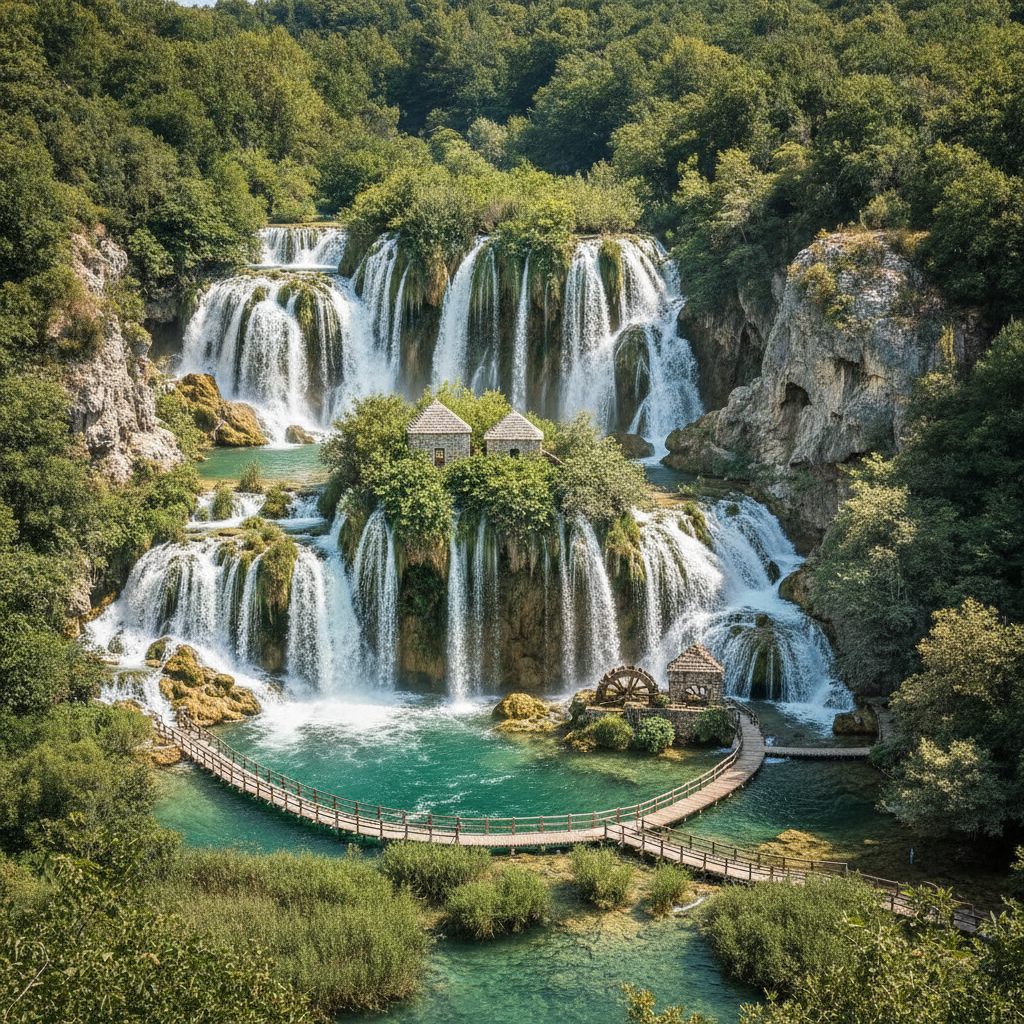
Day Trips from Split — Krka Waterfalls, Omis Canyon & the Cetina River
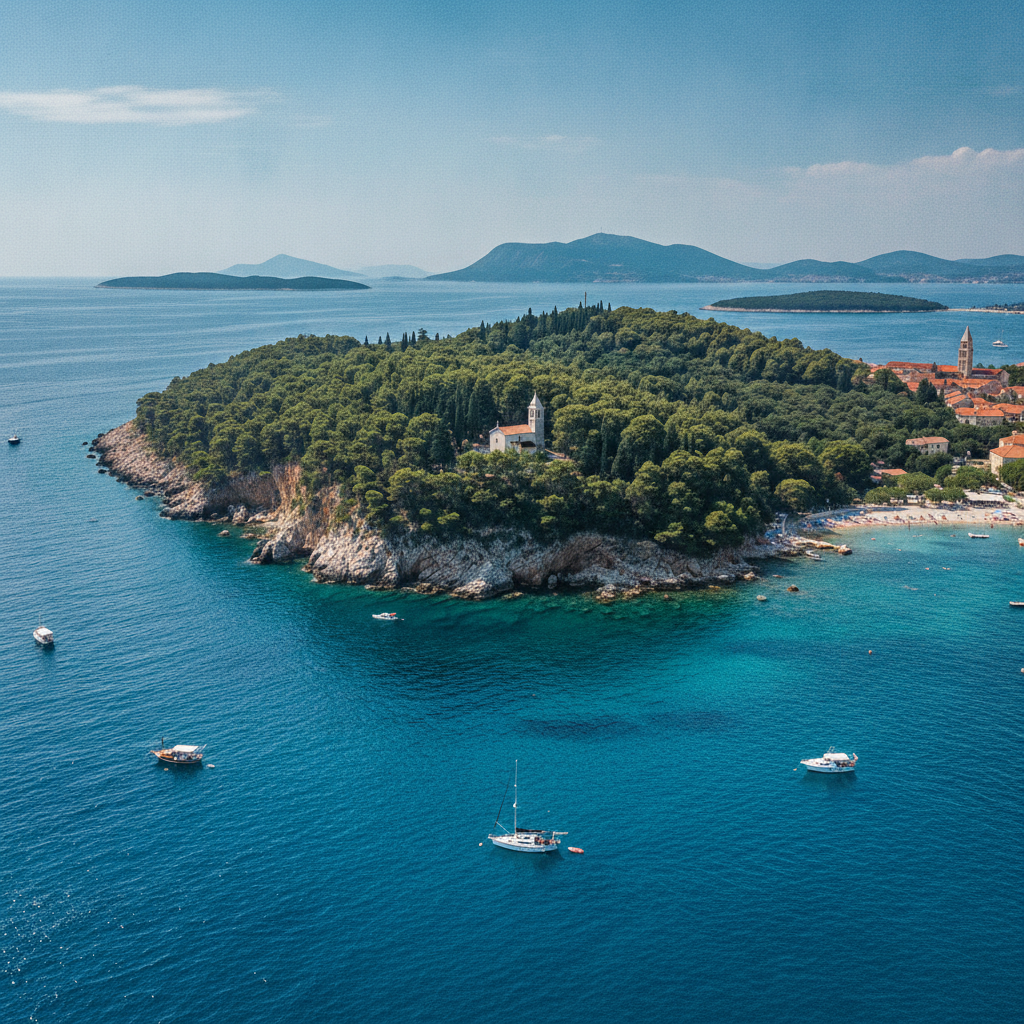
Marjan Hill — the Urban Forest, Rocky Beaches & Split's Traditional Sport of Picigin
Split — Diocletian's Palace, the Peristyle & a Living Roman City
Split Food & Dalmatian Cooking — Prsut, Black Risotto & Konoba Culture