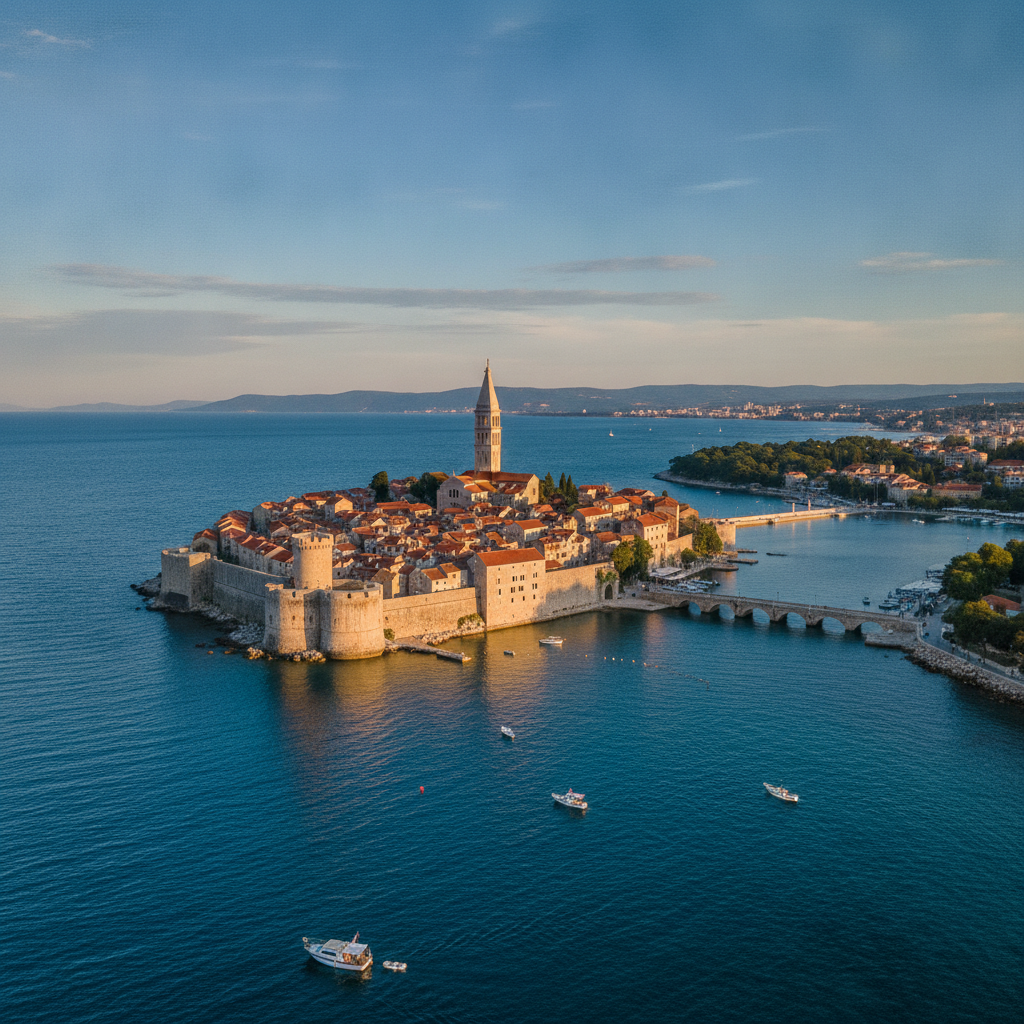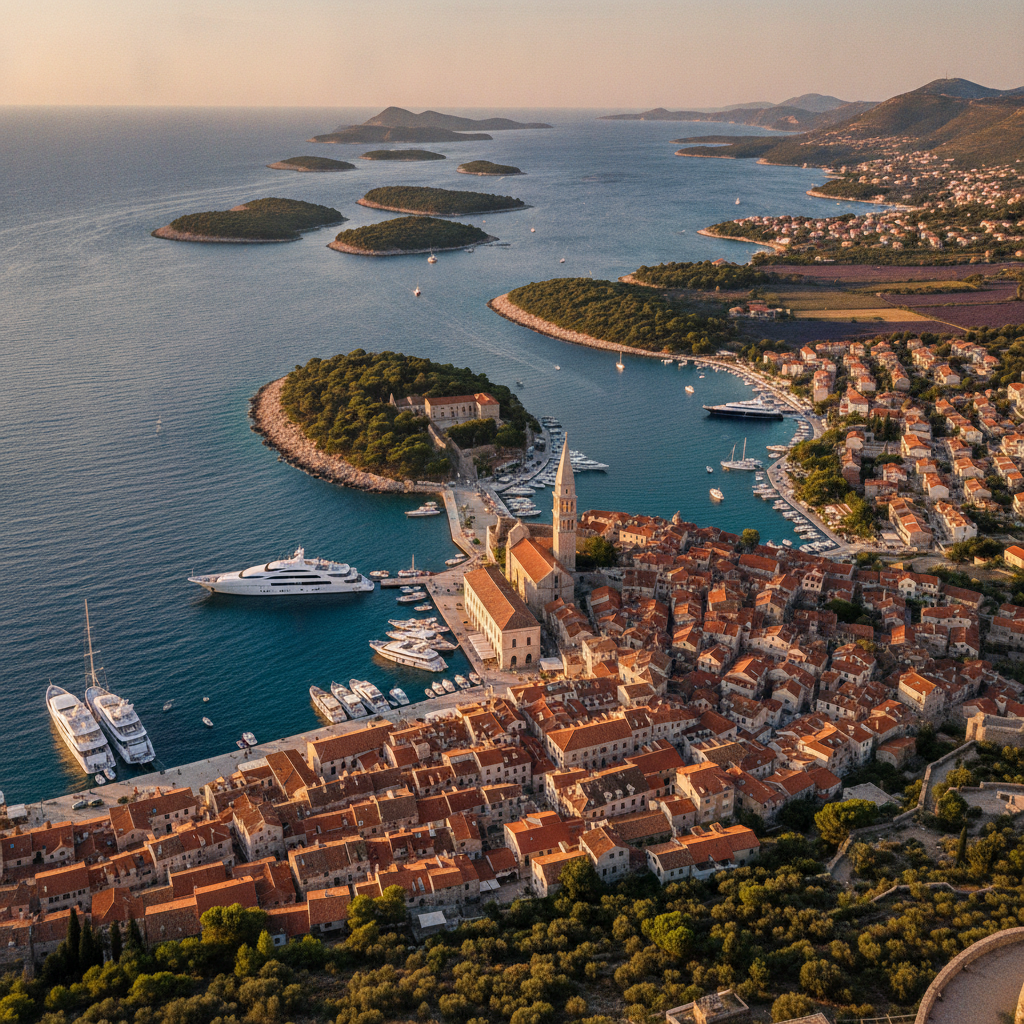
Hvar Island — the Lavender Island, the Pakleni Islands & Dalmatian White Wine
Hvar (the island 70km northwest of Split, accessible from Split by fast catamaran to Hvar Town in 1 hour at €15 or by car ferry to Stari Grad in 2 hours at €6, the sunniest island in Croatia at 2,726 hours of sunshine per year, the most fashionable island destination in the Adriatic, the island where European celebrity yachts gather in summer and where the lavender cultivation tradition is protected as a UNESCO intangible cultural heritage since 2016) merits a minimum 2-night stay to experience both the resort coast and the island interior.
- 1
Hvar Town — the Venetian Piazza and the Cathedral of St Stephen
Hvar Town (the principal settlement on the west end of the island, population 4,000, the most fashionable waterfront town in the Adriatic, the piazza — the main square called Trg Sv. Stjepana, the largest piazza in Dalmatia at 4,500 square metres — the Venetian loggia and clocktower on the north side of the square, the Cathedral of St Stephen with its unfinished Gothic facade on the east end, the Arsenal building (the 16th-century Venetian naval base, now containing the oldest municipal theatre in Croatia, built in 1612 — the first public theatre in the Balkans and one of the first public theatres in Europe, €4 adults, accessible through the Arsenal) are the Old Town's key elements. The central piazza (the aperitivo hour at the Carpe Diem bar, the waterfront restaurant tables on the quay's south edge, the mega-yachts moored 30m from the restaurant tables creating the defining summer-luxury atmosphere of the Adriatic) and the Cathedral (the 16th-century interior with the Hvar Madonna, the 13th-century Byzantine icon above the left altar, the oldest dated object in Hvar's Old Town) are the town's essential experiences.
- 2
Spanjola Fortress — the View Above Hvar Town
Spanjola Fortress (the Spanish Fortress, properly the Fortica or Citadel, on the hill 100m above Hvar Town, accessible by climbing 900 steps from the main piazza in 20 minutes or by the dirt path around the north side of the hill, €10 adults, daily 8am-midnight May-September, the fortress named after the Spanish troops who garrisoned it during the Habsburg period, the present structure built by the Venetians in 1551 on the foundations of an earlier 13th-century fortification) provides the most complete aerial view of the Dalmatian island chain from any point accessible on foot — the 360-degree panorama from the summit (Hvar island stretching east to Stari Grad plain, the Pakleni islands directly below, the island of Vis 30km to the south, the island of Brac 15km to the north, the island of Korcula 60km to the southeast, and the Biokovo mountain range on the mainland visible 50km east) is the essential Dalmatian archipelago orientation view.
- 3
Stari Grad Plain — the UNESCO Ancient Greek Agricultural Landscape
The Stari Grad Plain (the agricultural plain in the centre of Hvar island behind the town of Stari Grad on the north coast, the most completely preserved ancient Greek agricultural land division anywhere in the Mediterranean world, the field boundaries and irrigation channels laid out by Greek colonists from Paros in 384 BCE still defining the land parcels 2,400 years later, UNESCO World Heritage Site since 2008 for the exceptional preservation of the ancient chora — the agricultural hinterland of the Greek colony) is accessible by bus from Hvar Town to Stari Grad in 40 minutes, then on foot or by bicycle along the farm tracks. The olive groves (some trees identifiable as the direct descendants of the original Greek plantings, 2,000 years old or more, the gnarled trunks recognizable from the age photographs of the Stari Grad plain catalogue) and the dry-stone walls of the Greek field divisions (still used as cattle boundaries today, the stones the same limestone blocks laid by Greek hands in the 4th century BCE) make the plain the most remarkable agricultural landscape in Croatia.
- 4
Lavender — the Hvar Island Harvest Tradition
Hvar lavender (the Lavandula angustifolia grown on the stone terraces and hillsides throughout the island's interior, the harvest in late June-July by hand cutting with sickles, the tradition of lavender cultivation introduced to the island in the 1920s as a replacement crop for the phylloxera-devastated vineyards, the island now producing 12 tonnes of lavender essential oil per year — Croatia's largest lavender producing area) is available as: the essential oil (€5-10 per 10ml bottle, the quality varying significantly between producers — the Zlatan Plenković farm outside Jelsa is the most established producer, tours by appointment), the dried bouquets (€2-5 per bunch, sold at every craft stall and market in Hvar Town), the lavender honey (from the bees kept in the lavender-growing areas of the island interior, €8-15 per 250g jar, the most distinctive Hvar food product). The lavender harvest festival (the mid-June celebration of the cutting season in Velo Grablje village — the inland lavender village 20 minutes above Hvar Town, the oldest inhabited lavender village in Croatia) is the most authentic cultural expression.
- 5
Pakleni Islands — the Swimming Circuit
The Pakleni Islands (the archipelago of 16 small islands immediately southwest of Hvar Town harbour, the islands whose name derives from Paklina — the pine resin called 'hell-pitch' historically collected from the pine trees and used for caulking boat hulls, not from Pakao, hell, as the tourist brochures frequently claim) are accessible by water taxi from Hvar Town harbour (the water taxis operating from the town quay, the fare €5-8 per person for the 10-minute crossing to the nearest island Jerolim, the naturist beach island closest to town). The circuit (Jerolim the naturist island, Stipanska the restaurant island, Sveti Klement the largest island with the Palmizana cove — the most sheltered swimming bay in the archipelago with a Michelin-mentioned restaurant, the Meneghello family has owned the island since 1906 and operates the Robinson Crusoe-style garden restaurant there) takes a full day by water taxi.
- 6
Plavac Mali Wine — the Dalmatian Red from Hvar's South Coast
Hvar's wine production (the Plavac Mali red grape variety cultivated on the sun-baked south-facing terraces of the Hvar island south coast — the Dingac designation on the Peljesac peninsula immediately across the channel being the premium expression, the Hvar Plavac Mali from Ivan Dolac the island's most celebrated wine) is the correct accompaniment to the island's grilled fish and lamb. Zlatan Otok (the largest premium Dalmatian winery, with cellars in Sveta Nedjelja on Hvar's south coast, winery visits by appointment, the Zlatan Plavac Mali Grand Cru from the Ivan Dolac estate at €25-35/bottle, the winery tour including a boat trip to the vineyards from Hvar Town at €15 per person), Bastijana (the family winery at Milna on Hvar's south coast, the small-production Plavac Mali and Bogdanusa white, direct sales from the winery), and the Hvar Cooperative wines (the bulk production available at every island restaurant at €5-8/carafe) represent the full spectrum of Hvar wine from artisan to tourist-grade.
Walk this route with audio
Stories play automatically as you reach each stop — no tapping needed.
More in split
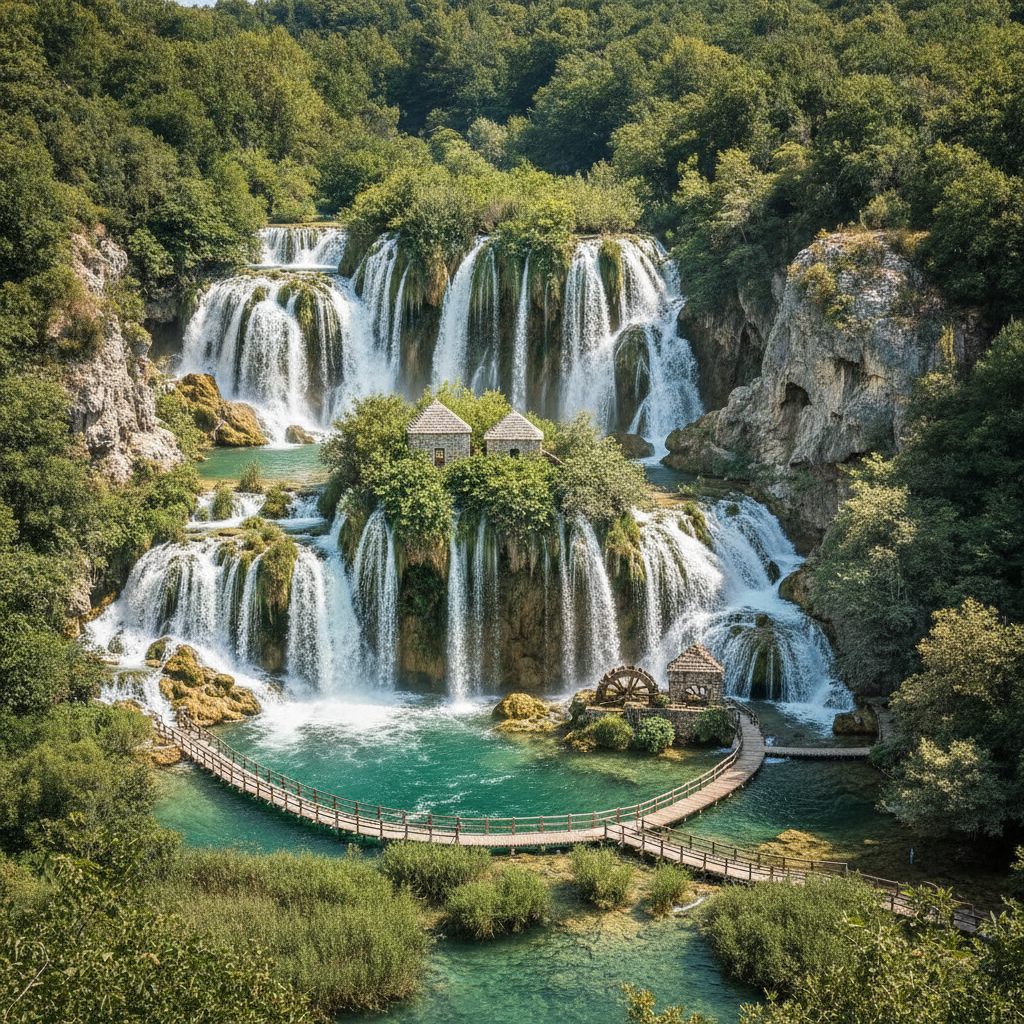
Day Trips from Split — Krka Waterfalls, Omis Canyon & the Cetina River
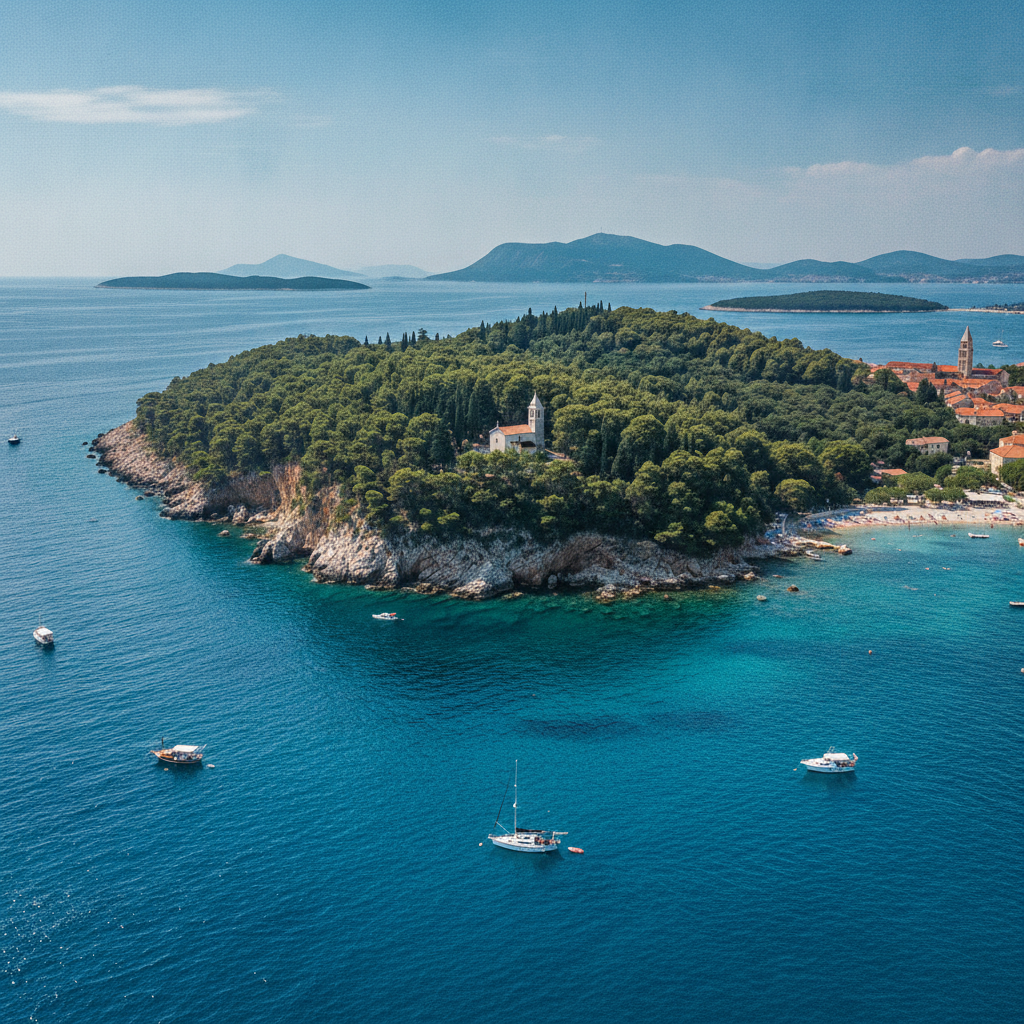
Marjan Hill — the Urban Forest, Rocky Beaches & Split's Traditional Sport of Picigin
Split — Diocletian's Palace, the Peristyle & a Living Roman City
Split Food & Dalmatian Cooking — Prsut, Black Risotto & Konoba Culture