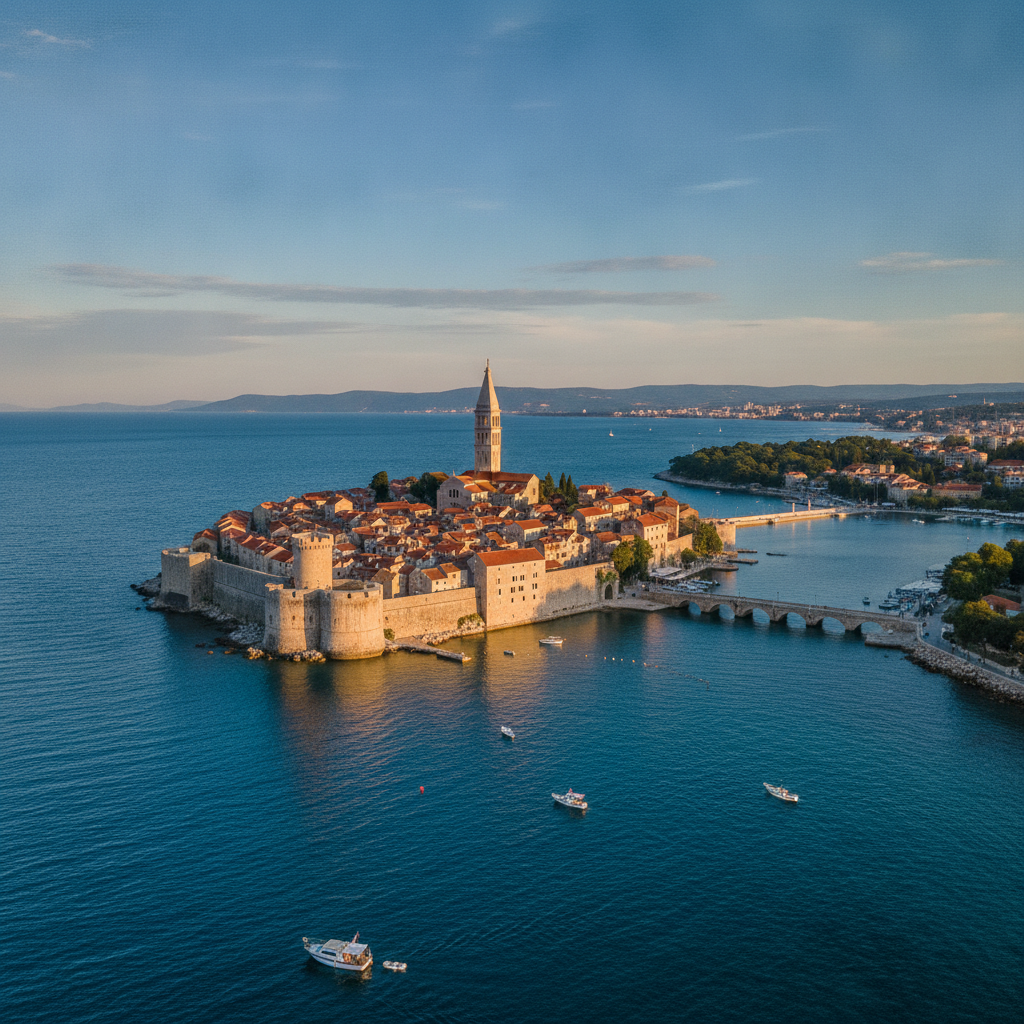
Split — Diocletian's Palace, the Peristyle & a Living Roman City
Split (population 160,000, the largest city in Dalmatia, the second-largest city in Croatia, built within and around the walls of the Roman palace of Emperor Diocletian, the UNESCO World Heritage Site and the only city in the world where people have continuously lived inside a Roman imperial palace for 1,700 years) is the gateway to the Dalmatian coast and islands.
- 1
Diocletian's Palace — the Roman Imperial Complex Built for One Man's Retirement
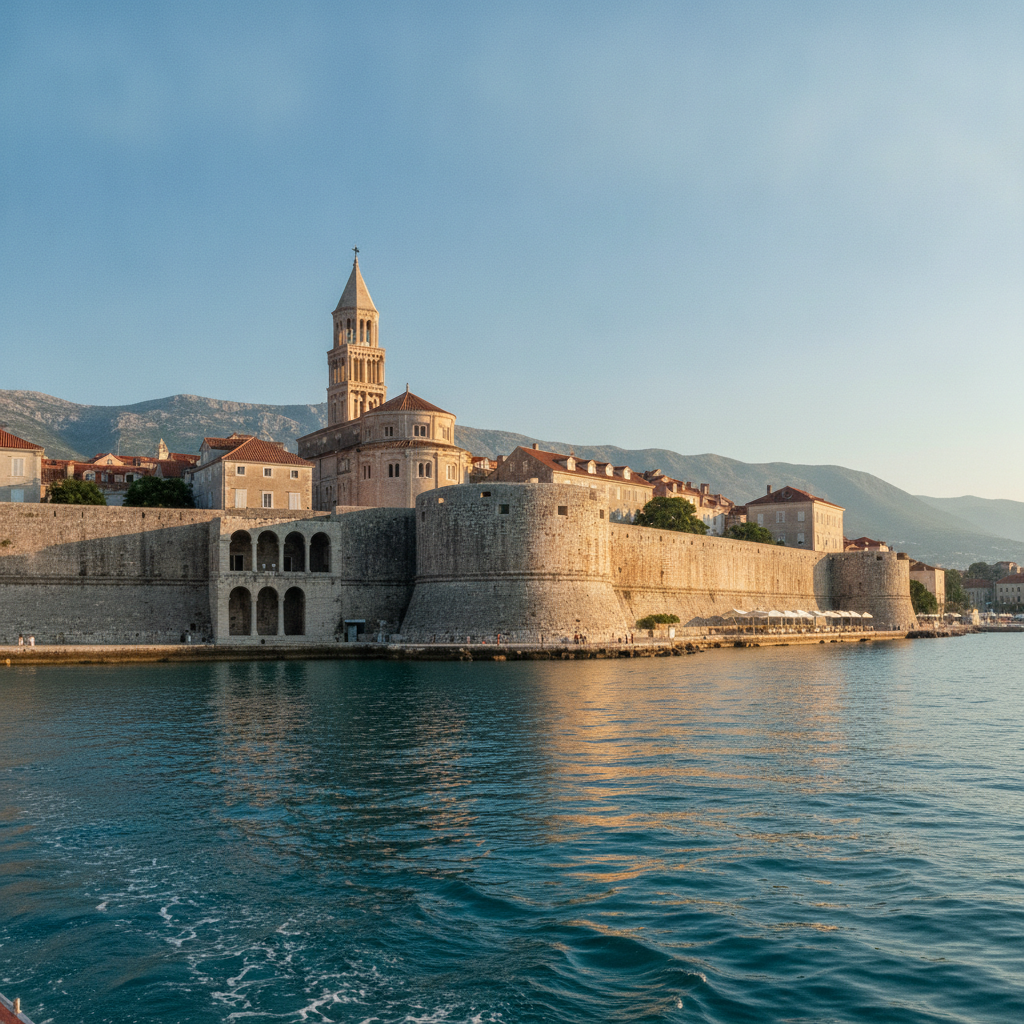
Diocletian's Palace (built 295-305 AD as the retirement home of Emperor Diocletian, the Roman emperor who ruled 284-305 AD and voluntarily abdicated power to retire to his native Dalmatia — the only Roman emperor in the first 300 years of the empire to retire voluntarily, all others died in office or were murdered — the palace covering 31,000 square metres, the walls 2.5m thick, the 4 gates, the 16 towers, the entire southern facade 200m long facing the Adriatic) is the largest and most complete Roman palace in the world. The palace was built not as a military fortress but as a luxurious retirement complex combining the design elements of a Roman villa, a military camp, and an imperial residence — the southern facade (the Adriatic-facing wall with the 6 arched windows of the imperial apartments, the emperor's private loggia from which Diocletian watched the Adriatic sunset every evening) is the defining architectural achievement of late Roman imperial domestic architecture.
- 2
The Peristyle — the Palace's Central Ceremonial Square
The Peristyle (the central courtyard of Diocletian's Palace, the colonnaded square linking the southern imperial apartments with the northern Jupiter Temple and mausoleum complex, now the main outdoor social space of Split's Old Town, the cafe tables arranged between the Roman columns, the sphinx from the reign of Thutmosis III 1479-1425 BCE brought from Egypt by Diocletian and now missing its head — one of only 12 Egyptian sphinxes still surviving in Europe) is the heart of both the ancient palace and the modern city. The outdoor opera performances (the Split Summer Festival, July-August, the Peristyle used as an outdoor opera stage, the sound quality provided by the Roman stone acoustics of the colonnaded square, tickets €20-45 at Ulaznice.hr) and the red-velvet cafe chairs of the Caffe Peristil (the most atmospheric coffee in Dalmatia, the espresso at €2.50 served to tourists and locals sharing the same Roman columns) are the daily expressions of the site's living function.
- 3
Cathedral of Saint Domnius — Diocletian's Mausoleum Converted to a Church
The Cathedral of Saint Domnius (the Katedrala Svetog Dujma, on the Peristyle, the Roman imperial mausoleum of Emperor Diocletian converted to a Christian cathedral in the 7th century, the conversion representing one of history's great ironies: Diocletian was the last emperor to mount a systematic persecution of Christians — the Diocletian Persecution of 303-311 AD was the most severe Roman persecution of the faith — and his own tomb became the most celebrated Christian church in Dalmatia, the patron saint being Bishop Domnius who was martyred by Diocletian himself in 304 AD, €7 adults for the cathedral and treasury, daily 8am-7pm May-September) is the only Roman emperor's tomb still standing anywhere in the world. The 13th-century campanile (the bell tower added to the ancient mausoleum structure, the view from the top at 57m altitude the best panorama of the palace complex and the Adriatic below, €3 additional for the tower climb) is the defining silhouette of Split's skyline.
- 4
Temple of Jupiter — the Baptistery
The Temple of Jupiter (the Roman temple at the northwest corner of the Peristyle, the smallest and best-preserved of the three religious structures within the palace, dedicated to the king of the Roman gods who was the emperor's divine protector — Diocletian styled himself Jovius, the man of Jupiter — converted to a Christian baptistery in the early medieval period, the baptismal font and the medieval sarcophagus of Bishop John of Ravenna (170 AD) inside the original Roman temple cella, €3 adults) retains the original Roman coffered barrel vault above the vestibule (the most completely preserved Roman ceiling decoration in Dalmatia) and the decapitated headless sphinx (the second of Diocletian's Egyptian sphinxes brought from Egypt, now displayed in the temple courtyard, the missing head one of the great archaeological losses of the Dalmatian sites).
- 5
The Four Gates — the Four Cardinal Points of the Roman City
The four gates of Diocletian's Palace (the Golden Gate to the north — Porta Aurea, the most ceremonially significant, facing the Roman road to Salona, the largest and most ornate gate, the 10-metre statue of Bishop Gregory of Nin by Ivan Mestrovic immediately outside the gate, the statue's left big toe worn shiny by the tourist tradition of rubbing it for luck; the Silver Gate to the east, now housing the daily vegetable market in the medieval street behind it; the Bronze Gate to the south, opening directly onto the Riva waterfront and the sea; and the Iron Gate to the west, the most architecturally modified gate, the medieval Chapel of Our Lady of the Belfry built directly into the gate structure in the 10th century) define the four sides of the original Roman grid plan still legible in the current street pattern of the Old Town.
- 6
Riva Waterfront — the Roman Facade Above the Sea
The Riva (the waterfront promenade of Split, running the full 200-metre length of the southern facade of Diocletian's Palace directly above the Adriatic, the 6 original Roman arched windows of the imperial apartments visible above the cafe terraces, the palm trees planted in the 19th century during the Austro-Hungarian renovation of the waterfront, the most historically remarkable seafront esplanade in Europe — the promenade where modern café tables sit immediately below 1,700-year-old Roman arched windows — redeveloped in 2007 by the Croatian architect Boris Podrecca who replaced the 1950s Yugoslav concrete with white Brac stone) is the daily social gathering point for the entire city of Split: the morning coffee ritual (the Dalmatian kava standing culture — espresso at the bar rather than table service, the fastest and cheapest coffee in Croatia at €1-1.50 at the Riva cafes) and the evening korzo (the traditional Croatian promenade walk, the entire population of Split appearing to walk the Riva between 6 and 8pm) are the living social expressions of the ancient waterfront.
Walk this route with audio
Stories play automatically as you reach each stop — no tapping needed.
More in split
Day Trips from Split — Krka Waterfalls, Omis Canyon & the Cetina River
Marjan Hill — the Urban Forest, Rocky Beaches & Split's Traditional Sport of Picigin
Split Food & Dalmatian Cooking — Prsut, Black Risotto & Konoba Culture
Hvar Island — the Lavender Island, the Pakleni Islands & Dalmatian White Wine