Tiong Bahru: Singapore's Art Deco Neighbourhood
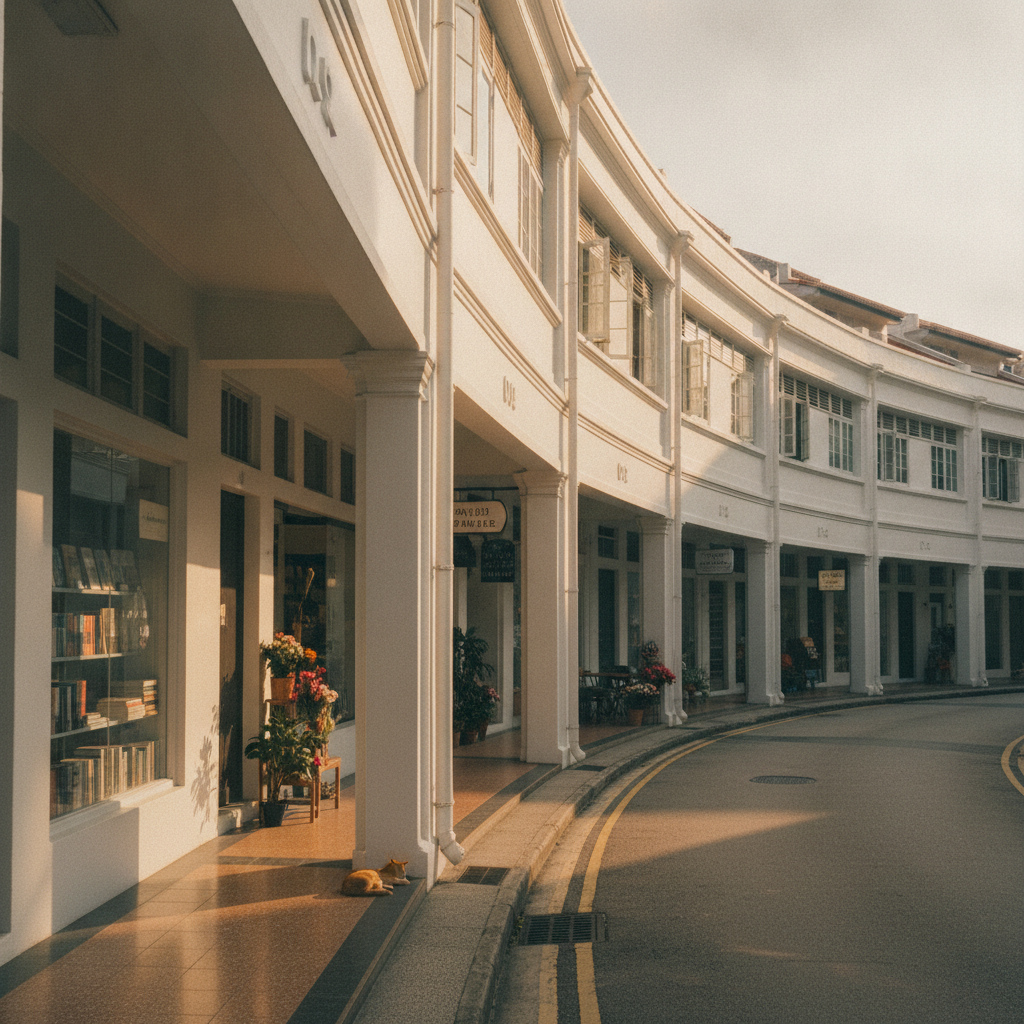
Tiong Bahru, the neighborhood approximately 2 kilometers southwest of Chinatown centered on Tiong Bahru Road, is Singapore's most architecturally distinctive pre-war residential neighborhood: the estate (a cluster of 55 blocks of flats and shophouses built between 1936 and 1954 by the Singapore Improvement Trust, the predecessor to today's Housing Development Board) is the finest surviving example of Streamline Moderne architecture in Southeast Asia — a style that arrived in Singapore via the British civil service's adoption of modernist housing design in the 1930s. The blocks' curved facades, rounded corners, spiraling staircases, and horizontal banding give the estate a distinctly aerodynamic quality that earned it the nickname 'the estate of the wealthy' in its early years, when its modern amenities (indoor plumbing, electricity, lifts) made it the most desirable public housing in Singapore. Tiong Bahru has undergone a second transformation since the 2000s, becoming Singapore's most creative and independent-business-heavy neighborhood.
- 1
The Tiong Bahru Estate — Streamline Moderne in the Tropics
The Tiong Bahru estate, the 55-block residential development built by the Singapore Improvement Trust between 1936 and 1954, is the architectural heart of the neighborhood: the original blocks (the oldest are on Guan Chuan Street, Yong Siak Street, and Kim Pong Road) are two to four-storey structures in the Streamline Moderne style — the late phase of Art Deco that arrived in Singapore through British colonial planning, characterized by smooth curved surfaces, horizontal band windows, spiral staircases in rounded stairwells accessible from the street, and terrazzo floors. The buildings were revolutionary at their construction: the first public housing in Singapore to have running water, electricity, and indoor bathrooms in every unit, designed to replace the overcrowded shophouse tenements of Chinatown and Tanjong Pagar. Walking the estate's curved internal streets (Moh Guan Terrace, Lim Liak Street, Yong Siak Street) at ground level provides the most authentic encounter with Singapore's pre-war residential architecture.
- 2
Tiong Bahru Market — The Best Breakfast in Singapore
Tiong Bahru Market, a two-storey market and hawker centre at the corner of Tiong Bahru Road and Seng Poh Road (rebuilt in 2006 to replace the original 1955 market, but retaining the circular plan of the original), is widely considered by Singaporean food writers and chefs to be the best all-round hawker centre in Singapore, with the widest range of high-quality breakfast options available at a single site: Jian Bo shui kueh (steamed rice cakes topped with preserved turnip and chili) and zhong (sticky rice dumplings in banana leaves) from the oldest stall in the market (50+ years), char kway teow from Stall 02-95 (one of the most acclaimed wok hei fried noodle preparations in Singapore), chwee kueh from the stall at the bottom of the escalator (another decades-old institution), and roti prata, laksa, Teochew porridge, and bak chor mee all within 100 meters. The market is best experienced between 7am and 9am, when the queues are manageable and the full range of breakfast hawkers is operational.
- 3
Yong Siak Street — Books, Coffee, and Tiong Bahru Bakery
Yong Siak Street, one of the Tiong Bahru estate's internal residential streets (lined on both sides by the curving 1930s-era Streamline Moderne blocks), became Singapore's most celebrated 'lifestyle street' after 2010: the arrival of Books Actually (an independent bookshop specializing in Singapore and Southeast Asian literature, established 2005, that expanded to its current Yong Siak Street location in 2009), Plain Vanilla Bakery, Tiong Bahru Bakery (the first Parisian-style boulangerie in Singapore, founded by a French baker who moved to Singapore and began making croissants and baguettes to French standards — the croissant is widely considered the best in Singapore), and a series of specialty coffee shops transformed a quiet residential back street into a destination. The street's aesthetic — Art Deco white-rendered facades + independent creative businesses — became a template for the 'heritage neighborhood gentrification' model that Singapore has since applied to other neighborhoods.
- 4
Keong Saik Road and Duxton Hill
Keong Saik Road, a short street of restored 1920s–1930s Straits Chinese shophouses running between New Bridge Road and Tanjong Pagar Road (approximately 10 minutes' walk east of Tiong Bahru), is Singapore's most densely creative commercial street: a single block of shophouses converted to bars, restaurants, boutique hotels, and creative agency offices, with an energy and density of interesting businesses per meter that exceeds even Haji Lane. The nearby Duxton Hill (Duxton Road and Teck Lim Road), a small hill of restored shophouses between Tanjong Pagar Road and Keong Saik Road, is Singapore's most established wine bar and fine dining district, with a concentration of European wine bars (the legacy of Singapore's wine-importing trade, which historically centered on this neighborhood because of its proximity to the port) alongside newer cocktail bars and restaurant group flagships.
- 5
Bukit Ho Swee and the 1961 Fire
Bukit Ho Swee, the neighborhood immediately west of Tiong Bahru, is the site of one of the defining events in Singapore's housing history: the Bukit Ho Swee fire of May 25, 1961, in which a fire starting in a squatter settlement of attap (palm-leaf-thatched) huts rapidly spread through approximately 1,000 huts in four hours, leaving 16,000 people homeless and killing four. The fire was politically decisive: it galvanized Lee Kuan Yew's government to accelerate its public housing program through the Housing Development Board (established 1960), and the speed of the Bukit Ho Swee resettlement — 6,000 residents rehoused within a year in the new Bukit Ho Swee HDB blocks that still stand today — demonstrated that the HDB model could work. Singapore's post-1960 transition from a city of squatter settlements, overcrowded shophouse tenements, and kampong villages to the 90%+ public housing ownership of today traces directly from the Bukit Ho Swee fire.
- 6
Redhill and Queenstown — Singapore's First New Town
Queenstown, the neighborhood south of Tiong Bahru built in the late 1950s and early 1960s as Singapore's first planned public housing 'new town' (the prototype for the 23 new towns that now house 80% of Singapore's population), contains some of Singapore's oldest surviving HDB blocks: the earliest high-rise public housing in Singapore (built 1960-65, eight to twelve storeys) arranged in linear blocks around the Queenstown community centers, library, hawker centers, and shops that constituted the HDB new town's standard template. The Queenstown Stadium (1956), the Queenstown Library (1970, the first branch library in Singapore), and the Redhill Close blocks (the oldest occupied HDB housing in Singapore) are all located within a short walk of each other in this area — the most complete surviving example of Singapore's early public housing planning model.
Walk this route with audio
Stories play automatically as you reach each stop — no tapping needed.
More in singapore
Sentosa Island: Singapore's Pleasure Island
East Coast and Katong: Peranakan Heritage and Seaside Singapore
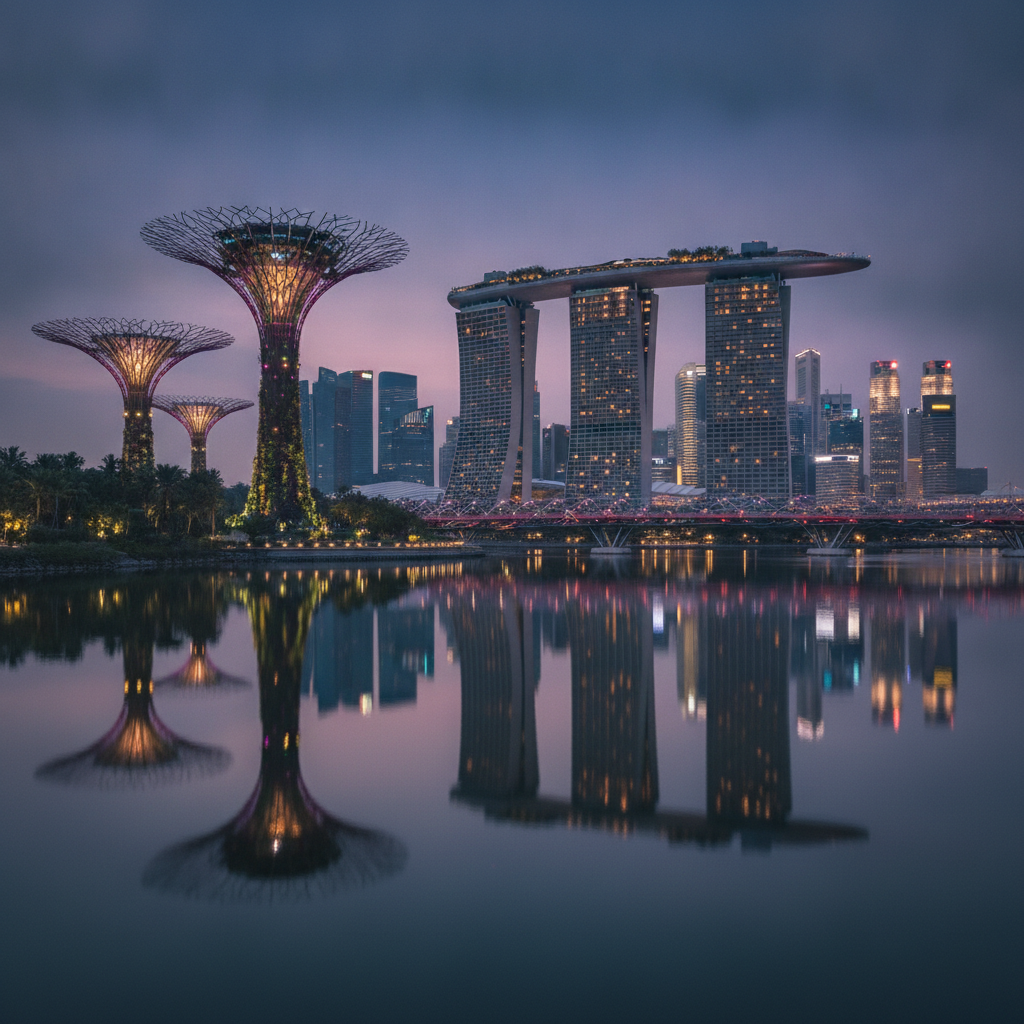
Marina Bay: Singapore's Futurist Waterfront
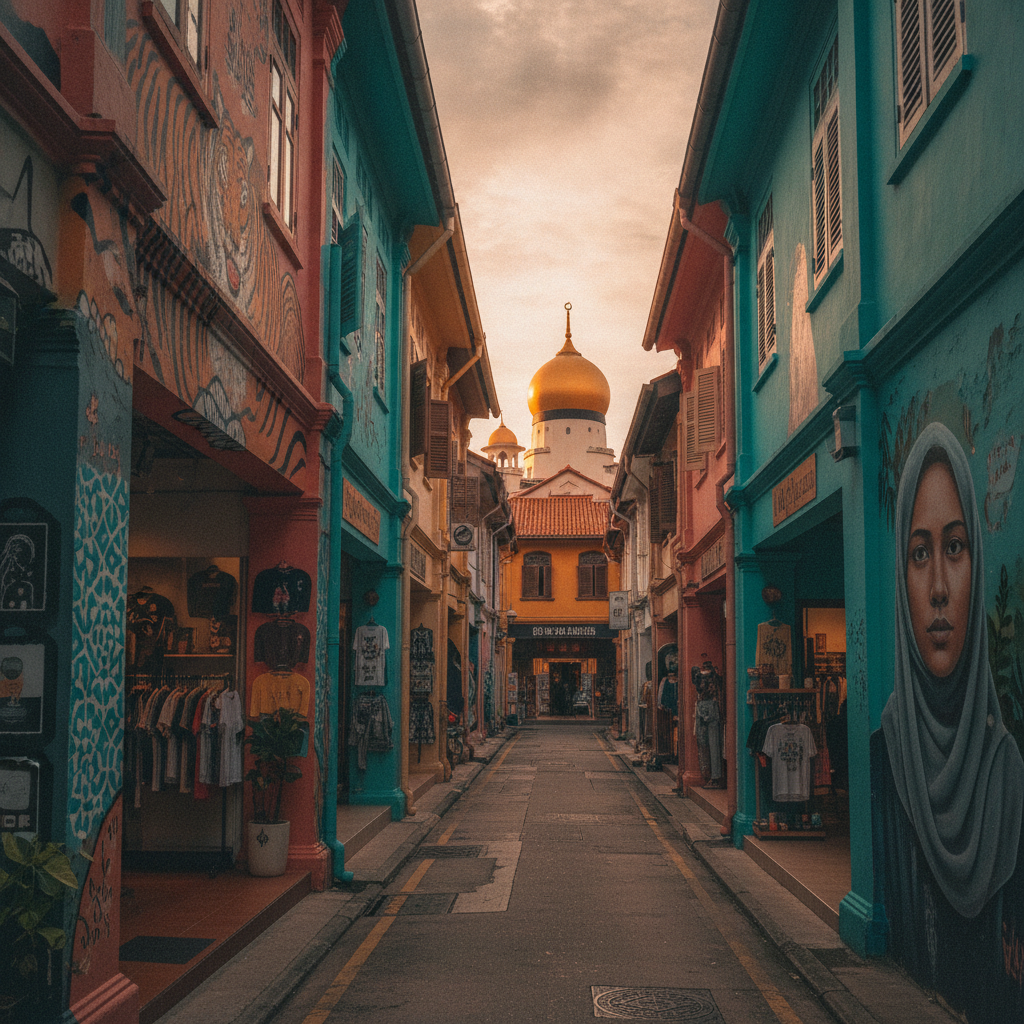
Little India and Kampong Glam: Singapore's Indian and Malay Quarters
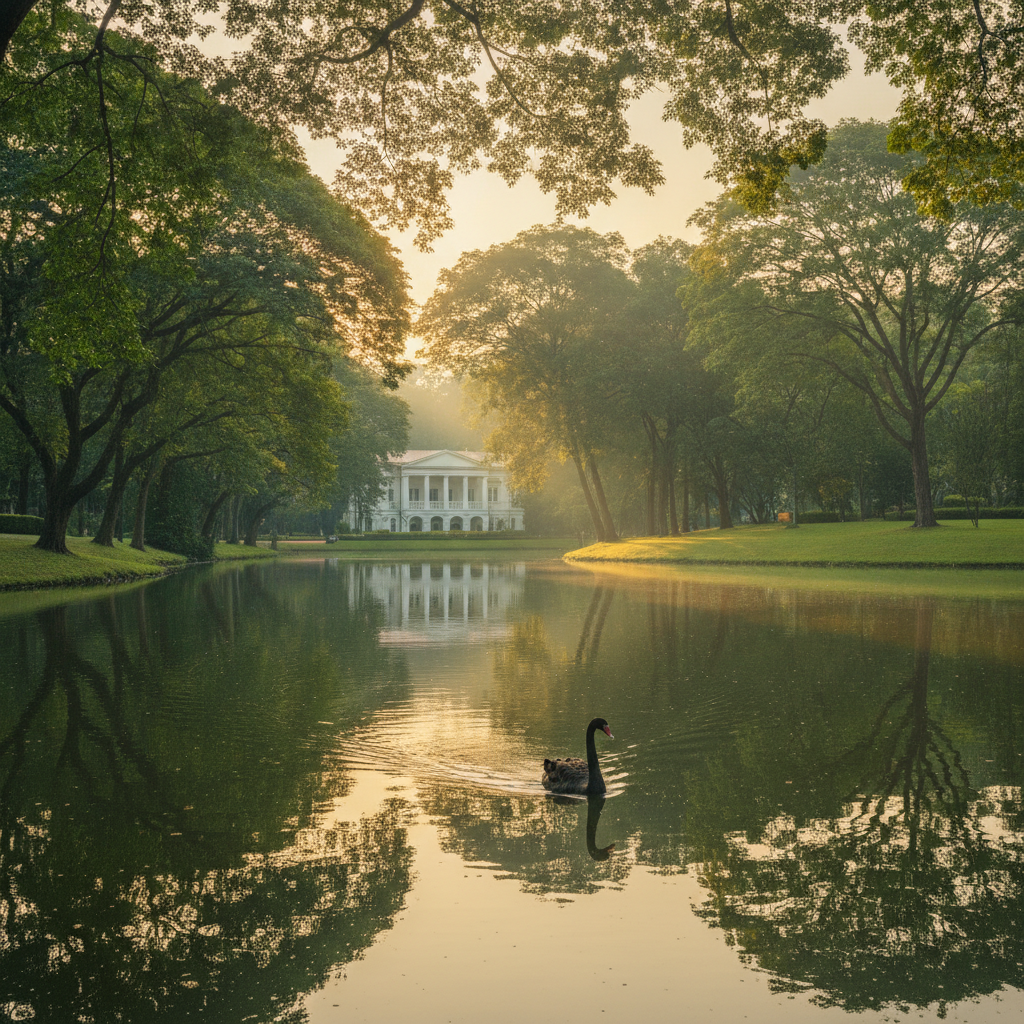
Orchard Road and the Botanic Gardens: Shopping and Green Sanctuary