Orchard Road and the Botanic Gardens: Shopping and Green Sanctuary
Orchard Road, Singapore's primary retail and hotel corridor (2.2 kilometers of shopping malls, hotels, and restaurants running from Dhoby Ghaut MRT in the east to Tanglin Road in the west), was originally an area of nutmeg and pepper plantations in the 19th century, then a residential area of bungalows and colonial clubs, before its redevelopment as a commercial strip in the 1960s–70s. The street now contains approximately 22 interconnected shopping malls (including ION Orchard, Paragon, Ngee Ann City/Takashimaya, 313@Somerset, and The Heeren), making it one of the densest concentrations of retail floor space in the world per linear kilometer. The Singapore Botanic Gardens (73 hectares, founded 1859, a UNESCO World Heritage Site since 2015) is located at the western end of Orchard Road and represents the green counterweight to the commercial strip — a former rubber-tree research station and orchid-breeding center that is now Singapore's most-visited attraction and one of the world's finest tropical botanic gardens.
- 1
ION Orchard and Orchard Road's Retail Spine
ION Orchard, a 218-meter-tall mixed-use tower (retail podium, hotel, and residences) at the Orchard/Paterson intersection opened in 2009 and designed by Benoy with local architects, is the visual anchor of Orchard Road: a curving glass and aluminum facade rising from the sunken Orchard MRT station, its lower floors housing 300 luxury and mid-market retail brands across an underground mall connecting to the MRT concourse below. ION's 56th-floor observation deck (ION Sky) provides a 360-degree view of Orchard Road from above — the view down Orchard from the south is the canonical image of Singapore's shopping district: a canyon of glass retail towers receding in perspective, the road itself invisible, the entire landscape composed of shopping mall podiums. The surrounding mall cluster — Wisma Atria, Ngee Ann City (containing Takashimaya, the largest single department store in Singapore), Paragon — represents the highest density of luxury retail in Southeast Asia, with the Singapore flagships of Louis Vuitton, Hermès, Gucci, Chanel, and Prada all within a 400-meter stretch.
- 2
Dempsey Hill — The Barracks Repurposed
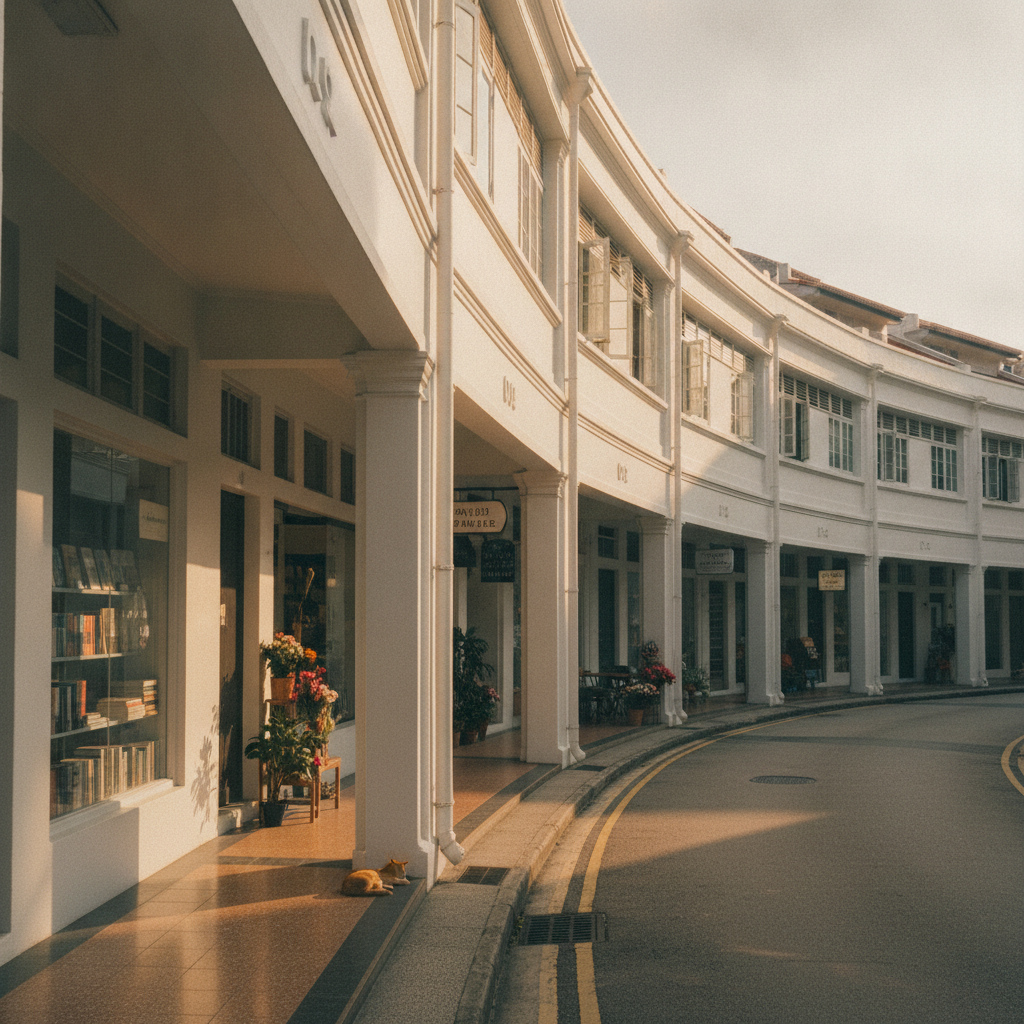
Dempsey Hill, a cluster of former British military barracks buildings (Tanglin Barracks, 1860s–1970s) set in 35 hectares of forested land immediately south of the Botanic Gardens, is Singapore's most atmospheric dining and lifestyle destination: the old barracks buildings — single-storey red-brick structures with wide verandahs, set under a canopy of mature rain trees — have been repurposed as restaurants, antique dealers, art galleries, wine merchants, and specialty retailers, all operating within the original colonial-era building shells. The area's combination of military history, mature tropical forest, colonial architecture, and high-quality restaurants makes it unlike anywhere else in Singapore: a place where you eat dinner in a converted ammunition store or browse antique furniture in a former quartermaster's warehouse.
- 3
Singapore Botanic Gardens — 163 Years of Tropical Botany
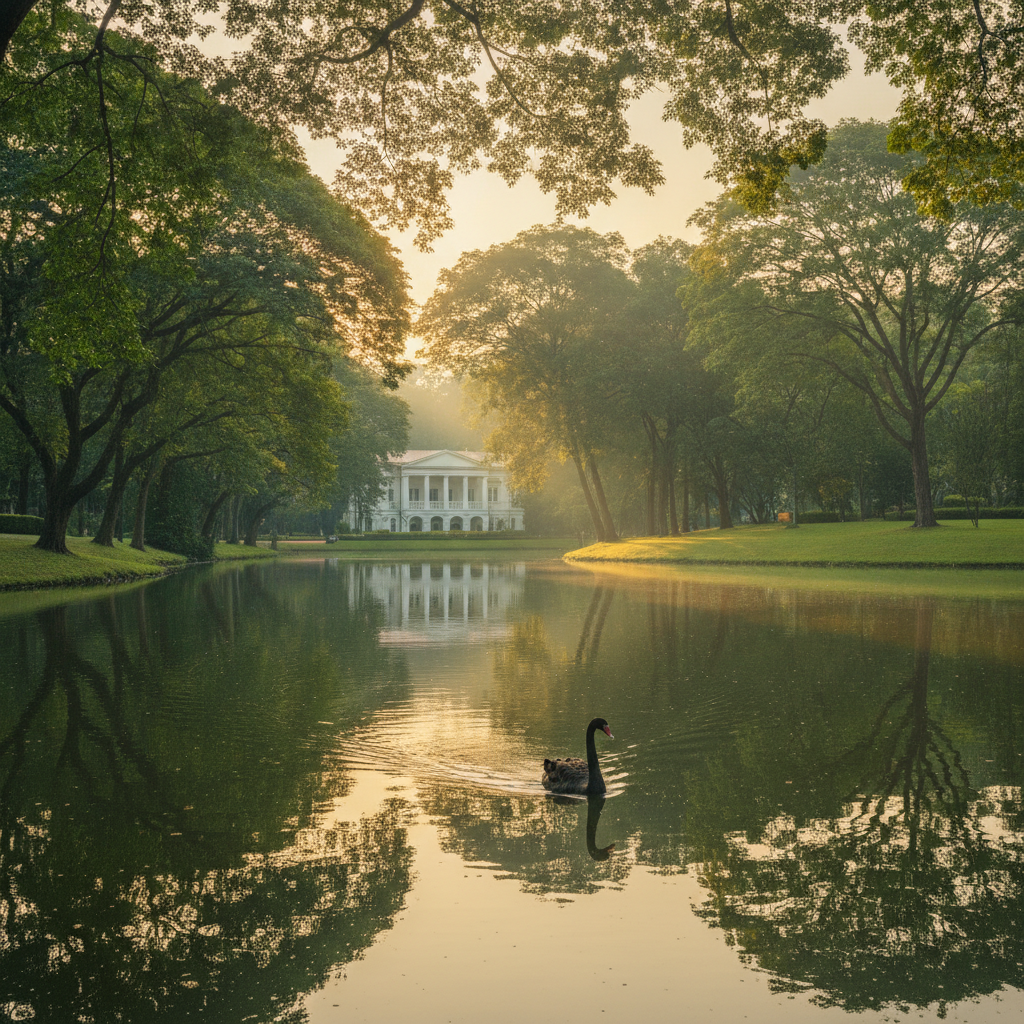
The Singapore Botanic Gardens, established in their current location in 1859 (on a site designated by Sir Stamford Raffles for a botanic garden in 1822), is a 73-hectare UNESCO World Heritage Site containing the world's most comprehensive collection of tropical plants outside of Kew Gardens: 10,000 plant species across 1 million specimens, organized into themed areas including the National Orchid Garden (containing 1,000 orchid species and 2,000 hybrids, including the Vanda Miss Joaquim — Singapore's national flower, a hybrid of uncertain origin discovered in a Singapore garden in 1893), the Ginger Garden, the Healing Garden (containing over 500 medicinal plants used in traditional Southeast Asian medicine), and the Heritage Trees of the main lake area (including a 100-year-old tembusu tree that appears on the Singapore $5 note). The gardens are open daily from 5am to midnight, free of charge (except for the National Orchid Garden), and are used daily by thousands of Singaporeans for early-morning walks, jogging, and picnics.
- 4
National Orchid Garden — Singapore's Floral Crown Jewel
The National Orchid Garden within the Botanic Gardens, opened in 1995 on a 3-hectare slope of the garden's central hill, is the world's largest display of tropical orchids: 1,000 species and 2,000 hybrids of orchids displayed on a hillside cascading with color — purples, whites, yellows, and the distinctive purple-and-white of the Vanda Miss Joaquim (Singapore's national flower). The garden includes a climate-controlled Cool House (recreating the cooler conditions of highland tropical orchid habitats — the 16°C interior is a popular escape from Singapore's 32°C outdoor heat), an Orchid VIP Garden displaying orchids named after visiting heads of state (Margaret Thatcher orchid, Princess Diana orchid, Nelson Mandela orchid), and live orchid displays in the main glasshouse. The Botanic Gardens' orchid hybridization program, active since the late 19th century, has produced approximately 400 new orchid hybrids and is the longest-running systematic orchid breeding program in the world.
- 5
Tanglin and the Expatriate Quarter
Tanglin, the residential and diplomatic neighborhood west of Orchard Road centered on Tanglin Road (which runs from the Botanic Gardens to Alexandra Road), is Singapore's most exclusive address: a district of landed property (private houses on their own land — the rarest and most expensive form of residential property in land-scarce Singapore), foreign embassies, members-only clubs (including the Tanglin Club, founded 1865 for the British expatriate community; the American Club; and the British Club), and the Tanglin Mall (a smaller, quieter alternative to Orchard Road's main malls, popular with the diplomatic and expatriate community). The area retains a different atmosphere from the rest of Singapore — quieter, more tree-covered, less dense — reflecting both its history as an elite colonial residential quarter and its current role as a buffer between the commercial corridor of Orchard Road and the Botanic Gardens' green space.
- 6
Holland Village — Singapore's Bohemian Enclave
Holland Village, a residential neighborhood 2 kilometers west of the Botanic Gardens, is Singapore's most persistently bohemian neighborhood: a cluster of shophouses, cafes, independent restaurants, and specialty retailers around Holland Avenue and Lorong Mambong that has served as the informal 'expatriate village' of Singapore since the 1970s (when the nearby Holland Road area was developed as housing for foreign professionals). The neighborhood's character — relaxed, small-scale, independent rather than chain, with a mix of Singapore's national cuisines in informal settings — is the opposite of Orchard Road's mall-anchored retail model, and its survival as a neighborhood of independent businesses in a city that has otherwise comprehensively replaced independent retail with malls is itself notable.
Walk this route with audio
Stories play automatically as you reach each stop — no tapping needed.
More in singapore
Sentosa Island: Singapore's Pleasure Island
East Coast and Katong: Peranakan Heritage and Seaside Singapore
Marina Bay: Singapore's Futurist Waterfront
Little India and Kampong Glam: Singapore's Indian and Malay Quarters
Colonial Civic District: The Architecture of Empire