Colonial Civic District: The Architecture of Empire
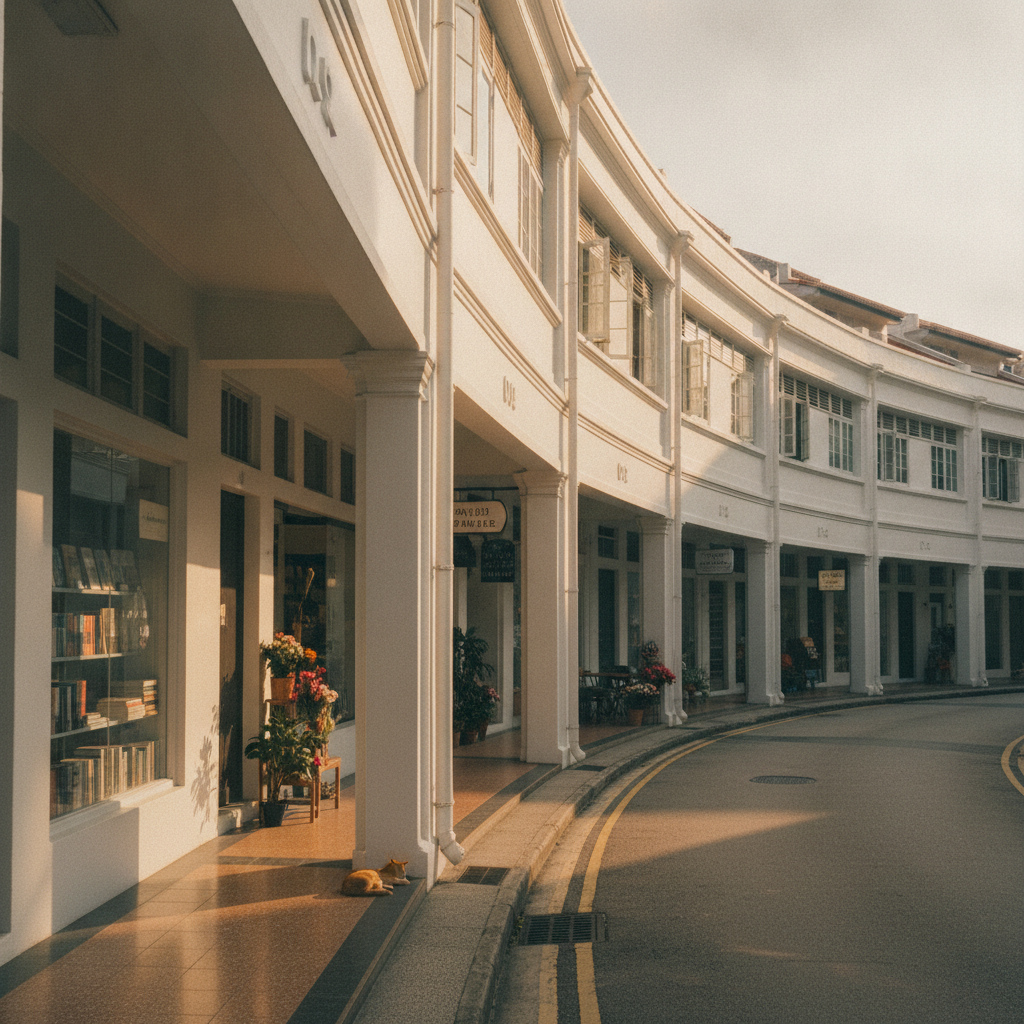
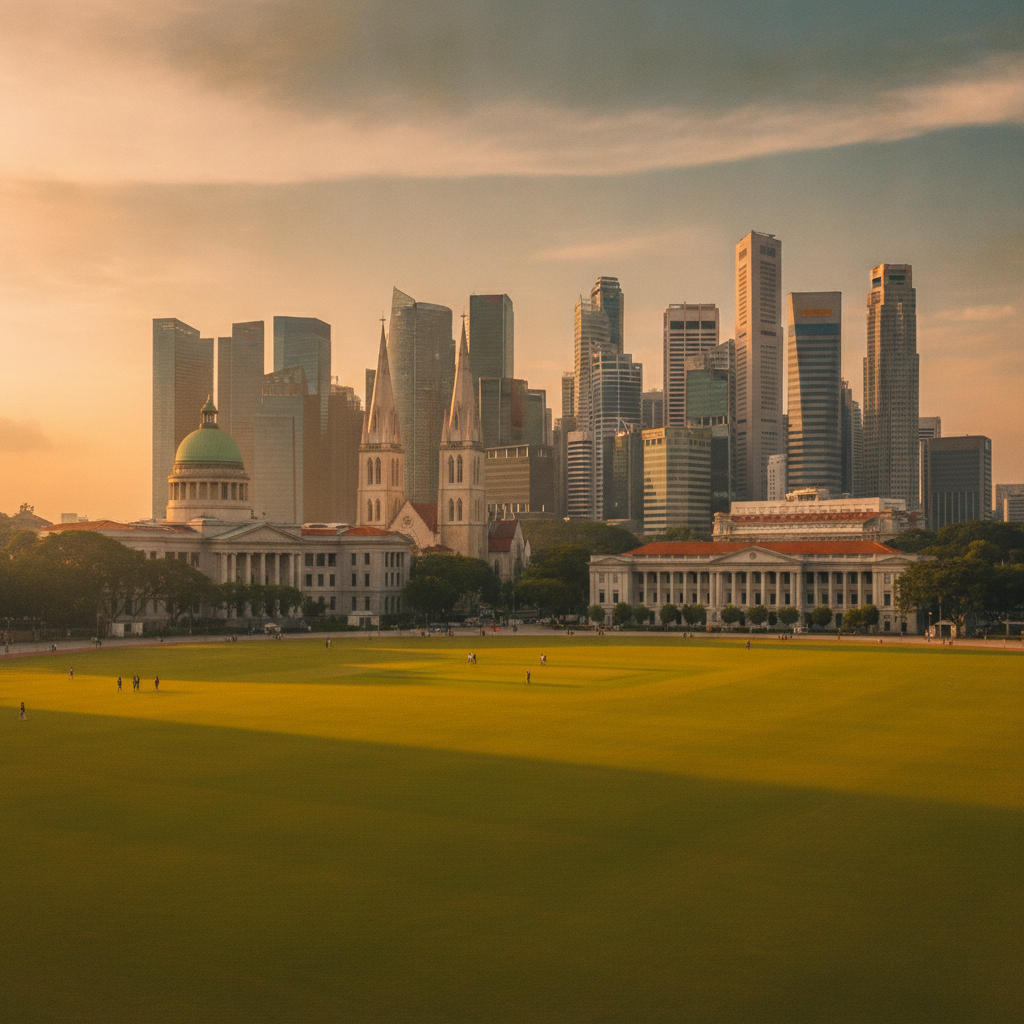
Singapore's Colonial Civic District, the area around the north bank of the Singapore River between Fort Canning Hill and Marina Bay, contains the densest concentration of British colonial-era public architecture in Southeast Asia: the neoclassical Supreme Court (1939) and City Hall (1929) buildings now converted to the National Gallery Singapore (the largest art museum in Southeast Asia), St Andrew's Cathedral (1862), Raffles Hotel (1887), The Padang (the colonial-era cricket ground at the center of civic Singapore), the Asian Civilisations Museum, the Cavenagh Bridge (1869, Singapore's oldest surviving bridge), and Fort Canning Hill (the site of the command post from which the British surrender of Singapore was ordered in 1942 — the most consequential act in Singapore's colonial history). The district represents the physical legacy of Sir Stamford Raffles's 1822 Town Plan, which divided Singapore into ethnic quarters and reserved the north bank of the river for government and European settlement.
- 1
Raffles Hotel — The Grand Hotel of the Empire
Raffles Hotel, the white-verandahed colonial grande dame on Beach Road, opened in 1887 as a 10-room establishment run by the Armenian Sarkies brothers (who also founded the E&O Hotel in Penang and the Strand Hotel in Rangoon) and expanded to its current form in a series of renovations culminating in a major 1991 restoration and a second major renovation completed in 2019. The hotel's Long Bar is the birthplace of the Singapore Sling cocktail (invented by Chinese Hainanese bartender Ngiam Tong Boon in 1915, the exact recipe for which is disputed but typically involves gin, cherry liqueur, Bénédictine, Cointreau, grenadine, pineapple juice, and lime juice), still served today in the dark-wood-panelled bar where peanut shells are traditionally thrown on the floor. Raffles has hosted an extraordinary roster of literary and imperial guests: Somerset Maugham (who set multiple short stories in its corridors), Rudyard Kipling, Joseph Conrad, Charlie Chaplin, Michael Jackson, and every visiting head of state to Singapore in the postwar period. The hotel's 1887 Tiffin Room still serves its colonial-era curry tiffin (a multi-course Indian and Southeast Asian curry lunch served in 1887-style service) on Sundays.
- 2
National Gallery Singapore — Asia in Two Colonial Courts
The National Gallery Singapore, housed in the connected former Supreme Court (1939, designed by Frank Dorrington Ward in neo-classical style) and City Hall (1929) buildings and opened as a gallery in 2015, is the largest visual art museum in Southeast Asia: 64,000 square metres of gallery space, a permanent collection of over 9,000 works of Southeast Asian and Singaporean art (the most comprehensive collection of Southeast Asian modernism in the world), and the site of temporary blockbuster exhibitions from international institutions. The permanent collection is organized thematically rather than chronologically, exploring the relationship between Singapore and Southeast Asian artistic traditions from the 19th century to the present day — a framing that foregrounds the region's own art history rather than treating Southeast Asia as peripheral to a European art history narrative. City Hall's courtroom and Supreme Court's ceremonial hall have been preserved within the gallery conversion, creating moments where imperial architecture collides with contemporary art.
- 3
The Padang and St Andrew's Cathedral
The Padang (Malay for 'field' or 'plain') is a 4.3-hectare grass rectangle at the center of the Colonial District, surrounded by the Singapore Cricket Club (1852), the Singapore Recreation Club, St Andrew's Cathedral, the former Supreme Court, and City Hall. The field has served as Singapore's civic gathering space since 1837: the site of colonial-era cricket matches (the Singapore Cricket Club still plays here), VJ Day celebrations in 1945, independence celebrations in 1959, National Day parades (held here until the Padang became too small and the parade moved to the Floating Platform in 2007), and more recently the site of the National Day Preview. St Andrew's Cathedral, immediately west of the Padang, is the oldest Anglican church in Singapore (current building 1862, on the site of an earlier church of 1836), a white-washed Gothic Revival building with 59-meter spires that was plastered using Madras chunam — a mix of shell lime, egg white, coarse sugar, and coconut husk that produces an unusually smooth, brilliant white surface.
- 4
Asian Civilisations Museum — The Rivers of Civilisation
The Asian Civilisations Museum, housed in the Empress Place Building (1865, one of Singapore's finest examples of Palladian neoclassical architecture) on the north bank of the Singapore River, is Southeast Asia's most important museum of pan-Asian art and culture: permanent galleries devoted to the art and material culture of China, South Asia, Southeast Asia, the Islamic world, and Singapore's own multicultural history, organized around the theme of the maritime trade routes that connected Asia's civilizations for 2,000 years. The museum's Tang Shipwreck Gallery is particularly remarkable: the cargo of a 9th-century Arab dhow discovered off the coast of Belitung Island in Indonesia in 1998 (the Tang Cargo), containing approximately 60,000 pieces of Tang Dynasty Chinese ceramics and gold objects that were being shipped from China to the Middle East — the largest and best-preserved collection of Tang ceramics ever found, providing irreplaceable evidence about the scale and sophistication of 9th-century Asian maritime trade.
- 5
Cavenagh Bridge and the Singapore River
The Cavenagh Bridge, a wrought-iron suspension bridge spanning the Singapore River between Empress Place and St Andrew's Road, is the oldest surviving bridge in Singapore (built 1869 from iron imported from Scotland, designed by the Indian Public Works Department). The bridge is no longer open to motorized traffic (a notice has prohibited 'cattle, horses, and vehicles' since 1910) but remains open to pedestrians and is one of the few places in Singapore from which the original Singapore River mercantile waterfront can be imagined: the north bank, where the colonial godowns (warehouses) of Boat Quay once stood, is now a heritage conservation area of restored shop-houses housing restaurants and bars; the south bank, where Indian and Chinese bumboats once unloaded their cargoes onto the quay, is now the Singapore Esplanade's approaches and the Museum of Asian Civilisations' riverside terrace.
- 6
Fort Canning Hill — The Hill of Kings
Fort Canning Hill, a 63-meter-high hill immediately north of the Colonial District, is the site of 700 years of Singapore history compressed into a single geographical location: the hill was the seat of the ancient Malay kings of Singapura (who ruled Singapore from approximately 1299 to 1391 before the last king, Parameswara, fled to found Melaka), the site of Sir Stamford Raffles's personal bungalow (built 1822, demolished 1859), the location of the British army command post from which Lieutenant-General Arthur Percival ordered the surrender of Singapore to Japanese forces on February 15, 1942 — the largest surrender of British-led forces in history, described by Churchill as 'the worst disaster and largest capitulation in British history' — and now a public park containing a spice garden, Gothic Gate, Christian and Muslim cemeteries, and the Fort Canning Battlebox museum (the preserved underground command post from which the surrender was directed, reconstructed with wax figures of Percival and his staff on the night of the surrender).
Walk this route with audio
Stories play automatically as you reach each stop — no tapping needed.
More in singapore
Sentosa Island: Singapore's Pleasure Island
East Coast and Katong: Peranakan Heritage and Seaside Singapore
Marina Bay: Singapore's Futurist Waterfront
Little India and Kampong Glam: Singapore's Indian and Malay Quarters
Orchard Road and the Botanic Gardens: Shopping and Green Sanctuary