Chinatown and Tanjong Pagar: Singapore's Chinese Heritage Heart
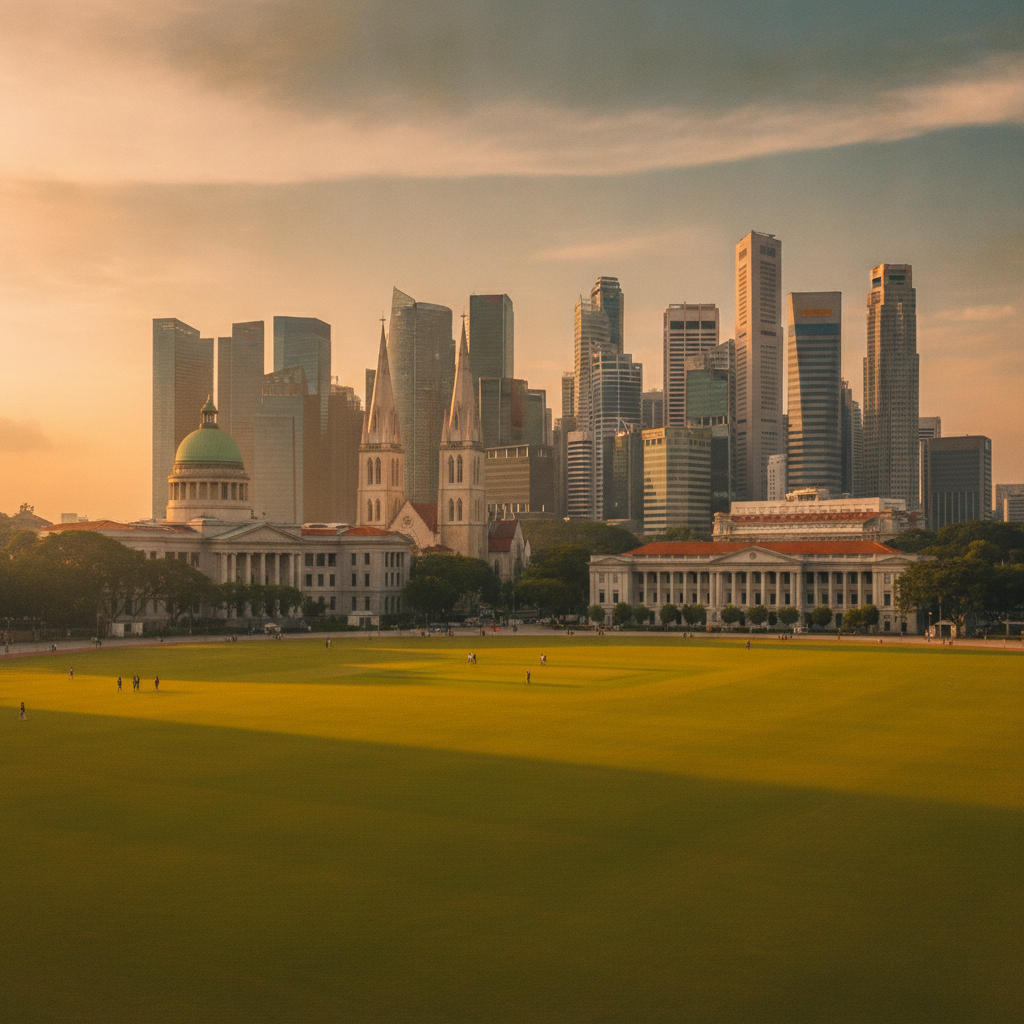
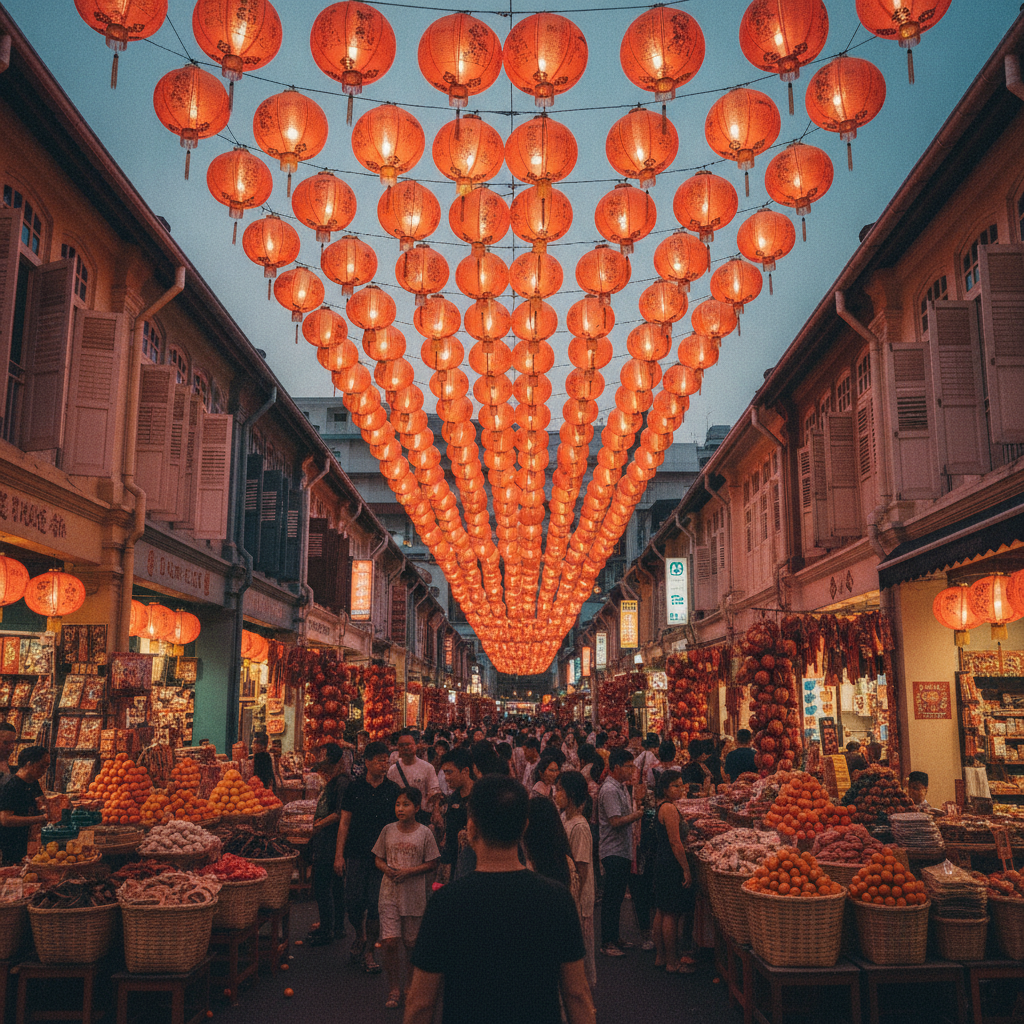
Singapore's Chinatown, known in Hokkien as Niu Che Sui ('ox-cart water', after the ox-carts that transported water to the area in the 19th century), is the historic center of Singapore's Chinese community — the first settlement of Chinese migrants who began arriving in significant numbers after Sir Stamford Raffles established a British trading port in 1819. The district, bounded roughly by South Bridge Road, New Bridge Road, and the Singapore River, contains the city's most important Chinese temples, the best-preserved blocks of Straits Chinese shophouse architecture, Singapore's oldest Buddhist temple, and the Chinatown Complex hawker center (the largest hawker center in Singapore, with over 260 food stalls). Tanjong Pagar, the neighborhood immediately south of Chinatown, developed as Singapore's coolies' quarter and shipyard workers' district and now contains Singapore's most dramatic concentration of restored conservation shophouses alongside the Tanjong Pagar Railway Station (the former terminus of the Keretapi Tanah Melayu rail line to Malaysia, preserved as a heritage site after the line's closure in 2011).
1. Sri Mariamman Temple — Singapore's Oldest Hindu Temple
- 1
Sri Mariamman Temple — Singapore's Oldest Hindu Temple
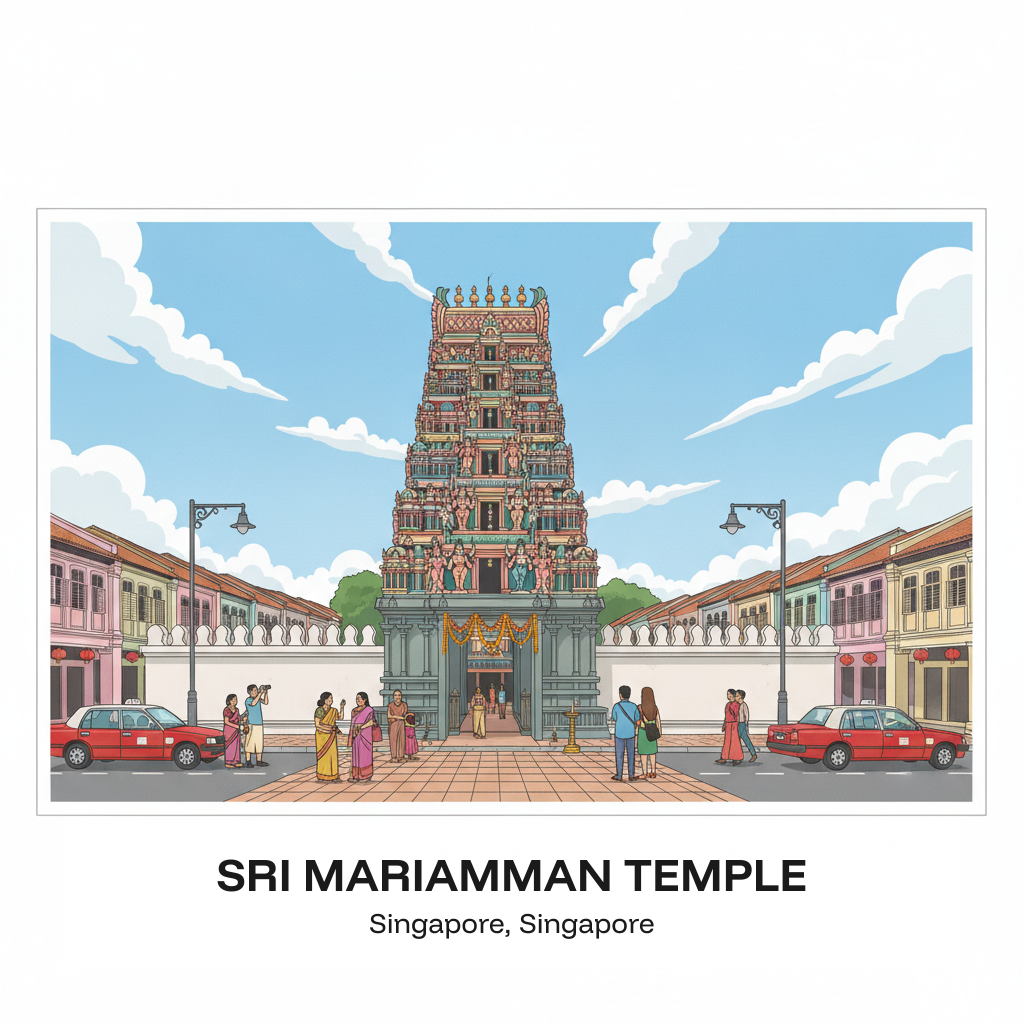
Sri Mariamman Temple, on South Bridge Road in the heart of Chinatown, is Singapore's oldest Hindu temple (founded 1827, current structure dating primarily from 1843) and the most important South Indian Hindu site in the city: a towering gopuram (entrance tower) of approximately 72 brightly painted plaster deities — gods, goddesses, mythological creatures, celestial beings — stacked in tiers above the temple gate, an architectural tradition brought directly from Tamil Nadu where gopurams serve as the defining visual element of Dravidian temple architecture. The temple is dedicated to Sri Mariamman, the goddess of healing and rain (the name Mariamman derives from 'mari' meaning 'rain' and 'amman' meaning 'mother' in Tamil), and serves primarily Singapore's Tamil Hindu community. The site of the annual Thimithi festival (firewalking), in which Hindu devotees cross a 3-meter-long pit of burning coals in fulfilment of vows — one of the most dramatic religious observances in Singapore.
- 2
Chinatown Heritage Centre — The Stories of the Immigrants
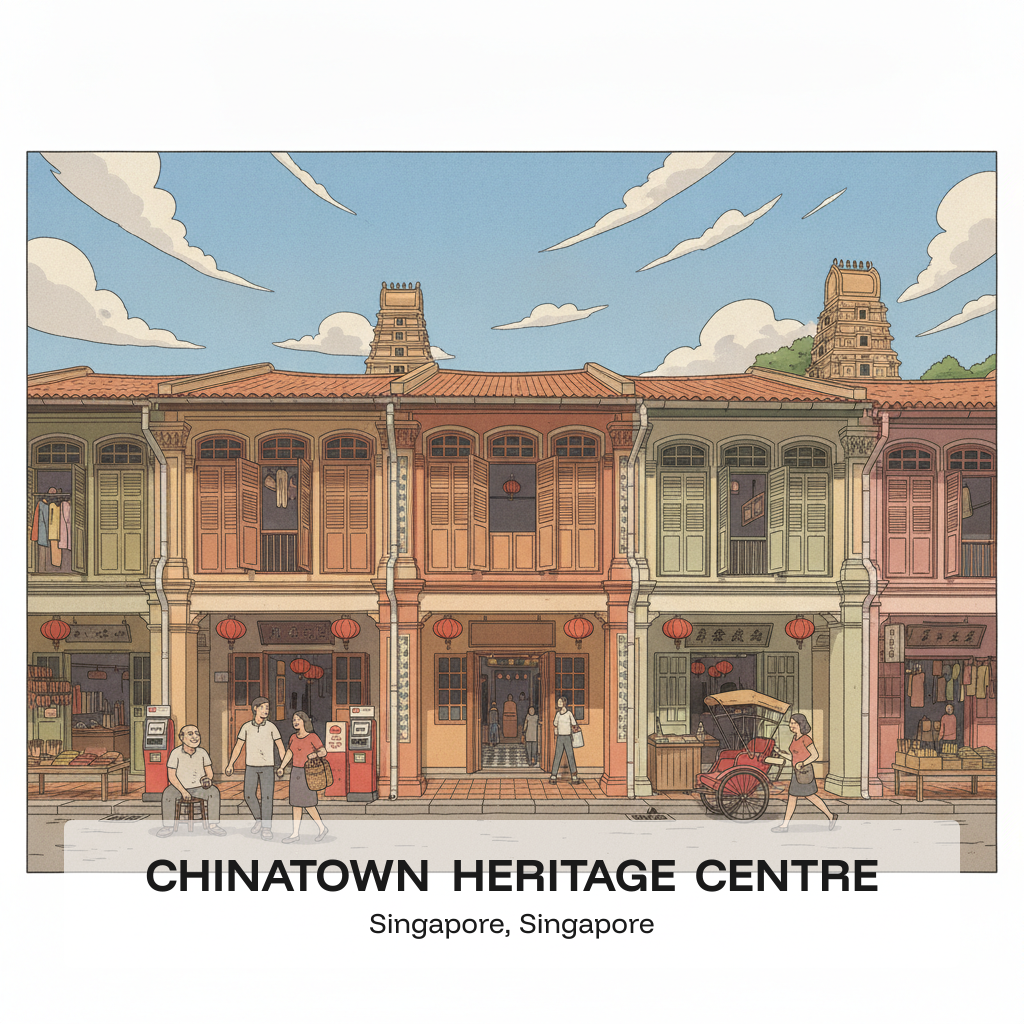
The Chinatown Heritage Centre, housed in three restored shophouses at 48 Pagoda Street (shophouses built around 1900 and used as coolie housing — cheap lodgings for newly arrived Chinese laborers in the late 19th and early 20th centuries), is Singapore's most intimate heritage museum: a recreation of the cramped conditions of early Chinese immigrant life in Singapore, with reconstructed cubicle bedrooms (the shophouses were subdivided into tiny cubicles rented for a few cents per night, housing multiple men per space), an opium den recreation, a rickshaw puller's living space, and oral history recordings from descendants of Chinatown residents about daily life in the district before the urban redevelopment of the 1960s–80s that displaced much of the original community. The centre documents the three major dialect groups that settled Chinatown — Hokkien (the largest, from Fujian Province), Cantonese (from Guangdong), and Teochew (also from Guangdong) — and the competition and coexistence between them in 19th and early 20th century Singapore.
- 3
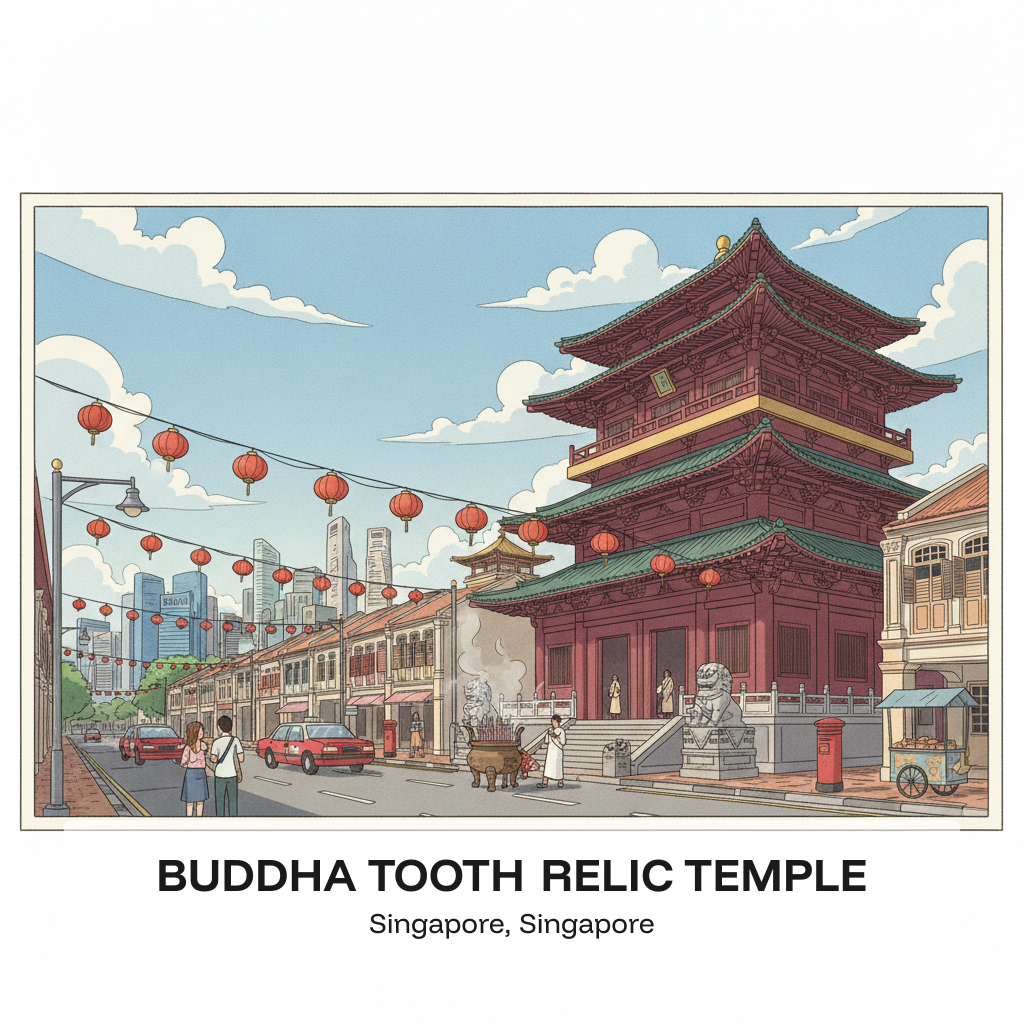
Buddha Tooth Relic Temple — The Relic of the Sacred Tooth
The Buddha Tooth Relic Temple and Museum, a massive neo-Tang Dynasty Buddhist temple on South Bridge Road opened in 2007, was built specifically to house what is claimed (by the temple's abbot) to be the left canine tooth of the historical Buddha Siddhartha Gautama — a relic brought from Myanmar, where it was allegedly recovered from a collapsed stupa. The relic is housed in a 420-kilogram gold stupa in the fourth-floor Relic Chamber (only accessible to Buddhists in prayer clothes; the stupa is visible through glass to other visitors). The temple is the most architecturally ambitious religious building built in Singapore in the last century: five floors containing a ceremonial hall, a museum of Buddhist artifacts (over 300 exhibited artifacts, including Tang Dynasty murals, Tibetan thangkas, and Sri Lankan silverwork), a rooftop garden and 10,000-Buddha pavilion, and a ground-floor gift shop selling Buddhist prayer items and vegetarian food.
- 4
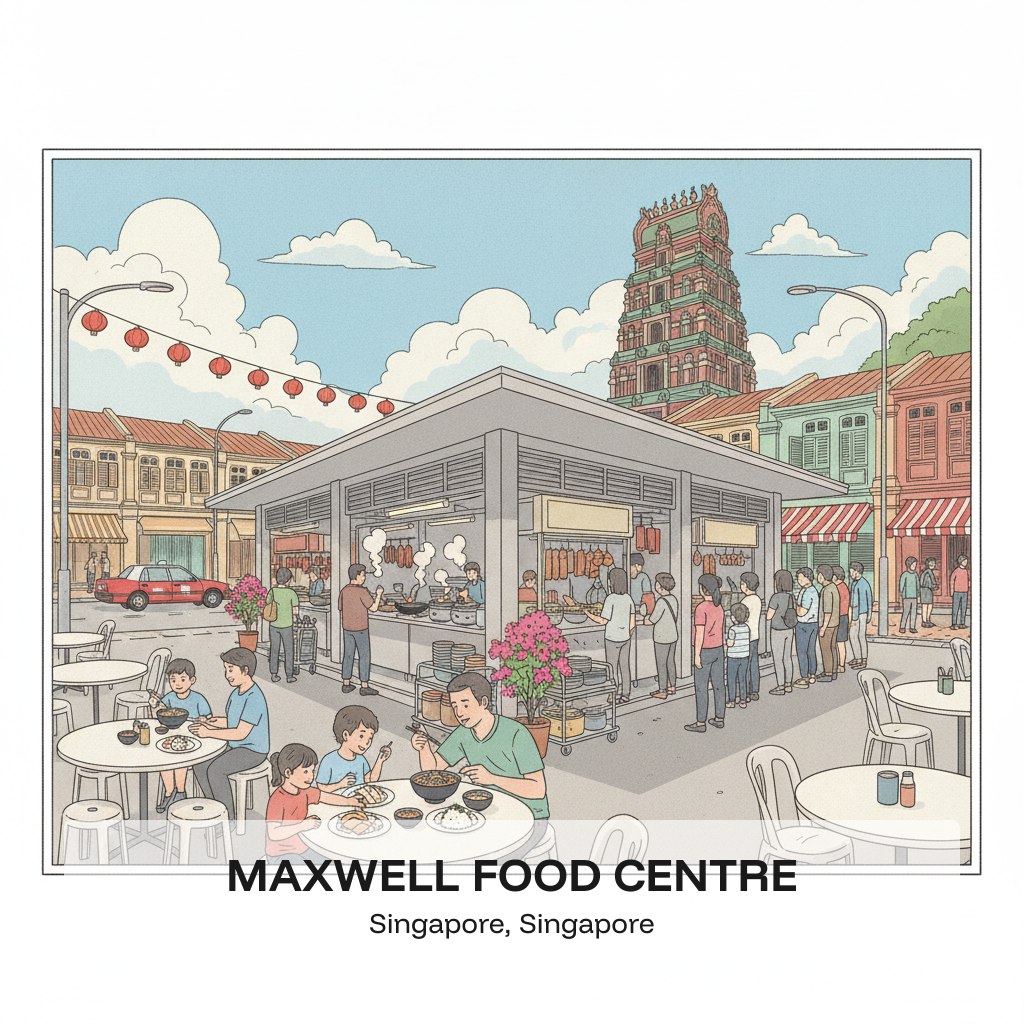
Maxwell Food Centre — Singapore's Definitive Hawker Experience
Maxwell Food Centre, a 1980s-era hawker center on Maxwell Road at the edge of Chinatown, is the most famous hawker center in Singapore: a single-storey concrete hall of approximately 100 hawker stalls serving dishes from every major Singapore cuisine tradition — Hainanese chicken rice, char kway teow (stir-fried flat rice noodles with egg and Chinese sausage), laksa (spicy coconut curry noodle soup), bak kut teh (pork rib herbal soup), oyster omelette, carrot cake, and dozens more — at prices ranging from S$3 to S$8 per dish. The center's most famous stall, Tian Tian Hainanese Chicken Rice (Stall 10), was visited by Anthony Bourdain and Michelle Obama; it regularly has queues of 30–45 minutes. Hawker centers are Singapore's unique contribution to food culture: open-air or covered communal dining halls where independent stallholders (many of whom are the third and fourth generations of family businesses) cook a single specialty dish from a small gas-fired kitchen — the Singaporean equivalent of a food court but with authentic family recipes rather than franchise menus.
- 5
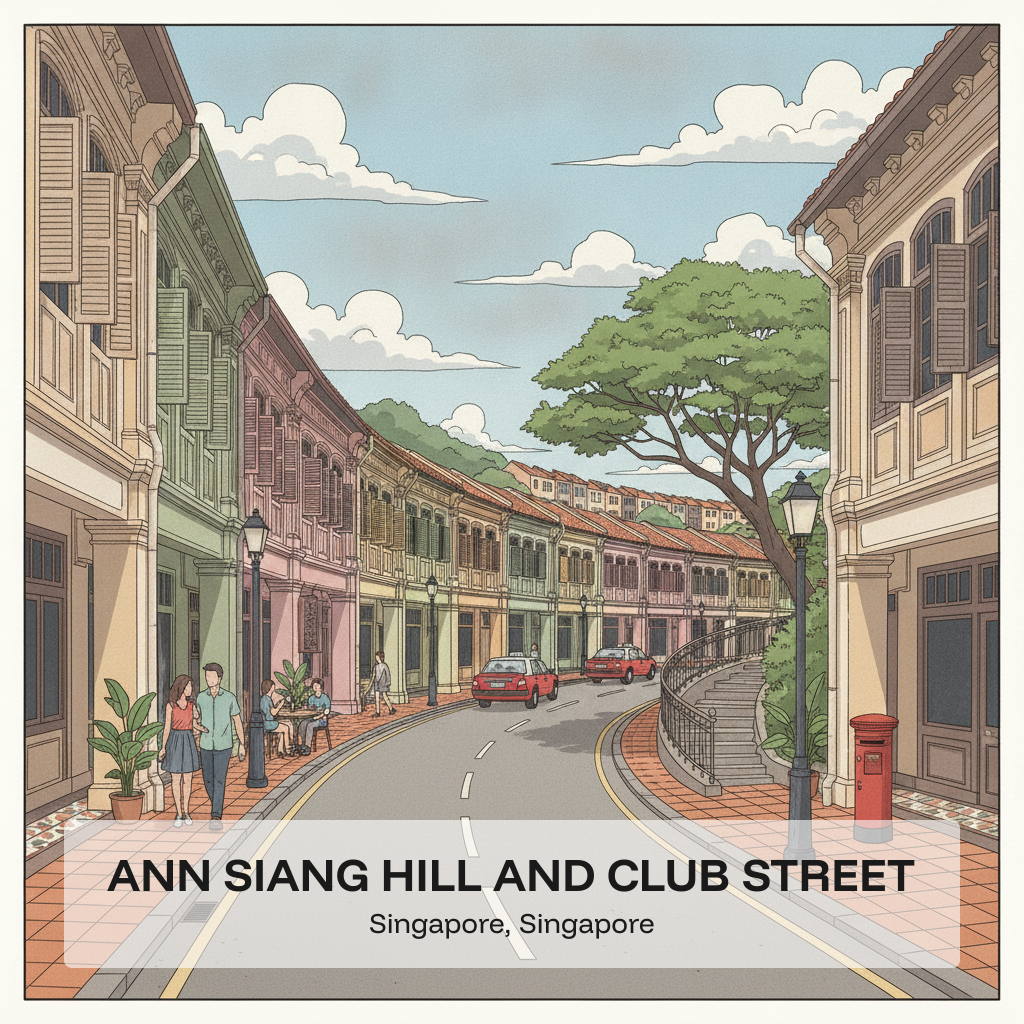
Ann Siang Hill and Club Street
Ann Siang Hill and Club Street, the curved streets running up and over a small ridge between Chinatown and Tanjong Pagar, are Singapore's most photogenic conservation neighborhood: two parallel streets of restored late-19th and early-20th century shophouses — two and three storey buildings with ornate plasterwork facades, timber shuttered windows, and five-foot ways (covered pedestrian walkways mandated by Raffles's town plan of 1822) — now housing wine bars, cocktail bars, restaurants, boutiques, and small offices for creative agencies. The area was historically the base of Chinese clan associations (the buildings bear the plaques of multiple kongsi — clan organizations of people sharing the same surname who provided mutual aid to newly arrived immigrants from China) and is now the most densely concentrated nightlife and restaurant district in the historic core of Singapore.
- 6
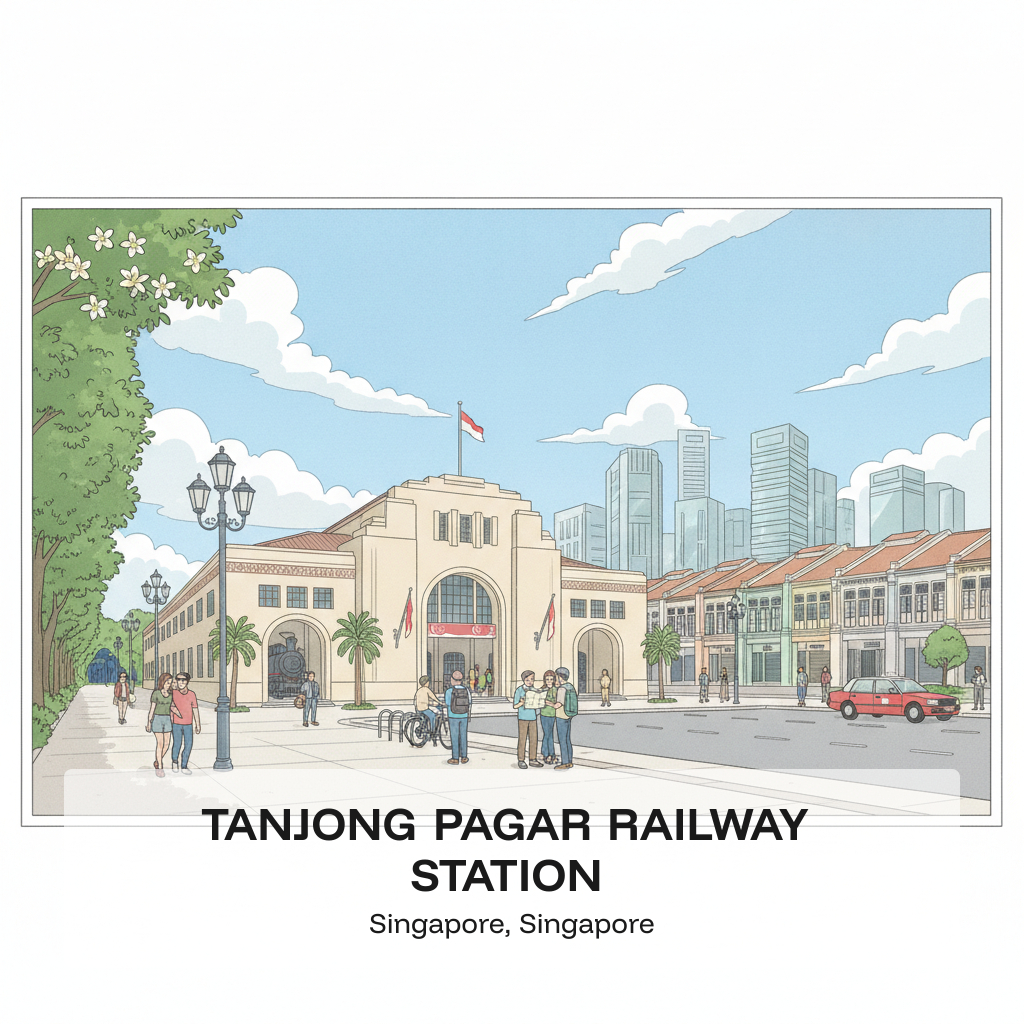
Tanjong Pagar Railway Station — The End of the Line
Tanjong Pagar Railway Station, a grand 1932 Art Deco terminal building on Keppel Road designed by the Public Works Department of Malaya, was the southern terminus of the Keretapi Tanah Melayu (KTM) rail line that ran from Singapore north through Malaysia to Thailand — the only land connection between Singapore and mainland Southeast Asia. The station, which continued operating until July 2011 when the KTM rail line was relocated to Woodlands in northern Singapore following a 1990 Singapore-Malaysia agreement, is now a national monument preserved as a heritage site. The building's interior — a grand ticketing hall with high coffered ceilings, four large murals depicting Malayan industries (rubber, rice, commerce, and transport), and a preserved booking office — is accessible on guided tours. The former rail corridor (the KTM Green Corridor) has been converted to a 24-kilometer linear park running from Tanjong Pagar to Woodlands, one of Singapore's most unusual urban nature walks.
Walk this route with audio
Stories play automatically as you reach each stop — no tapping needed.
More in singapore
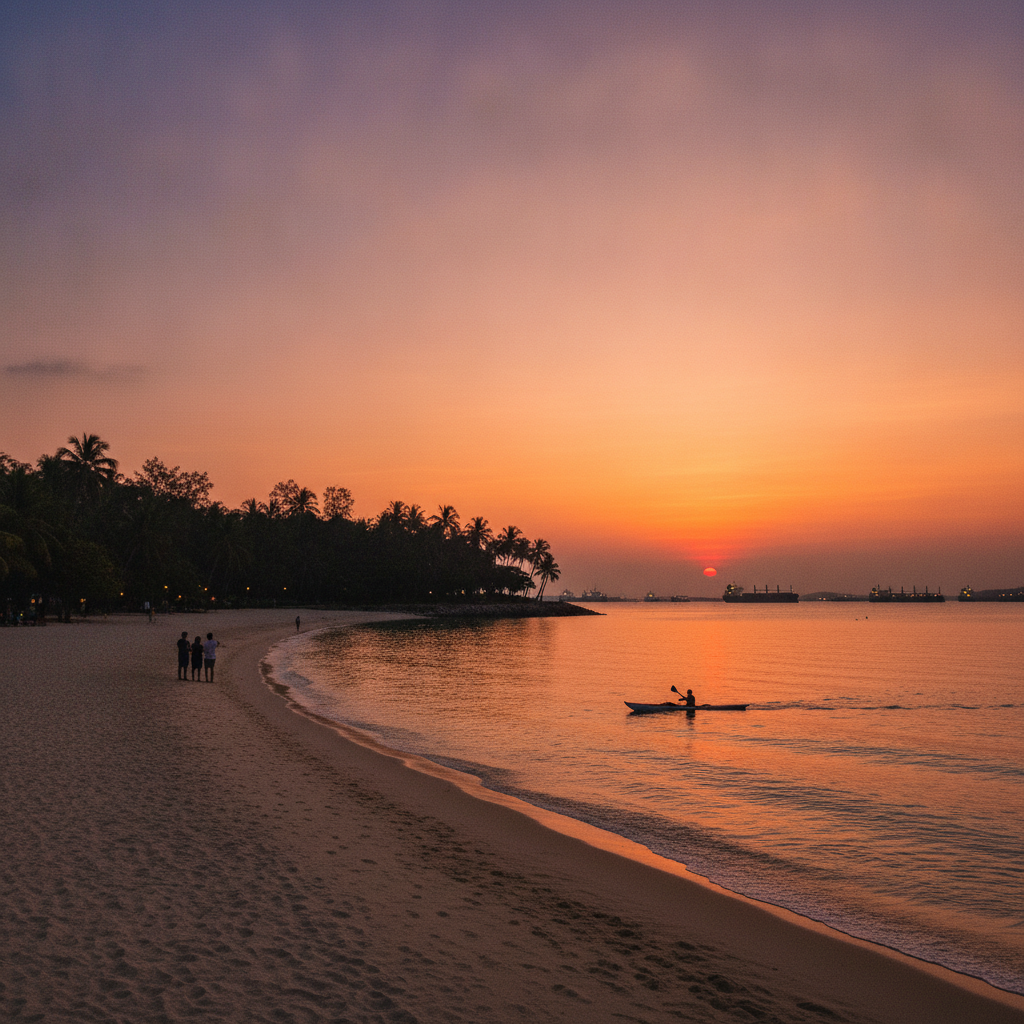
Sentosa Island: Singapore's Pleasure Island
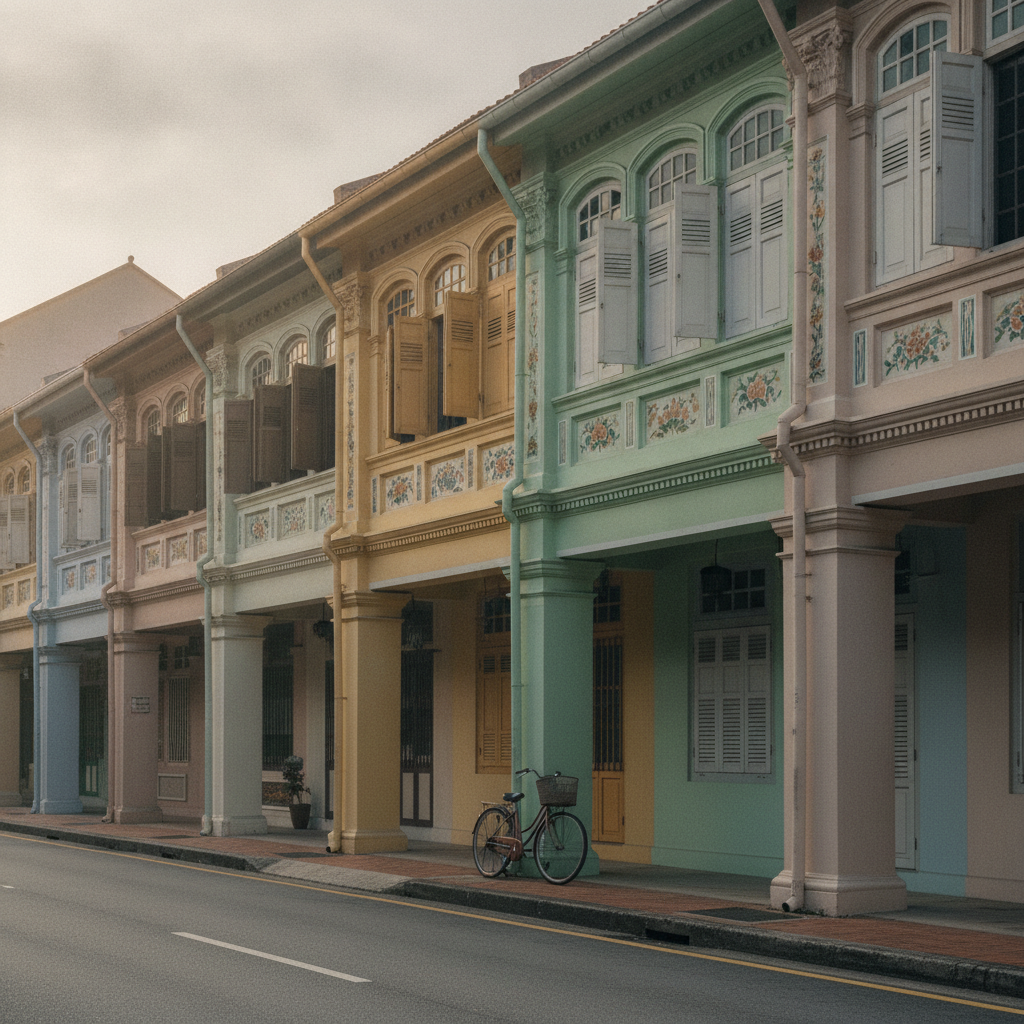
East Coast and Katong: Peranakan Heritage and Seaside Singapore
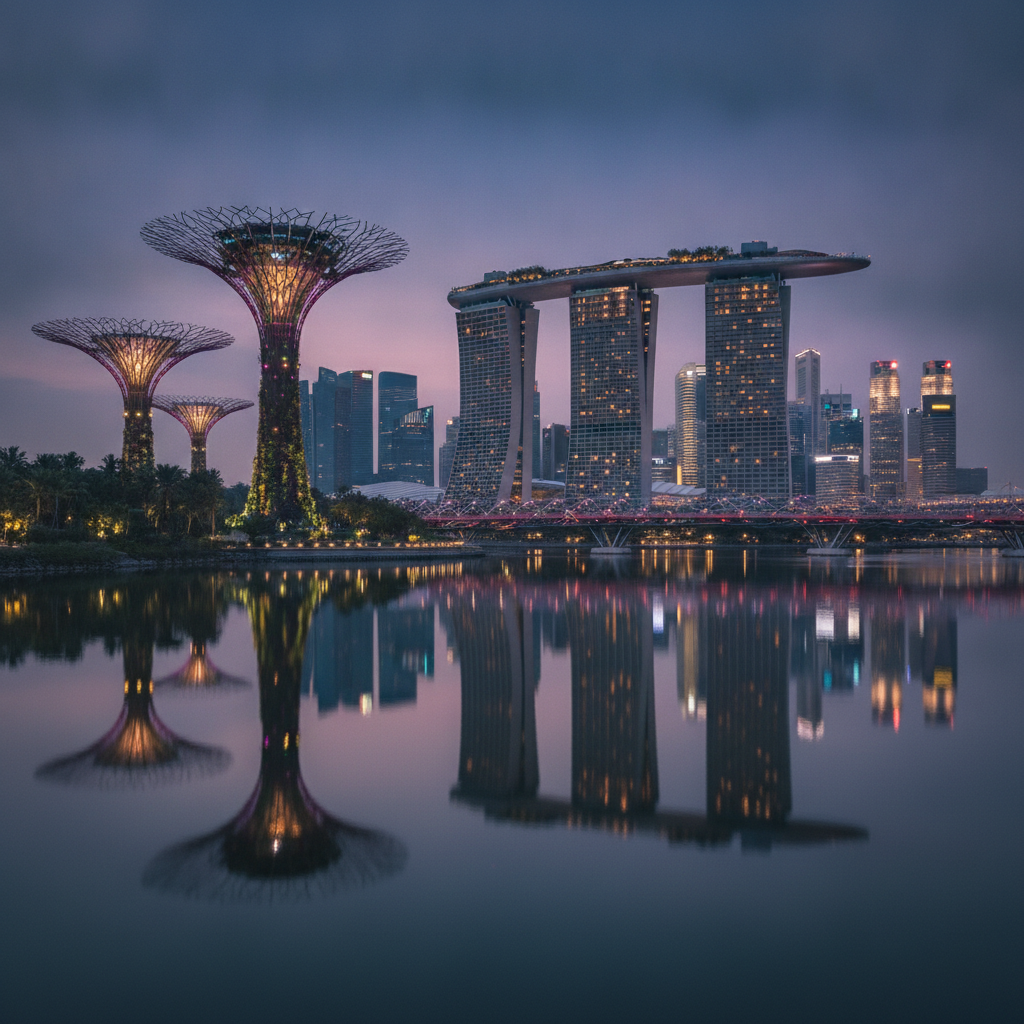
Marina Bay: Singapore's Futurist Waterfront
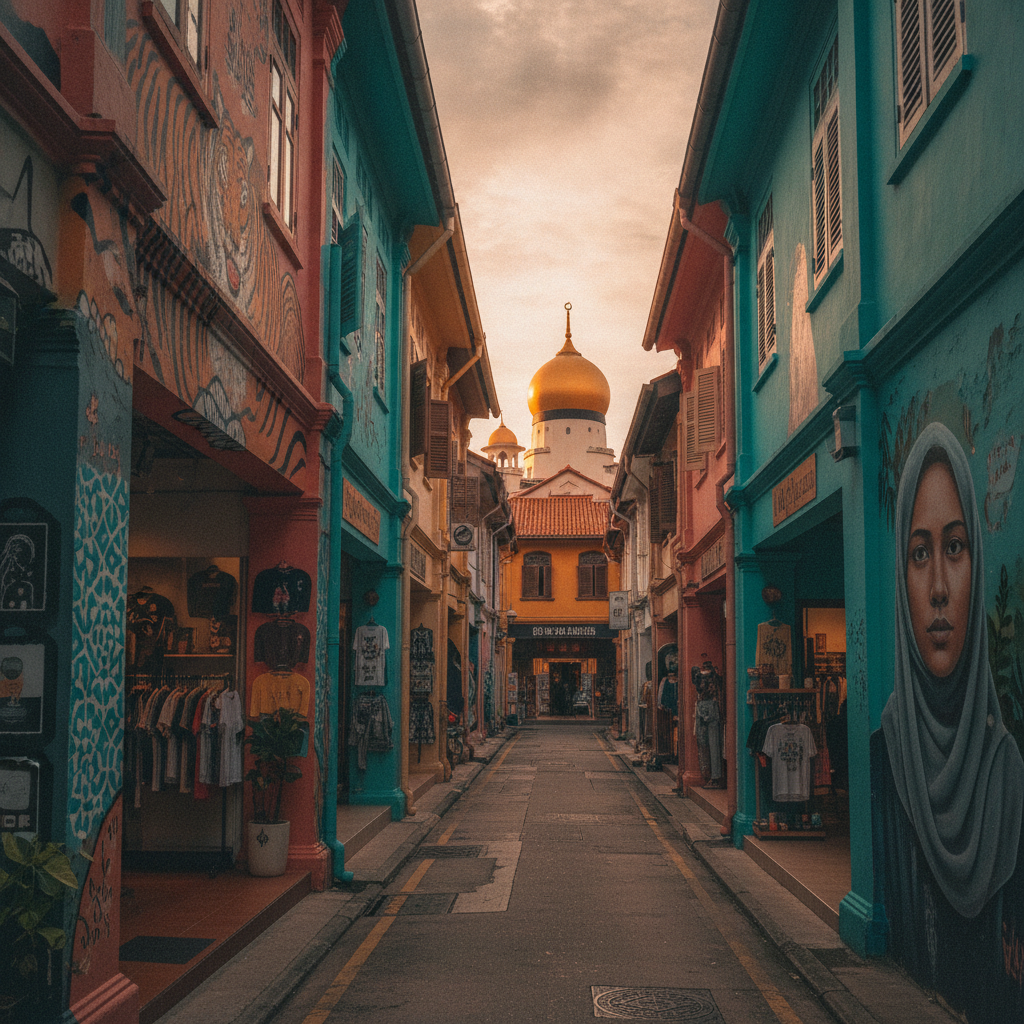
Little India and Kampong Glam: Singapore's Indian and Malay Quarters
Orchard Road and the Botanic Gardens: Shopping and Green Sanctuary