Angkor Deeper: 1,000 Lingas in Phnom Kulen's Sacred River, Preah Khan's Dancer Colonnade & the Sunrise Photo Circuit
Beyond the main circuit—the Grand Circuit's Preah Khan Buddhist university with its Hall of Dancers and Ta Som's fig tree growing completely over the stone gate tower, Phnom Kulen where Jayavarman II proclaimed the Devaraja God-King ideology in 802 CE and carved a thousand Shiva lingas into the river source so all water to Angkor was consecrated, the Angkor National Museum's Gallery of a Thousand Buddhas (entry $12 in a country earning $300/month), UNICEF investigations finding that most 'orphanage tourism' children have living parents paid to be institutionalised, the French versus Indian restoration debate (anastylosis versus adding new stone), and why Phnom Bakheng at 16:30 (300-visitor limit) versus Pre Rup (uncrowded) changes your entire sunset.
- 1
Preah Khan & the Northern Circuit Temples
The 'Grand Circuit' of the Angkor Archaeological Park—a 26 km route encompassing the temples northeast and east of Angkor Thom—contains some of the most significant and least-visited temples in the park. Preah Khan ('Sacred Sword')—built by Jayavarman VII in 1191 as a Buddhist university and temple complex—is a large, partially unrestored temple with the same jungle-reclaimed aesthetic as Ta Prohm but with significantly fewer visitors; its cruciform layout, multi-layered enclosures, and the extraordinary colonnade of the Hall of Dancers (carved with devatas—celestial female figures—in the walls) reward extended exploration. Ta Som (a small, atmospheric Buddhist temple of the Jayavarman VII period with a particularly famous east gate where a fig tree has grown entirely over the gopura—gate tower—creating a natural arch of roots and stone). East Mebon (1052 CE—a temple built on an artificial island in the now-dry East Baray reservoir; the original island access by boat; now approached across the dried lakebed) and Pre Rup (961 CE—one of the finest pre-Angkor Wat temples, with an excellent viewpoint from the upper level at sunset).
- 2
Siem Reap's Museum Scene – The National Museum & SIPAR
The Angkor National Museum (opened 2007)—on the road between Siem Reap town and the Angkor entrance)—houses the world's finest collection of Khmer sculpture and artefacts: the Gallery of a Thousand Buddhas (over 1,000 Buddha images from across the Angkor period), a reconstructed Angkor Wat model, and interactive displays on the hydraulic system and the empire's history. The museum is privately managed (by the Bangkok-based Siam Commercial Bank and a Thai company—a consortium that pays a concession fee to the Cambodian government) and has been criticised for its expensive entry fee (foreigners: $12) in a country where the average monthly income is under $300. The Landmine Museum (founded by Aki Ra—a former child soldier who spent years after the civil war manually defusing mines and collecting them in his home before opening the museum in 1997, later relocated to the current site 25 km north) is the most emotionally significant small museum in Cambodia. Artisans Angkor (in Siem Reap town and at several Angkor sites) offers free tours of the silk-weaving, stone-carving, and lacquerwork workshops.
- 3
Phnom Kulen – The Sacred Mountain & Angkor's Origin
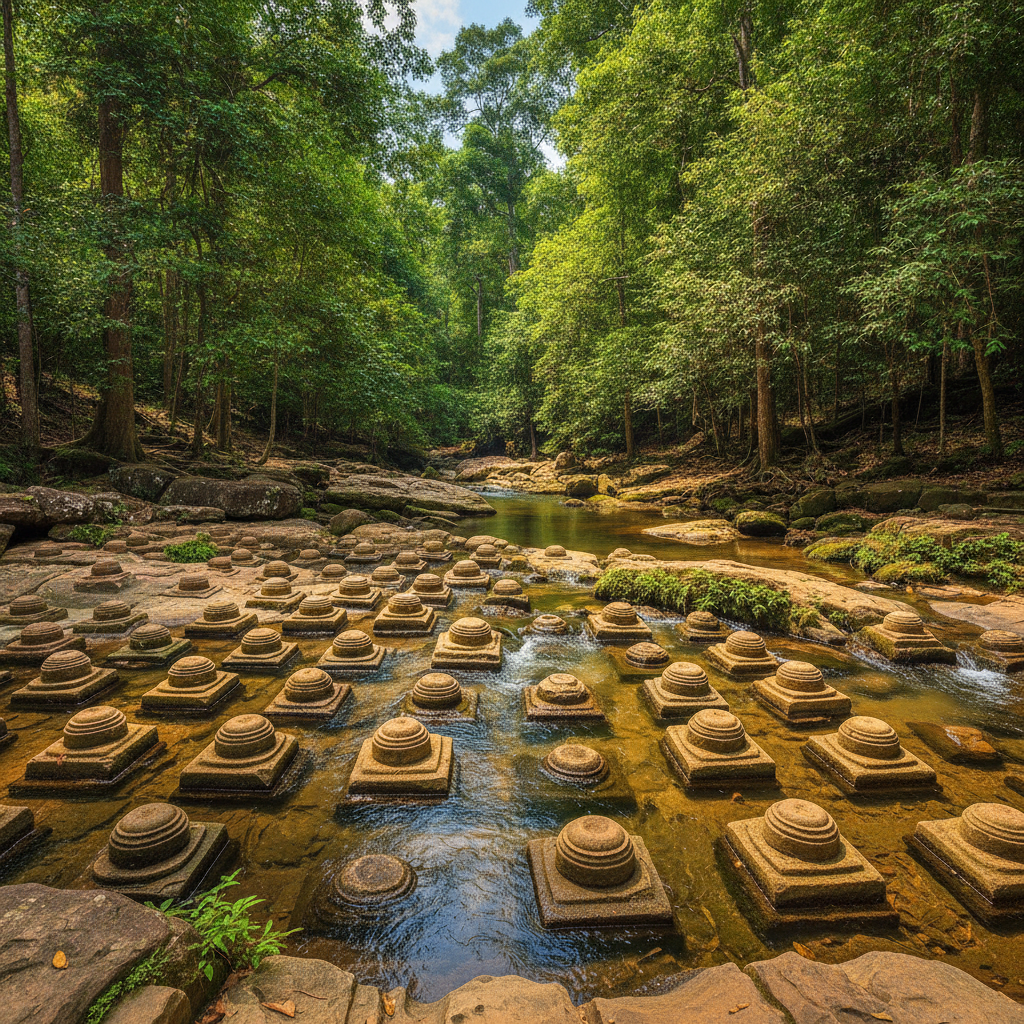
Phnom Kulen ('Mountain of the Lychees')—50 km northeast of Siem Reap, a sandstone plateau at 487 metres—is the most sacred mountain in Cambodia and the origin site of the Angkor civilisation: it was here that Jayavarman II proclaimed himself 'King of the Universe' (chakravartin) and established the cult of the Devaraja ('God-King') in 802 CE, founding the political-religious ideology that would sustain the Khmer Empire for 600 years. The sacred geography: the Siem Reap River has its source on Phnom Kulen, so the Khmer carved thousands of lingas (phallic symbols of Shiva) into the riverbed at the source—the 'River of a Thousand Lingas' (Kbal Spean)—so that the water flowing to Angkor was consecrated as it passed over the lingas. The plateau: a Buddhist monastery at the summit (Wat Preah Ang Thom, containing a giant reclining Buddha carved from a sandstone outcrop), and the Sra Damrei ('Elephant Pool')—ancient Khmer stone carvings of elephants, lions, and nagas carved into the boulders of a natural pool. Requires a day trip and is best combined with a visit to Beng Mealea.
- 4
Siem Reap's NGO Economy & Development Paradoxes
Siem Reap has hosted one of Southeast Asia's densest concentrations of international NGO operations since the 1990s, when the UN Transitional Authority in Cambodia (UNTAC) brought hundreds of international staff, creating an infrastructure of international restaurants, expatriate housing, and services that remained after the UN mission ended. The 'NGO economy': the combination of international aid money, tourism revenue, and garment industry FDI (in Phnom Penh, not Siem Reap) has produced a dual-track economy in which a small formal sector (hotel jobs, restaurant work, tuk-tuk driving) connects to the international economy at incomes far above the agricultural norm, while the majority rural population remains in subsistence rice farming. The paradoxes: the 'orphanage tourism' industry (Siem Reap developed a niche of orphanage visits as a tourist activity; investigations by UNICEF and child protection organisations found that the majority of children in 'orphanages' were not orphans but had living parents—families were paid to send children to institutions that could attract tourist donations, a form of child exploitation disguised as charity); responsible tourism organisations (the CCPCR, local NGOs) now actively campaign against this practice.
- 5
Angkor's Conservation Challenges – Vandalism, Water & Restoration Debates
Angkor's conservation challenges are as complex as the structures themselves. The water table problem: the ancient hydraulic engineering system that maintained Angkor's stability for 600 years has been partially disrupted by modern groundwater extraction (from the tourism infrastructure around the site); this is causing subsidence and structural instability in several temples. The restoration debate: APSARA, the French EFEO (which has been present since 1908), and teams from Japan, India, Germany, China, and the United States take different approaches to temple restoration—ranging from anastylosis (reassembling fallen stones in their original positions, the French-preferred approach) to reconstruction (adding new stone where original is missing, the Indian approach that has been controversial at Ta Prohm where significant new stone has been added). The visitor footprint: sandstone is soft and carved surfaces are worn by the thousands of daily visitors climbing temple structures; access to the inner sanctuaries of many temples has been progressively restricted. Vandalism (Instagram photographers removing site markers, carving initials, breaking carvings for 'authentic' mementos) remains a persistent problem.
- 6
Siem Reap's Sunrise & Sunset Spots – The Photographer's Circuit
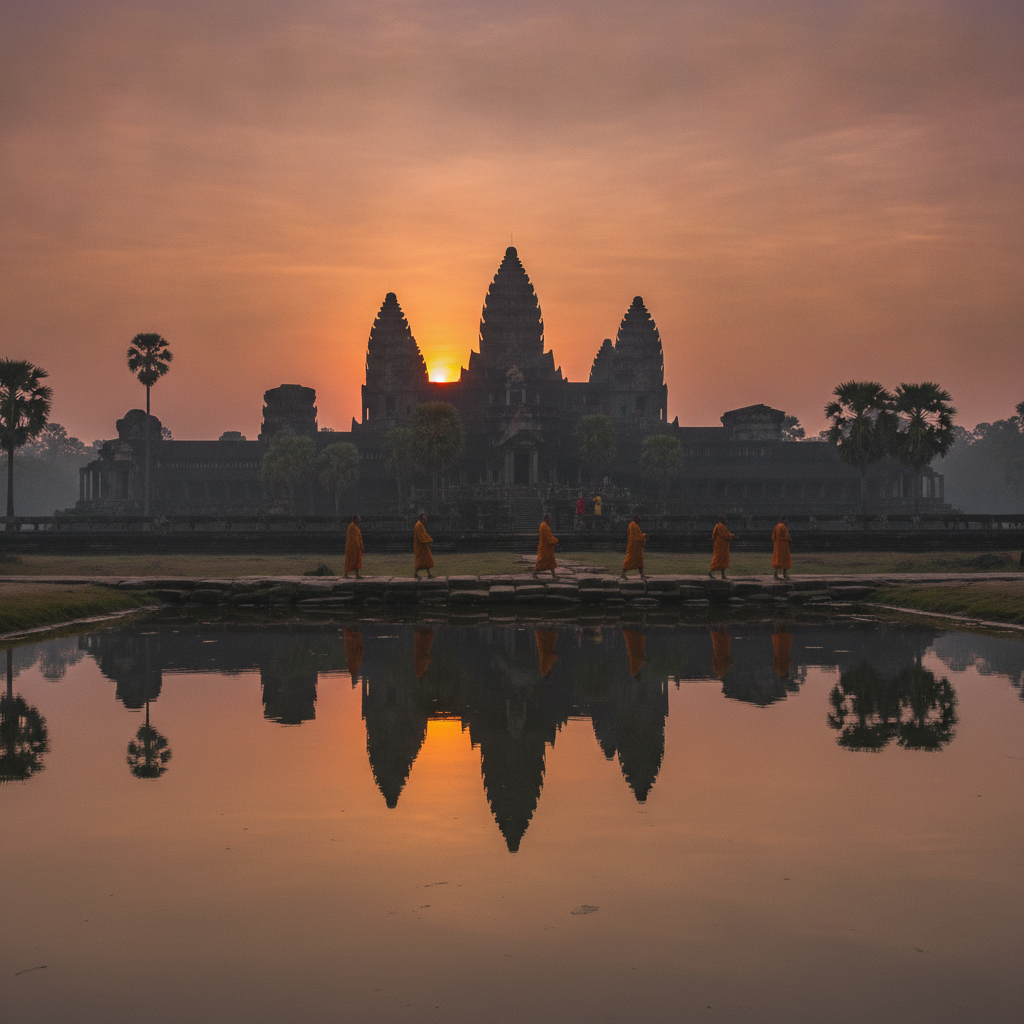
The light at Angkor shifts so dramatically between early morning and midday that visiting time has as much impact on experience as visiting order. The canonical scenes: Angkor Wat's west entrance reflection pool—the temple silhouette behind the pool, orange sky emerging at 05:30–06:30 (the position varies with season; May–June requires moving to the left-side pool for the reflection to be centred). Phnom Bakheng—the 9th-century hilltop temple 1.5 km north of Angkor Wat—is Angkor's famous sunset viewpoint (limited to 300 visitors, timed entry; arrive by 16:30 for 18:00 sunset). Pre Rup—a less visited alternative sunset viewpoint from the upper terrace, fewer crowds, similar quality of light over the surrounding forest. The alternative Angkor Wat sunrise: the reflection in the south library pond (small, usually uncrowded, the sky colours are more fully reflected). Sra Srang (the Royal Bath—a Jayavarman VII-period baray with a stone landing stage)—excellent for sunrise over the water, with fewer visitors than Angkor Wat. The lesson of Angkor photography: the difference between the 05:30 light and the 10:00 light is the difference between a good photograph and a postcard.
Walk this route with audio
Stories play automatically as you reach each stop — no tapping needed.
More in Siem Reap
Siem Reap's Other Story: Khmer Rouge's 2 Million Deaths, Tonlé Sap's Reversing River & Apsara Dance's Revival
Leaving Siem Reap: Artisans Angkor's Ikat Silk Revival, Buddhist Monks at Dawn & Angkor's Civilisational Weight
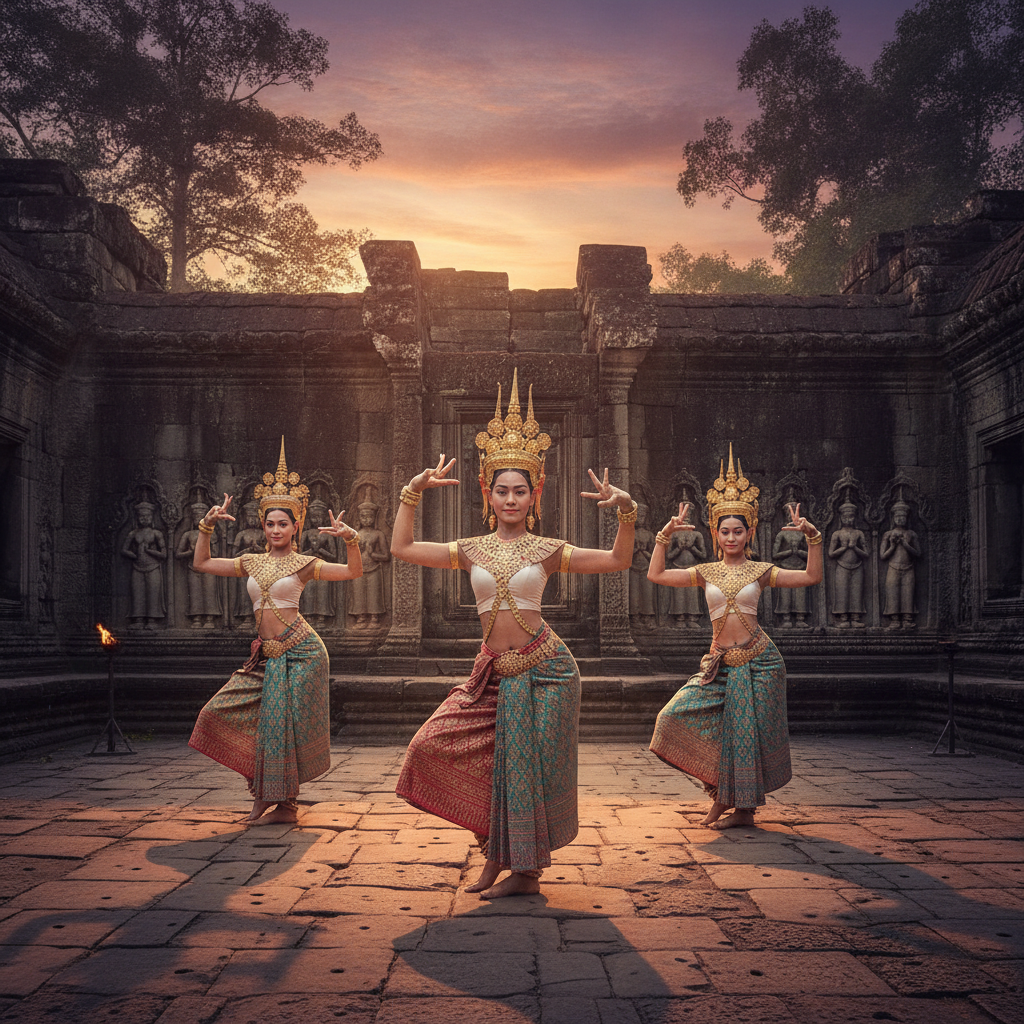
Siem Reap's Foundations: The 1,000 km² Hydraulic Empire, Apsara Dance Surviving Genocide & Henri Mouhot's Useful Myth
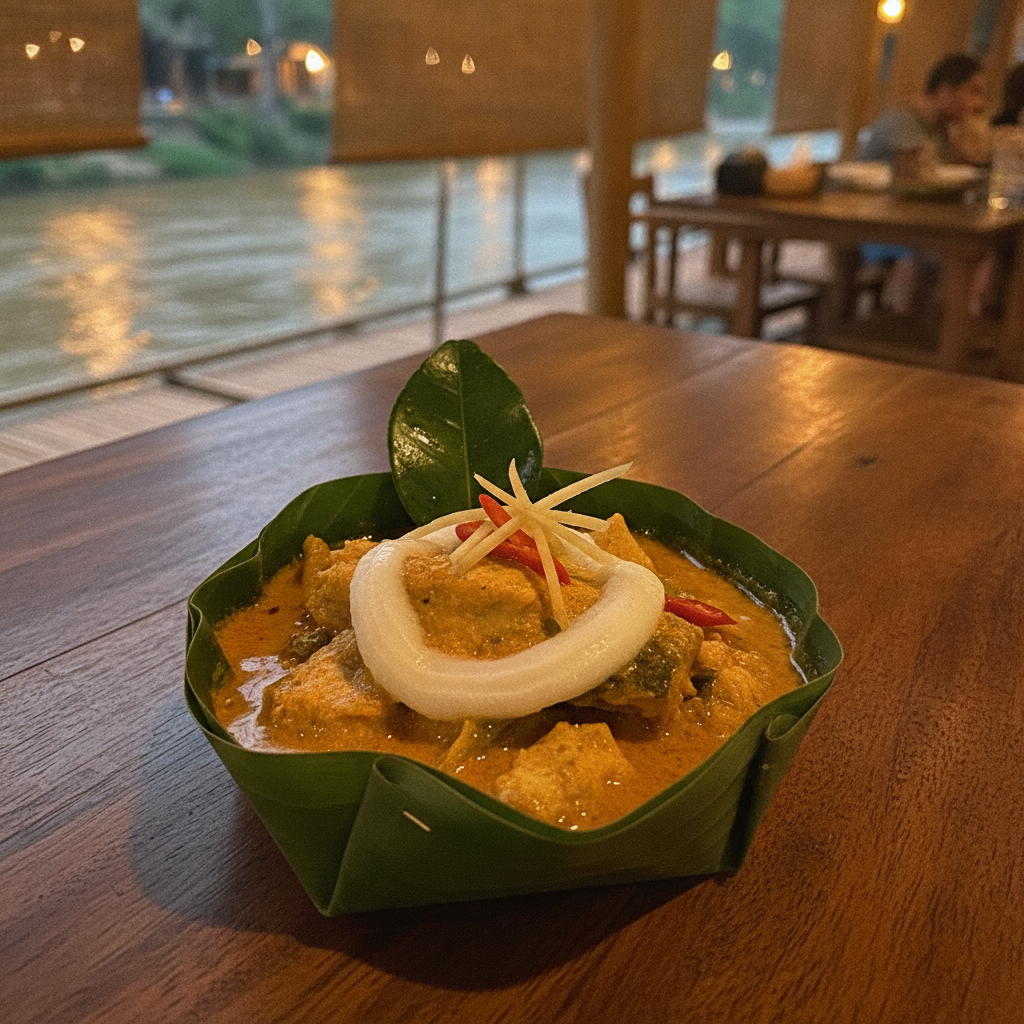
Siem Reap Grounded: Fish Amok and Prahok Fermented Fish, Tuk-Tuk Drivers' COVID Crisis & Bamboo Train to Battambang